How to Create a Travel Budget: Plan Your Trip Expenses Step by Step?
A practical step-by-step guide for estimating every major trip expense, comparing the total with your available funds, and building a budget that feels realistic.
Planning a trip is exciting, but it’s also easy to underestimate how much it will cost. I’ve learned this from my own travels ↗. Early on, I focused on booking flights and accommodation without adding up every expense. By the time the trip ended, I had spent much more than I expected. Since then, I always create a travel budget before making any bookings, and it has made every trip far less stressful and much easier to enjoy.
Budgeting for travel isn’t about limiting your experiences or avoiding fun activities. It’s about understanding where your money will go before you leave home. In this guide, I’ll show you how to estimate your total trip expenses step by step, organize your spending into simple categories, and build a realistic budget that matches your travel plans. By the end, you’ll have a clear financial plan that helps you travel with greater confidence.
What Is a Travel Budget?
A travel budget is an estimate of how much money you expect to spend during your entire trip.
Instead of guessing your costs, you calculate them before you travel.
A good budget includes every major expense, from getting to your destination to returning home.
Creating a budget helps you understand whether your trip fits your finances before you start making reservations.
It also gives you a clear spending plan, making it easier to choose options that match your budget.
Why You Should Create a Travel Budget Before Booking Anything?
Many travelers start booking flights or hotels as soon as they find a good deal.
However, those are only part of the total cost of a trip.
Without a complete budget, it’s easy to overlook other expenses that add up quickly.
Creating your budget first helps you:
- ✓Know the estimated total cost of your trip.
- ✓Compare travel options with confidence.
- ✓Make better booking decisions.
- ✓Reduce financial stress during your vacation.
- ✓Prepare for both expected and unexpected expenses.
- ✓Stay in control of your spending from the beginning.
Even a simple budget can make your travel planning much more organized.
Step 1: Clearly Define Your Trip

Before estimating any costs, take a few minutes to define your travel plans.
Ask yourself questions such as:
- ✓Where am I traveling?
- ✓How long will my trip be?
- ✓Am I traveling alone or with others?
- ✓Is this a domestic or international trip?
- ✓What is the main purpose of this trip?
These details directly affect your overall budget.
For example, a weekend city break usually costs very differently from a two-week international vacation or a road trip across several destinations.
The clearer your travel plan is, the easier it becomes to estimate your expenses accurately.
If you haven’t decided where to travel yet, choosing the right destination first will make budgeting much easier. Our guide on How to Choose a Travel Destination can help you narrow down your options before estimating your trip costs.
Step 2: List Every Major Expense Category

One of the most common budgeting mistakes is only thinking about flights and accommodation.
A complete travel budget includes every major area where you’ll spend money.
Start by making a simple list of your expected expenses.
Most travel budgets include:
- ✓Transportation
- ✓Accommodation
- ✓Food and drinks
- ✓Activities and attractions
- ✓Local transportation
- ✓Travel documents (if required)
- ✓Personal spending
- ✓Emergency fund
At this stage, don’t worry about exact prices.
Your goal is simply to identify every category that may require money during your trip.
Having a complete list makes it much easier to build an accurate budget in the next steps.
Step 3: Estimate Your Transportation Costs

Transportation is often one of the largest parts of any travel budget.
Depending on your trip, this may include:
- ✓Flights
- ✓Train tickets
- ✓Bus tickets
- ✓Ferry tickets
- ✓Fuel for road trips
- ✓Airport transfers
- ✓Parking fees
- ✓Taxi or ride-sharing services
Research average prices before making any bookings.
If several transportation options are available, compare them carefully before deciding which one best fits your overall budget.
Remember, transportation isn’t just about getting to your destination. Think about the entire journey, including how you’ll travel between airports, stations, hotels, and attractions once your trip begins.
Step 4: Estimate Your Accommodation Costs

Accommodation is usually one of the biggest expenses after transportation.
The cost depends on several factors, including your destination, travel season, length of stay, and the type of place you choose.
When estimating accommodation costs, consider options such as:
- ✓Hotels
- ✓Resorts
- ✓Hostels
- ✓Guesthouses
- ✓Vacation rentals
- ✓Camping (if suitable)
Research average nightly prices for your travel dates instead of relying on the lowest advertised rates.
Then multiply the estimated nightly cost by the number of nights you plan to stay.
If your accommodation includes breakfast, parking, or other services, make a note of them. Knowing what’s already included can help you estimate your overall trip cost more accurately.
Step 5: Calculate Your Food and Drink Expenses

Food is another major part of your travel budget.
Your spending can vary depending on your eating habits and the type of trip you’re planning.
Think about questions like:
- ✓Will I mostly eat at restaurants?
- ✓Will I prepare some of my own meals?
- ✓Does my accommodation include breakfast?
- ✓How often will I buy snacks or drinks?
Instead of trying to predict every meal, estimate a realistic daily amount for food and drinks.
Then multiply it by the number of travel days.
Using realistic estimates is much better than choosing numbers that are too low just to make the budget look smaller.
Step 6: Estimate Activity and Attraction Costs

Every trip is different.
Some travelers enjoy museums and historical sites.
Others prefer outdoor adventures, guided tours, or entertainment.
Make a list of the activities you genuinely want to experience during your trip.
Examples include:
- ✓Museum tickets
- ✓National park entrance fees
- ✓Guided tours
- ✓Boat trips
- ✓Theme parks
- ✓Cultural experiences
- ✓Adventure activities
Research the average admission prices before your trip and include them in your budget.
Planning these costs early helps you decide which experiences are your highest priorities without making last-minute financial decisions.
Step 7: Include Local Transportation
Many travelers remember the cost of reaching their destination but forget about getting around after they arrive.
Think about how you’ll travel between places during your trip.
Your local transportation budget may include:
- ✓Public transportation
- ✓Taxi services
- ✓Ride-sharing apps
- ✓Rental cars
- ✓Fuel
- ✓Parking
- ✓Bicycle rentals
Even if each trip costs only a small amount, the total can become a noticeable part of your travel budget over several days.
Adding these costs now makes your overall estimate much more accurate.
Step 8: Add Personal Spending
Every traveler spends money differently.
Some people enjoy shopping for souvenirs.
Others prefer spending on local food, entertainment, or small personal purchases.
Instead of trying to predict every item, set aside a reasonable amount for personal spending.
This category may include:
- ✓Souvenirs
- ✓Clothing
- ✓Gifts
- ✓Coffee and snacks
- ✓Small personal items
- ✓Unexpected purchases
Including personal spending in your budget gives you more flexibility during your trip without affecting the money you’ve already planned for essential expenses.
Step 9: Set Aside an Emergency Fund

No matter how carefully you plan, unexpected situations can happen.
You may need to pay for:
- ✓Medical care
- ✓Transportation changes
- ✓Lost belongings
- ✓Extra accommodation
- ✓Unexpected travel delays
An emergency fund is not money you expect to spend.
It is simply there if something unexpected happens.
Having this safety buffer gives you peace of mind throughout your trip and helps you avoid financial stress if your plans suddenly change.
Review Your Estimated Trip Cost
Once you’ve estimated every major expense category, add them together to calculate your expected total trip cost.
Your estimate should include:
- ✓Transportation
- ✓Accommodation
- ✓Food and drinks
- ✓Activities
- ✓Local transportation
- ✓Personal spending
- ✓Emergency fund
At this stage, don’t worry about making your budget perfect.
The goal is to create a realistic estimate that helps you understand the overall cost of your trip before making bookings or financial commitments.
Step 10: Compare Your Budget with Your Available Funds
Now that you’ve estimated your total trip cost, compare it with the amount of money you have available for the trip.
This is one of the most important parts of creating a travel budget.
If your estimated expenses are within your budget, you’re in a good position to move forward with planning.
If your estimate is higher than you expected, don’t panic.
A travel budget is meant to help you make adjustments before you spend any money.
This is much easier than discovering you can’t afford part of your trip after you’ve already made bookings.
Step 11: Adjust Your Budget If Needed
It’s completely normal to revise your budget several times.
Most travelers make small changes before reaching a final budget that feels realistic.
Instead of removing experiences that matter most to you, look for areas where you can make practical adjustments.
You might decide to:
- ✓Choose a different type of accommodation.
- ✓Stay for fewer days.
- ✓Select activities that better fit your budget.
- ✓Use a different transportation option.
- ✓Reduce personal spending.
- ✓Delay non-essential purchases until after the trip.
Small changes across several categories often have a bigger impact than making one major cut.
The goal is to create a budget that feels realistic while still allowing you to enjoy your trip.
Keep Your Budget Simple
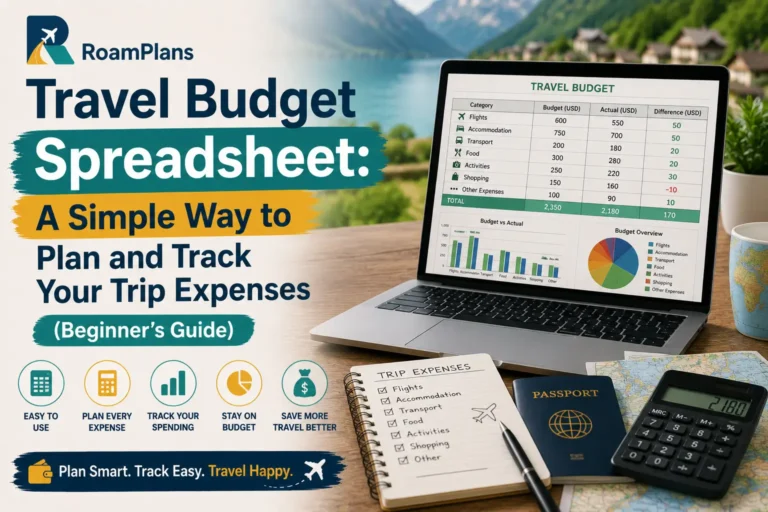
Many people believe a travel budget needs long spreadsheets or complicated formulas.
From my own experience, that’s usually unnecessary.
A simple budget that you understand is much more useful than a detailed one you never look at again.
Focus on estimating the major expense categories first.
Once those are planned, you’ll already have a clear picture of what your trip is likely to cost.
Remember, your budget is a planning tool, not a strict rulebook.
It should help you make informed decisions before you travel, not create extra stress.
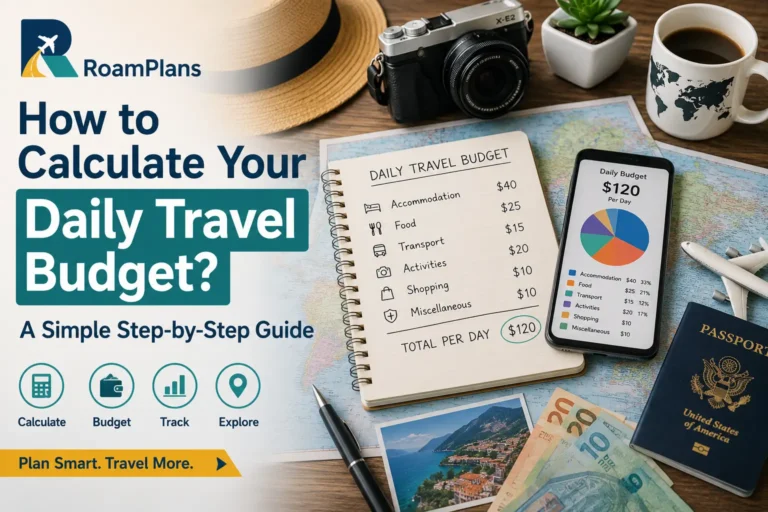
Example of a Simple Travel Budget

Here’s an example of how a basic travel budget might look.
| Expense Category | Estimated Cost |
|---|---|
| Transportation | $500 |
| Accommodation | $700 |
| Food & Drinks | $300 |
| Activities | $250 |
| Local Transportation | $120 |
| Personal Spending | $180 |
| Emergency Fund | $200 |
| Estimated Total | $2,250 |
The numbers above are only examples.
Your own budget will depend on your destination, travel style, trip length, and personal preferences.
Travel Budget Planning Checklist
Before moving on to bookings, check whether you’ve completed these steps.
- ✓✅ Defined your trip.
- ✓✅ Listed every major expense category.
- ✓✅ Estimated transportation costs.
- ✓✅ Estimated accommodation costs.
- ✓✅ Calculated food and drink expenses.
- ✓✅ Added activities and attractions.
- ✓✅ Included local transportation.
- ✓✅ Set aside personal spending.
- ✓✅ Added an emergency fund.
- ✓✅ Calculated your estimated total trip cost.
- ✓✅ Compared your estimate with your available budget.
- ✓✅ Adjusted your plan where necessary.
Completing these steps gives you a strong financial foundation before you begin making reservations.
Common Budgeting Mistakes to Avoid
Even experienced travelers occasionally overlook small details when creating a travel budget.
Watch out for these common mistakes:
- ✓Guessing costs instead of researching them.
- ✓Forgetting smaller expense categories.
- ✓Setting an unrealistic spending limit.
- ✓Leaving out an emergency fund.
- ✓Booking before calculating the total trip cost.
- ✓Focusing only on major expenses while ignoring everyday costs.
Avoiding these mistakes can make your travel budget much more accurate and easier to follow.
Signs You Have Created a Realistic Travel Budget
A well-planned travel budget should leave you feeling prepared rather than uncertain.
Your budget is probably realistic if:
- ✓It covers every major expense.
- ✓The estimated costs are based on research.
- ✓It includes an emergency fund.
- ✓The total fits your available finances.
- ✓It allows enough flexibility for your travel style.
A realistic budget doesn’t guarantee that every expense will be exactly the same, but it gives you a reliable financial plan before your journey begins.
Frequently Asked Questions
A travel budget is an estimate, not an exact prediction. The goal is to create a realistic financial plan based on research so you know approximately how much your trip will cost before you travel.
Yes. Creating a budget first helps you understand whether your travel plans fit your finances. It also makes it easier to compare different booking options without overspending.
A complete travel budget should cover transportation, accommodation, food and drinks, activities, local transportation, personal spending, and an emergency fund.
Review each expense category and look for practical adjustments. You might shorten your trip, choose different accommodation, or reduce optional expenses until your budget feels realistic.
No. A simple notebook, notes app, or basic table is enough. The most important thing is understanding where your money will go before your trip begins.
Yes. Setting aside emergency money gives you extra financial security if unexpected situations arise during your trip.
No. Every trip is different. Your destination, travel style, length of stay, and planned activities will all affect your total budget.
Final Travel Budget Checklist
Before booking your trip, make sure you can answer “Yes” to these questions.
- ✓✅ Have I clearly defined my trip?
- ✓✅ Did I estimate every major expense?
- ✓✅ Have I researched realistic prices?
- ✓✅ Did I include transportation, accommodation, food, and activities?
- ✓✅ Have I added local transportation and personal spending?
- ✓✅ Did I set aside an emergency fund?
- ✓✅ Does my estimated total fit my available finances?
- ✓✅ Have I reviewed my budget before making bookings?
If you answered “Yes” to these questions, you’ve built a strong financial foundation for your trip.
Final Thoughts
One thing I’ve learned through experience is that creating a travel budget isn’t about restricting yourself—it’s about giving yourself peace of mind. Every time I planned my expenses before booking, I felt more confident throughout the journey because I already knew what to expect. Even when prices changed slightly, having a realistic budget helped me make better decisions without unnecessary stress.
As you plan your next trip, remember that a travel budget is simply a tool to help you travel more confidently. It doesn’t have to be perfect, and you don’t need complicated calculations to make it work. A thoughtful budget created before your trip can help you enjoy the journey, stay in control of your finances, and focus on making lasting travel memories.

Adnan Ahmed
RoamPlans AuthorTravel Planning Researcher & Editor
Adnan Ahmed is the travel planning researcher and editor behind RoamPlans. He creates clear, practical guides to help travelers compare destinations, plan routes, estimate costs, and avoid common trip-planning mistakes. His work combines careful source research, official travel information, and regular content reviews to keep each guide useful and current.
- ✓Destination Research
- ✓Budget Planning
- ✓Route Planning
- ✓Beginner Travel Guides