Complete Transportation Guide for Travelers
Booking your flight and accommodation may feel like the biggest part of planning a trip. However, you still need to work out how you will reach your hotel, move between cities, visit attractions, and return to the airport.
Transportation problems often happen because travelers plan each ticket separately. A cheap train, bus, or flight may look like a good deal until transfer costs, luggage fees, long waiting times, or a distant station are added.
When I plan a trip, I map every movement before making transport bookings. This helps me see where I may need a train, airport transfer, local bus, rental car, taxi, or backup route. It also makes the full cost much easier to estimate.
This complete transportation guide for travelers explains how to plan each stage, compare transport options, estimate the real cost, and reduce common problems before the trip begins.
Important Note: Transportation systems, ticket rules, prices, payment methods, driving laws, and passenger protections differ by destination and provider. Always confirm final details through official transport operators, airports, rental companies, and government websites before booking.
| Travel situation | Common transport choice |
| Large city with an established transit system | Public transportation |
| Travel between well-connected cities | Train |
| Smaller towns without rail service | Bus or coach |
| Rural areas and flexible routes | Rental car |
| Airport to nearby accommodation | Train, shuttle, taxi, or ride app |
| Short trip with heavy luggage | Taxi or ride app |
| Multi-stop scenic route | Rental car or train |
| Low-cost city trip | Public transportation |
These are starting points rather than fixed rules. The best option still depends on your route, schedule, group size, and destination.
What Does Travel Transportation Include?
Travel transportation includes every movement from the time you leave home until you return.
Many beginners focus only on the longest part of the trip, such as an international flight. Smaller transport stages can create just as many problems if they are ignored.
A complete transportation plan normally includes the following areas.
Transportation to Your Departure Point
Your first transport stage may be the trip from home to an airport, train station, or bus terminal.
Possible options include:
- Driving and using long-term parking
- Asking someone to drop you off
- Booking a taxi or ride app
- Taking a local train or bus
- Using an airport shuttle
- Staying near the airport before an early departure
Check how long this stage normally takes and add time for traffic, parking, ticket collection, station entry, or terminal transfers.
A flight leaving at 8:00 a.m. does not mean you only need to plan from 8:00 a.m. Your transport plan begins when you leave home.
Transportation From the Arrival Airport
After landing, you may need to travel from the airport to a hotel, apartment, train station, cruise terminal, or another city.
Common airport transport options include:
- Airport trains
- Metro or subway services
- Public buses
- Hotel shuttles
- Shared airport transfers
- Private transfers
- Licensed taxis
- Ride apps
- Rental car collection
Do not assume every airport is close to the city center. Some airports are far from the destination they serve, and the transfer may take longer than expected.
Before choosing an option, check:
- Your arrival terminal
- Immigration and baggage time
- The final departure time of public transport
- The distance from the stop to your accommodation
- Whether your luggage will be easy to carry
- Late-night transport availability
- The exact taxi or ride-app pickup area
The RoamPlans Airport Arrival Guide can help you prepare for the steps that happen before you leave the terminal.
Transportation Between Cities
A multi-city trip may include several transport types.
You may travel between destinations by:
- Train
- Long-distance bus or coach
- Rental car
- Domestic flight
- Ferry
- Shared transfer
Compare the complete door-to-door time. A one-hour flight may require travel to the airport, early arrival, security, waiting, baggage collection, and another transfer after landing.
A three-hour train leaving from the city center may sometimes take less total time, even though its listed travel time is longer.
This is one reason transportation should be checked while following your multi-city trip plan, rather than after the full route has already been fixed.
Transportation Within a Destination
Local transportation affects where you stay, how many places you can visit, and how much you spend each day.
Common local options include:
- Metro or subway
- Local trains
- City buses
- Trams
- Ferries
- Taxis
- Ride apps
- Walking
- Cycling
- Hotel shuttles
- Attraction shuttles
An accommodation that appears cheaper may cost more overall if it requires several paid rides each day.
Before booking a hotel, check the walking distance to useful transport stops, service frequency, late-night routes, and the number of changes required to reach key areas.
This should be considered alongside the advice in How to Choose the Right Accommodation for Your Trip.
Transportation for Day Trips
Day trips need their own transport plan.
Check:
- The first available departure
- The final return service
- Weekend or holiday timetables
- Whether advance booking is required
- The distance between the stop and attraction
- Parking availability
- Expected traffic
- What happens if the return service is missed
A route that works well during the day may become difficult in the evening. Always check the return before leaving.
Transportation for the Return Trip
Plan the return airport or station transfer separately.
The route used after arrival may not work for departure because:
- The flight leaves early
- Public transport starts late
- Weekend schedules differ
- Road traffic is heavier
- You have more luggage
- Your final accommodation is in another area
Confirm your departure terminal, expected travel time, and backup option before the last day of the trip.
Divide Your Trip Into Transportation Stages
The easiest way to plan transport is to stop viewing the trip as one long route.
Break it into small stages that can be researched and compared separately.
Stage 1: Home to the Departure Airport or Station
Ask:
- How will I get there?
- How long does the route usually take?
- What happens if traffic is heavy?
- Is parking required?
- Is public transport running at that time?
- What is my backup option?
Stage 2: Arrival Point to Accommodation
Ask:
- Which terminal or station will I arrive at?
- Where is the transport pickup point?
- Can I pay by cash, card, or app?
- Will the route still operate after a delay?
- Can I manage the route with my luggage?
Stage 3: Travel Between Destinations
Ask:
- Which city-center or airport stations are involved?
- Is the service direct?
- Are reservations required?
- How much time is needed for changes?
- Does the ticket allow refunds or changes?
- Are all parts of the route on one booking?
Stage 4: Daily Local Transportation
Ask:
- Which transport system serves my accommodation?
- How much will daily travel cost?
- Is there a day pass or travel card?
- How late does the service operate?
- Is walking realistic for the planned route?
- Do I need mobile internet to buy or show tickets?
Stage 5: Day-Trip Transportation
Ask:
- Is the return service reliable?
- Does the timetable change on weekends?
- Is advance booking needed?
- How far is the attraction from the final stop?
- Is there a backup route?
Stage 6: Return to the Airport or Station
Ask:
- What time should I leave?
- Is early-morning transport available?
- Could traffic affect the route?
- Is a pre-booked transfer safer for this stage?
- What is my second option?
Use a table like this while planning:
| Trip stage | Starting point | Destination | Main option | Backup option | Booking needed? |
| Departure | Home | Airport | Local train | Taxi | No |
| Arrival | Airport | Hotel | Airport bus | Taxi | Maybe |
| Intercity | City A | City B | Train | Coach | Yes |
| Local travel | Hotel | Attractions | Metro | Taxi | No |
| Return | Hotel | Airport | Pre-booked transfer | Taxi | Yes |
This simple map can reveal missing routes before they become problems.
Transportation Planning Tips for Beginners
Check the Exact Location
Cities may have several airports, train stations, and bus terminals.
Always confirm:
- Full station name
- Airport code
- Terminal
- Street address
- Platform or stop details
- Distance from the city center
Two stations with similar names may be far apart.
Use Official Sources
Use official transport websites or apps to confirm:
- Timetables
- Ticket rules
- Service changes
- Luggage limits
- Accessibility
- Pickup areas
- Refund terms
Third-party platforms can help with comparison, but final operating details should be checked with the provider.
Save Information Offline
Save:
- Tickets
- Booking references
- Route screenshots
- Hotel address
- Station names
- Pickup instructions
- Provider contact details
- Backup route
Mobile data may fail inside stations, tunnels, airports, or unfamiliar areas.
Leave Time Between Separate Bookings
A delay on one ticket may not protect the next booking if they were purchased separately.
Leave more time when:
- Changing stations
- Collecting luggage
- Passing through border control
- Using separate operators
- Traveling during busy hours
- Taking the final service of the day
Keep a Backup Option
A useful backup may be:
- A later train
- Another bus route
- A licensed taxi
- A local ride app
- A nearby hotel
- An alternative station
- An emergency contact
You may never use it, but knowing it exists reduces stress when plans change.
Train Travel
Train travel can be one of the easiest ways to move between cities, especially when stations are near city centers. It can also reduce airport transfers, security lines, and long road travel.
However, train systems differ between countries. Some routes allow flexible tickets, while others require reservations. Some stations serve several rail companies, and a city may have more than one main station.
Use the Complete Train Travel Guide for Beginners for the full booking, boarding, luggage, station, and connection process.
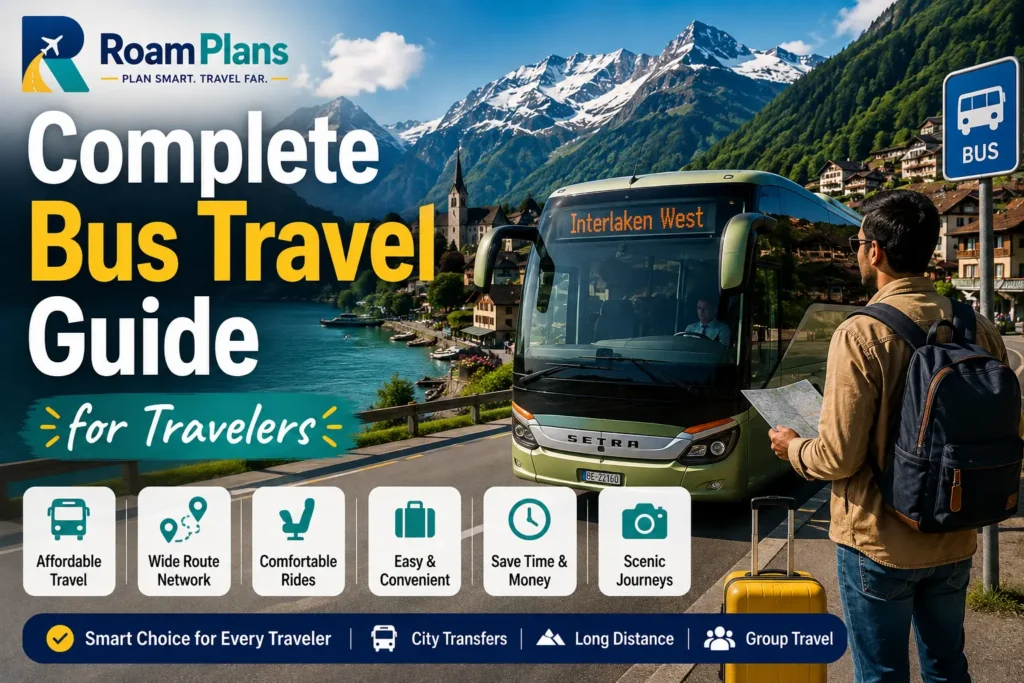
Bus and Coach Travel
Buses and coaches can connect airports, cities, small towns, villages, and places without rail service. They are often cheaper than trains, but traffic can make travel times less predictable.
The word bus may describe local city services, while coach often refers to longer routes. Travelers should check the type of service before booking.
For full booking and boarding details, see the Complete Bus Travel Guide for Travelers.
Rental Cars
A rental car can provide flexibility where public transport is limited. It may suit rural routes, national parks, small towns, family trips, and plans with several stops.
It also brings added work. Travelers must check documents, deposits, insurance, fuel, tolls, parking, and local driving rules.
The Car Rental Guide for Travelers covers booking, insurance, fuel policies, inspection, fees, pickup, and return in full.
Choose the Right Vehicle Size
The cheapest vehicle may be too small for the passengers and bags.
Consider:
- Number of adults
- Number of children
- Suitcase size
- Child seats
- Road type
- Fuel use
- Automatic or manual transmission
- Parking space
- Long-distance comfort
A car listed for five passengers may not fit five passengers and five large suitcases.
Public Transportation Abroad
Public transportation may include buses, metros, subways, trams, local trains, ferries, and shared city transport.
It is often the easiest way to move around a large city, but the ticket system can feel unfamiliar at first.
The full process appears in How to Use Public Transportation Abroad.
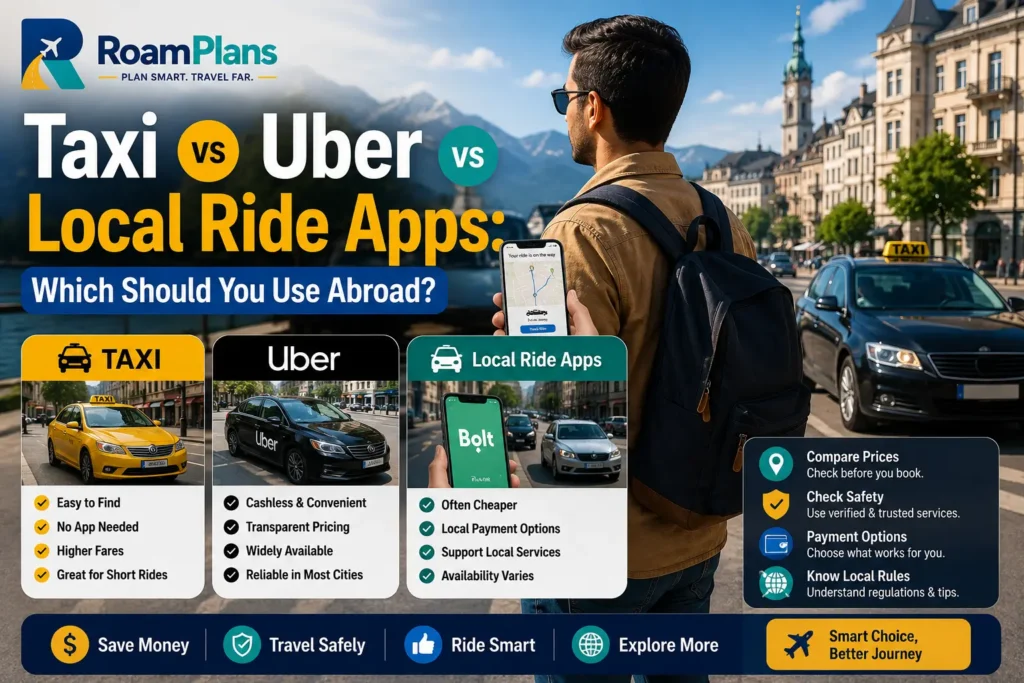
Taxis, Uber, and Local Ride Apps
Taxis and ride apps are useful for airport transfers, late-night trips, short journeys, heavy luggage, and areas with limited public transport.
Availability, pricing, payment methods, and pickup rules differ by city.
See Taxi vs Uber vs Local Ride Apps for a full comparison.
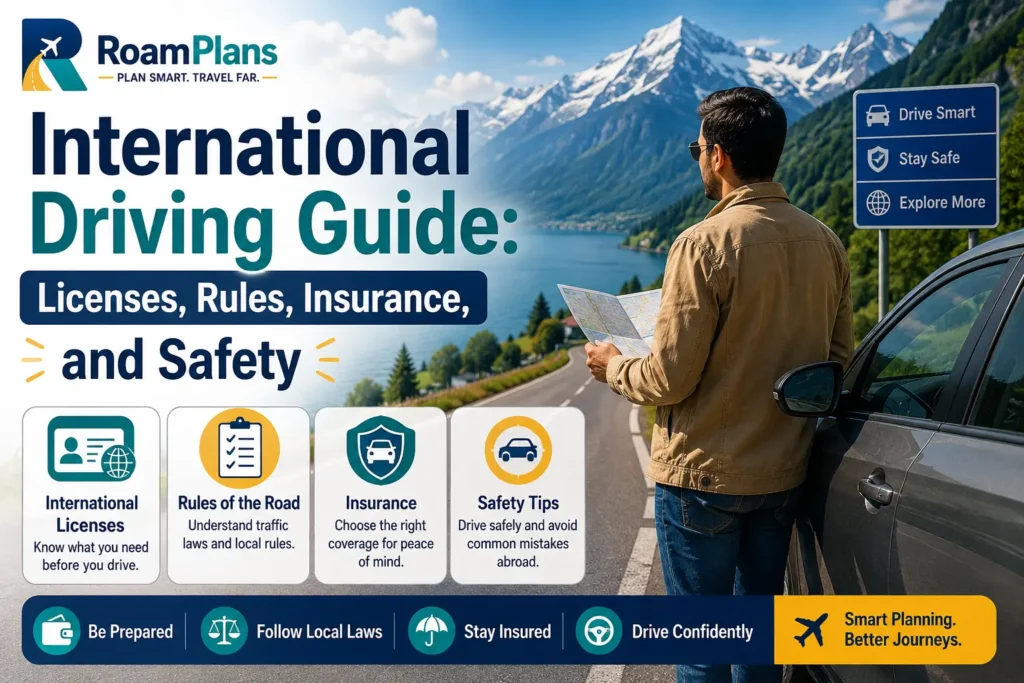
Driving in Another Country
Driving abroad can provide freedom, but travelers must check local rules before renting or using a vehicle.
License rules, insurance, road signs, tolls, parking, and required equipment can differ from one country to another.
Read the International Driving Guide before planning a self-drive route.
Other Transportation Options
Trains, buses, rental cars, public transport, taxis, and ride apps cover most travel needs. Some destinations also depend on ferries, walking routes, cycling, and shuttle services.
These options should be checked during the same planning stage as your main transport bookings.
Ferries and Boats
Ferries may connect:
- Islands
- Coastal cities
- River districts
- Ports
- Vehicle routes
- Tourist areas
Some ferries carry passengers only, while others also carry cars, bicycles, and motorcycles.
Before booking, check:
- Passenger or vehicle ticket
- Departure port
- Check-in time
- Luggage rules
- Vehicle size rules
- Seat or cabin type
- Weather policy
- Cancellation terms
- Transport from the arrival port
Ports can be far from city centers. Add the cost and time needed to reach both ports.
Weather can also affect ferry schedules. Avoid planning a tight connection immediately after a ferry arrival.
Walking
Walking is often the simplest option for short distances, but map distance does not show every difficulty.
Check:
- Hills
- Stairs
- Road crossings
- Pavement condition
- Weather
- Lighting
- Traffic
- Personal safety
- Luggage
- Walking time
A hotel may look close to a station on a map but still require a difficult uphill walk with bags.
Use street-level images where available and read recent traveler comments about the route.
Cycling and Bike-Sharing
Cycling may work well in cities with safe bike lanes and clear rental systems.
How Far in Advance Should You Book Transportation?
There is no single booking period that works for every destination or transport type.
The right time depends on:
- Travel season
- Route popularity
- Service frequency
- Refund terms
- Group size
- Vehicle supply
- Special events
- Public holidays
- Accessibility needs
The goal is to book limited services before they become expensive or unavailable, while keeping flexibility where plans may change.
Transportation That May Need Early Booking
Consider booking earlier for:
Transportation Planning for Different Travelers
The same route may work differently for a solo traveler, couple, family, group, or traveler with reduced mobility.
A good plan should match the people taking the trip.
Solo Travelers
Solo travelers may focus more on:
- Late-night safety
- Luggage control
- Clear pickup points
- Shared transfers
- Reliable public transport
- Emergency contacts
- Offline directions
A taxi may cost more for one person, but it can still be a sensible choice after a late arrival.
Share important route details with a trusted person where practical.
Couples
Couples can compare the total price of:
- Two public transport tickets
- One taxi
- One rental car
- Shared airport transfer
- Two train tickets
The cheapest option per person may change when costs are combined.
Couples should also check whether both travelers can manage the luggage during station changes.
Families With Children
Family transport planning may need extra attention to:
- Child fares
- Child seats
- Pushchairs
- Toilet access
- Food stops
- Direct routes
- Luggage
- Rest time
- Early departures
- Long transfers
A direct option may cost more but reduce stress and missed connections.
For rental cars and taxis, check local child-seat rules before travel.
Do not assume every taxi or ride app provides a suitable seat.
Groups
Groups should compare:
- Group train tickets
- Minibuses
- Vans
- Large taxis
- Private transfers
- Several rental cars
- Seating availability
One large vehicle may be cheaper and easier than several small vehicles, but luggage space must be checked.
Create one shared document containing:
- Booking references
- Departure times
- Pickup address
- Driver contact
- Passenger list
- Luggage details
Choose one person to manage each booking, but make sure other group members also have the main information.
Travelers With Reduced Mobility
Check each stage of the route separately.
Look for:
- Step-free station entry
- Lift access
- Platform gaps
- Accessible toilets
- Low-floor buses
- Wheelchair spaces
- Accessible taxis
- Assistance booking
- Boarding support
- Suitable luggage help
An accessible departure station does not guarantee that the arrival station offers the same facilities.
Contact the operator directly where support is needed. Save confirmation details and arrive within the stated assistance time.
How to Prepare a Transportation Backup Plan?
A backup plan does not need to cover every possible problem. It should give you one realistic next step if the main option fails.
Prepare backups for the routes that could affect:
- A flight
- A hotel check-in
- A tour
- A ferry
- A separate train
- The final service of the day
- A border crossing
Save a Second Route
For major transport stages, identify one alternative.
This may be:
- A later train
- Another bus operator
- A different station
- A licensed taxi
- A local ride app
- A private transfer
- A nearby hotel
- A different airport route
Check whether the backup operates at the time you may need it.
A backup bus that stops running before your arrival is not a useful backup.
Keep Emergency Money
Keep a separate amount for unexpected transport.
This may help pay for:
- A taxi
- A replacement ticket
- An extra hotel night
- A new transfer
- Parking
- Fuel
- Food during a delay
Keep more than one payment method where possible.
A foreign card may fail, a cash machine may be unavailable, or an app may reject payment.
Save Addresses Offline
Save the full address of:
- Accommodation
- Airport
- Train station
- Bus station
- Ferry port
- Rental office
- Embassy or consulate where relevant
- Emergency contact
Keep the accommodation address in the local language where useful.
Also save map pins and screenshots.
Leave a Time Buffer
The right buffer depends on the route.
Allow more time when:
- Tickets are separate
- Luggage must be collected
- Border checks are involved
- Stations are large
- A station change is required
- Traffic is heavy
- Service frequency is low
- You are traveling with children
- Accessibility support is needed
Know What Happens After the Last Service
Before taking a late route, check:
- Final train
- Final bus
- Taxi availability
- Ride-app availability
- Hotel reception hours
- Safe waiting area
- Nearby accommodation
- Airport opening hours
This matters most after delays or late arrivals.
What to Do During Delays, Cancellations, or Missed Connections?
Transport problems can still happen after careful planning.
The first goal is to find accurate information. The second is to protect your next booking and keep records.
Check the Operator’s Official Information
Use:
- Official app
- Official website
- Station display
- Airport display
- Service desk
- Customer support number
- Staff announcements
Social media posts and third-party apps may help, but confirm major changes with the operator.
Keep Tickets and Receipts
Save:
- Original ticket
- Replacement ticket
- Booking email
- Delay notice
- Cancellation notice
- Food receipts
- Taxi receipts
- Hotel receipts
- Screenshots
- Staff messages
These records may be needed for a refund, insurance request, or formal complaint.
Ask About Rebooking
Ask the operator whether you can receive:
- A later service
- A different route
- A new seat
- A refund
- An overnight option
- Help with a missed connection
Check Separate Tickets
Separate bookings may be treated as separate contracts.
If the first service is delayed, the second provider may not replace the missed ticket.
Contact the next provider as soon as possible. Some may allow a change before departure even when they do not cover the delay.
Contact Your Accommodation
Tell the accommodation when a delay may affect check-in.
Provide:
- Name
- Booking number
- New arrival estimate
- Transport type
- Contact number
Ask whether:
- Reception remains open
- Self-check-in is available
- A late fee applies
- The booking will remain active
Protect the Rest of the Trip
After solving the immediate problem, check whether it affects:
- Tours
- Rental car pickup
- Dinner reservations
- Ferry bookings
- Hotel nights
- Local transport
- Return travel
Changing one later booking early may prevent another loss.
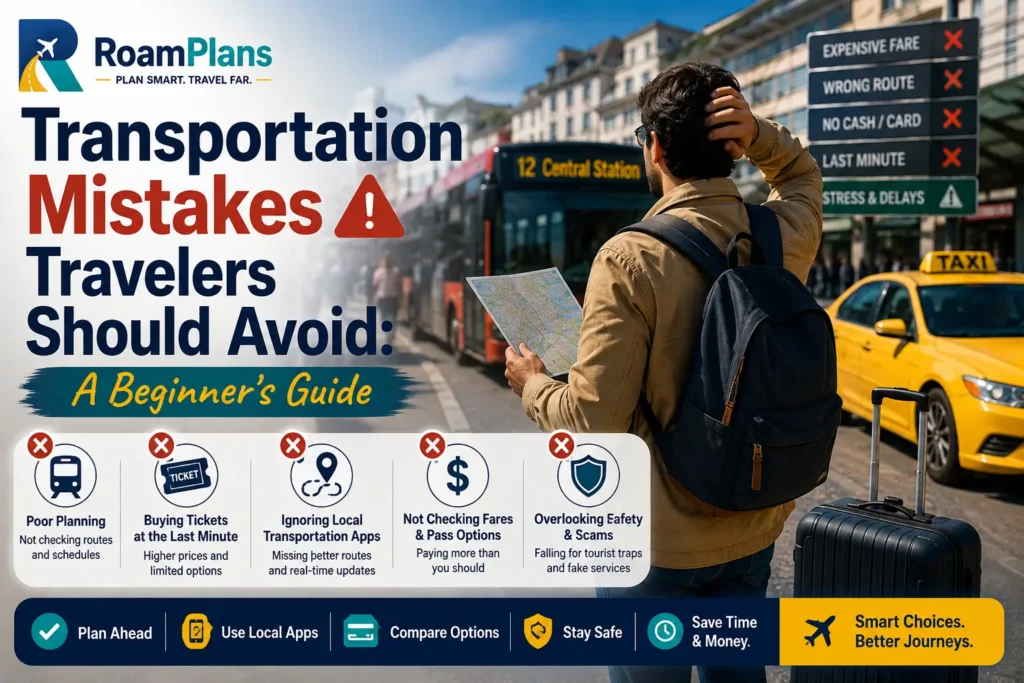
Common Transportation Mistakes Travelers Should Avoid
The most common mistakes happen before the traveler leaves.
Avoid these problems:
- Comparing ticket prices without adding transfer costs
- Booking the wrong station or airport
- Leaving too little time between separate tickets
- Ignoring luggage limits
- Choosing accommodation far from useful transport
The full Transportation Mistakes Travelers Should Avoid guide explains each error and how to prevent it.
Final Thoughts
A complete transport plan covers every movement, not just the longest ticket.
You do not need to use one type of transport for the whole trip. A train may work between cities, public transport may suit daily travel, and a taxi may be best for an early airport transfer.
The best plan is the one that fits the traveler, route, budget, and time available. Save all key information offline, leave extra time around important connections, and keep one realistic backup for each major stage.