Complete Train Travel Guide for Beginners
Train travel can be one of the easiest ways to move ↗ between cities. Stations are often close to city centers, luggage rules may be simpler than air travel, and many routes let you avoid traffic and airport transfers.
However, taking a train for the first time can feel confusing. You may need to choose the correct station, ticket type, seat, platform, carriage, and connection. Some trains require reservations, while others allow passengers to board with a flexible ticket.
When I plan a train trip, I check the full route before looking at fares. I confirm the exact stations, total travel time, number of changes, luggage rules, and transport from the final station to my accommodation.
This complete train travel guide for beginners explains how to research routes, choose the right train, compare tickets, book seats, and prepare for the trip.
Start with the exact departure and arrival stations. Compare the full hotel-to-hotel journey, choose a ticket valid for your train, and book a seat if required. Save the usable ticket offline, check any validation or check-in instructions, then match the departure board, platform, carriage and seat before boarding. Keep a backup for the final connection to your accommodation.
Train systems, ticket conditions, luggage limits, station procedures, and passenger rights differ by country and operator. Confirm final details through the official rail company or transport authority before booking.
Is Train Travel Right for Your Trip?

Train travel works well for many routes, but it is not always the best choice.
Compare the route, price, time, luggage, station location, and final connection before booking.
When Train Travel Works Well
A train may suit your trip when:
- ✓Stations are near city centers
- ✓The route is direct
- ✓Several departures are available
- ✓You do not want to drive
- ✓Airport transfers would take too long
- ✓You are carrying manageable luggage
- ✓Parking would be expensive
- ✓The route offers useful scenery
- ✓You want more movement than a bus allows
Train travel can be especially useful during a multi-city trip. You may leave from one city center and arrive close to your next hotel without using an airport.
When Train Travel May Not Work Well
A train may be less useful when:
- ✓The destination has no nearby station
- ✓The route needs several changes
- ✓Tickets are very expensive
- ✓The final station is far from your accommodation
- ✓You have too much luggage to carry
- ✓Service is limited at your arrival time
- ✓A direct bus is much easier
- ✓A rental car is needed after arrival
- ✓Engineering work affects the route
Do not choose a train only because the main travel time looks short.
Add:
- ✓Travel to the departure station
- ✓Waiting time
- ✓Connections
- ✓Travel from the final station
- ✓Possible taxi or bus costs
The guide How to Choose the Best Transportation for Your Trip ↗ gives a wider method for comparing trains with other options.
Main Types of Trains
Train names differ between countries, but most services fit into a few main groups.
Knowing the difference helps you choose the right ticket and arrival time.
High-Speed Trains
High-speed trains connect major cities over longer distances.
They may offer:
- ✓Shorter travel times
- ✓Reserved seats
- ✓Fewer stops
- ✓Food service
- ✓Charging points
- ✓First and standard classes
High-speed trains often require a ticket for one fixed service. Prices may rise closer to departure.
Check whether the fare includes a seat reservation.
Intercity Trains
Intercity trains connect cities and larger towns.
They may be slower than high-speed trains but can still offer:
- ✓Comfortable seating
- ✓Luggage storage
- ✓Reserved seats
- ✓Food or drink service
- ✓Direct city-center routes
Some intercity tickets are flexible, while others only work on one train.
Regional Trains
Regional trains connect smaller cities, towns, and rural areas.
They often:
- ✓Stop more frequently
- ✓Take longer
- ✓Use unreserved seating
- ✓Have lower fares
- ✓Connect with local services
Regional trains may not require advance booking, but busy routes can still become crowded.
Local and Commuter Trains
Local trains serve cities, suburbs, and nearby areas.
They may use:
- ✓Transport cards
- ✓Contactless payment
- ✓Mobile tickets
- ✓Zone fares
- ✓Time-based tickets
Seats are usually not reserved.
These trains can be useful for airport transfers, hotel access, and day trips.
Metro and Subway Trains
Metro and subway systems are built for city travel.
They usually offer:
- ✓Frequent service
- ✓Short distances
- ✓Several city stops
- ✓No seat reservations
- ✓Local transport fares
For the metro or bus connection before or after your main train, use our guide to using public transportation abroad ↗. Local fares, validation and tap-out requirements may differ from the intercity ticket.
International Trains
International trains cross national borders.
Before booking, check:
- ✓Passport rules
- ✓Visa requirements
- ✓Border checks
- ✓Ticket conditions
- ✓Luggage rules
- ✓Arrival station
- ✓Local time differences
Some border checks happen before boarding. Others take place during the trip or after arrival.
Overnight Trains
Overnight trains run during sleeping hours.
They may offer:
- ✓Standard seats
- ✓Reclining seats
- ✓Shared sleeping compartments
- ✓Private compartments
- ✓Beds
- ✓Washbasins
- ✓Showers on selected services
The cheapest ticket may include only a normal seat. Check the accommodation type before paying.
Scenic Trains
Scenic trains focus on views and tourism.
They may include:
- ✓Panoramic windows
- ✓Reserved seats
- ✓Special routes
- ✓Limited daily departures
- ✓Higher fares
- ✓Seasonal schedules
Some scenic routes are regular public services, while others use special tourist trains.
How to Find the Right Train Route?
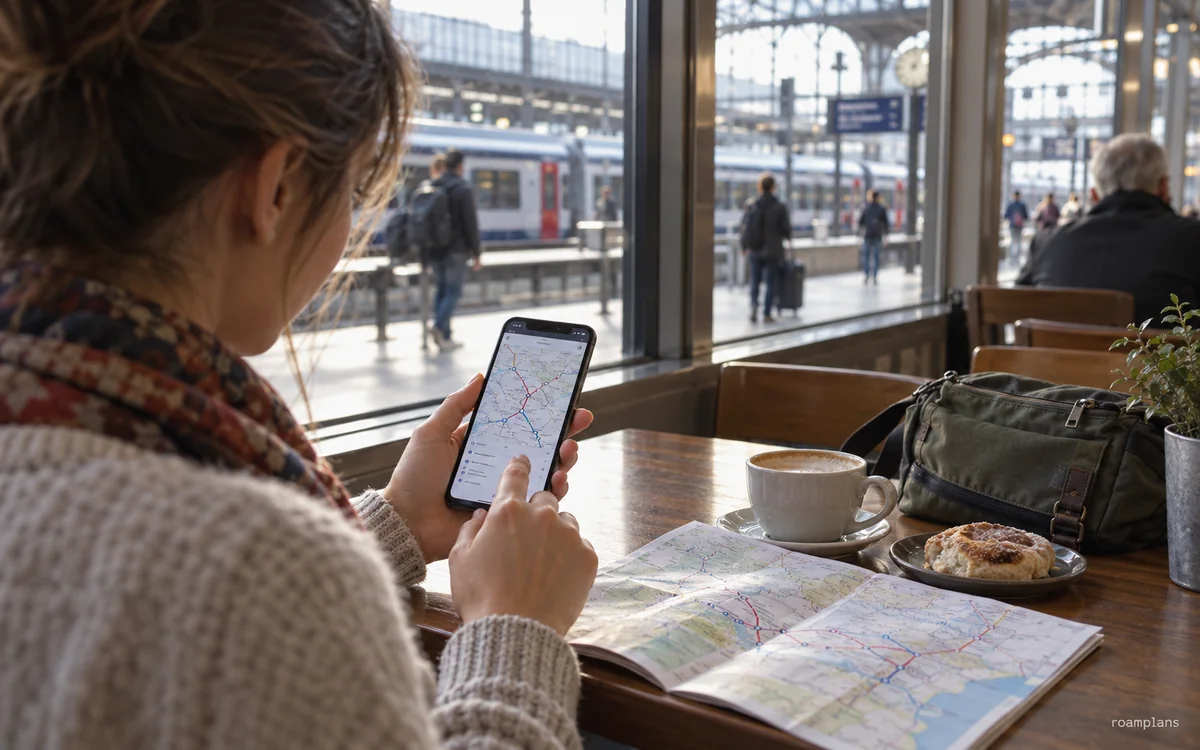
Start with the exact places you need to travel between.
Do not search by country or city alone when several stations are available.
Identify the Exact Starting Point
Your train route may begin from:
- ✓A city-center station
- ✓An airport station
- ✓A suburban station
- ✓A small regional station
- ✓A station near your hotel
Check:
- ✓Distance from your accommodation
- ✓Local transport to the station
- ✓Station opening hours
- ✓Lift access
- ✓Expected traffic
- ✓Taxi availability
A cheaper train from a distant station may cost more after the transfer is added.
Identify the Exact Arrival Point
Your train may arrive at:
- ✓The main city station
- ✓A suburban terminal
- ✓An airport
- ✓A station outside the center
- ✓A smaller town near the destination
Check the route from the final station to your accommodation.
Look for:
- ✓Metro or bus connections
- ✓Taxi ranks
- ✓Ride-app pickup areas
- ✓Walking distance
- ✓Final local service time
- ✓Hotel check-in hours
Use Official Train Sources
Official train websites and apps are usually the best place to confirm:
- ✓Timetables
- ✓Station names
- ✓Platform changes
- ✓Ticket conditions
- ✓Service alerts
- ✓Luggage rules
- ✓Seat reservations
- ✓Refund rules
Third-party booking sites can help compare routes, but confirm the service with the official operator before travel.
Search the Full Route
A full route search should show:
- ✓Departure station
- ✓Arrival station
- ✓Departure time
- ✓Arrival time
- ✓Total travel time
- ✓Number of changes
- ✓Train operator
- ✓Train number
- ✓Ticket type
Check whether the arrival time is on the same day or the next day.
Compare More Than One Departure
Do not book the first result without comparing other times.
A later or earlier train may offer:
- ✓Fewer changes
- ✓Lower price
- ✓Better arrival time
- ✓Longer connection time
- ✓Easier station
- ✓Direct service
A slightly longer train may be easier if it removes a risky connection.
Direct Trains Vs Connecting Trains
A direct train takes you from the departure station to the arrival station without changing trains.
A connecting route requires one or more changes.
Benefits of a Direct Train
A direct train can offer:
- ✓Less confusion
- ✓Lower missed-connection risk
- ✓Easier luggage handling
- ✓Fewer platforms
- ✓More comfort for families
- ✓Simpler travel for beginners
A direct service may cost more, but it can be worth the extra price when the alternative requires several changes.
Benefits of a Connecting Route
A connecting route may offer:
- ✓Lower fare
- ✓More departure times
- ✓Access to smaller destinations
- ✓Better arrival time
- ✓More route choices
Connections can work well when stations are small and enough time is available.
What to Check Before Booking a Connection?
Check:
- ✓Time between trains
- ✓Number of platforms
- ✓Lift and stair access
- ✓Distance between platforms
- ✓Whether the station changes
- ✓Whether tickets are on one booking
- ✓What happens after a delay?
- ✓Whether the next train requires a reservation
A connection at the same station is usually easier than a transfer between two stations.
Same Ticket vs Separate Tickets
Check whether the journey is sold as a protected through-ticket or as separate contracts. One checkout, booking reference or email does not by itself guarantee connection protection. Ask the seller what happens if the first train is delayed, including whether rerouting is covered.
Separate tickets can be cheaper but may carry more risk.
If the first train is late, the next operator may not accept your separate ticket.
Before booking separate tickets, check:
- ✓Minimum connection time
- ✓Change rules
- ✓Refund rules
- ✓Later train prices
- ✓Backup accommodation
- ✓Final service of the day
How Much Connection Time Do You Need?
There is no single connection time that works for every station.
Allow more time when:
- ✓The station is large
- ✓You have heavy luggage
- ✓Platforms are far apart
- ✓A border check is involved
- ✓You need assistance
- ✓The first train often runs late
- ✓The tickets are separate
- ✓It is the final connection of the day
A longer connection may feel less efficient, but it gives you more room to recover from a delay. If the itinerary crosses borders or changes stations, our cross-border travel planning guide ↗ helps you account for documents and onward transport. A timetable connection is not a guarantee that a separate-ticket transfer will be protected.
How to Choose the Correct Train Station?
Many cities have more than one train station.
Some station names may also look very similar.
Before booking, confirm:
- ✓Full station name
- ✓City name
- ✓District
- ✓Station code
- ✓Street address
- ✓Local transport links
- ✓Distance from your hotel
Main Station Does Not Always Mean Best Station
The main station may not be closest to your hotel.
A smaller station may offer:
- ✓Shorter local transfer
- ✓Less walking
- ✓Easier pickup
- ✓Fewer crowds
- ✓Better connection to your accommodation
Compare all available stations.
Airport Train Stations
Some airports have:
- ✓One station for all terminals
- ✓Separate terminal stations
- ✓A station reached by shuttle
- ✓A station outside the airport
Check the terminal and walking route before booking.
Stations With Similar Names
Two stations may share the same city name but serve different areas.
Common differences include:
- ✓Central
- ✓North
- ✓South
- ✓East
- ✓West
- ✓Airport
- ✓Main
- ✓Old Town
Do not assume they are close.
Station Changes
Some routes require passengers to arrive at one station and leave from another.
Check:
- ✓Distance between stations
- ✓Local transport
- ✓Taxi time
- ✓Traffic
- ✓Luggage
- ✓Ticket needed for the transfer
Add enough time for the complete station change.
Train Ticket Types Explained
Train ticket names differ between operators, but the main conditions are often similar.
Read the rules before choosing the lowest fare.
Fixed-Train Tickets
A fixed ticket works only on a selected train.
It may include:
- ✓Specific date
- ✓Specific departure time
- ✓Specific train number
- ✓Reserved seat
These tickets can cost less but often have strict change rules.
Flexible Tickets
A flexible ticket may allow travel on several trains during a set period.
It can be useful when:
- ✓Your earlier travel may be delayed
- ✓You want more departure choices
- ✓Your plans are not fully fixed
Flexible tickets may cost more.
Refundable Tickets
A refundable ticket may allow full or partial repayment after cancellation.
Check:
- ✓Cancellation deadline
- ✓Refund fee
- ✓Original payment method
- ✓Processing time
- ✓Missed-train conditions
Refundable does not always mean a full refund.
Non-Refundable Tickets
These tickets often cost less.
They may offer no refund after:
- ✓Cancellation
- ✓Missed departure
- ✓Name error
- ✓Date error
Check every detail before paying.
Peak and Off-Peak Tickets
Some operators charge different fares based on travel time.
Peak periods may include:
- ✓Weekday mornings
- ✓Weekday evenings
- ✓Major holidays
- ✓Busy events
Off-peak tickets may not work during restricted times.
Single and Return Tickets
A single ticket covers one direction.
A return ticket covers both directions.
Check whether:
- ✓The return date is fixed
- ✓The return train is fixed
- ✓The return can be used within a period
- ✓Two single tickets cost less
Open Tickets
An open ticket may allow travel without selecting one exact service.
It may still have limits based on:
- ✓Date
- ✓Route
- ✓train type
- ✓peak period
- ✓operator
Mobile and Paper Tickets
Tickets may be issued as:
- ✓QR code
- ✓Barcode
- ✓PDF
- ✓App ticket
- ✓Paper ticket
- ✓Transport card
Check whether the ticket must be:
- ✓Downloaded
- ✓Printed
- ✓Activated
- ✓Collected
- ✓Validated
Save mobile tickets offline before reaching the station.
Reserved and Unreserved Seats
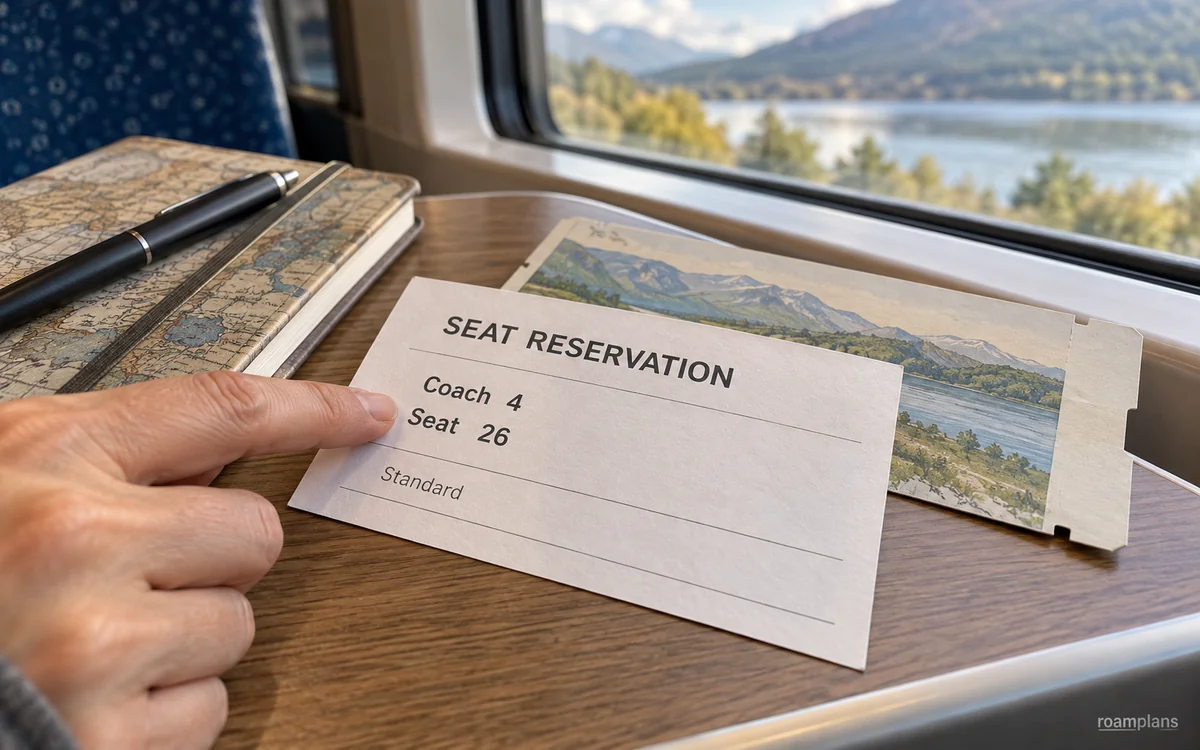
A train ticket does not always include a seat.
This is one of the most common points of confusion for beginners.
Reserved Seats
A reserved seat gives you:
- ✓Carriage number
- ✓Seat number
- ✓Travel date
- ✓Selected train
Reservations may be:
- ✓Included
- ✓Optional
- ✓Required
- ✓Charged separately
A reservation can be useful during busy periods or long trips.
Unreserved Seats
With unreserved seating, you can use any available seat in the correct class.
You may need to stand when the train is crowded.
Arrive earlier when:
- ✓Traveling during rush hour
- ✓Using a popular regional route
- ✓Carrying large luggage
- ✓Traveling with children
- ✓The train begins at your station
Mandatory Reservations
Some high-speed, international, scenic, and overnight trains require a seat or sleeping reservation.
A rail pass may not include this reservation.
Check before boarding.
Optional Reservations
An optional reservation can help when you want:
- ✓A window seat
- ✓Seats together
- ✓A table
- ✓A quiet area
- ✓A seat near luggage
- ✓A specific carriage
Seat Direction and Location
Some booking systems let you choose:
- ✓Forward-facing seat
- ✓Backward-facing seat
- ✓Window
- ✓Aisle
- ✓Table
- ✓Quiet carriage
- ✓Family area
- ✓Accessible seat
Seat direction can change if the train reverses during the route.
Train Classes
Many trains offer standard and first-class tickets.
Some operators use other names, but the main difference is usually comfort and service.
Standard Class
Standard class may include:
- ✓Normal seating
- ✓Luggage storage
- ✓Charging points
- ✓Wi-Fi on selected trains
- ✓Food available for purchase
It is usually the lower-cost choice.
First Class
First class may offer:
- ✓More seat space
- ✓Fewer passengers
- ✓Wider seats
- ✓Added food or drinks
- ✓Lounge access
- ✓Flexible ticket terms
Benefits differ between operators.
Do not pay more without checking what is included on the exact train.
Is First Class Worth It?
First class may be useful when:
- ✓The route is long
- ✓You need to work
- ✓Standard class is crowded
- ✓A meal is included
- ✓The fare difference is small
- ✓You need more personal space
Standard class is often enough for short routes.
How to Book Train Tickets?
Book through the official operator where possible.
This can make ticket changes, refunds, and service updates easier.
Information Needed for Booking
You may need:
- ✓Passenger name
- ✓Travel date
- ✓Departure station
- ✓Arrival station
- ✓Travel class
- ✓Seat choice
- ✓Discount card
- ✓Passport details
- ✓Contact information
Enter names exactly as required.
Check the Final Booking Screen
Before payment, confirm:
- ✓Correct date
- ✓Correct local time
- ✓Correct stations
- ✓Number of passengers
- ✓Train number
- ✓Seat
- ✓Ticket conditions
- ✓Luggage
- ✓Total price
- ✓Payment currency
Save the Confirmation
After booking:
- ✓Download the ticket
- ✓Save it offline
- ✓Screenshot key details
- ✓Add the trip to your calendar
- ✓Save the operator contact
- ✓Record the booking reference
Do not depend on email or mobile data at the station.
Check Whether Identification Is Needed
Some tickets are linked to:
- ✓Passenger name
- ✓Passport
- ✓National ID
- ✓Discount card
- ✓Rail pass
Carry the required document.
Avoid Booking the Wrong Date
Be careful with:
- ✓Overnight trains
- ✓Services after midnight
- ✓Different date formats
- ✓Time zones
- ✓Return dates
A train leaving at 12:30 a.m. departs on the new calendar day.
Rail Passes vs Individual Train Tickets
A rail pass allows travel across a selected network, country, or group of countries during a set period. Individual tickets cover specific journeys.
A rail pass can offer flexibility, but it is not always the cheaper choice.
Before buying one, compare the pass price with the cost of the actual journeys in your plan.
When a Rail Pass May Work Well
A rail pass may suit your trip when:
- ✓You plan several long train journeys
- ✓Your travel dates may change
- ✓You want flexible departure times
- ✓The pass covers most of your route
- ✓Individual fares are expensive
- ✓You plan to visit several cities
- ✓You prefer making fewer separate bookings
A flexible pass can be useful during a multi-city trip, but its value depends on the routes you will use.
When Individual Tickets May Cost Less
Individual tickets may work better when:
- ✓You are taking only one or two trains
- ✓Your dates are fixed
- ✓Advance fares are available
- ✓Regional tickets are inexpensive
- ✓The pass does not cover every operator
- ✓Reservation fees are high
- ✓Your trip includes buses, cars, or flights as well
A pass should not be purchased only because it appears simpler.
Check What the Pass Covers
A rail pass may cover:
- ✓Selected national trains
- ✓Regional trains
- ✓Intercity services
- ✓Cross-border routes
- ✓Some ferries
- ✓Local transport in limited areas
It may not cover:
- ✓Private rail companies
- ✓Metro systems
- ✓Airport express trains
- ✓Scenic tourist services
- ✓Sleeper cabins
- ✓Mandatory reservations
Read the coverage map and operator list before paying.
Seat Reservation Fees
Some trains require an added reservation even when the rail journey is covered by the pass.
Reservation charges may apply to:
- ✓High-speed trains
- ✓International trains
- ✓Overnight trains
- ✓Scenic trains
- ✓Premium services
Add required reservations and supplements to the pass cost, but do not add a charge twice if it is already included. For a European example, Interrail’s reservation guidance ↗ distinguishes the pass from additional seat reservations and explains that most high-speed and night trains require reservations.
Planning Japan instead? Use our Japan Rail Pass comparison ↗ for that product’s specific coverage and route calculations rather than applying European pass rules.
Travel Days and Validity Periods
Rail passes may be valid for:
- ✓Consecutive days
- ✓A selected number of travel days
- ✓One country
- ✓Several countries
- ✓A fixed route
- ✓A regional network
A travel day may follow local time and end at midnight. Check how overnight trains are counted.
Compare the Full Cost
Use a table before deciding:
| Cost item | Rail pass | Individual tickets |
|---|---|---|
| Main purchase price | ||
| Seat reservations | ||
| Sleeper supplements | ||
| Local transport not covered | ||
| Airport train | ||
| Refund or change flexibility | ||
| Final cost |
Choose the option that fits your real route rather than the one with the broadest coverage.
How Early Should You Book Train Tickets?
The best booking time depends on the route, operator, season, and ticket type.
Some regional trains keep the same fare and do not need early booking. High-speed, international, scenic, and overnight trains may have limited seats or lower advance fares.
Consider Booking Earlier When
Book earlier when:
- ✓The route is popular
- ✓You are traveling during a holiday
- ✓You need seats together
- ✓You want a sleeper cabin
- ✓The train has mandatory reservations
- ✓You are traveling with a group
- ✓A major event is taking place
- ✓Only a few trains run each day
- ✓You need accessible assistance
Early booking can give you more seat and timetable choices.
You May Not Need Early Booking When
Advance booking may be less necessary when:
- ✓Regional trains run frequently
- ✓Tickets have fixed prices
- ✓Seats are unreserved
- ✓You want flexibility
- ✓The route has many daily departures
- ✓The operator allows easy same-day purchase
Even when you plan to buy later, learn how the ticket system works before reaching the station.
Check the Booking Release Date
Train tickets may become available a set number of weeks or months before travel.
The release date can change because of:
- ✓Seasonal timetable updates
- ✓Engineering work
- ✓Holiday schedules
- ✓International coordination
- ✓Operator changes
A missing train does not always mean the service is sold out. It may not have been released yet.
Avoid Booking Too Early Without Checking the Full Plan
Before buying a fixed ticket, confirm:
- ✓Accommodation dates
- ✓Arrival time from the previous destination
- ✓Station location
- ✓Hotel check-in time
- ✓Local transport after arrival
- ✓Connection risk
A low advance fare may become useless if another part of the trip changes.
How to Read a Train Schedule?
A train schedule gives more information than the departure and arrival time.
Read every part before booking.
Departure Time
Train times normally use local time.
Check:
- ✓Morning or evening
- ✓12-hour or 24-hour format
- ✓Date
- ✓Day of the week
- ✓Time zone
- ✓Overnight departure
A service at 00:30 leaves shortly after midnight on the new date.
Arrival Time
Check whether the train arrives:
- ✓On the same day
- ✓After midnight
- ✓The next morning
- ✓In another time zone
Late arrival may affect hotel check-in and local transport.
Train Number
The train number helps identify the correct service.
Several trains may leave for the same city within a short period.
Match:
- ✓Train number
- ✓Departure time
- ✓Destination
- ✓Operator
Final Destination
Station boards may display the train’s final destination rather than your stop.
For example, your train may stop in your city but continue to another country or region.
Know the final destination shown on the board.
Number of Changes
The schedule should show:
- ✓Connection station
- ✓Arrival time
- ✓Next departure time
- ✓Platform where available
- ✓Total connection time
Check whether a station change is required.
Service Notes
Look for notes about:
- ✓Reservation requirements
- ✓Engineering work
- ✓Replacement buses
- ✓Limited service
- ✓Weekend changes
- ✓Border checks
- ✓Bicycle restrictions
- ✓First-class availability
Do not ignore small symbols or notes beside the service.
Platform Information
The platform may appear:
- ✓During booking
- ✓On the day of travel
- ✓Shortly before departure
- ✓Only on station displays
Platform numbers can change. Check again after arriving.
Preparing for the Train Station
Good station preparation reduces rushing and missed trains.
Confirm the Station Address
Save:
- ✓Full station name
- ✓Street address
- ✓Map location
- ✓Main entrance
- ✓Local transport route
- ✓Taxi drop-off point
Large stations may have several entrances. One entrance may be closer to your platform than another.
Plan How You Will Reach the Station
Check:
- ✓Walking time
- ✓Metro or bus route
- ✓Traffic
- ✓Taxi availability
- ✓Parking
- ✓Early-morning service
- ✓Weekend schedule
Add extra time for unfamiliar routes.
Check Station Facilities
Useful facilities may include:
- ✓Ticket office
- ✓Ticket machines
- ✓Toilets
- ✓Waiting area
- ✓Luggage storage
- ✓Food shops
- ✓Lift access
- ✓Assistance desk
- ✓Information desk
Smaller stations may have limited staff or no indoor waiting area.
Download the Ticket Before Arrival
Save your ticket:
- ✓In the official app
- ✓As a PDF
- ✓As a screenshot where accepted
- ✓In your phone wallet
- ✓As a printed copy where required
Make sure the barcode or QR code is clear.
Charge Your Phone
Before leaving for the station:
- ✓Charge your phone
- ✓Carry a battery bank
- ✓Save the ticket offline
- ✓Save the hotel address
- ✓Save the operator contact
- ✓Screenshot the route
Do not rely on station Wi-Fi.
Keep Documents Easy to Reach
You may need:
- ✓Train ticket
- ✓Passport
- ✓National ID
- ✓Rail pass
- ✓Seat reservation
- ✓Discount card
- ✓Visa documents
Keep them in a secure but easy-to-reach place.
Check for Service Updates
Before leaving your accommodation, check:
- ✓Train status
- ✓Delays
- ✓Cancellations
- ✓Platform changes
- ✓Replacement transport
- ✓Weather
- ✓Engineering work
Use the official operator’s website or app.
How Early Should You Arrive at the Station?
Arrival time depends on the station and service.
You may need more time for a large international station than for a small regional stop.
Arrive Earlier When
Allow extra time when:
- ✓The station is unfamiliar
- ✓You need to collect a ticket
- ✓Security checks are used
- ✓Passport checks are required
- ✓The station is large
- ✓You have heavy luggage
- ✓You need assistance
- ✓You are traveling with children
- ✓Your train is the final service of the day
You May Need Less Time When
Less time may be enough when:
- ✓The station is small
- ✓You already have the ticket
- ✓There are no security checks
- ✓The platform is easy to find
- ✓You use the station often
- ✓The train is a frequent local service
Avoid arriving at the final minute. Train doors or ticket gates may close before the listed departure time. Check the operator’s boarding cutoff separately from its recommended arrival time; allow time for ticket collection, security, border checks and any assistance arrangements where required.
Finding the Correct Platform
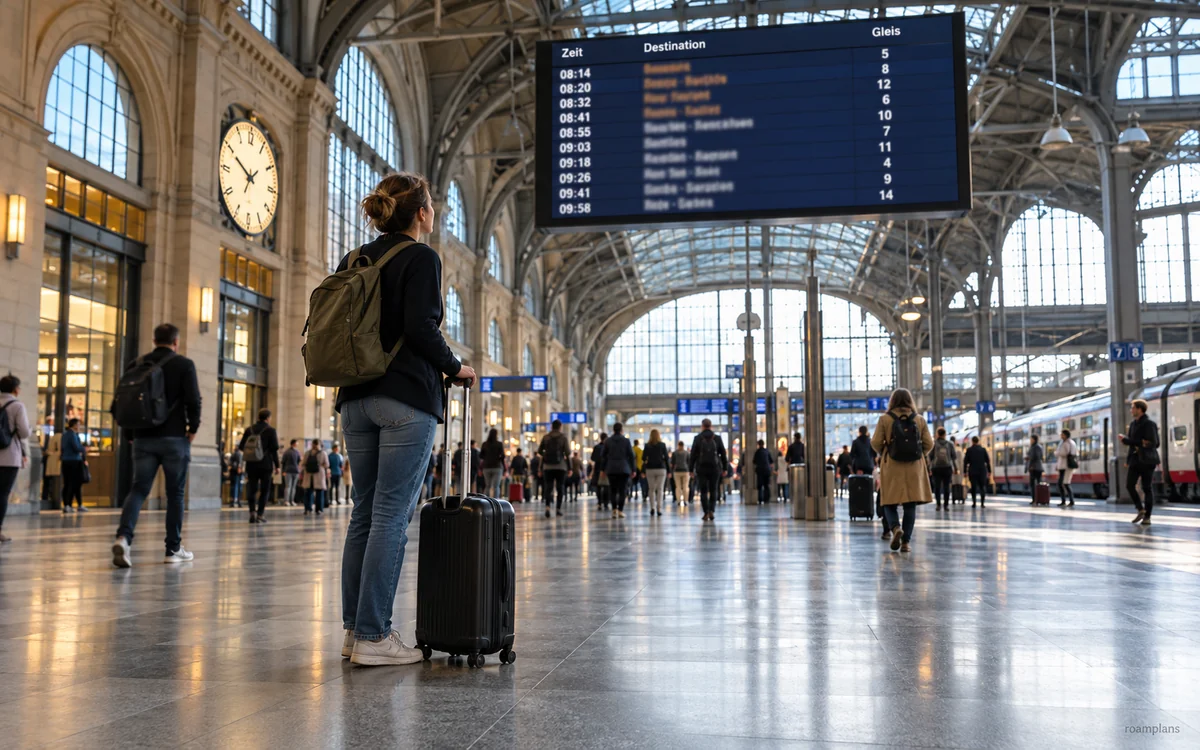
After entering the station, look for the main departure board.
Match your booking with:
- ✓Departure time
- ✓Train number
- ✓Final destination
- ✓Operator
- ✓Platform
Platform May Appear Late
Some stations show the platform only shortly before departure.
Wait near the main board where you can see updates.
Do not follow another passenger without checking your own train.
Platform Changes
Platforms can change because of:
- ✓Delays
- ✓Track problems
- ✓Operational needs
- ✓Engineering work
- ✓Another late train
Watch the board and listen for announcements.
Platform Sections
Long platforms may be divided into sections, such as:
- ✓A, B, and C
- ✓Zones 1 to 5
- ✓Front, middle, and rear
Your carriage may stop in a specific section.
Position yourself near the correct area before the train arrives.
Finding Your Train Carriage and Seat
Reserved tickets normally show a carriage and seat number.
Carriage Number
The carriage number may appear:
- ✓On the train door
- ✓Near the window
- ✓On an electronic display
- ✓On the platform information board
Check the number before boarding.
Seat Number
Seat numbers may be shown:
- ✓Above the seat
- ✓On the seat edge
- ✓On an electronic panel
- ✓Beside the window
Confirm that you are in the correct class and carriage.
Coach Order
Some station displays show the expected order of carriages.
This can help you stand near the correct part of the platform.
The order may still change, so check the train after it arrives.
Finding an Unreserved Seat
For unreserved seating:
- ✓Board the correct class
- ✓Check for reservation displays
- ✓Avoid seats marked for another passenger
- ✓Keep aisles clear
- ✓Do not place bags on seats during busy periods
Some seats may be reserved only for part of the route.
Train Luggage Rules
Train luggage rules can be more flexible than airline rules, but limits still apply.
Check the operator’s policy before travel.
Common Storage Areas
Luggage may be stored:
- ✓Above the seat
- ✓Under the seat
- ✓At the end of the carriage
- ✓In a central rack
- ✓In a dedicated luggage area
Large suitcases may not fit above the seat.
Number and Size of Bags
An operator may limit:
- ✓Number of bags
- ✓Total weight
- ✓Bag dimensions
- ✓Oversized items
- ✓Bicycle space
- ✓Sports equipment
The rules may differ between regional, high-speed, and international trains.
Keep Valuables With You
Keep these items near your seat:
- ✓Passport
- ✓Money
- ✓Phone
- ✓Laptop
- ✓Camera
- ✓Medicines
- ✓Booking documents
Do not leave valuable items in a large bag at the end of the carriage.
Label Large Bags
Add your:
- ✓Name
- ✓Phone number
- ✓Email address
Do not place your full home address where it can be seen easily.
Avoid Blocking Walkways
Keep luggage away from:
- ✓Doors
- ✓Aisles
- ✓Emergency exits
- ✓Accessible spaces
- ✓Stair areas
Staff may ask you to move it.
Bicycles and Large Equipment
Bicycles, skis, surfboards, and other large items may require:
- ✓Advance reservation
- ✓Separate ticket
- ✓Specific carriage
- ✓Packing
- ✓Size limit
Do not arrive with large equipment without checking the rules.
Luggage During Connections
When changing trains, you are normally responsible for moving your own luggage.
Plan more connection time when:
- ✓You have large bags
- ✓Lifts are limited
- ✓Platforms are far apart
- ✓A station change is required
Boarding the Train
Boarding is usually simple once you have found the correct platform and carriage.
Let Passengers Leave First
Stand to the side of the doors and allow passengers to exit.
This creates more space and helps you board safely.
Check the Train Before Entering
Confirm:
- ✓Train number
- ✓Destination
- ✓Carriage class
- ✓Carriage number
- ✓Departure time
Do not board only because the train is on your platform.
Load Luggage Quickly and Safely
Move bags away from the door after boarding.
Place large luggage in the correct storage area and smaller bags near your seat.
Find Your Seat
If your seat is reserved:
- ✓Match the carriage
- ✓Match the seat number
- ✓Check window or aisle
- ✓Keep the ticket available
If another passenger is in your seat, show the reservation calmly. Ask staff for help if the issue is not resolved.
Keep the Ticket Accessible
Tickets may be checked:
- ✓At the station gate
- ✓On the platform
- ✓After boarding
- ✓Several times during an international trip
Do not pack the ticket inside a large suitcase.
Changing Trains
Train changes require more attention than direct journeys.
Check the Next Train Before Arrival
Before reaching the connection station, check:
- ✓Next departure time
- ✓Train number
- ✓Final destination
- ✓Platform
- ✓Delay status
The next train’s final destination may differ from your own stop.
Follow Station Signs
After leaving the first train, follow signs for:
- ✓Platforms
- ✓Connections
- ✓Departures
- ✓Main hall
- ✓Metro or local transport
Avoid leaving the station unless the connection requires it.
Watch for Platform Changes
The platform shown during booking may change.
Check the station board after arrival.
Do Not Stop for Food Before Finding the Platform
Find the next platform first.
Buy food or use the toilet only after confirming:
- ✓Platform
- ✓Departure time
- ✓Walking distance
- ✓Boarding time
If the First Train Is Delayed
Check whether:
- ✓The next train is also delayed
- ✓Your ticket works on a later service
- ✓Staff can rebook you
- ✓The connection will wait
- ✓A different route is available
Use the operator’s official app or ask staff.
Separate Tickets
When using separate tickets, contact the next operator as soon as a delay becomes likely.
A separate ticket may not be replaced automatically.
Station Changes
If the connection requires another station:
- ✓Follow the saved route
- ✓Check local transport
- ✓Allow for traffic
- ✓Keep money or a payment card ready
- ✓Confirm the new station name
- ✓Save a taxi backup
A station change should be planned before the day of travel.
Overnight Train Travel
An overnight train lets you travel while you sleep. It may save daytime hours and reduce the need for one hotel night.
However, comfort and privacy depend on the ticket type. A standard seat is very different from a private sleeping compartment.
Check exactly what your booking includes before paying.
Common Overnight Train Options
Overnight trains may offer:
- ✓Standard seats
- ✓Reclining seats
- ✓Shared couchettes
- ✓Shared sleeping compartments
- ✓Private sleeping compartments
- ✓Single or double cabins
- ✓Family compartments
- ✓Premium cabins with private facilities
The names and layouts differ between operators.
Look at official photos or carriage plans before booking.
Seat vs Couchette vs Sleeper
Standard Seat
A standard seat is usually the lowest-cost option.
It may work for a shorter overnight route, but sleeping can be difficult because of:
- ✓Upright seating
- ✓Noise
- ✓Lighting
- ✓Other passengers
- ✓Regular stops
Couchette
A couchette usually provides a simple padded bunk in a shared compartment.
It may include:
- ✓Pillow
- ✓Sheet
- ✓Blanket
- ✓Shared washroom
- ✓Lockable compartment door
Privacy may be limited.
Sleeper Compartment
A sleeper compartment usually offers a proper bed and more space.
Depending on the service, it may include:
- ✓Bedding
- ✓Washbasin
- ✓Towels
- ✓Breakfast
- ✓Private toilet
- ✓Private shower
Check whether the compartment is private or shared with other passengers.
Shared and Private Compartments
A shared compartment costs less but may include unfamiliar passengers.
A private compartment may suit:
- ✓Couples
- ✓Families
- ✓Solo travelers who want privacy
- ✓Travelers carrying valuable items
- ✓People who need better sleep
Check whether booking one bed reserves the full compartment or only one space inside it.
Overnight Train Security
Keep important items close while sleeping.
Store these near your bed:
- ✓Passport
- ✓Money
- ✓Phone
- ✓Wallet
- ✓Medicines
- ✓Tickets
- ✓Electronics
Lock the compartment door where possible.
Use a small bag that can stay beside you rather than placing valuables in large luggage storage.
Border Checks During the Night
International overnight trains may include passport or customs checks.
Checks may happen:
- ✓Before boarding
- ✓At the border
- ✓Inside the compartment
- ✓Early in the morning
- ✓After arrival
Keep travel documents easy to reach.
Ask staff whether you need to remain awake for any part of the route.
Food and Water
Some overnight trains offer:
- ✓Dining car
- ✓Snack trolley
- ✓Included breakfast
- ✓Drinks for purchase
Others offer little or no food.
Carry enough water and a simple snack, especially when boarding late.
Preparing to Sleep
Useful items may include:
- ✓Earplugs
- ✓Eye mask
- ✓Light clothing layers
- ✓Small toiletries
- ✓Phone charger
- ✓Secure document pouch
Set an alarm before your stop, but also ask staff whether they provide a wake-up call.
What to Expect During the Train Ride
Train travel can feel different from flying or taking a coach.
You may be able to stand, move between carriages, use a dining area, or work at your seat.
Facilities differ by train type and operator.
Ticket Checks
Staff may check:
- ✓Ticket
- ✓Seat reservation
- ✓Passport
- ✓Rail pass
- ✓Discount card
- ✓Identification
Ticket checks may happen more than once on international routes.
Keep all documents available until you leave the final station.
Food and Drinks
Train food options may include:
- ✓Dining carriage
- ✓Café bar
- ✓Snack trolley
- ✓Vending machine
- ✓At-seat service
Regional trains may offer no food service.
Check before boarding and bring your own food when needed.
Avoid food with a strong smell in shared seating areas.
Toilets
Most long-distance trains have toilets, but local and older trains may have limited facilities.
Check whether accessible toilets are available if required.
Do not leave toilet visits until the train reaches a station because doors and facilities may be temporarily locked.
Wi-Fi and Mobile Service
Some trains provide free Wi-Fi, but the connection may be slow or unavailable in rural areas and tunnels.
Download before travel:
- ✓Tickets
- ✓Maps
- ✓Entertainment
- ✓Hotel address
- ✓Work files
- ✓Translation tools
Do not depend on onboard Wi-Fi for important booking information.
Charging Devices
Charging points may be available:
- ✓Beside the seat
- ✓Under the seat
- ✓Between seats
- ✓Inside sleeping compartments
Carry a battery bank because charging points may be broken or already in use. Save tickets and key station details before departure. Our navigation app guide ↗ explains offline preparation; an offline map is not a substitute for a live mobile ticket where the operator requires one.
Noise and Quiet Areas
Some trains have quiet carriages.
In a quiet area:
- ✓Keep calls short
- ✓Use headphones
- ✓Lower notification sounds
- ✓Speak softly
- ✓Avoid loud group conversations
Check whether your reserved seat is in a quiet, family, or standard carriage.
Following Your Route
Use station signs, onboard screens, announcements, or an offline map to follow progress.
Do not depend only on announcements because they may be difficult to hear or may not use your language.
Set an alarm before your stop on longer routes.
Leaving the Train
Before arrival:
- ✓Collect small items
- ✓Check under the seat
- ✓Remove charging cables
- ✓Put on outdoor clothing
- ✓Move large luggage closer when safe
- ✓Confirm the exit side
- ✓Check the next transport stage
Do not block doors too early.
Wait until the train is close to your station before moving large bags.
Train Delays and Cancellations
Train delays can affect hotel check-in, another train, a flight, or a planned activity.
Stay calm and use official information.
Check the Official Service Status
Use:
- ✓Operator app
- ✓Official website
- ✓Station display
- ✓Information desk
- ✓Onboard staff
- ✓Customer service number
A general map app may show a delay but may not explain rebooking rules.
Keep Your Ticket
Do not delete or throw away:
- ✓Original ticket
- ✓Seat reservation
- ✓Booking email
- ✓Delay notice
- ✓Replacement ticket
These may be needed for a refund or claim.
Ask Whether You Can Use Another Train
After a delay or cancellation, ask whether your ticket is valid on:
- ✓The next train
- ✓Another operator
- ✓A different route
- ✓A replacement bus
Do not assume you can board another service without permission.
Refunds and Compensation
Refund and compensation rules depend on:
- ✓Operator
- ✓Country
- ✓Route
- ✓Ticket type
- ✓Delay length
- ✓Cause of disruption
Keep:
- ✓Tickets
- ✓Receipts
- ✓Screenshots
- ✓Staff messages
- ✓Delay confirmation
Check the operator’s official passenger-rights page after travel.
Added Expenses
A delay may create added costs for:
- ✓Food
- ✓Taxi
- ✓Hotel
- ✓Replacement transport
- ✓Phone calls
Keep every receipt.
Do not assume the operator will repay all expenses. Check the conditions before making a costly booking where possible.
What to Do After a Missed Train Connection
A missed connection should be handled differently depending on whether the route was booked on one ticket or separate tickets.
Connection on One Ticket
If the first train is delayed:
- 1Check the official app.
- 2Speak to onboard or station staff.
- 3Ask which later train you can use.
- 4Request a new seat reservation where required.
- 5Keep the original ticket.
The operator may provide another route, but the process differs by service.
Connection on Separate Tickets
Separate tickets may offer less protection.
Contact the next operator before the second train leaves.
Ask whether you can:
- ✓Change the departure
- ✓Pay a change fee
- ✓Use a later service
- ✓Receive partial credit
You may need to buy a new ticket.
Final Train of the Day
Missing the final train can create a serious problem.
Ask staff about:
- ✓Replacement transport
- ✓Taxi arrangements
- ✓Nearby accommodation
- ✓Morning service
- ✓Ticket validity for the next day
Contact your hotel if arrival will be delayed.
Missed Connection Caused by the Traveler
You may receive no help when the train was missed because you:
- ✓Arrived late
- ✓Used the wrong station
- ✓Waited on the wrong platform
- ✓Left too little time between separate tickets
Ask staff about the lowest-cost available option rather than buying the first new ticket you see.
Train Travel Safety Tips
Train travel is generally straightforward, but travelers should protect documents, money, and luggage.
Keep Valuables Close
Keep these items with you:
- ✓Passport
- ✓Wallet
- ✓Phone
- ✓Laptop
- ✓Camera
- ✓Medicines
- ✓Keys
Do not place them in a suitcase stored far from your seat.
Watch Bags at Stations
Busy stations can be confusing.
Keep bags closed and close to your body while:
- ✓Reading departure boards
- ✓Buying tickets
- ✓Using machines
- ✓Boarding
- ✓Changing platforms
Avoid leaving luggage unattended.
Use Official Staff and Services
Ask for help from:
- ✓Uniformed staff
- ✓Official information desks
- ✓Police
- ✓Operator help points
Be careful with strangers offering to carry bags, sell tickets, or guide you to another platform.
Check the Train Before Boarding
Confirm:
- ✓Train number
- ✓Destination
- ✓Departure time
- ✓Carriage class
- ✓Operator
A train on the correct platform may still be the wrong service.
Stay Aware at Night
During late-night travel:
- ✓Wait in lit areas
- ✓Stay near other passengers
- ✓Keep bags secure
- ✓Avoid empty carriages where possible
- ✓Save the station exit route
- ✓Arrange final transport before arrival
Protect Personal Information
Do not display your passport, booking documents, or home address longer than needed.
Use a luggage label with basic contact information rather than a full home address.
Emergency Information
Save:
- ✓Local emergency number
- ✓Rail operator number
- ✓Hotel contact
- ✓Travel insurance details
- ✓Trusted contact
Know where emergency buttons or staff areas are located.
Common Train Travel Mistakes
Small errors can lead to missed trains, added fees, and stressful connections.
1. Booking the Wrong Station
Cities may have several stations with similar names.
Check the full station name, address, and map location.
2. Choosing the Wrong Date
This often happens with:
- ✓Trains after midnight
- ✓Overnight services
- ✓Different date formats
- ✓Return bookings
Confirm the date before payment.
3. Assuming a Ticket Includes a Seat
Some tickets allow travel but do not reserve a seat.
Check whether a reservation is included, optional, or required.
4. Ignoring Ticket Restrictions
A low fare may work only on one train.
Read:
- ✓Change rules
- ✓Refund rules
- ✓Time restrictions
- ✓Operator restrictions
5. Leaving Too Little Connection Time
Short changes can fail because of delays, large stations, stairs, or luggage.
Add more time for unfamiliar stations and separate tickets.
6. Going to the Wrong Platform Too Early
Platforms may change.
Keep checking the main departure board.
7. Following the City Name Only
Station boards may show the train’s final destination rather than your stop.
Know the final destination and train number.
8. Carrying Too Much Luggage
You may need to move every bag through stations and connections.
Pack only what you can manage safely.
9. Forgetting to Activate or Validate a Ticket
Some mobile, paper, regional, or pass-based tickets must be activated before use.
Check the instructions.
10. Depending on Mobile Internet
Stations and trains may have weak service.
Save tickets and route details offline.
11. Boarding the Wrong Carriage
Different parts of a train may:
- ✓Split later
- ✓Have different classes
- ✓Require reservations
- ✓Serve different destinations
Confirm the carriage before sitting down.
12. Ignoring the Final Local Connection
A train may arrive after buses and metros stop running.
Plan the route from the station to the hotel.
13. Buying a Rail Pass Without Comparing Prices
A rail pass may cost more after reservation fees are included.
Compare it with individual tickets first.
14. Leaving Valuables in Large Luggage
Keep important items near your seat.
15. Planning No Backup
Save a later train, bus, taxi, or nearby hotel for important routes.
More general booking errors are covered in Transportation Mistakes Travelers Should Avoid ↗.
Train Travel Checklist
Before Booking
- ✓Exact departure station checked
- ✓Exact arrival station checked
- ✓Direct and connecting routes compared
- ✓Door-to-door time calculated
- ✓Ticket restrictions read
- ✓Seat reservation checked
- ✓Train class compared
- ✓Luggage rules checked
- ✓Final local transport checked
- ✓Backup train identified
After Booking
- ✓Passenger name checked
- ✓Date and local time checked
- ✓Train number saved
- ✓Seat and carriage recorded
- ✓Ticket downloaded
- ✓Ticket saved offline
- ✓Booking reference saved
- ✓Operator app downloaded
- ✓Station address saved
- ✓Hotel address saved
One Day Before Travel
- ✓Service status checked
- ✓Engineering work checked
- ✓Weather checked
- ✓Station route checked
- ✓Departure time confirmed
- ✓Phone charged
- ✓Battery bank packed
- ✓Documents prepared
- ✓Food and water arranged
- ✓Backup route reviewed
At the Station
- ✓Departure board checked
- ✓Train number confirmed
- ✓Platform confirmed
- ✓Final destination confirmed
- ✓Carriage section found
- ✓Ticket kept ready
- ✓Passport kept ready
- ✓Platform changes monitored
- ✓Enough time left for boarding
- ✓Luggage kept secure
After Boarding
- ✓Carriage confirmed
- ✓Seat confirmed
- ✓Luggage stored safely
- ✓Valuables kept close
- ✓Connection details checked
- ✓Arrival stop monitored
- ✓Ticket kept accessible
- ✓Alarm set where needed
Before Leaving the Train
- ✓Phone collected
- ✓Charger removed
- ✓Documents checked
- ✓Bags counted
- ✓Seat area checked
- ✓Arrival platform checked
- ✓Hotel route opened
- ✓Next ticket prepared
Frequently Asked Questions
Choose the exact stations, compare direct and connecting routes, read the ticket rules, book the required seat, save the ticket offline, and arrive early enough to find the platform and carriage.
Not always. Some tickets include a seat, some offer it for an added fee, and others use unreserved seating. Check before booking.
It depends on the station and service. Arrive earlier for large stations, international trains, ticket collection, security checks, heavy luggage, or assistance.
Many trains allow large luggage, but size, weight, and storage rules differ. Check the operator’s policy and make sure you can move the bags yourself.
Advance fares can cost less on some high-speed and intercity routes. Regional trains may use fixed fares. Compare ticket conditions before booking early.
If the route is on one ticket, ask staff about the next valid service. With separate tickets, you may need to change or buy a new ticket.
A rail pass may save money for several long routes, but individual advance tickets can cost less. Include seat reservation fees when comparing.
Many operators accept mobile tickets, but some require printing, collection, activation, or validation. Follow the ticket instructions.
Match the departure time, train number, operator, final destination, platform, and carriage shown on your ticket and station display.
It can be safe when normal precautions are used. Keep valuables close, lock the compartment where possible, and use official staff for help.
Final Thoughts
Train travel can be simple once you know what to check.
Start with the exact stations, then compare direct routes, connections, ticket rules, seat options, luggage, and total travel time. Read the fare conditions before choosing the lowest price.
Save your ticket offline and reach the station with enough time to find the correct platform and carriage. During the trip, keep documents and valuables close, follow official service updates, and prepare for any connection before arrival.
A train can be a practical choice between city centers, but the full route still matters. Check how you will reach the first station and how you will travel from the final station to your accommodation.
Good preparation makes the first train trip easier and reduces the risk of avoidable booking and station errors.

Adnan Ahmed
RoamPlans AuthorTravel Planning Researcher & Editor
Adnan Ahmed is the travel planning researcher and editor behind RoamPlans. He creates clear, practical guides to help travelers compare destinations, plan routes, estimate costs, and avoid common trip-planning mistakes. His work combines careful source research, official travel information, and regular content reviews to keep each guide useful and current.
- ✓Destination Research
- ✓Budget Planning
- ✓Route Planning
- ✓Beginner Travel Guides

Turn This Guide into a Practical Trip Plan
Use the recommended Transportation Cost Calculator or explore more free RoamPlans tools.