International Driving Guide: Licenses, Rules, Insurance, and Safety
Driving in another country can give you more freedom during a trip. You can visit rural areas, small towns, beaches, national parks, and places that public transport may not reach.
However, international driving needs more preparation than normal local driving. Your home licence may not be enough. You may need an International Driving Permit, added insurance, safety equipment, or written permission to cross a border.
Road signs, speed limits, parking rules, toll systems, and driving sides can also differ from what you know.
Before I drive in another country, I check the licence rules, insurance terms, local road laws, and emergency number. I also save the main road signs and planned route offline.
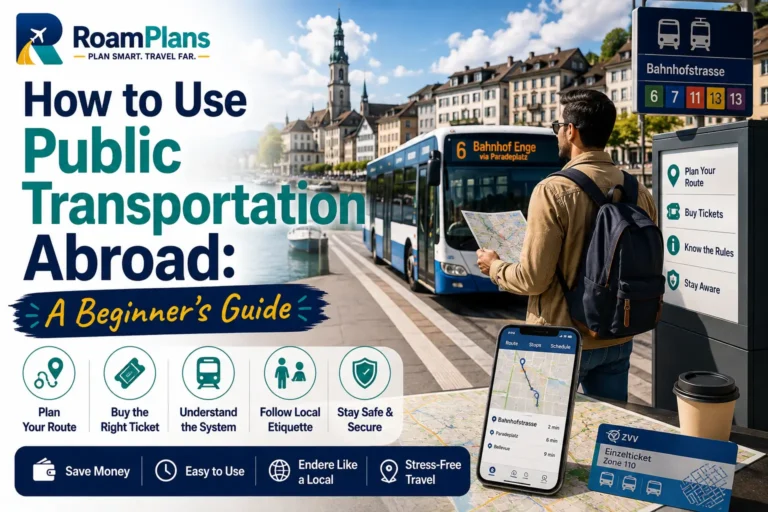
This international driving guide explains the documents, rules, insurance, and safety checks you should complete before driving abroad. First compare public transportation with a rental car ↗ to decide which parts of the trip actually need driving.
Driving laws differ by country, state, province, and region. Rental companies may also have rules that are stricter than local law. Check official government, road authority, insurance, and rental-company information for your exact destination before driving.
Key Takeaways
- ✓Check whether your home driver’s licence is accepted.
- ✓Find out whether you need an International Driving Permit.
- ✓Carry your original licence even when you have an IDP.
- ✓Confirm insurance before entering another country.
- ✓Learn the driving side, road signs, and main safety laws.
- ✓Check tolls, low-emission zones, parking, and border limits.
- ✓Save emergency and roadside-support numbers offline.
- ✓Never assume one country’s rules apply in another.
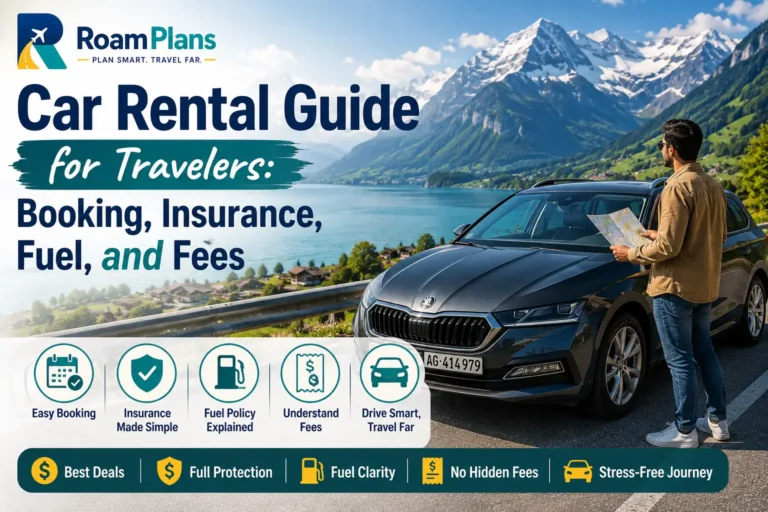
The Car Rental Guide for Travelers: Booking, Insurance, Fuel, and Fees ↗ explains deposits, fuel policies, rental charges, vehicle checks, and return steps.
Can You Use Your Home Driver’s Licence Abroad?

Your home driver’s licence may be accepted for short visits in some destinations.
However, acceptance depends on:
- ✓Country
- ✓Region
- ✓Licence language
- ✓Length of stay
- ✓Vehicle category
- ✓Driver age
- ✓Visa type
- ✓Rental-company policy
A licence that works in one country may not work in the next country on the same trip.
Check Licence Validity
Your licence should remain valid for the full driving period.
Check:
- ✓Expiry date
- ✓Correct name
- ✓Date of birth
- ✓Vehicle class
- ✓Restrictions
- ✓Photograph
- ✓Address where required
A licence that expires during the trip may not be accepted.
Licence Language
A licence written in a language that local police or rental staff cannot read may need:
- ✓International Driving Permit
- ✓Official translation
- ✓Certified translation
- ✓Local temporary permit
Do not depend on a personal translation.
Licence-Holding Period
Some rental companies require the licence to have been held for a minimum period.
This may be:
- ✓One year
- ✓Two years
- ✓Another fixed period
The rule may apply even when the driver is above the minimum age.
Temporary or Digital Licences
A temporary paper licence or digital licence may not be accepted abroad.
Check whether the destination and rental company require the physical original card.
Carry the original licence unless official guidance states otherwise.
Learner and Provisional Licences
Learner, provisional, or restricted licences may not be accepted for international driving.
A rental company may also refuse them.
Vehicle Categories
Your licence may allow only certain vehicles.
Check whether it covers:
- ✓Normal passenger car
- ✓Manual transmission
- ✓Motorcycle
- ✓Scooter
- ✓Campervan
- ✓Large van
- ✓Trailer
Do not drive a vehicle category that is not shown on your licence.
Length of Stay
A foreign licence may be valid only for a limited time.
Longer stays may require:
- ✓Local driving licence
- ✓Licence exchange
- ✓Driving test
- ✓Temporary permit
- ✓Local registration
Tourist rules may not apply after becoming a resident.
What Is an International Driving Permit?
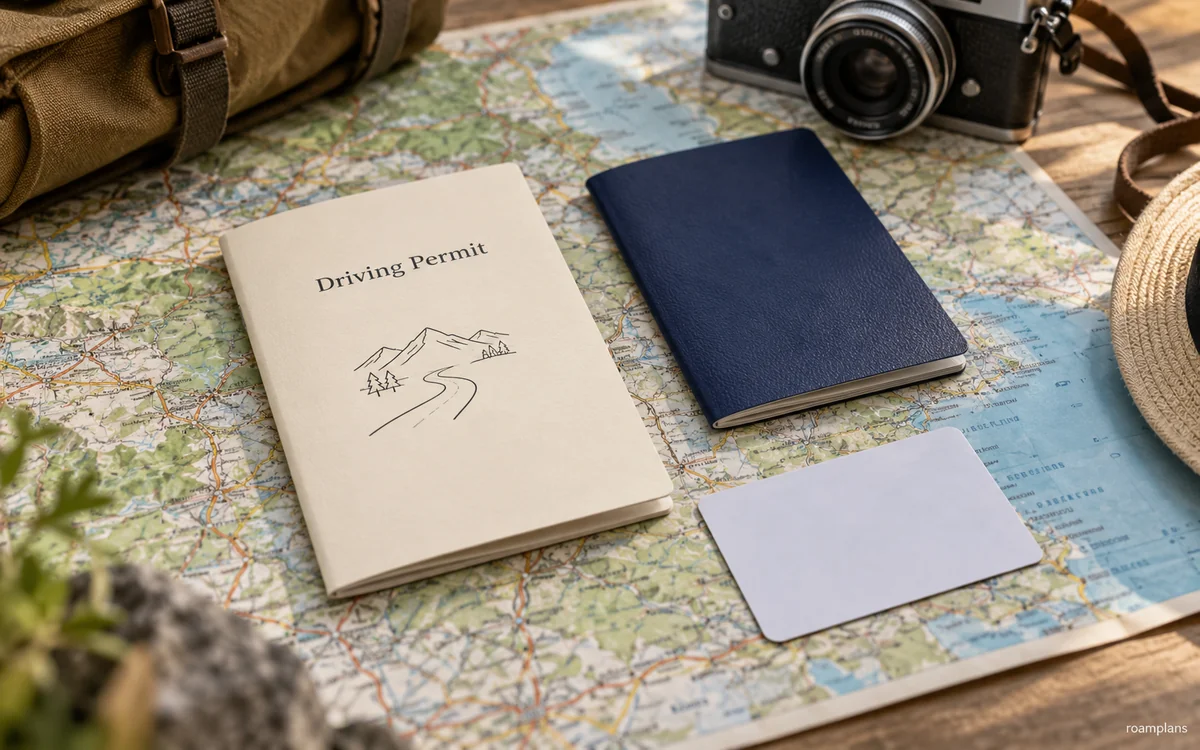
An International Driving Permit is a document that presents your licence information in a standard multilingual format.
It can help police, rental companies, and local authorities understand your driving details.
It is commonly called an IDP.
What an IDP Does?
An IDP may:
- ✓Translate licence information
- ✓Show the vehicle categories you can drive
- ✓Support your original licence
- ✓Meet a destination or rental-company requirement
What an IDP Does Not Do?
An IDP does not:
- ✓Replace your original driver’s licence
- ✓Give you a new driving qualification
- ✓Allow you to drive an unapproved vehicle
- ✓Remove local age rules
- ✓Replace insurance
- ✓Allow you to ignore road laws
- ✓Guarantee rental approval
Carry the IDP with your original licence.
IDP Validity
An IDP may have:
- ✓Issue date
- ✓Expiry date
- ✓Vehicle categories
- ✓Country-specific limits
The permit type matters as well as its expiry date. Different destinations recognize different convention formats, so an IDP is not automatically valid worldwide. GOV.UK’s IDP guidance ↗ is an example for UK licence holders; travelers with other licences should check their own authorized issuer and the destination authority.
For example, Tokyo police’s IDP guidance ↗ specifies the 1949 Geneva Convention format for Japan. Do not assume a different permit format works simply because it is called an IDP.
Check whether it remains valid for the full trip.
IDP Photographs and Details
The permit may show:
- ✓Full name
- ✓Date of birth
- ✓Photograph
- ✓Licence categories
- ✓Issue details
Make sure the information matches your home licence.
Fake International Licences
Be careful with websites selling an “international driver’s licence.”
A private document may not be legally valid.
Use only an authorized issuer recognized by your home country.
Warning signs may include:
- ✓Instant digital-only licence
- ✓No original licence required
- ✓Claim of worldwide validity
- ✓Very long validity period
- ✓No authorized issuer details
- ✓Promise that it replaces your home licence
Check the issuer through an official government source.
International Driving Permit Vs Driver’s Licence
Your home licence and IDP serve different purposes.
| Document | Main purpose |
|---|---|
| Home driver’s licence | Proves that you are legally licensed to drive |
| International Driving Permit | Translates and supports the home licence |
| Passport | Confirms identity and travel status |
| Rental agreement | Confirms permission to use a rented vehicle |
| Insurance certificate | Shows vehicle or driver protection |
| Vehicle registration | Identifies the vehicle and registered owner |
Original Licence
Your original licence is the main legal driving document.
An IDP cannot normally be used by itself.
International Driving Permit
The IDP helps local officials read your licence information.
It may also be required by law or rental policy.
Official Translation
Some destinations may accept or require an official licence translation instead of an IDP.
Check which document applies.
Local Temporary Licence
Some destinations may require foreign drivers to obtain a local temporary permit.
An IDP may not replace that process.
How to Check Whether You Need an IDP?
Do not rely on a general country list from an old travel article.
Rules can depend on nationality, licence type, visa, and length of stay.
Step 1: Check the Destination Government
Look for information from:
- ✓Transport ministry
- ✓Road authority
- ✓Police
- ✓Immigration office
- ✓Embassy
- ✓Consulate
Confirm whether your exact home licence is accepted.
Step 2: Check Your Home Government
Your home government may explain:
- ✓Where to obtain an IDP
- ✓Authorized issuers
- ✓Required documents
- ✓Valid permit types
- ✓Fraud warnings
Step 3: Check the Rental Company
The law may accept your licence, but the rental company may still require an IDP.
Ask the branch that will provide the vehicle.
Rules may differ between branches of the same company.
Step 4: Check Every Country on the Route
For a multi-country trip, check each country separately.
Do not assume permission in the pickup country covers:
- ✓Transit country
- ✓Border country
- ✓Ferry destination
- ✓Island
- ✓Final return country
Step 5: Check the Licence Language
An IDP may be helpful or required when your licence uses another script or language.
Step 6: Save Proof
Save official pages, emails, or rental confirmations offline.
This may help if staff are unsure at pickup.
Questions to Ask
Ask:
- ✓Is my home licence accepted?
- ✓Do I need an IDP?
- ✓Which IDP type is required?
- ✓Do I need an official translation?
- ✓How long may I drive as a visitor?
- ✓Does the rental company have a stricter rule?
- ✓Is the document accepted at border crossings?
Documents to Carry While Driving Abroad
Keep the main documents together, but protect them from theft.
Original Driver’s Licence
Carry the physical original unless official rules allow another form.
A photo on your phone may not be accepted.
International Driving Permit
Carry the IDP where required.
Keep it with the original licence.
Passport or Identity Document
You may need your passport for:
- ✓Police check
- ✓Border crossing
- ✓Rental pickup
- ✓Accident report
- ✓Hotel or ferry check
Some travelers prefer carrying a secure copy during normal trips, but local law may require the original.
Rental Agreement
A rental agreement confirms:
- ✓Approved driver
- ✓Vehicle
- ✓Rental period
- ✓Return location
- ✓Insurance
- ✓Border permission
- ✓Road restrictions
Keep a paper or offline digital copy.
Vehicle Registration
The vehicle should have official registration documents.
Know where they are stored.
Proof of Insurance
Carry the required insurance certificate or accepted digital proof.
Check whether it covers:
- ✓Current country
- ✓Transit countries
- ✓Vehicle type
- ✓Rental period
- ✓Approved drivers
Cross-Border Permission
A rental company may issue written permission for international borders.
This may include:
- ✓Approved countries
- ✓Added fee
- ✓Insurance certificate
- ✓Vehicle documents
- ✓Emergency number
Visa and Entry Documents
Border officials may check:
- ✓Passport
- ✓Visa
- ✓Entry stamp
- ✓Vehicle papers
- ✓Travel permission
Emergency Details
Save:
- ✓Local emergency number
- ✓Police number
- ✓Roadside assistance
- ✓Rental company
- ✓Insurance claim number
- ✓Embassy or consulate
- ✓Accommodation contact
Keep these details offline.
Document Checklist
| Document | Why it matters |
|---|---|
| Original driver’s licence | Proves legal driving qualification |
| IDP where required | Translates and supports the licence |
| Passport or ID | Confirms identity |
| Rental agreement | Shows permission to use the vehicle |
| Vehicle registration | Identifies the vehicle |
| Insurance proof | Confirms required cover |
| Border permission | Allows approved international travel |
| Emergency contacts | Helps after an accident or breakdown |
Keep Copies
Store secure copies in:
- ✓Encrypted cloud storage
- ✓Travel document app
- ✓Email
- ✓Locked phone folder
Do not leave all documents inside an unattended vehicle.
Driver Age and Licence-Holding Requirements
Legal driving age and rental age are not always the same.
A country may allow driving at one age, while a rental company sets a higher minimum.
Minimum Legal Driving Age
The legal driving age depends on:
- ✓Country
- ✓Vehicle type
- ✓Licence category
- ✓Local region
Check the rule for the exact vehicle.
Rental Minimum Age
Rental companies may require drivers to be:
- ✓21
- ✓23
- ✓25
- ✓Another age
The rule may differ by vehicle class.
Young-Driver Surcharge
A driver below a set age may pay an added daily fee.
This can apply to:
- ✓Main driver
- ✓Added driver
- ✓Premium vehicle
- ✓Cross-border rental
Add the full surcharge to the trip cost.
Vehicle Limits for Younger Drivers
Younger drivers may be unable to rent:
- ✓Luxury vehicles
- ✓Sports cars
- ✓Large SUVs
- ✓Vans
- ✓Campervans
- ✓High-powered vehicles
Licence-Holding Period
A company may require the licence to have been held for a minimum number of years.
This is separate from the driver’s age.
Maximum Age Rules
Some destinations or companies may set:
- ✓Maximum rental age
- ✓Added insurance
- ✓Medical certificate
- ✓Recent licence-renewal proof
Do not assume there is no upper age rule.
Added Drivers
Every added driver may need to meet the same:
- ✓Age requirement
- ✓Licence rule
- ✓IDP rule
- ✓Insurance condition
- ✓Border condition
Do not let an unapproved person drive.
Rental Company Rules Vs Legal Driving Rules
A common mistake is assuming that legal permission means the rental company must provide a vehicle.
It does not.
Legal Rules
Government rules decide whether you may legally drive on public roads.
They may cover:
- ✓Licence validity
- ✓IDP
- ✓Minimum age
- ✓Vehicle class
- ✓Insurance
- ✓Road laws
Rental Company Rules
The rental company decides whether it will rent a vehicle to you.
It may add rules for:
- ✓Higher minimum age
- ✓Longer licence-holding period
- ✓Credit card
- ✓IDP
- ✓Border crossing
- ✓Vehicle class
- ✓Road type
- ✓Driving area
Example
A country may legally accept your home licence.
However, the rental company may still require:
- ✓IDP
- ✓Credit card
- ✓Licence held for two years
- ✓Minimum age of 25
- ✓Written border permission
You must meet both legal and rental requirements.
Branch-Level Differences
Rules can differ by:
- ✓Airport branch
- ✓City branch
- ✓Country branch
- ✓Vehicle supplier
- ✓Franchise location
Confirm with the exact pickup location.
Written Confirmation
Ask for written confirmation when the rule affects:
- ✓Licence acceptance
- ✓IDP
- ✓Debit card
- ✓Border travel
- ✓Ferry use
- ✓Added driver
- ✓Vehicle type
Keep the reply with the booking documents.
Do Not Depend on Counter Exceptions
A staff member may refuse the rental when your documents do not meet the written terms.
Prepare before travel rather than hoping for an exception.
International Car Insurance Explained
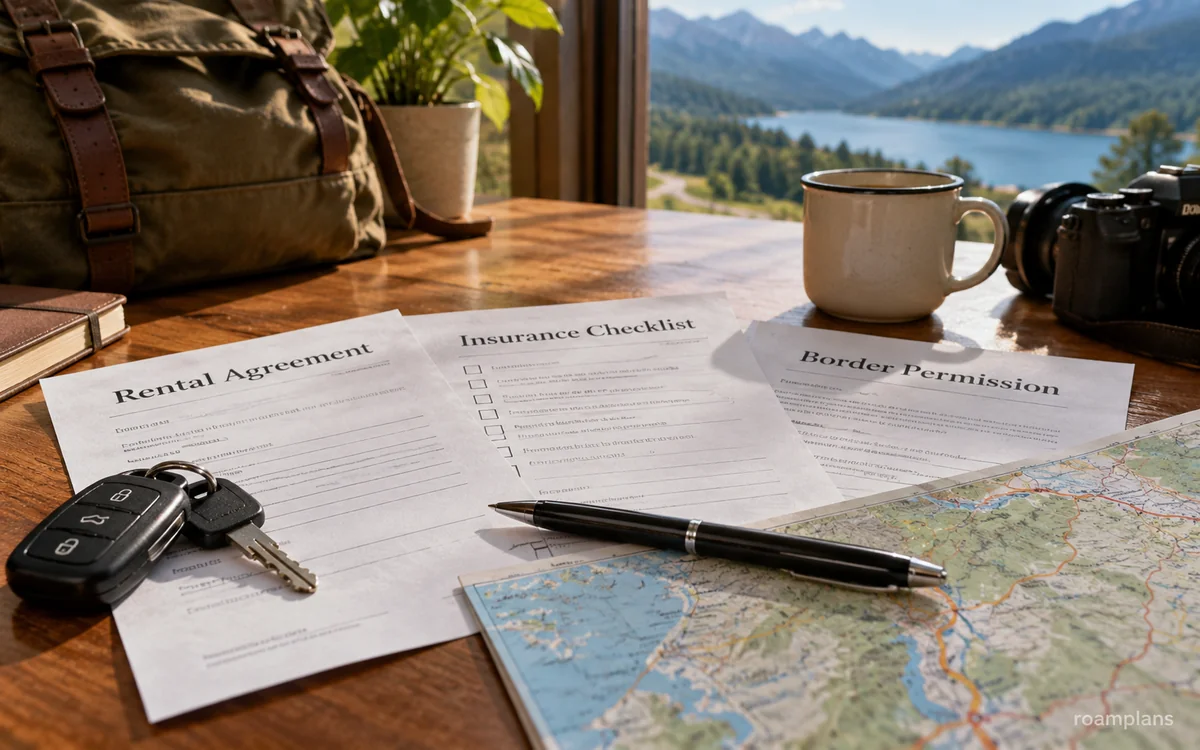
You need valid insurance before driving in another country.
The required cover may depend on:
- ✓Destination
- ✓Vehicle
- ✓Driver
- ✓Length of stay
- ✓Rental agreement
- ✓Border route
- ✓Local law
Do not assume your home insurance follows you abroad.
Start with the Legal Minimum
Many countries require third-party liability insurance.
This cover may pay for injury or property damage caused to another person.
The legal minimum may not cover:
- ✓Damage to your vehicle
- ✓Theft
- ✓Personal belongings
- ✓Medical costs
- ✓Roadside assistance
- ✓Rental-company fees
Check whether the vehicle already includes the required legal cover.
Confirm the Territory
An insurance policy may work in one country but not another.
Check every country on the planned route, including countries you only drive through.
Also check:
- ✓Islands
- ✓Border regions
- ✓Ferry routes
- ✓Overseas territories
- ✓Restricted areas
Confirm the Approved Drivers
Insurance may cover only drivers listed on the policy or rental agreement.
An unapproved driver may create serious problems after an accident.
Carry Proof of Insurance
Keep accepted proof in the vehicle or with your documents.
It may be:
- ✓Printed certificate
- ✓Insurance card
- ✓Digital document
- ✓Cross-border certificate
Check whether police and border staff accept digital proof.
Personal Auto Insurance Abroad
Your home auto policy may provide limited international cover, but many policies do not.
Contact the insurer before travel.
Questions to Ask Your Insurer
Ask:
- ✓Does my policy cover driving in this country?
- ✓Does it cover a rental vehicle?
- ✓Does it cover my own vehicle abroad?
- ✓Which drivers are covered?
- ✓Which vehicle types are excluded?
- ✓Does it include third-party liability?
- ✓Does it include theft and collision?
- ✓What deductible applies?
- ✓Does it cover towing?
- ✓Does it cover legal costs?
- ✓How do I report a claim from abroad?
Get written confirmation where possible.
Short Trips vs Long Stays
A policy may cover short tourist trips but not:
- ✓Long stays
- ✓Work travel
- ✓Residency
- ✓Commercial driving
- ✓Vehicle export
- ✓Permanent relocation
Check the maximum number of days.
Your Own Vehicle Abroad
Taking your own vehicle across a border may require:
- ✓International insurance extension
- ✓Vehicle registration
- ✓Owner permission
- ✓Customs documents
- ✓Road tax
- ✓Emissions documents
- ✓Breakdown cover
The insurance should match the vehicle and every country on the route.
Rental Car Insurance and Credit Card Coverage
Rental cars often include basic legal cover, but added protection may still be offered.
The Car Rental Guide for Travelers: Booking, Insurance, Fuel, and Fees ↗ explains rental waivers and booking costs in more detail.
Rental Company Cover
A rental company may offer:
- ✓Collision Damage Waiver
- ✓Loss Damage Waiver
- ✓Theft protection
- ✓Added liability cover
- ✓Personal accident cover
- ✓Personal belongings cover
- ✓Roadside assistance
Read what each option protects.
Credit Card Rental Protection
Some credit cards provide rental vehicle protection.
This may require you to:
- ✓Pay the full rental cost with the card
- ✓Use the cardholder as the main driver
- ✓Decline part of the rental company’s cover
- ✓Report damage within a set time
- ✓Rent for fewer than a set number of days
Common Credit Card Exclusions
Credit card protection may exclude:
- ✓Third-party liability
- ✓Personal injuries
- ✓Personal belongings
- ✓Luxury cars
- ✓Large vans
- ✓Motorcycles
- ✓Campervans
- ✓Certain countries
- ✓Off-road driving
- ✓Long rentals
Do not rely on a card benefit until you read the current terms.
Primary and Secondary Coverage
Primary coverage may handle an eligible claim before your personal auto insurer.
Secondary coverage may pay only after another policy responds.
Ask the card provider which type applies.
Save the Claim Process
Keep:
- ✓Benefits guide
- ✓Claim phone number
- ✓Required document list
- ✓Reporting deadline
- ✓Emergency contact
Third-Party Liability, Collision, and Comprehensive Cover
These types of cover protect different risks.
Third-Party Liability
Third-party liability may pay for:
- ✓Injury to another person
- ✓Damage to another vehicle
- ✓Damage to other property
It may not pay for damage to the vehicle you are driving.
Collision Cover
Collision cover may protect against damage caused by a crash.
It may apply after:
- ✓Hitting another vehicle
- ✓Hitting a wall
- ✓Hitting a road object
- ✓Single-vehicle accident
Check the deductible and exclusions.
Comprehensive Cover
Comprehensive cover may protect against non-collision events such as:
- ✓Theft
- ✓Fire
- ✓Storm
- ✓Flood
- ✓Vandalism
- ✓Falling objects
The exact meaning differs by insurer.
Theft Protection
Theft protection may apply only when you:
- ✓Lock the vehicle
- ✓Keep the key secure
- ✓Report the theft to police
- ✓Follow parking rules
- ✓Provide required documents
Leaving the key inside the vehicle may cancel the protection.
Personal Accident Cover
This may help with medical costs after an accident.
You may already have similar cover through:
- ✓Health insurance
- ✓Travel insurance
- ✓Employer insurance
Check for duplicate cover.
Insurance Deductibles, Excess, and Exclusions
Insurance does not always pay the full cost.
Deductible or Excess
A deductible or excess is the amount you may need to pay before insurance covers the remaining eligible loss.
For example, if the excess is $1,000 and the eligible damage costs $3,000, you may pay the first $1,000.
The words “deductible” and “excess” often describe the same basic idea.
Zero-Excess Cover
Some policies offer lower or zero excess.
This may cost more.
Check whether it still excludes:
- ✓Tyres
- ✓Wheels
- ✓Windscreen
- ✓Roof
- ✓Undercarriage
- ✓Interior
- ✓Lost keys
- ✓Wrong fuel
Common Policy Exclusions
Insurance may not apply after:
- ✓Drunk driving
- ✓Drug use
- ✓Reckless driving
- ✓Unapproved driver
- ✓Border crossing without permission
- ✓Driving on blocked roads
- ✓Off-road use
- ✓Racing
- ✓Using the wrong fuel
- ✓Leaving the vehicle unlocked
- ✓Failing to report an accident
- ✓Leaving the scene illegally
Loss-of-Use Charges
A rental company may charge for days when a damaged vehicle cannot be rented.
Check whether your cover includes:
- ✓Loss of use
- ✓Towing
- ✓Administration fees
- ✓Damage assessment
- ✓Storage costs
Follow the Reporting Rules
A valid claim may require:
- ✓Police report
- ✓Accident form
- ✓Photos
- ✓Witness details
- ✓Rental-company notice
- ✓Insurance notice
- ✓Claim within a set period
Report the incident as soon as it is safe.
Cross-Border Insurance
Driving into another country may change your insurance position.
Do not cross a border until the vehicle and insurance are approved.
Check Every Country
Confirm cover for:
- ✓Main destination
- ✓Transit country
- ✓Return route
- ✓Ferry destination
- ✓Nearby country visited for a day
Written Rental Permission
A rental company may require written border approval.
It may charge for:
- ✓Cross-border insurance
- ✓Added paperwork
- ✓Roadside support
- ✓Vehicle tracking
- ✓Different return location
Insurance Certificate
Some routes may require a special insurance document.
Carry the accepted original or digital proof.
Border Exclusions
A company may block travel into certain countries because of:
- ✓Insurance limits
- ✓Theft risk
- ✓Vehicle recovery problems
- ✓Legal restrictions
- ✓Sanctions
- ✓Road conditions
Breakdown Cover Abroad
Normal roadside support may stop at the border.
Check:
- ✓Towing distance
- ✓Repair limits
- ✓Replacement vehicle
- ✓Hotel or transport support
- ✓Service language
- ✓Emergency number
Left-Side Vs Right-Side Driving
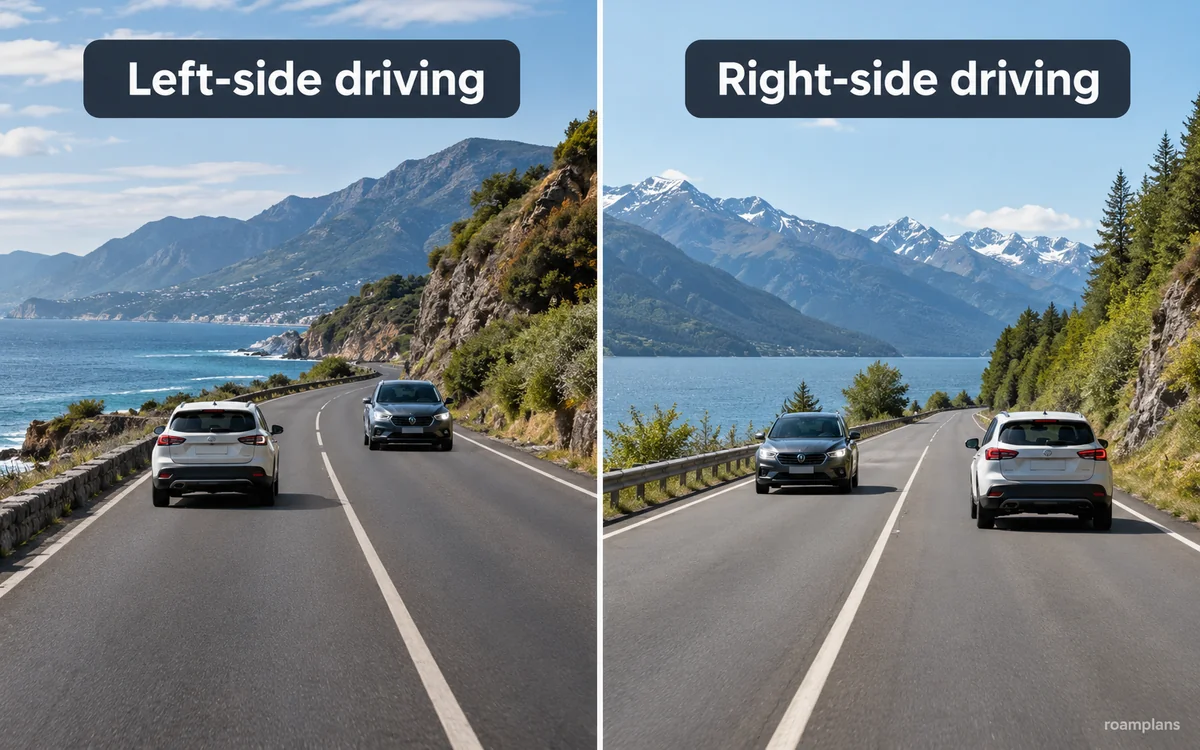
Driving on the opposite side of the road can feel unnatural at first.
Take extra care during the first part of the journey.
Know the Driving Side
Before travel, confirm:
- ✓Which side of the road to use
- ✓Which side the steering wheel is on
- ✓How roundabouts work
- ✓Which lane is normally used for overtaking
Start on Quiet Roads
Where possible, begin in:
- ✓Rental parking area
- ✓Quiet street
- ✓Low-traffic road
- ✓Hotel area
Avoid entering a busy motorway at once.
Use a Simple Reminder
A short reminder can help, such as:
- ✓“Keep left”
- ✓“Keep right”
Place a small note where it does not block your view.
Take Extra Care After Stops
Drivers often make mistakes when:
- ✓Leaving a car park
- ✓Turning from a quiet road
- ✓Leaving a petrol station
- ✓Starting after a break
- ✓Entering a roundabout
Pause and check the correct side.
Passenger Help
A passenger can help by watching:
- ✓Lane position
- ✓Turns
- ✓Road signs
- ✓Roundabouts
The driver should still make every final decision.
How to Learn Local Road Signs?
Road signs may use different shapes, colors, words, and symbols.
Learn the main signs before driving.
Signs to Study
Focus on:
- ✓Stop
- ✓Give way or yield
- ✓No entry
- ✓Speed limit
- ✓Parking restriction
- ✓One-way street
- ✓Pedestrian crossing
- ✓School zone
- ✓Toll road
- ✓Road closed
- ✓Low-emission zone
- ✓Height or weight limit
Local Language
Learn common road words such as:
- ✓Exit
- ✓Center
- ✓North
- ✓South
- ✓Closed
- ✓Toll
- ✓Parking
- ✓Diversion
- ✓Police
Save a translated sign guide offline.
Temporary Signs
Road works may use:
- ✓Temporary speed limits
- ✓Lane closures
- ✓Detours
- ✓Portable traffic lights
- ✓Worker instructions
Temporary signs may take priority over normal road markings.
Electronic Signs
Motorways may display changing information about:
- ✓Speed
- ✓Traffic
- ✓Weather
- ✓Closed lanes
- ✓Accidents
- ✓Tolls
Follow the current electronic instruction.
Speed Limits and Road Cameras
Speed limits can change by road type, vehicle, weather, and local area.
Common Speed-Limit Areas
Different limits may apply in:
- ✓Cities
- ✓Villages
- ✓School zones
- ✓Rural roads
- ✓Motorways
- ✓Tunnels
- ✓Road works
- ✓Residential areas
Do not rely only on the navigation app.
Units
Speed may be shown in:
- ✓Miles per hour
- ✓Kilometres per hour
Check the unit before driving.
Vehicle-Specific Limits
Lower limits may apply to:
- ✓Vans
- ✓Campervans
- ✓Vehicles with trailers
- ✓Heavy vehicles
- ✓New drivers
Weather Limits
Some places reduce the legal limit during:
- ✓Rain
- ✓Snow
- ✓Fog
- ✓Poor visibility
Speed Cameras
Enforcement may use:
- ✓Fixed camera
- ✓Mobile camera
- ✓Average-speed camera
- ✓Police vehicle
- ✓Traffic-light camera
A rental company may later charge an administration fee for passing driver details to authorities.
Safe Speed
The legal limit is not always a safe speed.
Drive more slowly when:
- ✓Roads are wet
- ✓Visibility is poor
- ✓Traffic is heavy
- ✓Roads are narrow
- ✓Animals may enter the road
- ✓You are unfamiliar with the route
Roundabouts and Right-of-Way Rules
Roundabout and priority rules can differ by country.
Study them before driving.
Roundabout Direction
Traffic may move:
- ✓Clockwise in left-driving countries
- ✓Counterclockwise in right-driving countries
Check signs and lane arrows.
Who Has Priority?
In many places, vehicles already inside the roundabout have priority.
However, local rules and signs may differ.
Look for:
- ✓Give-way sign
- ✓Stop line
- ✓Traffic lights
- ✓Lane arrows
Choose the Lane Early
Large roundabouts may use separate lanes for:
- ✓First exit
- ✓Straight route
- ✓Later exit
Follow road markings rather than making a sudden lane change.
Signal Correctly
Indicator rules may differ.
Learn when to signal:
- ✓Before entering
- ✓While changing lanes
- ✓Before leaving
Right-of-Way at Junctions
Priority may depend on:
- ✓Road signs
- ✓Road markings
- ✓Main road status
- ✓Vehicle direction
- ✓Pedestrian crossing
- ✓Tram or bus lane
Do not assume your home-country rule applies.
Pedestrians and Cyclists
Give extra attention near:
- ✓Crosswalks
- ✓Bike lanes
- ✓Schools
- ✓Tram stops
- ✓City centers
Cyclists may have priority when you turn across a cycle lane.
Seat Belts and Child-Seat Rules
Seat-belt and child-restraint laws differ by destination.
Seat Belts
Wear a seat belt on every trip.
Check whether the law covers:
- ✓Front seats
- ✓Rear seats
- ✓Taxis
- ✓Minibuses
- ✓Older vehicles
Safety should come before any local exemption.
Child Seats
Rules may depend on:
- ✓Child age
- ✓Height
- ✓Weight
- ✓Seat position
- ✓Vehicle type
Possible restraints include:
- ✓Rear-facing infant seat
- ✓Forward-facing child seat
- ✓Booster seat
- ✓Standard seat belt
Front-Seat Restrictions
Children may be blocked from the front seat below a certain age or height.
A rear-facing seat must not be placed in front of an active airbag.
Rental Child Seats
When renting a seat, check:
- ✓Correct size
- ✓Damage
- ✓Cleanliness
- ✓Instructions
- ✓Installation
- ✓Approval label
Book in advance because supply may be limited.
Bring Your Own Seat
A personal seat may provide a better fit.
Check whether it meets local standards.
Mobile Phone Rules
Mobile phone laws can be stricter than travelers expect.
Handheld Phone Use
Many destinations ban holding a phone while driving.
This may include use while:
- ✓Moving
- ✓Stopped in traffic
- ✓Waiting at a light
Hands-Free Use
Hands-free use may still be limited for:
- ✓New drivers
- ✓Learner drivers
- ✓Commercial drivers
Even when legal, calls can reduce attention.
Navigation
Set the route before driving.
Mount the phone where it does not block:
- ✓Windscreen
- ✓Mirrors
- ✓Controls
- ✓Airbags
Do not type while moving.
Pull Over Safely
Stop in a legal parking place before:
- ✓Changing the route
- ✓Sending a message
- ✓Reading travel details
- ✓Making a difficult call
The road shoulder may not be a safe or legal stopping place.
Alcohol and Drug-Driving Rules
Alcohol limits differ widely.
Some destinations use a very low or zero limit.
The safest choice is not to drink before driving.
Different Legal Limits
A lower limit may apply to:
- ✓New drivers
- ✓Young drivers
- ✓Commercial drivers
- ✓Motorcycle riders
Next-Morning Risk
Alcohol can remain in the body the next morning.
Sleep, coffee, and food do not remove it quickly.
Prescription Medicines
Some medicines can affect:
- ✓Alertness
- ✓Vision
- ✓Reaction time
- ✓Judgment
Check the medicine warning and ask a medical professional where needed.
Recreational Drugs
Driving after drug use may lead to:
- ✓Arrest
- ✓Fine
- ✓Licence action
- ✓Insurance refusal
- ✓Travel problems
Insurance Consequences
Insurance and rental protection may become invalid after alcohol or drug use.
Use:
- ✓Public transportation
- ✓Licensed taxi
- ✓Ride app
- ✓Designated driver
when drinking is planned.
Essential Rules to Check Before Driving
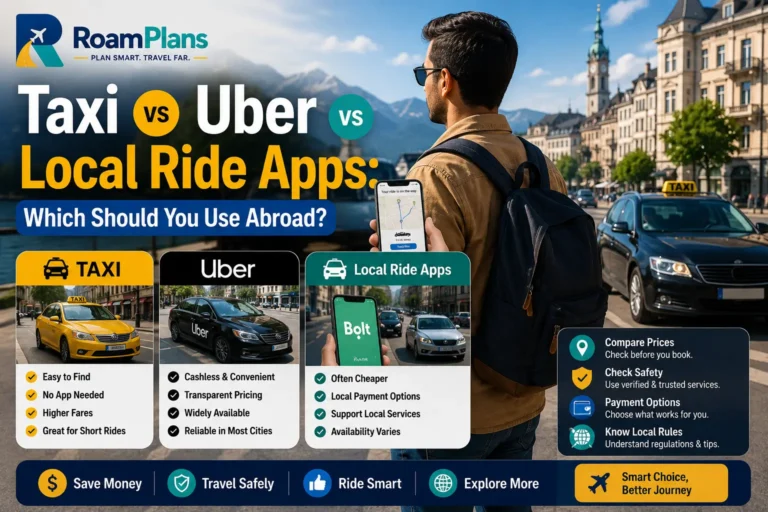
For days when you choose not to drive, compare taxis and local ride apps ↗ or plan a public transport route ↗ before leaving the car.
Use this quick table before the trip:
| Rule | What to confirm |
|---|---|
| Driving side | Left or right |
| Speed | Units and road-specific limits |
| Alcohol | Legal limit and zero-limit groups |
| Phone | Handheld and hands-free rules |
| Seat belts | Front and rear requirements |
| Child seats | Age, height, and weight rules |
| Roundabouts | Direction, lanes, and priority |
| Headlights | Daytime or weather requirements |
| Overtaking | Legal side and blocked areas |
| Emergency vehicles | How to give way |
| Pedestrians | Crossing and turning priority |
| Motorcycles and bicycles | Lane-sharing and passing rules |
Save the most important rules offline before collecting the vehicle.
Required Safety Equipment
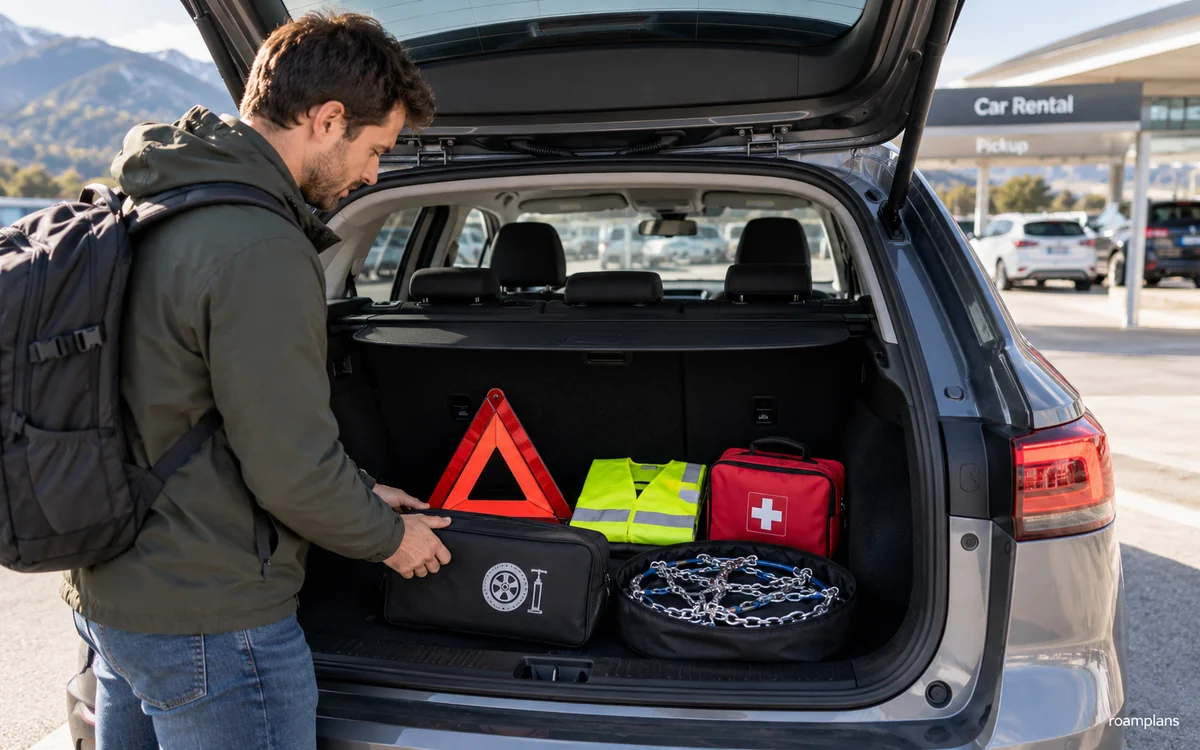
Some countries require drivers to carry specific safety equipment.
The rules may depend on:
- ✓Country
- ✓Vehicle type
- ✓Season
- ✓Road
- ✓Weather
- ✓Rental agreement
Check the official list before driving.
Warning Triangle
A warning triangle can alert other drivers after a breakdown or accident.
Keep it in an easy-to-reach place.
Deployment rules depend on the country and road type. For example, the UK Highway Code ↗ says never to use a warning triangle on a motorway. Do not walk into traffic to place equipment or take photos; follow the destination’s breakdown instructions.
Reflective Vest
Some countries require a reflective vest for the driver or every passenger.
Keep it inside the passenger area.
A vest stored in the boot may be difficult to reach safely after a breakdown.
First-Aid Kit
A first-aid kit may be required or strongly advised.
Check:
- ✓Expiry dates
- ✓Missing items
- ✓Local standard
- ✓Storage location
Fire Extinguisher
Some vehicles or destinations require a fire extinguisher.
Confirm:
- ✓Correct size
- ✓Expiry date
- ✓Easy access
- ✓Secure storage
Spare Tyre or Repair Kit
The vehicle may include:
- ✓Full spare tyre
- ✓Temporary spare
- ✓Tyre repair kit
- ✓Air compressor
Learn how the equipment works before leaving.
Spare Bulbs and Fuses
Some destinations may require spare bulbs or fuses.
Modern vehicles may use lights that drivers cannot replace easily, so check current local rules.
Snow Chains and Winter Equipment
Winter travel may require:
- ✓Snow tyres
- ✓Snow chains
- ✓Ice scraper
- ✓Winter washer fluid
- ✓Emergency blanket
Do not wait until reaching a mountain road to check these rules.
Vehicle Safety Check
Before driving, check:
- ✓Tyres
- ✓Lights
- ✓Wipers
- ✓Mirrors
- ✓Brakes
- ✓Fuel
- ✓Battery level
- ✓Warning lights
- ✓Seat belts
- ✓Emergency equipment
Report missing or damaged items before leaving a rental branch.
Tolls, Vignettes, and Road Charges
Countries use different systems to charge drivers for roads, tunnels, bridges, and city access.
A missed payment may lead to a fine or rental administration fee.
Toll Booths
A toll booth may accept:
- ✓Cash
- ✓Bank card
- ✓Contactless payment
- ✓Toll device
- ✓Local payment card
Choose the correct lane before reaching the barrier.
Electronic Tolls
Some roads have no payment booth.
A camera or transponder may record:
- ✓Number plate
- ✓Entry point
- ✓Exit point
- ✓Travel time
Payment may be made:
- ✓Automatically
- ✓Online
- ✓Through a rental company
- ✓At a shop
- ✓Through a toll account
Vignettes
A vignette is a road-use permit for a set period.
It may be:
- ✓Physical sticker
- ✓Digital registration
- ✓Daily permit
- ✓Weekly permit
- ✓Monthly permit
- ✓Annual permit
A vignette may be required before entering a motorway.
Check Whether the Vehicle Already Has One
A rental car may already include a valid vignette for the pickup country.
It may not cover another country.
Check:
- ✓Countries covered
- ✓Expiry date
- ✓Number plate
- ✓Vehicle category
- ✓Digital registration
Toll Transponders
A rental company may provide a toll device.
Ask:
- ✓Which roads it covers
- ✓Daily fee
- ✓Per-use fee
- ✓Activation rule
- ✓How charges appear
- ✓Whether it works across borders
Tunnels and Bridges
Special charges may apply to:
- ✓Major bridges
- ✓Mountain tunnels
- ✓Border tunnels
- ✓Ferry connections
These may not be included in the normal road toll.
Avoiding Tolls
A navigation app may offer a route that avoids toll roads.
Check whether the alternative adds:
- ✓Long driving time
- ✓More fuel
- ✓Difficult roads
- ✓Border crossings
- ✓Mountain routes
A toll-free route is not always the cheaper or safer choice.
Keep Toll Proof
Save:
- ✓Receipt
- ✓Online payment confirmation
- ✓Vignette record
- ✓Rental toll agreement
- ✓Number plate details
Keep the records until the trip charges are settled.
Low-Emission and Restricted Driving Zones
Many cities limit vehicle access to reduce traffic or pollution.
Entering without the correct permit may lead to a fine.
Low-Emission Zones
A low-emission zone may restrict vehicles based on:
- ✓Fuel type
- ✓Emissions level
- ✓Vehicle age
- ✓Registration country
- ✓Time of day
The vehicle may need:
- ✓Sticker
- ✓Digital registration
- ✓Local permit
- ✓Advance approval
Congestion-Charge Zones
A city may charge drivers for entering a busy area.
The charge may depend on:
- ✓Day
- ✓Time
- ✓Vehicle
- ✓Emissions
- ✓Entry point
Payment may be required before or shortly after travel.
Restricted Traffic Zones
Historic city centers may limit entry to:
- ✓Residents
- ✓Hotel guests
- ✓Delivery vehicles
- ✓Permit holders
A navigation app may still direct you into the zone.
Watch road signs carefully.
Hotel Access
A hotel inside a restricted zone may need to register your number plate.
Contact the hotel before arrival.
Ask:
- ✓Can guests drive to the entrance?
- ✓Is advance registration needed?
- ✓Where should the car be parked?
- ✓Which route is approved?
- ✓Are there restricted hours?
Rental Cars
A rental car is not automatically exempt.
Ask the rental company whether the vehicle has:
- ✓Emissions sticker
- ✓City permit
- ✓Digital registration
Keep Proof of Registration
Save the confirmation when you register for a zone.
Parking Rules Abroad
Parking signs and road markings can differ greatly between countries.
Do not park only because another vehicle is there.
Check Every Sign
A sign may show:
- ✓Paid hours
- ✓Permit zone
- ✓Time limit
- ✓No parking
- ✓Loading zone
- ✓Resident parking
- ✓Street-cleaning time
- ✓Disabled parking
- ✓Tow-away area
Read all signs on the street.
Road Markings
Parking rules may use:
- ✓Colored curb
- ✓Painted lines
- ✓Numbered bays
- ✓Symbols
- ✓Signs at the start of a zone
Learn the local meaning before parking.
Parking Meters
A meter may require:
- ✓Number plate
- ✓Parking-space number
- ✓Payment card
- ✓Cash
- ✓Mobile app
- ✓Printed ticket
Place the ticket where required.
Parking Apps
A local parking app may need:
- ✓Account
- ✓Phone number
- ✓Number plate
- ✓Bank card
- ✓Zone code
Install it before leaving Wi-Fi where possible.
Time Limits
A paid space may still have a maximum stay.
Paying for more time may not make longer parking legal.
Hotel Parking
Ask about:
- ✓Daily fee
- ✓Overnight access
- ✓Height limit
- ✓Vehicle size
- ✓Reservation
- ✓Valet parking
- ✓Electric charging
Secure Parking
Use secure parking when carrying luggage.
Do not leave visible:
- ✓Bags
- ✓Passports
- ✓Electronics
- ✓Shopping
- ✓Rental documents
Parking Tickets
Keep:
- ✓Payment receipt
- ✓App confirmation
- ✓Photo of signs
- ✓Photo of the parked car
- ✓Ticket notice
A rental company may add an administration fee when forwarding a fine.
Towing and Wheel Clamps
Illegal parking may result in:
- ✓Tow
- ✓Wheel clamp
- ✓Fine
- ✓Storage fee
- ✓Release fee
Contact the official local authority or rental company for help.
Driving on Motorways
Motorways can be fast and efficient, but rules may differ from your home country.
Entering the Motorway
Use the entry lane to match traffic speed where safe.
Check:
- ✓Mirrors
- ✓Blind spot
- ✓Lane markings
- ✓Speed limit
Vehicles already on the motorway may have priority.
Lane Use
In many countries, drivers should keep to the normal driving lane and use another lane only for overtaking.
Do not stay in an overtaking lane without reason.
Safe Following Distance
Leave more space during:
- ✓Rain
- ✓Snow
- ✓Fog
- ✓Darkness
- ✓Heavy traffic
A safe gap gives you more time to react.
Motorway Exits
Exit signs may appear earlier or later than expected.
Move into the correct lane in good time.
Do not make a sudden turn across lanes.
Service Areas
Plan stops for:
- ✓Fuel
- ✓Charging
- ✓Food
- ✓Toilets
- ✓Rest
Do not drive while tired.
Emergency Lanes
Use an emergency lane only when allowed.
It may be used for:
- ✓Breakdown
- ✓Emergency vehicle access
- ✓Temporary traffic control
Never stop there for a normal break.
Variable Speed Limits
Electronic signs may change the speed limit.
The displayed limit may be legally enforced.
Driving on Rural and Mountain Roads
Rural roads can be narrow, dark, or poorly marked.
They may also have animals, sharp turns, and changing weather.
Narrow Roads
Slow down before:
- ✓Blind corner
- ✓Bridge
- ✓Hill
- ✓Passing point
- ✓Village
Be ready to stop.
Single-Lane Roads
A single-lane road may have passing places.
Do not block them.
Check local rules about which driver should reverse.
Animals
Animals may enter the road without warning.
Watch for:
- ✓Livestock
- ✓Deer
- ✓Sheep
- ✓Goats
- ✓Wild animals
Reduce speed near warning signs.
Mountain Roads
Mountain routes may include:
- ✓Sharp bends
- ✓Steep drops
- ✓Tunnels
- ✓Falling rocks
- ✓Snow
- ✓Ice
- ✓Limited barriers
Use a suitable gear and avoid heavy braking for long periods.
Fuel and Charging
Rural fuel or charging stations may be far apart.
Refill before the level becomes low.
Mobile Signal
Download the road route and test it before travel. Our navigation app guide ↗ explains offline planning checks. A saved map does not show every closure, legal access restriction or current weather warning.
Save:
- ✓Emergency numbers
- ✓Accommodation
- ✓Fuel stops
- ✓Main road names
Unpaved Roads
Check whether the vehicle and insurance allow unpaved roads.
A normal rental agreement may block them.
Night Driving and Bad Weather
Driving after dark in an unfamiliar country can be difficult.
Road signs, lane markings, and hazards may be harder to see.
Avoid Night Driving Where Practical
Consider daytime travel when the route includes:
- ✓Rural roads
- ✓Mountains
- ✓Wildlife
- ✓Poor lighting
- ✓Heavy rain
- ✓Snow
- ✓Unknown border crossings
Check Headlight Rules
Some destinations require headlights:
- ✓During daytime
- ✓Outside cities
- ✓In tunnels
- ✓During rain
- ✓During poor visibility
Rain
During heavy rain:
- ✓Slow down
- ✓Increase distance
- ✓Use lights
- ✓Avoid sudden braking
- ✓Avoid flooded roads
Do not drive through water when the depth is unknown.
Fog
In fog:
- ✓Reduce speed
- ✓Use suitable lights
- ✓Follow lane markings
- ✓Avoid high beams where they reduce visibility
Strong Wind
High-sided vehicles may be affected by wind.
Take care on:
- ✓Bridges
- ✓Open motorways
- ✓Coastal roads
- ✓Mountain passes
Heat
Hot weather can affect:
- ✓Tyre pressure
- ✓Engine temperature
- ✓Driver concentration
- ✓Battery range
Carry water and take breaks.
Winter Tyres and Snow Chains
Winter equipment rules may apply only during certain dates or weather conditions.
Winter Tyres
Check whether winter tyres are:
- ✓Required by law
- ✓Required by road sign
- ✓Required in mountain areas
- ✓Included with the rental
Snow Chains
Chains may be required on selected roads.
Before travel:
- ✓Confirm the correct tyre size
- ✓Learn how to fit them
- ✓Check where they must be used
- ✓Practice before reaching snow
Do not use chains on clear roads unless allowed.
All-Season Tyres
All-season tyres may not meet every winter rule.
Check the required tyre markings.
Mountain Passes
A road may close because of:
- ✓Snow
- ✓Avalanche risk
- ✓Ice
- ✓Wind
- ✓Poor visibility
Check the official road report before leaving.
Rental Vehicle Preparation
Ask the rental company whether the vehicle includes:
- ✓Winter tyres
- ✓Chains
- ✓Ice scraper
- ✓Winter fluid
- ✓Roadside support
Get the answer in writing.
Driving Across International Borders
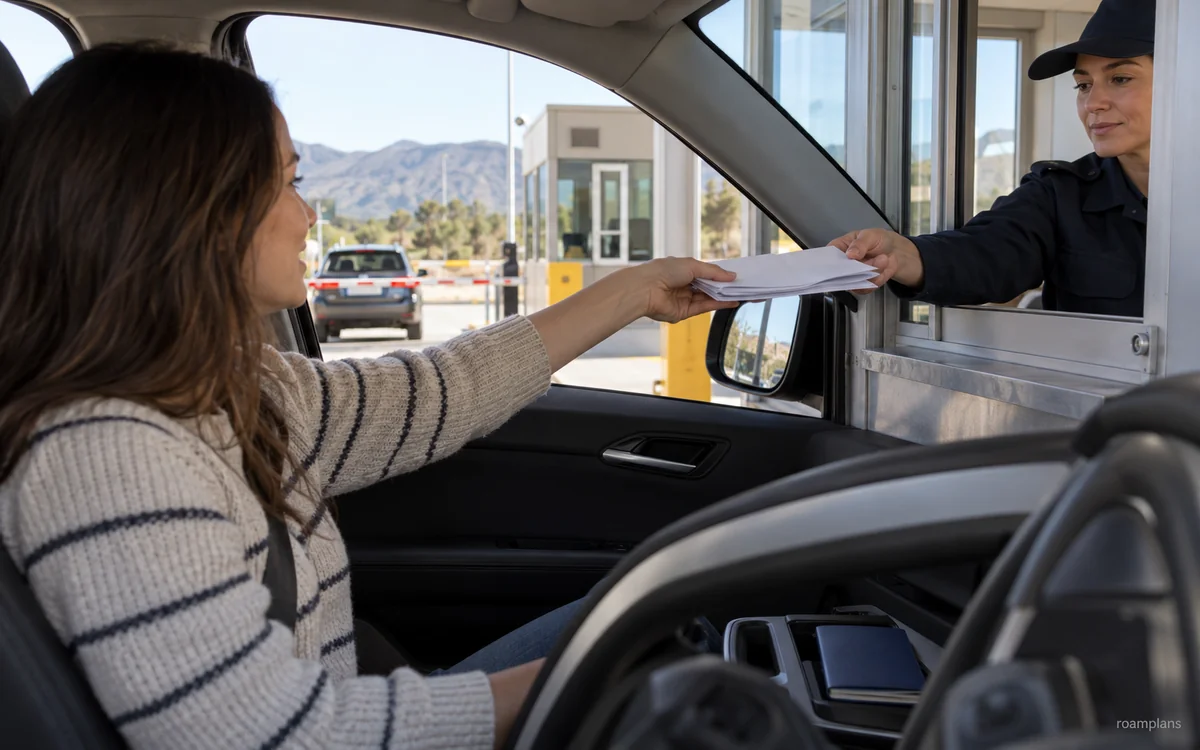
International border travel needs permission, documents, and insurance.
Do not assume an open border means the vehicle may cross.
Check Rental Permission
A rental company may:
- ✓Allow the border
- ✓Charge a fee
- ✓Block certain countries
- ✓Limit vehicle classes
- ✓Require written approval
- ✓Require added insurance
Carry the Correct Documents
You may need:
- ✓Passport
- ✓Visa
- ✓Driver’s licence
- ✓IDP
- ✓Vehicle registration
- ✓Rental agreement
- ✓Border letter
- ✓Insurance proof
- ✓Customs document
Check Entry and Exit Rules
Vehicle rules may differ from passenger entry rules.
Check:
- ✓Temporary vehicle import
- ✓Road tax
- ✓Vignette
- ✓Customs declaration
- ✓Required equipment
One-Way International Return
Returning a vehicle in another country may be expensive or unavailable.
Confirm:
- ✓Return branch
- ✓One-way fee
- ✓Drop-off permission
- ✓Border documents
- ✓Vehicle restrictions
Border Delays
Allow extra time for:
- ✓Document checks
- ✓Queues
- ✓Customs
- ✓Vehicle inspection
- ✓Insurance questions
Restricted Goods
Check customs rules before carrying:
- ✓Food
- ✓Plants
- ✓Fuel
- ✓Medicines
- ✓Alcohol
- ✓Tobacco
- ✓High-value goods
Ferry and Island Travel Rules
Taking a vehicle on a ferry may require advance approval.
Rental Company Permission
Check whether the rental company allows:
- ✓Ferry travel
- ✓Island travel
- ✓International ferry route
- ✓Vehicle transport by ship
Ferry Booking
Book the correct:
- ✓Vehicle length
- ✓Vehicle height
- ✓Number plate
- ✓Passenger count
- ✓Departure port
- ✓Arrival port
Insurance
Confirm whether the insurance remains valid:
- ✓On the ferry
- ✓On the island
- ✓In the destination country
Vehicle Alarm
Some ferry companies may ask drivers to disable motion alarms.
Follow crew instructions.
Access During the Journey
Passengers may not be allowed to return to the vehicle deck during the crossing.
Take:
- ✓Passport
- ✓Medicine
- ✓Phone
- ✓Wallet
- ✓Warm clothing
- ✓Child supplies
before leaving the car.
Island Restrictions
An island may have:
- ✓Separate road tax
- ✓Restricted roads
- ✓Limited fuel
- ✓Limited charging
- ✓Special rental rules
Plan before boarding.
What to Do After an Accident Abroad?
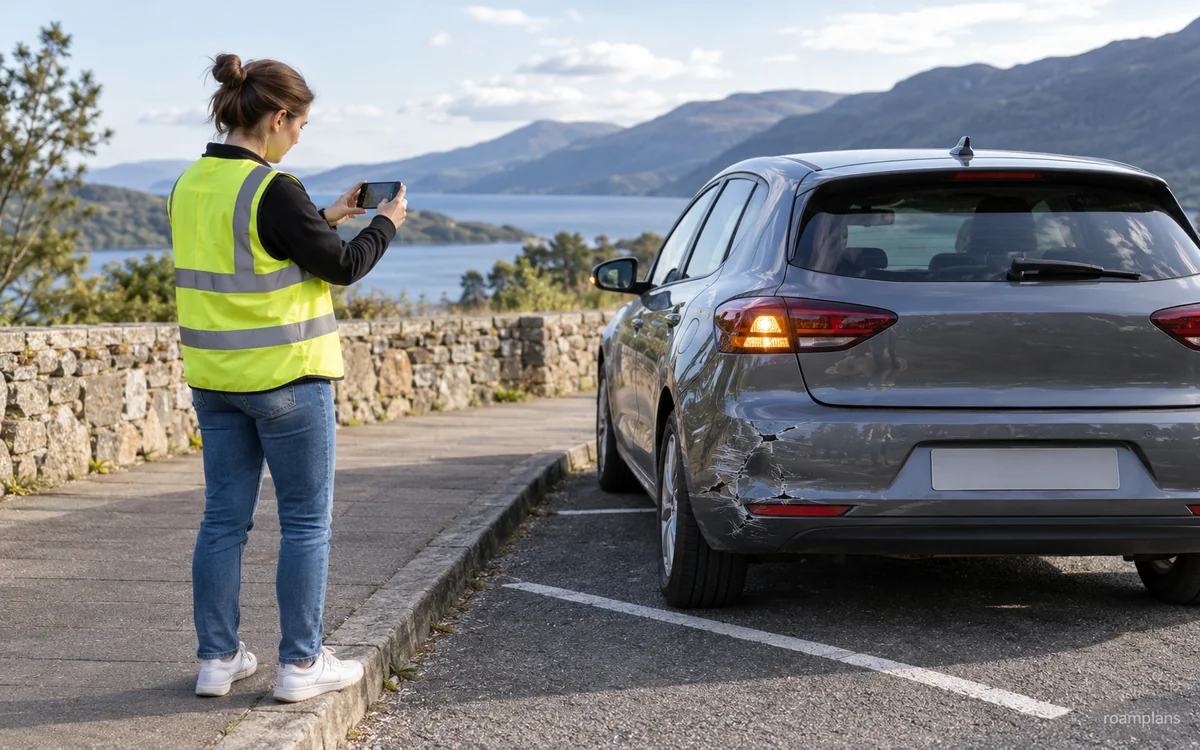
An accident can be stressful, especially in another language.
Follow a clear process.
Stop Safely
Stop the vehicle where required.
Use:
- ✓Hazard lights
- ✓Reflective vest
- ✓Warning triangle
Use warning equipment only as required and safe for the road type; never deploy a triangle where prohibited. If you cannot leave the vehicle safely, stay belted, keep hazard lights on and contact emergency services for instructions. Do not enter moving traffic.
Check for Injuries
Call emergency services when:
- ✓Someone is injured
- ✓The road is blocked
- ✓There is fire
- ✓Damage is serious
- ✓The other driver leaves
- ✓Local law requires it
Do Not Leave Illegally
Some countries require drivers to remain at the scene.
Follow police instructions.
Record the Scene
Once everyone is safe, take photos only from a protected position. Do not step into traffic or delay emergency help to document:
- ✓Vehicle damage
- ✓Number plates
- ✓Road position
- ✓Signs
- ✓Traffic lights
- ✓Weather
- ✓Skid marks
- ✓Surrounding area
Exchange Details
Collect:
- ✓Driver name
- ✓Contact details
- ✓Licence information
- ✓Vehicle registration
- ✓Insurance details
Find Witnesses
Ask for witness:
- ✓Name
- ✓Phone number
- ✓Email
Contact the Rental Company
Call the rental company before arranging:
- ✓Towing
- ✓Repair
- ✓Replacement car
Follow its accident process.
Contact the Insurer
Report the accident within the required time.
Ask which documents are needed.
Complete the Accident Form
Some countries use a standard accident statement.
Describe facts clearly.
Do not sign a document you do not understand.
Do Not Admit Fault
Give an honest description without accepting legal blame.
Police and insurers will review the evidence.
Keep All Records
Save:
- ✓Police report
- ✓Accident form
- ✓Photos
- ✓Videos
- ✓Witness details
- ✓Medical records
- ✓Towing receipt
- ✓Rental agreement
- ✓Insurance messages
What to Do After a Breakdown Abroad?
A breakdown may happen because of a mechanical issue, flat tyre, battery problem, or warning light.
Move to Safety
Where possible:
- ✓Leave the traffic lane
- ✓Turn on hazard lights
- ✓Use reflective clothing
- ✓Move behind a barrier
- ✓Keep passengers away from traffic
Call Roadside Assistance
Provide:
- ✓Vehicle number plate
- ✓Exact location
- ✓Road name
- ✓Direction of travel
- ✓Warning light
- ✓Vehicle condition
Use Road Markers
Motorway markers can help support teams find you.
Do Not Repair Without Permission
A rental company or insurer may require an approved provider.
An unauthorized repair may not be refunded.
Flat Tyre
Do not change a tyre in an unsafe location.
Call support when:
- ✓Traffic is heavy
- ✓The road is narrow
- ✓You lack equipment
- ✓The tyre is badly damaged
Warning Light
Stop when a serious warning appears.
Take a photo of the dashboard.
Wrong Fuel
Do not start the engine after using the wrong fuel.
Call support at once.
Replacement Vehicle
Ask about:
- ✓Replacement car
- ✓Towing
- ✓Hotel
- ✓Transport
- ✓Repair time
- ✓Border limits
Traffic Tickets and Fines Abroad
Foreign drivers must follow local enforcement rules.
A fine may reach you after the trip.
Common Fines
These may include:
- ✓Speeding
- ✓Parking
- ✓Bus-lane use
- ✓Red-light violation
- ✓Toll non-payment
- ✓Low-emission zone entry
- ✓Phone use
- ✓Seat-belt violation
Rental Administration Fees
A rental company may charge a separate fee for:
- ✓Identifying the driver
- ✓Forwarding the fine
- ✓Processing authority requests
This fee is not always the fine itself.
Check the Notice
Confirm:
- ✓Vehicle
- ✓Date
- ✓Time
- ✓Location
- ✓Offence
- ✓Payment deadline
- ✓Appeal deadline
Paying a Fine
Use the official payment method.
Be careful with fake emails or payment pages.
Appealing
An appeal may require:
- ✓Written form
- ✓Evidence
- ✓Translation
- ✓Submission before a deadline
Keep parking and toll evidence during the trip.
Unpaid Fines
Ignoring a fine may lead to:
- ✓Added cost
- ✓Debt collection
- ✓Future rental problems
- ✓Legal action
- ✓Entry issues in serious cases
Use official guidance.
Common International Driving Mistakes
1. Assuming the Home Licence Works Everywhere
Check destination and rental-company rules.
2. Treating an IDP as a Separate Licence
Carry the original licence with it.
3. Buying a Fake International Licence
Use an authorized issuer only.
4. Ignoring Insurance Territory
Confirm every country on the route.
5. Letting an Unapproved Driver Use the Vehicle
Every driver should be listed and insured.
6. Forgetting the Driving Side
Take extra care after turns and stops.
7. Depending Only on a Navigation App
Watch official road signs.
8. Missing a Vignette or Toll Payment
Check road-charge rules before entering.
9. Entering a Restricted City Zone
Confirm permits and hotel access.
10. Ignoring Parking Signs
Read signs and road markings.
11. Driving While Tired
Take regular breaks and avoid unsafe night driving.
12. Using a Phone While Driving
Set the route before moving.
13. Assuming the Alcohol Limit Is the Same
The safest choice is not to drink before driving.
14. Crossing a Border Without Permission
Get rental and insurance approval first.
15. Missing Required Safety Equipment
Inspect the vehicle before departure.
16. Repairing a Rental Vehicle Without Approval
Call the rental company or roadside service.
17. Deleting Records Too Soon
Keep documents, receipts, and photos until all charges are complete.
More planning errors are covered in Transportation Mistakes Travelers Should Avoid ↗.
Complete International Driving Checklist
Before the Trip
- ✓Home licence validity checked
- ✓IDP requirement checked
- ✓Authorized IDP issuer confirmed
- ✓Passport validity checked
- ✓Driver age rule checked
- ✓Licence-holding period checked
- ✓Vehicle category checked
- ✓Rental rules checked
- ✓Insurance territory checked
- ✓Border route approved
Documents
- ✓Original driver’s licence
- ✓International Driving Permit
- ✓Passport or ID
- ✓Visa where required
- ✓Rental agreement
- ✓Vehicle registration
- ✓Insurance proof
- ✓Border permission
- ✓Emergency contacts
- ✓Secure document copies
Insurance
- ✓Legal liability cover confirmed
- ✓Collision cover checked
- ✓Theft protection checked
- ✓Deductible or excess checked
- ✓Credit card protection checked
- ✓Cross-border cover checked
- ✓Roadside support checked
- ✓Exclusions read
- ✓Claim process saved
- ✓Reporting deadline saved
Road Rules
- ✓Driving side confirmed
- ✓Speed units checked
- ✓Alcohol rule checked
- ✓Phone rule checked
- ✓Seat-belt rule checked
- ✓Child-seat rule checked
- ✓Roundabout rule checked
- ✓Overtaking rule checked
- ✓Headlight rule checked
- ✓Main road signs saved
Road Charges and Parking
- ✓Toll system checked
- ✓Vignette checked
- ✓Toll device checked
- ✓Low-emission zone checked
- ✓Congestion charge checked
- ✓Hotel access checked
- ✓Parking rules checked
- ✓Parking app installed
- ✓Payment method prepared
- ✓Receipts saved
Vehicle Safety
- ✓Tyres checked
- ✓Lights checked
- ✓Wipers checked
- ✓Mirrors adjusted
- ✓Warning triangle found
- ✓Reflective vest found
- ✓First-aid kit checked
- ✓Spare tyre or repair kit found
- ✓Winter equipment checked
- ✓Emergency number saved
During the Trip
- ✓Approved drivers only
- ✓Seat belts used
- ✓Phone not handled
- ✓Speed limits followed
- ✓Tolls tracked
- ✓Parking proof kept
- ✓Fuel or battery monitored
- ✓Breaks taken
- ✓Restricted roads avoided
- ✓Weather checked
After an Accident or Breakdown
- ✓Vehicle moved safely where possible
- ✓Emergency services called where needed
- ✓Scene photographed
- ✓Driver details collected
- ✓Witness details collected
- ✓Police report obtained where required
- ✓Rental company contacted
- ✓Insurer contacted
- ✓Repairs approved
- ✓Records kept
Frequently Asked Questions
It depends on the destination, licence language, length of stay, and vehicle type. Some countries accept it, while others require an IDP, translation, or local permit.
No. An IDP supports and translates your original driver’s licence. You normally need to carry both documents.
The law may not require one, but the rental company may still ask for it. Check with the exact pickup branch.
Not always. Ask your insurer which countries, drivers, vehicles, and risks are covered.
Some cards provide rental damage protection, but exclusions may apply to countries, vehicle types, liability, and rental length.
The driving side depends on the country. Check it before travel and take extra care after turns, stops, and roundabouts.
Some countries require a vignette for motorways or selected roads. Check whether it is physical or digital and whether the vehicle already has one.
Only when the rental company and insurance allow it. Written permission and an added fee may be required.
Stop safely, call emergency services where needed, record the scene, exchange details, and contact the rental company and insurer.
Move to a safe place, use hazard equipment, call approved roadside assistance, and avoid unapproved repairs.
Yes. Authorities or rental companies may forward fines and add administration charges.
Keep your licence, IDP where required, rental agreement, vehicle registration, insurance proof, border permission, and emergency contacts.
Final Thoughts
In short, driving abroad can make a trip more flexible, but it requires careful preparation.
Start by checking whether your home licence is accepted and whether you need an International Driving Permit. Confirm the rules with both official authorities and the rental company.
Next, check insurance for every driver, vehicle, and country on the route. Learn the driving side, speed limits, signs, alcohol rules, phone laws, tolls, parking rules, and restricted zones.
Inspect the vehicle and required safety equipment before leaving. Save the route, emergency contacts, insurance details, and roadside-support number offline.
Choose a suitable speed while adjusting to unfamiliar roads. Confirm rental and insurance conditions before crossing borders or taking a vehicle on a ferry. Check local permits for restricted areas, and use the rental company’s approved repair process where required.
A clear document, insurance, road-rule, and emergency plan can help you drive with more confidence and avoid fines, coverage problems, and unsafe decisions.

Adnan Ahmed
RoamPlans AuthorTravel Planning Researcher & Editor
Adnan Ahmed is the travel planning researcher and editor behind RoamPlans. He creates clear, practical guides to help travelers compare destinations, plan routes, estimate costs, and avoid common trip-planning mistakes. His work combines careful source research, official travel information, and regular content reviews to keep each guide useful and current.
- ✓Destination Research
- ✓Budget Planning
- ✓Route Planning
- ✓Beginner Travel Guides
Turn This Guide into a Practical Trip Plan
Use the recommended Transportation Cost Calculator or explore more free RoamPlans tools.