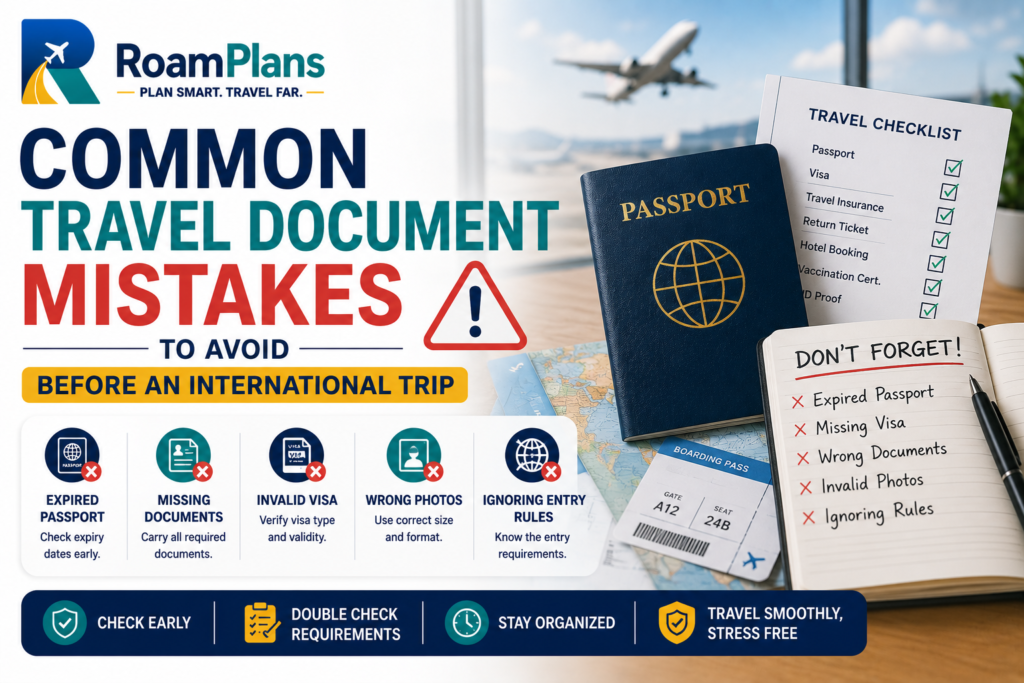
Common Travel Document Mistakes to Avoid Before an International Trip
Common Travel Document Mistakes to Avoid Before an International Trip | RoamPlans RoamPlans · Travel Documents Common Travel Document Mistakes to Avoid Before an…
Read guide →
Planning an international trip involves more than booking a flight and choosing a hotel. Before you leave, you need to know which travel documents apply to your trip, whether your passport meets the destination’s rules, and whether you need a visa, electronic travel authorization, health certificate, or other supporting paperwork.
I have found that document problems often start because travelers check the main destination but miss smaller details, such as passport validity, transit-country rules, name differences between bookings and passports, or proof of onward travel. The safest approach is to check every document early, confirm current rules with official sources, and keep backup copies in case something goes wrong.
This guide explains the main international travel documents a traveler may need, when they may be requested, and how to organize them before leaving. Some requirements depend on your nationality, destination, transit route, length of stay, and reason for travel, so no single document list applies to every international trip.
Important Note: Passport, visa, health, customs, and entry rules can change. Always confirm current requirements through official government, embassy, immigration, health, or airline sources before traveling.
For most international trips, you will need a valid passport. Depending on your nationality and destination, you may also need a visa, eVisa, electronic travel authorization, vaccination certificate, travel insurance document, proof of accommodation, onward ticket, customs form, or other entry document.
Your exact requirements depend on:
Do not assume that the documents you used for one country will work for another. Check the requirements for each trip separately.
Use this checklist as a starting point before an international trip.
| Travel Document | Usually Required | Depends on Trip | Good Backup |
| Passport | ✓ | ||
| Visa | ✓ | ||
| eVisa | ✓ | ||
| Electronic Travel Authorization | ✓ | ||
| Return or onward ticket | ✓ | ||
| Accommodation confirmation | ✓ | ||
| Proof of sufficient funds | ✓ | ||
| Travel insurance certificate | ✓ | ||
| Vaccination certificate | ✓ | ||
| Prescription or doctor’s letter | ✓ | ||
| International Driving Permit | ✓ | ||
| Child travel consent documents | ✓ | ||
| Customs or arrival form | ✓ | ||
| Copy of passport | ✓ | ||
| Copy of visa or entry approval | ✓ | ||
| Emergency contact information | ✓ | ||
| Copies of bookings | ✓ |
This table is a planning guide rather than a fixed legal requirement. A document marked as trip-dependent may be mandatory for one traveler and unnecessary for another.
It helps to separate your paperwork into three groups instead of putting everything into one long travel checklist.
For most international travelers, the passport is the main identity and border-crossing document.
A boarding pass or confirmed travel booking will also be needed during the airport process, although these are normally created after you book or check in rather than obtained months before travel.
These can include:
Whether you need them depends on the destination and your personal situation.
Backup copies may not get you through immigration by themselves, but they can make a stressful situation easier if an original document is lost or stolen.
Useful backups include:
I prefer keeping important travel records in more than one secure place instead of depending entirely on a phone, email account, or single paper folder.
Your passport should be one of the first things you check when planning an international trip.
Do this before buying expensive non-refundable flights whenever possible.
Look at:
Having a passport does not automatically mean it will be accepted for every international trip.
Some countries require a passport to remain valid beyond your planned departure date. Others may have rules about blank pages or damaged passports.
If your passport is close to expiration, checking the destination’s entry rules early can save you from having to change your trip later.
For a full explanation of passport rules, the supporting RoamPlans guide Passport Requirements for International Travel will cover these points in more detail.
One of the most common mistakes is checking whether a passport is technically valid but ignoring how much validity remains.
A traveler may think:
“My passport expires after I return, so I am fine.”
That is not always enough.
Some countries may require several months of remaining passport validity from the date you enter or leave the country. The exact rule varies by destination and may also depend on your nationality.
Before traveling, check:
Do not rely on a general rule you saw for another country.
Check the destination’s official immigration, embassy, or government travel information.
Expiration is not the only passport issue that can cause problems.
Some destinations may require available passport pages for entry or visa stamps. Even where a set number of blank pages is not required, having very little space left can still create problems during a multi-country trip.
Your passport should also be in good condition.
Watch for:
Do not assume an airline or immigration officer will accept a badly damaged passport simply because the expiration date is still valid.
If you are unsure about its condition, check with the passport authority before traveling.
Another simple issue can create major trouble at check-in: the name on a flight booking does not match the passport.
When booking an international flight, enter your personal information using the passport you plan to travel with.
Check:
Small typing errors are easier to fix early than at the airport.
Pay extra attention if you recently changed your name after marriage, divorce, or another legal change. Your airline booking, visa, and passport information should be consistent with the documents you intend to present.
Before completing any visa or entry form, copy your passport details carefully instead of entering them from memory.
A passport allows you to prove your identity and nationality, but it does not automatically give you permission to enter every country.
Depending on your nationality and destination, you may need some form of travel authorization.
A traditional visa may require an application before travel. Depending on the country, the process can involve an embassy, consulate, visa center, or official online system.
Requirements may include:
The exact process varies widely.
An eVisa is an electronic visa that can usually be applied for online.
After approval, travelers may receive an electronic confirmation instead of a physical visa sticker.
Even if the approval is stored electronically, I still prefer keeping a downloadable or printed copy available while traveling.
Some countries allow certain nationalities to enter without a traditional visa but require an online authorization before departure.
Depending on the destination, this may be known as an:
An electronic travel authorization is not always the same thing as a visa.
A visa on arrival is normally issued after reaching an approved border or airport entry point.
Travelers may still need documents such as:
Do not treat “visa on arrival” as meaning “nothing needs to be prepared.”
Check the entry conditions before leaving home.
For deeper coverage, the supporting Beginner’s Guide to Travel Visas will explain visa types, validity, entries, applications, and common visa terms.
The term visa-free can make international travel sound simpler than it really is.
Visa-free usually means an eligible traveler does not need to obtain a traditional visa before entering for an approved type and length of visit.
It does not mean that there are no entry requirements.
A visa-free traveler may still need:
There can also be limits on how long you may stay and what activities are allowed.
For example, visa-free tourist entry does not automatically give someone permission to work, study long-term, or remain beyond the allowed stay.
The separate RoamPlans guide Visa-Free vs Visa on Arrival: What’s the Difference? will compare visa-free entry, visas on arrival, eVisas, and electronic travel authorizations in more detail.
Your final destination is not the only country that may have document rules.
If your flight connects through another country, check the transit requirements for that stop before you travel. Some travelers can remain inside the international transit area without extra paperwork, while others may need a transit visa or other authorization.
Your requirements can also change if you:
This is why I check every country shown on the itinerary, even when I am only connecting there.
A short airport stop does not always mean the country’s document rules can be ignored.
Before departure, confirm transit requirements using the official immigration or embassy website for the country involved. Your airline can also help explain whether your connection normally requires you to clear immigration, but the traveler remains responsible for having the correct documents.
Some travelers focus only on getting permission to enter a country and forget that immigration officials may also want to know how they plan to leave.
This is where proof of onward travel becomes useful.
It may be:
Whether it is required depends on the destination, your nationality, your visa status, and the type of trip.
Airlines may also check onward-travel requirements before allowing a passenger to board because they need to confirm that the traveler appears to meet the destination’s entry conditions.
Proof of onward travel can help show that you plan to leave before your permitted stay ends.
For example, if you are visiting for two weeks, an immigration officer may want to see that you already have travel arrangements to leave at the end of that period.
This does not mean every traveler will be asked for a ticket.
The key is to know whether your destination requires one and have the information ready if it applies to your trip.
Save your return or onward booking where you can find it quickly.
Useful information includes:
A screenshot can be useful as a backup, but I prefer keeping the original booking confirmation available too.
Your passport and visa may be the main entry documents, but immigration officers can sometimes ask for additional information about your visit.
These are often called supporting documents.
This can show where you expect to stay during your trip.
Examples include:
You do not always need to print every hotel booking for a long trip. However, having the address of your first accommodation available is very useful.
Some arrival forms also ask for this information.
Some destinations may require travelers to show that they have enough money to support themselves during their stay.
Accepted evidence depends on the country and situation.
It may include:
Do not carry sensitive financial paperwork unless it is genuinely required.
Check the official destination rules first so you know what type of evidence may be accepted.
A simple itinerary can also help explain your travel plans.
It may include:
You usually do not need a minute-by-minute schedule.
The purpose is simply to have enough information available to explain the basic plan for your trip if asked.
International travel with children can involve additional paperwork.
A child’s passport is usually separate from the parent’s passport, and the rules for visas, consent documents, and identification can vary by country.
Parents and guardians should check requirements well before booking.
Make sure the child’s passport:
Do not assume children’s passports follow exactly the same validity or renewal process as adult passports.
Some countries or border authorities may ask for evidence that the other parent has given permission for the child to travel.
A consent letter may be useful or required depending on the circumstances.
The document may include:
Some destinations may have specific rules about witnessing, notarization, or supporting documents.
Children traveling with grandparents, relatives, school groups, or other adults may need additional proof of permission.
Possible documents include:
Requirements vary, so check both the destination and airline rules.
If a parent and child have different surnames, carrying supporting documents can help explain the relationship if questions arise.
This might include a birth certificate, marriage certificate, custody paperwork, or another relevant document.
Only carry documents that are appropriate for your situation and destination requirements.
Health paperwork is another part of international travel that depends heavily on the destination.
Some countries may require proof of a specific vaccination for travelers arriving from certain areas. Others may have health declaration or medical-document requirements.
The most widely known example is proof of yellow fever vaccination for travel involving certain countries or risk areas.
Do not check only your final destination.
Health-document rules can sometimes depend on where you have recently traveled or which countries you passed through.
That means your full route may matter.
Before traveling, check:
Because health entry requirements can change, confirm them with official health and government sources close to your departure date.
The separate RoamPlans guide Travel Vaccination Documents and Entry Requirements will cover vaccination records and health-entry paperwork in more detail.
Traveling with medication can require extra preparation, especially if you take prescription medicine, controlled medication, injections, or medical equipment.
A medicine that is common and legal in your home country may be restricted somewhere else.
Depending on your medication and destination, you may need:
A doctor’s letter may include:
Avoid assuming that a prescription from home automatically allows you to bring any quantity of medication into another country.
Check the destination’s official customs, health, or medicines authority before traveling if your medicine may be restricted.
I prefer keeping essential medication in carry-on luggage along with the paperwork related to it.
That reduces the risk of losing both access to the medicine and proof of why you are carrying it if checked.
Keep medication in its original labeled packaging whenever practical.
Travel insurance is not an entry requirement for every destination, but some countries or visa types may ask travelers to show proof of coverage.
Even where it is optional, having insurance details available can help if you need medical care, cancel part of a trip, or contact emergency assistance.
Keep access to:
If your visa requires a certain level or type of insurance, confirm that your policy meets those rules before submitting the application.
Do not rely entirely on opening your insurance provider’s website while abroad.
Save an offline copy of your policy certificate and emergency contact information.
If you lose internet access, your phone stops working, or you need help quickly, those details will be much easier to reach.
Planning to drive abroad adds another set of documents to check.
Your home driving licence may be accepted in some countries, while others may require an International Driving Permit, commonly called an IDP.
An IDP does not replace your normal driving licence.
It generally works alongside the valid licence issued in your home country.
Depending on the destination, you may need:
Rental companies can also have their own conditions in addition to national driving laws.
This distinction matters.
A country may legally accept your driving licence, but a rental company may still have extra documentation requirements.
The reverse can also cause confusion. A rental company accepting your booking online does not automatically prove that you meet every legal requirement to drive in that country.
Check both before collecting the vehicle.
International Driving Permits are linked to formal international agreements and are normally issued through authorized organizations in participating countries.
Be careful with websites selling unofficial “international licences” or digital documents that may have no legal value.
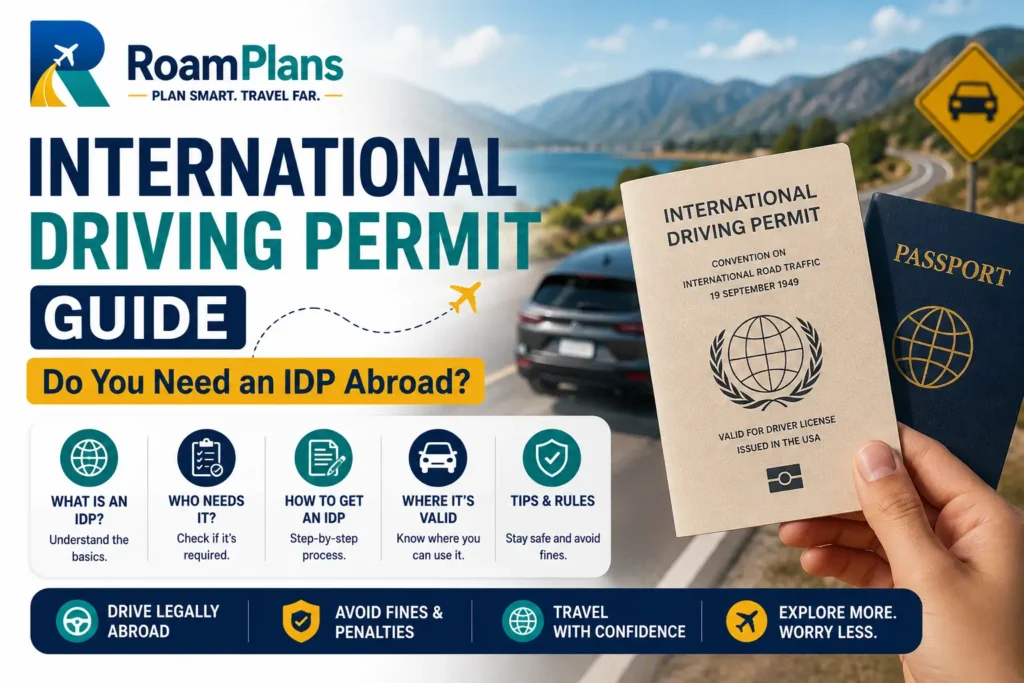
The detailed RoamPlans International Driving Permit Guide: Do You Need an IDP Abroad? will explain what an IDP is, how it differs from a domestic licence, where travelers normally obtain one, and common IDP mistakes.
Some countries require travelers to complete forms before arrival, during the flight, or at the border.
These may be paper forms or online forms.
Common examples include:
The questions vary by destination.
You may be asked for information such as:
Beginners often mix these two processes together.
Immigration mainly checks whether you are allowed to enter the country.
Officers may review your passport, visa, travel purpose, length of stay, and supporting documents.
Customs mainly deals with what you are bringing into the country.
You may need to declare certain food, plants, medicines, commercial goods, large amounts of currency, or other controlled items.
Always answer declaration questions accurately.
Trying to hide an item can create a much bigger problem than declaring something you are unsure about.
The supporting guide Customs and Immigration Explained for International Travelers will explain the full border process from arrival through passport control, baggage collection, customs, and airport exit.
Travel documents may be checked several times during an international trip.
Knowing who may ask for them helps you keep the right paperwork ready instead of searching through emails or bags at the last minute.
Your airline may check whether you appear to meet the entry and transit requirements for your trip before giving you a boarding pass.
Staff may ask for:
Airlines often use international travel databases and destination rules to check whether passengers have the documents needed to board.
If your paperwork is missing, you may be denied boarding even before reaching immigration.
Airport security usually focuses on identity, boarding access, and security screening rather than deciding whether you can enter another country.
Depending on the airport and country, you may need to show:
Some countries have exit immigration checks.
Officers may review your passport, visa status, or legal stay before allowing you to leave.
Not every country uses the same departure process.
Immigration officers decide whether a traveler can enter the country.
They may ask for:
Having a visa does not always guarantee entry. Border officers may still check whether the traveler meets the entry conditions.
Customs officers focus mainly on what you bring into the country.
You may need to declare:
If you are unsure whether an item needs to be declared, check the destination’s customs rules before departure.
Documents can also be needed after immigration.
Hotels may ask for identification during check-in.
Rental companies may request:
Keep key documents easy to reach during your first day instead of packing everything deep inside checked luggage.
Many travel documents now exist in digital form, but I would not depend on a phone alone for an international trip.
Phones can lose battery, break, get stolen, or fail to connect to the internet.
A safer approach is to keep both digital and physical backups for the most useful documents.
Consider storing copies of:
Keep them in a secure location that you can access even if you cannot open your normal email account.
Printed copies can be useful for:
Do not carry your passport photocopy as if it were a legal replacement for the original passport.
Its main value is helping you access your information and explain your identity if the original is lost.
Do not store every important document in the same bag.
If that bag is lost or stolen, you could lose both the original documents and all backups.
A better setup is:
Carry-on: original documents you need during travel
Second secure location: selected paper copies
Secure digital storage: scanned copies
Trusted contact at home: copies of key information where appropriate
The detailed RoamPlans guide How to Store Travel Documents Safely While Traveling will cover document storage and backup methods in more depth.
Losing a passport abroad is stressful, but having a basic emergency plan can make the next steps much easier.
Check whether you lost:
This helps you work out which organizations you need to contact.
If your passport or wallet was stolen, local authorities may ask you to make a police report.
A report can also be useful for insurance claims or replacement-document applications.
Your country’s embassy or consulate can explain the process for replacing a lost passport or getting an emergency travel document.
You may need information such as:
This is one reason keeping a secure passport copy is useful.
If you have a flight scheduled before your documents can be replaced, contact the airline.
Do not assume you will be allowed to board using a photocopy of a passport.
A replacement passport may affect a visa or electronic authorization connected to the old passport number.
Check whether you need to update or replace that authorization before continuing the trip.
If your policy covers lost or stolen travel documents, contact your insurer and keep receipts for eligible expenses.
Travel-document rules can change, so the source you use matters.
Social media posts, forums, old blog articles, and videos can be useful for personal experiences, but they should not be your final source for legal entry requirements.
Use official sources before traveling.
For travelers from the United States, the U.S. Department of State provides destination information about passport rules, visas, entry and exit requirements, safety, local laws, and embassy contacts.
Travelers from other countries should use their own government’s official foreign travel service where available.
The destination country’s official:
can provide current entry information.
This is especially useful for visas, electronic authorizations, permitted stays, and passport rules.
Use recognized government or public health sources for vaccination and health-entry requirements.
Check both your home country’s travel-health advice and the destination’s official requirements.
Use the destination’s customs authority for information about:
Airlines can help confirm boarding and transit-document checks for your route.
This is especially useful for complicated connections.
Still, do not rely on airline advice as your only source for immigration rules.
Airlines commonly use IATA travel-information systems to check passport, visa, and health-document rules.
These systems can be useful for checking how entry requirements apply to a specific nationality and itinerary.
Use a simple verification process:
If two sources appear to disagree, rely on the current official authority responsible for that rule and contact them directly if needed.
Travel documents should be checked early.
Some problems can be fixed in minutes. Others may take weeks or months.
Start with documents that can take the longest to arrange.
Check:
If your passport needs renewal, deal with it early rather than waiting until flights are booked.
Start arranging trip-dependent documents.
This may include:
Keep copies of applications and approval notices as you receive them.
Review your completed travel file.
Check:
This is also a good time to prepare secure digital backups.
Check requirements again.
Look for:
Complete online forms that are allowed or required within a specific pre-arrival period.
Put essential originals in your carry-on or personal bag.
Check that you have:
Do not place your passport or other essential entry documents inside checked luggage.
Use this final check before leaving home.
Many travel-document problems are caused by small planning errors rather than completely missing paperwork.
A passport can still be rejected if it does not meet the destination’s remaining-validity rule.
Check the actual entry requirement.
Some visas take time to process.
Research visa requirements before making expensive non-refundable bookings where possible.
A connection can create additional visa or entry requirements.
Check every country in your route.
Visa-free travelers may still need electronic authorization, onward travel, accommodation information, or other entry documents.
A wrong passport number, date, name, or expiration date can cause problems with visas, airline records, and electronic travel authorizations.
Review every field before submitting it.
Make sure airline, visa, passport, and other key travel records use consistent personal details.
Parents sometimes assume their own documents cover their children.
Check child passport, visa, consent, and custody-related requirements separately.
Prescription status in your home country does not guarantee the medicine can be brought into another country without restrictions.
Check before packing.
Losing one bag should not mean losing your passport, all paper copies, and every backup.
Separate originals and copies where practical.
Screenshots are useful backups, but some authorities may require original documents, official digital records, or printed approvals.
Carry the format required by the destination.
A requirement that applied during your last trip may no longer be current.
Check again for every international journey.
Rules can change between booking and travel.
Recheck official requirements shortly before leaving.
The supporting RoamPlans guide Common Travel Document Mistakes to Avoid Before an International Trip will cover these errors and prevention steps in more detail.
Most international travelers need a valid passport. Depending on your nationality, destination, and route, you may also need a visa, eVisa, electronic travel authorization, return ticket, accommodation details, health records, travel insurance, or other supporting documents.
Sometimes, but not always. Your destination may also require a visa, electronic authorization, proof of onward travel, health documents, or other entry paperwork.
The required remaining validity depends on the destination. Some countries accept a passport valid for the trip, while others require additional months of validity. Check the official rule for your destination before booking.
No. Visa requirements depend on your nationality, destination, reason for travel, and length of stay. You may qualify for visa-free entry, an eVisa, visa on arrival, or an electronic travel authorization instead.
Possibly. Transit requirements depend on your nationality, airport, route, and whether you need to pass through immigration. Check every country you transit through.
Yes, depending on the country and situation. Travelers may be asked to provide an accommodation address or booking information as part of the entry process.
Some destinations may require proof that you plan to leave before your permitted stay ends. A return or onward ticket can be used as evidence where required.
Keeping printed copies of selected documents can be useful even if digital versions are accepted. At minimum, keep secure backups of your passport, visa, accommodation, insurance, and other key travel information.
Children generally need their own valid travel documents. Depending on the trip, they may also need a visa, parental consent letter, birth certificate, custody records, or other supporting paperwork.
Your booking information should match the passport you plan to use. If you notice a name error, contact the airline before travel rather than waiting until check-in.
Contact local authorities if it was stolen, then contact your country’s nearest embassy or consulate. They can explain how to apply for a replacement passport or emergency travel document.
Start with your government’s official travel advice, then confirm the rules through the destination country’s embassy, immigration authority, health authority, and your airline where relevant.
In short, Good travel-document planning is less about carrying a huge folder and more about knowing exactly what your trip requires.
Start with your passport, then check visas, transit rules, health documents, supporting evidence, driving paperwork, and any documents needed for children. Keep the originals secure, create sensible backups, and check current rules through official sources before departure.
I have found that one final document check a few days before an international trip can prevent many avoidable problems. Rules can change after you book, so treat travel documents as something you confirm again rather than something you check only once.
Once your documents are ready, you can head to the airport knowing that the administrative side of the trip has been properly planned.
Browse practical guides, clear explanations, and step-by-step travel advice.
Common Travel Document Mistakes to Avoid Before an International Trip | RoamPlans RoamPlans · Travel Documents Common Travel Document Mistakes to Avoid Before an…
Read guide →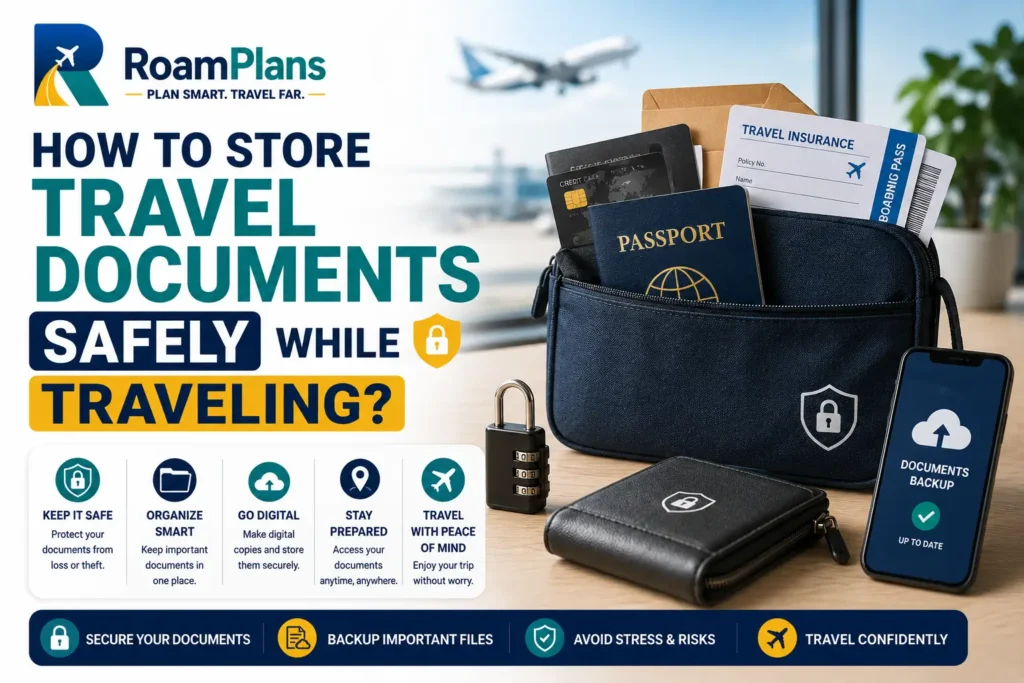
International Driving Permit: Do You Need an IDP? | RoamPlans RoamPlans · Travel Documents International Driving Permit Guide: Do You Need an IDP Abroad?…
Read guide →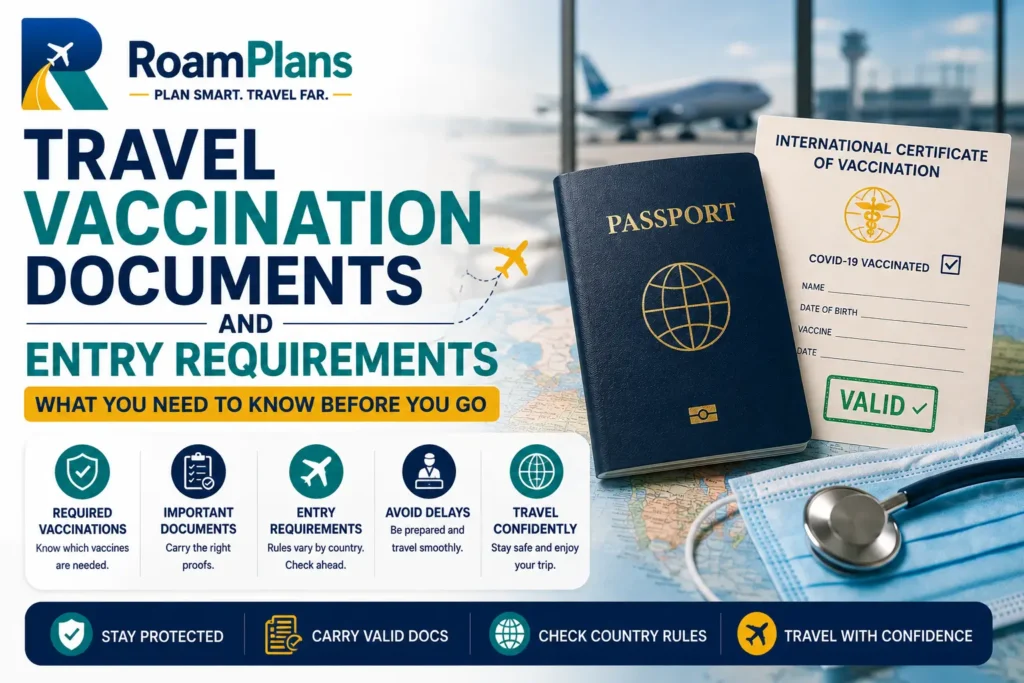
How to Renew Your Passport Before International Travel? | RoamPlans RoamPlans · Travel Documents How to Renew Your Passport Before International Travel? ✦ Renewal…
Read guide →
Beginner’s Guide to Travel Visas | RoamPlans RoamPlans · Travel Documents Beginner’s Guide to Travel Visas ✦ Visa types✓ Application documents↕ Entry requirement checks…
Read guide →Use a practical travel tool to organize your budget, itinerary, packing, or trip costs.