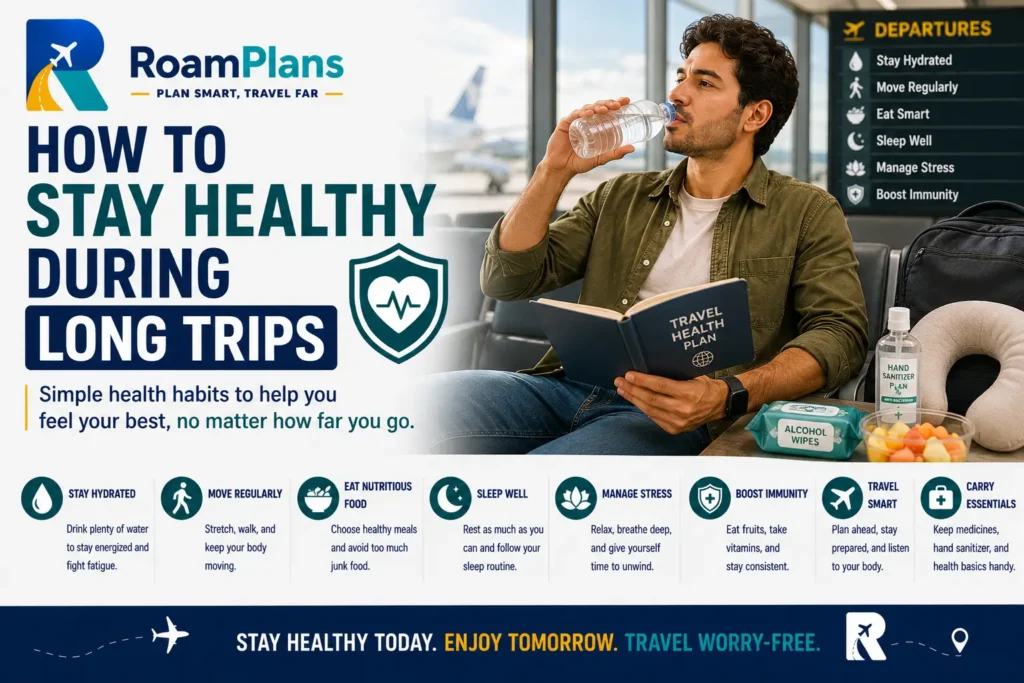
How to Stay Healthy During Long Trips
How to Stay Healthy During Long Trips | RoamPlans RoamPlans · Travel Safety How to Stay Healthy During Long Trips ✓ Sleep and jet…
Read guide →
Travel should feel exciting, but being somewhere unfamiliar also means dealing with risks you may not face at home. Different laws, transportation systems, food standards, scams, weather, and emergency services can all affect how safe a trip feels. The goal is not to worry about every possible problem. It is to prepare for the problems that are realistic and know what you would do if something went wrong.
When I plan a trip, I prefer to handle safety before I leave rather than trying to figure everything out after arriving. I check the destination, save key information offline, think about how I will get around, keep backup access to money and documents, and make sure someone I trust knows where I am going. These are simple steps, but they make traveling in an unfamiliar place much easier to manage.
This complete travel safety guide for beginners explains the main areas every traveler should think about before and during a trip. We will cover personal safety, destination research, scams, health, emergencies, transportation, accommodation, money, documents, and digital safety. Each topic stays brief here because several of them have their own detailed RoamPlans guides.
Safety Note: Conditions can change before or during a trip. Always check current government travel advice, local authorities, weather alerts, and health information for your destination before making safety decisions.
Travel safety is much broader than avoiding crime.
A safe trip starts before you leave home. It includes choosing where you go, learning about local conditions, planning how you will move around, protecting your personal information, preparing for health problems, and knowing who to contact during an emergency.
For a beginner traveler, it helps to think about travel safety in a few simple areas:
You do not need a complicated safety system. You need enough information to make sensible decisions without spending your whole trip worrying.
One of the best times to think about safety is before you pay for the trip.
Start by checking official travel information for the country or region you are considering. If you are traveling from the United States, the U.S. Department of State publishes Travel Advisories for destinations around the world. Its advisories can include information about crime, civil unrest, terrorism, health concerns, kidnapping, natural disasters, and the ability of the U.S. government to provide help.
The U.S. advisory system uses four levels:
| Advisory Level | Meaning |
| Level 1 | Exercise Normal Precautions |
| Level 2 | Exercise Increased Caution |
| Level 3 | Reconsider Travel |
| Level 4 | Do Not Travel |
These levels should be a starting point rather than the only thing you check. Safety can vary within the same country. A specific region, border area, city, or route may have different conditions from another part of the destination.
Also check recent information about:
Do this again shortly before departure because conditions can change after you book.
The U.S. State Department says its advisories are updated as security and safety conditions change, so an old screenshot or travel blog should not replace current official information.
If you want a full process for researching a destination, read How to Check If a Destination Is Safe Before You Travel.
A rule that seems normal at home may be very different somewhere else.
Travelers should check local laws and customs before visiting another country. Rules can affect alcohol, prescription medication, photography, driving, drones, public behavior, clothing in certain places, identification requirements, and items you are allowed to carry.
The U.S. State Department includes local laws and customs as part of its destination guidance because travelers abroad are generally subject to the laws of the country they are visiting.
Do not rely only on social media posts or comments from another traveler. For anything involving entry rules, medications, legal restrictions, or official requirements, check the relevant government or embassy source.
You do not need to memorize every local law. Focus on rules that may affect what you plan to do during the trip.
A travel safety plan does not need to be a large document.
It can be a few pieces of information stored in places you can reach quickly.
Before leaving, make sure you have:
Share your basic itinerary with someone you trust, especially if you are traveling alone. They do not need a minute-by-minute schedule. Your flight details, accommodation, destination, and a general idea of where you will be are usually enough.
It also helps to agree on how you will communicate. If you normally send a message every day or every few days, someone at home is more likely to notice when something is unusual.
For the full preparation process, see How to Build a Travel Emergency Plan Before You Leave.
U.S. citizens and nationals traveling or living abroad can use the Smart Traveler Enrollment Program, or STEP.
STEP is a free State Department service that allows travelers to receive messages from the nearest U.S. embassy or consulate. These messages can include security updates, demonstrations, weather events, health issues, and changes to travel advice.
It can also make it easier for the U.S. government to communicate with travelers during certain emergencies.
STEP does not make a destination safe and it does not replace your own planning. Think of it as another source of official information that may help you respond when local conditions change.
Travelers from other countries can check whether their own government offers a similar registration or travel-alert service.
Phones are useful travel tools, but they can be lost, stolen, damaged, or left without battery or internet access.
Do not make your entire trip dependent on one device.
Save the information you would need if your internet stopped working, including:
A small printed backup can also make sense for information you cannot afford to lose access to.
This does not mean carrying printed copies of every booking. The goal is simply to avoid being stranded because one phone stopped working.
Most personal travel safety comes down to awareness and good decisions rather than fear.
Pay attention to what is happening around you. If a street, vehicle, person, or situation makes you uncomfortable, you do not need to stay just because you are worried about appearing rude.
A few habits help in many destinations:
You do not need to act suspicious of everyone you meet. Talking to local people and other travelers is one of the best parts of travel. The aim is simply to keep control of your money, transportation, accommodation details, and personal decisions.
Traveling alone gives you freedom, but you also have to handle every decision yourself.
Before going somewhere alone, think about how you will return, whether you will have phone service, what time you expect to be back, and who would know where to look if you needed help.
Try to arrive in a new destination with your first transportation and accommodation already clear. This can remove a lot of pressure when you are tired, carrying luggage, and still learning how the area works.
Solo travelers also benefit from regular check-ins with someone they trust.
For detailed advice, read Solo Travel Safety Tips for Beginners.
Women traveling alone may face some risks and social situations that deserve separate attention, including unwanted attention, harassment, accommodation privacy, local cultural expectations, nightlife, and personal transportation choices.
Research the destination before leaving, especially local expectations and any issues reported by other female travelers. At the same time, avoid treating one person’s story on social media as proof that an entire destination is safe or unsafe.
Have a clear way to leave situations that make you uncomfortable and keep control of your transportation whenever possible.
The dedicated Female Solo Travel Safety Guide covers this topic separately so we do not repeat all of that advice here.
Scammers often depend on confusion, urgency, distraction, or the fact that a visitor does not know how things normally work locally.
Some scams happen before the trip even begins.
The U.S. Federal Trade Commission warns travelers about fake vacation rentals, travel offers that lack clear details, suspicious payment requests, and other travel-related fraud. In June 2026, the FTC again advised travelers to research companies, hotels, rentals, and agents before committing to an offer.
During the trip, scams can take other forms. Depending on the destination, travelers may encounter:
Do not try to memorize every scam in existence. Before visiting a destination, spend a few minutes checking which scams are commonly reported there and how legitimate local services normally operate.
One simple warning sign is unexpected pressure. If someone insists that you act, pay, follow them, hand something over, or make a decision immediately, give yourself time to verify what is happening.
Our Common Tourist Scams and How to Avoid Them guide covers scam types and prevention in more detail.
Theft can happen quickly, especially in busy places where travelers are distracted by luggage, maps, tickets, or their phones.
Airports, train stations, public transportation, tourist attractions, markets, and crowded streets can require extra attention. The U.S. State Department advises travelers to avoid displaying expensive valuables, keep personal items secure, stay alert, and research local crime risks before traveling.
Try to make yourself a harder target without becoming nervous about every person around you.
Simple habits can help:
If someone tries to rob you and the situation could become violent, protecting yourself matters more than protecting a phone, wallet, watch, or bag.
Once you are somewhere safe, you may need to contact local police, cancel payment cards, secure online accounts, contact your insurer, or ask your embassy or consulate for help depending on what was taken.
If your passport is lost or stolen, follow your passport-replacement plan rather than relying on this general safety section. RoamPlans covers document protection separately in How to Store Travel Documents Safely While Traveling.
For a full response plan after theft, read What to Do If You’re Robbed or Your Valuables Are Stolen Abroad.
Losing access to money can turn a small travel problem into a much bigger one.
The goal is not to carry a large emergency cash reserve. It is to avoid depending on a single wallet, card, phone, or payment account.
For example, if your main card stops working and your backup card is sitting beside it in the same stolen wallet, the backup does not help.
A better setup is to separate your payment options.
You might carry:
Keep enough money available for basic needs such as transportation, food, or reaching your accommodation if your main payment method fails.
Be careful around ATMs as well. If possible, use machines attached to banks or other established locations rather than isolated machines in unfamiliar areas.
Also check your bank’s international-use settings and know how to freeze a card quickly from your banking app or by phone.
This section is about financial safety, not travel budgeting. Your travel budget tells you how much you plan to spend. Your backup-payment plan tells you how you will manage if something goes wrong.
Your passport, identification, visas, booking records, and other travel documents deserve the same care as your money.
Do not keep every original document and every backup together.
Depending on your destination and local requirements, you may be able to leave certain originals securely at your accommodation and carry only what you need for the day. In other places, local rules may require travelers to carry identification, so check official destination guidance before deciding what to leave behind.
Before the trip, keep secure copies of key information where you can reach them if the originals disappear.
This may include:
Do not post passport photos or other identification details publicly.
If you lose a passport abroad, the replacement process belongs to your Travel Documents plan, so this pillar should not repeat it in detail.
For document storage, backups, and what to do after losing documents, use How to Store Travel Documents Safely While Traveling and the related RoamPlans Travel Documents guides.
Your phone may hold your boarding passes, maps, hotel bookings, banking apps, email, photos, passwords, and access to your accounts.
That makes digital safety part of travel safety.
Before leaving, protect your phone with a strong screen lock and make sure you know how to locate, lock, or erase it remotely if the device supports those features.
Be careful with public Wi-Fi. CISA advises travelers to avoid unsecured public Wi-Fi where possible, turn off Bluetooth when it is not needed, be cautious with unfamiliar charging connections, and watch for phishing messages and suspicious links.
A few habits can reduce digital risk:
Also think about what you share online.
Posting your exact hotel, room number, live location, or detailed plans publicly can reveal more information than you intended. The State Department advises travelers not to share detailed travel plans online until after returning home.
You can still share your trip with friends and family. Just think about who can see the information and whether they need to know your exact location in real time.
A beautiful hotel photo does not tell you everything about safety.
Look at the location, recent guest feedback, access to transportation, and how you expect to arrive and leave. If you expect to arrive late at night, know how you will get from the airport, station, or bus stop to the property before you arrive.
The State Department recommends researching lodging in advance, checking the surrounding area, considering security features, and knowing the emergency exits after checking in.
Once you reach your room:
If you are staying in a vacation rental, hostel, guesthouse, or other property without a traditional front desk, check how you would contact the host or local support if a problem occurs.
Your Accommodation category already covers neighborhood selection in more detail. See How to Choose a Safe Area to Stay (Beginner’s Guide) rather than repeating that topic here.
Transportation deserves more attention than simply finding the cheapest way from one place to another.
Road systems, driving habits, taxi rules, public transportation, pedestrian behavior, and vehicle standards can be very different from what you are used to.
The CDC’s 2026 Yellow Book identifies motor vehicle crashes as a major travel-related injury risk and advises travelers to choose transportation carefully, stay alert, use seat belts, and avoid riding with impaired drivers.
The State Department also advises travelers to research licensed taxis or rideshare services, arrange trusted airport transportation where needed, and learn about local public-transport safety.
Before using a taxi or rideshare:
One small detail can create a serious problem: traffic may move from the opposite direction from what you are used to.
Look both ways before crossing even if you think you know where traffic should come from.
Avoid walking while staring at your phone, especially near busy intersections, stations, bike lanes, or unfamiliar road systems.
Driving abroad adds several new factors at the same time:
different road signs, local traffic rules, unfamiliar vehicles, new road layouts, and sometimes driving on the opposite side of the road.
If you are tired after a long flight, consider whether immediately driving a rental car is a good idea.
Motorbikes also deserve extra care. The CDC advises travelers to avoid motorcycles and motorbikes when possible and stresses helmet use for those who ride them.
Your Transportation category covers rental cars, driving rules, taxis, ride apps, and public transportation separately, so use those guides when planning the actual transport side of the trip.
Trying local food is one of the best parts of travel, but food and water standards can vary between destinations.
The CDC says contaminated food and drinks can cause travelers’ diarrhea and other illnesses. It recommends safer eating and drinking habits based on local conditions.
You do not need to avoid local food because you are traveling. You need to know when extra care makes sense.
Pay attention to:
If official guidance says local tap water may not be safe, use a safer drinking-water source and think about water used for ice or brushing your teeth as well. CDC guidance specifically addresses these situations for destinations where water contamination is a concern.
Street food should be judged using the same basic food-safety principles as other food. Look at how it is cooked, stored, handled, and served.
Do not let fear stop you from enjoying local food. A little research before the trip can tell you which precautions actually apply to your destination.
For the full topic, read Food and Water Safety While Traveling.
Travel can change your normal routine.
Long flights, different sleep schedules, heat, cold, unfamiliar food, more walking, less rest, altitude, insects, and long days can all affect how you feel.
Before international travel, check the CDC destination page or the relevant health authority for your destination. Health advice can vary by country, region, season, planned activities, and the individual traveler.
For everyday travel health, focus on simple habits:
If you take regular medication, check the rules for your destination before leaving.
Some medicines that are legal or easily available in the United States can face restrictions elsewhere. The State Department advises travelers to check destination-specific rules for medications and other controlled items before international travel.
Keep medication in suitable packaging and bring the information or documents required for your destination.
This connects with your Travel Documents category, especially where medication letters, health certificates, or entry documents may apply.
You do not need to map every hospital before a normal trip.
But if you are visiting a remote place, managing an existing health need, taking part in higher-risk activities, or staying somewhere for a long period, it makes sense to know where medical care is available.
Medical facilities and emergency response may differ from what you are used to at home, particularly outside major cities. CDC guidance notes that access to trauma care can vary considerably by destination and location.
Keep any insurance or medical-assistance contact details easy to access.
Your Travel Medical Insurance Guide for International Travelers covers the insurance side separately.
For daily health habits and longer travel, continue with How to Stay Healthy During Long Trips.
Safety conditions are not always related to crime. Weather, wildfires, flooding, earthquakes, storms, transport strikes, demonstrations, or other local events can change a trip very quickly.
Before leaving, check which hazards are realistic for your destination and the time of year you are visiting. You do not need to prepare for every possible disaster. Focus on events that actually occur in that area.
The CDC recommends learning which emergencies can happen at your destination, having a communication plan, identifying safe meeting places if your group becomes separated, and keeping basic supplies and key information available.
During the trip:
Government travel advisories can also identify risks related to natural disasters or short-term events that may affect traveler safety.
If conditions change after you arrive, adjusting your plans is usually better than forcing an itinerary that no longer makes sense.
A demonstration that begins peacefully can still affect roads, public transportation, access to airports, or movement around a city.
If you notice a large gathering or unexpected security activity, find out what is happening before walking into the area. Follow local authority instructions and check official alerts when available.
This is another reason to avoid planning a trip so tightly that you have no room to change your route or timing.
U.S. travelers should also monitor current State Department information during international trips because security conditions and transportation access can change during a crisis. The department may issue information through embassies, consulates, travel advisories, and STEP messages.
You do not need to follow the news every hour during your vacation. A quick check is enough when local conditions seem unusual or when an official alert is issued.
Do not assume that 911 works everywhere.
Emergency numbers differ between countries. Before arriving, save the local numbers for police, ambulance, and fire services where relevant. The U.S. State Department specifically recommends learning the local equivalent of 911 before traveling.
Store these numbers in your phone and keep them with your offline emergency information.
If you are traveling with children, older family members, or a group, make sure more than one person has access to the information.
Also learn enough about your location to explain where you are during an emergency. A hotel name, street address, nearby landmark, or map pin may help when you are unfamiliar with the local area.
Even good preparation cannot prevent every problem.
A traveler can become sick, lose a phone, experience theft, miss transportation, become separated from a group, or find themselves affected by a local emergency.
When something serious happens, try to deal with the immediate problem before worrying about the rest of the itinerary.
A simple order can help.
If there is an immediate threat, move away from it when you can do so safely.
Your first concern should be your physical safety, not recovering luggage, taking photos, arguing over money, or protecting replaceable belongings.
Call the appropriate police, ambulance, fire, or other local emergency service if the situation requires urgent help.
Do not wait for your travel insurer, airline, hotel, or someone back home to solve an immediate emergency that needs local assistance.
Once the immediate situation is under control, tell a trusted person what happened and where you are.
If you are traveling with other people but have become separated, use the meeting or communication plan you agreed on before the trip.
Depending on the situation, this could mean:
Handle the most time-sensitive problems first.
The next contact depends on what happened.
You may need:
For U.S. citizens abroad, the nearest U.S. embassy or consulate may provide help during certain emergencies, including situations involving crime, lost passports, or wider crises.
The State Department also maintains emergency assistance channels for U.S. citizens abroad.
This pillar gives you the basic response. How to Build a Travel Emergency Plan Before You Leave explains how to prepare for these situations before the trip begins.
Some beginner travelers assume their embassy can solve almost any problem abroad.
Embassies and consulates can provide several forms of assistance, but they do not replace local police, hospitals, insurance companies, banks, or airlines.
For example, a U.S. embassy or consulate may be able to help a U.S. citizen who has lost a passport, become a victim of crime, or needs assistance during a major crisis.
But you should still contact the organization that directly handles the problem.
If your card is stolen, contact your bank.
If you need urgent medical help, contact local emergency or medical services.
If your flight is canceled, contact your airline.
If a crime has taken place, contact local police where appropriate.
Knowing who handles which problem can save time when you are already under stress.
Travel insurance can help with certain financial losses, medical expenses, cancellations, emergencies, or other covered events, depending on the policy.
But insurance does not replace good safety decisions.
If you are sick or injured, seek suitable help rather than delaying care while trying to work out whether every expense will be covered. Once the immediate situation is handled, contact the insurer according to your policy requirements.
CDC advises international travelers to know how they would obtain medical care abroad and to check what their existing health coverage includes before leaving.
Keep insurance contact details and your policy information somewhere you can reach them without searching through old emails.
For coverage, exclusions, medical expenses, claims, and choosing a policy, use the RoamPlans Travel Insurance guides rather than relying on this safety pillar.
Many travel safety problems do not begin with one dramatic decision. They start with small habits that leave a traveler with fewer options when something goes wrong.
Here are some mistakes worth avoiding.
Passport, cash, two bank cards, and a phone should not all become one package that disappears together.
Separate your backups.
Landing late at night in an unfamiliar destination is a poor time to start comparing random transportation offers.
Know your basic arrival plan before the trip.
Busy tourist areas can still have pickpocketing, scams, traffic hazards, and other problems.
Stay aware even when many other visitors are around.
If your phone contains your map, hotel address, tickets, payment access, and communication apps, running out of battery can affect more than convenience.
Charge before long days and consider a suitable backup charging option.
Think before publicly sharing your exact location, accommodation details, or future movements.
Share what you are comfortable with, but keep sensitive details limited to people who need them.
Confirm the vehicle and driver when using an app-based service, and use official taxi systems where available.
Do not assume every person approaching tourists at an airport or station represents an authorized transportation service.
Alcohol can reduce your ability to judge people, routes, transportation, money decisions, and unfamiliar situations.
Enjoying nightlife and staying aware can exist together.
Something you routinely do at home may be restricted elsewhere.
Check rules related to your planned activities instead of assuming they are the same everywhere.
One blocked, damaged, lost, or stolen card should not leave you without any way to pay for basic needs.
A viral post saying a destination is completely safe or extremely dangerous may leave out location, timing, context, or the traveler’s own circumstances.
Use current official information along with recent local research.
These are only the basic mistakes. Travel Safety Mistakes Beginners Should Avoid covers the topic separately.
You do not need dozens of safety tasks before every vacation.
Use this checklist as a final review.
A checklist cannot make every trip risk-free. Its job is to make sure one forgotten detail does not leave you without options.
Research your destination, know local emergency numbers, protect your money and documents, use verified transportation, learn common scams, follow local health advice, share basic plans with someone you trust, and keep backup information available offline.
You do not need to prepare for every possible problem. Focus on the risks that are realistic for your destination and activities.
Start with current government travel information for your destination. Check local laws, transportation, health advice, common scams, emergency contacts, and the area where you will stay.
During the trip, stay aware of your surroundings and adjust plans if local conditions change.
Yes, sharing basic trip information with someone you trust can be useful, especially for international or solo travel.
You can share your flights, accommodation, destination, key activities, and expected communication schedule without sending every detail of every day.
Avoid keeping all of your cash and payment cards together. Carry a primary payment method and keep a backup somewhere separate.
Use established ATMs where possible, know how to freeze a missing card, and keep enough backup access to money for basic needs.
Open public networks can carry added security risks. Avoid using networks you do not trust for sensitive activity, confirm network names before connecting, turn off automatic connections, and protect key accounts with strong passwords and two-factor authentication.
Deal with immediate danger first.
Get somewhere safe, contact local emergency services if needed, communicate with someone you trust, protect anything that remains at risk, and then contact the organizations that can help with the specific problem.
Having these contacts prepared before departure makes the process much easier.
No destination or trip can be guaranteed to be free from risk.
Risk also varies by location, timing, activity, personal circumstances, weather, health, and changing local conditions. Good travel safety means reducing avoidable risks and being prepared to respond if something unexpected happens.
In short, Travel safety is not about spending your trip expecting something bad to happen. Good preparation gives you more control when plans change. Research the destination, protect your essentials, make a simple emergency plan, stay aware, and use current official information when conditions matter. Once those basics are handled, you can focus much more of your attention on enjoying the trip.
Browse practical guides, clear explanations, and step-by-step travel advice.
How to Stay Healthy During Long Trips | RoamPlans RoamPlans · Travel Safety How to Stay Healthy During Long Trips ✓ Sleep and jet…
Read guide →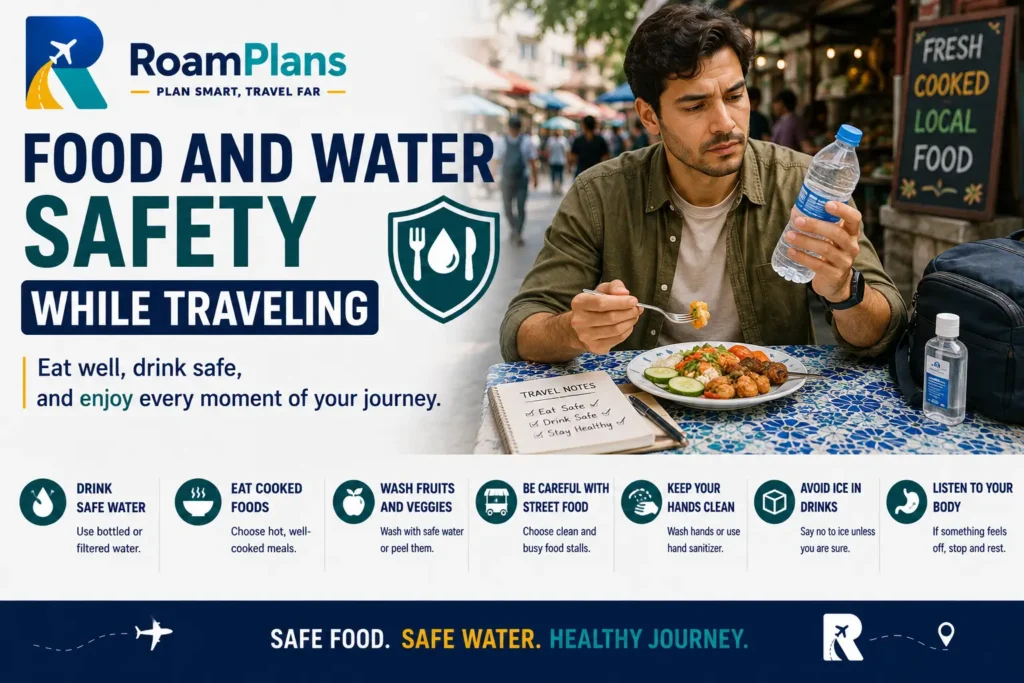
Food and Water Safety While Traveling | RoamPlans RoamPlans · Travel Safety Food and Water Safety While Traveling ✓ Safer food choices ⌖ Water…
Read guide →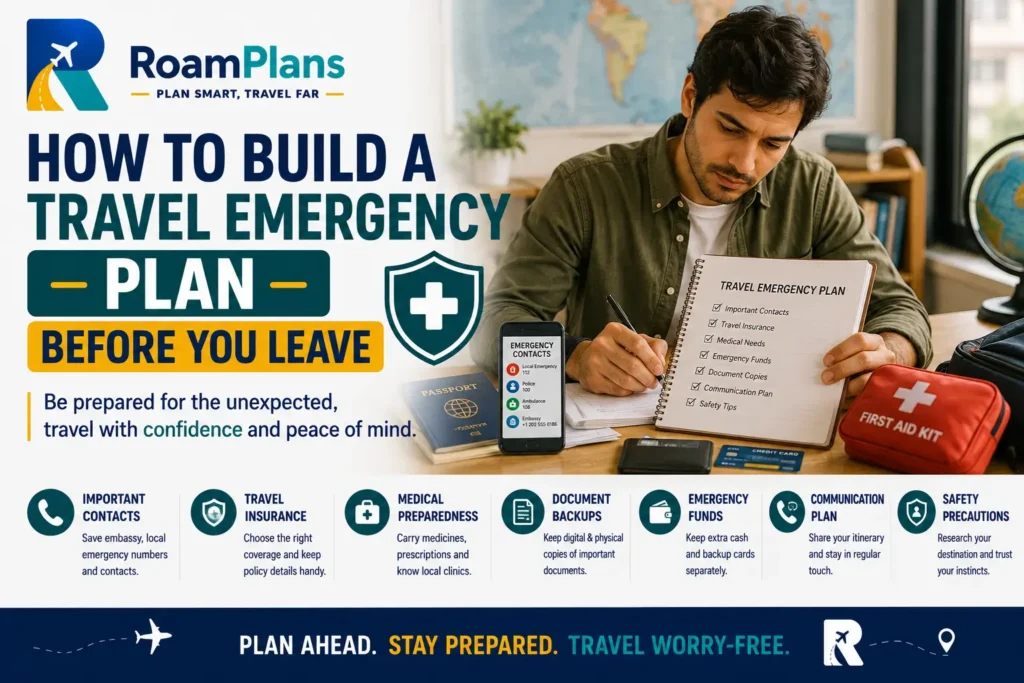
How to Build a Travel Emergency Plan Before You Leave | RoamPlans RoamPlans · Travel Safety How to Build a Travel Emergency Plan Before…
Read guide →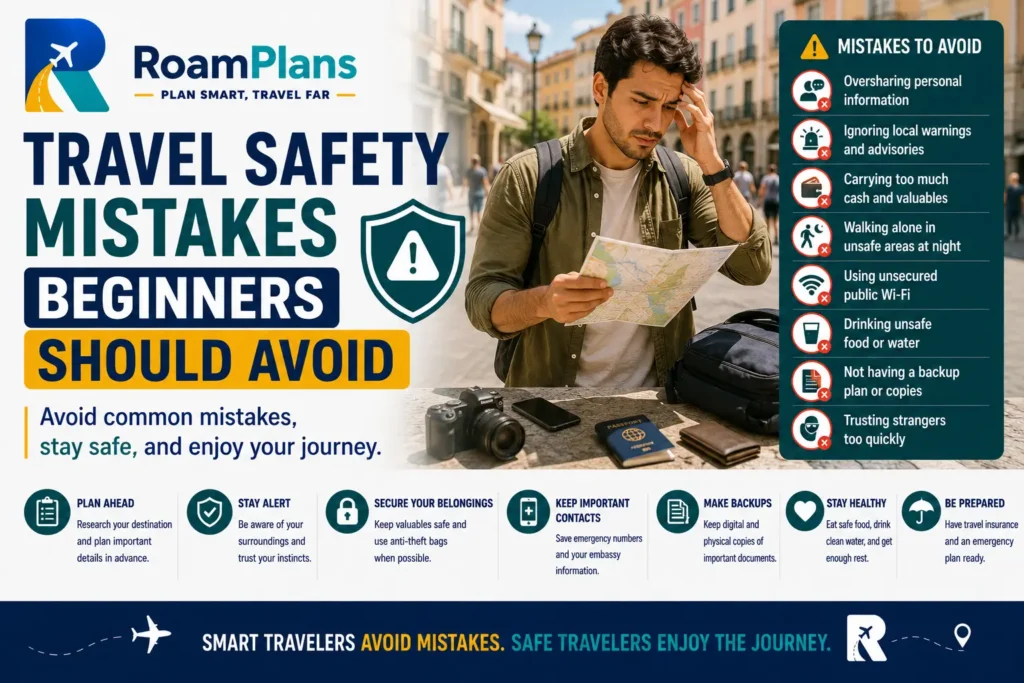
Travel Safety Mistakes Beginners Should Avoid | RoamPlans RoamPlans · Travel Safety Travel Safety Mistakes Beginners Should Avoid ✓ Planning mistakes⌖ Scams and transport✦…
Read guide →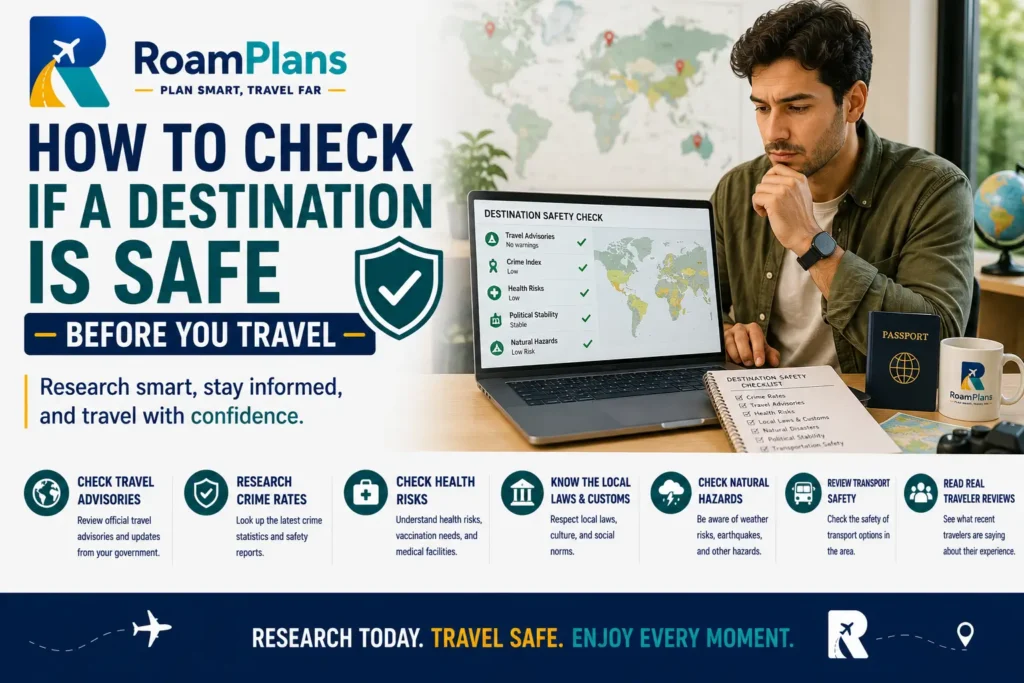
How to Check If a Destination Is Safe Before You Travel | RoamPlans RoamPlans · Travel Safety How to Check If a Destination Is…
Read guide →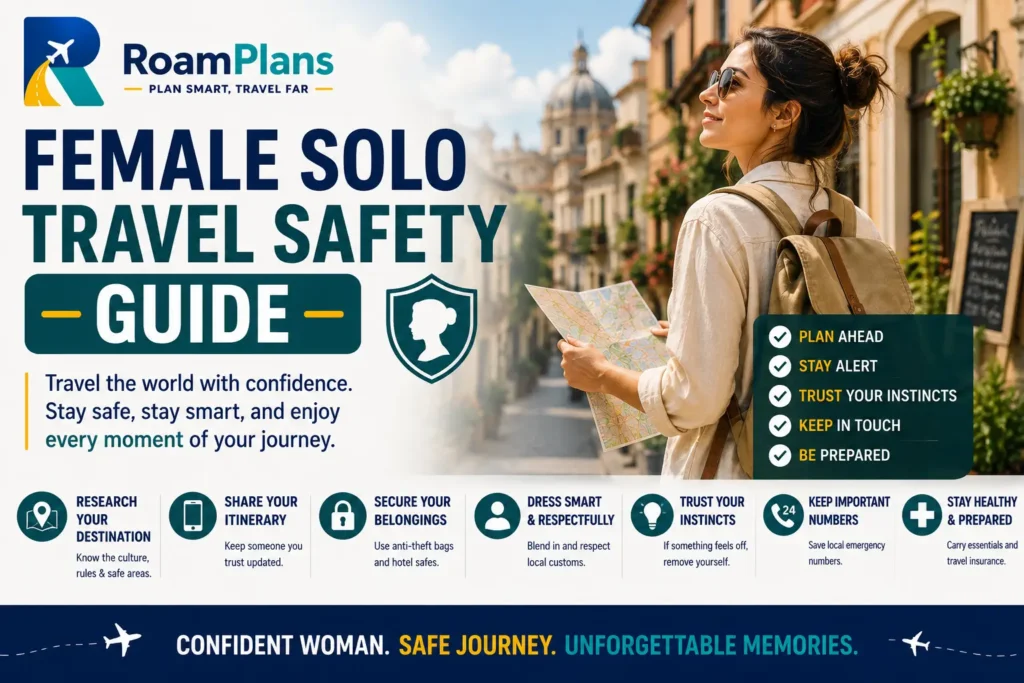
Female Solo Travel Safety Guide | RoamPlans RoamPlans · Travel Safety Female Solo Travel Safety Guide ✓ Women-specific research ⌖ Safer stays and transport…
Read guide →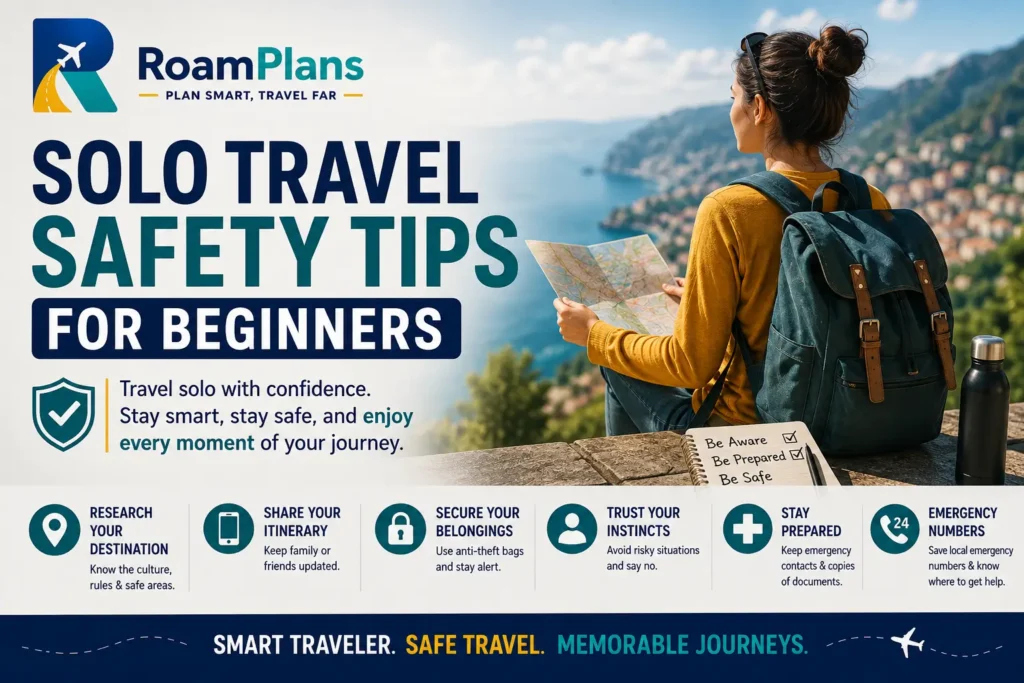
Solo Travel Safety Tips for Beginners | RoamPlans RoamPlans · Travel Safety Solo Travel Safety Tips for Beginners ✓ Safer solo planning ⌖ Arrival…
Read guide →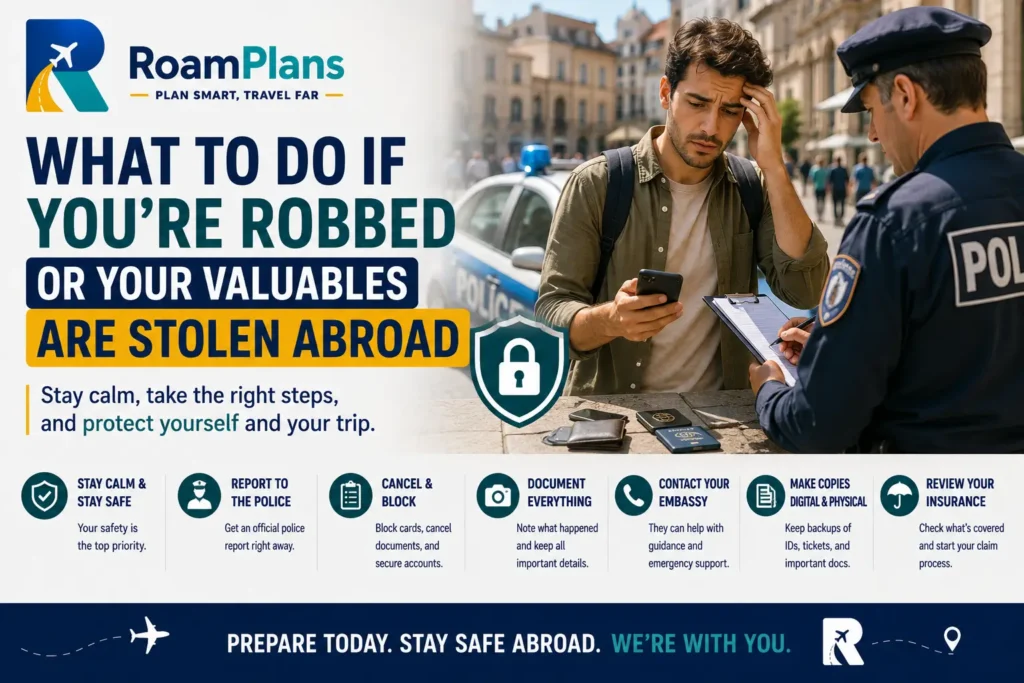
Robbed Abroad? What to Do After Theft | RoamPlans RoamPlans · Travel Safety What to Do If You’re Robbed or Your Valuables Are Stolen…
Read guide →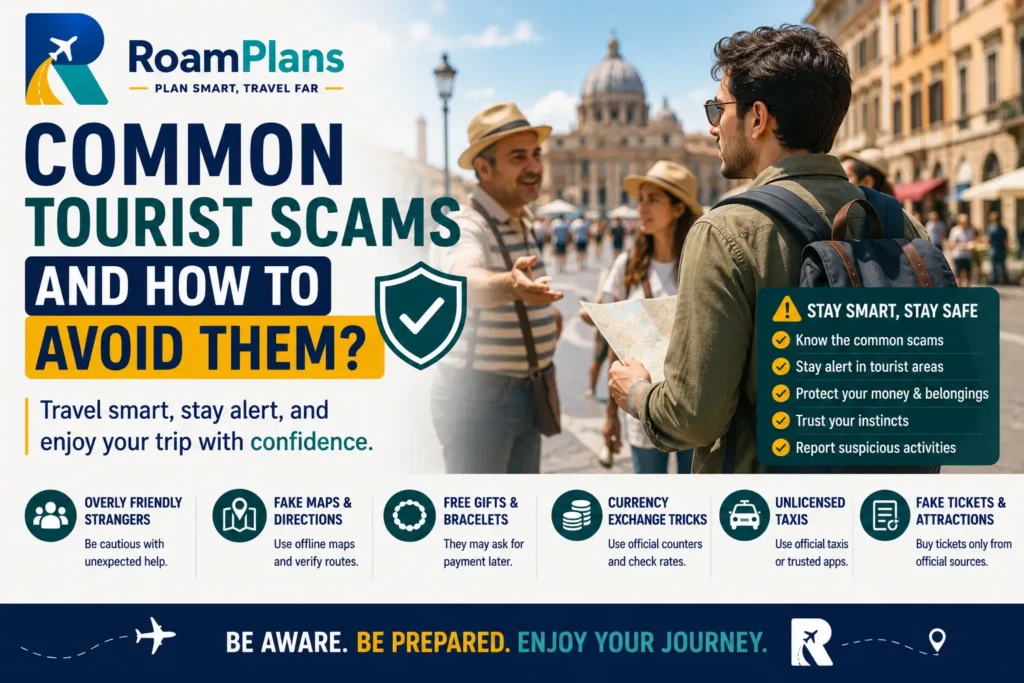
Common Tourist Scams and How to Avoid Them | RoamPlans RoamPlans · Travel Safety Common Tourist Scams and How to Avoid Them ✓ Common…
Read guide →Use a practical travel tool to organize your budget, itinerary, packing, or trip costs.