How to Check If a Destination Is Safe Before You Travel
Before I decide whether a destination fits a trip ↗, I do not rely on one safest countries list, a viral video, or a single traveler’s experience. I start with current official information, then narrow the research from the country to the region, city, neighborhood, transportation, health situation, weather, and activities I actually plan to do. A destination can look very different once you research the exact trip instead of judging the whole country with one label.
This matters even more for beginner travelers. Search results and social media can make a place sound either completely safe or extremely dangerous, while the real answer is usually more specific. One part of a country may have normal tourist activity while a border region has a serious warning. A city may be reasonable for daytime sightseeing while certain transport routes or areas need extra care after dark.
This guide explains how to check if a destination is safe before you travel, especially for U.S. travelers planning an international trip. You will learn how to read Travel Advisories, check regional warnings, review crime and health risks, research local laws, look at transportation and weather conditions, and compare current information without becoming overwhelmed.
Safety Note: Conditions can change after you book. Check official destination information while planning, shortly before departure, and again during the trip if there is a major local event or new advisory.
Key Takeaways
Start with current government travel advice rather than blogs or social media.
Read the full Travel Advisory instead of judging a destination only by its level.
Check whether higher-risk warnings apply to the entire country or only certain regions.
Look at the reason behind an advisory, such as crime, unrest, terrorism, kidnapping, or health concerns.
Research the exact cities and areas you expect to visit.
Check current health notices separately because health conditions can change quickly.
Review local laws and customs before making assumptions based on rules at home.
Consider transportation, weather, natural hazards, accommodation location, and planned activities.
Compare several current sources when personal reports and official guidance seem very different.
Repeat your checks shortly before departure because safety conditions can change.
What Does It Mean for a Destination to Be Safe?
There is no single test that can prove a destination is safe.
Travel risk depends on several factors working together.
For example:
Country
Region
City
Neighborhood
Time of day
Local conditions
Transportation
Weather
Health risks
Activities
Traveler profile
A destination that works well for one traveler may require different precautions for another.
A traveler staying in a major hotel district and using established transportation may face different risks from someone driving through remote border areas.
A solo traveler may make different decisions from a family traveling with young children.
Someone going on a normal city break may need different preparation from someone planning mountain trekking, nightlife, diving, or a long road trip.
That is why I prefer asking:
rather than:
That question leads to much better research.
Start with Official Government Travel Advice
For U.S. travelers, the first place I would check for an international destination is the U.S. Department of State.
The State Department publishes Travel Advisories for destinations around the world and currently uses four advisory levels.
This gives you a starting point.
It does not give you the entire answer.
The full advisory may contain more useful information than the number itself.
What Does Level 1 Mean?
Level 1: Exercise Normal Precautions is the lowest State Department advisory level.
That does not mean:
Normal travel risks can still exist, including:
Theft
Scams
Road accidents
Weather
Health problems
Local emergencies
You should still research the places you intend to visit and use normal travel-safety habits.
A useful real example is Canada, which was listed at Level 1 in the State Department’s June 5, 2026 advisory. The advisory still exists because travelers need current destination information rather than a guarantee of zero risk.
Treat Level 1 as:
Normal precautions are appropriate based on the current advisory.
Do not read it as:
What Does Level 2 Mean?
Level 2: Exercise Increased Caution tells travelers that there are identified safety or security concerns that deserve more attention.
The reason matters.
One Level 2 destination may have a crime concern.
Another may have terrorism, civil unrest, kidnapping, or another identified risk.
For example, Costa Rica’s April 2, 2026 advisory was Level 2 due to crime.
That does not mean every tourist visiting Costa Rica faces the same level of crime at every place and every time.
It means a traveler should read the reason for the advisory and understand which precautions apply.
This is why the advisory level + reason + location matters more than the number alone.
What Does Level 3 Mean?
Level 3: Reconsider Travel is much stronger guidance.
At this level, do not treat the warning as something to quickly dismiss because other travelers say they went there and were fine.
Read:
Why the destination received Level 3
Which locations are affected
Whether the advisory applies countrywide
Whether conditions have changed recently
What the State Department recommends travelers do
Your reason for travel matters too.
A traveler deciding whether to take an optional vacation has a different decision from someone who needs to travel for family, work, or another serious reason.
If you are considering optional leisure travel to a Level 3 destination, take time to judge whether the risks fit your experience and your ability to manage them.
What Does Level 4 Mean?
Level 4: Do Not Travel is the highest State Department advisory level.
This can be linked with risks such as armed conflict, kidnapping, detention, serious unrest, limited government assistance, or other severe conditions depending on the destination.
Read the advisory carefully because Level 4 can sometimes apply to a specific part of a country rather than every location.
For example, current State Department guidance for Rwanda identifies a Level 4 warning for the area within 10 kilometers of the Democratic Republic of the Congo border due to unrest, while its guidance separately describes conditions elsewhere.
This shows why looking only at a country’s name beside a warning can give you an incomplete picture.
Read the Entire Travel Advisory
One of the biggest mistakes beginner travelers make is stopping after seeing:
Level 1
or:
Level 2
Open the full advisory.
Current State Department destination pages can include sections covering:
Entry, exit, and visa requirements
Safety and security
Local laws and customs
Health
Transportation
Weather and natural disasters
Embassy and consulate information
Those sections tell you how the advisory connects to your actual trip.
For example, you might discover that:
Certain border regions have stronger warnings.
Road travel at night needs extra care.
Demonstrations occur in certain places.
Emergency medical facilities are limited outside major cities.
Particular local laws affect tourists.
Severe weather is a seasonal concern.
That information is much more useful than simply saying:
Look at Why the Advisory Was Issued
Travel Advisories can identify different types of risk.
Do not treat them as interchangeable.
A destination affected mainly by petty theft needs a different plan from one experiencing armed conflict.
Your research may need to consider:
Crime
Civil unrest
Terrorism
Kidnapping
Wrongful detention
Health risks
Natural disasters
Limited emergency support
Armed conflict
The practical question becomes:
What behavior or planning decision does this risk change for me?
For crime, that may affect valuables and transportation.
For unrest, it may affect demonstrations and movement between areas.
For a health concern, it may change medical preparation.
For natural hazards, it may affect the season you travel.
This keeps your research useful rather than simply collecting scary information.
Check the Date of the Advisory
Safety information can become outdated.
Look at:
When the advisory was issued
Whether it was recently updated
Whether the advisory level changed
Whether only the text changed
Whether a new event has happened since the last update
State Department destination pages can show advisory history, including past levels and updates. For example, Costa Rica’s page records an April 2, 2026 Level 2 advisory and notes that the summary was updated without changing the level.
That distinction can be useful.
A level may remain the same while the details inside the warning change.
Do not save an advisory screenshot six months before departure and assume it still tells you everything you need to know.
Open the current page again.
Check Whether Only Certain Regions Have Higher Risk
This is one of the most useful steps in destination safety research.
Country-level labels can hide major regional differences.
Thailand is a good current example.
The State Department’s July 7, 2026 advisory lists Thailand overall at Level 1: Exercise Normal Precautions, while identifying increased-risk areas near the Thai-Cambodian border and in Yala, Pattani, and Narathiwat provinces.
That means:
Thailand = Level 1
does not mean:
Every part of Thailand has exactly the same current risk.
Always read any section covering:
Borders
Provinces
States
Islands
Rural regions
Conflict areas
Specific cities
Then compare those locations with your itinerary.
If your entire trip stays far from an affected region, the warning may change your decision differently than if your route goes directly through it.
Map the Warning Against Your Actual Route
After finding regional warnings, open your itinerary.
Look at every major location:
Airport → city → hotel → day trip → next city → border crossing → departure airport
Then ask:
Does my route enter a warned-against area?
Am I passing close to one?
Does my road or rail route go through it?
Is a planned day trip affected?
Are transportation connections disrupted by the issue?
This matters because travelers sometimes say:
That may be true.
Or the airport transfer, highway, border crossing, or tour route may pass through the affected area.
Check the route instead of guessing from distance.
Do Not Treat an Entire City as One Safety Zone
Country research should narrow into city research.
City research should narrow further where it matters.
A large city can contain:
Major tourist areas
Residential districts
Business districts
Nightlife areas
Transport hubs
Quiet outskirts
Areas with higher crime reports
Do not search only:
Is Mexico City safe?
or:
Is Paris safe?
Search the actual situations you expect to face:
Area around your accommodation
Airport transfer
Main transport stations
Night routes
Attractions
Planned day trips
For accommodation, the question is not only whether the city is generally suitable for tourists.
You also need to know whether the particular location works for the way you will use it.
For detailed accommodation-area research, use How to Choose a Safe Area to Stay ↗ (Beginner’s Guide) rather than relying on a general country advisory.
Check Crime Risks Separately
Travel advisories may identify crime as a concern, but you still need to understand what kind of crime matters to a visitor.
Look for information about:
Pickpocketing
Phone theft
Robbery
Vehicle break-ins
Taxi crime
ATM or card fraud
Tourist scams
Assault
Theft on public transport
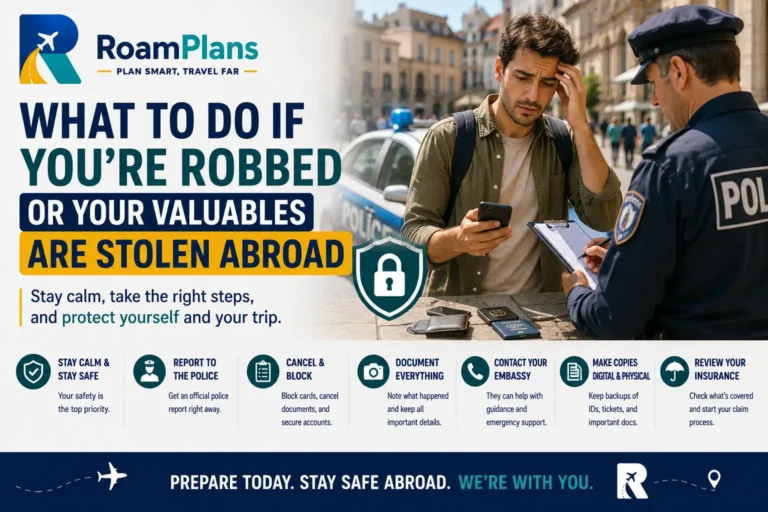
The State Department maintains specific crime guidance for travelers and recommends researching destination crime risks, securing valuables, using suitable transportation, and staying alert to local conditions.
Different crime patterns require different preparation.
If the main issue is pickpocketing, you may change how you carry your phone and wallet.
If vehicle break-ins are common, you may avoid leaving luggage in a rental car.
If taxi-related crime is identified, you may arrange airport transportation differently.
Useful safety research always ends with:
What should I do differently because of this information?
Check Whether Crime Is Concentrated in Particular Situations
Do not stop after reading:
Look for context.
Ask:
Does it mainly involve petty theft?
Are tourists specifically targeted?
Are incidents concentrated after dark?
Are certain transport systems mentioned?
Are particular neighborhoods identified?
Are rental cars targeted?
Are robberies a concern?
Does official guidance recommend avoiding certain areas?
A risk that mainly affects unattended valuables requires a different response from a risk involving violent robbery.
This is also where recent local reports can add context after you have read official information.
Use them to understand how the risk appears on the ground, not to replace official guidance.
Research Tourist Scams Before Arrival
Scams often affect travelers differently from residents because visitors do not know how normal services work.
Before you arrive, check scams connected with:
Airports
Taxis
Currency exchange
ATMs
Tickets
Attractions
Restaurants or nightlife
Accommodation
Online bookings
The goal is not to memorize every story.
Learn the main patterns and how legitimate local services normally work.
For example:
How do official taxis look?
Does this airport use a fixed fare?
Where are attraction tickets officially sold?
That knowledge makes it easier to notice when something does not match the normal process.
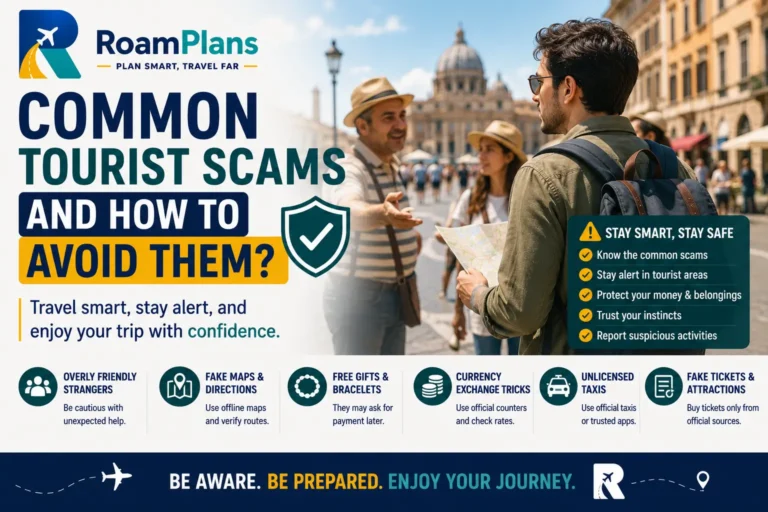
The dedicated Common Tourist Scams and How to Avoid Them ↗ guide covers this topic in full.
Check Local Laws Before You Decide a Destination Fits You
Safety is not limited to crime.
Travelers can face serious problems by breaking laws they did not know existed.
The State Department tells travelers to learn destination laws because foreign countries apply their own legal and customs rules, and violations can lead to fines, detention, confiscation of items, arrest, or imprisonment.
Research rules that may affect your plans, such as:
Prescription medication
Alcohol
Photography
Drones
Driving
Identification
Customs
Public behavior
Clothing requirements in certain settings
Restricted items
Political activity
Do not assume:
It is legal in the United States, so it is legal there.
That is not how international travel works.
Pay Special Attention to Medication Rules
Medication deserves a separate check because a medicine available normally at home may be regulated differently abroad.
Check official destination or embassy guidance for:
Prescription requirements
Controlled medicines
Quantity limits
Documentation
Original packaging
Transit-country restrictions
Do this before booking if the medication is essential and the rules could affect whether the trip is practical for you.
Do not depend on a travel forum comment saying:
I carried it and nobody checked.
Someone passing through without a problem does not change the law.
Check Current Health Risks Separately
A low crime risk does not mean the health situation is low risk.
CDC publishes destination-specific Travelers’ Health information and Travel Health Notices covering outbreaks, mass gatherings, natural disasters, and other health situations affecting travelers.
As of August 2026, CDC’s Travelers’ Health pages continue to carry active notices for issues such as Zika, Ebola, chikungunya, malaria, and other changing conditions.
This shows why health needs a separate check.
A destination can have a normal security situation while dealing with:
Mosquito-borne disease
Flood-related health risks
Measles
Food or water concerns
Another outbreak
Do not use the State Department advisory as your only health source.
Use the CDC Destination Page for Your Actual Country
CDC destination pages can include information on:
Vaccinations
Current health notices
Mosquito-borne disease
Malaria
Food and water risks
Animal exposure
Environmental risks
The information can change as conditions change.
For example, CDC’s current Costa Rica traveler page reports an updated July 30, 2026 chikungunya notice affecting part of the country.
This is exactly why I would recheck health information shortly before leaving even if the trip was booked months earlier.
A destination-safety decision should reflect current conditions, not only what was true when you bought the flight.
Check Weather and Natural Hazards Separately
A destination may have low crime but still be a poor choice for your travel dates because of weather or natural hazards.
Depending on the location and season, check for:
Hurricanes or typhoons
Flooding
Wildfires
Extreme heat
Winter storms
Earthquakes
Volcanic activity
Landslides
Severe air-quality problems
The State Department includes weather and natural-disaster information within its destination guidance, while U.S. emergency guidance recommends following official alerts and evacuation instructions when hazards develop.
The useful question is not:
Does this country ever have hurricanes?
It is:
Could this hazard realistically affect the place and dates I am considering?
A destination may be perfectly reasonable during one season and much harder to manage during another.
Check the Season, Not Just the Annual Climate
Average yearly weather can hide seasonal risk.
For example, your research should distinguish between:
Normal rainy season and severe flooding
Normal summer heat and dangerous heat events
Normal wildfire season and an active nearby fire
Normal tropical weather and a named storm approaching your destination
Before booking weather-sensitive trips, look at the season.
Then check current conditions again shortly before departure.
If an active emergency develops, local authorities and current alerts should take priority over the itinerary you created months earlier. Ready.gov advises people to monitor emergency alerts and follow evacuation instructions when issued.
Check Recent Natural Disasters Even if the Weather Looks Fine
A storm or flood may be over while its effects remain.
Possible problems after an event can include:
Road closures
Damaged transportation
Power outages
Water problems
Closed attractions
Limited medical access
Accommodation disruption
CDC Travel Health Notices can also be issued because natural disasters affect health conditions for travelers.
This is why I would search both:
current weather
and:
recent major events
before departure.
A sunny forecast does not tell you whether a region is still recovering from flooding that happened the previous week.
Check for Demonstrations, Protests, and Civil Unrest
Demonstrations do not automatically make an entire destination unsuitable for travel.
But they can affect:
Roads
Airports
Train services
City centers
Government areas
Public transportation
Access to attractions
The State Department defines unrest as political, economic, religious, or other instability that may threaten traveler safety. Its advisories also warn that demonstrations or conflict can affect a person’s ability to get help or leave an area.
If a destination has recent political tension, check whether protests are:
Occasional or frequent
Concentrated in specific areas
Affecting transportation
Expected around an election or major event
Becoming violent
Leading to curfews or movement restrictions
Do not assume a demonstration will remain peaceful simply because it started that way.
State Department destination guidance for countries such as Türkiye and Egypt advises travelers to avoid demonstration areas because gatherings can change unexpectedly.
Check Whether Your Hotel or Transport Route Passes Near Protest Areas
This is where general news needs to become personal trip research.
Suppose protests are occurring near a government district.
Ask:
Is my hotel there?
Does my airport bus pass through it?
Is the main railway station affected?
Is my tour meeting point nearby?
Are roads being closed?
Is there a curfew?
A protest several miles from your plans may affect you very differently from one blocking the only route between your hotel and airport.
Use a map and compare the affected area with your actual itinerary.
Look for Strikes and Transport Disruptions
Not every disruption is a security emergency.
Transport strikes, roadblocks, fuel shortages, or service closures can still make a destination difficult for a beginner traveler.
Check recent information about:
Airport operations
Rail services
Public buses
Ferries
Taxis
Major roads
This matters more when your trip depends on one transport connection.
For example, a traveler staying in a city center with several transport options has more flexibility than someone relying on the only bus into a remote region.
The decision is not simply:
Is transportation safe?
It is also:
Do I have another option if this service stops?
Research Road Safety Before Planning to Drive
Crime is not the only transport risk.
Before deciding to rent a car or drive between cities, check:
Road conditions
Local driving practices
Night driving advice
Seasonal weather
Border restrictions
Vehicle requirements
Local license rules
Availability of fuel or roadside support where relevant
State Department country guidance includes transportation information because road conditions and driving risks can differ significantly between destinations.
Do not decide to rent a car simply because it appears cheaper or more flexible.
Ask whether you are comfortable handling the actual road conditions you will face.
The legal and practical details of driving belong in your International Driving Guide ↗, while this safety check helps you decide whether driving fits the destination in the first place.
Check Public Transportation From a Safety Point of View
Research public transport beyond route maps and ticket prices.
Look for current guidance about:
Pickpocketing
Late-night service
Station areas
Unofficial taxis around stations
Whether certain routes need extra care
How visitors commonly travel from airports
For example, State Department crime guidance recommends researching transportation options and using suitable licensed or trusted services based on local conditions.
You do not need to avoid public transport because theft has been reported.
You need to understand where and how the risk occurs.
A busy metro with pickpocketing concerns creates a different plan from a destination where travelers are advised not to use certain transport after dark.
Check Your Accommodation Location Before You Book
Hotel reviews tell you about the property.
They do not always tell you whether the location fits your trip.
Before booking, look at:
Distance from public transportation
Walking route from the station
Late-night arrival
Nearby businesses
Street access
Recent comments about the surrounding area
Distance from the places you expect to visit
You may find a highly rated hotel that creates an awkward or isolated route every evening.
That does not make the hotel bad.
It may simply be the wrong location for your itinerary.
State Department destination guidance treats lodging safety as part of travel preparation rather than separating the hotel completely from its surroundings.
Look at Recent Reviews for Safety Patterns
Reviews can add useful detail once you have already checked official information.
Search recent accommodation reviews for terms such as:
Area
Night
Station
Walking
Security
Entrance
Taxi
Noise
Harassment
Theft
Do not judge a property from one dramatic comment.
Look for repeated patterns.
For example:
One person saying I felt unsafe is subjective.
But several recent guests describing the same broken entrance lock or the same problem on the walk from the station deserves more attention.
Use reviews as evidence about the property experience, not as your main source for judging the safety of an entire country.
Check Whether Your Planned Activities Change the Risk
A destination may suit ordinary sightseeing while one planned activity creates extra safety concerns.
Examples include:
Hiking alone
Scuba diving
Renting a motorbike
Mountain trekking
Nightlife
Swimming
Boating
Adventure sports
Driving long rural routes
Visiting remote areas
Ask:
Would I still choose this destination if I removed this activity?
If yes, the destination itself may still fit while the activity needs another plan.
You might use:
A guide
Organized transportation
Different timing
Better equipment
Another location
Do not turn an activity decision into a judgment about the whole destination.
Check Beach and Water Safety
A beautiful beach is not automatically a safe swimming area.
Destination research may need to include:
Currents
Warning flags
Lifeguards
Seasonal conditions
Local closures
Water contamination
Marine hazards
CDC destination guidance advises travelers to use designated swimming areas and obey lifeguards and warning flags where applicable.
If swimming, diving, or boating is a major reason for the trip, research those conditions separately before booking.
Consider the Type of Traveler
A destination does not create exactly the same situation for every visitor.
Your research may need extra checks if you are:
Traveling alone
A woman traveling alone
Traveling with children
Pregnant
An older traveler
Managing a medical condition
Traveling with mobility needs
Taking essential medication
This does not mean a destination is automatically unsuitable.
It means general tourist information may not answer every question that matters to you.
For example, a place may have good transportation overall but poor accessibility for the routes you need.
A destination may have normal general security while local laws or social conditions create different concerns for women.
Your safety research should reflect the person actually taking the trip.
Do Not Use Another Traveler’s Comfort Level as Your Own
A common online comment is:
I went there and nothing happened.
That tells you about one person’s trip.
It does not tell you:
Where they stayed
What time they traveled
Which region they visited
How experienced they were
Which activities they did
Whether conditions have changed
Their experience can still be useful.
It just should not cancel current official guidance.
The opposite is also true.
One traveler having a bad experience does not prove an entire destination is unsuitable.
Look for patterns and context.
Use Recent Local Reports for Context, Not as Your Only Source
After checking official guidance, I like using recent local information to answer questions official pages may not cover in detail.
For example:
Has a transport strike actually started?
Are roads currently closed?
Is a wildfire affecting the airport?
Has a major demonstration ended?
Is a tourist site operating normally?
For changing events, check the date carefully.
A report from three months ago may appear high in search results even though the event has already ended.
Look at both:
When was the article published?
and:
When did the event happen?
These are not always the same date.
Be Careful With Social Media Safety Videos
Social media is useful for seeing:
Street layouts
Transport stations
Neighborhood appearance
Recent traveler experiences
But it can also reward dramatic claims.
Videos titled:
This place is completely unsafe
or:
The media lies, this place is perfectly safe
may attract attention because the wording is extreme.
Neither statement is enough for a travel decision.
Ask:
When was this recorded?
Which neighborhood is shown?
Was the person there for one day or several weeks?
Are they discussing crime, politics, health, or only personal comfort?
Does current official information agree?
Use the video to create questions.
Then verify the answers elsewhere.
Do Not Judge Safety From Crime Statistics Alone
Crime numbers can help with context, but they can also be difficult to compare between countries.
Reporting practices, definitions, enforcement, data collection, and local geography may differ.
For a traveler, the more useful question is often:
Which problems are visitors likely to encounter, where do they happen, and what precautions are recommended?
Official destination guidance can help answer that in a travel-specific way.
For example, the State Department’s crime guidance focuses on practical concerns such as theft, transportation, valuables, demonstrations, scams, and local legal differences rather than reducing an entire destination to one crime number.
Use statistics as one source, not the final decision.
Watch for Worldwide or Regional Alerts
Sometimes a risk is larger than one destination.
The State Department can issue worldwide or regional caution messages when changing events may affect U.S. citizens across several countries.
As of July 22, 2026, its Worldwide Caution page advised Americans to exercise increased caution because of heightened Middle East tensions and the possibility of unexpected escalation and airspace disruption.
This is a good example of why destination research should not stop at one country’s advisory page.
A wider event can affect:
Flight routes
Airspace
Connections
Embassies
Security conditions
Check broader official alerts when major international events are occurring.
Check Whether Your Flight Route Is Affected
A destination itself may remain open while the journey there changes.
Regional conflict, severe weather, strikes, or airspace restrictions can cause:
Canceled flights
Longer routes
Different connections
Airport changes
Before departure, check your airline directly.
Do not assume an old flight schedule is still operating because your booking remains visible.
This matters especially when your route connects through a region affected by fast-changing events.
Consider How Easy It Would Be to Get Help
Another useful destination-safety question is:
If something went wrong, how easy would it be for me to get help?
Think about:
Local emergency services
Medical facilities
Mobile coverage
Transportation
Embassy or consulate access
Language
Distance from major cities
A remote destination may have low crime while still being harder to manage during a medical emergency or transport failure.
That does not mean you should avoid remote travel.
It means your preparation may need to be stronger.
The State Department’s crisis guidance explains that local conditions can affect the government’s ability to assist or evacuate U.S. citizens during serious events.
Check Where Your Embassy or Consulate Is
For U.S. international travelers, find the nearest U.S. embassy or consulate before departure.
You may never need it.
Still, it helps to know which post serves your destination.
Consular assistance can matter during certain situations involving:
Lost passports
Crime
Arrest
Serious emergencies
Major crises
The State Department directs U.S. citizens abroad to the nearest embassy or consulate for routine and emergency consular assistance.
This is one item to save offline rather than searching for it during an emergency.
Consider STEP for a Destination With Changing Conditions
U.S. citizens and nationals can consider enrolling in the Smart Traveler Enrollment Program when traveling abroad.
STEP can help travelers receive safety and security information from the nearest U.S. embassy or consulate.
It becomes especially useful when conditions may change because of:
Demonstrations
Severe weather
Security events
Wider crises
The State Department’s current worldwide caution guidance also directs U.S. travelers to STEP for safety and security updates.
STEP does not decide whether a destination is safe for you.
It gives you another official information channel after you decide to travel.
Separate Destination Risk From Your Own Risk Tolerance
Two people can read the same information and make different reasonable decisions.
One experienced traveler may be comfortable with:
Complicated public transport
Frequent petty theft
Limited English
Busy cities
A first-time traveler may prefer a simpler trip.
That is fine.
After you finish your research, ask:
Am I comfortable managing these risks?
Do I understand the precautions?
Can I afford safer alternatives when needed?
Do I have enough experience for this trip?
Will I spend the entire vacation worrying?
A destination can be possible to visit and still not be the right choice for you right now.
Choosing an easier first trip is not a failure.
It can give you the experience needed for a more difficult destination later.
Use a Three-Stage Safety Check
You do not need to repeat hours of research every week.
A practical way to handle destination safety is to check it at three points.
Before Booking
This is the deepest check.
Review:
Current Travel Advisory
Regional warnings
Health notices
Local laws
Weather season
Political conditions
Transportation
Areas you may stay
Activities you want to do
The State Department’s International Travel Checklist recommends reviewing destination-specific Travel Advisories and local requirements before an international trip.
At this stage, you are deciding:
Does this trip make sense for me?
After Booking
You do not need to repeat all the research.
Keep an eye on changes that could affect:
Your flight
Your accommodation area
Major events
Health notices
Weather
Planned activities
This is especially useful when your trip is several months away.
Shortly Before Departure
Run through the key checks again.
Open the current advisory rather than reading your old notes.
Check:
Advisory level and text
Current regional warnings
CDC destination information
Weather
Major disruptions
Airline status
Accommodation
Planned transport
CDC uses Travel Health Notices to inform travelers about health risks linked with outbreaks, gatherings, and natural disasters, so health conditions deserve a fresh check as well.
This final review can catch something that did not exist when you booked.
Build a Simple Destination Safety Picture
After doing the research, bring the information together.
I would not create a complicated numerical safety score.
Instead, divide what you found into three groups.
Normal Travel Precautions
These are issues you feel comfortable managing.
Examples might include:
Pickpocketing
Common tourist scams
Busy transport
Hot weather
Normal city awareness
Risks That Need a Specific Plan
These do not automatically stop the trip, but they change how you travel.
Examples might include:
Certain areas to avoid
Limited late-night transportation
Mosquito-borne disease
Severe seasonal heat
Frequent demonstrations in one district
Poor road conditions
For each one, write the action you will take.
For example:
Plan: Use the official taxi desk or verified ride service.
Plan: Keep phone and wallet secured in crowded trains.
That turns safety research into something useful.
Risks That Make You Reconsider the Trip
Some findings deserve a much bigger decision.
Examples can include:
Level 3 or Level 4 government advice affecting your route
Active armed conflict
Serious unrest near your destination
Major health conditions you cannot reasonably manage
Transportation shutdowns that remove your route
A natural disaster directly affecting the area
Inability to obtain essential medication
A situation where suitable emergency support would be very difficult to access
The State Department currently defines Level 3 as Reconsider Travel and Level 4 as Do Not Travel.
Do not reduce stronger official warnings to:
Read the reasons and decide based on the trip you are actually planning.
Ask Seven Questions Before You Book
Once you finish the research, ask yourself these questions.
1. What Is the Main Risk?
Crime?
Health?
Political instability?
Road safety?
Weather?
Knowing the main risk tells you whether it can realistically be managed.
2. Does the Risk Affect My Exact Route?
A warning hundreds of miles away can be very different from one covering your hotel, airport, border crossing, or day-trip route.
3. Can I Reduce the Risk With a Clear Action?
For example:
Change accommodation area
Avoid night driving
Use verified transportation
Travel in another season
Skip one region
Join an organized tour
If a simple change reduces the issue, you may not need to abandon the whole destination.
4. What Happens if Conditions Get Worse?
Could you:
Change cities?
Leave earlier?
Reach another airport?
Pay for another hotel?
Contact your embassy?
Access backup money?
A destination becomes harder to manage when you have no practical second option.
5. Can I Get Help if I Need It?
Think about:
Emergency services
Medical facilities
Communication
Transportation
Consular support
Remote travel can be perfectly reasonable, but your preparation may need to be stronger.
6. Does This Trip Match My Experience?
A first-time international traveler may reasonably choose a simpler destination than someone who has spent years traveling independently.
That is not fear.
It is choosing a trip you are ready to manage.
7. Will I Actually Enjoy the Trip?
If your research leaves you feeling that you will spend every hour worried about transportation, crime, political conditions, or medical access, another destination may fit you better.
A trip being technically possible does not mean it is the right trip for you.
When Official Advice and Traveler Reports Disagree
This happens often.
You may read an official warning and then find hundreds of travelers saying:
Or you may see a low advisory level while social media contains frightening stories.
Do not automatically choose one side.
Instead, ask why they appear different.
Official Guidance Usually Looks at Wider Risk
Government guidance may consider:
National security
Crime trends
Ability to provide consular help
Regional conflict
Health
Local laws
Political conditions
A tourist may experience only one neighborhood for four days.
Those are two different views.
Traveler Reports Give Street-Level Detail
Recent visitors can sometimes tell you:
What a station feels like late at night
Whether taxis are easy to use
How an area around a hotel feels
Whether a common scam is currently happening
What public transport is like
That can be useful.
Use traveler reports to add practical context to official guidance rather than to cancel it.
Look for Patterns Instead of Individual Stories
One review saying:
I never felt safe here
is one person’s experience.
One review saying:
This is the safest city in the world
is also one person’s experience.
Instead, look for repeated themes across several recent sources.
For example:
Several travelers mentioning phone theft in the same area deserves more attention.
Multiple accommodation reviews mentioning poor street lighting or difficult late-night transport may also matter.
Patterns give you more useful information than the strongest opinion.
Check the Date on Everything
Safety information can age quickly.
Before using an article, video, forum post, or news report, check:
Publication date
Event date
Whether the situation is still active
Whether newer official guidance exists
This matters for:
Protests
Elections
Strikes
Wildfires
Floods
Disease outbreaks
Conflict
Airspace closures
State Department advisory pages can change as conditions change, and CDC continues to publish current Travel Health Notices for active health concerns.
A useful safety article from 2023 can still contain good general advice.
It should not be your main source for deciding what is happening now.
Do Not Confuse News Coverage With Personal Travel Risk
A major event can dominate international news while affecting only one part of a country.
The opposite can also happen.
A problem receiving little international coverage may still directly affect the area you plan to visit.
After seeing a news story, ask:
Where exactly did this happen?
When?
Is it ongoing?
How far is it from my route?
What do local authorities say?
Has the travel advisory changed?
Then make the decision from those answers rather than the headline alone.
Watch for Major Changes After You Book
Do not assume booking the trip ends your safety research.
Pay attention when you hear about:
New conflict
Major protests
Severe weather
Earthquakes
Wildfires
Health outbreaks
Airport closures
Border changes
Major transportation strikes
You do not have to monitor the destination every day.
But a major new event deserves another check.
The State Department can issue destination advisories and broader worldwide alerts when conditions affect U.S. travelers across several locations.
Know When to Change Your Plans
Changing plans is sometimes the best travel-safety decision.
Consider adjusting the trip if:
Official advice becomes stronger
A warned-against region enters your itinerary
Your accommodation area is affected by unrest or disaster
Major transport links stop operating
A serious health issue emerges
Authorities close an area
Weather makes an activity unsafe
Your essential medication or medical needs cannot be managed
You no longer have a realistic safe route
Changing the trip does not always mean canceling everything.
You may be able to:
Change neighborhoods
Remove one region
Move travel dates
Change transport
Skip an activity
Use another airport
Choose another city
The best solution is often smaller than canceling the entire trip.
Do Not Let Money Force a Safety Decision
Non-refundable flights and hotels can make travelers reluctant to change plans.
That money has already influenced the booking decision.
It should not control a new safety decision after conditions change.
Ask:
That question can make the decision clearer.
You can then check:
Airline options
Hotel cancellation rules
Travel insurance
Credit-card benefits
Rebooking possibilities
Do not assume cancellation coverage applies. Check the actual terms of any policy or booking.
Common Destination Safety Research Mistakes
Looking Only at the Advisory Level
Read the full reason, regional warnings, and practical guidance.
Using a Safest Countries List as the Final Answer
Country rankings cannot describe every city, neighborhood, route, season, or traveler.
Ignoring Regional Differences
One part of a country can have very different conditions from another.
Checking Crime but Ignoring Health
CDC health notices and destination health information can reveal risks that crime research will never show.
Checking the Country but Not the Hotel Area
Your daily experience happens around specific streets and transport routes.
Trusting One Viral Video
Use it as a clue for further research, not proof.
Using Old Information
Always check when advice or reports were updated.
Ignoring Local Laws
Something legal at home may be restricted at your destination.
Researching Only Before Booking
Check again before departure.
Assuming a Level 1 Destination Has No Risk
Level 1 means exercise normal precautions, not zero risk.
Assuming Level 2 Means You Must Cancel
Level 2 means exercise increased caution. Read why the destination received that level before making a decision.
Letting One Good Experience Cancel Official Warnings
Another person’s successful trip does not change current conditions or government guidance.
Destination Safety Checklist Before Booking
Government Advice
Check the current Travel Advisory.
Read the entire advisory.
Check the reason for the advisory.
Check regional warnings.
Look at the advisory date and recent history.
Check any relevant worldwide or regional alerts.
The State Department’s official checklist directs international travelers to review destination-specific advisories and local requirements as part of trip preparation.
Health
Open the CDC destination page.
Check current Travel Health Notices.
Review destination health risks.
Check whether medication rules affect you.
Consider your own medical needs.
CDC publishes destination information and separate Travel Health Notices for changing health risks.
Location
Check each city on your itinerary.
Check your accommodation area.
Compare regional warnings with your route.
Check airport and station areas.
Look at late-night transport.
Crime and Scams
Check common visitor crime.
Research current tourist scams.
Check ATM and card concerns.
Look at transport-related safety advice.
Check whether certain areas need extra care.
Local Laws
Check medication rules.
Check identification requirements.
Review laws linked with your planned activities.
Check driving rules if renting a vehicle.
Learn any local customs that may affect the trip.
Weather and Natural Hazards
Check the normal season.
Check current weather closer to departure.
Look for recent natural disasters.
Check local alerts.
Know whether your destination has seasonal hazards.
Transportation
Research airport transportation.
Check public transport conditions.
Review driving risks if relevant.
Check major strikes or disruptions.
Have another option for key journeys.
Personal Fit
Consider whether the trip fits your experience.
Think about solo or family needs.
Check access to medical help.
Consider your own risk tolerance.
Ask whether you still feel comfortable taking the trip.
Recheck Before Departure
A few days before leaving, repeat a shorter version of the checklist.
Check:
Current advisory
Regional warnings
CDC notices
Weather
Flight status
Accommodation
Transportation
Major local events
You are looking for changes, not starting the entire research process again.
If everything is broadly the same, continue with your plan.
If something significant changed, investigate that issue before departure.
Frequently Asked Questions
Start with current government travel advice, then check regional risks, health, crime, laws, weather, transportation, and your exact route.
Level 1 means normal precautions, Level 2 increased caution, Level 3 reconsider travel, and Level 4 do not travel.
Level 2 does not automatically mean cancel. Read the reason for increased caution and decide whether you can reasonably manage that risk.
Use recent travel experiences for local context, but check changing safety, legal, and health claims against current official sources.
Check before booking and again near departure. Recheck during the trip if a major event or local condition changes.
They can provide ideas, but they cannot judge your exact city, neighborhood, route, activities, timing, or personal needs.
Use CDC Travelers’ Health destination pages and current Travel Health Notices.
Yes. Official advisories can identify specific regions with higher risk even when the country’s overall advisory is lower.
Final Thoughts
In short, Checking whether a destination is safe is not about finding one number that gives you permission to travel. Start with current official guidance, narrow the research to your actual route, check health and local conditions separately, and decide whether the risks fit your experience and plans. Recheck shortly before departure, and be willing to change part of the trip when new information makes that the better choice.

Adnan Ahmed
RoamPlans AuthorTravel Planning Researcher & Editor
Adnan Ahmed is the travel planning researcher and editor behind RoamPlans. He creates clear, practical guides to help travelers compare destinations, plan routes, estimate costs, and avoid common trip-planning mistakes. His work combines careful source research, official travel information, and regular content reviews to keep each guide useful and current.
- ✓Destination Research
- ✓Budget Planning
- ✓Route Planning
- ✓Beginner Travel Guides
Turn This Guide into a Practical Trip Plan
Use the recommended Airline Baggage Allowance Checker or explore more free RoamPlans tools.