Travel Safety Mistakes Beginners Should Avoid
Most beginner travel-safety problems do not start with ↗ one dramatic mistake. They usually begin with small decisions: booking before checking current conditions, carrying everything valuable in one place, arriving without a backup plan, using unfamiliar transport without checking how it works, or assuming that something legal at home must also be legal abroad.
My approach is to remove as many avoidable problems as possible before the trip begins. I check the destination, keep important information backed up, think through arrival transport, separate money and cards, and make sure I know what I would do if plans changed. None of this makes travel completely risk-free, but it gives you more options when something goes wrong.
This guide covers the most common travel safety mistakes beginners should avoid before and during a trip. Separate RoamPlans guides cover scams, robbery, emergency planning, food and water, long-trip health, solo travel, and destination safety in more depth, so this article focuses on the mistakes that connect those areas together.
Safety Note: Travel conditions can change quickly. Check current official advice for your destination before booking and again before departure. U.S. travelers can use the State Department’s Travel Advisories and CDC Travelers’ Health pages as starting points.
Key Takeaways
Do not book an international trip before checking current destination conditions.
Read the full Travel Advisory, not only the advisory number.
Do not depend on one phone, one bank card, or one copy of an important document.
Plan how you will get from the airport or station to your accommodation before arrival.
Keep valuables divided rather than carrying everything together.
Learn the basic local laws that can affect tourists.
Check health needs and medication rules before departure.
Do not assume travel insurance covers every possible problem.
Keep emergency contacts and important information available offline.
Avoid letting embarrassment, money already spent, or a fixed itinerary stop you from changing an unsafe situation.
Mistake 1: Booking Before Checking the Destination
Flights can look cheap enough that you want to book first and research later.
That order can create problems.
Before paying for a trip, check:
Current Travel Advisory
Regional warnings
Entry rules
Health information
Local laws
Weather season
Major disruptions
Your planned cities and routes
The U.S. State Department’s International Travel Checklist starts with learning about your destination and reviewing destination information before departure.
This does not mean spending days researching every possible problem.
A basic pre-booking check can tell you whether anything significant affects the trip you are considering.
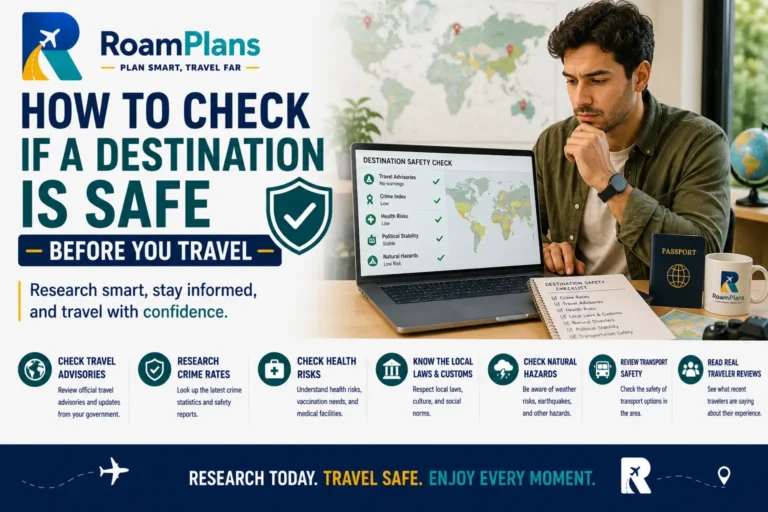
For the complete process, use How to Check If a Destination Is Safe Before You Travel ↗.
Mistake 2: Looking Only at the Travel Advisory Number
Seeing:
Level 1
or:
Level 2
is not enough.
The State Department says it considers several risk indicators when assigning Travel Advisory levels. The full destination page can explain why caution is needed and whether stronger warnings apply only to certain locations.
Read:
The advisory reason
Regional warnings
Safety and security information
Local laws
Health information
Transportation advice
Recent updates
For example, a Level 2 destination because of crime requires a different plan from a Level 2 destination affected by terrorism or unrest.
The number helps you begin the research.
The details help you plan the trip.
Mistake 3: Assuming Popular Tourist Destinations Are Automatically Safe
A place attracting millions of visitors can still have:
Pickpocketing
Tourist scams
Unsafe road conditions
Seasonal weather hazards
Areas tourists should avoid
Local laws visitors commonly misunderstand
Popularity does not remove risk.
It may even create specific opportunities for theft and scams because large numbers of visitors carry phones, cash, passports, and luggage.
Do not ask only:
Do many tourists go there?
Ask:
What problems should a tourist there actually prepare for?
The State Department recommends reviewing destination-specific safety and security information rather than assuming normal tourist activity means no precautions are needed.
Mistake 4: Trusting Social Media More Than Current Official Information
Travel videos can be useful.
They can show:
Streets
Public transportation
Airports
Neighborhoods
Recent traveler experiences
But one video cannot tell you the full current safety situation.
Someone may say:
Another person may say:
Never visit this city.
Both are personal experiences.
Before changing your trip because of a social-media post, check:
When it was recorded
Where the traveler actually stayed
Whether the situation is still current
Whether official guidance supports the claim
Use traveler experiences to add context.
Do not use one creator as a replacement for current government, health, weather, or local emergency information.
Mistake 5: Assuming Your Hotel Area Is Safe Because the Hotel Has Good Reviews
A hotel can have:
Excellent rooms
Helpful staff
Good ratings
and still be in a location that does not work well for your trip.
Before booking, check:
The exact location
Walking route from public transport
Late-night arrival
Nearby streets
Distance from the places you will visit
Recent comments about the surrounding area
Look at the map.
A cheap room far from the center may save money but create expensive or uncomfortable late-night transport.
A hotel beside a major railway station may be extremely convenient while requiring more care with valuables in crowded surrounding streets.
The property rating alone cannot answer those questions.
Mistake 6: Planning Arrival Transport After You Land
Your arrival is one of the worst times to start researching basic transportation.
You may be:
Tired
Jet-lagged
Carrying luggage
Looking for mobile data
Using unfamiliar currency
Surrounded by drivers offering rides
Before departure, know:
How you will leave the airport or station
Where the official transport area is
Approximate travel time
How payment works
Whether your accommodation has check-in restrictions
What your backup option is
This is especially useful when you arrive late at night.
You do not necessarily need to pre-book a private transfer.
You simply need to know the normal process before someone approaches you and offers a different one.
Mistake 7: Choosing the First Taxi or Driver Who Approaches You
At unfamiliar airports, stations, and tourist areas, beginners sometimes assume anyone offering transportation must be legitimate.
That is risky.
Use the transportation process recommended for the destination.
That may mean:
Official airport taxi rank
Licensed taxi
Hotel-arranged transfer
Verified ride-hailing app
Public transportation
The State Department’s destination and crime guidance encourages travelers to research local transportation and use appropriate trusted services based on local conditions.
If someone pressures you to ignore the official queue, change your booking, or follow them somewhere unclear, you can decline and return to the normal transport process.
Mistake 8: Carrying All Your Money in One Place
Imagine your wallet contains:
All your cash
Every bank card
Your main ID
Backup money
If that wallet disappears, one theft becomes several problems at once.
A better setup is to divide access to money.
For example:
Daily wallet: limited cash + one payment card
Separate secure location: backup card + emergency cash
The exact amount depends on your trip.
The principle is simple:
Do not let losing one item remove every way you have to pay.
This is especially useful during multi-city or international trips where replacing a bank card may take time.
Mistake 9: Carrying Your Passport Everywhere Without a Reason
Your passport is important.
That does not automatically mean it should be in your pocket during every walk, beach visit, dinner, or sightseeing day.
Whether you need to carry the original depends on:
Local identification laws
Your activity
Hotel requirements
Transport
Destination rules
Check the rules first.
Where carrying your original passport is not required, keeping it securely stored may reduce the chance of losing it during ordinary sightseeing.
Where local law requires you to carry certain identification, follow that requirement.
Do not copy a travel influencer’s passport habit without checking what applies where you are going.
Mistake 10: Having No Copy of Your Important Documents
A lost document becomes much harder to manage if you have no record of it.
Before departure, keep secure copies of important information such as:
Passport identification page
Visa where applicable
Insurance information
Important reservations
Prescriptions
Emergency contacts
CDC’s travel packing guidance recommends carrying copies of passports and travel documents, prescriptions, health information, and emergency contact details.
Do not keep every copy only inside the same bag as the original documents.
If the bag disappears, your backup disappears with it.
For a fuller document-storage process, use How to Store Travel Documents Safely ↗.
Mistake 11: Depending on Your Phone for Everything
Your phone may contain:
Boarding passes
Hotel reservation
Maps
Payment apps
Passport copies
Emergency numbers
Translation tools
Transport apps
Then your phone:
Runs out of battery
Breaks
Gets wet
Is lost
Is stolen
Has no mobile signal
You should still be able to handle the most important parts of your trip.
Before departure, keep selected information available offline.
That might include:
Accommodation name and address
Emergency contact
Insurance assistance number
Important booking references
Passport information
Local emergency number
You do not need to print your entire itinerary.
You need enough backup information to function without immediate access to your normal phone setup.
Mistake 12: Having No Emergency Contact Plan
A contact list is not the same as an emergency plan.
Your family may know you are traveling but not know:
Which country you are in today
Which hotel you are using
Who your insurer is
How to reach your travel companion?
What to do if you stop responding
The State Department advises international travelers to plan for emergencies, and its destination guidance commonly recommends having a contingency plan.
At minimum, a trusted person at home should know how to access the key information you intentionally choose to share.
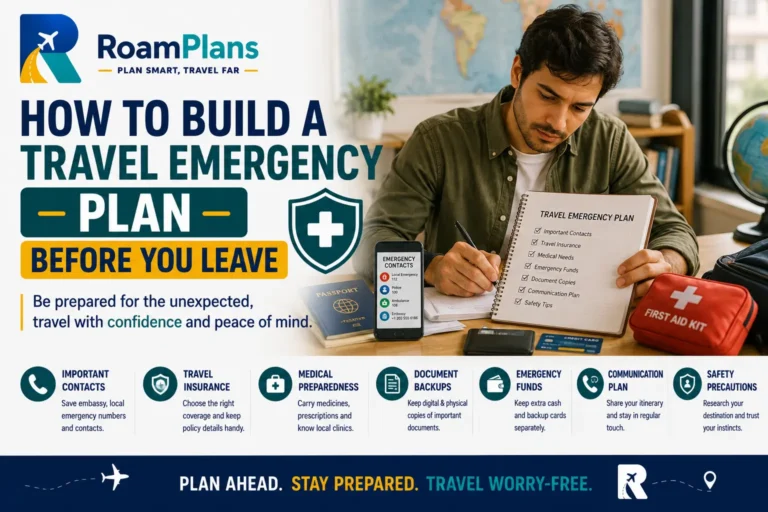
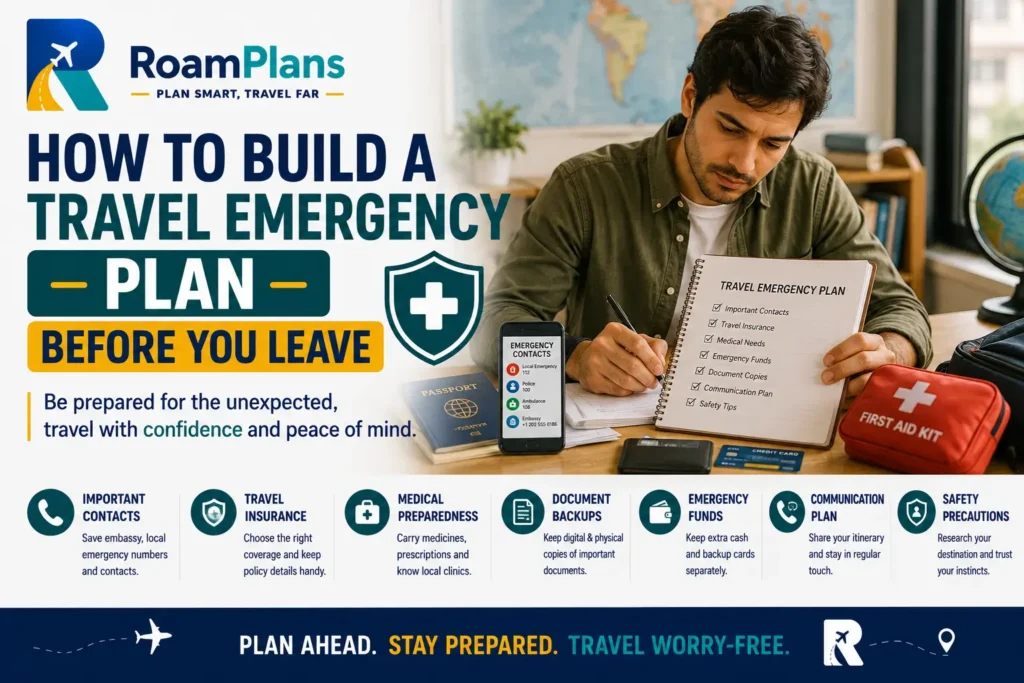
For a full setup, use How to Build a Travel Emergency Plan Before You Leave ↗.
Mistake 13: Not Knowing the Local Emergency Number
Many beginners know their home emergency number automatically.
Then they travel somewhere that uses a different system.
Before departure, save the emergency number for your destination.
Also know how you would contact:
Police
Ambulance
Your accommodation
Travel insurer
Embassy or consulate where relevant
Do not assume you will have enough mobile data during an emergency to search all of this from scratch.
Save the information.
Mistake 14: Ignoring Embassy or Consulate Information
Most travelers will never need consular help.
You should still know which embassy or consulate serves your destination.
For U.S. travelers, the State Department also provides the Smart Traveler Enrollment Program, or STEP. It says STEP can send security alerts from the nearest U.S. embassy or consulate and can help officials contact travelers or their emergency contacts during an emergency.
You do not need to memorize an embassy address.
Save the relevant official contact information somewhere accessible.
Mistake 15: Assuming the Embassy Can Solve Every Problem
Knowing where your embassy is helps.
Expecting it to replace your own preparation does not.
An embassy or consulate may be able to provide certain forms of assistance during situations such as a lost passport, arrest, crime, or major emergency.
That does not mean it can:
Pay all your bills
Cancel local laws
Guarantee evacuation
Replace travel insurance
Recover every stolen item
Make private companies refund you
Build your own backup plan instead of treating consular support as your entire emergency system.
Mistake 16: Ignoring Local Laws Because You Are a Tourist
Being unfamiliar with a law generally does not make it disappear.
Rules can differ on:
Prescription medication
Alcohol
Driving
Drones
Photography
Public behavior
Identification
Controlled substances
Customs
Restricted sites
The State Department’s planning guidance specifically tells travelers to review destination information and local requirements before international travel.
Do not use:
But this is legal at home
as your travel rule.
The law that matters is the law where you are.
Mistake 17: Packing Medication Without Checking the Rules
A prescription medication that is normal in your home country may be restricted somewhere else.
Before departure, check:
Whether your medication is permitted
Quantity restrictions
Documentation requirements
Transit-country rules
Original packaging requirements
CDC recommends keeping medicine in its original labeled container, carrying copies of prescriptions, and taking enough medication for the trip plus extra for possible delays.
Do this research early if the medicine is essential.
Discovering a restriction at airport security is much harder than solving it during planning.
Mistake 18: Putting Essential Medication Only in Checked Luggage
Checked bags can be delayed.
They can also be lost.
CDC advises travelers to pack medications in carry-on baggage and to carry enough for the trip, plus extra for possible delays.
Keep essential medication accessible during:
Flights
Layovers
Long bus trips
Train journeys
Also follow airline security rules and destination medication requirements.
A medicine you need every day should not depend entirely on whether your suitcase arrives with you.
Mistake 19: Skipping Pre-Travel Health Research
Travel safety includes health.
Before international travel, check whether your destination has recommendations or concerns involving:
Vaccinations
Mosquito-borne illness
Malaria
Food and water
Heat
Altitude
Other current health notices
CDC says a pre-travel health review should consider factors such as itinerary, trip duration, activities, and the traveler’s own health.
Not every traveler needs a medical appointment for every trip.
But everyone can check the current destination health information.
If your health, activities, or destination create additional concerns, seek qualified medical advice before leaving.
Mistake 20: Assuming Your Normal Health Insurance Works Everywhere
Before international travel, find out what your existing health coverage actually provides overseas.
CDC advises travelers to check whether their health insurance covers medical care abroad and to make a plan for obtaining care if needed. It also notes that travelers may need additional health or medical evacuation coverage depending on the trip.
Questions worth checking include:
Is overseas treatment covered?
Do I pay first?
Is emergency evacuation covered?
Is there a 24-hour assistance number?
Are there exclusions?
Do not wait until you are sitting in a foreign clinic to discover how your coverage works.
Mistake 21: Buying Travel Insurance Without Reading What It Covers
Having a policy is different from having the coverage you expect.
Before buying, read the terms relevant to your trip.
Depending on the policy, review areas such as:
Emergency medical treatment
Cancellation
Trip interruption
Baggage
Adventure activities
Existing medical conditions
Emergency evacuation
Exclusions
Do not assume:
I bought travel insurance, so every problem is covered.
The useful question is:
Does this policy cover the problems that matter for this trip?
Mistake 22: Keeping Your Insurance Details Somewhere You Cannot Reach
An insurance policy stored only inside an email account is less useful when:
You cannot connect to the internet.
Your phone is stolen.
You are in a hospital.
A travel companion needs to call for you.
Keep the important details accessible.
For example:
Policy number
Emergency assistance number
Insurer name
Basic instructions for getting help
You can store these securely on your phone while keeping an additional offline copy where appropriate.
Mistake 23: Carrying Expensive Items You Do Not Need
Every expensive object you bring becomes another object you have to:
Protect
Store
Carry
Insure
Remember
Before packing, ask:
Will I actually use this enough to justify bringing it?
That can apply to:
Extra cameras
Jewelry
Multiple devices
Expensive watches
Large amounts of cash
You do not have to travel without anything valuable.
Just avoid creating unnecessary risk by packing expensive items that add little to the trip.
Mistake 24: Displaying Cash and Valuables Unnecessarily
You do not need to treat every public place as dangerous.
You also do not need to advertise what you are carrying.
Avoid unnecessarily displaying:
Large amounts of cash
Several bank cards
Expensive jewelry
Passport
Backup money
Use what you need.
Keep the rest secure.
The State Department’s destination crime guidance commonly recommends protecting valuables and remaining aware of your surroundings in areas where theft is a concern.
Mistake 25: Leaving Valuables Visible in a Vehicle
A locked rental car is not automatically a secure storage locker.
Where vehicle break-ins are a known concern, visible luggage, bags, electronics, or shopping can attract attention.
Before driving away from the hotel:
Organize what you need.
Avoid opening luggage repeatedly in public parking areas.
Take essential documents and valuables with you where appropriate.
Follow destination-specific security guidance.
If your itinerary requires leaving luggage in a vehicle between hotels, research the local theft risk before deciding how to handle it.
Mistake 26: Walking Around With No Idea Where You Are Going
Stopping on a busy street while looking confused at your phone is not automatically dangerous.
But you can make navigation easier before leaving the hotel.
Check:
Your destination
Main route
Transport stop
Return route
Approximate journey time
Download offline maps where useful.
If you become unsure, step into an appropriate public place and recheck rather than continuing randomly.
Knowing the basic route also makes it easier to notice when a taxi or driver is taking you somewhere unexpected.
Mistake 27: Ignoring Your Surroundings Because You Are Focused on Your Phone
Navigation apps are useful.
They can also take all of your attention.
Looking continuously at a screen can make it easier to miss:
Traffic
People approaching
Your transport stop
Changes around you
Where you put your belongings
Check the map.
Look up.
Continue walking.
You do not need perfect situational awareness every second.
You simply need to remain aware that you are moving through a real environment, not only following a line on a screen.
Mistake 28: Assuming Daytime and Nighttime Are the Same
A neighborhood can feel very different after:
Shops close
Public transport becomes less frequent
Crowds disappear
Nightlife begins
Before staying out late, check how you will return.
Ask:
Is public transport still running?
Is my walk well used at that time?
Should I use a taxi or ride app?
Am I traveling alone?
Is there a safer pickup point?
Plan the return before the evening begins.
Do not wait until 1:00 a.m. with a dying phone to work it out.
Mistake 29: Getting So Intoxicated That You Cannot Make Normal Decisions
Alcohol can affect:
Judgment
Balance
Awareness
Communication
Navigation
This does not mean you cannot enjoy nightlife.
The safety mistake is drinking to the point where you cannot:
Recognize your surroundings
Protect your belongings
Find your accommodation
Judge transportation
Make normal decisions
If you are traveling with friends, agree on how you will get back before drinking heavily.
Do not leave a seriously impaired friend alone because they say they are fine.
Mistake 30: Leaving Drinks Unattended
Keep control of your drink in bars, clubs, festivals, and other nightlife settings.
Avoid accepting an open drink from an unknown person if you did not see how it was prepared.
If you leave a drink unattended and are unsure about it, replace it.
If you suddenly feel far more impaired or unwell than expected, tell someone you trust and seek help.
The price of another drink is insignificant compared with taking a chance on one you no longer trust.
Mistake 31: Sharing Your Exact Location Publicly in Real Time
Posting every hotel, restaurant, airport, and day-trip location while you are still there can reveal more than you intended.
You do not need to stop sharing your trip.
Consider waiting until you leave a place before publicly posting:
Your hotel name
Room-area details
Exact daily route
A temporary rental address
Photos showing where valuables are stored
This matters even more for solo travelers.
Share your detailed itinerary privately with people you trust rather than making every movement public.
Mistake 32: Leaving Your Phone Without a Strong Screen Lock
Your phone may hold much more than photos.
It can contain:
Email
Banking apps
Booking confirmations
Cloud files
Password resets
Payment apps
Passport copies
CISA recommends protecting mobile devices from unauthorized access and keeping physical control of them whenever possible.
Use a strong passcode or suitable biometric lock.
Also make sure you know how to remotely locate, lock, or erase your device if your phone platform provides that option.
Mistake 33: Having No Extra Protection on Important Accounts
A stolen phone becomes a bigger problem if access to your email automatically gives someone access to everything else.
Protect important accounts such as:
Main email
Banking
Cloud storage
Social accounts
Travel booking accounts
Use strong, unique passwords and multi-factor authentication where available.
CISA’s current Secure Our World guidance recommends strong passwords and multi-factor authentication as basic account-security measures.
Your email deserves particular attention because many password-reset links arrive there.
Mistake 34: Connecting to Any Wi-Fi Network With a Familiar Name
An airport, hotel, café, or station may have several networks with similar names.
Confirm the correct network before connecting.
CISA advises checking the official name and password of a public Wi-Fi hotspot so you do not accidentally connect to an untrusted access point.
Ask staff when you are unsure.
Do not assume:
Airport_Free_WiFi_Official
is genuine simply because the name sounds convincing.
Mistake 35: Treating All Public Wi-Fi as Automatically Dangerous
The opposite mistake is also common.
The FTC notes that widespread website encryption means using public Wi-Fi is generally safer than it once was, especially when websites use HTTPS.
You should still:
Confirm the correct network
Keep your device updated
Avoid suspicious security warnings
Use encrypted websites
Be careful with sensitive transactions
Disconnect from networks you do not need
The useful habit is careful use, not panic every time you see public Wi-Fi.
Mistake 36: Ignoring Suspicious Messages Because You Are Traveling
Travel creates perfect timing for fake messages.
A scammer may pretend to be:
Your airline
Hotel
Bank
Delivery company
Government agency
Booking platform
CISA warns travelers to be cautious with unexpected links, attachments, and phishing messages.
If a message says:
Your flight has been canceled. Pay here now.
do not automatically use the link.
Open the airline’s official app or website separately and check the booking there.
Mistake 37: Believing an Urgent Payment Request Without Verifying It
Pressure is a common scam tool.
You may be told:
Pay immediately
Your booking will disappear
Your account will be locked
Police are coming
Your card has been compromised
You must transfer money for protection
FTC scam guidance warns that impersonators often create urgency and ask people to move money or provide sensitive information.
Stop.
Verify the situation through an official contact method you find independently.
Urgency is a reason to check more carefully, not to act faster.
Mistake 38: Letting a Stranger Handle Your ATM Transaction
Someone offering to help at an ATM may genuinely be helpful.
They may also be watching your PIN, card, or cash.
If you are confused by an ATM:
Cancel the transaction.
Take your card.
Move away.
Ask a bank employee where possible.
Use another machine if something feels wrong.
Do not give your PIN to someone helping you.
Do not let a stranger take your card to “fix” the problem.
Mistake 39: Using an ATM Without Looking at the Location
The first available ATM is not always the one I would choose.
Where possible, prefer a machine:
Inside or attached to a bank
In a well-used location
Somewhere you can handle your cash without standing isolated
Avoid unnecessarily displaying large amounts of cash after withdrawing it.
If a machine looks damaged, altered, or unusual, use another one.
Mistake 40: Accepting Help You Did Not Ask For Without Thinking
Beginner travelers can look confused.
Someone may approach and say:
That machine is broken.
Your train has been canceled.
The attraction is closed.
You need a different ticket.
I can take you there.
Your hotel moved.
Sometimes the person is correct.
Sometimes this is the beginning of a scam.
Before following an unexpected stranger, verify the information yourself.
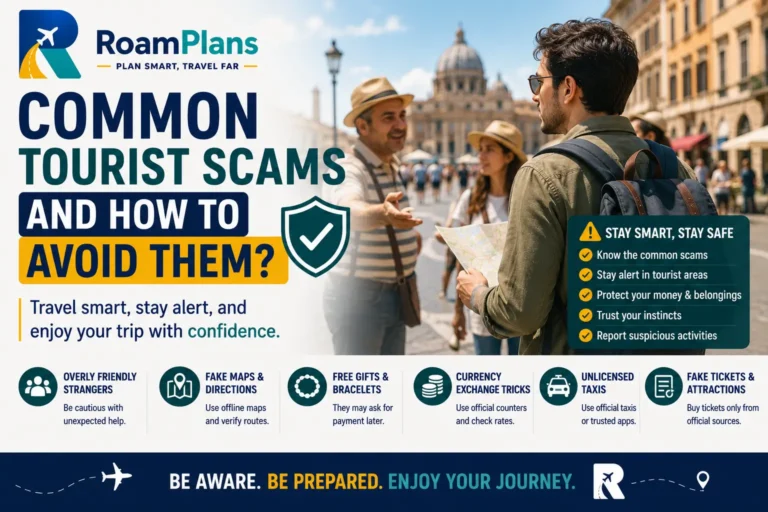
The broader warning signs and common setups are covered in Common Tourist Scams and How to Avoid Them ↗.
Mistake 41: Letting Politeness Keep You in an Uncomfortable Situation
You are allowed to:
Say no
Walk away
Decline a ride
Refuse a drink
Leave a shop
Change seats
Cancel an activity
Return to your hotel
You do not owe a stranger a long explanation.
If someone keeps pressuring you after you have declined, ending the interaction is often better than trying to remain polite.
Mistake 42: Arguing With an Aggressive Person Over Something Small
If someone becomes aggressive over a small amount of money, a taxi disagreement, or another minor issue, your first goal should be getting yourself to a safer situation.
Do not turn a minor dispute into a physical confrontation to prove that you are right.
Move toward:
Hotel staff
Transport staff
Security
Police where appropriate
A busy public place
If you are robbed, protecting yourself comes before protecting replaceable property.
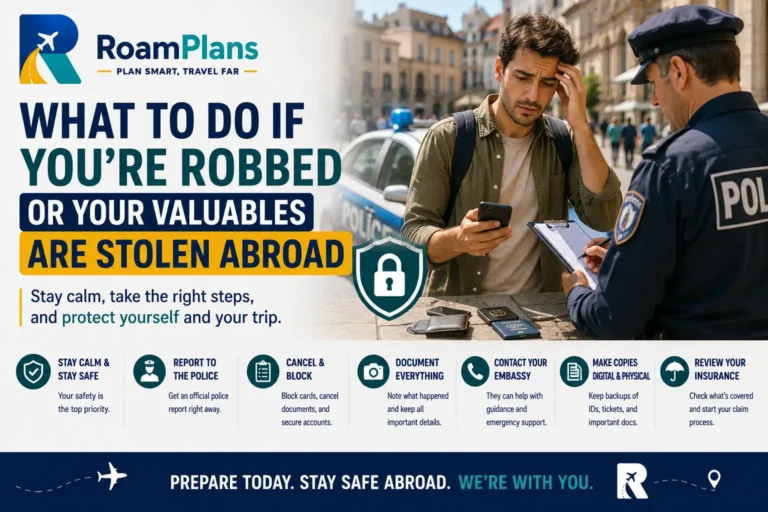
The recovery process is covered in What to Do If You’re Robbed or Your Valuables Are Stolen Abroad ↗.
Mistake 43: Chasing Someone Who Stole Your Phone or Bag
Your first reaction may be to run after them.
That can turn theft into a more dangerous encounter.
A stolen phone can be replaced.
A confrontation may expose you to injury or additional people involved in the theft.
Move to a safer location and then deal with:
Police reporting
Device security
Bank cards
Insurance
Documents
Do not make recovering an object more important than your physical safety.
Mistake 44: Taking an Unknown Shortcut Because the Map Says It Is Faster
Navigation apps are built to find routes.
They do not always know whether a narrow shortcut feels suitable for a visitor at a particular time.
A route that saves seven minutes may send you through:
An empty street
Poorly lit stairs
An isolated park
An industrial area
An unfamiliar alley
If the route does not feel suitable, use the longer main street or another transport option.
Saving a few minutes should not be the only factor in your decision.
Mistake 45: Wearing Headphones So Loudly That You Cannot Hear Your Surroundings
Music and podcasts can make long travel days more enjoyable.
You still need to hear what is happening around you when:
Crossing roads
Walking through stations
Waiting for transport
Moving through crowded areas
Keep the volume at a level that allows you to notice traffic, announcements, and people approaching.
This is particularly useful in places where traffic moves differently from what you are used to.
Mistake 46: Forgetting That Road Traffic May Come From the Opposite Direction
Travelers can automatically look in the direction they use at home.
That habit becomes risky in countries where vehicles travel on the opposite side of the road.
CDC travel injury guidance reminds travelers that pedestrians also need extra attention when adjusting to unfamiliar traffic systems.
At crossings:
Slow down.
Look both directions.
Follow pedestrian signals.
Do not assume vehicles will stop.
This simple habit matters even if you never drive abroad.
Mistake 47: Riding in a Car Without Using a Seat Belt
A taxi ride is still a road journey.
CDC recommends travelers use seat belts, including in rear seats, and where possible choose taxis or vehicles that provide them.
Do not stop using a seat belt simply because:
Local passengers are not wearing one
The ride is short
You are sitting in the back
You are on vacation
The basic safety rule has not changed because you crossed a border.
Mistake 48: Renting a Scooter Because Everyone Else Is Doing It
Scooters and motorbikes may look like an easy way to explore a destination.
They can also expose an inexperienced traveler to unfamiliar:
Traffic
Road surfaces
Driving customs
Weather
Licensing rules
CDC’s Yellow Book recommends travelers avoid motorcycles and motorbikes where possible and strongly recommends an appropriate helmet for travelers who do use them.
Before renting one, ask yourself whether you would confidently ride the same type of vehicle in difficult traffic at home.
If the answer is no, vacation may not be the best place to learn.
Mistake 49: Riding a Motorbike Without a Proper Helmet
A decorative helmet is not the same as meaningful protection.
CDC recommends properly fitted, good-quality helmets for travelers who ride motorcycles, motorbikes, or bicycles.
If suitable safety equipment is unavailable, reconsider the activity.
A cheap rental should not decide how much protection you use.
Mistake 50: Driving While Exhausted After a Long Flight
Landing, collecting a rental car, and immediately driving several hours may look efficient.
But you may be dealing with:
Poor sleep
Jet lag
Unfamiliar roads
Different traffic rules
A new vehicle
If you are too tired to drive safely, change the plan.
Use airport accommodation, another driver, public transport, or rest before continuing.
Do not let a prepaid hotel several hours away pressure you into driving when you cannot concentrate properly.
Mistake 51: Assuming Local Driving Works Like Driving at Home
Before renting a vehicle, learn:
Which side of the road is used
Basic road signs
Speed rules
Parking rules
Toll systems
Required documents
Local restrictions
CDC advises travelers who drive abroad to learn local traffic laws and use proper safety equipment.
Your international driving experience at one destination does not automatically prepare you for every other country.
Mistake 52: Joining a Protest Because It Looks Interesting
Political demonstrations can be culturally interesting to observe.
They can also change quickly or create legal and security problems for foreign visitors.
The State Department warns that demonstrations, protests, and unrest can threaten traveler safety, disrupt transportation, or make assistance harder to access.
In some countries, foreign participation can create additional legal risk.
If a demonstration develops nearby, move away rather than treating it as another sightseeing stop.
Mistake 53: Assuming a Peaceful Protest Must Stay Peaceful
A gathering may be calm when you first see it.
Conditions can change.
Roads may close.
Police may arrive.
Crowds may move.
State Department advisories for several destinations specifically warn travelers to avoid demonstrations because they can disrupt transport or become violent.
Do not wait until you are trapped inside a large crowd before deciding to leave.
Mistake 54: Photographing Police, Military, or Sensitive Sites Without Checking the Rules
Photography rules differ between countries.
Something that looks like an ordinary building to you may be considered a military, government, or security site.
State Department guidance for destinations including Greece, Türkiye, Morocco, and others warns that photographing certain military or sensitive facilities can be restricted and may lead to legal problems.
If you are unsure whether photography is permitted:
Ask first or do not take the photo.
Do not assume being a tourist gives you an exception.
Mistake 55: Ignoring Local Emergency Alerts Because the Day Looks Normal
A clear morning does not mean conditions will remain safe.
Travelers can encounter:
Severe storms
Flash floods
Wildfires
Extreme heat
High surf
Lightning
Check official local weather and emergency alerts when conditions could affect your plans.
The National Weather Service maintains specific safety guidance for hazards such as floods, heat, lightning, hurricanes, and dangerous beach conditions.
If local authorities close an area or tell people to evacuate, follow the instruction rather than relying on how the weather looks from your hotel window.
Mistake 56: Driving Through Floodwater Because Other Cars Are Doing It
Flooded roads can hide:
Washed-out surfaces
Strong moving water
Debris
Unexpected depth
Do not use another vehicle successfully crossing as proof that your vehicle can safely do the same.
Follow local road closures and emergency instructions.
A delayed route is better than turning bad weather into an emergency.
Mistake 57: Continuing an Outdoor Activity During Lightning
A beach, mountain viewpoint, golf course, or open field can become unsafe when thunderstorms arrive.
Do not continue an outdoor activity simply because:
The storm still looks far away.
Check current local alerts and follow staff, ranger, lifeguard, or emergency instructions.
The National Weather Service maintains specific lightning-safety guidance as part of its hazard information.
Your reservation time does not matter more than the weather.
Mistake 58: Swimming Because the Water Looks Calm
The surface can look inviting while currents create danger below it.
The National Weather Service warns that dangerous rip currents and waves can affect beaches even when conditions appear pleasant.
Before entering unfamiliar ocean water:
Check warning flags.
Follow lifeguard instructions.
Look at current beach warnings.
Stay out when local authorities advise against swimming.
A beautiful beach photo tells you nothing about the current.
Mistake 59: Overestimating Your Swimming Ability
Being a strong pool swimmer does not guarantee you can handle:
Ocean currents
Waves
Cold water
Deep water
Fatigue
CDC advises travelers not to swim alone in unfamiliar water and recommends following lifeguards and local warnings.
Do not enter rough water because another person says:
It is easy.
Their ability and experience may be different from yours.
Mistake 60: Drinking Alcohol Before Swimming or Boating
Alcohol can affect balance, coordination, and judgment.
CDC’s traveler swimming guidance advises against drinking alcohol before or during swimming, diving, and boating.
If you plan to drink, separate that part of the day from activities that require good judgment in or around water.
Mistake 61: Skipping a Life Jacket Because the Boat Trip Is Short
A short boat ride can still have an emergency.
CDC recommends wearing a life jacket during boating and appropriate water-recreation activities.
Do not remove it simply because:
The water looks calm
You can swim
Other passengers are not wearing one
You are close to shore
If a tour operator ignores basic safety equipment, consider whether you want to continue with that operator.
Mistake 62: Going Into Unfamiliar Water Alone
Remote beaches, lakes, and swimming spots may look peaceful precisely because nobody else is there.
That also means help may be farther away.
CDC advises travelers not to swim alone in unfamiliar water.
If something changes suddenly, such as a current, injury, cramp, or medical problem, another person may be able to get help.
Mistake 63: Joining an Adventure Activity Without Checking the Operator
A low price or attractive social-media page does not tell you whether an activity is being run safely.
Before booking activities such as:
Diving
Rafting
Climbing
Paragliding
Boat trips
ATV tours
look at:
Safety equipment
Instructor qualifications where relevant
Recent reviews
Weather policy
Emergency procedures
Insurance requirements
If an operator dismisses reasonable safety questions, that itself gives you useful information.
Mistake 64: Hiding a Medical Condition From an Activity Provider
If a legitimate operator asks about conditions that could affect an activity, answer accurately.
Depending on the activity, relevant issues may include:
Heart conditions
Asthma
Recent surgery
Pregnancy
Seizure history
Medication
Mobility limitations
The purpose is not to embarrass you.
The information may affect whether the activity is appropriate or how staff respond in an emergency.
If you are unsure whether a medical condition is compatible with a planned activity, ask a qualified healthcare professional before the trip.
Mistake 65: Pushing Through Illness Because You Already Paid
A prepaid tour can create pressure to ignore symptoms.
Money already spent does not make your body healthier.
If you have:
High fever
Severe dehydration
Breathing problems
Chest pain
Fainting
Severe pain
Worsening illness
get suitable medical help rather than trying to finish the itinerary.
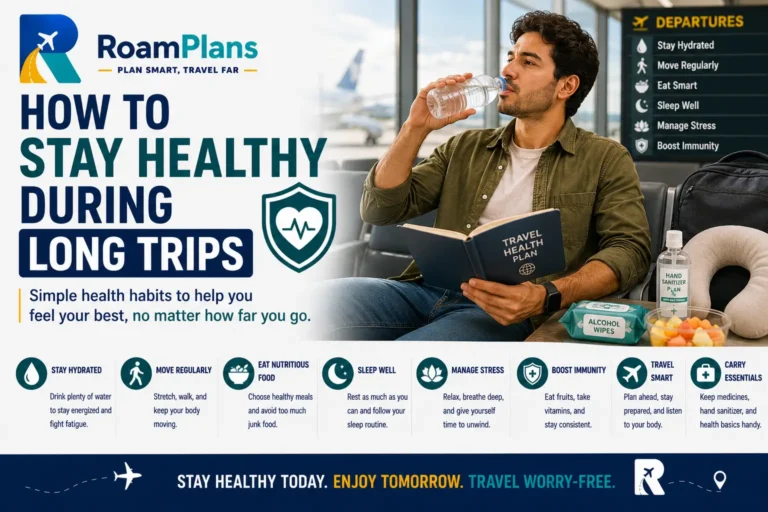
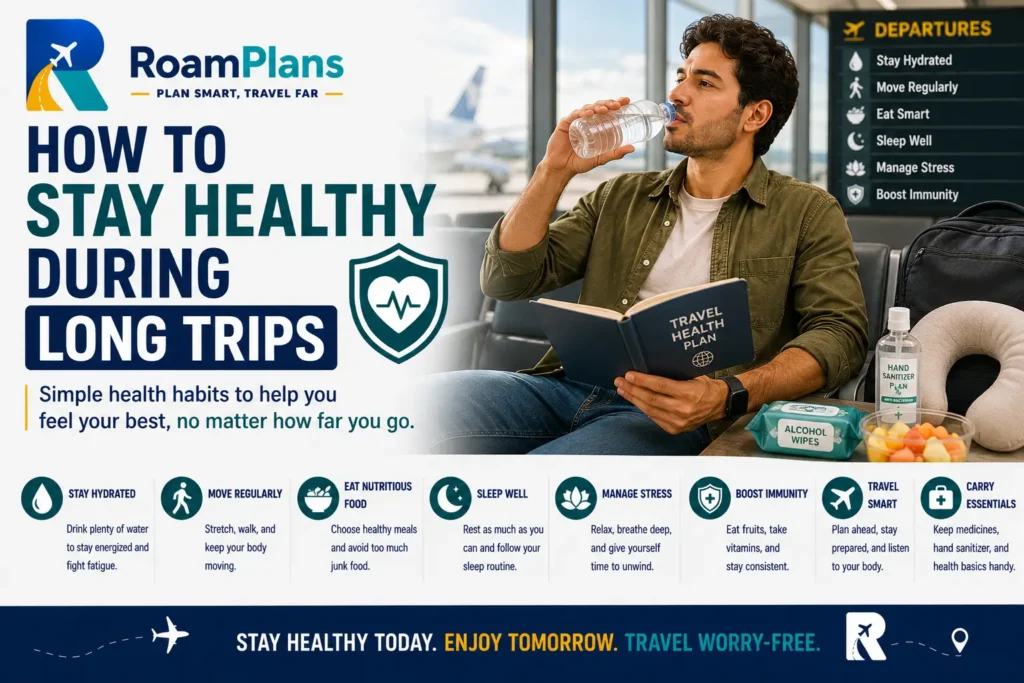
For everyday long-trip health habits, see How to Stay Healthy During Long Trips ↗.
Mistake 66: Treating Every Stomach Problem With Random Medication
Travelers sometimes buy whatever another tourist recommends.
Different illnesses can cause similar symptoms.
Medication that is appropriate in one situation may be unsuitable in another.
Use medicines according to professional or official guidance, especially when symptoms are severe.
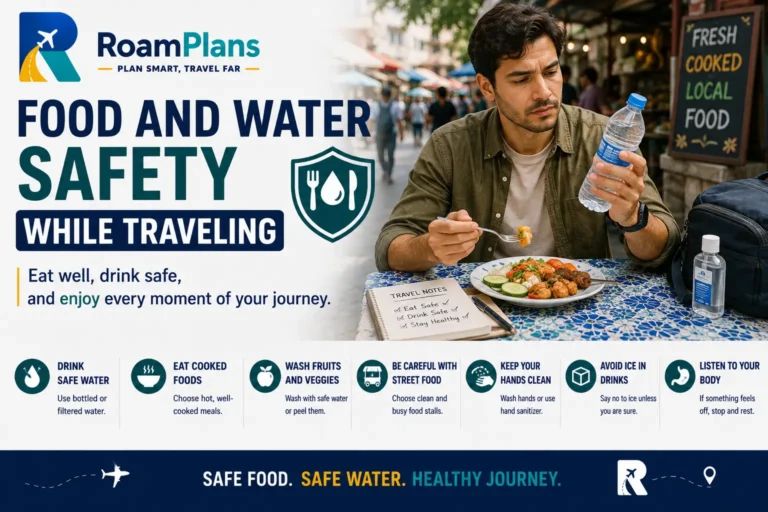
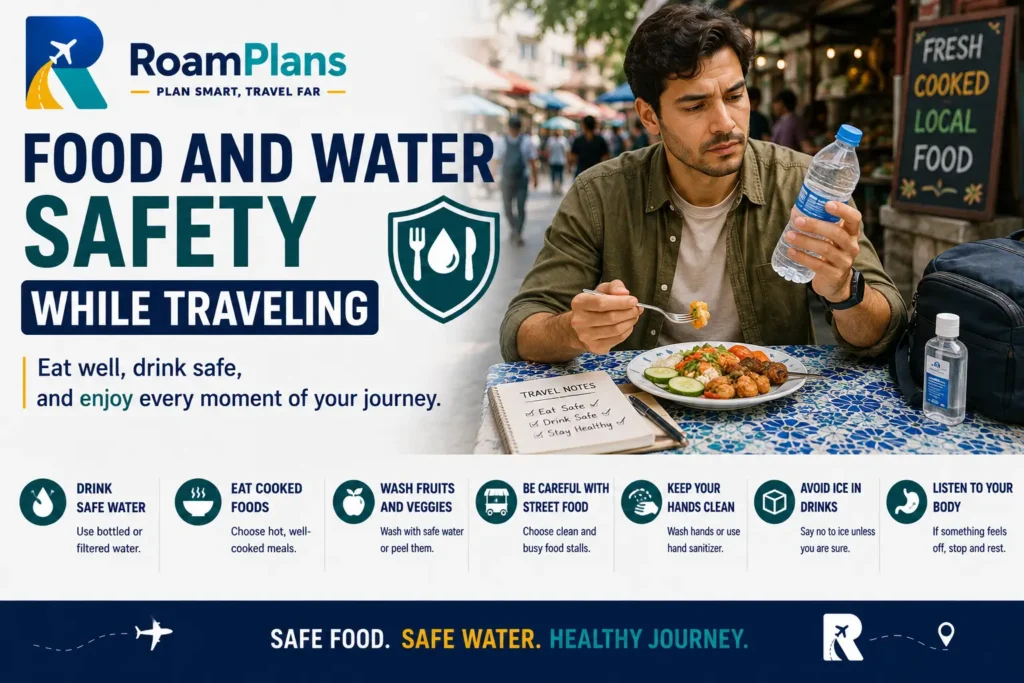
The dedicated Food and Water Safety While Traveling guide covers travelers’ diarrhea, hydration, and warning signs in more detail.
Mistake 67: Ignoring Food and Water Precautions Because Locals Eat There
Local residents and visitors do not always have the same exposure history or habits.
More importantly, one crowded restaurant does not tell you:
How food was stored
Whether water is safe
How raw ingredients were handled
Check destination-specific health advice and use food precautions that fit that destination.
Do not turn:
Locals eat it
into your entire food-safety test.
Mistake 68: Leaving the Group Without Telling Anyone
This matters during:
Tours
Hiking
Nightlife
Festivals
Group trips
If you decide to leave, tell at least one person.
A simple message such as:
I’m going back to the hotel by taxi
can prevent people from spending hours trying to find you.
This is especially useful when plans change late at night or in an unfamiliar place.
Mistake 69: Assuming Your Travel Companion Knows the Plan
You may know:
Hotel address
Flight number
Insurance company
Emergency contact
Where the passports are stored
Your companion may not.
Make sure everyone who needs the information can access the basics.
Do not build a trip where one person is the only person who knows how everything works.
If that person loses their phone or becomes ill, the rest of the group should still be able to continue.
Mistake 70: Refusing to Change Plans Because You Do Not Want to Look Afraid
Sometimes travelers continue with a bad situation because they do not want to appear nervous.
You may hear:
Everyone else is doing it.
You already came this far.
Don’t be boring.
You are allowed to change your mind.
Skip:
The ride
The party
The shortcut
The swim
The hike
The neighborhood
The activity
You do not need to prove that you are adventurous.
A good safety decision is one that gives you a reasonable way to continue enjoying the trip.
Mistake 71: Having No Backup Way to Access Money
A lost wallet or blocked card becomes much harder to manage if it was your only way to pay.
Keep a second payment option separate from your main wallet.
That could include:
A backup card
A small amount of emergency cash
Another secure payment method
Do not keep the backup beside the main card.
The purpose is to make sure one lost bag or wallet does not remove every financial option at once.
Mistake 72: Carrying Too Much Emergency Cash
Having some backup money can help.
Carrying a large amount of cash can create another problem.
Keep enough for a realistic emergency rather than turning your backpack into a bank.
Separate it from your daily spending money and avoid repeatedly opening your emergency storage in public.
Mistake 73: Not Telling Your Bank About a Lost Card Quickly
If a payment card disappears, deal with it as soon as you reasonably can.
Use your bank’s official app, website, or verified contact information to freeze or report the card.
Do not use a phone number sent to you in an unexpected text claiming to be your bank.
CISA recommends being careful with unexpected messages and links because phishing attempts often try to get account or personal information.
Mistake 74: Having No Backup for Two-Factor Authentication
Strong account security is useful, but beginners sometimes create another problem by making one phone the only way to access every account.
If that phone disappears, you may struggle to reach:
Email
Banking
Cloud storage
Booking accounts
Where your services allow it, securely prepare backup authentication methods or recovery codes before leaving.
CISA recommends multi-factor authentication as one of its core online-security practices.
Keep recovery information secure and separate from the device it protects.
Mistake 75: Leaving Devices Unlocked in Shared Accommodation
Hostels, shared apartments, coworking spaces, and group accommodation may put your devices around people you do not know.
Lock phones and laptops when you are not using them.
CISA recommends keeping devices secured when they are outside your direct physical control.
Do not assume a room is completely private simply because your belongings are inside it.
Mistake 76: Leaving Your Passport and Backup Documents Together
A backup works only if it survives the same problem that removes the original.
The State Department recommends keeping document copies separate from original documents and also giving copies to a trusted person where appropriate.
For example:
Original passport: secure primary location
Copy: separate secure location
Trusted contact: another copy where appropriate
Avoid putting everything inside one passport wallet and calling that your backup system.
Mistake 77: Saving Important Information Only Online
Cloud storage is useful until you have:
No internet
No mobile signal
A dead phone
A locked account
Keep selected essential information available offline.
You may want easy access to:
Accommodation address
Insurance assistance number
Emergency contacts
Passport details
Important reservation information
The State Department specifically recommends preparing travel documents and copies before international travel.
You do not need an offline copy of every email.
Save the information you would genuinely need during a problem.
Mistake 78: Not Knowing Your Accommodation Address
A hotel name alone may not be enough.
Save the complete address in a form you can show to:
Taxi drivers
Police
Transport staff
Local helpers
If the local language uses another writing system, keeping the address in the local script can also be useful.
This is especially helpful during your first arrival, when you may have limited mobile data or be too tired to search properly.
Mistake 79: Saying Your Room Number Loudly to Strangers
Treat your room number as private information.
If hotel staff ask for it in a public area, you can show the key card or say it quietly rather than announcing it across a crowded lobby.
You do not need to become secretive about everything.
Just avoid unnecessarily telling unknown people exactly where you are sleeping.
Mistake 80: Ignoring a Broken Hotel Door or Lock
If your accommodation door does not lock properly, report it.
Do not spend several nights hoping nobody notices.
The same applies to:
Broken windows
Damaged balcony doors
Lockers that cannot close
Doors that do not latch
If the property cannot provide a reasonable solution, ask about another room or consider whether you should stay elsewhere.
A cheap booking is not useful if you cannot comfortably secure the room.
Mistake 81: Opening Your Hotel Door Without Checking Who Is Outside
If someone unexpectedly knocks and says they are hotel staff, you can verify before opening.
Call reception using the hotel’s known number and ask whether someone was sent to your room.
You do not need to assume every unexpected visitor is dangerous.
Verification takes very little effort.
Mistake 82: Giving Strangers Too Much Personal Information
Friendly conversations are part of travel.
You do not need to immediately tell someone you just met:
Your room number
That you are traveling alone
Exactly how much cash you carry
Where your passport is stored
Your complete itinerary
Share information gradually and appropriately.
Being friendly does not require explaining every detail of your trip.
Mistake 83: Checking Out of a Hotel Without Checking the Room
A five-minute room check can prevent a much harder recovery process later.
Before leaving, check:
Safe
Bedside table
Bathroom
Charging sockets
Under the bed
Wardrobe
Passport storage
Refrigerator
Phones, passports, chargers, watches, and medication are easy to forget because they may have been stored somewhere different from your normal routine.
Mistake 84: Putting Your Passport in an Airplane Seat Pocket
Seat pockets are easy places to forget items when people rush to leave a flight.
Keep important documents in a consistent secure place rather than moving them around whenever you sit down.
The same applies on:
Trains
Buses
Airport lounges
Restaurants
Create one normal passport location and return it there after use.
Consistency reduces the chance of leaving it behind.
Mistake 85: Leaving Your Bag Unattended for “Just a Minute”
A bag can disappear quickly from:
Train stations
Cafés
Hotel lobbies
Airport seating
Bus terminals
Keep important bags under your control or leave them with an official storage service.
Do not ask an unknown stranger to watch your passport, laptop, and wallet while you walk away.
Mistake 86: Sleeping Through a Train Ride With Valuables Exposed
Overnight trains and long bus rides can make you tired enough to stop thinking about where your belongings are.
Before sleeping:
Secure your phone.
Put important documents away.
Close your main bag.
Keep valuables in a controlled location.
Do this before you become exhausted rather than trying to organize everything after you are already half asleep.
Mistake 87: Putting Valuables in an Easy-to-Reach Outer Pocket
Outer backpack pockets are useful for:
Tissues
Water bottles
Low-value items
They are usually a poor choice for:
Passport
Main wallet
Backup card
Phone when you are not using it
Keep important belongings somewhere that is harder for another person to access without you noticing.
This matters most in crowded transport, queues, and major tourist areas.
Mistake 88: Falling Asleep in a Public Place Without Securing Your Belongings
Long layovers can make airport or station sleep unavoidable.
Before closing your eyes, think about where your:
Passport
Phone
Wallet
Main bag
will be.
Avoid leaving a valuable item loose beside you.
If you are traveling with someone, taking turns resting can sometimes make luggage management easier.
Mistake 89: Ignoring Local Safety Alerts
Travelers often spend months researching before departure and then stop checking information once they arrive.
Conditions can still change.
Local alerts may warn about:
Severe weather
Fires
Flooding
Evacuations
Transport disruption
Ready.gov emphasizes receiving timely emergency alerts and following instructions from public-safety authorities during emergencies.
Use the official alert system relevant to the destination you are visiting.
Mistake 90: Ignoring an Evacuation Order Because Your Hotel Looks Fine
A wildfire, storm, flood, or other emergency may not look dangerous from your window yet.
Authorities may be acting on information you cannot see.
Ready.gov advises people to evacuate when authorities instruct them to do so during hazards such as wildfires.
Do not delay because:
You already paid for the room.
Your luggage is not packed.
Other tourists are staying.
The weather currently looks normal.
Follow official instructions and focus on getting to the recommended location safely.
Mistake 91: Having No Way to Receive Emergency Information
Think about how you would learn that conditions had changed.
Depending on the destination, this may involve:
Government alerts
Local emergency apps
Hotel notifications
Airline messages
Embassy alerts
Local news
For U.S. emergency planning, Ready.gov recommends making receiving alerts and warnings part of an emergency plan.
International travelers should identify the appropriate local systems for the destination rather than assuming the same alert system works everywhere.
Mistake 92: Waiting Until an Emergency to Build a Plan
An emergency is a bad time to decide:
Who to call
Where your documents are
How to access backup money
Which person at home has your itinerary
How to contact your insurer
The State Department recommends preparing documents, reviewing destination information, and planning before international travel.
Keep the plan simple enough that you can actually use it.
Mistake 93: Focusing on Your Property Before Your Own Safety
If something serious happens, your first priority should be getting yourself to a safer place.
A phone, camera, wallet, or suitcase can usually be dealt with afterward.
Once you are somewhere safer, you can work through:
Police reporting
Bank cards
Device security
Passport replacement
Insurance
Do not remain in an unsafe situation because you are trying to recover a replaceable item.
Mistake 94: Trying to Handle a Serious Emergency Completely Alone
Independent travel does not mean refusing help.
Depending on the situation, contact:
Local emergency services
Police
Medical professionals
Accommodation staff
Your insurer
Embassy or consulate
Trusted family or friends
The State Department provides country information and consular resources as part of international travel preparation, while CDC directs travelers to destination-specific health information before and during travel.
Use qualified help when the situation is beyond a normal travel inconvenience.
Mistake 95: Assuming Every Problem Requires the Police
Some problems are better handled first through:
Hotel management
Airline staff
Bank
Insurance company
Transport company
Police involvement becomes more relevant for situations such as:
Theft
Robbery
Assault
Serious threats
Other crimes
Knowing which problem you are solving can save time.
If you need an insurance claim after theft, check whether your policy requires a police report.
Mistake 96: Failing to Keep Evidence After a Serious Problem
After a theft, accident, medical problem, or major disruption, keep useful records where safe to do so.
That may include:
Police report
Medical receipts
Photos
Booking records
Airline communication
Replacement receipts
Insurance reference numbers
Do not spend your first moments after an emergency collecting paperwork if you still need medical help or physical safety.
Handle immediate safety first.
Then document what happened.
Mistake 97: Posting About a Lost Phone Before Securing Your Accounts
If your phone is stolen, your first priorities should include protecting access to the device and important accounts.
Do not spend the first hour posting the story across social media while:
Email remains accessible
Banking apps remain logged in
The device has not been locked
CISA recommends protecting physical devices, using strong authentication, and guarding accounts from unauthorized access.
Secure first.
Tell the story later.
Mistake 98: Assuming You Will Remember Every Detail After an Incident
Stress affects memory.
Once you are safe, write down basic details such as:
Time
Location
What happened
What was taken
Description of the situation
Who you contacted
That can make later reports and insurance paperwork easier.
Keep your notes factual rather than trying to prove who was responsible before you have enough information.
Mistake 99: Continuing the Exact Same Plan After Conditions Change
A safe decision made yesterday can become a poor decision today.
Examples include:
A storm approaching
A transport strike beginning
A protest moving toward your area
A road closing
You becoming ill
Your phone being stolen
Your travel companion becoming unable to continue
Adapt.
A flexible itinerary is often safer than one you refuse to change.
Mistake 100: Believing Good Travel Safety Means Being Afraid of Everything
This may be the biggest mistake of all.
Travel safety is not about assuming every stranger is a scammer, every neighborhood is dangerous, or every unfamiliar meal will make you sick.
Good safety habits give you room to enjoy the trip.
You check the important things.
You prepare backups.
You stay aware.
Then you travel.
The goal is not:
Avoid every possible risk.
The goal is:
Avoid unnecessary risk and be prepared when normal travel problems happen.
A Simple Beginner Travel Safety Routine
You do not need to remember 100 separate rules every morning.
Reduce them to a few habits.
Before Leaving Your Accommodation
Check:
Phone charged
Address saved
Payment method
Necessary ID
Weather
Transport plan
While You Are Out
Remember:
Keep important belongings secure.
Stay aware around transport and crowds.
Use established transport options.
Protect your phone and payment information.
Follow weather and local warnings.
Change plans if something no longer feels reasonable.
Before Going Out at Night
Know:
Where you are going
How you are returning
Whether transport will still operate
Who you are with
What you actually need to carry
Before Sleeping
Check:
Door locked
Phone charging
Passport secure
Wallet secure
Medication ready if needed
Tomorrow’s first transport or activity
These small routines are easier to maintain than trying to remember a huge list of safety rules every day.
Beginner Travel Safety Checklist
Before Booking
Check the current destination Travel Advisory.
Read regional warnings.
Check CDC destination health information.
Review the travel season and major weather risks.
Research local laws that affect your trip.
Check the areas you may stay.
Think about transport and planned activities.
The State Department recommends reviewing destination advisories and local laws during international travel planning, while CDC provides destination-specific health information.
Before Departure
Make secure copies of important documents.
Keep backups separate from originals.
Prepare backup access to money.
Save accommodation details offline.
Save emergency contacts.
Check medication requirements.
Review insurance information.
Secure important online accounts.
Confirm airport or station arrival transport.
Recheck current destination conditions.
The State Department specifically recommends making multiple copies of required travel documents and keeping copies separate from originals.
During the Trip
Keep passport and money secure.
Carry only what you need for the day.
Stay aware in crowded places.
Verify unexpected payment requests.
Protect your phone.
Use suitable transportation.
Wear seat belts.
Follow weather and emergency alerts.
Avoid demonstrations.
Adjust plans when conditions change.
Digital Safety
Use a strong phone lock.
Protect important accounts with multi-factor authentication where available.
Confirm public Wi-Fi names before connecting.
Be careful with unexpected links.
Keep devices physically secure.
Prepare account recovery options.
CISA recommends strong authentication, phishing awareness, careful Wi-Fi use, and protection of physical devices.
If Something Goes Wrong
Move to a safer place first.
Get medical or emergency help when needed.
Secure cards and digital accounts.
Report crimes where appropriate.
Contact your insurer if relevant.
Protect or replace important documents.
Tell a trusted contact.
Keep useful records.
Change the itinerary if the situation requires it.
Frequently Asked Questions
Failing to prepare backups is one of the most damaging mistakes. One lost phone, wallet, or document should not remove every option you have.
It depends on local law and what you are doing. Check destination identification rules and securely store the original when carrying it is unnecessary.
Divide your payment options. Keep daily money separate from a backup card or emergency cash.
It can be used carefully, but confirm the correct network, use encrypted sites, keep devices updated, and avoid suspicious links or warnings.
Get somewhere safer first. Then secure affected cards or accounts and handle police, document, and insurance steps as needed.
Research the destination, prepare a few backups, use sensible transport, protect valuables, and stay aware without assuming every unfamiliar situation is dangerous.
Yes, when new conditions materially affect your route or safety. Follow current official advice rather than sticking to a plan simply because it is booked.
Check government travel advice, regional warnings, health information, local laws, weather, transportation, and the areas included in your actual itinerary.
Final Thoughts
In short, Beginner travel safety is mostly about avoiding preventable problems and keeping more than one option available. Check the destination, protect your documents and money, plan important transport, secure your phone, follow local warnings, and be willing to change plans when conditions change. Good preparation should make travel feel easier, not make you afraid of it.

Adnan Ahmed
RoamPlans AuthorTravel Planning Researcher & Editor
Adnan Ahmed is the travel planning researcher and editor behind RoamPlans. He creates clear, practical guides to help travelers compare destinations, plan routes, estimate costs, and avoid common trip-planning mistakes. His work combines careful source research, official travel information, and regular content reviews to keep each guide useful and current.
- ✓Destination Research
- ✓Budget Planning
- ✓Route Planning
- ✓Beginner Travel Guides
Turn This Guide into a Practical Trip Plan
Use the recommended Airline Baggage Allowance Checker or explore more free RoamPlans tools.