
How to Choose the Best Travel Insurance for Your Trip
How to Choose the Best Travel Insurance for Your Trip? | RoamPlans RoamPlans · Travel Insurance How to Choose the Best Travel Insurance for…
Read guide →
Travel insurance can look simple when it appears as an extra option beside a flight or hotel booking. The real decision is more detailed. A policy may cover one problem but exclude another, use different limits for medical treatment and evacuation, or reimburse a cancellation only when the reason meets the policy terms.
When I review travel insurance for an international trip, I do not start with the cheapest plan or the largest number shown on the sales page. I first look at the trip cost, destination, existing health coverage, non-refundable bookings, planned activities, and what could create a serious financial loss. Then I compare the medical limits, evacuation benefit, cancellation terms, exclusions, deductibles, and claim requirements. This gives me a much clearer picture of what the policy could actually do for that trip.
For this guide, I also check current information from sources such as the U.S. Department of State, Medicare, and insurance regulators. That matters because travel insurance is a contract, and coverage can differ significantly between policies. The National Association of Insurance Commissioners (NAIC) identifies trip cancellation, interruption, delay, baggage protection, travel medical coverage, and medical evacuation among the main forms of travel insurance.
For a first international trip, the goal is not to buy every available benefit. It is to identify the risks you would struggle to pay for yourself and then check whether a policy actually covers them.
Travel Note: Travel insurance policies have their own definitions, limits, exclusions, deductibles, eligibility rules, and claim conditions. Always read the policy wording before buying and before relying on a benefit.
Travel insurance is insurance that covers certain risks connected to travel.
Depending on the policy, it may provide benefits for problems such as:
NAIC describes travel insurance as protection for travel-related risks including trip cancellation, delays, baggage loss, travel medical needs, and medical evacuation.
Most travelers do not need every type of protection in equal amounts.
Someone taking a short trip with refundable bookings may care most about medical coverage.
Someone paying thousands of dollars for a non-refundable cruise may care more about cancellation and interruption.
Someone trekking in a remote region may place much more weight on medical evacuation.
That is why I prefer starting with the risk, then looking for the insurance benefit that addresses it.
The basic process is:
You buy a policy → a covered event happens → you follow the policy requirements → you submit evidence where required → the insurer reviews the claim → an eligible loss may be paid up to the applicable limit.
The phrase covered event matters.
Buying travel insurance does not mean the insurer becomes responsible for every expense that goes wrong during the trip.
Each benefit normally has rules covering:
A traveler may have a genuine financial loss and still find that it does not qualify under the policy.
That is why the policy certificate and full wording matter more than a short marketing summary.
One of the easiest beginner mistakes is thinking:
I bought travel insurance, so my trip is protected against anything that happens.
That is not how insurance works.
A policy promises specific benefits under specific conditions.
For example, standard trip cancellation coverage normally depends on one of the covered reasons stated in the policy. Simply deciding that you no longer want to travel is not automatically the same as experiencing a covered cancellation.
NAIC advises travelers to look at exclusions as well as included benefits because different policies can exclude different situations.
This is why the dedicated RoamPlans What Does Travel Insurance Cover — and What Does It Not Cover? article will go deeper into covered benefits and exclusions.
A comprehensive travel insurance policy may combine several benefits.
The most common categories include:
| Coverage | Main Purpose |
| Trip cancellation | Helps with eligible prepaid losses if you cancel before departure for a covered reason |
| Trip interruption | Can help when a covered event disrupts the trip after it begins |
| Travel medical | Helps with eligible medical costs during travel |
| Medical evacuation | Helps with qualifying emergency medical transportation |
| Baggage loss/damage | Covers eligible lost, stolen, or damaged belongings |
| Baggage delay | Helps with certain necessary purchases when baggage is delayed |
| Travel delay | Can reimburse eligible expenses caused by a covered delay |
| Missed connection | May help with qualifying costs when a covered delay causes a missed connection |
Not every policy contains all of these benefits, and the limits can differ significantly.
For a beginner traveler, I would read each benefit as a separate question rather than seeing one large coverage amount and assuming everything shares that limit.
Travel insurance is not automatically necessary for every trip in the same way.
The better question is:
What could I lose if this trip goes wrong, and could I comfortably pay that amount myself?
I would consider several areas.
Add up money that you would lose if you had to cancel under circumstances where the supplier would not refund you.
This may include:
A traveler with $300 at risk faces a very different decision from someone with $8,000 or $15,000 in non-refundable bookings.
Do not assume your U.S. health plan covers international care.
The State Department recommends contacting your insurer before travel to find out whether emergency and routine medical treatment abroad is covered.
Ask your insurer:
The answers help show whether a separate travel medical policy would fill a real gap.
The supporting article Do You Really Need Travel Insurance? will focus specifically on this buy-or-skip decision for different types of trips.
Medical treatment abroad can work differently from treatment at home.
The U.S. Department of State says the U.S. government does not pay the overseas medical expenses of U.S. citizens. It also warns that in some locations travelers may be asked for payment or a deposit before treatment is provided.
That means an international traveler should know:
I would save the insurer’s emergency assistance number offline before leaving home.
Insurance documents are much less useful if the traveler cannot find the contact information while sitting in a foreign hospital.
These terms are related, but they do not always mean the same product.
This mainly focuses on healthcare during travel.
Depending on the policy, benefits may include eligible:
A broader policy may combine medical coverage with benefits for:
The State Department explains that medical and evacuation coverage can be purchased separately or included as part of broader travel insurance.
The dedicated Travel Medical Insurance Guide for International Travelers will own the detailed medical-insurance intent, including medical limits, deductibles, overseas healthcare, evacuation, and pre-existing medical conditions.
Travelers with Medicare need to check this separately.
Medicare’s current official guidance says it usually does not cover healthcare while you are outside the United States, although limited exceptions exist. In most cases, the traveler pays the cost. Some Medigap policies may provide foreign travel emergency benefits.
A traveler with Medicare should therefore check:
Do not assume that being well insured at home means the same protection follows you overseas.
Emergency medical evacuation insurance addresses transportation connected to a serious medical situation.
For example, you might be injured in a place where the nearby facility cannot provide the treatment you need.
Depending on the policy and medical circumstances, evacuation coverage may help arrange or pay for transport to an appropriate medical facility.
The State Department strongly recommends considering medical evacuation insurance for higher-risk destinations or places with limited medical care.
It also reports that an air ambulance evacuation back to the United States can cost about $20,000 to $200,000, depending on the location and medical condition.
That does not mean every traveler needs the largest evacuation policy available.
It means the traveler should understand what an evacuation could cost and compare that risk with the coverage offered.
Imagine a traveler is badly injured abroad.
Three separate costs could arise:
Treatment at the local hospital
Medical transportation to another hospital
Transportation back to the United States
A policy may handle those costs differently.
When reading medical coverage, check:
Do not look only at the medical-treatment number and assume evacuation is covered at the same amount.
Trip cancellation insurance addresses eligible losses when a covered event causes you to cancel before the trip begins.
Depending on the policy, it may reimburse certain prepaid, non-refundable costs.
Those might include eligible:
NAIC identifies cancellation and interruption coverage as one of the main forms of travel insurance.
The key phrase remains:
covered reason.
A standard policy does not necessarily reimburse every reason for canceling.
The supporting Trip Cancellation Insurance Guide: What Is Covered and What Is Not? will examine covered reasons, exclusions, prepaid costs, timing, and Cancel for Any Reason coverage in more detail.
These sound similar but apply at different stages.
The problem happens before departure, and you cannot take the trip.
The trip has already started, but a covered event causes you to interrupt it.
For example:
You have paid for a 14-day trip.
After four days, a covered emergency forces you to return home.
Depending on the policy, trip interruption could address eligible unused prepaid costs and certain additional travel expenses.
Always use the definitions in the policy you are considering because conditions and limits can differ.
Some policies offer an optional benefit commonly called Cancel for Any Reason, or CFAR.
It provides broader cancellation flexibility than standard covered-reason cancellation, but it still has rules.
NAIC explains that CFAR typically provides only a partial reimbursement and can require the traveler to buy the benefit within a specified period, insure the required trip cost, and cancel by a stated deadline before departure.
So:
Cancel for Any Reason does not mean full money back at any time.
Read:
before paying extra for it.
Travel insurance can include protection for baggage and personal belongings.
This commonly appears as two different benefits.
This can apply to qualifying baggage or personal property that is:
This can help with eligible essential purchases when checked baggage does not arrive within the waiting period stated by the policy.
NAIC lists baggage loss and delay as common travel insurance protections and notes that this coverage may interact with protection available from other sources such as homeowners insurance or credit cards.
Baggage policies can have several limits.
For example:
This becomes especially relevant if you travel with expensive:
Read the benefit details rather than looking only at the overall baggage number.
Travel delay insurance can help with certain expenses after a qualifying delay.
Depending on the policy, eligible costs might include:
However, policies can require a delay to last a minimum number of hours and result from a covered cause before the benefit applies.
That means:
flight delayed = automatic insurance payment
is not a safe assumption.
Keep airline notices and receipts when a delay causes additional expenses.
They may be needed later for a claim.
These two benefits answer different problems.
The traveler is delayed.
The traveler’s checked bag is delayed.
You could experience both during the same trip, but each may have its own:
Read them separately.
Missed connection coverage can apply when a qualifying covered delay causes you to miss another scheduled transportation connection.
It can be relevant for trips involving:
However, the policy decides which situations qualify.
A connection that you booked with very little time between separate tickets may not automatically become an insured loss simply because you missed it.
Check the wording.
Some standard policies restrict or exclude activities they consider higher risk.
Depending on the insurer, examples can include:
NAIC specifically lists some risky activities among possible travel-insurance exclusions.
If an activity is one of the main reasons for your trip, check it before buying the policy, not after an accident.
The dedicated Adventure Travel Insurance: What Activities Are Covered? article will focus on activity definitions, exclusions, search and rescue, equipment, medical treatment, and evacuation.
Family travel can create different insurance needs from a solo trip.
A family policy may cover eligible:
but the insurer decides who qualifies as a family member and how benefits apply.
Before choosing one, check:
A policy that works well for one adult does not automatically provide the right protection for a family.
The supporting Family Travel Insurance Guide: Coverage for Parents and Children will cover these family-specific questions without repeating the general pillar.
Travel insurance can also be sold based on how often you travel.
This normally covers one defined trip.
The policy may use information such as:
This is intended for people who take several eligible trips during a policy period.
An annual policy may be convenient for frequent travelers, but that does not mean every benefit is identical to a single-trip policy.
Check:
The number of trips you take should be one factor in comparing policies, not the only one.
There is no universal insurance requirement for every international traveler.
Some destinations, visa types, tours, or activities may require specific insurance, while many trips do not have a general government insurance requirement.
Even when insurance is optional, a traveler may still decide it makes sense because of the financial risks involved.
Keep these questions separate:
Does my trip require insurance?
and
Would insurance protect me from a financial risk I do not want to carry myself?
The answer to one does not automatically answer the other.
Before comparing plans, I use four questions.
Examples:
Estimate what you could lose from:
Check:
That gap is what a travel insurance policy should be evaluated against.
This method prevents you from buying a policy simply because a booking page says your trip needs protection.
For a beginner traveler, price is easy to compare.
Coverage is harder.
Two policies can have similar premiums but very different:
The State Department advises travelers to review whether a policy covers their destinations, full trip length, emergency medical care, medical transportation, current medical conditions, and planned activities.
That is a much better starting point than sorting plans from cheapest to most expensive.
By the end of this complete guide, you should be able to answer:
Those questions keep the decision tied to your actual trip rather than a generic recommendation.
The next stage is to look beyond the headline benefits and examine exclusions, pre-existing medical conditions, deductibles, coverage limits, primary and secondary insurance, credit-card protection, policy timing, and cost. Those details often decide whether a policy that looks good on the sales page is actually a good fit.
Understanding exclusions is just as important as understanding benefits.
A policy can advertise medical care, cancellation, evacuation, and baggage protection while still excluding certain situations.
NAIC currently lists examples of common travel insurance exclusions that can include:
The exact exclusions depend on the individual policy.
That is why I read the exclusions section before comparing the headline benefit amounts.
A $500,000 benefit is not useful for a problem that the policy excludes.
Comparison websites and booking pages can be useful for finding plans, but the short benefit table is only a starting point.
Before buying, I would open the full policy documents and check:
NAIC advises travelers to review both what a travel policy covers and what it excludes before purchase.
If an exclusion could realistically affect your trip, investigate it before paying.
Travel insurance policies can use specific definitions for pre-existing medical conditions.
The definition may look at medical conditions, symptoms, treatment, diagnoses, medications, or changes in health during a stated period before the policy was purchased.
Do not create your own definition based on whether you personally consider a condition serious.
Use the definition in the policy.
NAIC specifically advises travelers to check whether pre-existing conditions are excluded and whether the insurer requires approval before receiving medical treatment.
Some policies exclude losses connected to pre-existing conditions.
Others may offer a pre-existing condition exclusion waiver when certain policy conditions are met.
The conditions can differ by insurer.
For example, a plan may require the traveler to:
NAIC’s travel-insurance regulatory guidance requires disclosure of pre-existing condition exclusions and whether a purchaser has an opportunity to qualify for a waiver.
If you have an existing medical condition, this should be one of the first sections you read.
Do not wait until you need treatment abroad to find out how the policy defines it.
If an insurer or application asks for required medical information, answer accurately.
Travel insurance decisions should be made using the actual policy application and wording.
I would never assume that leaving out a medical issue will make coverage easier.
If you are uncertain about what must be disclosed, ask the insurer before buying and keep a record of the answer.
For personal medical questions, speak with a qualified healthcare professional.
For insurance coverage questions, ask the insurer.
Those are separate issues.
A deductible is an amount the insured traveler may need to pay before an insurance benefit pays according to its terms.
Not every travel insurance benefit uses the same deductible.
One policy might have:
When comparing plans, do not look only at:
Coverage: $100,000
Also ask:
What portion might I have to pay myself?
The answer can change the real value of the policy.
These terms describe different things.
The maximum amount the policy can pay under a particular benefit, subject to its terms.
An amount you may have to pay before the applicable insurance benefit begins paying according to the policy.
For example:
Emergency medical limit: $100,000
Medical deductible: $500
Those numbers should not be read as the same thing.
A beginner traveler should check both.
Some policies contain smaller limits within a larger benefit.
For baggage coverage, for example, there may be:
Medical and delay coverage can also include separate benefit maximums.
This is why a large total coverage number on the front page may not tell you how much is available for the exact problem you are concerned about.
Read the benefit schedule.
Family and group travelers should pay special attention to whether a limit applies:
Imagine a family of four sees:
Baggage coverage: $2,000
Before assuming everyone has $2,000, check whether that amount applies to each insured traveler or to the entire insured trip.
Policy wording decides.
Some travelers already have health insurance, credit-card benefits, or other insurance that may overlap with a travel policy.
When more than one insurance plan could apply, one plan may be treated as primary and another as secondary under its rules.
In general insurance coordination, primary coverage pays first under its terms, while secondary coverage considers remaining eligible amounts according to its own rules. NAIC uses the same basic primary-versus-secondary concept when explaining coordination between health plans.
For travel insurance, check the actual policy because the coordination method can differ by benefit.
Secondary coverage may require you to use another applicable insurance source first.
For example, a travel medical policy might require an eligible traveler to submit a claim to their normal health insurer before the travel plan considers remaining covered expenses.
That can affect:
I prefer knowing this before the trip, especially for medical coverage.
If the policy is secondary, save the contact details for both insurers.
Imagine receiving hospital treatment abroad.
If your travel policy requires another insurer to process the expense first, you may need documentation showing what that insurer:
That can make a claim more complicated.
Before departure, ask:
NAIC advises travelers to ask whether insurer approval is required before medical care and whether existing conditions affect coverage.
Keep the answers with your insurance documents.
Some credit cards include travel-related insurance benefits.
Depending on the specific card, benefits may include areas such as:
But credit-card benefits vary significantly.
Do not assume that a card marketed for travelers automatically provides comprehensive travel insurance.
The actual card’s Guide to Benefits is the document that matters.
A card benefit may require you to pay some or all of the eligible travel cost with that card.
Other conditions can relate to:
For example, official card-benefit documents filed with the Consumer Financial Protection Bureau show travel insurance benefits tied to eligible cardholder status and, in some cases, payment of the covered transportation fare with the card.
Before buying separate insurance, check what your card already provides.
But do not assume the card fills every gap.
A credit card might already provide enough protection for certain parts of a simple trip.
A standalone policy may provide broader protection for other travelers or trips.
Compare areas such as:
| Question | Credit Card | Standalone Policy |
| Trip cancellation | Check benefit | Check policy |
| Emergency medical | May be limited or absent | Often available |
| Medical evacuation | Check carefully | Often offered |
| Baggage | May be included | Common benefit |
| Travel delay | Often card-dependent | Common in many plans |
| Adventure activities | Check exclusions | Varies by plan |
| Pre-existing conditions | Check terms | Varies by plan |
Do not assume one is automatically better.
Compare what your card actually covers with what your trip actually needs.
Before buying another plan, I would check:
This does not mean all of these replace travel insurance.
The goal is simply to avoid paying for coverage without knowing what you already have.
Then look at the remaining gap.
You can often buy travel insurance after making a trip booking, but timing can affect certain benefits and eligibility.
Some optional benefits or waivers can have time-sensitive purchase conditions.
Pre-existing condition waivers and broader cancellation options are examples where purchase timing may matter under a policy.
That is why I prefer researching insurance soon after the first meaningful non-refundable trip payment rather than waiting until the final week.
Read the plan’s purchase deadlines before deciding to wait.
There is no benefit in rushing into the first insurance offer that appears on a booking page.
Instead:
The aim is early enough to preserve useful options, but informed enough to avoid buying the wrong policy.
Usually, travel insurance does not have to be purchased at exactly the same moment as the flight.
However, particular benefits can depend on how soon you buy after your initial trip payment.
So I would record:
Date of first trip deposit
and
Date insurance is purchased
Those dates may matter later.
Never assume that a feature advertised by a policy is still available regardless of purchase timing.
Check its eligibility rules.
Do not assume you can wait for a problem and then insure it.
Insurance is intended to cover uncertain future risks under the policy terms.
Once an event is known or already happening, purchasing insurance generally cannot turn that existing problem into a new covered loss.
If you forgot insurance until after departure, you would need to check whether any insurer offers coverage that can legally begin during travel and what that new policy excludes.
Do not expect it to cover something that has already happened.
Travel insurance is intended for uncertain risks.
Once a hurricane, strike, health event, or other disruption becomes known, a newly purchased policy may not treat that event as an unforeseen covered situation.
The exact rule comes from the policy.
This is another reason not to buy insurance only after news appears that your trip might be affected.
Read how the plan handles known, foreseeable, or named events.
There is no single price.
Current NAIC consumer guidance says travel insurance policies usually cost around 5% to 10% of the total trip price, although actual prices depend on the policy and traveler.
NAIC says pricing can vary based on factors including:
Coverage choices also affect what you pay.
Treat 5%–10% as a broad reference point, not a quote.
Suppose your insured trip cost is:
$4,000
Using NAIC’s broad 5%–10% range as a rough reference, a policy might fall around:
$200–$400
But your real quote can be higher or lower.
The price can change based on:
Do not set your insurance budget from the percentage alone.
Compare actual quotes and coverage.
Age can be one of the factors used in travel insurance pricing.
NAIC’s current consumer information specifically identifies age among factors that can affect travel-insurance cost.
For older travelers, I would pay extra attention to:
Original Medicare generally offers little foreign medical coverage, while some Medigap policies can provide foreign travel emergency benefits.
Compare the actual insurance gap before buying.
Trip cancellation insurance is protecting a stated amount of financial exposure.
If one traveler insures $1,000 of trip costs and another insures $15,000, their cancellation risk is not the same.
NAIC’s current guidance connects travel insurance pricing with total trip price.
Make sure the trip cost you enter is calculated according to the insurer’s instructions.
Do not automatically include every expense without checking what counts as insurable trip cost.
Entering a lower trip cost can reduce the quote, but it may also affect coverage or eligibility for particular benefits.
Follow the insurer’s definition of trip cost.
Include the prepaid, non-refundable costs the policy tells you to insure.
If a benefit requires you to insure the full eligible trip cost, intentionally entering less can create a problem later.
Read the conditions before changing the insured amount simply to lower the premium.
The opposite mistake can also happen.
If a hotel provides a full refund until the day before arrival, there may be less financial exposure than with a completely non-refundable reservation.
Travel insurance is primarily useful for costs you could actually lose.
Before entering trip cost:
That gives you a more realistic figure.
I use the same comparison order for each plan.
Check:
Check:
The State Department recommends considering evacuation protection, especially where medical care is limited.
Check:
Check:
Check:
Check:
Check that the activities you actually plan to do are covered.
NAIC lists risky recreational activities among areas that may be excluded by travel policies.
Read the exclusions again after reviewing the benefits.
A plan can look excellent until you find that the risk you care about sits inside an exclusion.
A beginner traveler can compare plans using something like this:
| Feature | Plan A | Plan B | Plan C |
| Price | Check | Check | Check |
| Emergency medical | Check | Check | Check |
| Medical deductible | Check | Check | Check |
| Medical evacuation | Check | Check | Check |
| Trip cancellation | Check | Check | Check |
| Trip interruption | Check | Check | Check |
| Travel delay | Check | Check | Check |
| Baggage | Check | Check | Check |
| Pre-existing conditions | Check | Check | Check |
| Planned activities | Check | Check | Check |
| Main exclusions | Check | Check | Check |
| Primary/secondary medical | Check | Check | Check |
This makes it much easier to compare actual protection rather than marketing language.
A policy might advertise:
$1,000,000 evacuation coverage
while another offers:
$500,000 evacuation coverage
That does not automatically make the first plan better for you.
You still need to compare:
Large numbers get attention.
Policy wording decides whether the benefit applies.
There is no single policy that is best for every international traveler.
The right comparison should match your destination, prepaid costs, health situation, existing protection, activities, trip length, and the financial risks you want to insure.
Related RoamPlans guide: How to Choose the Best Travel Insurance for Your Trip will provide the full policy-comparison process and buying checklist without turning this pillar into a product-ranking page.
A city trip to a country with strong medical infrastructure presents different risks from:
The State Department particularly recommends considering medical evacuation protection for places with higher risk or limited medical care.
Destination should therefore affect more than the policy price.
It should affect the coverage you prioritize.
A 4-day trip and a 90-day trip create different exposure.
Check the maximum trip duration in the policy.
This is especially important with:
Do not assume annual insurance means each individual trip can last the entire year.
Read the per-trip duration rule.
List activities before buying.
Examples:
Then search the policy for each activity.
Do not rely only on the word:
adventure
in a plan name.
What matters is whether your actual activity, altitude, equipment, certification, or competition status falls within the policy terms.
Consider:
You do not need to diagnose insurance risk yourself.
The goal is to know what questions to ask.
For health decisions, use your healthcare professional.
For policy coverage, use the insurer and policy wording.
Cancellation coverage matters most when you have money that you genuinely stand to lose.
Calculate:
Then compare this with the cancellation benefit.
You do not necessarily need to insure every dollar you plan to spend during the trip.
Focus on what the insurer defines as eligible trip cost.
Insurance becomes more useful when you know how to use it.
Before buying or departure, find:
The State Department recommends travelers carry insurance information and understand what services their policy provides overseas.
Save this information offline.
Reviews can help reveal:
But one person’s approved or denied claim does not prove your future claim will receive the same result.
The policy wording and facts of the claim matter.
Use reviews as one signal, not as a substitute for reading coverage.
Travel insurance is regulated at the state level in the United States.
NAIC provides access to state insurance departments, including channels for consumers who need help with an insurer or agent.
Before buying from an unfamiliar company, you can check the relevant regulator and insurer information.
This adds another trust check beyond the sales website.
If something goes wrong, the insurer will normally need evidence showing that the loss occurred and meets the policy conditions.
The documents needed depend on the claim.
Possible examples include:
Start saving evidence while the problem is happening rather than trying to rebuild everything weeks later.
Related RoamPlans guide: How to Make a Travel Insurance Claim: Step-by-Step Guide will cover claim documents, insurer contact, deadlines, tracking, denied claims, and appeals in detail.
If insurance might be involved, save receipts for costs such as:
Do not assume a bank transaction alone will always provide everything an insurer wants.
Photograph paper receipts as a backup.
Medical evacuation and some medical services can require coordination or prior approval.
The State Department recommends checking whether your plan requires insurer approval for treatment or evacuation arrangements.
If it is safe to do so, contact the insurer’s emergency assistance service before making major medical transport decisions.
In a true medical emergency, seek necessary emergency help first.
Common mistakes include:
Related RoamPlans guide: Travel Insurance Mistakes to Avoid Before and During Your Trip will focus on these errors and the practical steps that prevent them.
For a beginner international traveler, I would use this order:
Work out what money you could genuinely lose.
Review:
Is it:
Do not compare one basic medical plan with one expensive comprehensive plan and conclude that the cheaper option is better value.
Compare plans designed to solve the same problem.
Look specifically for anything related to:
Know how much protection the policy provides and what amount you may still have to pay.
Especially for optional cancellation benefits and pre-existing condition provisions.
Download:
Make them available offline.
When I compare policies, I try to avoid asking:
Which policy has the most benefits?
Instead, I ask:
Which policy covers the financial problems that matter on this particular trip, with limits and exclusions I understand?
That keeps the decision practical.
A large list of benefits has little value if most of them do not match the trip.
A simpler plan can sometimes fit better if it protects the few risks that would otherwise create a serious financial loss.
You should be able to answer:
If several answers are unclear, keep researching before purchasing.
A good policy decision begins with knowing what you are buying, not simply knowing the premium.
Buying the policy is not the final step.
Before I consider travel insurance ready for a trip, I download the documents, check the traveler information, save the emergency contact details, and make sure I can open everything without internet access.
Keep:
The U.S. Department of State recommends reviewing travel insurance carefully before departure and knowing what medical and evacuation protection you have overseas.
Do not wait until the night before departure to read the policy.
After buying, check:
If something does not match your trip, contact the insurer while there is still time to correct it.
Also confirm whether the plan has any review or cancellation period and what rules apply to it. These terms can differ by policy and state.
A confirmation email may show that you bought insurance, but it usually does not contain every coverage condition.
Save the actual policy wording.
This is where you can check:
NAIC advises consumers to understand coverage limitations and exclusions before relying on a travel policy.
I would save the full PDF on my phone and keep another secure backup online.
Do not depend completely on hotel or airport Wi-Fi.
Save these offline:
Policy number
Emergency assistance number
Medical benefit information
Claims contact
Policy certificate
You may need this information in:
A small offline insurance folder can save a lot of searching during a stressful situation.
For a major international trip, it can help to leave selected insurance information with someone you trust at home.
They may need:
Do not give them unnecessary financial or medical information.
The purpose is to make sure someone can help locate your insurance details if you lose your phone or documents.
Travel insurance is not universally mandatory, but some destinations, visas, tours, or activities can have specific insurance conditions.
Check the official entry information for your exact destination and travel purpose.
Do not assume that buying any travel insurance policy automatically satisfies a government, tour operator, or activity provider.
Where insurance proof is required, check:
Your policy should satisfy the actual requirement, not simply contain the word travel insurance.
If your destination, visa, tour, or activity requires proof, keep it accessible during travel.
A useful setup is:
Original/digital certificate available on phone
offline PDF
printed copy where useful
You may be asked for insurance information before or during the trip.
Do not put the only proof inside checked luggage.
Compare the insurance dates with your full itinerary.
Include:
If you change the trip after buying insurance, check whether the policy needs to be updated.
Do not assume that a new destination, longer trip, higher trip cost, or additional traveler becomes covered automatically.
Trip plans can change between purchase and departure.
Examples include:
If the change could affect coverage, contact the insurer.
Ask whether:
Keep written confirmation where possible.
A few days before travel, I would review the policy one final time.
The State Department specifically advises international travelers to determine whether their health insurance works abroad and to consider medical and evacuation coverage where gaps exist.
Travel insurance does not always mean you will never pay anything yourself.
In some destinations, medical providers can require payment or deposits before treatment, and reimbursement may happen later according to the policy. The State Department warns travelers to check how overseas medical bills will be handled and notes that the U.S. government does not pay private medical expenses abroad.
I would still travel with access to:
Insurance and emergency money solve different problems.
Your health comes first.
In a serious emergency:
The State Department recommends checking whether your insurer requires approval before treatment or evacuation and understanding how medical expenses abroad are handled.
Do not delay urgent medical care merely to complete insurance paperwork.
For serious medical situations, evacuation, or complicated hospital treatment, the insurer’s emergency assistance service can be important.
Depending on the plan, it may help coordinate:
Medical evacuation can be extremely expensive. State Department guidance says air ambulance evacuation to the United States can cost roughly $20,000 to $200,000, depending on the location and medical condition.
This is why I save the assistance number separately from the full policy.
Medical evacuation is different from booking a normal flight home.
Policies can contain rules about:
If the situation allows, contact the insurer before arranging an expensive evacuation yourself.
A transport costing tens of thousands of dollars should not be booked based on assumptions about reimbursement.
For a medical insurance claim, useful documents may include:
Ask for copies before leaving the hospital or clinic when possible.
Getting records months later from another country can be harder.
If a significant delay causes extra expenses, start documenting it.
Keep:
The policy will determine whether the reason and duration qualify.
Do not assume every delayed flight activates the travel-delay benefit.
Insurance may not be the only source of assistance.
Depending on the situation and airline rules, the carrier may provide:
Find out what the airline is providing before spending large amounts yourself.
Then keep evidence of any remaining expenses.
This can also make the later insurance claim easier to explain.
Report delayed checked luggage before leaving the airport where possible.
Keep:
If you must buy essential items, keep the receipts.
Do not assume the policy will reimburse expensive replacements simply because the suitcase is late.
Baggage-delay benefits normally have their own waiting periods, limits, and eligible-expense rules.
For lost airline baggage, follow the airline’s reporting process.
For theft, a police report may be useful or required by the policy depending on the circumstances.
Keep:
Do not exaggerate the value of lost items.
Provide accurate information supported by whatever evidence you have.
Receipts can become some of the most useful claim evidence.
Save receipts for possible covered expenses such as:
Take a photograph of paper receipts.
Thermal-paper receipts can fade, and small pieces of paper are easy to lose during a trip.
If a problem happens, create one folder immediately.
For example:
Travel Insurance Claim — Flight Delay
Save:
This is much easier than searching through email, photos, and several apps after returning home.
For a complicated incident, make a short timeline.
For example:
8:10 AM — flight scheduled
10:30 AM — airline announced cancellation
11:15 AM — rebooked for next day
1:00 PM — booked hotel
This can help later when completing a claim form.
Keep the timeline factual.
Do not rely on remembering every detail several weeks later.
Travel insurance claims usually require both:
proof that the event occurred
and
proof of the financial loss
The policy tells you:
Submit the claim as soon as practical rather than leaving everything until months after the trip.
Keep copies of everything you send.
Insurance reimburses covered losses under policy conditions.
A genuine expense can still be denied when:
This is why reading the policy before travel matters.
The claim is reviewed against the contract rather than simply against whether the traveler experienced a difficult situation. NAIC emphasizes that travel insurance benefits are subject to limitations and exclusions.
Do not assume the first denial is automatically the final answer.
Start by reading:
Then compare the insurer’s explanation with your documents.
If something appears missing or incorrect, ask the insurer what review or appeal process is available.
Keep communication in writing where possible.
If the denial is unclear, ask:
The goal is to understand whether the problem is:
coverage
or
missing evidence.
Those are very different situations.
Insurance in the United States is primarily regulated at the state level.
NAIC directs consumers who have problems with insurers or agents to their state insurance department and provides tools for finding the appropriate regulator.
If you cannot resolve a serious issue directly with the insurer, your state insurance department may provide information about the complaint process.
Keep:
before filing a complaint.
Do not delete everything as soon as you arrive home if:
Keep the relevant records until the matter is completed.
Afterward, you can archive:
and remove unnecessary temporary copies.
If you travel regularly, the end of a trip is a good time to review the policy.
Ask:
This creates useful first-hand planning knowledge for the next trip.
I find this more useful than automatically buying the same plan again because it worked once.
Insurance is one layer of financial protection.
It does not replace:
A policy can help with certain financial consequences.
It cannot remove the original problem.
Private medical evacuation insurance and U.S. government crisis evacuation are also different.
During certain major crises, the State Department may coordinate transportation for U.S. citizens, but official guidance states that U.S. government-coordinated evacuation transportation is generally provided on a reimbursable basis, meaning travelers may have to repay the cost.
Do not treat possible government assistance as a substitute for your own emergency planning or insurance.
For most insured trips, I would keep:
Do not carry a large stack of unnecessary insurance paperwork.
Carry what would help you access the policy during a problem.
Use this before an international trip.
Travel insurance is insurance for certain financial risks connected to travel. Depending on the policy, it can include cancellation, interruption, medical care, evacuation, baggage, and delay coverage.
It depends on what financial risks you face and what coverage you already have. Consider non-refundable trip costs, overseas medical coverage, evacuation risk, destination, and planned activities.
Not universally. Requirements can depend on the destination, visa, tour, or activity. Check the official rules for your trip.
Many travel policies offer medical coverage, but limits, deductibles, exclusions, and coordination with existing health insurance vary. The State Department recommends checking your overseas health coverage before departure.
It depends on the plan. Travelers should ask their insurer directly rather than assuming domestic coverage works abroad.
Original Medicare generally provides very limited coverage outside the United States, with specific exceptions. Travelers should check their exact Medicare, Medicare Advantage, or Medigap coverage before travel.
It can cover qualifying emergency medical transportation under the policy terms. This can be especially important where appropriate medical care is far away. The State Department recommends considering evacuation insurance for higher-risk locations or areas with limited medical care.
No. Standard trip cancellation normally requires a covered reason defined by the policy.
Trip cancellation generally deals with a covered event before departure. Trip interruption deals with qualifying problems after the trip has already started.
Standard cancellation insurance generally does not cover simply changing your mind unless the reason otherwise qualifies under the policy. Broader cancellation options may exist, but their conditions should be checked carefully.
Many comprehensive policies provide baggage benefits, but limits, exclusions, per-item caps, and other conditions apply.
Many policies include travel-delay benefits, but the delay normally has to meet the policy’s minimum duration, covered reason, and documentation requirements.
Some credit cards include selected travel benefits. Check your specific card’s Guide to Benefits before deciding whether separate insurance is needed.
Research it soon after you begin making meaningful non-refundable trip payments. Some benefits or waivers can have time-sensitive eligibility conditions.
Do not expect a newly purchased policy to cover an event that has already happened or become known. Insurance generally addresses uncertain future risks according to its terms.
The price varies based on the traveler, trip, coverage, destination, age, and other factors. NAIC currently gives a broad consumer reference of roughly 5%–10% of trip price, but actual quotes can fall outside that range.
Not necessarily. Compare the benefits, limits, deductibles, exclusions, activities, and medical coverage against your actual trip rather than choosing by price alone.
Get necessary emergency care, contact your insurer or assistance provider as soon as reasonably possible, and keep medical and payment records. Check the policy for authorization requirements.
It depends on the claim. Possible evidence includes receipts, medical records, airline notices, baggage reports, police reports, and proof of prepaid trip expenses.
Read the denial and the policy section it cites. Ask the insurer about additional evidence or its review process. If a serious insurance dispute remains unresolved, U.S. consumers can also find their state insurance department through NAIC.
Yes. Insurance may reimburse eligible expenses later, and some medical providers abroad can require payment before or at the time of treatment.
In short, Travel insurance makes more sense when you stop treating it as a single product that either “covers the trip” or does not.
I prefer looking at the trip itself first.
How much money could I lose? What medical protection already follows me abroad? Could I afford a serious medical evacuation? Are my activities covered? Which bookings are non-refundable? What exclusions could realistically affect me?
Then I compare the policy against those risks.
For a beginner international traveler, the goal should not be to buy the policy with the longest benefit list or the largest numbers. The goal is to choose protection for financial losses that would be difficult to handle yourself, while knowing exactly where the policy stops.
Current guidance from both the U.S. Department of State and NAIC supports the same basic approach: check your existing overseas protection, consider medical and evacuation needs, and read what the policy does and does not cover before buying.
After buying, keep the policy accessible, save the emergency number, document problems while they happen, and understand the claim process before you need it.
That turns travel insurance from a last-minute booking add-on into a useful part of responsible international trip planning.
Browse practical guides, clear explanations, and step-by-step travel advice.
How to Choose the Best Travel Insurance for Your Trip? | RoamPlans RoamPlans · Travel Insurance How to Choose the Best Travel Insurance for…
Read guide →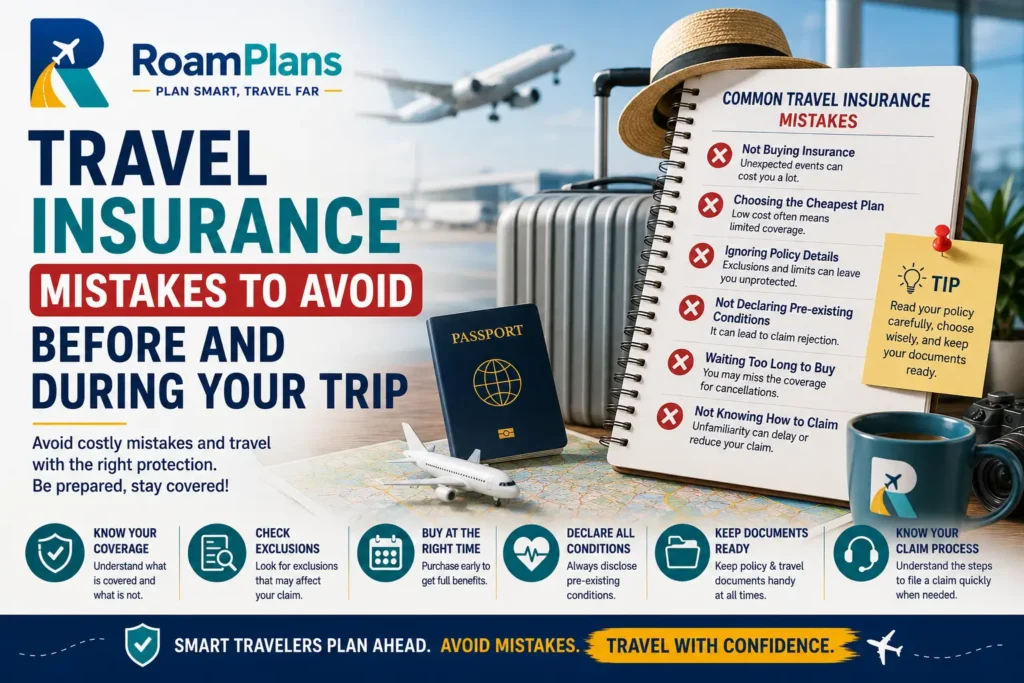
Travel Insurance Mistakes to Avoid Before and During Your Trip | RoamPlans RoamPlans · Travel Insurance Travel Insurance Mistakes to Avoid Before and During…
Read guide →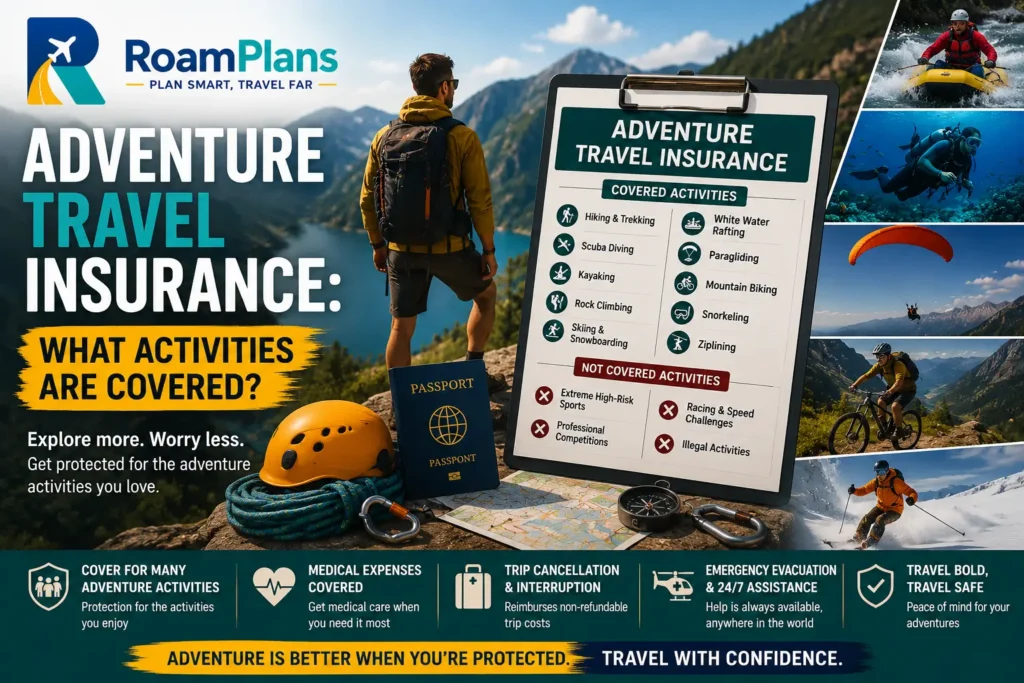
Adventure Travel Insurance: What Activities Are Covered? | RoamPlans RoamPlans · Travel Insurance Adventure Travel Insurance: What Activities Are Covered? ✓ Activity limits↗ Medical…
Read guide →
Family Travel Insurance Guide for Parents | RoamPlans RoamPlans · Travel Insurance Family Travel Insurance Guide: Coverage for Parents and Children ✓ Parents &…
Read guide →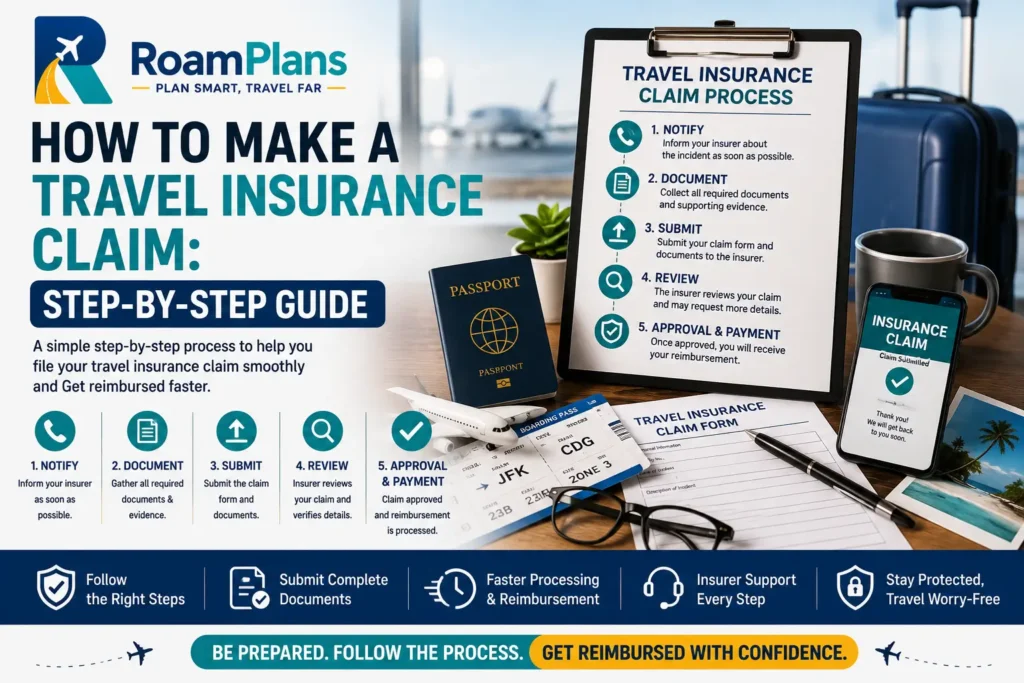
How to Make a Travel Insurance Claim: Step-by-Step Guide | RoamPlans RoamPlans · Travel Insurance How to Make a Travel Insurance Claim: Step-by-Step Guide…
Read guide →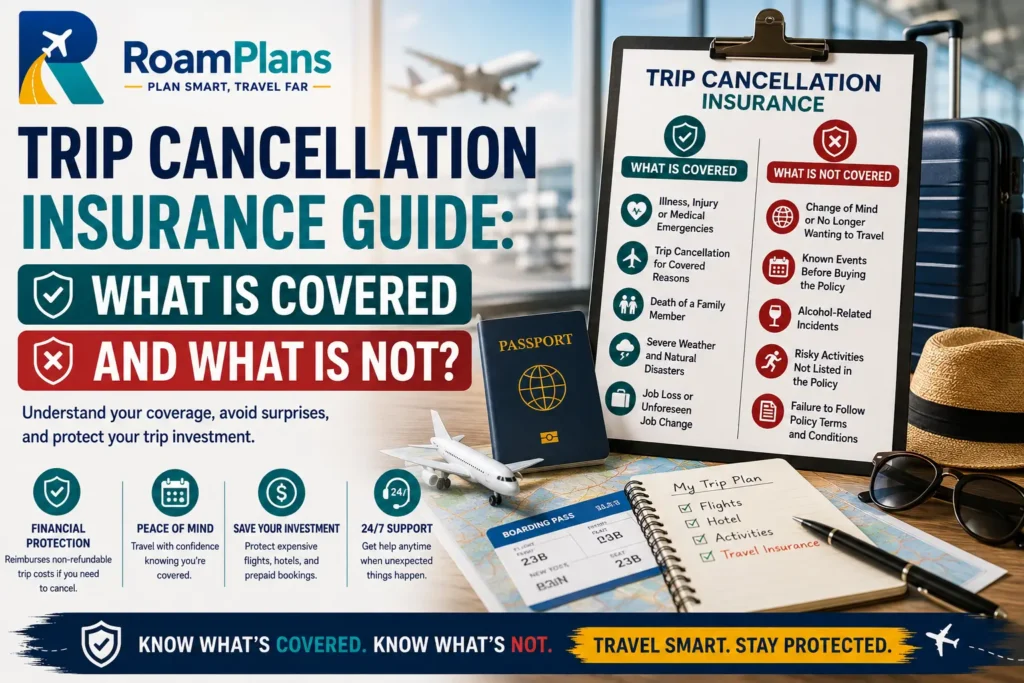
Trip Cancellation Insurance Guide: What Is Covered and What Is Not? | RoamPlans RoamPlans · Travel Insurance Trip Cancellation Insurance Guide: What Is Covered…
Read guide →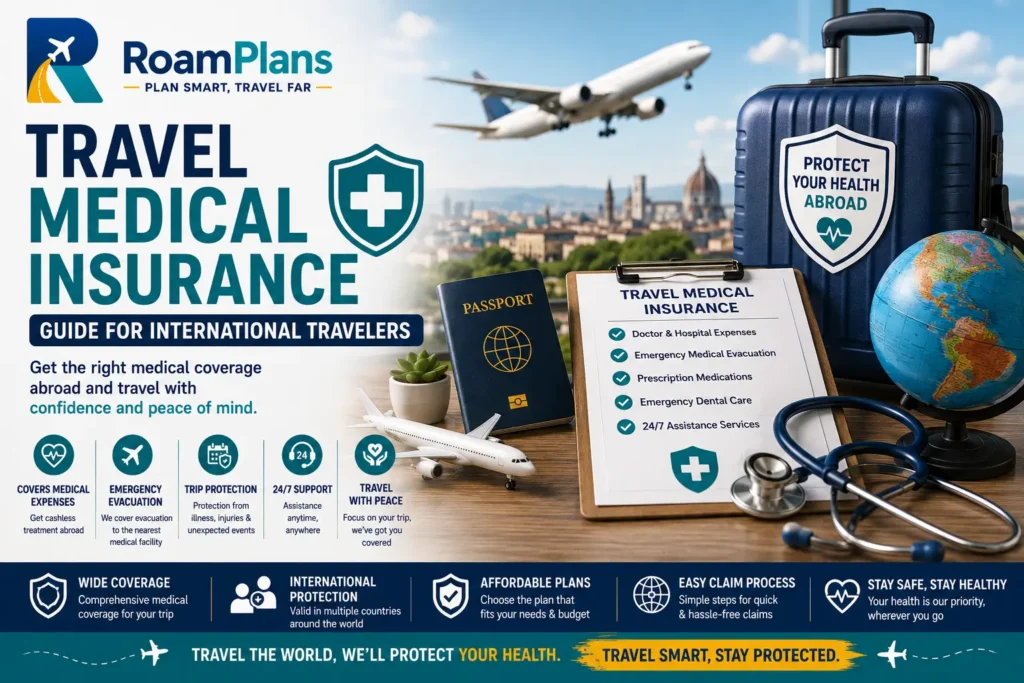
Travel Medical Insurance Guide for International Travelers | RoamPlans RoamPlans · Travel Insurance Travel Medical Insurance Guide for International Travelers ✦ Medical coverage abroad✓…
Read guide →
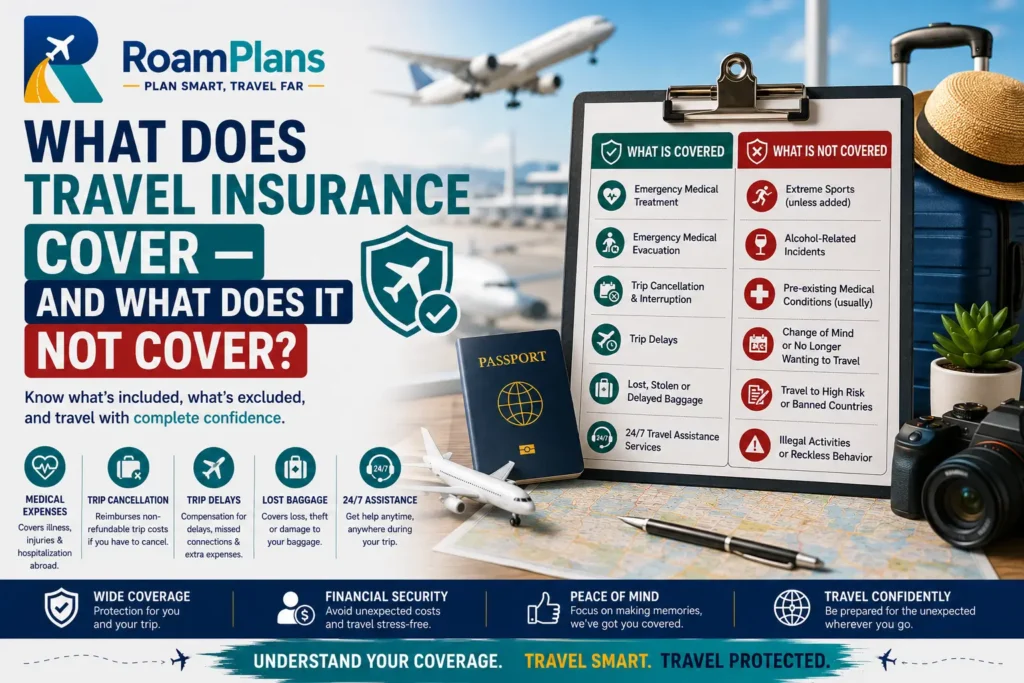
What Does Travel Insurance Cover — and What Does It Not Cover? | RoamPlans RoamPlans · Travel Insurance What Does Travel Insurance Cover —…
Read guide →Use a practical travel tool to organize your budget, itinerary, packing, or trip costs.