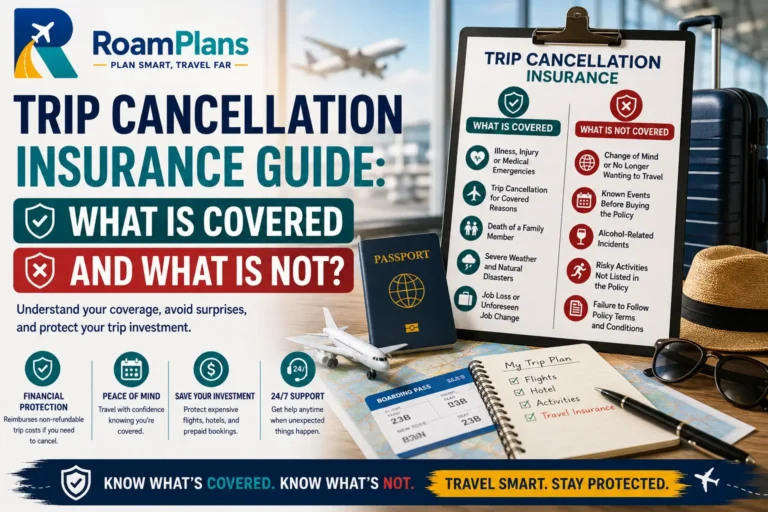
Do You Really Need Travel Insurance?
Travel insurance is easy to buy without thinking much about it. Airlines, hotels, cruises, and booking websites often offer protection during checkout, which can make it feel like one more ↗ box to tick before paying.
I prefer making the decision in a different order. First, I look at how much money is actually at risk, whether my existing health insurance works abroad, whether the bookings are refundable, what activities are planned, and whether an emergency medical evacuation could create a major expense. Then I compare those risks with the policy rather than buying insurance simply because it is offered.
That approach matters because travel insurance is not automatically necessary for every trip, but it can be very useful when a traveler faces financial risks they would struggle to handle themselves. NAIC advises consumers to consider the cost of the trip, the risks involved, and what protection they already have before deciding whether to buy travel insurance.
For international travelers, medical coverage deserves extra attention. The U.S. Department of State recommends checking whether your existing health insurance works abroad and strongly recommends considering travel medical insurance for emergency medical care and evacuation.
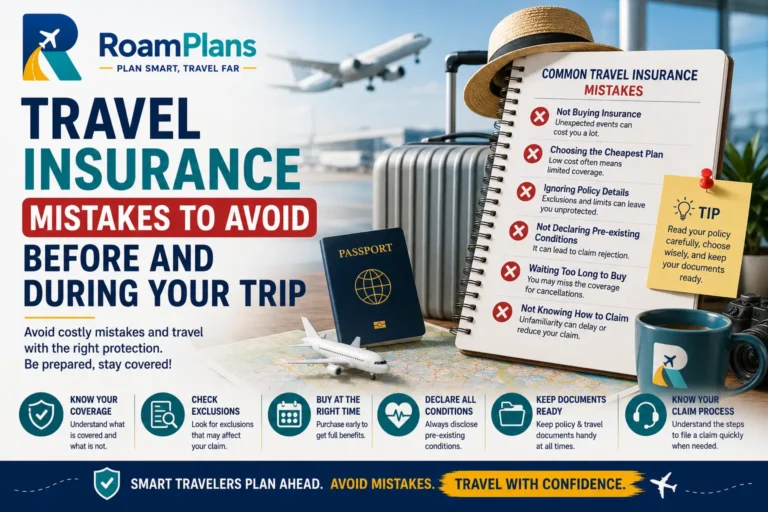
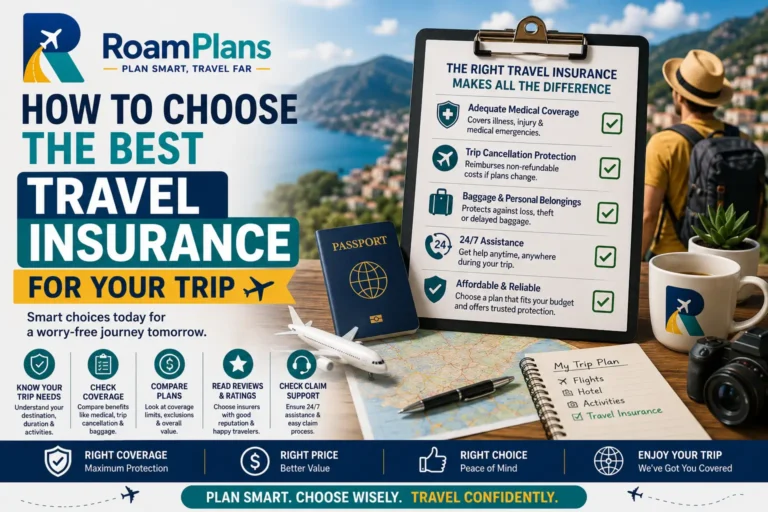
Do you need travel insurance? Not for every trip, and it is not universally compulsory. You should seriously consider it when you could not comfortably absorb your non-refundable trip costs, overseas medical bills, emergency evacuation, or the cost of an unexpected interruption. It may be reasonable to skip broad trip insurance when the trip is inexpensive and refundable, your health plan works at the destination, evacuation is covered, and no destination, visa, cruise, or tour rule requires a policy.
| Your Situation | How Important Is Travel Insurance? | What to Check First |
|---|---|---|
| International trip with weak or no overseas health coverage | Strongly worth considering | Travel medical limits, emergency evacuation, exclusions, and how claims are paid |
| Expensive non-refundable vacation, cruise, or package | Usually more valuable | Covered cancellation and interruption reasons, insured trip cost, and supplier default terms |
| Adventure activity or remote destination | Often important | Whether the exact activity, search and rescue, and evacuation are covered |
| Family trip with children | Depends on the whole family’s exposure | Whether every child is named or eligible, medical limits, family benefits, and total prepaid cost |
| Short, inexpensive domestic trip with refundable bookings | May be less necessary | Existing health, credit-card, airline, and hotel protection |
| Destination, visa, cruise, or tour requires insurance | Required if the rule applies to you | Minimum coverage, approved proof, dates, territory, and wording required |
Travel insurance is a contract. Whether you need it depends on your trip, existing coverage, financial risk, health situation, activities, and the exact policy terms. There is no single answer that fits every traveler.
Key Takeaways
- ✓Travel insurance is not automatically necessary for every trip.
- ✓The main question is how much financial risk you would carry without it.
- ✓International medical coverage should be checked separately from trip cancellation coverage. This travel medical insurance guide ↗ explains the medical and evacuation side.
- ✓Your normal U.S. health insurance may not work the same way abroad.
- ✓Original Medicare usually does not cover healthcare outside the United States, apart from limited exceptions.
- ✓Medical evacuation can create a much larger financial risk than ordinary travel delays or baggage problems.
- ✓Refundable bookings reduce some cancellation risk.
- ✓Expensive non-refundable trips create more financial exposure.
- ✓Existing credit-card or insurance benefits should be checked before buying duplicate coverage.
- ✓The right decision depends on what you could comfortably afford to lose yourself.
Is Travel Insurance Really Necessary?
Sometimes yes.
Sometimes no.
The answer depends less on whether you are traveling internationally and more on the financial and medical risks created by the particular trip.
A traveler taking a $600 trip with refundable hotels, a changeable flight, and strong overseas medical coverage faces a different situation from someone taking a $10,000 non-refundable cruise with limited medical coverage abroad.
The second traveler has much more money at risk.
Travel insurance is most useful when it protects against a loss that would be difficult for you to absorb yourself.
Start With the Risk, Not the Insurance Policy
I would not begin by asking:
Which insurance should I buy?
I would begin with:
What could realistically cost me money on this trip?
That could include:
- ✓Canceling a non-refundable trip
- ✓Becoming sick abroad
- ✓Needing hospital care
- ✓Requiring emergency evacuation
- ✓Cutting a trip short
- ✓Losing prepaid bookings
- ✓Experiencing a long delay
- ✓Losing baggage
Then ask:
Could I comfortably pay for that problem myself?
If the answer is no, insurance deserves a closer look.
The Three Biggest Questions to Ask
For most beginner international travelers, I would start with three areas.
1. How Much Money Could You Lose Before Departure?
Add up your prepaid, non-refundable bookings.
This can include:
- ✓Flights
- ✓Hotels
- ✓Tours
- ✓Cruise costs
- ✓Train tickets
- ✓Activity reservations
- ✓Other prepaid travel
If most of the trip is refundable, your cancellation risk may be lower.
If several thousand dollars would disappear if you had to cancel for a covered emergency, trip cancellation protection becomes more relevant.
2. What Happens If You Need Medical Care Abroad?
Do not assume your regular health insurance follows you everywhere.
The State Department advises travelers to contact their health insurer and confirm whether medical treatment outside the United States is covered.
Ask:
- ✓Does my insurance work in this destination?
- ✓Is emergency care covered?
- ✓Are hospital stays covered?
- ✓Will I need to pay first?
- ✓How do I make an overseas claim?
- ✓Is medical evacuation included?
This check can matter more than baggage or delay protection.
3. Could You Afford Emergency Medical Evacuation?
Medical evacuation can be one of the largest possible travel expenses.
The State Department currently says an air ambulance back to the United States can cost about $20,000 to $200,000, depending on the location and medical condition.
That does not mean every traveler needs the highest evacuation benefit available.
It means travelers going somewhere with limited medical care should understand what would happen if they needed specialized transport.
When Travel Insurance Makes More Sense
Travel insurance becomes more attractive as your financial exposure increases.
Here are situations where I would give it serious consideration.
You Have Expensive Non-Refundable Bookings
Suppose your trip includes:
- ✓$2,000 flights
- ✓$3,000 cruise
- ✓$1,500 hotels
- ✓$1,000 tours
If most of that money cannot be refunded, canceling could create a large loss.
A trip cancellation policy may be useful if it covers the reasons you are concerned about.
The important part is checking the policy's covered reasons.
Insurance does not make every cancellation refundable.
You Are Traveling Internationally Without Strong Medical Coverage
This is one of the strongest reasons to check travel insurance.
The State Department says travelers should verify overseas coverage with their existing insurer and notes that the U.S. government does not pay citizens' private medical expenses abroad.
If your health plan provides little international protection, travel medical coverage may fill an important gap.
You Use Original Medicare
Older travelers should check this carefully.
Medicare's current guidance says Original Medicare usually does not cover medical care outside the United States, with only limited exceptions.
Some Medigap plans may provide foreign travel emergency coverage, so travelers should check the specific plan before buying separate protection.
Do not assume all Medicare-related coverage works the same way abroad.
You Are Traveling Somewhere With Limited Medical Care
A trip to a major city with several hospitals can create a different medical risk from travel to:
- ✓Remote island
- ✓Rural region
- ✓Safari area
- ✓High mountains
- ✓Expedition route
- ✓Remote trekking region
The State Department strongly recommends medical evacuation insurance when traveling to areas with higher risk or limited medical care.
For these trips, evacuation coverage may deserve more attention than baggage protection.
You Are Taking a Cruise
Cruises can involve:
- ✓High prepaid costs
- ✓Fixed departure dates
- ✓Medical care away from home
- ✓Missed-port or transportation problems
- ✓International medical treatment
- ✓Evacuation concerns
If a cruise is expensive and non-refundable, the amount of money at risk can make insurance more useful.
Check the cruise company's cancellation terms first so you know what financial exposure actually remains.
You Are Booking a Package Tour
A package can combine several non-refundable costs.
Examples may include:
- ✓Hotels
- ✓Transportation
- ✓Tours
- ✓Guides
- ✓Activities
Canceling one package may therefore put more money at risk than canceling one hotel.
Calculate the real non-refundable amount before deciding.
You Are Traveling With Children
Family trips can create larger total trip costs because several travelers are included in:
- ✓Flights
- ✓Accommodation
- ✓Tours
- ✓Medical needs
A sick child or parent can also affect the entire family's travel plans.
The question is not simply whether families "need" insurance.
Ask how much of the family's trip could be lost and whether everyone has suitable medical coverage abroad.
You Have an Older Family Member at Home
Some travelers worry that an emergency involving a close family member could force them to cancel or return early.
Whether this is covered depends on the policy's definitions and covered reasons.
Do not assume every family emergency qualifies.
Read:
- ✓Who counts as a family member
- ✓What medical events qualify
- ✓Cancellation conditions
- ✓Interruption conditions
before depending on the benefit.
You Are Traveling During an Expensive Peak Period
Holiday travel, school breaks, major events, and peak-season trips can involve:
- ✓Higher flight prices
- ✓Higher hotel costs
- ✓More non-refundable bookings
That can increase the amount of money at risk.
Insurance does not prevent a disruption, but the financial impact of losing a peak-season booking can be larger.
You Are Taking an Adventure or Remote Trip
Activities such as:
- ✓Skiing
- ✓Trekking
- ✓Diving
- ✓High-altitude hiking
- ✓Other outdoor activities
can introduce extra medical and evacuation risk.
Standard policies can also exclude certain higher-risk activities. NAIC warns travelers to check exclusions for risky recreational activities.
Do not buy ordinary insurance and assume every planned activity is covered.
When Travel Insurance May Be Less Necessary
There are also trips where the financial case for broad travel insurance may be weaker.
That does not mean insurance is useless.
It means the traveler may already be able to handle most of the financial risk.
Most of Your Trip Is Refundable
Imagine you have:
- ✓Fully refundable hotel
- ✓Flexible flight
- ✓No prepaid tours
- ✓Small trip cost
If you cancel, you may lose very little money.
Paying for large trip cancellation coverage could therefore be less important.
Medical risk still needs to be checked separately.
Do not treat refundable bookings as proof that medical insurance is unnecessary.
The Trip Is Very Cheap
Suppose your total non-refundable cost is only $250.
If losing that $250 would not cause financial difficulty, you might reasonably decide not to insure the cancellation risk.
This is similar to other insurance decisions.
If you can comfortably absorb the loss, transferring that risk to an insurer may be less important.
Your Existing Insurance Already Covers the Main Risks
You may already have useful protection from:
- ✓Health insurer
- ✓Credit card
- ✓Homeowners or renters insurance
- ✓Other insurance
Before buying another policy, check what already applies.
NAIC specifically advises consumers to determine whether existing coverage may overlap with travel insurance before buying additional protection.
Avoid paying twice without first knowing what each policy covers.
You Can Comfortably Self-Insure Small Losses
Self-insuring simply means accepting that you will pay the cost yourself if something happens.
For example, you may decide that you do not need insurance against:
$150 baggage delay expenses
because you could comfortably pay that amount yourself.
However, you may still want protection against:
$100,000 medical evacuation
because that expense would be much harder to absorb.
You do not have to insure every travel risk equally.
Think in Terms of Small Risk vs Large Risk
This distinction helps beginner travelers.
Small Risks
Examples:
- ✓Buying toiletries because luggage is delayed
- ✓Paying for one extra meal
- ✓Losing a low-cost tour
- ✓Minor transportation expense
You may be able to handle these yourself.
Large Risks
Examples:
- ✓Major hospital bill
- ✓Medical evacuation
- ✓Losing $10,000 in prepaid travel
- ✓Emergency return transportation
These can have a much larger financial effect.
I would prioritize protection against losses that could seriously affect your finances rather than trying to insure every minor inconvenience.
Travel Insurance Is More Than Trip Cancellation
Some travelers think:
My bookings are refundable, so I do not need travel insurance.
That may be true for the cancellation part.
It does not answer:
- ✓Medical coverage
- ✓Medical evacuation
- ✓Travel interruption
- ✓Other risks
You should evaluate each major risk separately.
Start by reviewing what travel insurance covers ↗ and how its main benefits fit together. This article stays focused on whether buying coverage makes sense for your specific trip.
Medical Risk Can Matter Even on a Cheap Trip
A cheap trip is not automatically a low-risk trip.
Imagine spending only:
$600 on flights and hotels
but then needing emergency hospital treatment abroad.
The cost of the trip and the cost of a medical emergency are completely different.
This is why I separate:
Trip-cost risk
from
Medical risk
when deciding whether insurance is worthwhile.
Your Destination Changes the Decision
The same traveler can make a different insurance decision for two different trips.
Trip A
Five days in a large city with:
- ✓Refundable hotel
- ✓Good medical facilities
- ✓Existing overseas medical coverage
- ✓Low prepaid cost
Trip B
Two weeks in a remote area with:
- ✓Non-refundable bookings
- ✓Limited medical facilities
- ✓Trekking
- ✓No overseas health coverage
Trip B clearly creates more financial exposure.
The traveler did not change.
The trip changed.
Insurance decisions should reflect that.
Domestic vs International Travel Insurance
Travel insurance can also be useful for domestic trips, especially when large non-refundable costs are involved.
But international trips introduce additional questions:
- ✓Does health insurance work abroad?
- ✓Could evacuation be needed?
- ✓Will providers require payment upfront?
- ✓Are several countries involved?
The State Department's international checklist specifically encourages travelers to consider travel medical insurance and medical evacuation protection before going abroad.
That makes medical coverage a bigger part of the international decision.
Do You Need Insurance for a Weekend International Trip?
Trip length alone does not answer the question.
A three-day trip can still involve:
- ✓Expensive non-refundable flight
- ✓Medical emergency
- ✓Cruise departure
- ✓Remote destination
But if the trip is inexpensive, refundable, and your existing health coverage works well abroad, the case for comprehensive insurance may be weaker.
Evaluate the risk rather than the number of days.
Do You Need Insurance for a Long International Trip?
Longer travel can increase exposure because there are more days for something to happen.
Check:
- ✓Maximum policy trip length
- ✓Medical coverage
- ✓Destination limits
- ✓Activities
- ✓Existing health insurance
- ✓Annual vs single-trip options
Do not assume a policy designed for a one-week vacation automatically works for several months abroad.
A Simple Travel Insurance Decision Test
Before buying, answer these questions.
Question 1
How much non-refundable money could I lose?
Write the amount down.
Question 2
Would losing that amount create financial difficulty?
If yes, cancellation protection deserves closer attention.
Question 3
Does my existing health insurance cover me abroad?
Confirm directly with the insurer.
Question 4
Does it include medical evacuation?
Do not assume normal medical coverage includes this.
Question 5
Am I going somewhere remote or medically limited?
If yes, evacuation risk becomes more important.
Question 6
Are my activities excluded from standard insurance?
Check before buying.
Question 7
What protection do I already have through my credit card or other insurance?
Avoid unnecessary duplication.
Question 8
Which loss could I not comfortably pay myself?
That is usually the risk worth focusing on first.
My Rule for Deciding
I would not ask whether travel insurance is "worth it" in the abstract.
I would ask:
If this trip goes wrong in a realistic way, what is the largest financial loss I could face, and am I comfortable paying it myself?
If the possible loss is small and manageable, insurance may be less important.
If the possible loss involves thousands of dollars in non-refundable bookings, major medical care, or evacuation, the decision changes.
Travel insurance is most useful when it protects money you genuinely cannot afford to lose.
Do You Really Need Travel Insurance? — Part 2
Does Your Age Change Whether You Need Travel Insurance?
Age can affect the insurance decision, but it should not be used alone.
A younger traveler may have lower medical concerns but still face expensive risks such as:
- ✓Emergency hospital treatment
- ✓Medical evacuation
- ✓Large non-refundable bookings
- ✓Adventure-related injuries
- ✓Trip interruption
An older traveler may need to pay closer attention to existing health coverage, medical limits, pre-existing conditions, and evacuation.
The better approach is to look at age together with health, destination, trip cost, and existing insurance.
Do Young and Healthy Travelers Need Travel Insurance?
Being young and healthy can reduce some risks, but it does not remove them.
A healthy traveler can still:
- ✓Break a bone
- ✓Develop an unexpected illness
- ✓Need emergency surgery
- ✓Have a serious accident
- ✓Need evacuation from a remote location
The State Department recommends that international travelers check whether their health insurance covers medical care abroad and consider travel medical and evacuation insurance before departure.
If your trip is inexpensive and refundable, broad cancellation insurance may be less important.
Medical protection still deserves a separate check.
Do Older Travelers Need More Travel Insurance?
Older travelers should pay particular attention to international medical coverage.
Original Medicare generally does not cover healthcare outside the United States except in limited situations. Some Medicare Advantage plans may provide emergency or urgent foreign coverage, and some Medigap policies include foreign travel emergency benefits.
Before buying anything extra, check your exact plan.
Ask:
- ✓Does it cover emergency treatment abroad?
- ✓What countries are covered?
- ✓What limits apply?
- ✓Must I pay upfront?
- ✓Is evacuation covered?
- ✓Does the policy cover the whole trip?
Do not assume all Medicare-related plans provide the same international protection.
What If You Have a Pre-Existing Medical Condition?
This deserves careful attention because travel policies can exclude certain losses connected to pre-existing medical conditions.
NAIC currently lists pre-existing health conditions among common travel insurance exclusions and advises travelers to check whether their medical history affects coverage.
Some policies may offer a waiver of the pre-existing condition exclusion when specific requirements are met.
Those rules can involve:
- ✓When you purchase the policy
- ✓Whether required trip costs are insured
- ✓Your health when buying
- ✓Other policy conditions
Do not assume one insurer's waiver rules apply to another.
A Medical Condition Does Not Automatically Mean You Cannot Get Useful Coverage
Having an existing condition does not mean travel insurance is automatically useless.
It means you need to compare the policy more carefully.
I would specifically look for:
- ✓Definition of pre-existing condition
- ✓Look-back period where applicable
- ✓Exclusion wording
- ✓Waiver availability
- ✓Purchase deadline
- ✓Medical eligibility requirements
NAIC advises travelers to ask whether pre-existing conditions are excluded before purchasing.
For personal health questions, speak with a qualified healthcare professional.
For coverage questions, use the insurer and policy wording.
Should Solo Travelers Buy Travel Insurance?
Traveling alone does not automatically mean you need more insurance.
But solo travel can change how an emergency feels in practice because you may not have a companion nearby to help with:
- ✓Hospital communication
- ✓Transportation
- ✓Luggage
- ✓Rebooking
- ✓Contacting family
For a solo international trip, I would make sure I know:
- ✓How overseas medical care is covered
- ✓How to contact emergency assistance
- ✓Whether evacuation is covered
- ✓Who my emergency contact is
- ✓Where my policy information is stored
The State Department encourages travelers to carry insurance information and consider medical evacuation protection, especially where appropriate care may be difficult to reach.
The insurance decision still comes back to financial risk rather than simply traveling alone.
Do Families Need Travel Insurance?
Family travel can increase financial exposure because several travelers may have prepaid:
- ✓Flights
- ✓Hotels
- ✓Tours
- ✓Cruise costs
- ✓Activities
An illness affecting one child or parent can also affect several bookings at once.
Use the family travel insurance guide to check child eligibility, shared limits, and how one family member’s illness can affect the rest of the booking.
Before buying family coverage, check:
- ✓Who qualifies as a covered family member
- ✓Whether children are included
- ✓Age limits
- ✓Medical coverage per traveler
- ✓Cancellation limits
- ✓Family-member illness definitions
- ✓Activities
- ✓Pre-existing condition rules
Do not assume one family policy automatically gives every traveler identical benefits.
Related RoamPlans guide: Family Travel Insurance Guide ↗: Coverage for Parents and Children will explain family eligibility, children, cancellation, medical protection, and policy limits in more detail.
Do You Need Travel Insurance for a Cruise?
Cruises can create several financial risks at the same time.
These can include:
- ✓High non-refundable trip cost
- ✓International medical treatment
- ✓Missed departure
- ✓Trip interruption
- ✓Emergency evacuation
- ✓Additional transportation
Before deciding, calculate how much of your cruise, flights, hotels, and excursions would actually be lost if you had to cancel for a covered emergency.
Medical coverage also deserves attention because cruise travel can take you far from your normal healthcare network.
The State Department recommends checking medical and evacuation coverage before international travel and specifically highlights evacuation insurance for locations where appropriate medical care may be limited.
Do You Need Insurance for Adventure Travel?
Possibly, but a normal policy may not be enough.
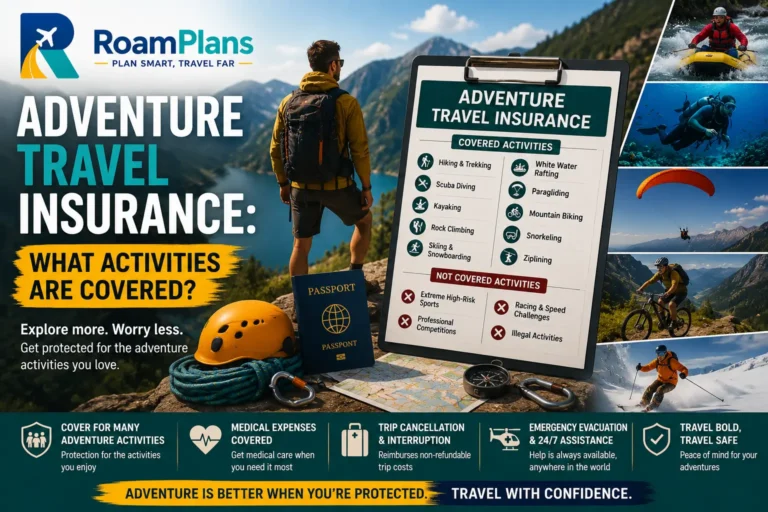
NAIC warns that policies can exclude activities considered risky, including examples such as backcountry skiing and other higher-risk recreation. Its consumer guidance also notes that medical evacuation coverage may exclude activities the insurer considers dangerous.
That means an adventure traveler has two questions:
Do I need insurance?
and
Does this policy cover the activity I am actually doing?
A policy with strong medical limits can still be a poor choice if your main activity is excluded.
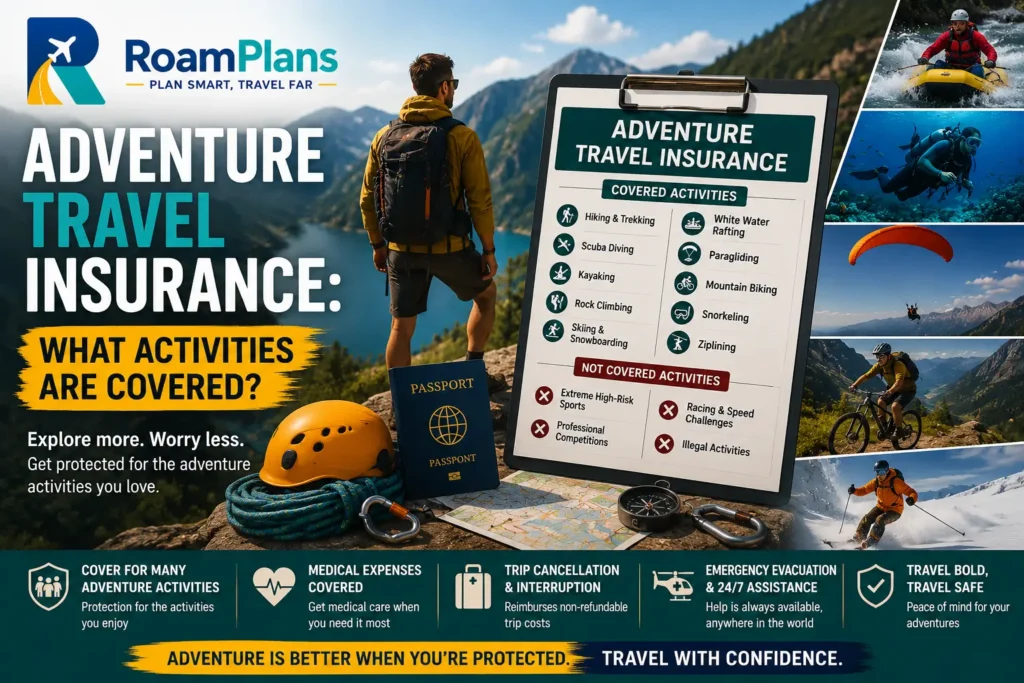
Related RoamPlans guide: Adventure Travel Insurance ↗: What Activities Are Covered? will focus on activity exclusions, medical treatment, evacuation, equipment, and higher-risk trips.
High-Risk Activities Should Be Checked by Name
Do not rely on general phrases such as:
sports covered
or
adventure protection included.
Search the policy for the activity you plan to do.
For example:
- ✓Skiing
- ✓Snowboarding
- ✓Scuba diving
- ✓Trekking
- ✓Mountaineering
- ✓Cycling
- ✓Motorbike riding
Then check conditions such as:
- ✓Altitude
- ✓Certification
- ✓Competition
- ✓Equipment
- ✓Guided vs unguided activity
If the activity is central to the trip, confirm it before paying for the insurance.
Does Your Credit Card Mean You Do Not Need Travel Insurance?
Maybe for some risks, but not automatically.
Some credit cards provide selected travel benefits.
Depending on the card, these may include:
- ✓Trip cancellation or interruption
- ✓Travel delay
- ✓Baggage protection
- ✓Rental-car coverage
- ✓Travel accident benefits
However, the benefits and eligibility conditions vary by card. Official card-benefit guides filed with the Consumer Financial Protection Bureau show that travel protections can depend on cardholder eligibility and how the trip was paid for.
Do not rely on a card simply because it is marketed as a travel card.
Questions to Ask About Credit-Card Travel Protection
Before deciding that separate insurance is unnecessary, check:
- ✓What benefits are included?
- ✓What is the maximum reimbursement?
- ✓Do I need to pay for the trip with the card?
- ✓Who is covered?
- ✓Are family members covered?
- ✓Does it include emergency medical treatment?
- ✓Does it include medical evacuation?
- ✓What cancellation reasons qualify?
- ✓What exclusions apply?
- ✓What claim documentation is needed?
If the credit card covers your small travel risks but leaves a major medical gap, you may decide that medical coverage is still worth buying.
Do Not Buy Duplicate Coverage Without Checking
You may already have protection through:
- ✓Health insurance
- ✓Credit card
- ✓Homeowners or renters insurance
- ✓Auto insurance
- ✓Tour provider
- ✓Airline
- ✓Another travel policy
NAIC advises consumers to check existing coverage before buying travel insurance because some benefits can overlap.
The goal is not to eliminate every overlap.
The goal is to know what you already have before paying for more.
Can You Rely on Airline or Hotel Refund Policies Instead?
Refundable travel can reduce the amount of cancellation insurance you need.
Suppose:
- ✓Flight can be changed for little cost
- ✓Hotel can be canceled free
- ✓Tours are paid on arrival
Your financial loss from canceling may be small.
That can make broad trip cancellation coverage less important.
However, supplier refund policies do not answer whether you have:
- ✓Medical coverage abroad
- ✓Evacuation protection
- ✓Interruption coverage
- ✓Other travel benefits
Evaluate those separately.
What If You Are Visiting Friends or Family?
A trip to stay with relatives may have very little prepaid accommodation cost.
That can reduce the financial need for cancellation coverage.
But international medical risk still exists.
For example, you might have:
$500 of non-refundable travel costs
but no useful international health coverage.
In that situation, a traveler may care much more about medical protection than cancellation insurance.
This is why trip cost alone should not decide the answer.
What If Someone Else Paid for Your Trip?
Think about who actually carries the financial loss.
For example:
- ✓Parent paid for your flight
- ✓Employer paid for business travel
- ✓Friend paid for accommodation
- ✓Tour was a gift
You may personally have little prepaid cost at risk.
But you could still face:
- ✓Medical costs
- ✓Evacuation
- ✓Additional transportation
- ✓Other personal expenses
Check what the person or organization paying for the trip already provides before buying additional coverage.
Do Business Travelers Need Separate Insurance?
Some employers already provide:
- ✓Corporate travel insurance
- ✓Overseas medical protection
- ✓Emergency assistance
- ✓Evacuation services
If you are traveling for work, ask before buying your own plan.
Find out:
- ✓Who is insured
- ✓Which countries are covered
- ✓Whether leisure days are covered
- ✓Whether family members are covered
- ✓What happens if the trip becomes partly personal
Avoid assuming a company-paid flight automatically means the company covers every travel emergency.
Do Frequent Travelers Need Travel Insurance Every Time?
If you take several trips each year, repeatedly buying single-trip insurance may not always be the best structure.
An annual or multi-trip plan can sometimes be more convenient.
But annual coverage needs careful review.
Check:
- ✓Maximum length per trip
- ✓Medical limits
- ✓Cancellation benefits
- ✓Destinations
- ✓Adventure activities
- ✓Age restrictions
- ✓Number of covered trips
Do not assume annual insurance means unlimited coverage for any trip during the year.
When an Annual Plan May Make More Sense
An annual plan may deserve comparison if you:
- ✓Travel internationally several times a year
- ✓Take frequent short trips
- ✓Want ongoing medical protection
- ✓Prefer one policy period
But calculate the actual value.
If you take only one or two trips, a single-trip policy may fit better.
If your trips are expensive and have very different cancellation costs, check whether an annual plan provides enough trip cancellation protection.
Can You Skip Comprehensive Travel Insurance and Buy Only Medical Coverage?
Sometimes that can be a reasonable approach.
Imagine:
- ✓Flights are refundable
- ✓Hotels are refundable
- ✓You have very little prepaid money at risk
- ✓Your main concern is medical care abroad
In that case, travel medical coverage may be more relevant than a comprehensive plan containing large cancellation benefits.
The State Department notes that medical and evacuation insurance can be purchased separately or as part of a wider travel insurance policy.
Match the product to the risk.
Can You Buy Only Medical Evacuation Coverage?
Medical evacuation can also be offered separately from broader travel insurance.
The State Department says evacuation insurance can be purchased separately or added to travel health insurance and strongly recommends considering it for destinations with higher risk or limited medical care.
This may appeal to travelers who already have suitable international medical coverage but lack emergency transportation protection.
Check how the evacuation benefit actually works before relying on it.
When Skipping Broad Travel Insurance May Be Reasonable
There are situations where a traveler may decide not to buy a comprehensive policy.
For example:
- ✓Trip cost is low
- ✓Most bookings are refundable
- ✓You can comfortably absorb the remaining loss
- ✓Existing health insurance works abroad
- ✓Medical evacuation is already covered
- ✓Credit card provides useful travel protection
- ✓No high-risk activities are planned
That can be a reasonable financial decision.
The important part is making it after checking the risks, rather than skipping insurance because you assume nothing will happen.
When I Would Be More Cautious About Skipping It
I would look much more carefully before going without suitable protection when:
- ✓Trip costs are high and non-refundable
- ✓Overseas medical coverage is weak
- ✓Original Medicare is the main health coverage
- ✓Destination has limited medical care
- ✓Emergency evacuation could be difficult
- ✓Cruise or expedition is involved
- ✓High-risk activities are planned
- ✓Several family members have expensive bookings
The State Department's current guidance puts particular emphasis on overseas medical coverage and evacuation because U.S. travelers can otherwise be responsible for significant medical expenses themselves.
Do Not Let Fear Decide for You?
Travel insurance should be a financial decision.
You do not need to imagine every possible disaster.
Instead, focus on realistic questions:
How much could I lose?
What would be difficult to pay myself?
What coverage do I already have?
What gaps remain?
That produces a more useful answer than either:
Everyone needs travel insurance
or
Travel insurance is a waste of money.
Both are too broad.
Use a Risk-Based Decision Table
A beginner traveler can use this simple framework:
| Trip Situation | Insurance Priority |
|---|---|
| Cheap, refundable trip + good overseas medical coverage | Lower |
| Expensive non-refundable international trip | Higher |
| No overseas health coverage | Higher medical priority |
| Original Medicare without suitable foreign protection | Higher medical priority |
| Remote destination | Higher evacuation priority |
| Adventure activities | Check specialist/activity coverage |
| Several expensive family bookings | Higher cancellation exposure |
| Strong card benefits + refundable trip | Check remaining gaps |
| Frequent traveler | Compare annual coverage |
| Very small financial loss you can afford | Lower cancellation priority |
This table is a starting point rather than a universal rule.
A Yes-or-No Travel Insurance Decision Framework
Use these questions in order.
1. Would Cancellation Cost You a Meaningful Amount?
Yes: Look closely at cancellation protection.
No: Cancellation coverage may be less important.
2. Does Your Health Insurance Work Abroad?
No or unsure: Travel medical coverage deserves serious consideration.
Yes: Check the limits and exclusions.
3. Is Medical Evacuation Already Covered?
No: Consider the destination and evacuation risk.
Yes: Check how much and under what conditions.
4. Are You Visiting a Remote Location?
Yes: Medical evacuation becomes more important.
5. Are You Doing Higher-Risk Activities?
Yes: Check the activities against the policy before buying.
6. Does Your Credit Card Already Cover Important Risks?
Yes: Compare the card benefits with a separate policy.
No: Do not count on benefits you do not have.
7. Could You Pay the Remaining Risk Yourself?
Yes: You may choose to self-insure it.
No: That risk is a stronger candidate for insurance.
Three Example Travelers
Traveler A — Short Budget City Trip
- ✓$500 total non-refundable cost
- ✓Refundable hotel
- ✓Strong international health coverage
- ✓No adventure activities
- ✓Emergency evacuation already covered
This traveler may decide comprehensive insurance is not worth the cost.
They have relatively little financial exposure.
Traveler B — Expensive Family Vacation
- ✓Four international flights
- ✓Non-refundable resort
- ✓Prepaid tours
- ✓Limited health coverage abroad
- ✓$9,000 total trip cost
This traveler has much more to lose.
Medical and cancellation protection deserve serious comparison.
Traveler C — Low-Cost Remote Trekking Trip
- ✓Only $900 prepaid
- ✓Cheap accommodation
- ✓Remote mountain region
- ✓Limited nearby medical facilities
- ✓Trekking involved
The trip itself is inexpensive.
But the possible medical evacuation risk can be large.
This traveler may care much more about medical and evacuation coverage than cancellation.
Travel Cost and Travel Risk Are Not the Same Thing
This is one of the most useful ideas to remember.
A $15,000 luxury vacation can create high cancellation risk.
A $1,000 remote adventure trip can create high medical and evacuation risk.
A $500 city visit with refundable bookings and strong existing insurance can create relatively low financial exposure.
Do not use trip price alone.
Look at the type of loss you might face.
What Should You Compare Before Making the Final Decision?
Before deciding yes or no, write down:
Trip Risk
- ✓Non-refundable cost
- ✓Destination
- ✓Trip length
- ✓Activities
- ✓Remote locations
Existing Protection
- ✓Health insurance
- ✓Medical evacuation
- ✓Credit card
- ✓Other insurance
Personal Situation
- ✓Age
- ✓Health considerations
- ✓Family travelers
- ✓Amount you can comfortably self-insure
Then identify the remaining gaps.
If the remaining risk is small enough that you would comfortably pay it yourself, buying broad insurance may be less useful.
If the remaining risk could cause serious financial difficulty, insurance deserves closer attention.
Do Not Decide Based Only on the Insurance Premium
Suppose:
Policy A costs $80
and
Policy B costs $180
The cheaper plan is not automatically the better choice.
Maybe Policy A excludes the activity you are traveling to do.
Maybe Policy B provides the medical and evacuation coverage you actually need.
The right question is:
What protection am I receiving for the price?
not simply:
Which premium is lower?
Do Not Buy More Insurance Than the Trip Needs
The opposite problem also happens.
A traveler with:
- ✓Fully refundable reservations
- ✓Strong international health coverage
- ✓No remote travel
- ✓Low trip cost
may not need an expensive comprehensive package with every possible benefit.
Insurance should transfer meaningful financial risk.
It does not need to protect you from every small inconvenience.
My Practical Decision Rule
I use three categories.
Risk I Can Comfortably Pay Myself
I may self-insure this.
Risk That Would Hurt Financially
I compare insurance carefully.
Risk That Could Be Financially Serious
I place the highest priority on suitable coverage.
For many international travelers, major medical treatment and evacuation can fall into the third category.
That is why checking existing international health coverage should happen before deciding whether travel insurance is necessary.
Do You Really Need Travel Insurance? — Part 3
Common Travel Insurance Decision Scenarios
The easiest way to decide whether insurance makes sense is to test it against a realistic trip.
I would not ask whether travel insurance is generally good or bad. I would look at the exact traveler, bookings, destination, existing coverage, and the size of the possible loss.
Here are some common situations.
Scenario 1: Cheap Weekend Trip With Refundable Bookings
Suppose your trip looks like this:
- ✓$300 flight
- ✓Refundable hotel
- ✓No prepaid tours
- ✓Good overseas medical coverage
- ✓No risky activities
- ✓Major emergency costs already covered elsewhere
Your cancellation exposure is small.
If losing the remaining non-refundable money would not affect you financially, comprehensive cancellation coverage may provide limited value.
You should still confirm the medical side rather than assuming a cheap trip means there is no meaningful risk.
Scenario 2: $8,000 Non-Refundable International Vacation
Now imagine:
- ✓$3,000 flights
- ✓$3,500 resort
- ✓$1,500 prepaid tours
- ✓Most costs non-refundable
Losing the trip could mean losing thousands of dollars.
In this situation, I would compare cancellation coverage carefully.
Check:
- ✓What cancellation reasons qualify
- ✓Maximum reimbursement
- ✓Exclusions
- ✓Purchase deadlines
- ✓Whether all eligible trip costs must be insured
NAIC advises travelers to compare the money they could lose against the protection offered by the policy rather than assuming every cancellation will qualify.
Scenario 3: Low-Cost Trip but No Overseas Health Coverage
Suppose your trip costs only $700.
That sounds like a low financial risk until you discover your domestic health plan does not cover medical treatment abroad.
Now the biggest risk is no longer the $700 trip.
It is the possible medical bill.
The U.S. Department of State recommends checking with your health insurer before departure and considering separate travel health coverage when your regular insurance does not provide suitable protection abroad.
In this situation, travel medical insurance may matter much more than cancellation insurance.
Scenario 4: Original Medicare Is Your Main Health Coverage
Original Medicare generally provides very limited healthcare coverage outside the United States. Medicare itself says travelers may consider separate travel insurance because of those limitations.
Some Medigap policies provide foreign travel emergency benefits, and some Medicare Advantage plans may offer certain emergency or urgent services outside the country.
So I would not immediately buy another policy.
First check the exact Medicare-related coverage you already have.
Then fill the remaining gap.
Scenario 5: Remote International Trip
Imagine traveling to:
- ✓Remote island
- ✓Rural safari region
- ✓Mountain area
- ✓Expedition destination
You may have relatively little money tied up in hotels or flights.
But getting suitable medical treatment could require transportation over a long distance.
The State Department recommends considering medical evacuation coverage for higher-risk locations and places where appropriate medical care may be limited.
For this kind of trip, I would prioritize:
medical treatment + evacuation
before worrying about small baggage benefits.
Scenario 6: Expensive Cruise
Cruises can combine several financial risks:
- ✓Large prepaid fare
- ✓Flights to port
- ✓Hotels before departure
- ✓Excursions
- ✓International medical care
If most of those costs are non-refundable, insurance deserves closer attention.
I would calculate the entire amount I could genuinely lose rather than looking only at the cruise fare.
Medical and evacuation protection should also be checked separately.
Scenario 7: Visiting Family Abroad
Suppose you are staying with relatives for free.
Your trip may involve:
- ✓One flight
- ✓Little prepaid accommodation
- ✓Few tours
- ✓Low cancellation exposure
Broad cancellation coverage might be less important.
But if your health insurance does not work in the destination, medical protection may still be useful.
Again:
low trip cost does not automatically mean low medical risk.
Scenario 8: Adventure Trip
Suppose the main reason for traveling is:
- ✓Trekking
- ✓Diving
- ✓Skiing
- ✓Mountaineering
- ✓Other higher-risk activity
The question is no longer simply whether you need insurance.
You need to know whether the policy actually covers that activity.
NAIC warns that travel insurance can contain exclusions for higher-risk recreational activities.
A policy can have excellent medical limits and still be a poor fit if your main activity is excluded.
Scenario 9: Credit Card Already Provides Travel Benefits
You may find that your credit card already covers some risks, such as:
- ✓Travel delay
- ✓Baggage
- ✓Rental vehicle damage
- ✓Certain cancellation situations
That can reduce the extra coverage you need.
But I would still check whether the card includes:
- ✓International medical treatment
- ✓Medical evacuation
- ✓Adequate cancellation limits
Do not compare the label travel benefits with a full travel insurance policy.
Compare the actual benefits.
Scenario 10: You Can Afford to Lose the Entire Trip Cost
Suppose:
- ✓Your trip costs $1,200
- ✓It is non-refundable
- ✓Losing $1,200 would be disappointing but financially manageable
- ✓You already have suitable overseas medical and evacuation coverage
You may reasonably decide to self-insure the cancellation risk.
Insurance is about transferring financial risk.
If you can comfortably absorb a particular loss, transferring it may be less valuable.
Destination and Visa Insurance Requirements
Before deciding that insurance is optional, check the official entry requirements for your destination and travel purpose.
Requirements can also be linked to:
- ✓Visa category
- ✓Tour
- ✓Cruise
- ✓Organized activity
The State Department recommends reviewing the current country information and entry requirements for every international trip.
If insurance is required for your particular trip, the decision changes from:
Do I want insurance?
to:
What insurance satisfies the requirement?
If Insurance Is Required, Check the Exact Conditions
Do not assume that any policy will qualify.
Look for requirements involving:
- ✓Minimum medical coverage
- ✓Medical evacuation
- ✓Coverage dates
- ✓Geographic area
- ✓Required documentation
- ✓Particular wording
Then compare the official requirement with the policy certificate.
If the policy does not clearly meet the requirement, ask the insurer before relying on it.
Required Insurance and Useful Insurance Are Different Questions
A policy can satisfy a visa or tour requirement while still providing less protection than you personally want.
The reverse can also happen.
A policy may give you strong personal protection even where no government requires insurance.
So ask two questions:
Entry Question
What insurance must I carry?
Personal Risk Question
What financial protection do I personally need?
Treat them separately.
Should You Buy Insurance Because the Booking Website Recommends It?
Not automatically.
Booking-site insurance can be convenient, but convenience does not prove that the plan fits your trip.
Before accepting it, check:
- ✓Insurer
- ✓Medical coverage
- ✓Evacuation
- ✓Cancellation
- ✓Exclusions
- ✓Deductibles
- ✓Benefit limits
Then compare it with at least one alternative if the trip involves meaningful financial risk.
The small checkout box should not replace the insurance decision.
Should You Buy the Cheapest Policy?
Price should be part of the comparison, but not the starting point.
Suppose:
Plan A: $95
Plan B: $150
If Plan A excludes your main activity or provides weak medical coverage, the $55 saving may not make it better value.
I would compare:
coverage → exclusions → limits → deductible → price
in that order.
Should You Buy the Most Expensive Policy?
Also no.
A higher premium does not automatically mean the policy is better for your trip.
You may be paying for benefits that do not matter to you.
For example, someone with fully refundable reservations may place less value on large cancellation benefits but much more value on strong medical evacuation coverage.
Match the policy to the risk.
What About “Peace of Mind”?
Peace of mind has value, but I would not use it as the only reason to buy insurance.
A better approach is:
- ✓Identify the risk.
- ✓Estimate the possible financial loss.
- ✓Check existing protection.
- ✓See what insurance would add.
- ✓Decide whether the premium is worth transferring that risk.
Then any peace of mind comes from knowing what the policy actually protects.
Insurance Cannot Remove Every Travel Risk
Travel insurance is financial protection.
It cannot guarantee:
- ✓Your flight will operate
- ✓You will not become sick
- ✓Your baggage will arrive
- ✓A trip will not be interrupted
It can help with certain financial consequences when the policy terms are met.
That is a much more realistic expectation.
A Final Yes-or-No Decision Process
Use this before buying.
Step 1: Calculate Your Non-Refundable Trip Cost
Write down:
$________
Do not include refundable expenses unless the insurer specifically treats them as insured trip cost.
Step 2: Ask Whether You Could Comfortably Lose That Money
If yes, cancellation insurance may be less important.
If no, compare cancellation protection.
Step 3: Check Your Health Insurance Abroad
Do not guess.
The State Department recommends asking your current insurer whether routine and emergency care outside the United States is covered.
Step 4: Check Medical Evacuation
Ask:
If I need transport to better medical care, who pays?
If the answer is unclear, investigate further.
Step 5: Review Your Destination
Consider:
- ✓Medical facilities
- ✓Remoteness
- ✓Trip length
- ✓Several countries
- ✓Activities
Step 6: Check Existing Credit-Card Benefits
Read the current benefit guide.
Do not depend on remembered benefits from several years ago.
Step 7: Check Your Activities
Search the policy for anything important you plan to do.
Step 8: Check Pre-Existing Condition Rules
If relevant, read the policy definition and waiver conditions before buying.
Step 9: Check Official Trip Requirements
Verify destination, visa, tour, cruise, or activity insurance requirements.
Step 10: Identify the Remaining Financial Gap
This is the most important step.
Ask:
What meaningful loss is still not covered?
That gap tells you whether another policy may be worthwhile.
Final “Do I Need Travel Insurance?” Checklist
Your Money
- ✓Non-refundable trip cost calculated
- ✓Refundable bookings separated
- ✓Amount you can comfortably lose decided
- ✓Cancellation risk reviewed
Your Medical Coverage
- ✓Existing health insurer contacted
- ✓Overseas emergency care checked
- ✓Overseas routine care checked where relevant
- ✓Out-of-pocket payment requirements checked
- ✓Medical evacuation checked
- ✓Medicare/Medigap/Medicare Advantage checked where relevant
Your Trip
- ✓Destination considered
- ✓Remote areas considered
- ✓Trip duration checked
- ✓Activities reviewed
- ✓Cruise or tour conditions checked
- ✓Official insurance requirements checked
Existing Protection
- ✓Credit-card benefits checked
- ✓Other insurance checked
- ✓Employer coverage checked for business travel
- ✓Duplicate coverage identified
Policy Decision
- ✓Main financial risk identified
- ✓Coverage matched to that risk
- ✓Exclusions read
- ✓Deductible checked
- ✓Benefit limits checked
- ✓Premium compared with financial exposure
If you can answer these clearly, the insurance decision becomes much easier.
Frequently Asked Questions
Not for every trip. It becomes more useful when you face medical or financial losses that would be difficult to pay yourself.
It can be, especially when you have significant non-refundable costs, limited overseas health coverage, or medical evacuation risk. The value depends on your individual trip.
Sometimes. Whether insurance is required depends on your exact destination, visa, tour, or activity. Check current official requirements before departure.
Consider it if your regular health plan does not cover treatment at your destination or leaves important gaps such as emergency evacuation. Confirm overseas benefits, exclusions, deductibles, payment arrangements, and evacuation coverage with your current insurer before buying another policy.
Children do not automatically need a separate policy, but they should have suitable protection when the family’s risks justify insurance. Check whether each child is included, what medical and cancellation benefits apply, and whether family or per-person limits are adequate.
You usually do not need to buy it before making the first booking, but you should compare policies soon after your first non-refundable payment. Some benefits or pre-existing-condition waivers may require purchase within a policy-specific time window.
Maybe not for cancellation, but you should still check medical and evacuation risks. A cheap trip can still produce an expensive medical emergency.
Refundable accommodation reduces cancellation exposure, but it does not answer whether you need medical, evacuation, or other protection.
A refundable flight reduces one financial risk. Review the rest of the trip and your overseas medical coverage separately.
Good health does not eliminate accidents or unexpected illness. Check the financial consequences of an emergency rather than assuming health alone removes the need.
It depends on the trip. Younger travelers may have lower health concerns but can still face medical treatment, evacuation, cancellation, or adventure-related risks.
Older travelers should check overseas medical coverage carefully. Original Medicare usually provides very limited coverage outside the United States.
Original Medicare generally does not cover healthcare outside the United States except in limited circumstances. Some Medigap or Medicare Advantage plans may offer certain foreign emergency benefits.
Maybe. First check whether your health plan works in the destination and whether it includes medical evacuation.
Not automatically. Check what your card actually covers and compare the remaining gaps with a separate policy.
Family trips can create higher total prepaid costs and several medical exposures. Calculate what the whole family could lose and check each person's medical coverage.
Solo travel itself does not create an automatic insurance requirement. Focus on financial risk, medical coverage, evacuation, and emergency assistance.
It can make more sense when the cruise and related flights or hotels are expensive and non-refundable. Medical and evacuation protection should also be checked.
You may, but standard policies can exclude higher-risk activities. Check your exact activity against the policy before buying.
Possibly. If you can comfortably absorb the cancellation loss and already have suitable medical and evacuation coverage, broad travel insurance may be less important.
It depends on your risk. A traveler with refundable bookings but weak overseas medical coverage may reasonably place more importance on medical protection.
It becomes more relevant when appropriate medical treatment may be far away or difficult to reach. The State Department recommends considering it for higher-risk or medically limited destinations.
Start checking soon after you make meaningful non-refundable trip payments. Some benefits and waivers can have time-sensitive purchase conditions.
Ask:
That gives you a much better answer than asking whether every traveler should buy insurance.
Final Thoughts
In short, there is no universal rule that every international traveler must buy the same type of travel insurance.
When I evaluate it, I start with the trip rather than the policy.
I look at the non-refundable cost, medical coverage abroad, destination, evacuation risk, activities, existing credit-card benefits, and how much loss I could comfortably handle myself.
A cheap trip can still have a serious medical risk.
An expensive trip can have a large cancellation risk.
A remote trip can have little prepaid cost but a major evacuation risk.
That is why the answer to “Do I really need travel insurance?” changes from one traveler and trip to another.
The State Department recommends that U.S. travelers consider travel insurance and specifically encourages them to check overseas medical and evacuation protection because the U.S. government does not pay their private medical costs abroad.
My final rule is simple:
Insure the risks that would be difficult for you to pay yourself. Self-insure smaller risks you can comfortably handle. And never assume coverage exists until you have checked the actual policy.

Adnan Ahmed
RoamPlans AuthorTravel Planning Researcher & Editor
Adnan Ahmed is the travel planning researcher and editor behind RoamPlans. He creates clear, practical guides to help travelers compare destinations, plan routes, estimate costs, and avoid common trip-planning mistakes. His work combines careful source research, official travel information, and regular content reviews to keep each guide useful and current.
- ✓Destination Research
- ✓Budget Planning
- ✓Route Planning
- ✓Beginner Travel Guides
Turn This Guide into a Practical Trip Plan
Use the recommended Airline Baggage Allowance Checker or explore more free RoamPlans tools.