Northern Lights in Iceland: Best Time, Places and Planning Tips
Northern Lights in Iceland: Best Time, Places and Planning Tips | RoamPlans RoamPlans · Major Iceland Experiences and Routes Northern Lights in Iceland: Best…
Read guide →
Iceland can look simple on a map, but planning a first trip takes more thought than choosing a few waterfalls and booking a rental car. Weather can change quickly, driving distances can feel longer than expected, and the best route depends heavily on the season and the number of full days you actually have.
For most first-time visitors, the biggest decision is not which attraction to see first. It is deciding how much of Iceland you can realistically cover. A short trip should normally focus on Reykjavík, the Golden Circle, and part of the South Coast. Longer trips can move farther east, north, and eventually around the Ring Road.
This guide gives you the broad picture before you build the details. It covers trip length, Iceland’s main regions, Reykjavík, the Golden Circle, South Coast, Ring Road, transport choices, seasons, accommodation, food, safety, and the main decisions every first-time visitor should make.
| Planning Question | Good Starting Point |
| Best trip length for many first visits | 5–10 full days |
| Best for a short trip | Reykjavík + Golden Circle + South Coast |
| Best for a longer road trip | Ring Road |
| Main international airport | Keflavík International Airport |
| Best-known scenic route | Golden Circle |
| Main road around Iceland | Route 1 / Ring Road |
| Best way to explore rural Iceland | Rental car for many travelers |
| Best for travelers who do not want to drive | Reykjavík + organized tours |
| Best season for long daylight | Summer |
| Best season for Northern Lights | Darker months |
| Biggest planning issue | Weather, road conditions, and realistic driving time |
| Emergency number | 112 |
Yes, but it rewards preparation.
Iceland is relatively easy to understand geographically, English is widely used in the tourism industry, and many major attractions have established visitor facilities.
The challenge is different.
You need to respect:
Iceland is not difficult because the route is complicated.
It can become difficult when travelers assume nature will follow their schedule.
In cities such as Tokyo or Lisbon, a delayed train or closed attraction may change one part of the day.
In Iceland, weather can affect:
That means a good Iceland itinerary needs more flexibility.
A road trip should not be planned down to every 15-minute block.
For many first-time travelers, 5–10 full days is a strong range.
The correct number depends on how much of the country you want to see.
A short Iceland trip should stay focused.
Think:
Do not attempt the full Ring Road.
Five days gives you enough time for a more meaningful southern Iceland trip.
You may combine:
The route still needs to stay compact.
A week allows more breathing room.
You can spend more time across the south and southwest rather than simply rushing between famous stops.
A seven-day first trip does not automatically need to become a Ring Road trip.
Ten full days makes a first Ring Road trip far more realistic.
You can begin considering:
without making every day a very long driving day.
Two weeks gives you much more flexibility.
You can:
The later How Many Days Do You Need in Iceland? guide will compare these trip lengths in detail.
This is important.
If your flight lands at 4 PM, that is not a full Iceland sightseeing day.
If you fly home at 9 AM, departure day is not a full day either.
For example:
may give you only:
six usable sightseeing days
depending on flight times.
Always build the route from your actual available hours.
Iceland is commonly divided into seven broad regions:
Each has a different role in trip planning.
For a first visit, you do not need to cover all seven.
In fact, trying to do so on a short trip is one of the easiest ways to create an exhausting itinerary.
Reykjavík is Iceland’s capital and the main urban base for most visitors.
It is compact compared with many European capitals, but it is worth treating as more than a place to sleep before a road trip.
The city offers:
For many trips:
one full day or a combination of arrival/departure periods
is enough for a first overview.
Spend more time if you are interested in:
Do not automatically spend three days in Reykjavík if the main purpose of your trip is Iceland’s landscapes.
It can work for a short trip.
From Reykjavík, you can join organized tours to areas such as:
This is useful if you:
For a longer road trip, staying in Reykjavík every night creates unnecessary backtracking.
The later Reykjavík Travel Guide for First-Time Visitors will cover the capital in detail.
Many travelers first see Iceland on the Reykjanes Peninsula because Keflavík International Airport is located there.
The peninsula has:
It can work well on:
However, current volcanic and access conditions in parts of Reykjanes can change.
Always check official travel and safety information close to your visit rather than relying on an old itinerary.
The Golden Circle is Iceland’s most famous sightseeing route.
The three core attractions are:
These stops combine:
The route is popular because it fits easily into a day from Reykjavík.
For most first-time visitors:
yes.
It provides an efficient introduction to several landscapes without requiring a long road trip.
But popularity also means:
Starting earlier or traveling outside the busiest periods can improve the experience.
Both work well.
Better if you want:
Better if you:
The later Golden Circle Iceland: Complete First-Time Visitor Guide will own the detailed route.
If you have more than a very short stay, the South Coast should be high on your list.
This region contains some of Iceland’s most recognizable landscapes.
Common first-time stops include:
The landscape changes constantly as you move east.
You may see:
Part of it.
A Reykjavík day trip can cover major western South Coast stops.
But trying to reach far southeast locations and return to Reykjavík in the same day can create a very long schedule.
For a better experience, longer trips should stay overnight along the route.
Vík is one of the most useful small-town stops for travelers exploring the South Coast.
It can work as:
The town’s location makes it practical even though it is small.
Jökulsárlón Glacier Lagoon lies much farther east.
Do not look at a list of South Coast attractions and assume they all fit comfortably into one Reykjavík day trip.
This is where realistic distance planning becomes important.
The later Iceland South Coast Guide: Waterfalls, Beaches and Glacier Stops will cover this region in detail.
Iceland’s natural attractions should never be treated like controlled theme-park environments.
At beaches such as Reynisfjara, powerful waves can reach farther up the shore than visitors expect.
Never turn your back on the ocean or move closer to dangerous water just for a photograph.
Follow:
If conditions look dangerous, the correct decision is to move back.
West Iceland can be a good extension when you have more time.
The region includes:
The Snæfellsnes Peninsula is especially popular because it packs several landscape types into a relatively compact area.
But for a first trip under one week, I would not automatically add it if doing so makes the South Coast rushed.
North Iceland becomes more realistic on longer trips.
Major bases and areas include:
Akureyri is the main urban center in northern Iceland.
It can serve as a useful stop for:
The Mývatn area is known for:
This region adds a very different feel from the South Coast.
For many first-time travelers, it belongs naturally in a Ring Road itinerary rather than a short Reykjavík-based trip.
East Iceland is an important part of the Ring Road experience.
Expect:
Travelers rushing the Ring Road sometimes treat eastern Iceland as a transit zone.
That is a mistake.
If you choose the full Ring Road, give the east enough time to be more than a long drive between the southeast and north.
The Westfjords are spectacular but generally not part of a basic first-time Iceland route.
They require more time because:
For a short or normal-length first trip, focus elsewhere.
Add the Westfjords when:
Route 1, commonly called the Ring Road, circles much of Iceland.
It connects many major regions and is the backbone of the classic Iceland road trip.
The route itself is roughly:
1,300 km
but your actual trip will be much longer once you add:
For a first-time visitor, I would not recommend trying to complete it in only a few days.
Around:
10 days
is a much more comfortable starting point for a first trip.
More time is better if you want:
This is an important distinction.
The Ring Road does not automatically include:
Completing Route 1 does not mean you have seen the entire country.
The later Iceland Ring Road Guide: Route, Stops and How Long You Need will own this planning intent.
It depends on:
A summer traveler with ten or more full days has a very different situation from a winter traveler with six days.
Do not choose the Ring Road simply because it appears on a “must-do Iceland” list.
A focused South Iceland trip can be better than a rushed lap around the country.
Not always.
The later How to Get Around Iceland: Car, Bus, Tours and Domestic Flights guide will compare every main option.
International visitors may encounter:
Conditions can change quickly.
Even outside the middle of winter, cold or slippery conditions can occur.
A confident driver should still check current conditions.
Confidence does not replace information.
Do not treat weather as something you check only while packing.
In Iceland, weather is an active planning tool.
Before a driving day, check:
If conditions are poor, change the plan.
Your hotel reservation or itinerary spreadsheet does not make a road safe.
Official SafeTravel guidance specifically warns that Icelandic weather and road conditions can change quickly.
One of the best Iceland planning habits is keeping some margin.
Avoid planning every driving day at maximum capacity.
For example, if a route theoretically allows:
six major stops
consider planning four or five.
That gives you room for:
A scenic stop often takes longer than expected.
That is part of the trip.
Most first-time trips fit one of four shapes.
Best for:
Use:
Best for:
Focus on:
For many first-time visitors, this is the best balance.
Best for:
Instead of automatically circling Iceland, build a stronger regional trip with:
This reduces daily driving.
Best for:
This becomes a true Iceland road trip rather than a collection of Reykjavík day tours.
If you have:
Stay focused around Reykjavík, Golden Circle, and one carefully chosen regional day.
Build a southern Iceland trip.
Explore the south and southwest more deeply rather than racing around Route 1.
Consider the Ring Road.
This keeps the trip matched to your available time rather than forcing Iceland into a predetermined route.
Iceland’s appeal is not only:
The spaces between attractions are part of the experience.
You may want to stop for:
That means a good itinerary should contain time that is not assigned to a famous attraction.
Before booking hotels across Iceland, decide:
Only after those decisions should you lock the accommodation route.
The later How to Plan a Trip to Iceland: Step-by-Step Guide will walk through this process in detail.
Plan fewer regions and experience them properly.
A trip with:
Reykjavík + Golden Circle + South Coast
can be far better than an itinerary that claims to cover:
South + East + North + West
but gives every location only a few rushed hours.
Iceland rewards realistic pacing.
There is no single best month for every Iceland trip.
The right season depends on what matters most to you:
Iceland can be visited year-round, but a summer road trip and a winter Iceland trip are very different experiences.
| Season | Main Advantage | Main Trade-Off |
| Summer | Very long daylight and easiest road-trip conditions | Higher demand and more visitors |
| Autumn | Darker nights return, changing landscapes | Weather becomes less predictable |
| Winter | Northern Lights potential and snowy scenery | Short daylight and harder driving |
| Spring | Increasing daylight and transition toward road-trip season | Conditions can still feel wintry |
For a detailed month-by-month comparison, use Best Time to Visit Iceland: Weather, Crowds and Costs.
Summer is the easiest starting point for many first-time visitors planning a self-drive trip.
The main advantages are:
Around the longest days of the year, Iceland experiences extremely long daylight, with the famous midnight sun creating bright evenings and very short periods of darkness.
This changes how you can travel.
Instead of racing to reach every waterfall before sunset, you may still have usable light late into the evening.
Long daylight does not make weather harmless.
But it can make route planning easier because you are less likely to finish an unfamiliar driving day in darkness.
This can be especially useful for:
Do not assume the word:
summer
means consistently warm conditions.
Even in summer, you should be prepared for:
A waterproof outer layer still matters.
For many first-time drivers:
yes.
Summer generally offers the easiest conditions for:
It also gives you more daylight for unexpected delays.
That makes summer particularly attractive if the Ring Road is your first major Iceland road trip.
The advantages also make summer popular.
Expect:
If you know you are traveling in peak summer, book the main route earlier rather than assuming small towns will always have a room available.
Autumn can be an excellent middle ground.
As daylight decreases, darker nights begin returning while many roads and tourist services remain accessible.
This season may appeal if you want:
However, weather becomes increasingly important.
Do not assume an autumn trip will behave like a summer trip simply because there is no snow in Reykjavík when you arrive.
Winter creates a very different trip.
The attractions do not disappear, but the way you plan them changes.
You have:
A winter itinerary should generally cover less distance per day than a summer itinerary.
A road that looks straightforward on a map can become difficult because of:
SafeTravel advises drivers to check current conditions, alerts, and road information instead of assuming driving ability alone is enough.
For many first-time winter visitors, Reykjavík plus guided excursions can be more comfortable than committing to a long self-drive route.
Some do.
But you should decide based on:
Do not rent a car only because:
“everyone drives in Iceland.”
A tour can be the better choice if driving anxiety would dominate the trip.
Spring is another transition period.
Daylight increases rapidly, but road and weather conditions can still feel much closer to winter than summer.
It can work well if you:
Treat spring as its own season.
Do not plan an early-spring Ring Road exactly like a July road trip.
These experiences require different conditions.
You cannot realistically plan a trip for the strongest midnight-sun experience and also expect dark nights for aurora watching.
Visit Iceland currently describes the main aurora-viewing season as roughly late August through late April, when skies become dark enough.
The later Northern Lights in Iceland: Best Time, Places and Planning Tips guide will cover aurora planning separately.
No.
Even during aurora season, you need a combination of conditions.
Most importantly:
Clouds can ruin an otherwise promising night.
That is why booking one winter night in Iceland specifically for the Northern Lights is risky.
If aurora is a major goal, spending several nights in Iceland gives you more opportunities.
Do not build the entire emotional success of the trip around:
“We must see the Northern Lights tonight.”
Nature does not work on a reservation system.
This is one of the most important planning principles.
Do not choose a route first and then ignore the season.
Instead:
season → route → transport → accommodation
You can consider:
Favor:
Keep the plan flexible and check current road conditions closely.
This decision changes almost everything about an Iceland trip.
There is no universal winner.
A rental car is particularly useful once you move beyond Reykjavík-based day trips.
Many major first-time attractions can be reached on tours from Reykjavík.
That includes routes such as:
Yes.
A car-free trip works best when you design it as a car-free trip from the start.
For example:
Stay in the capital and use organized excursions.
This is much better than building a self-drive-style itinerary and then trying to reproduce it with public transport.
Who Might Prefer Iceland Without a Car?
Not in the same way as in Japan or much of urban Europe.
You should not assume you can reach every rural waterfall, beach, or glacier stop easily using scheduled public transport.
That is why first-time Iceland trips often fall into two main styles:
self-drive
or:
Reykjavík + tours
The later How to Get Around Iceland: Car, Bus, Tours and Domestic Flights guide will compare these choices properly.
Not every Iceland trip needs one.
A normal first-time summer trip around Reykjavík, Golden Circle, and much of the main Ring Road may not automatically require a 4WD.
But the correct vehicle depends on:
Do not pay for a larger vehicle simply because it looks more adventurous.
Do not rent too little vehicle for the route either.
Highland F-roads are not ordinary extensions of a standard road trip.
They can involve:
If your itinerary specifically includes Highlands or F-roads, vehicle choice becomes much more important.
For the detailed decision, use Renting a Car in Iceland: 2WD vs 4WD, Insurance and Costs.
This catches some first-time visitors by surprise.
Keflavík International Airport (KEF) is on the Reykjanes Peninsula outside Reykjavík.
The official airport currently describes Reykjavík as roughly a 40-minute drive away under normal conditions.
You need to plan the airport transfer separately.
The main choices are:
A coach is one of the simplest choices if you are staying in Reykjavík and do not need a rental car immediately.
The airport’s current information lists Flybus services between KEF and Reykjavík’s BSÍ terminal, with departures coordinated around flight arrivals.
Public transport also connects the airport and capital area.
It can be cheaper, but it may take longer than a dedicated airport coach.
Convenient, especially for:
but generally more expensive.
If your road trip starts immediately, collecting a rental car at or near the airport may make sense.
It depends on the route.
Do not pay for a vehicle sitting outside your hotel all day unless it genuinely helps the trip.
Usually not for ordinary city sightseeing.
Central Reykjavík is relatively compact.
A car can become more of a responsibility because you need to think about:
If you plan a city day first, consider delaying the rental pickup.
Accommodation strategy depends on the type of trip.
Stay in Reykjavík.
This is easiest for:
Change accommodation as you move east.
Possible bases depend on the route, but you may stay around:
Do not return to Reykjavík every night if you are already traveling far east.
Expect multiple accommodation changes.
The whole point is to keep moving around the country.
Choose overnight stops that keep driving days balanced.
This is critical.
Do not find a cheap hotel in a beautiful place and then force the itinerary around it.
First decide:
Then compare properties.
Your hotels should support the route.
In rural Iceland, a hotel that looks close on a map may still require a meaningful drive.
Check:
Do not assume every rural accommodation has a restaurant nearby.
All can work.
Useful for:
Common across rural Iceland and can be a good fit for road trips.
Some offer:
Check what is included.
Useful for:
Can work especially well on road trips.
But check:
before arriving after a long driving day.
Large urban areas generally offer more options.
Small road-trip stops may not.
This matters particularly when your route needs a specific overnight location to keep the next day’s drive reasonable.
Peak-season availability can shape the itinerary if you wait too long.
Food costs are an important part of Iceland planning.
You do not need to eat every meal in a full-service restaurant.
A practical trip can combine:
Depending on your preferences, Icelandic food experiences may include:
Reykjavík offers the widest restaurant choice, but smaller towns also have good options.
This is a practical road-trip issue.
A long scenic day may end in a small town where:
Plan food before the final hour of the day.
Having supermarket supplies can prevent a tired evening from becoming stressful.
Iceland can be expensive compared with many destinations.
Buying some meals or snacks from supermarkets can help reduce costs.
Useful road-trip items may include:
This also gives you flexibility when driving through rural areas.
For many travelers:
yes.
The largest trip costs can include:
But total cost depends heavily on the trip style.
A Reykjavík tour-based trip and a 10-day 4WD road trip can have very different budgets.
The dedicated Iceland Trip Cost: Budget for 3, 5, 7 and 10 Days article will handle actual budget planning rather than turning this pillar into a price spreadsheet.
The easiest places to control spending are often:
Do not sacrifice basic safety just to save money.
For example:
can create bigger problems later.
Many famous natural sights can be visited without buying a traditional attraction ticket.
However, you may pay for:
Budget separately for the activities that matter most.
No.
But high-priority experiences should not be left entirely to chance.
Consider advance booking for:
Keep some of the road trip flexible.
You do not want every day filled with non-refundable timed activities when weather can change the route.
Geothermal bathing is one of the most distinctive Iceland experiences.
Options range from:
You do not necessarily need the most famous lagoon to enjoy Iceland’s bathing culture.
A local pool can be:
Many first-time visitors associate Iceland immediately with the Blue Lagoon.
It can fit well depending on:
But it should not control the entire itinerary.
There are geothermal bathing experiences in other regions too.
Because conditions and access around the Reykjanes Peninsula can change, verify current official information before planning a fixed stop.
Iceland can work very well for families.
Children may enjoy:
The main issue is pacing.
A route with:
five hours of driving + six roadside stops
may look reasonable to an adult planning from home.
It can become exhausting for children.
Allow:
Do not build a family road trip around the maximum distance adults can tolerate.
You do not need difficult hikes to enjoy Iceland.
Many famous landscapes can be reached with:
But conditions can still include:
Check individual access before the trip.
Accessibility varies widely between:
The country can still offer meaningful experiences, but you need more attraction-level planning.
Check:
Do not assume that because a waterfall has a parking lot, the best viewpoint is automatically step-free.
Think in layers.
A basic clothing system often includes:
Useful items can also include:
The exact list changes by season.
The dedicated What to Pack for Iceland: First-Time Visitor Packing List will cover this in detail.
Strong wind can make umbrellas awkward.
For many outdoor sightseeing days, a waterproof jacket with a hood is more practical.
Waterproof trousers can also be useful if you expect:
Yes, even in winter.
Geothermal pools operate throughout the year, and swimming/bathing can be part of an Iceland trip regardless of outside temperature.
Mobile data is useful for:
Download useful maps or route information before remote driving sections when practical.
But do not treat a navigation app as your road-safety authority.
Your app may calculate a route that current weather or closures make unsuitable.
Before driving, check:
Where is the route?
Is the road open and what is its condition?
Is it safe to travel?
You need all three.
A map may say:
2 hours 30 minutes
That does not include:
In Iceland, the distance between hotels is not your actual sightseeing-day duration.
There is no universal daily maximum.
But if every day of your vacation includes:
four or five hours behind the wheel
plus several attractions, the trip may begin to feel like transportation rather than travel.
Alternate longer driving days with slower days when possible.
Do not always wait until the fuel gauge is low.
In rural regions, fuel stations may be farther apart than you are used to.
A simple road-trip habit is:
refuel when it is convenient, not only when it becomes urgent.
Cards are widely useful in Iceland.
But having a small backup payment option is sensible for travel generally.
For automated fuel stations, know how your card works before arriving in a remote area.
Once you know your travel dates, a practical order is:
Lock the arrival and departure framework.
Do not book random hotels first.
Decide how you will move around.
Especially rural road-trip nights.
Book experiences that would seriously affect the route.
Leave room for weather.
This order prevents the trip from becoming a collection of unrelated reservations.
If you have ten or more days, avoid making every day dependent on perfect conditions.
You may not always be able to add a completely empty day, but you can create flexibility by:
This gives you somewhere to move activities when the weather changes.
These are different things.
Poor planning is:
“We will decide everything when we arrive.”
Overplanning is:
“At 2:15 PM we must be at the third waterfall regardless of weather.”
Better planning is:
“These are today’s priority areas, this is our safe driving window, and these stops can be removed if conditions change.”
That approach fits Iceland much better.
Check:
Then adjust.
A route planned three months ago should not overrule information from that morning.
Use this simple decision.
There is no wrong season.
There are only routes that fit the season better or worse.
Do not try to make Iceland behave like a fixed attraction schedule.
Your first trip will work better when you match:
season + available days + transport + route
before booking every hotel and activity.
Summer gives you more daylight and easier road-trip possibilities. Darker months give you Northern Lights potential but require more respect for winter conditions. A rental car creates freedom, while organized tours remove much of the driving responsibility.
Choose the type of Iceland trip first.
Then build the details around it.
Geothermal water is not only a tourist attraction in Iceland.
Swimming pools and hot tubs are part of everyday community life.
Across the country, you will find:
For first-time visitors, adding at least one geothermal bathing experience is worthwhile.
It does not need to be the most expensive or famous option.
These are different experiences.
Usually offer:
They are often more affordable and give you a better sense of everyday Icelandic bathing culture.
Usually offer:
You can enjoy both, but you do not need several expensive lagoons on one trip.
Hygiene rules are taken seriously.
At public pools and many geothermal facilities, visitors are expected to shower thoroughly before entering the water.
Follow the posted instructions.
Do not assume the process works the same way as a hotel swimming pool in another country.
If you are unsure:
This is normal local practice, not a special rule for tourists.
Even on a winter trip.
Geothermal bathing is available throughout the year, and a hot pool can be especially enjoyable after:
Swimwear deserves a permanent place on an Iceland packing list.
Many first-time itineraries focus almost entirely on:
Those landscapes are a major reason to visit.
But Iceland also has a distinct culture shaped by:
Take some time to experience places as communities rather than only as scenic stops.
On a road trip, small Icelandic towns can provide:
Do not think of them only as places to refuel between waterfalls.
A slower meal or local pool visit can add more variety to the trip than another rushed roadside stop.
Not every beautiful field, road, or farm track is public access.
Do not:
A scenic photograph is not worth interfering with someone else’s property or work.
This is one of the most important rules for self-drivers.
Driving away from marked roads is prohibited.
Icelandic vegetation and soil can be extremely fragile.
Vehicle tracks may remain visible for years.
Do not leave the road because:
Use:
only.
This distinction matters.
An F-road is an official road.
Driving on an open F-road is not the same thing as driving across untouched land.
Leaving that road and driving over surrounding terrain is a different matter.
The same principle applies when walking.
Sensitive areas can be damaged when thousands of visitors leave established paths.
Follow:
This is especially important around:
Icelandic moss can be slow to recover after damage.
If a viewpoint has:
use it.
A cleaner photograph does not justify damaging the landscape.
Iceland’s natural attractions are real environments.
They are not designed so that every visitor can safely walk everywhere.
Warnings may exist because of:
When local authorities close an area, respect the closure.
Reynisfjara is one of Iceland’s most famous beaches.
It is also dangerous.
The main hazard is sneaker waves.
These waves can suddenly travel much farther up the beach than the previous waves.
Do not assume the beach is safe because the previous ten waves looked small.
That is exactly why sneaker waves are dangerous.
Conditions at Reynisfjara can change.
Safety signs and warning lights at the beach communicate the current level of risk.
If access is restricted:
do not enter simply because other visitors are doing it.
Local safety instructions should override your itinerary.
Famous waterfalls can involve:
Wear appropriate footwear.
Do not climb around barriers for a better photograph.
In colder months, areas near waterfalls can become icy even when nearby roads look clear.
Strong wind can be a serious hazard.
A cliff viewpoint that feels comfortable in calm weather can become dangerous during powerful gusts.
Keep extra distance when:
Do not stand on an exposed edge for photographs.
Steam, bubbling water, and colourful ground can make geothermal areas look inviting.
But temperatures can be extreme.
Stay on:
Do not step onto apparently solid ground outside the path.
Thin crust can hide very hot water or mud.
Do not walk onto a glacier casually.
Glaciers can contain:
For first-time visitors who want to walk on a glacier, a guided experience is generally the sensible choice.
Operators provide appropriate equipment and route knowledge.
Natural ice caves change.
A location used one season may not be safe or suitable later.
Do not rely on:
Use experienced operators and current local information.
A trail may look short on a map and still become demanding because of:
Before hiking, consider:
Choose a hike that suits the least experienced member of the group.
For more remote hiking or outdoor travel, tell someone where you are going.
SafeTravel provides a travel-plan system that can help search-and-rescue teams if something goes wrong.
At minimum, someone you trust should know:
This becomes more important as you move beyond busy tourist routes.
Phone coverage is good across much of Iceland’s populated coastline, but gaps can exist in:
Carry:
For more remote hiking, additional communication equipment may be worth considering.
Do not assume mobile data will work at every point on the trip.
For an emergency in Iceland:
call 112.
This includes situations involving:
Save the number in your phone before the trip.
Do not wait until you are already in an emergency to search for it.
When calling for help, being able to explain where you are matters.
Useful information can include:
The SafeTravel and Icelandic emergency services tools can help with location sharing.
This deserves repeating.
If authorities advise against travel:
stop or change the route.
A non-refundable room does not make conditions safe.
Possible alternatives include:
Weather flexibility is part of responsible Iceland planning.
Iceland is volcanically active.
Visitors should not panic simply because volcanic activity appears in the news.
But they should also not treat an eruption area as an unsupervised tourist attraction.
Conditions can affect:
Check:
Do not rely on a travel blog written months earlier.
Volcanic conditions can change much faster than an article can be updated.
If an eruption occurs during your trip, follow the instructions of:
Do not enter a closed area because you saw someone else reach it online.
A viral photograph is not evidence that your route is safe.
This is equally important.
An event affecting one part of the country does not necessarily affect:
Check the actual location and official status instead of assuming the whole country is affected.
You may see Icelandic horses close to roads.
Do not stop dangerously.
If you visit horses:
Never stop your vehicle in the road for a horse photograph.
In rural areas, sheep may be:
Slow down when animals are nearby.
Do not assume they will move away from your vehicle.
This applies to:
Avoid:
Wildlife photography should not change the animal’s behaviour.
Cliffs and coastal areas can contain nesting seabirds.
Stay behind:
Some ground can also be unstable near cliffs.
Following the trail protects both you and the birds.
Do not assume you can fly a drone everywhere.
Restrictions may apply around:
Check the rules for the exact location before flying.
A landscape being open to visitors does not mean drone use is automatically permitted.
Iceland’s natural environment can look vast and indestructible.
It is not.
Some landscapes recover very slowly from damage.
Responsible travel includes simple decisions:
You do not need to make the trip complicated.
You simply need to avoid treating the landscape as disposable.
If the official parking area is full:
wait or move on.
Do not park:
Popular attractions can become crowded.
Your car should never create a hazard for other drivers.
Road trips take visitors through small towns where tourism can have a large impact.
Useful ways to support them include:
Avoid treating towns only as:
fuel + bathroom stops.
Iceland can work well for solo travelers, but road-trip safety deserves additional attention.
Tell someone your route.
Avoid taking unnecessary risks because:
“there is nobody else here.”
Useful habits include:
Reykjavík can be an easy base for:
This can reduce both:
A road trip is not the only valid way to experience Iceland.
For families, prioritize:
Keep children especially close around:
Do not assume barriers exist at every dangerous natural site.
Couples may prefer a slower road trip with:
You do not need to cover the entire country for Iceland to feel special.
A focused South Coast trip can work particularly well for a shorter first visit.
A strong Iceland trip does not require difficult hiking.
You can enjoy:
with relatively short walks at many locations.
The main issue is checking the exact conditions at each stop.
Wind, ice, and uneven ground can make an easy summer path more challenging in another season.
Plan at the attraction level rather than assuming an entire route is accessible.
For every major stop, check:
A self-drive trip can sometimes offer useful flexibility because you control:
An organized accessible tour may be better for other travelers.
Choose according to individual needs.
Reykjavík offers the widest range of restaurant options.
In smaller towns, choice can be more limited.
If you have important dietary requirements:
Do not wait until late evening in a small town to discover that your options are limited.
Icelandic is the national language.
In the visitor economy, English is widely used.
Most first-time travelers can manage:
without speaking Icelandic.
Still, treat local place names respectfully and do your best with pronunciation when appropriate.
Cards are commonly used throughout Iceland.
For self-drivers, pay particular attention to:
Make sure your payment cards work internationally.
Having a second card can provide a useful backup.
Icelandic tap water is generally excellent.
Carry a reusable bottle and refill it rather than buying bottled water repeatedly.
In some areas, hot tap water can have a sulfur smell because of geothermal sources.
That is different from cold drinking water.
Do not assume every scenic stop has facilities.
Use toilets when they are available at:
Planning regular service stops is especially important for families.
Travel insurance can be useful for any international trip.
For Iceland, consider whether coverage fits:
Read the actual policy.
Do not assume every outdoor activity is automatically covered.
Before departure, confirm:
The most common mistake is building a route that looks possible on a map but feels exhausting on the ground.
Completing Route 1 is not an achievement if most of the trip is spent inside the car.
Build the itinerary from actual usable hours.
Weather should be checked throughout the trip.
Driving time does not include sightseeing.
Leave room for weather and unexpected stops.
The route and season should decide the vehicle.
Vehicle capability does not override closures or weather.
Stay on official roads.
A barrier is not a photography inconvenience.
Sneaker waves can move far beyond normal wave lines.
Give yourself more space than you think you need.
Use appropriate guided activities when needed.
Always check current official access information.
Geothermal bathing is useful in every season.
Mix restaurants with groceries and simpler meals if you want to control costs.
Limited room supply can distort the whole route.
Small towns may have limited late-night food.
Leave time for Iceland’s landscapes, which are often the main reason for the trip.
A good route should suit everyone in the group.
The dedicated Iceland Travel Mistakes First-Time Visitors Should Avoid guide will go deeper into these problems.
Yes. Iceland is relatively straightforward to plan, but visitors need to take weather, road conditions, distances, and nature safety seriously.
Five to ten full days is a strong range for many first visits. Shorter trips should focus on the southwest and South Coast, while around ten days makes a Ring Road trip more realistic.
Three days is enough for a short introduction, but you need to keep the route compact.
Yes. Five days can provide a strong Reykjavík, Golden Circle, and South Coast trip.
Yes. A week gives you time for a deeper regional trip without automatically needing to rush around the Ring Road.
Around ten days is a practical starting point for many first-time Ring Road travelers, although more time gives you greater flexibility.
No. Reykjavík plus organized tours works well for many short trips. A rental car becomes much more useful for independent rural and Ring Road travel.
Yes. Base yourself in Reykjavík and use guided excursions for major routes.
Main roads can be straightforward in good conditions, but wind, snow, ice, gravel, one-lane bridges, and rapid weather changes require attention.
Not for every route. Vehicle requirements depend on season, road type, weather, and whether you intend to use F-roads.
Route conditions vary with weather. Even roads that normally remain open can face temporary closures or difficult conditions.
There is no single best month. Summer favors long daylight and road trips, while darker months offer Northern Lights possibilities.
The main season generally runs through the darker part of the year, but visibility always depends on darkness, cloud cover, and aurora activity.
Yes, when conditions are strong enough, although darker locations away from city lights may improve viewing.
Yes. It is one of the easiest ways for a first-time visitor to experience geology, history, geothermal activity, and waterfalls in one route.
Yes. For many first-time visitors, it is one of the strongest regions in Iceland.
You can see selected western South Coast highlights in a day. Reaching farther southeast requires much more time.
Yes, particularly for one full day, arrival/departure periods, restaurants, museums, geothermal pools, and tour departures.
It works for short tour-based trips. For a longer self-drive trip, moving accommodation reduces backtracking.
It can be. Accommodation, rental cars, fuel, restaurants, and tours can make up a large part of the budget.
Yes. Compare accommodation carefully, use supermarkets for some meals, choose the correct rental vehicle, and prioritize the paid activities that matter most.
Yes. Icelandic cold tap water is generally excellent for drinking.
Cards are commonly used. A backup payment method is still useful.
It can be a good solo destination, but solo road trips and hikes require sensible route sharing, weather checks, and normal outdoor-safety precautions.
Yes. Keep driving days shorter, schedule regular breaks, and supervise children closely around natural hazards.
Many attractions and facilities can be accessible, but conditions vary. Check each stop individually for surfaces, steps, parking, and facilities.
Yes. Winter offers Northern Lights potential and snowy landscapes, but requires shorter itineraries and greater weather flexibility.
Yes. Summer is especially good for longer road trips, hiking, and long daylight hours.
It can be visited safely when visitors follow the warning system and stay well away from the water. Sneaker waves are a serious hazard.
Only visit volcanic areas that are officially open and follow current access and safety instructions.
112.
Yes. Current road, weather, closure, and safety information is useful throughout an Iceland road trip.
Bring layers, waterproof outer clothing, suitable footwear, and swimwear. Exact requirements depend on the season.
It is worth considering, especially for road trips, winter travel, outdoor activities, and trips with expensive non-refundable bookings.
Book high-priority accommodation, rental cars, and important activities, but leave some room for weather-related changes.
A successful first trip to Iceland comes from realistic pacing rather than trying to collect every famous attraction. Match the route to your season and actual number of full days, treat weather and road conditions as part of daily planning, leave room for changes, and respect the natural hazards that make Iceland so dramatic. Whether you choose a short Reykjavík-based trip, a South Coast road trip, or a longer Ring Road route, fewer well-planned regions will usually give you a better first experience than racing around the country.
Browse practical guides, clear explanations, and step-by-step travel advice.
Northern Lights in Iceland: Best Time, Places and Planning Tips | RoamPlans RoamPlans · Major Iceland Experiences and Routes Northern Lights in Iceland: Best…
Read guide →
Iceland South Coast Guide: Waterfalls, Beaches and Glacier Stops | RoamPlans RoamPlans · Major Iceland Experiences and Routes Iceland South Coast Guide: Waterfalls, Beaches…
Read guide →
Where to Stay in Reykjavík: Best Areas for First-Time Visitors | RoamPlans RoamPlans · Reykjavik Travel Guide Where to Stay in Reykjavík: Best Areas…
Read guide →
Golden Circle Iceland: Complete First-Time Visitor Guide | RoamPlans RoamPlans · Major Iceland Experiences and Routes Golden Circle Iceland: Complete First-Time Visitor Guide Thingvellir,…
Read guide →
Reykjavík Travel Guide for First-Time Visitors | RoamPlans RoamPlans · Reykjavik Travel Guide Reykjavík Travel Guide for First-Time Visitors First-time ReykjavikSights, pools & cultureOne-…
Read guide →
Iceland Ring Road Guide: Route, Stops and How Long You Need | RoamPlans RoamPlans · Iceland Driving & Transportation Iceland Ring Road Guide: Route,…
Read guide →
Renting a Car in Iceland: 2WD vs 4WD, Insurance and Costs | RoamPlans RoamPlans · Iceland Driving & Transportation Renting a Car in Iceland:…
Read guide →
Driving in Iceland: Road Rules, Weather and Safety | RoamPlans RoamPlans · Iceland Driving & Transportation Driving in Iceland: Road Rules, Weather and Safety…
Read guide →
Iceland 10-Day Itinerary: First-Time Ring Road Trip | RoamPlans RoamPlans · Iceland Itineraries Iceland 10-Day Itinerary: First-Time Ring Road Trip 10-day itineraryFirst Ring Road…
Read guide →
How to Get Around Iceland: Car, Bus, Tours and Domestic Flights | RoamPlans RoamPlans · Iceland Driving & Transportation How to Get Around Iceland:…
Read guide →
Iceland 7-Day Itinerary: One Week in Iceland | RoamPlans RoamPlans · Iceland Itineraries Iceland 7-Day Itinerary: One Week in Iceland 7-day itineraryOne week in…
Read guide →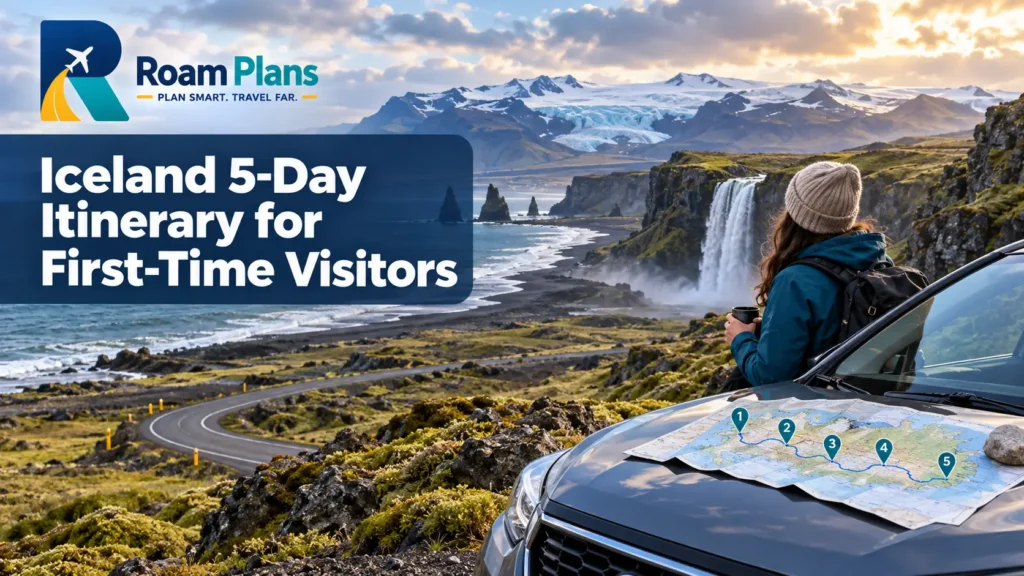
Iceland 5-Day Itinerary for First-Time Visitors | RoamPlans RoamPlans · Iceland Itineraries Iceland 5-Day Itinerary for First-Time Visitors Use this balanced Iceland 5-day itinerary…
Read guide →Use a practical travel tool to organize your budget, itinerary, packing, or trip costs.