Japan Travel Mistakes First-Time Visitors Should Avoid
Japan is often easier to travel around than it looks before your first visit. Trains connect the main cities, large stations have useful signs, and major visitor areas ↗ are used by international travelers. Still, small planning errors can turn an otherwise good trip into days filled with unnecessary transfers, heavy luggage, missed reservations, and too much time checking maps.
The mistakes I would focus on are not tiny social errors that make a traveler look inexperienced. Most local customs can be handled by paying attention and being respectful. The bigger problems are choices made before and during the trip that cost you time, money, comfort, or access to something you genuinely wanted to do.
If you are still building your route, How to Plan a Trip to Japan: Step-by-Step Guide covers the full planning process. This article focuses on the mistakes first-time visitors are most likely to make and what I would do instead.
Mistake 1: Trying to See Too Much Japan in One Trip
This is the first mistake I would fix.
Tokyo, Kyoto, Osaka, Nara, Hiroshima, Hakone, Mount Fuji, Kanazawa, and several day trips can all look possible when you are planning from home.
Japan's fast trains make the distances look manageable.
But a place being reachable does not mean it belongs in your itinerary.
Every additional base can mean:
- ✓Packing again
- ✓Hotel check-out
- ✓Getting to the station
- ✓Finding the right train
- ✓Carrying or forwarding luggage
- ✓Reaching the next hotel
- ✓Waiting for check-in
- ✓Learning another local transport system
A trip with six destinations may technically work while still feeling worse than a trip with three.
What I Would Do Instead
Build the route around your number of full usable days.
For many first-time trips:
7 days: about 1–2 main bases
10 days: about 2–3 main bases
14 days: about 3–4 main bases
These are not fixed limits, but they are a useful check.
If adding one destination creates two difficult travel days, I would seriously consider removing it.
The detailed duration decision is covered in How Many Days Do You Need in Japan ↗?
Mistake 2: Treating Fast Trains as If Travel Takes No Time
Japan's rail system is efficient, but first-time travelers sometimes plan only around the train's scheduled journey time.
That is rarely the full transfer.
A city-change day may include:
hotel → local station → major station → platform → train → destination station → local transport → hotel
You also need to account for luggage, station exits, ticket questions, check-in times, food, and finding your way through an unfamiliar station.
A two-hour train does not automatically create only a two-hour gap in the day.
What I Would Do Instead
I would treat every hotel-change day as a partial sightseeing day until the route proves otherwise.
Put the transfer into your itinerary first.
Then add one or two flexible activities nearby if enough useful time remains.
This keeps an ordinary delay from destroying the rest of the day's plan.
Mistake 3: Copying Someone Else's Japan Itinerary Without Checking the Pace
A popular 10-day itinerary may be technically good and still be wrong for you.
The person who created it may enjoy:
- ✓7 AM starts
- ✓Long walking days
- ✓Several neighborhoods per day
- ✓Frequent hotel changes
- ✓Late evenings
- ✓Very little unplanned time
If you normally travel slowly, copying that pace can make the trip tiring by Day 3.
What I Would Do Instead
Before copying any itinerary, ask:
How many hours does this person actually spend sightseeing each day?
Then check:
- ✓Number of hotel changes
- ✓Number of early starts
- ✓Walking load
- ✓Number of timed bookings
- ✓Number of long transfers
- ✓Amount of free time
Use another itinerary as a framework, not as a set of instructions you must follow.
Mistake 4: Buying the JR Pass Before Building the Route
For years, travelers often heard some version of:
Going to Japan? Buy a JR Pass.
That is no longer a safe default.
The current nationwide Japan Rail Pass prices are high enough that whether it saves money depends heavily on your actual long-distance journeys. A pass that works for one itinerary may cost more than individual tickets for another.
Recent Japan travel guides also flag automatic JR Pass buying as a common first-timer error.
What I Would Do Instead
Use this order:
- ✓Choose your cities.
- ✓Put them in route order.
- ✓Identify the long-distance rail journeys.
- ✓Check individual ticket costs.
- ✓Compare those costs with the current pass options.
- ✓Buy a pass only if the numbers and convenience make sense.
The full comparison belongs in Japan Rail Pass: Is the JR Pass Worth It?
Mistake 5: Booking Flights Before Checking Where the Trip Should End
Many first-time visitors automatically book:
Home → Tokyo → Home
before building the Japan route.
That can work perfectly.
But if your trip moves:
Tokyo → Kyoto → Osaka
you may eventually discover that you need to travel all the way back to Tokyo just to catch the flight home.
What I Would Do Instead
Before booking flights, compare:
Round trip through Tokyo
with:
Arrive in Tokyo → depart from the Osaka/Kansai area
Then compare the full effect:
- ✓Airfare
- ✓Final train journey
- ✓Airport transfer
- ✓Extra hotel night if needed
- ✓Travel time
Sometimes Tokyo round-trip still wins.
Other times, a multi-city ticket makes the entire route cleaner.
The important point is to check before the flight locks the itinerary.
Mistake 6: Choosing the Cheapest Hotel Without Checking Its Location
Hotel price is easy to compare.
Hotel location cost is less obvious.
Suppose one hotel saves you a small amount each night but adds 30 minutes of travel in each direction every day.
Over five nights, that can mean hours spent commuting during your vacation.
You may also spend more on:
- ✓Local trains
- ✓Late-night taxis
- ✓Luggage transfers
- ✓Airport transport
What I Would Do Instead
When comparing two hotels, I check:
room price + station access + daily route + next-city connection
For first-time travelers, I would often choose a simpler room close to useful transport rather than a better room that works against the itinerary.
Mistake 7: Planning a Full Sightseeing Day Immediately After Landing
Landing in Japan is exciting, especially after months of planning.
That does not make arrival day a normal sightseeing day.
A traveler arriving from the United States may still need to handle:
- ✓Immigration
- ✓Baggage
- ✓Customs
- ✓Airport transport
- ✓Mobile data setup
- ✓ATM or cash
- ✓Finding the hotel
- ✓Check-in
- ✓Jet lag
If something takes longer than expected, a timed attraction or expensive dinner reservation becomes another source of pressure.
What I Would Do Instead
I would make arrival day simple.
A good first evening might be:
- ✓Reach the hotel
- ✓Find the nearest station
- ✓Walk around the neighborhood
- ✓Eat nearby
- ✓Buy basic supplies
- ✓Sleep
Start the serious sightseeing the following morning.
You lose very little and usually gain a much better first full day.
Mistake 8: Filling Every Day With Timed Reservations
Advance booking can be useful in Japan.
But booking too much creates another problem.
If breakfast, a museum, lunch, an observation deck, dinner, and an evening activity all have fixed times, one small delay can affect the whole day.
It also removes one of the best parts of travel: staying longer somewhere you did not expect to enjoy.
What I Would Do Instead
I separate activities into:
Must reserve
An experience that has limited capacity or would genuinely matter if I missed it.
Priority but flexible
Something I want to do but can move around.
Optional
Nearby places that can fill extra time.
I prefer one main anchor booking on many sightseeing days rather than several appointments stacked together.
Mistake 9: Ignoring Peak Travel Dates Until Hotels Become Expensive
A traveler may choose April because cherry blossom photos look beautiful, then discover that their preferred hotels and experiences have become much harder or more expensive to book.
The same issue can happen around:
- ✓Cherry blossom periods
- ✓Golden Week
- ✓Obon
- ✓Autumn foliage
- ✓New Year
- ✓Major events
The problem is not visiting during a popular period.
The mistake is treating a high-demand trip as if it were an ordinary week.
What I Would Do Instead
Once the dates are fixed, check whether they overlap a major Japanese travel period.
If they do:
- ✓Book the important hotel nights earlier
- ✓Check transport reservation needs
- ✓Protect your highest-priority experiences
- ✓Leave more time around busy stations and attractions
Our Best Time to Visit Japan: Weather, Crowds and Costs ↗ guide covers those seasonal trade-offs separately.
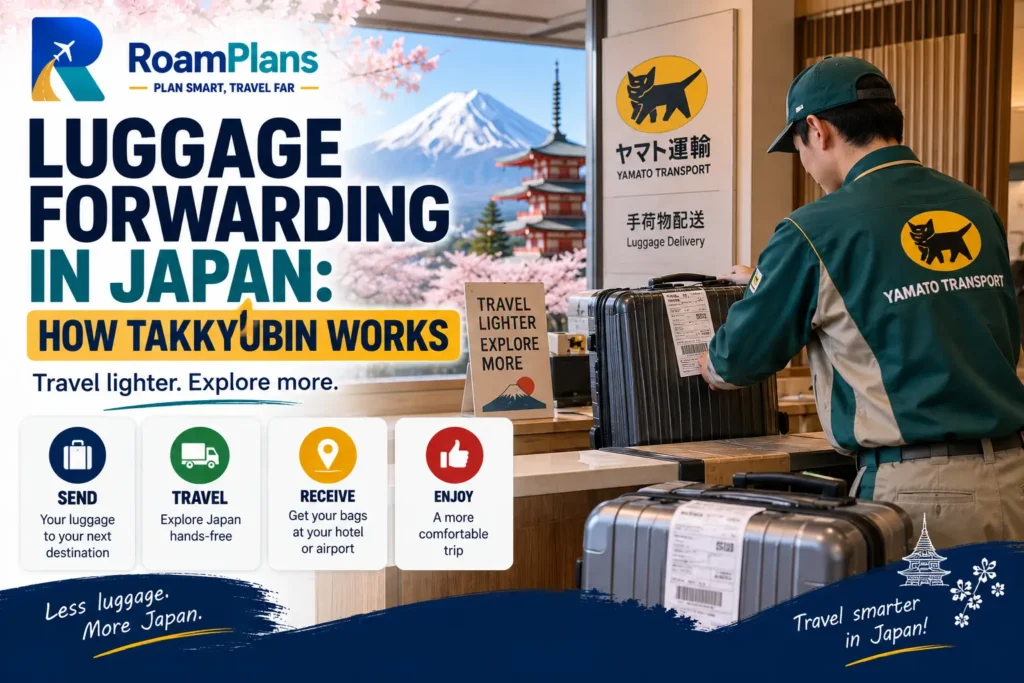
Mistake 10: Bringing Too Much Luggage
Large luggage can make an easy Japan route much harder.
JNTO specifically warns that big suitcases can be difficult on crowded trains and buses and recommends luggage forwarding, storage, and lockers where useful. Some Shinkansen services also have special rules for larger baggage.
What I Would Do Instead
If the route includes several cities, I would ask:
Can I move this suitcase through a station myself without struggling?
Pack lighter where possible.
If you need a large bag, decide before travel whether you will:
- ✓Carry it
- ✓Forward it
- ✓Store it
- ✓Send it ahead while keeping a smaller overnight bag
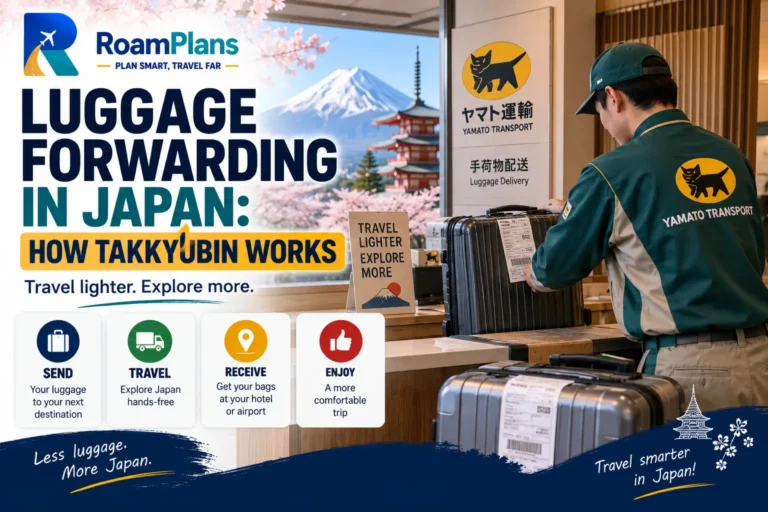
The full process is covered in Luggage Forwarding in Japan: How Takkyubin Works.
Mistake 11: Assuming Every Place Accepts Cards
Japan is much more cashless than it used to be, especially in major cities, but that does not mean every payment can be handled by card or phone.
Smaller restaurants, local shops, temples, ticket machines, and rural businesses may still prefer or require cash.
What I Would Do Instead
Carry:
- ✓One main card
- ✓One backup card
- ✓Some Japanese yen
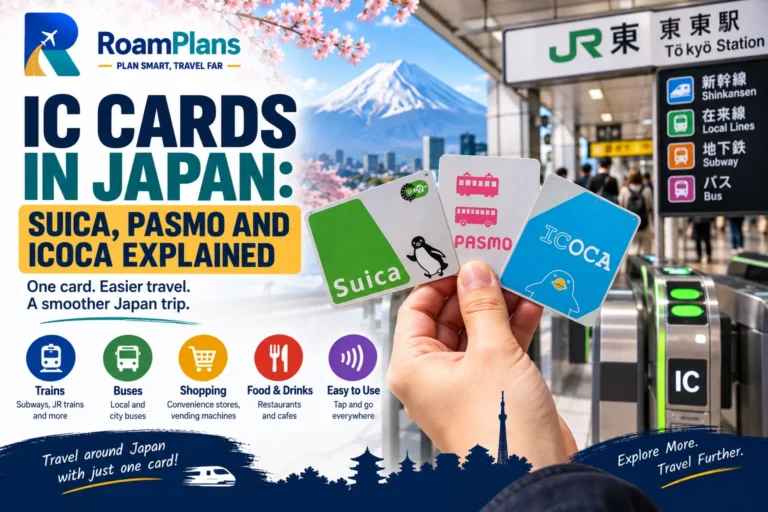
- ✓An IC card where useful
Do not keep every payment method in the same wallet.
That way, one lost card or failed transaction does not become a major problem.
Mistake 12: Depending on One Phone for Everything
Your phone may handle:
- ✓Maps
- ✓Train routes
- ✓Tickets
- ✓Hotel addresses
- ✓Translation
- ✓Reservations
- ✓Payments
- ✓Photos
That convenience can become a problem if your battery dies, mobile data stops working, or you lose the phone.
What I Would Do Instead
Before departure, I save important information offline.
That includes:
- ✓Hotel addresses
- ✓Flight details
- ✓Major train bookings
- ✓Passport copy
- ✓Insurance information
- ✓Emergency contacts
I would also carry a portable battery and keep at least one payment method separate from the phone.
Mistake 13: Arriving Without a Mobile Data Plan
Trying to solve connectivity problems after reaching Japan can make the first few hours harder than they need to be.
First-time visitors often need internet access almost immediately for:
- ✓Airport transport
- ✓Maps
- ✓Hotel directions
- ✓Translation
- ✓Train planning
- ✓Messages
What I Would Do Instead
Choose your connection before departure.
Possible options include:
- ✓eSIM
- ✓Physical SIM
- ✓International roaming
- ✓Pocket Wi-Fi
The best option depends on your phone, carrier, data use, and number of travelers.
The main goal is simple: know how you will get online before leaving the airport.
Mistake 14: Choosing Attractions Without Checking Their Location
A list of the best things to do in Tokyo or Kyoto can look manageable until you put the places on a map.
You may have three attractions that are famous but located far apart.
That creates unnecessary train journeys and can make a reasonable sightseeing list feel exhausting.
What I Would Do Instead
Group days by area.
For example, I would rather spend one Tokyo day around nearby western neighborhoods and another around eastern neighborhoods than repeatedly cross the city.
Before finalizing any day, check:
- ✓Attraction location
- ✓Opening hours
- ✓Travel time
- ✓Walking load
- ✓Reservation requirements
Good grouping often improves a trip more than adding another attraction.
Mistake 15: Underestimating How Much You Will Walk
Japan has excellent public transportation, but that does not mean you will avoid walking.
A normal sightseeing day can include:
- ✓Station corridors
- ✓Subway transfers
- ✓Temple grounds
- ✓Shopping streets
- ✓Parks
- ✓Hotel walks
- ✓Stairs
- ✓Searching for the correct station exit
Your actual daily walking can be much higher than the distance between attractions suggests.
What I Would Do Instead
Wear shoes you have already tested on long days.
I would also avoid stacking several heavy walking days together if that pace is not normal for you.
This is especially important for Kyoto, where sightseeing areas can involve a lot of walking between transport stops and individual sites.
Mistake 16: Wearing New Shoes on the Trip
Japan is a bad place to discover that your new shoes hurt after two hours.
The problem may appear slowly, then affect several days of sightseeing.
What I Would Do Instead
Bring your most dependable walking shoes.
If you want a second pair, choose something light and already broken in.
Do not choose footwear mainly because it looks good in photos.
Comfort matters far more after several days of walking.
Mistake 17: Assuming Kyoto Works Like Tokyo
Tokyo and Kyoto are both major visitor destinations, but they do not require the same daily planning style.
Tokyo has extensive rail and subway coverage.
Kyoto relies on a combination of trains, subways, buses, taxis, and walking, and many major sights are spread across different parts of the city.
What I Would Do Instead
Plan Kyoto by geographic area.
Do not put Arashiyama, eastern Kyoto, Fushimi, and several northern temples into one day simply because they are all famous.
The dedicated Kyoto Travel Guide for First-Time Visitors will cover the city's planning logic in more detail.
Mistake 18: Treating Osaka as Just Another Version of Tokyo
Osaka has its own strengths.
If you arrive expecting the same sightseeing style as Tokyo, you may build the wrong schedule.
Many travelers enjoy Osaka for:
- ✓Food
- ✓Nightlife
- ✓Shopping streets
- ✓Casual city atmosphere
- ✓Kansai access
What I Would Do Instead
Decide why Osaka belongs in your trip.
If you mainly want its evening atmosphere and food, you may not need to fill every daytime hour with attractions.
If you are considering using Osaka as a base, compare it properly with Kyoto before booking both.
That decision is covered in Kyoto vs Osaka: Which Is the Better Base?
Mistake 19: Assuming Every Train Works the Same Way
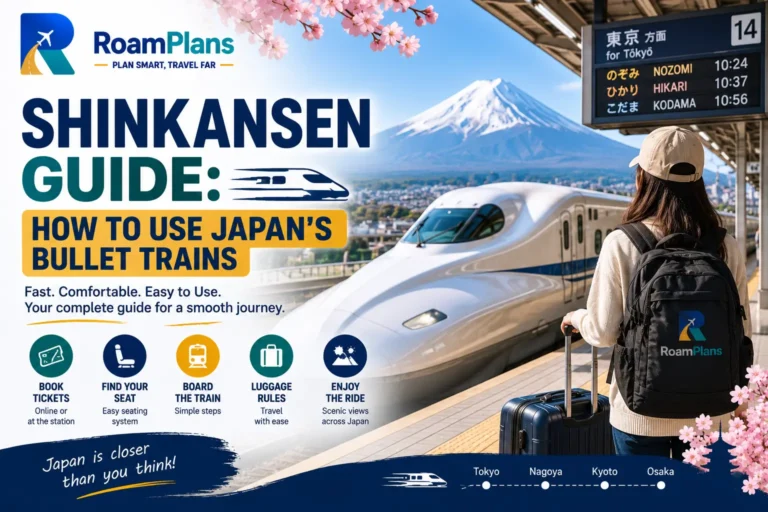
Japan's rail system is excellent, but it includes different operators, ticket types, train categories, reservations, and local rules.
A first-time traveler may assume that one IC card or one train pass automatically covers every journey.
That can lead to confusion at gates or stations.
What I Would Do Instead
For each major journey, check:
- ✓Departure station
- ✓Destination station
- ✓Operator
- ✓Train type
- ✓Ticket requirements
- ✓Reservation requirements
You do not need to learn Japan's entire rail system.
You only need to understand the journeys you are actually taking.
The deeper explanation belongs in Japan Train Travel Guide for First-Time Visitors.
Mistake 20: Using the Wrong Station Because the Names Look Similar
Large Japanese cities may have several stations with similar names or stations serving very different train companies.
Tokyo also has major hubs where one wrong exit can place you farther from your destination than expected.
What I Would Do Instead
Save the exact station and route before leaving the hotel.
For an important journey, I check:
- ✓Exact station name
- ✓Railway company
- ✓Platform where available
- ✓Exit number if useful
This is especially helpful for early-morning trains or reservations where being late matters.
Mistake 21: Standing in the Wrong Place on Escalators or Blocking Station Flow
Stations can be busy, and first-time visitors sometimes stop immediately after ticket gates, escalators, or platform exits to check their phones.
That can block people moving behind them.
What I Would Do Instead
If you need to check directions, move to the side first.
Follow local signs, queue markings, and passenger flow rather than assuming every station works like one at home.
Escalator standing customs can also differ by region, so following the people around you is usually easier than memorizing one nationwide rule.
Mistake 22: Talking Loudly on Public Transportation
Public transportation in Japan is often quieter than many visitors expect.
JNTO advises travelers to keep voices low and avoid disturbing other passengers. Phone calls are also generally discouraged on trains.
What I Would Do Instead
Keep conversations quiet and put the phone on silent.
If you need to make a call, wait until you are off the train where possible.
You do not need to be nervous about every sound. Just match the general atmosphere around you.
Mistake 23: Ignoring Local Queue Rules
Japan uses clear queue systems in many places, especially train platforms, attractions, restaurants, and shops.
A traveler who does not notice the markings can accidentally move ahead of others.
What I Would Do Instead
Before joining a crowd, look for:
- ✓Floor lines
- ✓Platform markings
- ✓Signs
- ✓Existing queues
If you are unsure, watching what local passengers do usually solves the problem.
Mistake 24: Eating While Walking Everywhere
You may see food stalls and convenience stores everywhere, but eating while moving through busy streets is not always the preferred local habit.
The situation varies by place.
What I Would Do Instead
If you buy food from a stall or shop, look for a nearby eating area or stand to the side rather than automatically walking through a crowded street while eating.
Follow any signs at markets, stations, or attractions.
This is a good example of where observation works better than trying to memorize a strict rule.
Mistake 25: Expecting Public Trash Bins Everywhere
You may notice fewer public trash bins than you are used to.
That can surprise first-time visitors after buying snacks or drinks.
What I Would Do Instead
Keep a small bag or pouch in your day bag for temporary waste.
Dispose of it when you find a suitable bin at:
- ✓Convenience stores where permitted
- ✓Stations
- ✓Attractions
- ✓Your hotel
Do not leave trash behind simply because a bin is not nearby.
Mistake 26: Assuming Convenience Stores Are Only for Emergency Food
Some travelers ignore convenience stores because they think using them means missing real Japanese food.
That is unnecessary.
Convenience stores can be useful for:
- ✓Breakfast
- ✓Drinks
- ✓Snacks
- ✓Quick meals
- ✓ATMs
- ✓Basic toiletries
- ✓Travel supplies
What I Would Do Instead
Use them when they solve a practical problem, but do not make them your only food experience.
They are useful travel infrastructure, not a replacement for trying local restaurants.
Mistake 27: Booking Every Famous Restaurant You See Online
Social media can make it seem as if you need reservations at specific viral restaurants to eat well in Japan.
That can create unnecessary cross-city travel and a schedule filled with meal appointments.
What I Would Do Instead
Reserve only restaurants that truly matter to you or genuinely require advance booking.
For other meals, eat near the area you are already exploring.
This keeps the day flexible and often leads to a much easier trip.
Mistake 28: Ignoring Dietary Needs Until You Arrive
Travelers with allergies, vegetarian diets, religious food requirements, or other restrictions may assume translation apps alone will solve everything.
Sometimes they will help, but dietary communication can still be difficult.
What I Would Do Instead
Prepare before departure.
Save:
- ✓Key ingredient names
- ✓Clear translated dietary statements
- ✓A few suitable restaurant options near your bases
- ✓Backup food choices
If an allergy is serious, do not rely only on a casual machine translation.
Mistake 29: Expecting Every Attraction to Be Open Every Day
Opening days and hours vary.
Some museums close on specific weekdays. Restaurants may have irregular days off. Temples and other attractions can have seasonal schedules.
What I Would Do Instead
Check official opening information for your highest-priority places before assigning them to a day.
I especially check:
- ✓Weekly closure days
- ✓Final admission time
- ✓Holiday changes
- ✓Reservation requirements
Do this before building the rest of the day around that attraction.
Mistake 30: Planning Around Old Information
Japan travel information changes.
Examples include:
- ✓Rail-pass prices
- ✓Reservation systems
- ✓Entry procedures
- ✓IC-card availability
- ✓Attraction rules
- ✓Transport schedules
A blog post from several years ago may still rank well while containing outdated details.
What I Would Do Instead
Use travel blogs for experience and planning ideas.
Use official sources for facts that can change.
That is the same rule I use throughout RoamPlans: recommendations can come from experience, but current rules should be checked at the source.
Mistake 31: Forgetting to Check Entry and Medication Rules
Some travelers spend weeks planning attractions and restaurants, then leave entry or medication checks until the end.
That is the wrong order.
Japan's visa and medication rules depend on your passport, travel purpose, drug ingredients, and quantity carried.
What I Would Do Instead
Check official government sources early for:
- ✓Visa or visa-exemption status
- ✓Passport requirements
- ✓Medication restrictions
- ✓Customs rules
- ✓Required documents
Do this before paying for difficult-to-change bookings.
Mistake 32: Assuming Cherry Blossom or Fall Color Dates Are Guaranteed
Seasonal travel is one of Japan's biggest attractions, but nature does not follow a fixed booking calendar.
Cherry blossom and autumn foliage timing can shift by:
- ✓Region
- ✓Elevation
- ✓Temperature
- ✓Annual weather
What I Would Do Instead
Use seasonal forecasts closer to departure and avoid building the whole trip around one exact date.
If seasonal scenery is a major goal, a route with more than one possible viewing area gives you more flexibility.
Mistake 33: Ignoring Weather Because the Trip Is Already Booked
A fixed itinerary can look perfect months before departure.
Then heavy rain, heat, snow, or another weather issue changes the day.
What I Would Do Instead
Check conditions again shortly before travel and keep indoor or flexible options available in each city.
The trip should be able to change without collapsing.
Our Best Time to Visit Japan: Weather, Crowds and Costs guide covers seasonal planning in more detail.
Mistake 34: Packing for Photos Instead of the Trip
A stylish suitcase is not useful if your shoes hurt and your clothing does not handle the weather.
First-time visitors often underestimate:
- ✓Walking
- ✓Temperature changes
- ✓Rain
- ✓Station stairs
- ✓Long sightseeing days
What I Would Do Instead
Pack around comfort first.
Use tested walking shoes, repeatable clothing, useful layers, and a manageable suitcase.
The complete destination-specific list is covered in What to Pack for Japan: First-Time Visitor Packing List ↗.
Mistake 35: Filling the Suitcase Before You Arrive
Japan is an easy place to shop.
Travelers often return with:
- ✓Snacks
- ✓Cosmetics
- ✓Clothing
- ✓Souvenirs
- ✓Stationery
- ✓Anime goods
- ✓Kitchen items
- ✓Gifts
If your suitcase is already full on Day 1, every purchase creates another luggage problem.
What I Would Do Instead
Leave empty space.
A foldable extra bag can also help for the return flight if your airline allowance permits it.
Mistake 36: Forgetting That Jet Lag Can Affect Several Days
Jet lag is not always limited to arrival evening.
Travelers coming from the U.S. may find that they wake too early, feel tired in the afternoon, or lose energy later in the trip.
What I Would Do Instead
Keep the first two days slightly easier than your busiest planned days.
I would also avoid putting the most important early-morning reservation immediately after arrival.
Mistake 37: Treating Every Day Trip as Free Extra Sightseeing
Day trips can save hotel changes, but they still use time.
A long day trip means:
- ✓Getting to the departure station
- ✓Traveling both ways
- ✓Waiting
- ✓Less time in your base city
What I Would Do Instead
Ask whether the day trip is more valuable than another full day where you are already staying.
Do not add a day trip simply because it appears on a list of best things to do.
Mistake 38: Using Taxis as the Default Backup
Taxis are useful, especially late at night, with luggage, or when public transport becomes inconvenient.
But using them repeatedly because your hotel or daily plan is poorly located can raise costs quickly.
What I Would Do Instead
Use taxis as a tool, not as a solution to a weak itinerary.
A better hotel location and better area grouping can often solve the problem before it starts.
Mistake 39: Forgetting to Check the Last Train
Late evenings can become awkward if you assume public transport runs all night.
What I Would Do Instead
If you plan nightlife or a late dinner, check the final practical train or subway connection back to your hotel.
Keep enough money available for a taxi if your plan genuinely runs late.
Mistake 40: Relying on One Translation Method
Translation apps are useful, but a weak signal, dead battery, or unclear machine translation can still create problems.
What I Would Do Instead
Learn a few simple phrases and save key information in Japanese where useful.
That can include:
- ✓Hotel name
- ✓Hotel address
- ✓Dietary statement
- ✓Medication information
- ✓Main destination names
You do not need fluent Japanese, but one backup method helps.
Mistake 41: Worrying Too Much About Making Small Etiquette Errors
Some first-time travelers become so worried about doing something wrong that they make the trip stressful.
Most everyday situations do not require perfect knowledge.
What I Would Do Instead
Follow three simple rules:
Watch what people around you are doing.
Follow posted signs.
Be quiet, patient, and respectful.
That handles a large part of normal travel etiquette.
Mistake 42: Not Leaving Any Unplanned Time
A perfectly filled itinerary often looks efficient.
In practice, it can make the trip worse.
You may discover a neighborhood you want to stay in longer, find a restaurant, spend more time shopping, or simply need a slower morning.
What I Would Do Instead
Leave at least one flexible block in each major city.
That could be:
- ✓One free evening
- ✓Half a day with no fixed bookings
- ✓A group of optional activities
Free time is not wasted time.
Mistake 43: Refusing to Change the Plan After Arrival
Weather changes. Energy changes. Interests change.
A traveler may discover that Kyoto deserves another day or that one planned attraction is less important than expected.
What I Would Do Instead
Treat the itinerary as a guide.
Keep your major bookings, but allow lower-priority plans to move.
A good trip is not one where every original plan is completed. It is one where your time is used well.
The Japan Mistakes I Would Take Most Seriously
If you remember only a few things from this article, make them these:
1. Do Not Add Too Many Bases
This affects time, cost, luggage, and energy.
2. Do Not Buy Transport Products Before Building the Route
The route should create the transport decision.
3. Do Not Ignore Hotel Location
A cheap room in the wrong place can cost you hours.
4. Do Not Treat Transfer Days Like Full Days
Leave enough time for real movement.
5. Do Not Overpack
Japan is easier with luggage you can manage yourself.
6. Do Not Fill Every Hour
Flexibility protects the trip.
7. Check Current Rules at Official Sources
Entry, transport, medication, and reservation systems can change.
A Quick First-Time Japan Mistake Checklist
Before you leave, check whether you have:
- ✓Limited the number of hotel bases
- ✓Counted full sightseeing days correctly
- ✓Checked arrival and departure airports
- ✓Compared transport costs before buying passes
- ✓Chosen hotels near useful transport
- ✓Planned what happens to your luggage
- ✓Prepared mobile data
- ✓Saved documents offline
- ✓Packed tested walking shoes
- ✓Left free time in the itinerary
- ✓Checked seasonal demand
- ✓Confirmed important opening days
- ✓Prepared more than one payment method
- ✓Checked entry and medication rules
- ✓Added weather backup options
If those items are covered, you have already avoided many of the mistakes that create the biggest first-trip problems.
Use RoamPlans to Catch Problems Before You Book
The easiest time to fix a bad Japan itinerary is before flights, hotels, and reservations are locked.
Use the Travel Itinerary Builder to check whether your cities and transfer days fit comfortably.
Use the Trip Cost Estimator to see whether extra bases or long-distance trips are pushing the budget higher than expected.
Use the Weather Planner before departure so your daily schedule can adjust to real conditions.
A planning tool should help you spot weak decisions early rather than simply organize them after they are made.
Frequently Asked Questions
Trying to visit too many places in too little time. Too many hotel changes can reduce sightseeing time and increase costs.
Not automatically. Build your route first and compare the current cost of individual train journeys with available pass options.
It can be. A cheaper hotel may become poor value if it adds extra travel every morning and evening.
No. Seven days can work well if you keep the route focused and avoid too many bases.
You can, but a smaller manageable suitcase is easier for train travel and hotel changes.
Yes, some cash is useful even though cards and electronic payments are common in many places.
Quiet conversation is generally fine, but loud conversations and phone calls can disturb other passengers.
No. Reserve places that genuinely matter to you and leave other meals flexible around your daily route.
Use them for general ideas, but recheck current rules, prices, transport systems, and entry requirements using official sources.
Remove a destination or fixed booking before adding more days. A smaller route often improves the trip faster.
Final Thoughts
In short, Most first-time Japan mistakes come from trying to control too much or fit too much into one trip. Keep the number of bases realistic, plan transfers properly, choose useful hotel locations, pack lighter, check changing rules at official sources, and leave enough room for the trip to change after you arrive.

Adnan Ahmed
RoamPlans AuthorTravel Planning Researcher & Editor
Adnan Ahmed is the travel planning researcher and editor behind RoamPlans. He creates clear, practical guides to help travelers compare destinations, plan routes, estimate costs, and avoid common trip-planning mistakes. His work combines careful source research, official travel information, and regular content reviews to keep each guide useful and current.
- ✓Destination Research
- ✓Budget Planning
- ✓Route Planning
- ✓Beginner Travel Guides
Turn This Guide into a Practical Trip Plan
Use the recommended Free Travel Itinerary Builder or explore more free RoamPlans tools.