Solo Travel Safety Tips for Beginners
Solo travel gives you more ↗ freedom over your schedule, budget, and daily plans. But traveling alone also means there may be no one beside you to watch your belongings, notice when something feels wrong, help with directions, or make a second decision during a stressful moment. That is why basic preparation matters more on a solo trip, especially if it is your first one.
My planning approach is simple: reduce the number of problems you would have to solve alone after arriving. I want to know where I am staying, how I will get there, how I will contact someone if needed, where my backup money is, and what information I can still access if my phone stops working. This does not mean planning every hour. It means keeping enough control over the important parts of the trip.
This guide covers practical solo travel safety tips for beginners before and during a trip. It stays focused on the extra decisions that come with traveling alone. Topics such as tourist scams, destination risk research, female solo travel, and emergency preparation are introduced only where they matter because each deserves separate guidance.
Safety Note: No destination can be guaranteed safe for every traveler. Risk can change by neighborhood, time of day, activity, local conditions, and personal circumstances. Check current official advice before departure and again if conditions change during your trip.
Key Takeaways
Research the destination and the specific areas you expect to visit.
Make your arrival simple by planning transportation and accommodation before you leave home.
Give basic trip details to someone you trust and agree on a check-in routine.
Keep backup access to money, documents, navigation, and communication.
Know how you will return before going somewhere unfamiliar, especially at night.
Stay aware without treating everyone around you as a threat.
Leave a situation if something feels wrong instead of worrying about appearing rude.
Prepare for small problems before they become emergencies.
Is Solo Travel Safe for Beginners?
Solo travel can be a reasonable option for a beginner, but there is no single answer that applies to every traveler or destination.
A short city trip with reliable transportation, a well-reviewed hotel, strong phone coverage, and easy access to services is very different from traveling alone through remote areas with limited transport or communication.
The safest first solo trip is usually one that matches your current experience.
You do not need to choose the most difficult destination to prove that you can travel alone. A simpler first trip gives you time to learn how you respond to unfamiliar transportation, accommodation, navigation, meals, and daily decisions without also adding unnecessary risk.
For international travel, I use official travel advice as the starting point rather than relying on social media opinions alone. U.S. travelers can review State Department Travel Advisories, destination information, local laws, and embassy or consulate guidance before departure.
Official advice is useful, but it should not be your only check. A country-level advisory may not tell you everything about the neighborhood where you plan to stay, the route you will use late at night, or the activity you are considering.
What Makes Solo Travel Safety Different?
Most general travel safety advice also applies to solo travelers.
The difference is that you may need to handle the first few minutes of a problem yourself.
If you miss the last train, lose your phone, feel sick, realize you are walking in the wrong direction, or become uncomfortable around someone, there may be no travel partner beside you to help make the next decision.
When traveling alone, nobody else may be there to:
Watch your luggage while you step away
Notice that you are becoming unwell
Help you read an unfamiliar transport system
Carry a second phone or payment card
Speak to staff while you deal with another problem
Notice unusual behavior from someone nearby
Contact your family if you cannot
Help decide whether it is time to leave a situation
That does not mean solo travel is unsafe.
It means your backup support needs to come from somewhere else.
That backup may be a second bank card, an offline map, hotel staff, a trusted person at home, local emergency services, an insurer, or an embassy or consulate when the situation falls within their role.
The goal is to avoid having one small problem remove all of your options.
Choose Your First Solo Destination Carefully

For a first solo trip, choose a destination you feel capable of managing rather than one that simply looks impressive online.
A beginner-friendly destination often has:
Transportation that is easy to research
Accommodation with plenty of recent guest information
Reliable mobile or internet coverage
Clear connections from the airport or station
Areas commonly used by visitors
Medical services you can identify if needed
Enough information available in a language you understand
Activities you would feel comfortable doing alone
Do not choose a destination only because an article calls it one of the safest places for solo travelers.
Safety can vary greatly inside the same country or city. One neighborhood may be busy and well connected while another may become difficult to reach at night. A popular destination can still have scams, theft, unsafe roads, or areas where travelers need more care.
For U.S. travelers going abroad, State Department Travel Advisories are a useful first check. They can highlight issues such as crime, civil unrest, health concerns, kidnapping, terrorism, or limited government assistance.
Use that information as the beginning of your research, then check the exact places you plan to visit.
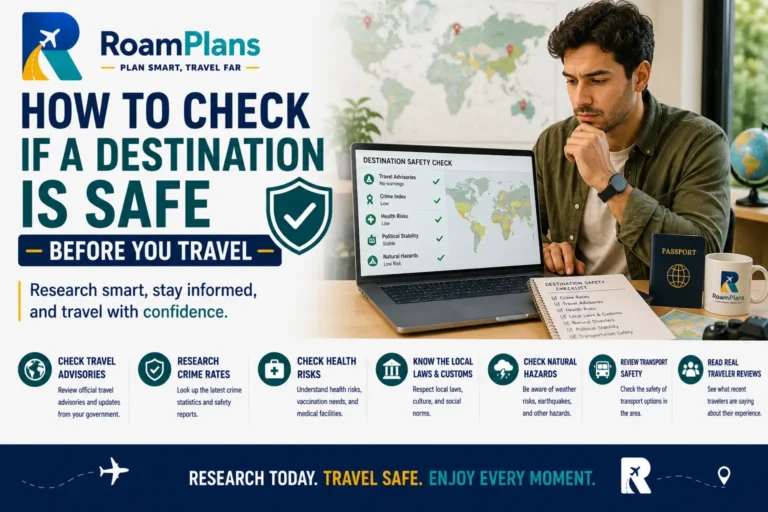
For a fuller process, see How to Check If a Destination Is Safe Before You Travel↗.
Research the Area Where You Will Stay
Do not stop your safety research at the country or city level.
Your accommodation location can affect how easy the trip feels every day.
Before booking, check:
Distance from the places you want to visit
Nearby public transportation
How you would return after dark
Recent guest reviews
Street access around the property
Whether reception or local support is available
How you will reach the property after arriving
Whether the route looks manageable with luggage
Whether you would feel comfortable handling the area alone
A cheaper hotel far from everything can sometimes create extra late-night transport, longer walks, or complicated transfers.
For a solo traveler, convenience can be part of safety.
If spending slightly more means you can stay near a direct transport route, avoid a long walk at night, or use accommodation with reliable staff support, include that difference when comparing your options.
For more detailed area research, read How to Choose a Safe Area to Stay (Beginner’s Guide)↗.
Make Your First 24 Hours Easy

The first day is one of the times when I would avoid adding unnecessary difficulty to a solo trip.
You may be tired from a flight, dealing with a new time zone, carrying luggage, using your phone heavily, and trying to understand an unfamiliar transport system at the same time.
Before leaving home, know:
Which airport, station, or terminal you will arrive at
How you plan to reach your accommodation
Roughly how long the trip should take
Where official taxi, train, bus, or rideshare pickup points are
Your accommodation address
Check-in instructions
What happens if you arrive late
Whether you will have mobile data
What your backup route is if the first option fails
Save the important information offline.
You should still be able to reach your accommodation if airport Wi-Fi does not work, your mobile data fails, or an app will not load.
Think Carefully About Arrival Time
A cheap flight arriving after midnight may look good during booking but create extra problems once you land.
Public transportation may have stopped. Your accommodation reception may be closed. Rideshare availability may be limited. You may also be tired enough to make poorer decisions.
For a first solo trip, a daytime arrival can make things easier.
You can see the area around your accommodation, learn nearby transport stops, buy anything you need, and get familiar with the surroundings before night.
A late arrival is not automatically a bad choice. It simply needs a stronger plan.
If you are arriving late, know how you will leave the airport or station and how you will enter the accommodation before you start the trip.
Share Your Basic Trip Details with Someone You Trust

Someone you trust should know the basic shape of your trip.
They do not need a minute-by-minute itinerary.
Useful information may include:
Destination
Travel dates
Flight or train details
Accommodation name and address
Major day trips
Your normal contact method
Important insurance details where relevant
A secure copy of key travel information
For certain activities, sharing your live location with a trusted person can also make sense.
This is especially useful if you are going hiking alone, traveling somewhere remote, meeting someone you do not know well, or using transportation late at night.
For international trips, eligible U.S. citizens and nationals can also consider the Smart Traveler Enrollment Program, or STEP, which can provide messages from the nearest U.S. embassy or consulate.
A trusted contact at home serves a different purpose.
Their job is not to monitor every movement. They simply know where you are supposed to be and can notice if your normal communication stops unexpectedly.
Agree on a Check-In Routine
Sharing an itinerary is more useful when the other person knows when they should expect to hear from you.
Keep the system simple.
You might send:
One message each evening
A message after reaching a new city
A message before and after a remote day trip
A quick update after returning from a late activity
A call every few days during a longer trip
Choose a routine that fits the trip rather than creating a system you will stop using after two days.
Also decide what a missed check-in means.
If you normally reply several hours late, a short delay should not automatically cause concern. But if you are hiking alone and specifically say you will message by 6:00 p.m., your contact should know what action to take if you do not check in.
That becomes more useful than simply telling someone, I am going traveling.
Keep Important Information Outside Your Phone
Your phone may be your map, boarding pass, transport app, hotel booking, bank access, camera, translator, and main communication device.
That is convenient until the phone disappears or stops working.
A solo traveler should be able to access essential information without depending on one device.
Keep offline access to:
Accommodation address
Trusted contact details
Local emergency numbers
Embassy or consulate information when relevant
Insurance assistance details
Important bookings
Basic passport information
Medical information you may need
You do not need to print your entire trip.
A small paper backup of the most important details can be enough.
Keep secure digital copies as well, but think about whether you could reach them if your primary phone were stolen.
That question is more useful than simply asking whether something is backed up.
Have More Than One Way to Access Money
Do not let one lost wallet or phone remove every way you have to pay.
A practical solo travel setup may include:
One primary bank card
One backup card stored separately
A reasonable amount of local cash
Secure access to your banking information
A way to freeze a missing card quickly
The exact setup depends on where you are traveling, but the principle stays the same.
Do not keep your passport, all of your cash, every bank card, and your phone together unless you have no practical alternative.
Imagine losing one bag and immediately losing:
your money, identification, maps, bank access, transport apps, and communication.
Separating backups helps prevent that.
A solo traveler does not need a large emergency fund in their pocket. You simply need another way to pay for basic needs if your normal option stops working.
Plan Your Return Before You Go Somewhere
One habit I recommend for solo travelers is checking the return journey before leaving for an unfamiliar place.
It is easy to focus on getting somewhere and assume you will solve the return later.
Before heading out, check:
When public transportation stops
Whether taxis or ride apps operate in the area
Approximate travel time
Whether mobile service is reliable
How far you may need to walk
Whether the route changes after dark
What your second option would be if the first fails
This matters more for beaches, hiking areas, nightlife districts, festivals, rural attractions, and places outside the main city center.
Transportation that is easy to find during the afternoon may be limited late at night.
If the return plan starts becoming difficult, make the decision early rather than waiting until your options are almost gone.
For example, if you plan to rely on public transportation, check the final departure time before you start your evening rather than after you miss it. If you expect to use a taxi or ride app, confirm that the service normally operates in that area.
Good solo travel safety often comes from these small decisions. You are not trying to predict every problem. You are making sure you still have a sensible next option when the original plan changes.
Stay Aware Without Looking Nervous

Solo travel safety does not mean walking around suspicious of everyone.
Most of the time, you simply need to notice what is happening around you and avoid becoming so distracted that someone else gets control of the situation.
Pay more attention in places where travelers are often busy with phones, luggage, tickets, or directions, such as:
Airports
Train and bus stations
Crowded public transport
Markets
Tourist attractions
Busy pedestrian areas
Nightlife districts
Try not to stand in the middle of a crowded area staring at your phone while looking confused.
If you need directions, move somewhere calmer, check your map, and then continue.
Before leaving your accommodation, I prefer to look at the general route first. I do not need to memorize every street, but knowing the direction I am heading makes me less dependent on constantly checking my phone.
Walk Like You Know Where You Are Going
You do not have to pretend you know an area when you do not.
But there is a difference between quietly checking directions and openly appearing completely lost.
If you are unsure where you are:
Move to a café, shop, hotel lobby, station counter, or another public place.
Check your map.
Ask staff or another reliable source for help if needed.
Continue once you know your next step.
There is nothing wrong with stopping.
The goal is simply to avoid letting confusion push you into following the first stranger who offers help.
Do Not Tell Everyone You Are Traveling Alone
Meeting people is part of solo travel, and you do not need to hide the fact that you are alone from every person you meet.
But strangers do not automatically need to know:
Your hotel name
Your room number
How long you will be alone
Your exact schedule
When your room will be empty
How much money you are carrying
Where you plan to go later that night
If a conversation makes you uncomfortable, you are allowed to keep your answers vague.
You can say you are meeting friends later, that someone is expecting you, or simply change the subject.
There is no requirement to be completely open with someone you have just met.
Personal information should be earned through trust, not given away because someone asks confidently.
Be Careful When Meeting New People
Solo travel often makes it easier to meet people.
You may talk to other travelers in hostels, join walking tours, meet people at cafés, use social apps, or make friends during activities.
Most of these interactions can be completely normal.
Still, meeting someone while traveling should follow the same basic rules you would use at home.
For a first meeting:
Choose a public place.
Arrange your own transportation.
Keep control of your phone and belongings.
Tell someone where you are going if appropriate.
Avoid giving out your accommodation room number.
Do not let someone pressure you into changing your plans.
Leave if their behavior makes you uncomfortable.
Be especially careful if someone you just met quickly starts asking about money, your hotel, your passport, where you keep valuables, or whether anyone knows where you are.
You do not need proof that someone has bad intentions before ending an interaction.
Feeling uncomfortable is enough reason to leave.
Be Careful with Dating and Social Apps
Some solo travelers use dating apps or social platforms to meet local people or other travelers.
That can be part of the trip, but you should treat the first meeting as a meeting with a stranger.
Use a public location and arrange your own way there and back.
Do not let someone you have just met control:
Your transportation
Your phone
Your money
Your accommodation access
Your drink
Your passport or identification
You may also want to share the meeting details with someone you trust.
If the person tries to move the meeting somewhere private very quickly or becomes angry because you are taking basic safety precautions, that is useful information.
A reasonable person should not have a problem with you protecting yourself.
Be Smart About Alcohol and Nightlife
You can enjoy nightlife while traveling alone, but alcohol changes how quickly you notice risks and how well you make decisions.
It can also make navigation, transport, money handling, and communication harder.
If you plan to drink:
Know how you will return before you go out.
Keep your phone sufficiently charged.
Keep control of your drink.
Do not leave it unattended.
Avoid accepting an open drink from someone you do not know.
Keep enough money or payment access for the return trip.
Know your own limits.
Leave before you become unable to manage yourself safely.
The biggest issue is not whether you drink.
It is whether you remain able to make your own decisions.
When traveling alone, there may be no friend beside you to recognize that you have had too much or to make sure you reach your accommodation safely.
Do Not Let Social Pressure Change Your Limits
You may meet people who want to stay out longer, move to another venue, take an unofficial taxi, or go somewhere you had not planned.
You can say no.
You do not need to stay because everyone else is staying.
One of the most useful solo travel skills is being comfortable leaving before other people do.
Protect Your Belongings Without Carrying Everything

Solo travelers face a simple problem: there is nobody else to watch the bag.
You will eventually need to use a restroom, order food, buy a ticket, or handle something while carrying your belongings.
Keep the items that would be hardest to replace close to you.
Depending on the trip, that may include:
Passport
Phone
Main payment card
Essential medication
Accommodation key
Do not leave a phone, wallet, passport, or open bag on a café table while walking away.
In accommodation, avoid carrying every valuable item with you all day just because you are traveling alone. If the property provides a suitable secure option, use it for items you do not need.
The goal is balance.
You do not want all of your important belongings sitting in one unattended place, but you also do not want to carry your entire financial and document backup system in one day bag.
Keep Your Phone Useful, Not Just Charged
A charged phone is helpful, but a solo traveler should also think about what happens if the phone is lost.
Before the trip:
Use a strong screen lock.
Turn on device-location features if available.
Know how to lock the device remotely.
Protect important accounts with two-factor authentication.
Back up important photos and information.
Save essential travel details offline.
Keep your mobile provider’s contact information somewhere else.
Avoid making the phone your only access point to everything.
If losing one device means losing your maps, banking access, hotel address, tickets, contacts, and identification copies at the same time, you have created a single point of failure.
A small amount of preparation can prevent that.
Be Careful About Live Social Media Updates
Posting during a solo trip can reveal more than you intended.
A photo may show:
Your hotel
Your room number
Your current location
The fact that you are alone
Where you will be later
How long your accommodation may be empty
You do not have to stop posting.
Just think about whether the information needs to be shared publicly in real time.
For some posts, waiting until you have left the location is a simple way to reduce unnecessary exposure.
Private location sharing with someone you trust serves a different purpose from public location sharing. One supports safety. The other may tell strangers where you are.
Use Accommodation Staff as a Local Resource
Good accommodation staff can be useful when you are traveling alone.
They may be able to tell you:
Which transport options operate late
Which entrance remains open at night
How to order a licensed taxi
Whether a planned walking route makes sense
Where the nearest pharmacy or medical facility is
Which areas visitors commonly avoid at certain times
This does not mean every staff recommendation is automatically correct.
But asking someone who works in the area can give you useful context when combined with your own research.
If you expect to return late, ask about the entrance procedure before leaving.
If you are staying somewhere without a staffed reception, make sure you know how to contact the host or property support if you become locked out or have another problem.
Do Not Give Out Your Room Number Casually
Your room number is private information.
When checking in, avoid repeating it loudly if the receptionist has already written it down.
If someone you have just met asks where you are staying, you can give a general area instead of the exact property.
If someone calls your hotel room claiming to be staff and asks for payment details or personal information, verify the request through the front desk or official contact method before providing anything.
Small habits like these require almost no effort but reduce unnecessary exposure.
Be More Careful with Remote Activities

A solo museum visit and a solo mountain hike do not carry the same type of risk.
If you plan to go somewhere remote, think about:
Mobile signal
Weather
Daylight hours
Route difficulty
Water
Navigation
Transportation back
Local rescue access
Whether someone knows your plan
Tell someone where you are going and when you expect to return.
If the activity goes beyond your experience level, consider a reputable guide or group rather than doing it alone just because solo travel is the theme of the trip.
You can travel independently without doing every activity independently.
That distinction matters.
Do Not Push Through Bad Weather Just to Keep the Plan
Solo travelers sometimes feel extra pressure to follow the itinerary because nobody else is there to suggest changing it.
If weather, transport, health, or local conditions change, change your plan.
Missing a hike, day trip, beach visit, or booking is frustrating.
Putting yourself in a situation that has clearly become unsafe because you already paid for it is worse.
Before heading somewhere remote or weather-sensitive, check current local conditions and ask yourself:
Would I still choose to do this if I had not already paid for it?
That question can help remove the pressure created by sunk costs.
Trust Your Instincts, but Also Check the Facts
You will often hear solo travel advice that says, Trust your gut.
That can be useful, but it needs context.
If a person or situation feels wrong, you do not need to stay and investigate.
Leave.
At the same time, instinct should not replace factual research.
A quiet street may feel frightening simply because it is unfamiliar. A busy tourist area may feel comfortable while still having a high risk of pickpocketing.
Use both:
your awareness in the moment + reliable information gathered before and during the trip.
That combination is stronger than either one by itself.
Learn the Common Scams Before You Arrive
Solo travelers can be easier targets for certain scams because there is no second person beside them to notice what is happening.
Before arriving, spend a few minutes learning which scams are commonly reported in that destination.
You may come across:
Fake taxi offers
Distraction theft
Overcharging
Fake petitions
ATM or card scams
Fake officials
Friendship scams
Ticket scams
Do not try to memorize every possible trick.
Learn the common patterns and know how legitimate local services normally operate.
If someone creates urgency and insists you must immediately hand over money, follow them somewhere, use a particular ATM, or accept help you did not request, slow the situation down.
For a full breakdown, read Common Tourist Scams and How to Avoid Them↗.
Avoid Looking Richer Than You Need To
You do not have to dress badly or hide everything you own.
But displaying expensive items can attract unnecessary attention.
Think about whether you really need to carry:
Expensive jewelry
Multiple high-value devices
Large amounts of cash
A passport when a secure alternative is allowed
Every bank card you brought
A simple day setup is usually easier to protect.
When I think about what to carry, I focus less on whether an item is valuable and more on one question:
How difficult would my day become if this disappeared?
That helps separate what should stay secure from what actually needs to come with you.
Stay Flexible When Something Feels Off
Solo travel gives you the freedom to change plans without negotiating with another traveler.
Use that advantage.
If:
A driver behaves strangely
A street becomes uncomfortable
A venue feels wrong
Someone keeps following you
Your accommodation does not match what you expected
A tour operator behaves irresponsibly
Weather changes
Transport stops operating
You become unwell
you can change the plan.
Go into a busy shop, hotel, café, police station, station office, or another public place if you need time to think.
Call someone.
Book another ride.
Return early.
Change accommodation if the situation is serious enough.
A travel itinerary is a plan, not an obligation.
Know When to Ask for Help
Traveling solo does not mean solving every problem alone.
Ask for help early when the situation is becoming difficult.
Depending on the problem, that might mean speaking with:
Hotel or hostel staff
Transport employees
Tour staff
Local police
Medical professionals
Your bank
Your insurer
Your embassy or consulate
Someone you trust at home
Waiting until you have no options left usually makes the situation harder.
A confident solo traveler is not someone who never asks for help.
It is someone who knows when handling a problem alone no longer makes sense.
Know What You Will Do If You Become Sick Alone
Getting sick can feel more stressful when nobody is traveling with you.
You may have to decide whether you need rest, a pharmacy, a clinic, or urgent medical care without another person there to help.
Before the trip, know how you would find medical care if you needed it. CDC guidance recommends having a plan for obtaining health care overseas and checking what your health insurance covers outside the United States.
Keep easy access to:
Your insurance details
Any medical assistance number
Your regular medication information
Emergency contacts
The address of your accommodation
Information about allergies or medical conditions that a doctor may need to know
If you start feeling unwell, do not automatically push through a full day because you do not want to waste part of the trip.
Rest, drink safe fluids where appropriate, and seek medical help if symptoms are severe, unusual, or getting worse.
If you need help finding medical services abroad, the nearest U.S. embassy or consulate can help U.S. citizens locate medical care, although it does not pay medical bills.
Medical preparation becomes more significant for remote trips, long stays, or travelers managing an existing health condition. CDC guidance also recommends making sure required medications remain available during international travel.
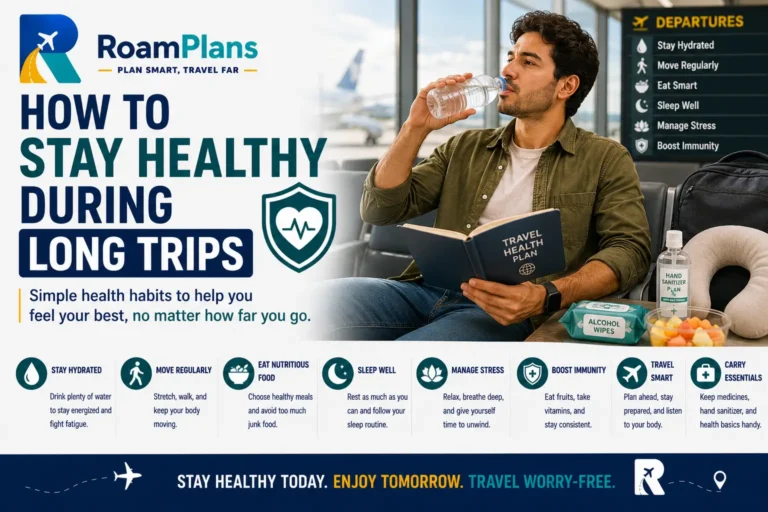
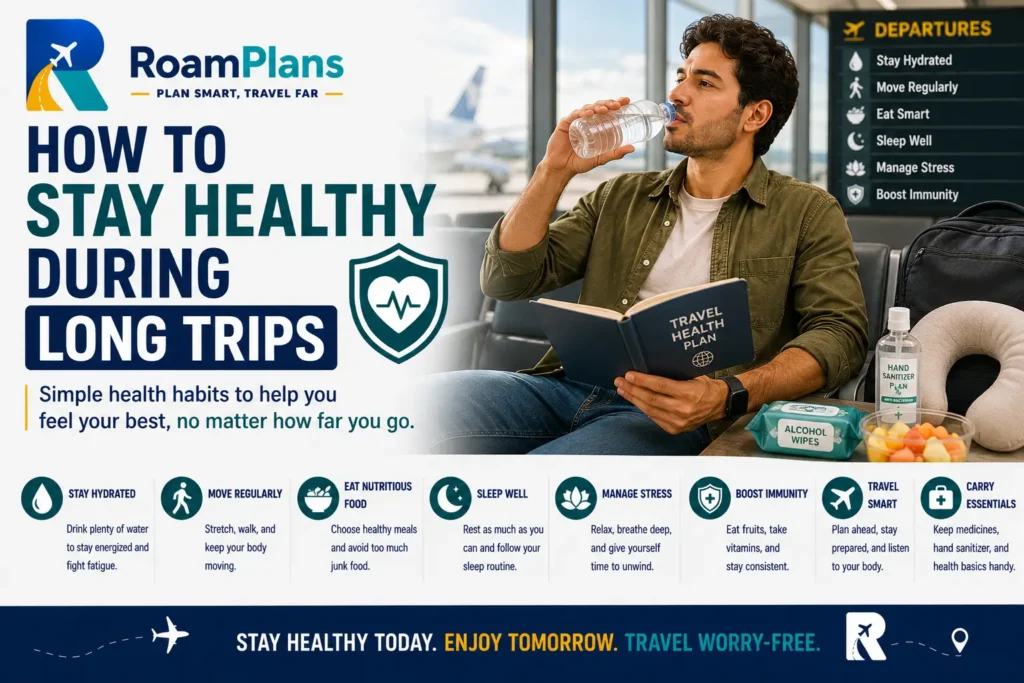
For broader health habits during longer trips, read How to Stay Healthy During Long Trips↗.
Know What to Do If Your Phone Goes Missing
For a solo traveler, losing a phone can affect much more than communication.
Your phone may contain:
Maps
Transport apps
Hotel details
Boarding passes
Banking access
Authentication codes
Contact numbers
Translation tools
That is why the backup steps you prepared before the trip matter.
If your phone disappears, first make sure you are somewhere safe.
Then, depending on your setup:
Try to locate or remotely lock the device.
Contact your mobile provider if the phone appears stolen.
Protect banking and other sensitive accounts.
Use your offline accommodation and contact information.
Tell someone you trust what has happened.
Make a police report when needed for theft, insurance, or local procedures.
Avoid spending hours alone chasing a stolen phone into an unfamiliar area based only on a location-tracking app. Property can be replaced. Your personal safety comes first.
What If Your Wallet or Valuables Are Stolen?
If you discover that something has been stolen, move somewhere safe before dealing with cards, reports, or replacement items.
Then work through the problem in order.
Freeze or cancel missing bank cards, check which documents were taken, secure remaining money, and contact local police when appropriate.
Your earlier decision to separate your backup card from your main wallet now becomes useful.
If your passport was also taken, you may need assistance from your embassy or consulate. The State Department recommends keeping copies of travel documents separate from the originals because copies can help with replacement if documents are lost or stolen.
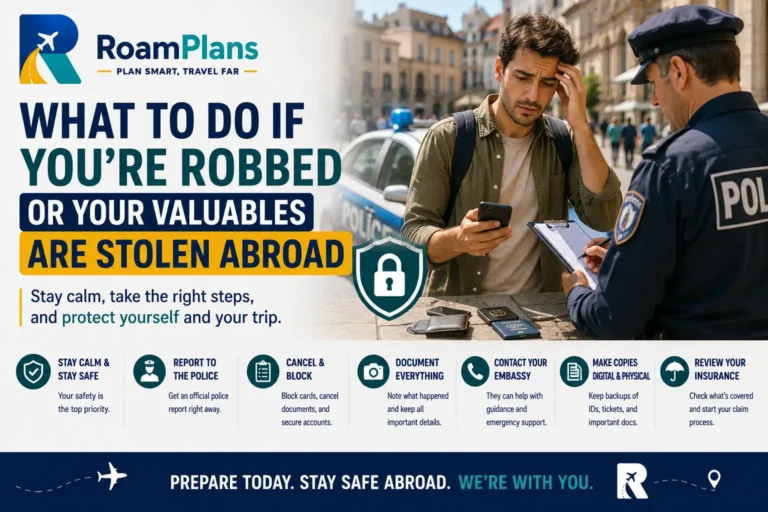
This article stays focused on solo travel, so the full theft-response process is covered in What to Do If You’re Robbed or Your Valuables Are Stolen Abroad.
Have a Plan for Losing Access to Your Accommodation
A lost key, dead phone, booking problem, or failed self-check-in can leave a solo traveler standing outside without immediate help.
Before staying somewhere with self-check-in, save the host or property contact information outside the booking app.
If the accommodation has reception, learn the hours.
Also know what you would do if you decided you could no longer stay there.
The State Department recommends booking lodging before arrival and having backup options in case you need to switch locations.
You do not need to book two hotels.
Knowing about one or two nearby alternatives can be enough, especially if you arrive late or are staying somewhere without full-time staff.
If the property feels seriously unsafe after arrival, do not stay simply because you already paid.
Your safety matters more than recovering the value of one night’s accommodation.
Prepare for a Solo Travel Emergency

An emergency plan should be simple enough that you can use it while stressed.
If something serious happens, think in this order:
1. Move Somewhere Safer
Deal with immediate danger before your luggage, booking, money, or itinerary.
2. Contact Local Emergency Services
Know the local police, ambulance, or emergency number instead of assuming 911 works everywhere.
3. Tell Someone You Trust
Send your location and explain what has happened when you are able.
4. Protect What Is Still at Risk
This might mean freezing cards, locking a phone, changing passwords, moving remaining valuables, or checking which documents are missing.
5. Contact the Organization That Handles the Problem
Depending on what happened, this might be:
Police
Medical services
Your bank
Your insurer
Your airline
Accommodation staff
Your mobile provider
Your embassy or consulate
For U.S. citizens abroad, embassies and consulates may assist in situations involving crime, lost passports, medical emergencies, and some wider crises, but they do not replace local police or medical services.
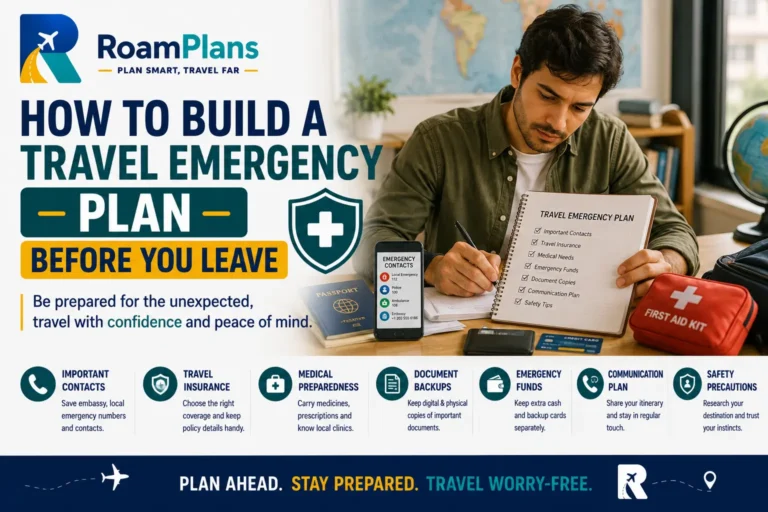
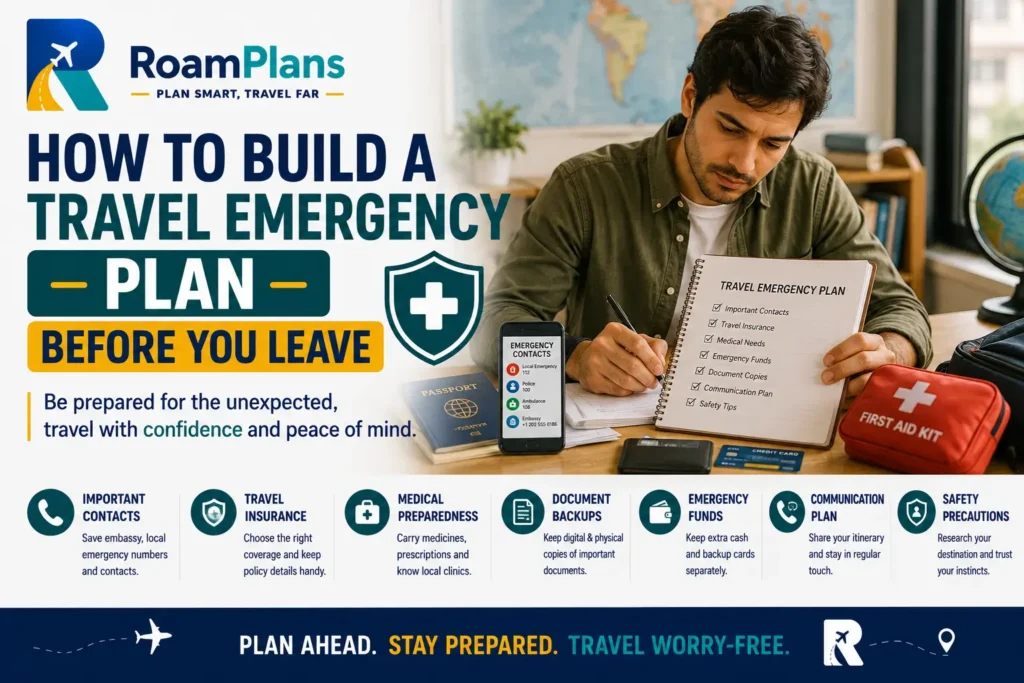
The full preparation process belongs in How to Build a Travel Emergency Plan Before You Leave.
Consider STEP for International Solo Trips
For U.S. citizens and nationals traveling abroad, STEP can be especially useful on a solo trip.
The Smart Traveler Enrollment Program is a free State Department service that can send security and safety messages from the nearest U.S. embassy or consulate.
It does not track your movements or remove the need for your own safety plan.
Think of it as another communication channel that can help you stay aware of major local developments.
Travelers from countries other than the United States should check whether their own government offers a similar registration or alert service.
Common Solo Travel Safety Mistakes Beginners Make
Most beginner mistakes are not dramatic.
They are small decisions that leave you with fewer options later.
Planning Only How to Get Somewhere
Always think about the return trip too, particularly at night or outside major city areas.
Keeping Every Backup Together
A second card does little good if it is inside the same wallet as your first one.
Depending Completely on One Phone
Keep key addresses, contacts, and emergency information available another way.
Sharing Too Much With New People
You can be friendly without sharing your hotel, room number, complete schedule, or financial details.
Trying to Be Polite When You Want to Leave
You do not owe a stranger extra time because leaving might seem rude.
Drinking More Than You Can Safely Manage Alone
Make sure you can still navigate, communicate, recognize problems, and return to your accommodation.
Choosing Accommodation Only by Price
A low room price can create extra transport costs and difficult late-night routes.
Ignoring Weather or Local Alerts
Changing a plan is better than continuing with an activity after conditions have become unsuitable.
Doing Remote Activities Without Telling Anyone
Someone should know your route and expected return time when you are going somewhere isolated.
Assuming Solo Travel Means Doing Everything Alone
Using a guide, group tour, hotel transfer, or organized activity when it makes sense does not make you less independent.
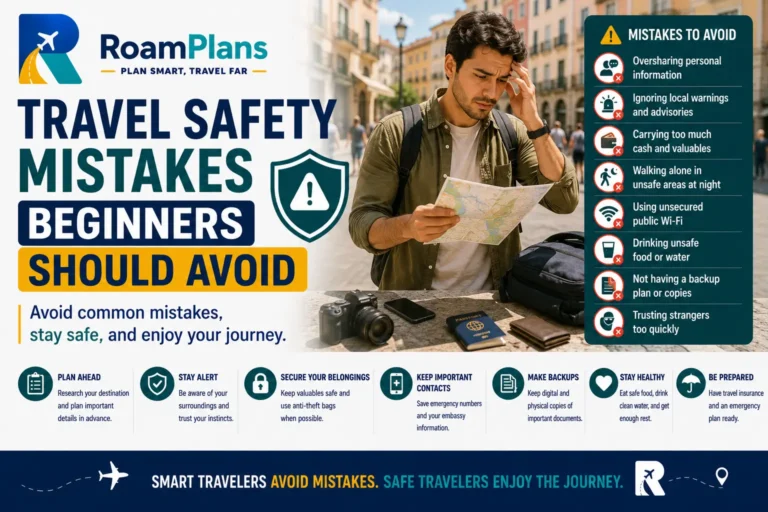
For a broader look at beginner safety errors across all types of trips, read Travel Safety Mistakes Beginners Should Avoid↗.
Solo Travel Safety Checklist for Beginners

Use this as a final check before your first solo trip.
Before Booking
Check current official travel advice.
Research the specific city and areas you plan to visit.
Check how you will travel from the airport or station.
Research accommodation location as well as the property itself.
Think about whether the destination matches your current travel experience.
Before Leaving
Share basic trip details with someone you trust.
Agree on a check-in routine.
Save accommodation details offline.
Save local emergency numbers.
Keep embassy or consulate details where relevant.
Keep copies of key travel documents.
Store a backup payment method separately.
Check how you would access money without your phone.
Protect your phone and main accounts.
Save any insurance assistance details.
Check how you would obtain medical care if needed.
Learn the most common scams reported at the destination.
Consider STEP if you are an eligible U.S. traveler.
The State Department’s current international travel checklist similarly recommends destination research, STEP enrollment, preparing document copies, reviewing personal travel needs, and considering travel insurance before an international trip.
During the Trip
Keep someone informed when plans change significantly.
Check your return transportation before going somewhere unfamiliar.
Keep your phone sufficiently charged.
Stay aware in crowded transport and tourist areas.
Keep your room number and sensitive details private.
Use verified transportation.
Keep your main and backup payment methods separate.
Avoid posting sensitive location details publicly in real time.
Change your plan if weather or local conditions become unsuitable.
Leave situations that make you uncomfortable.
Ask for help before a manageable problem becomes much harder.
Frequently Asked Questions
It can be. Choose a trip that matches your experience, research the destination carefully, plan your arrival and accommodation, share your basic itinerary, and keep backup access to money and communication.
A good approach is to reduce avoidable risks: research your destination, stay somewhere you can reach easily, use verified transportation, keep backup money, stay connected with someone you trust, and avoid situations where you lose control of your transport, belongings, or decisions.
Start with a trip you feel capable of handling.
You could choose a shorter stay, a familiar type of destination, daytime arrival, straightforward transportation, and accommodation with reliable support.
Yes. Give at least one trusted person your destination, accommodation, travel dates, and normal contact method.
For remote activities or late travel, sharing more specific plans or your location may make sense.
That depends on the destination, area, transport options, and activity.
Research the specific area rather than relying on a general rule. Know how you will return before going out, keep control of your phone and payment method, and leave if the situation no longer feels manageable.
Avoid going directly to an isolated place or revealing where you are staying.
Move into a busy shop, hotel, restaurant, station, or another staffed public place. Ask staff or local authorities for help if needed.
If you believe there is an immediate threat, contact local emergency services.
You do not have to hide it from everyone, but strangers do not need detailed information about your accommodation, room number, schedule, money, or how long you will be alone.
Share personal information gradually as trust develops.
If the problem is mild, rest and monitor how you feel. Seek medical care when symptoms are severe, unusual, or worsening.
Know how you would access local medical services and keep insurance and medical information available. CDC recommends making a plan for obtaining health care overseas before international travel.
Final Thoughts
In short, Solo travel safety is mostly about keeping good options available. Know where you are going, make your arrival simple, stay connected with someone you trust, separate your backups, and leave situations that do not feel right. You do not need to remove every risk before traveling alone. You need enough preparation and awareness to make sensible decisions when plans change.

Adnan Ahmed
RoamPlans AuthorTravel Planning Researcher & Editor
Adnan Ahmed is the travel planning researcher and editor behind RoamPlans. He creates clear, practical guides to help travelers compare destinations, plan routes, estimate costs, and avoid common trip-planning mistakes. His work combines careful source research, official travel information, and regular content reviews to keep each guide useful and current.
- ✓Destination Research
- ✓Budget Planning
- ✓Route Planning
- ✓Beginner Travel Guides
Turn This Guide into a Practical Trip Plan
Use the recommended Airline Baggage Allowance Checker or explore more free RoamPlans tools.