Hotel vs Airbnb: Which Is Better for Your Trip? (Beginner’s Guide)
A practical beginner’s comparison of hotel convenience and Airbnb flexibility, including privacy, space, services, cost, safety, trip length, and the type of traveler each option suits best.
When I booked my first city trip ↗, I chose a hotel because I wanted a simple and familiar experience. Everything was straightforward, from checking in to having my room cleaned each day. Later, while traveling with my family, I decided to try an Airbnb. Having extra space, a kitchen, and a living room made the trip feel more relaxed. After using both options on different trips, I realized there isn’t one choice that’s always better. The right accommodation depends on where you’re going, who you’re traveling with, and what kind of experience you want.
If you’re planning a trip and wondering whether to book a hotel or an Airbnb, you’re not alone. Both offer comfortable places to stay, but they provide very different experiences. This beginner’s guide compares hotels and Airbnb properties to help you understand their differences and choose the option that best fits your travel style and budget.
What Is a Hotel?
A hotel is a commercial property that provides private rooms for travelers.
Hotels are designed to offer convenience and professional services during your stay.
Most hotels provide:
- ✓Private bedrooms.
- ✓Private bathrooms.
- ✓Daily housekeeping.
- ✓Reception or front desk.
- ✓Room service at some properties.
- ✓Restaurants or breakfast options.
- ✓Wi-Fi and other guest facilities.
Hotels are available in different price ranges, from budget-friendly options to luxury resorts.
What Is an Airbnb?
Airbnb is a platform where property owners rent out accommodation to travelers.
Depending on the listing, you may stay in:
- ✓An entire apartment.
- ✓A private room.
- ✓A shared room.
- ✓A house.
- ✓A cottage.
- ✓A unique property such as a cabin or tiny home.
Unlike hotels, many Airbnb properties are individually owned, so every stay can feel different.
The Main Difference Between a Hotel and an Airbnb
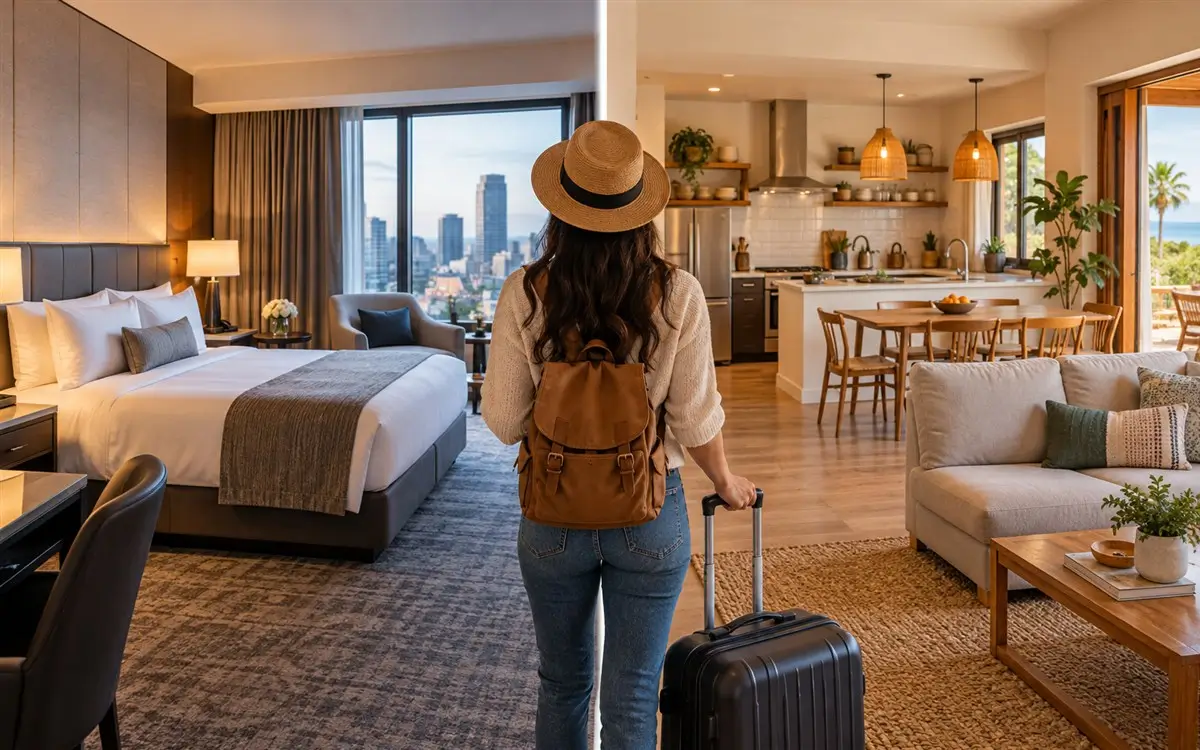
Although both provide accommodation, they focus on different travel experiences.
Hotels offer a more traditional stay with professional services and consistent facilities.
Airbnb properties often provide a more home-like environment with additional living space and personal touches.
The best option depends on your travel needs rather than which one is generally considered better.
Privacy and Space
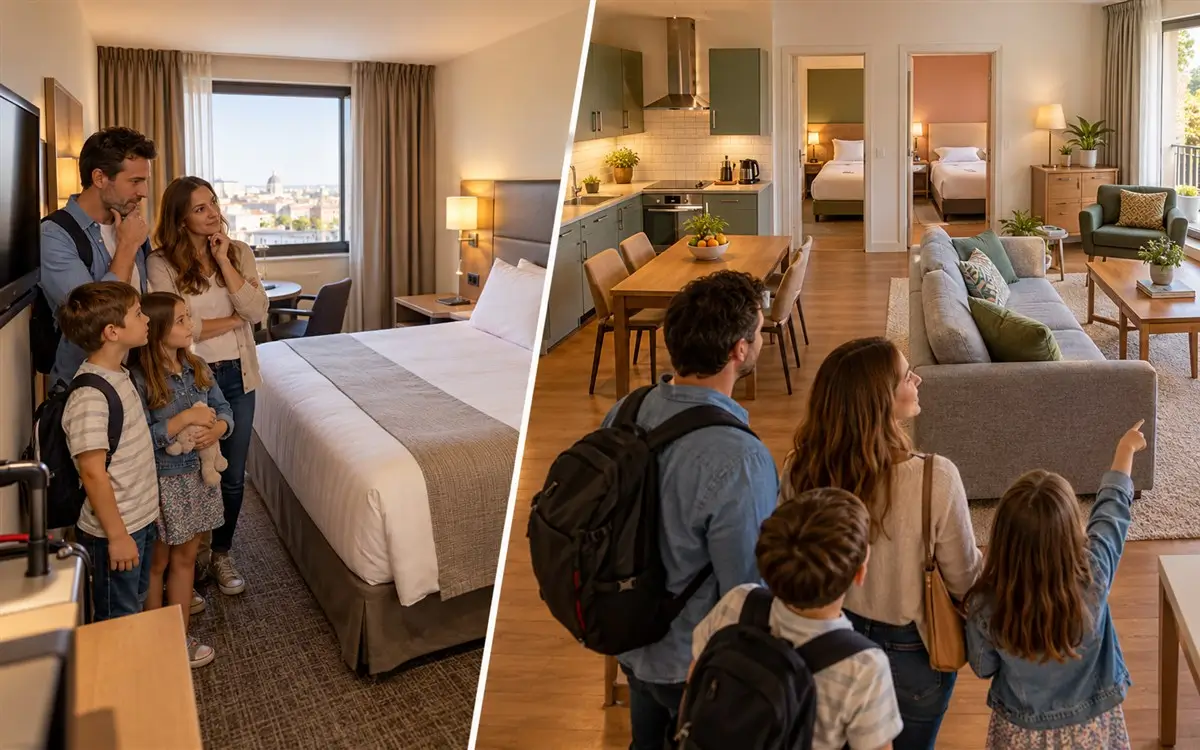
One of the biggest differences I noticed after trying both was the amount of space.
Hotels usually provide:
- ✓One private room.
- ✓A private bathroom.
- ✓Limited living space.
Many Airbnb properties offer:
- ✓Separate bedrooms.
- ✓Living rooms.
- ✓Kitchens.
- ✓Outdoor areas.
- ✓More room for families or groups.
If you’re staying for several days or traveling with multiple people, the extra space can make your trip much more comfortable.
Services and Convenience
Hotels are known for offering services that make travel easy.
Depending on the property, you may have access to:
- ✓Daily housekeeping.
- ✓24-hour reception.
- ✓Room service.
- ✓Concierge assistance.
- ✓On-site restaurants.
- ✓Fitness centers.
- ✓Swimming pools.
Airbnb accommodations are usually more self-service.
Many hosts provide useful information and local recommendations, but services vary from one property to another.
Which Feels More Like Home?
If you enjoy preparing your own meals or living like a local, Airbnb can provide a more residential experience.
Many properties include:
- ✓Fully equipped kitchens.
- ✓Washing machines.
- ✓Dining areas.
- ✓Comfortable living rooms.
Hotels, on the other hand, focus more on convenience.
Everything is designed to make your stay simple without requiring you to cook, clean, or manage household tasks.
Which Option Offers More Consistency?
From my own experience, hotels usually provide a more predictable stay.
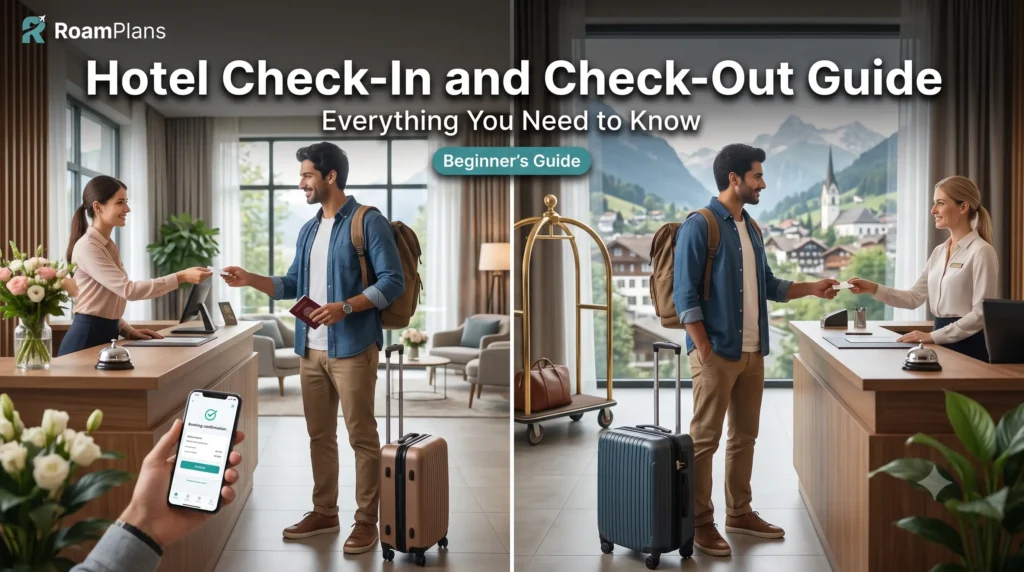
No matter which city I visit, I generally know what to expect from a hotel. The room layout, check-in process, and services are often similar, making travel feel straightforward.
Airbnb properties can be more unique because every home is different. That uniqueness can make a trip more memorable, but it also means each property may offer a different experience depending on the host and the listing.
Cost Comparison
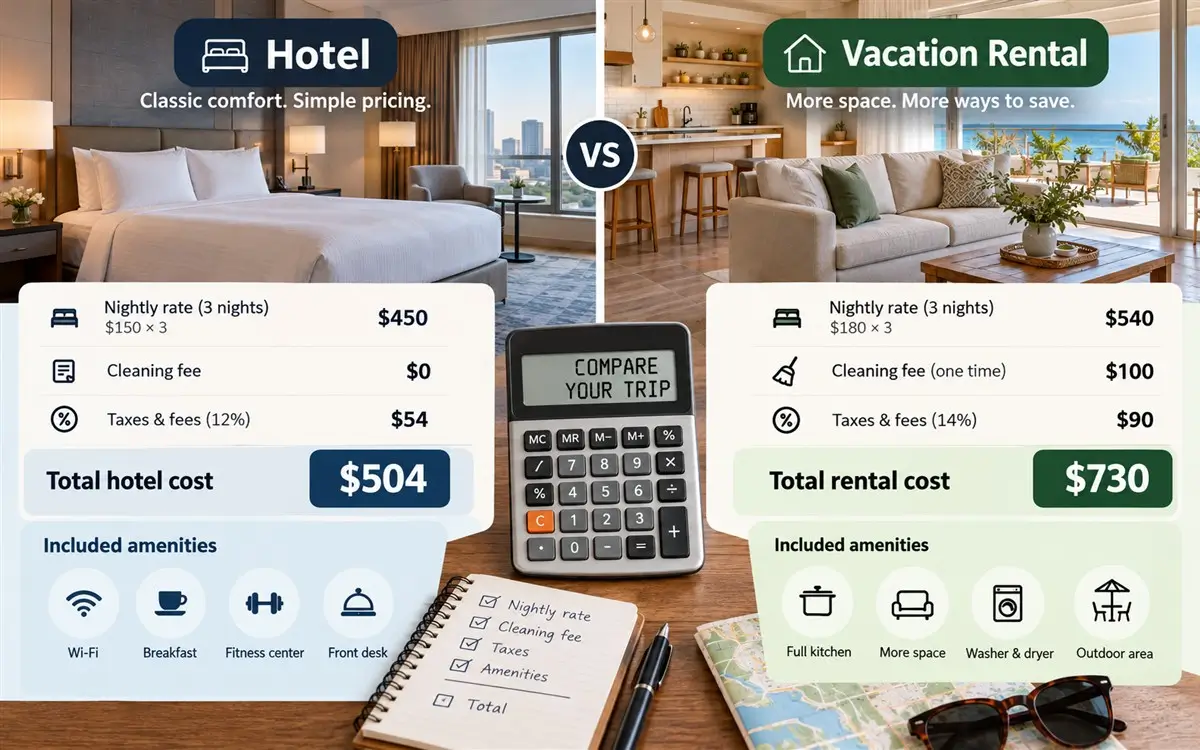
One of the biggest questions travelers ask is whether a hotel or an Airbnb is cheaper.
The answer depends on:
- ✓Your destination.
- ✓The time of year.
- ✓How many people are traveling.
- ✓How long you’re staying.
Hotels often have a fixed nightly rate, while Airbnb prices can vary depending on the property, cleaning fees, and local taxes.
Before booking, compare the total price instead of looking only at the advertised nightly rate. If you choose a hotel, our hotel booking price guide ↗ explains how to check fees, inclusions, and cancellation terms.
Which Is Better for Families?
From my own experience, Airbnb can be a great choice for family trips because it usually provides more space.
Many Airbnb properties offer:
- ✓Multiple bedrooms.
- ✓A kitchen.
- ✓Living and dining areas.
- ✓Laundry facilities.
- ✓Outdoor space.
These features can make longer family vacations more comfortable.
Hotels can also work well for families, especially if they offer family rooms, breakfast, swimming pools, or children’s activities.
The better choice depends on your family’s travel plans and budget.
Which Is Better for Couples?
Both hotels and Airbnb properties can be excellent options for couples.
Hotels are often a good choice if you want:
- ✓Daily housekeeping.
- ✓On-site restaurants.
- ✓Spa facilities.
- ✓Room service.
- ✓A simple, hassle-free stay.
Airbnb may appeal to couples looking for:
- ✓Greater privacy.
- ✓A cozy apartment or cottage.
- ✓A unique local experience.
- ✓Extra living space.
Think about the type of vacation you’re planning before deciding.
Which Is Better for Solo Travelers?
Solo travelers often choose accommodation based on convenience, safety, and budget.
Hotels usually provide:
- ✓Professional staff available throughout the day.
- ✓Easy check-in.
- ✓Consistent service.
- ✓Extra security features.
Airbnb may be a good option if you prefer:
- ✓A quieter environment.
- ✓More space.
- ✓A neighborhood experience.
- ✓Kitchen facilities.
The best option depends on your destination and personal preferences. For either stay type, research the neighborhood using our guide to choosing a safe area to stay ↗.
Which Is Better for Business Travelers?
Business travelers usually value convenience above everything else.
Hotels often include features such as:
- ✓Fast Wi-Fi.
- ✓Business centers.
- ✓Meeting rooms.
- ✓Flexible check-in.
- ✓Daily housekeeping.
While some Airbnb properties also provide excellent workspaces, hotels generally offer more consistent services for business trips.
Short Stay vs. Long Stay
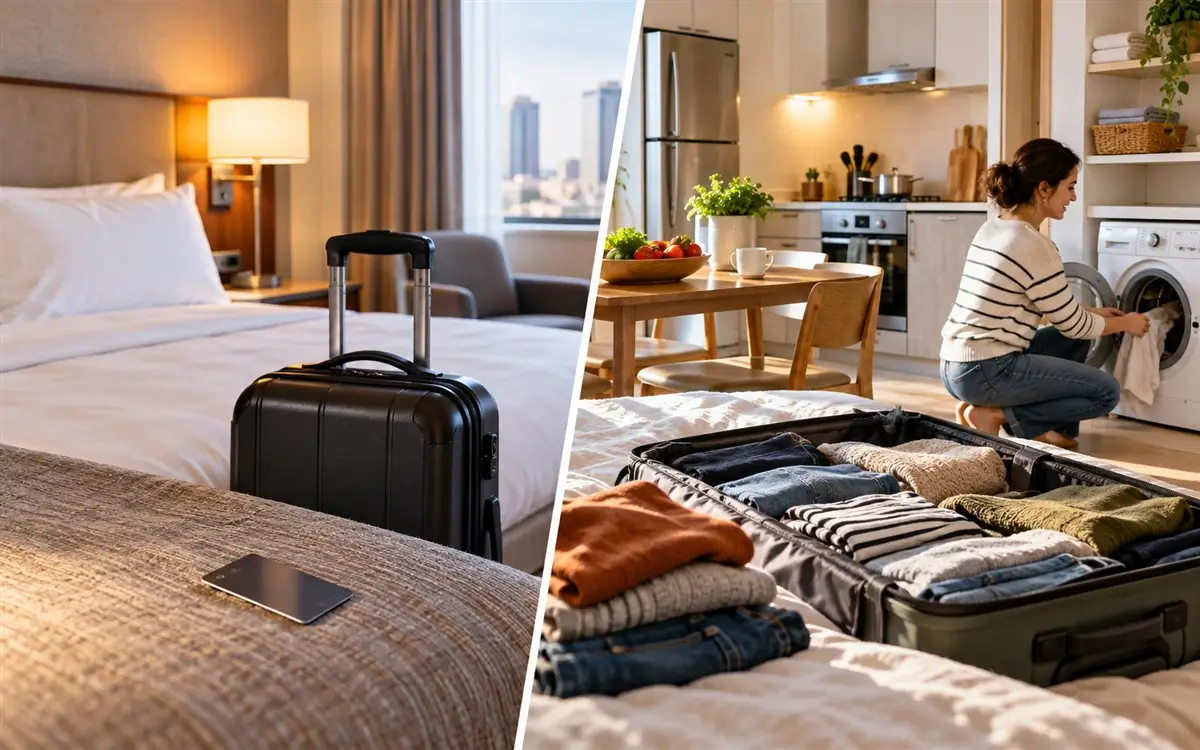
The length of your trip can also influence your decision.
Hotels are often better for:
- ✓Weekend trips.
- ✓Overnight stays.
- ✓Business travel.
- ✓Short city breaks.
Airbnb properties are often better for:
- ✓Week-long vacations.
- ✓Extended stays.
- ✓Family holidays.
- ✓Remote work trips.
Choosing accommodation that matches the length of your stay can improve both comfort and value.
Pros and Cons
Hotel Advantages
- ✓Professional service.
- ✓Daily housekeeping.
- ✓Predictable experience.
- ✓Convenient facilities.
- ✓Easy check-in and check-out.
Hotel Disadvantages
- ✓Less living space.
- ✓Fewer cooking facilities.
- ✓Can cost more during busy seasons.
Airbnb Advantages
- ✓More space.
- ✓Kitchen access.
- ✓Home-like atmosphere.
- ✓Good for longer stays.
- ✓Often ideal for groups.
Airbnb Disadvantages
- ✓Services vary by host.
- ✓Cleaning fees may increase the total cost.
- ✓Fewer on-site facilities.
- ✓Check-in procedures may differ between properties.
Which Travelers Benefit Most?
After using both options over the years, I’ve found that neither hotels nor Airbnb properties are automatically better.
Hotels usually suit travelers who want convenience, professional service, and a predictable experience.
Airbnb often works well for travelers who value extra space, flexibility, and a more local way of staying.
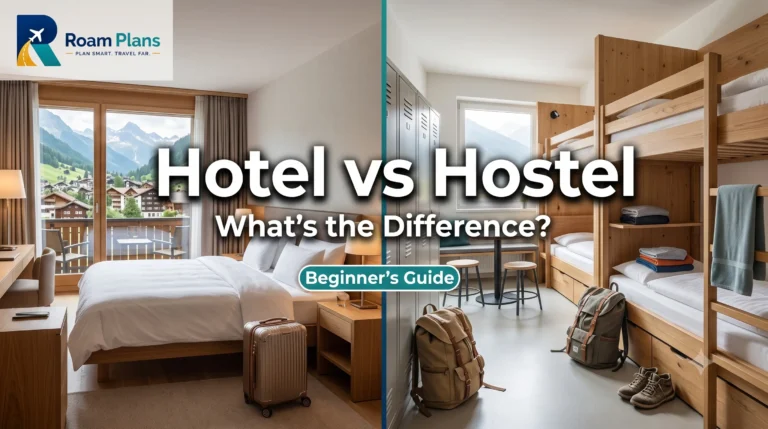
If you’re also considering budget-friendly shared accommodation, our Hotel vs Hostel guide ↗ explains how hotels compare with hostels and which option suits different types of travelers.
Common Mistakes When Choosing Between a Hotel and an Airbnb
Choosing the wrong type of accommodation doesn’t always ruin a trip, but it can make it less comfortable than expected.
From my own experience, the biggest mistake is booking without thinking about the type of trip you’re taking. A hotel might be perfect for a short business visit, while an Airbnb could be much better for a week-long family vacation. Matching your accommodation to your travel needs makes a big difference.
Some of the most common mistakes include:
- ✓Booking based only on the lowest price.
- ✓Ignoring the property’s location.
- ✓Not reading recent guest reviews.
- ✓Forgetting to compare the total cost, including extra fees.
- ✓Choosing a property with facilities you don’t need.
- ✓Not checking cancellation policies.
- ✓Assuming every Airbnb or hotel offers the same services.
- ✓Booking without considering the length of your stay.
Avoiding these mistakes can help you enjoy a more comfortable and stress-free trip.
Hotel vs Airbnb Decision Checklist
Use this checklist before making your reservation.
Choose a Hotel If You:
- ✓Prefer daily housekeeping.
- ✓Want a simple check-in process.
- ✓Need on-site facilities like restaurants or a gym.
- ✓Are traveling for a short stay.
- ✓Value consistent service.
Choose an Airbnb If You:
- ✓Need more living space.
- ✓Want a kitchen for cooking meals.
- ✓Are traveling with family or a group.
- ✓Plan to stay for several days or weeks.
- ✓Prefer a home-like environment.
Before Booking Either Option
- ✓Compare the total price.
- ✓Read recent guest reviews.
- ✓Check the property’s location.
- ✓Review cancellation policies.
- ✓Confirm which amenities are included.
Taking a few extra minutes to compare your options can help you choose accommodation that truly fits your trip.
Frequently Asked Questions
Neither is always better. Hotels usually provide professional services and a more predictable experience, while Airbnb properties often offer more space and a home-like atmosphere. The best choice depends on your travel style, budget, and the type of trip you’re planning.
Sometimes, but not always. Airbnb may offer better value for families, groups, or longer stays. However, cleaning fees, service charges, and local taxes can increase the total cost. Always compare the full price before booking.
Many families prefer Airbnb because larger properties often include multiple bedrooms, kitchens, and living areas. Hotels can also be a good choice, especially those that offer family rooms and child-friendly facilities.
Both can be safe when you choose carefully. Reading recent guest reviews, checking the property’s location, and booking through trusted platforms can help you make a safer decision, regardless of which option you choose.
For short trips, many travelers choose hotels because they offer quick check-in, daily housekeeping, and convenient services. For longer vacations, an Airbnb may provide more space and flexibility.
Final Thoughts
After staying in both hotels and Airbnb properties over the years, I’ve learned that there isn’t a single option that’s right for every trip. For a quick city break or a business trip, I usually appreciate the convenience and professional service of a hotel. For longer holidays with family or friends, I often enjoy the extra space and home-like feeling that an Airbnb can provide.
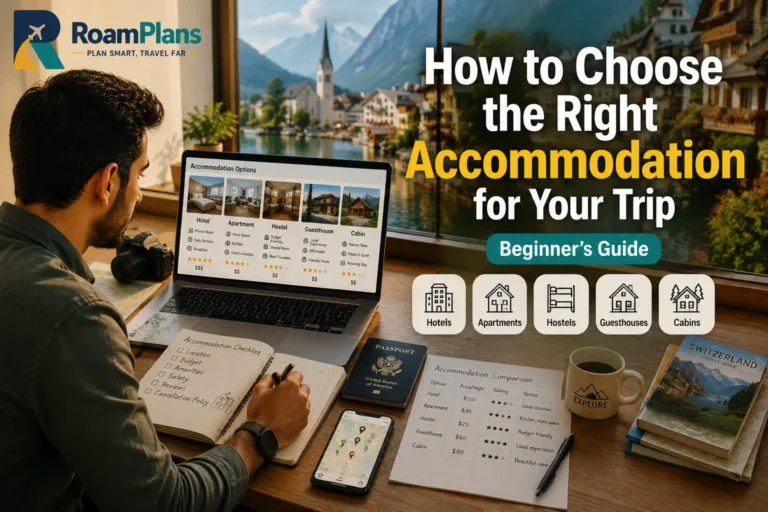
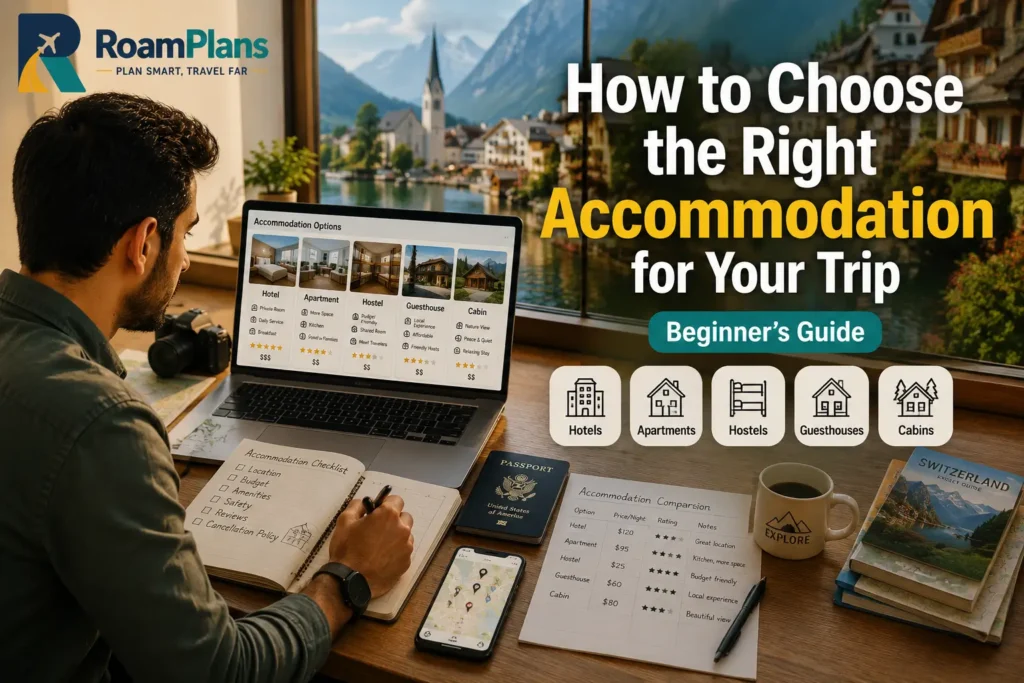
The best accommodation is the one that matches your travel plans, budget, and personal preferences. If you’re still deciding between hotels, Airbnb, hostels, or other lodging options, our How to Choose the Right Accommodation for Your Trip ↗ guide can help you compare all the major accommodation types and choose the one that fits your journey best.

Adnan Ahmed
RoamPlans AuthorTravel Planning Researcher & Editor
Adnan Ahmed is the travel planning researcher and editor behind RoamPlans. He creates clear, practical guides to help travelers compare destinations, plan routes, estimate costs, and avoid common trip-planning mistakes. His work combines careful source research, official travel information, and regular content reviews to keep each guide useful and current.
- ✓Destination Research
- ✓Budget Planning
- ✓Route Planning
- ✓Beginner Travel Guides

Turn This Guide into a Practical Trip Plan
Use the recommended Free Trip Cost Estimator or explore more free RoamPlans tools.