What to Pack for Japan: First-Time Visitor Packing List
Packing for Japan is less about bringing more things and more about bringing the right things ↗. First-time visitors often prepare for every possible situation, then discover that a heavy suitcase is harder to manage through train stations, hotel changes, stairs, and crowded city transport than they expected.
When I build a Japan packing list, I start with the trip itself: season, cities, number of hotel changes, expected walking, luggage size, and anything that cannot easily be replaced after arrival. Japan has convenience stores, pharmacies, clothing shops, electronics stores, and laundry options in major travel areas, so forgetting an ordinary toiletry is usually less serious than forgetting medication documents or packing shoes that hurt after one full sightseeing day.
This packing guide is built for a typical first visit to Japan, especially a Tokyo, Kyoto, and Osaka trip. Seasonal clothing gets its own section later, but the first goal is to make sure your core luggage is practical before adding weather-specific items.
Japan Packing List at a Glance
For most first-time trips, start with:
Travel Documents
- ✓Passport
- ✓Entry and booking information
- ✓Travel insurance details
- ✓Hotel addresses
- ✓Flight confirmations
- ✓Medication documents if required
- ✓Copies of key documents
Money
- ✓Main payment card
- ✓Backup card
- ✓Some Japanese yen
- ✓Small wallet or coin section
Clothing
- ✓Comfortable everyday outfits
- ✓Weather-appropriate layers
- ✓Sleepwear
- ✓Underwear and socks
- ✓One light extra layer
- ✓Seasonal outerwear where needed
Footwear
- ✓Comfortable walking shoes
- ✓Easy-to-remove shoes where practical
- ✓Second pair only if you genuinely need one
Electronics
- ✓Phone
- ✓Charging cable
- ✓Portable battery
- ✓Suitable plug adapter if required
- ✓Earphones
- ✓Camera only if you will actually use it
Daily Travel Items
- ✓Small day bag
- ✓Refillable water bottle
- ✓Compact umbrella when useful
- ✓Tissues
- ✓Small reusable bag
- ✓Basic medication
- ✓Personal toiletries
You do not need to pack every item recommended by every Japan travel list.
The right packing list should match your actual route.
Start by Packing Lighter Than You Think
If your trip includes Tokyo, Kyoto, Osaka, and several train journeys, luggage mobility matters.
Large railway stations can involve:
- ✓Long corridors
- ✓Stairs
- ✓Escalators
- ✓Elevators with queues
- ✓Platform changes
- ✓Crowded trains
- ✓Walking between station exits and hotels
That is why I would rather pack a medium suitcase that I can control myself than fill the largest suitcase my airline allows.
Japan's tourism authority also recommends lighter travel where possible and points travelers toward luggage forwarding services for larger bags.
Before choosing your suitcase, ask:
Can I lift this bag onto a luggage rack or move it through a busy station without help?
If the answer is no, either reduce the contents or plan how you will move the bag between cities.
Large Luggage Can Affect Shinkansen Travel
This is one Japan-specific packing issue worth checking before departure.
On the Tokaido, Sanyo, and Kyushu Shinkansen routes, luggage with combined dimensions above 160 cm and up to 250 cm may require a reservation for an appropriate oversized baggage space. JR Central says travelers without the required reservation may be charged a ¥1,000 baggage fee.
You do not need to memorize every measurement while packing.
Just measure a large suitcase before the trip if you expect to use the Shinkansen.
If your bag is oversized, make the transport plan before the day you travel.
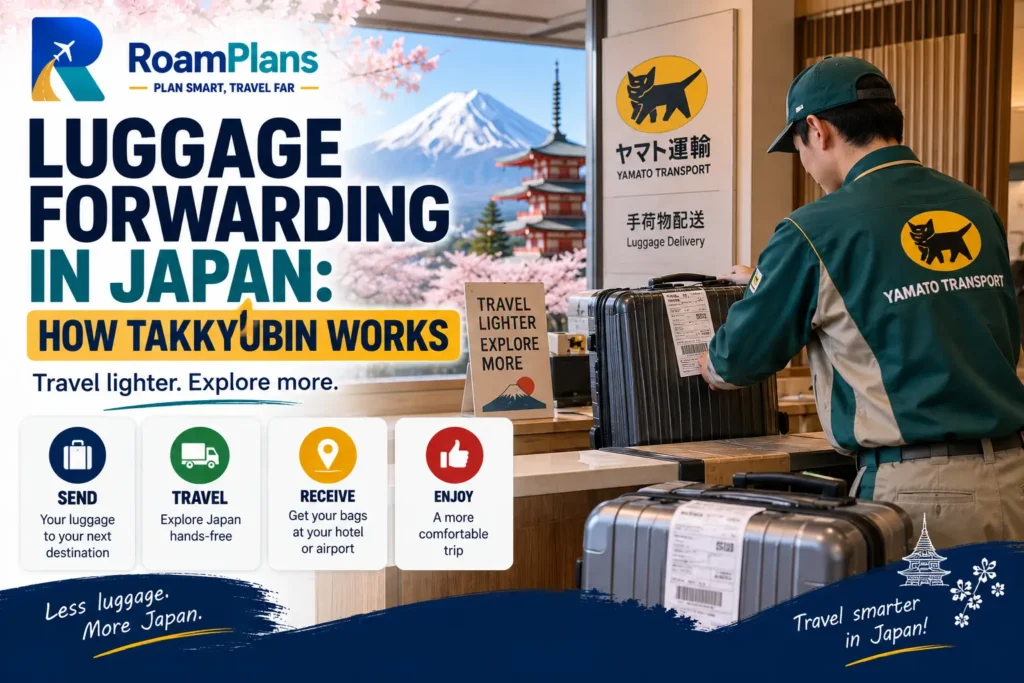
Our Luggage Forwarding in Japan: How Takkyubin Works guide will cover forwarding and bag movement in detail.
Choose Your Main Bag Based on the Route
I would use three questions.
Are You Staying in One City?
A larger suitcase is easier to manage if you unpack once and stay there.
Are You Changing Cities Several Times?
A smaller rolling case or manageable travel bag becomes much more useful.
Are You Shopping in Japan?
Leave empty space.
Do not start the trip with a suitcase packed to its limit if you already know you will buy gifts, clothing, food, beauty products, stationery, or other items.
One useful option is packing a lightweight foldable bag inside your main suitcase for the return trip.
What Documents Should You Pack for Japan?
Keep the document list simple but complete.
I would carry or save:
- ✓Passport
- ✓Flight booking
- ✓First hotel details
- ✓Other major accommodation bookings
- ✓Travel insurance
- ✓Important train or attraction reservations
- ✓Emergency contacts
- ✓Medication paperwork where needed
I also keep copies of the most important details somewhere separate from the originals.
That could mean:
- ✓Offline phone folder
- ✓Secure cloud storage
- ✓Printed copy
Do not depend on one email inbox being available at every moment.
Check Medication Before Putting It in Your Bag
This deserves more attention than it gets on generic packing lists.
Japan has rules for bringing medicines into the country. The Ministry of Health states that many general prescription medicines can be brought for personal use without a special procedure when the amount is up to one month's supply, but prohibited and specially controlled substances have separate rules. Larger quantities may require an Import Confirmation before travel.
So do not assume:
I have a prescription in the U.S., so I can automatically carry it into Japan.
Before packing regular medication:
- ✓Check the active ingredient.
- ✓Check Japan's current official rules.
- ✓Check the quantity you are carrying.
- ✓Complete any required paperwork early.
- ✓Keep medication in clearly identifiable packaging where practical.
This is one item I would verify before buying a non-refundable flight.
Bring Comfortable Walking Shoes
If I had to protect one clothing decision on a first Japan trip, it would be footwear.
You may walk far more than your planned sightseeing distance because the day also includes:
- ✓Railway stations
- ✓Subway transfers
- ✓Shopping streets
- ✓Temple grounds
- ✓Parks
- ✓Hotel walks
- ✓Searching for restaurants
- ✓Wrong station exits
A shoe that feels fine during a short walk at home may become uncomfortable after several full city days.
Pack shoes you have already worn.
A Japan trip is a poor time to break in a brand-new pair.
Should You Bring Two Pairs of Shoes?
Usually, I would bring:
one dependable main walking pair
and possibly:
one light second pair
The second pair can help if the first gets wet or you want something different for evenings.
But I would not bring three or four pairs just to match different outfits.
Shoes use a large amount of luggage space.
For most first-time city trips, comfort matters more than variety.
Easy-to-Remove Shoes Can Be Useful
There are places in Japan where shoes may need to be removed, including some traditional accommodation, temples, homes, and certain restaurants.
You do not need special Japanese travel shoes.
But a comfortable pair that is easy to put on and remove can make those situations simpler.
Also pack socks you are comfortable wearing when your shoes come off.
How Much Clothing Should You Pack?
For a 7-, 10-, or 14-day trip, I would not automatically pack one completely different outfit for every day.
Instead, build clothing around repeatable combinations.
For example:
- ✓4–6 tops
- ✓2–4 bottoms
- ✓Underwear and socks
- ✓Sleepwear
- ✓One useful layer
- ✓Seasonal jacket or coat
- ✓Main walking shoes
The exact number depends on season, laundry access, and personal preference.
If you can wash clothes during the trip, you may need much less.
This becomes especially useful on a two-week itinerary.
Use Layers Instead of Packing for Every Temperature
Spring and autumn can include cool mornings, warmer afternoons, and colder evenings.
Rather than bringing separate outfits for every temperature, I prefer clothing that works in layers.
A simple system might be:
base clothing → light layer → weather layer
That gives you more flexibility without filling the suitcase.
Your season matters much more than a generic packing list, so the next part will separate what to pack for spring, summer, autumn, and winter.
Do Not Treat All of Japan as One Weather Zone
A winter packing list for Tokyo is not the same as one for Hokkaido.
A summer trip to Tokyo and Kyoto is also different from a mountain-focused trip.
Before choosing clothing, check:
- ✓Cities
- ✓Elevation
- ✓Month
- ✓Expected temperature
- ✓Rain
- ✓Snow
- ✓Humidity
Our Best Time to Visit Japan: Weather, Crowds and Costs ↗ guide helps with the seasonal decision. This packing article will focus on what those conditions mean for your suitcase.
Pack for Walking, Not Just Photographs
It is easy to choose outfits based on how they will look in Tokyo or Kyoto.
I would reverse that thinking.
Ask:
Can I comfortably wear this for a full sightseeing day?
A useful travel outfit should handle:
- ✓Walking
- ✓Trains
- ✓Sitting
- ✓Stairs
- ✓Restaurants
- ✓Weather changes
You can still dress well.
Just make comfort part of the decision rather than something you think about after your feet hurt.
Carry a Small Day Bag
You will rarely want to carry your main luggage while sightseeing.
A small backpack, crossbody bag, or other comfortable day bag can hold:
- ✓Phone
- ✓Wallet
- ✓Portable battery
- ✓Water
- ✓Small umbrella
- ✓Hotel information
- ✓Tissues
- ✓Small purchases
I would choose something large enough for the basics but small enough that it does not become another heavy bag.
A day bag that starts empty often becomes much heavier after a few hours of shopping.
Leave Space Instead of Packing for Every Emergency
One of the most useful packing decisions is accepting that you can buy ordinary things after arrival.
Japan has convenience stores, drugstores, clothing shops, and other retailers where many basic forgotten items can be replaced.
That means I would prioritize:
hard-to-replace personal essentials
over
generic items you might possibly need once.
Pack what would create a real problem if forgotten.
Leave behind items that are simply there because maybe something will happen.
A lighter suitcase makes almost every transfer day easier.
What to Pack for Japan in Spring
Spring is one of the easiest seasons to pack for, but temperatures can still change through the day.
For a March to May trip around Tokyo, Kyoto, and Osaka, I would usually pack:
- ✓Lightweight tops
- ✓Long pants
- ✓Comfortable walking shoes
- ✓Light sweater or fleece
- ✓Lightweight jacket
- ✓Compact umbrella
- ✓Socks suitable for cooler mornings
- ✓One slightly warmer layer for March
March can still feel cool, while May is usually warmer.
The best approach is layering rather than bringing a heavy coat for the whole season.
If your trip covers northern Japan or mountain areas, check those locations separately because temperatures can be much lower.
What to Pack for Japan in Summer
Summer packing needs a different approach.
Tokyo, Kyoto, and Osaka can become hot and humid, so clothing should be lightweight and comfortable for long walking days.
I would consider:
- ✓Lightweight breathable shirts
- ✓Shorts or light pants
- ✓Comfortable moisture-friendly socks
- ✓Walking shoes that handle heat
- ✓Sun hat
- ✓Sunglasses
- ✓Small towel or handkerchief
- ✓Refillable water bottle
- ✓Compact umbrella
- ✓Light rain layer
- ✓Sunscreen
A portable handheld fan can also be useful, though you can easily buy one after arriving.
Do not fill your suitcase with heavy jeans, thick layers, or clothing that becomes uncomfortable once you start sweating.
Pack for Rain During Summer
Parts of Japan experience a rainy season during early summer.
That does not mean you need waterproof hiking equipment for a normal city trip.
For most first-time visitors, I would bring:
- ✓Small umbrella
- ✓Light rain jacket
- ✓Shoes that can handle some wet conditions
- ✓Small waterproof pouch for electronics
You can also buy umbrellas easily in Japan if needed.
I would not carry large rain gear every day unless the forecast suggests you actually need it.
What to Pack for Japan in Autumn
Autumn is another good season for layering.
September can still feel warm, while November can become much cooler, especially in the mornings and evenings.
A useful autumn packing list includes:
- ✓Light shirts
- ✓Long pants
- ✓Sweater or fleece
- ✓Light to medium jacket
- ✓Comfortable walking shoes
- ✓Compact umbrella
- ✓Socks suitable for cooler weather
For late autumn, I would bring one warmer outer layer rather than several bulky items.
As with spring, your exact month matters more than the word autumn.
What to Pack for Japan in Winter
Winter packing depends heavily on where you are going.
Tokyo, Kyoto, and Osaka can be cold without having the same snow conditions you may find in Hokkaido or mountain regions.
For a winter city trip, I would pack:
- ✓Warm base layers
- ✓Long pants
- ✓Sweater or fleece
- ✓Winter coat
- ✓Warm socks
- ✓Comfortable closed shoes
- ✓Gloves
- ✓Scarf
- ✓Warm hat if you use one
For snow destinations, you may also need:
- ✓Waterproof footwear
- ✓Heavier insulation
- ✓Better gloves
- ✓Snow-ready outerwear
Do not use a Tokyo winter forecast to prepare for Hokkaido.
Check each region before packing.
How Many Clothes Should You Pack for 7 Days?
For a one-week trip, you can usually pack enough clothing without needing laundry if you prefer.
A simple starting point could be:
- ✓4–5 tops
- ✓2–3 bottoms
- ✓7 sets of underwear
- ✓5–7 pairs of socks
- ✓Sleepwear
- ✓One outer layer
- ✓Main walking shoes
You can reduce this further if you are comfortable repeating outfits.
How Many Clothes Should You Pack for 10 Days?
For 10 days, I would start thinking about laundry rather than adding three more complete outfits.
You might use:
- ✓5–6 tops
- ✓3 bottoms
- ✓6–7 sets of underwear
- ✓6–7 pairs of socks
- ✓Sleepwear
- ✓Layers appropriate for the season
Wash partway through the trip if needed.
That keeps your suitcase easier to handle.
How Many Clothes Should You Pack for 14 Days?
I would not pack 14 separate outfits.
A two-week trip is usually easier if you plan to do laundry once or twice.
Many Japanese hotels offer washing machines, laundry rooms, or nearby laundromats, although facilities vary by property.
For two weeks, I would pack roughly enough for one week and wash along the way.
That can reduce luggage size significantly.
Electronics to Pack for Japan
For most first-time travelers, your phone will handle many travel tasks.
A simple electronics list is enough:
- ✓Smartphone
- ✓Charging cable
- ✓Portable battery
- ✓Earphones
- ✓Camera if you genuinely use one
- ✓Watch charger if needed
- ✓Laptop or tablet only if you need it
I would avoid carrying several devices that perform the same job.
Every device adds:
- ✓Charger
- ✓Cable
- ✓Weight
- ✓Security concerns
- ✓Another item to keep charged
Do You Need a Plug Adapter in Japan?
Japan mainly uses Type A plugs, with two flat parallel pins, which is the same basic plug shape used in the United States.
But voltage matters too.
Japan uses around 100 volts, while U.S. electricity is normally around 120 volts.
Many modern phone, laptop, and camera chargers are rated for a wide voltage range such as:
100–240V
If your charger shows that range, it will usually work without a voltage converter.
Check the label on each device before travel.
For high-powered appliances such as hair tools, do not assume compatibility just because the plug fits.
Should You Bring a Portable Battery?
Yes, I would.
Your phone may spend much more time active in Japan because you use it for:
- ✓Maps
- ✓Train directions
- ✓Translation
- ✓Photos
- ✓Tickets
- ✓Messaging
- ✓Reservations
That can drain the battery faster than a normal day at home.
Choose a power bank that meets your airline's current carry-on battery rules and keep it in your hand luggage rather than checked baggage where required.
Phone Data Should Be Arranged Before Arrival
You can use:
- ✓eSIM
- ✓Physical SIM
- ✓International roaming
- ✓Pocket Wi-Fi
The best choice depends on your phone, carrier, data needs, and number of travelers.
I would decide before departure so you can access maps and hotel directions soon after leaving the airport.
You do not need to pack extra equipment unless your chosen connection method requires it.
Toiletries: Bring Less Than You Think
Japan has convenience stores, pharmacies, department stores, and supermarkets where common toiletries are easy to find in major cities.
I would bring:
- ✓Toothbrush and toothpaste
- ✓Deodorant
- ✓Skincare products you rely on
- ✓Prescription items
- ✓Personal hygiene products
- ✓Small travel-size liquids
- ✓Any product that may be difficult for you to replace
Many hotels also provide basic toiletries, but do not assume every property offers exactly what you prefer.
If you are particular about a product, pack it.
If not, you can usually reduce the toiletry bag.
Bring Personal Products That May Be Hard to Replace
Generic shampoo is easy to buy.
A specific skin product, prescription cream, specialty contact-lens product, or allergy-safe item may be harder.
This is how I decide:
Can I replace this easily with any equivalent?
If yes, it is lower priority.
Would I need this exact product?
If yes, pack enough for the trip.
That method prevents a toiletry bag from becoming half the suitcase.
What Should Go in Your Carry-On?
Your carry-on should contain anything you would struggle to replace if your checked bag were delayed.
I would keep these with me:
- ✓Passport
- ✓Wallet
- ✓Main and backup cards
- ✓Medication
- ✓Phone
- ✓Charging cable
- ✓Portable battery
- ✓Travel documents
- ✓One basic change of clothing
- ✓Important personal items
- ✓Expensive electronics
Do not put medication, passport documents, or irreplaceable electronics into checked luggage unless there is a specific reason.
Pack a Small Arrival Kit
After a long flight, you may not want to open your entire suitcase at the airport or hotel lobby.
A small arrival kit can include:
- ✓Toothbrush
- ✓Face wipes
- ✓Medication
- ✓Phone charger
- ✓Fresh shirt
- ✓Underwear
- ✓Small deodorant
- ✓Contact lens supplies if needed
Keep it near the top of your carry-on.
It makes the first few hours easier if hotel check-in is later than your arrival time.
Should You Bring a Refillable Water Bottle?
A reusable bottle can be useful for long sightseeing days.
Japan also has many vending machines and convenience stores, so you will not be stuck without access to drinks in major cities.
I would bring a lightweight bottle if you already use one.
Do not pack a large insulated bottle that takes up significant luggage space unless you know you want it every day.
Bring a Small Reusable Shopping Bag
A lightweight foldable bag can be useful for:
- ✓Convenience-store purchases
- ✓Snacks
- ✓Souvenirs
- ✓Pharmacy items
- ✓Extra layers
It takes almost no luggage space and can prevent your day bag from becoming overloaded.
What About a Travel Towel?
For a standard city trip, I would usually skip a full travel towel.
Hotels generally provide towels, and carrying a large towel adds bulk.
A small hand towel can be useful, though, especially during hot weather.
You can also buy one after arriving if you decide you need it.
Pack One Small Empty Pouch
This sounds minor, but it can be useful.
A small zip pouch can hold:
- ✓Coins
- ✓Receipts
- ✓Tickets
- ✓Medication
- ✓Charging cables
- ✓Small purchases
It helps stop your day bag from becoming a mix of loose items after a few days.
The goal is not more gear.
It is keeping the gear you already carry easier to manage.
Money and Payment Items to Pack
You do not need to carry your whole Japan budget in cash.
I would travel with:
- ✓One main card
- ✓One backup card stored separately
- ✓Some Japanese yen
- ✓A wallet with space for coins
- ✓Emergency cash kept away from your main wallet
Japan has become much more card-friendly, but cash can still be useful at smaller shops, temples, rural businesses, ticket machines, and older restaurants.
A small coin section also helps because cash purchases can quickly leave you carrying several coins.
Should You Bring Cash From the United States?
I would bring enough yen to handle the first part of the trip without needing to find an ATM immediately after landing.
You can then withdraw more if needed.
The exact amount depends on your trip and payment habits, but there is no need to carry your entire 7-, 10-, or 14-day budget as physical cash.
Keep cash and cards in separate places so losing one wallet does not remove every payment option.
Do You Need an IC Card Before Packing?
No physical IC card needs to be packed from home.
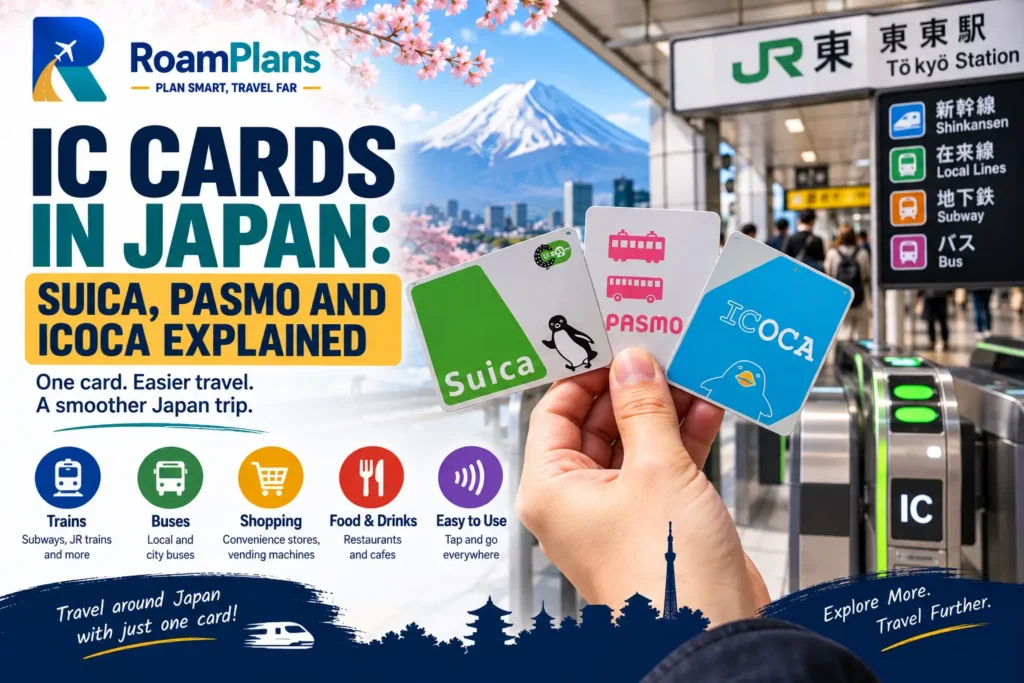
Cards such as Suica, PASMO, and ICOCA are mainly used after arrival for compatible trains, subways, buses, and some everyday purchases.
The full setup belongs in IC Cards in Japan: Suica, PASMO and ICOCA Explained.
For packing purposes, you mainly need a working phone and payment method.
Useful Small Items for a Japan Day Bag
A few small items can make long sightseeing days easier.
I would consider:
- ✓Tissues
- ✓Small hand towel
- ✓Hand sanitizer
- ✓Portable battery
- ✓Charging cable
- ✓Refillable bottle
- ✓Compact umbrella
- ✓Small reusable bag
- ✓Lip balm
- ✓Basic pain relief you are allowed to carry
- ✓Hotel address saved offline
Keep the list small.
Your day bag should still feel light after you add a drink, souvenir, or extra layer later in the day.
Should You Pack a Small Trash Bag?
A small reusable pouch or bag can be handy because public trash bins may not always be where you expect them.
You do not need to carry a roll of large garbage bags.
One small foldable or disposable bag is enough for wrappers, tissues, or other small waste until you find a suitable bin.
What Not to Pack for Japan
A useful packing list should also tell you what to leave at home.
Too Many Shoes
One main walking pair and one light backup pair are enough for most city trips.
Too Many Outfits
You do not need a completely different outfit for every day.
Plan laundry instead.
Large Toiletry Bottles
Bring travel-size products or buy basic replacements after arrival.
Heavy Guidebooks
Save maps, reservations, and useful information digitally unless you strongly prefer paper.
Too Many Electronics
A phone can already handle navigation, translation, tickets, photos, and communication.
Bulky Just-in-Case Gear
Do not pack something large because there is a small chance you may need it once.
A Completely Full Suitcase
Leave room for purchases made during the trip.
Items I Would Buy in Japan Instead of Packing
You can reduce luggage by buying common low-risk items after arrival.
Depending on your needs, these may include:
- ✓Umbrella
- ✓Basic toiletries
- ✓Extra socks
- ✓Small towel
- ✓Snacks
- ✓Bottled drinks
- ✓Simple stationery
- ✓Basic clothing layers
- ✓Small travel containers
I would still pack personal products you cannot easily replace.
The goal is not to arrive with an empty suitcase. It is to stop packing ordinary items as if Japan has no shops.
What Should Women Pack for Japan?
The basic packing system does not need to change much.
Focus on:
- ✓Comfortable walking clothes
- ✓Weather-ready layers
- ✓Shoes you can wear all day
- ✓Personal hygiene products
- ✓Any preferred skincare or hair products
- ✓Medication
- ✓A practical day bag
If you prefer specific sanitary products, cosmetics, or skincare brands, bringing your own can remove the need to search for replacements.
What Should Men Pack for Japan?
The same core rules apply:
- ✓Comfortable walking shoes
- ✓Repeatable outfits
- ✓Seasonal layers
- ✓Personal toiletries
- ✓Medication
- ✓Phone and charging gear
- ✓Lightweight day bag
Avoid packing heavy clothing simply because you think you need a different outfit for restaurants or evenings.
For most first-time sightseeing trips, practical clothing works well.
Packing for Temples, Shrines and Traditional Places
You do not need a special temple outfit for ordinary sightseeing.
I would simply wear clean, comfortable clothing that is suitable for public places.
Shoes may need to be removed in some locations, so clean socks and easy-to-remove footwear can be useful.
If you plan to visit a specific religious site with special rules, check that location before arriving.
Packing for a Ryokan Stay
If you are staying in a traditional ryokan, you usually do not need to pack special Japanese clothing.
Many ryokan provide items such as yukata and indoor slippers.
Pack your normal travel clothes and focus on personal essentials.
If the stay includes an onsen, check the property's bathing rules before arrival.
What to Pack for an Onsen Visit
For many onsen visits, you do not need much extra gear.
Your hotel or bath facility may provide towels or allow rentals.
Before going, check:
- ✓Tattoo rules
- ✓Towel availability
- ✓Bathing instructions
- ✓Storage options
- ✓Whether toiletries are provided
Do not buy special onsen equipment unless your specific property requires something.
Should You Bring Formal Clothes?
Most first-time Japan travelers do not need formal clothing.
Bring a smarter outfit only if you have a real reason, such as:
- ✓High-end restaurant reservation
- ✓Business meeting
- ✓Wedding
- ✓Formal event
Otherwise, a clean casual outfit is usually enough for normal sightseeing, restaurants, and evening plans.
How to Pack for Several Hotel Changes
If your trip moves between Tokyo, Kyoto, and Osaka, packing organization becomes more useful than packing more items.
I would separate items into a few simple groups:
- ✓Everyday clothes
- ✓Underwear and socks
- ✓Electronics
- ✓Toiletries
- ✓Documents
- ✓Laundry
Packing cubes can help if you already like using them, but they are not required.
The bigger goal is being able to pack and leave a hotel without spending an hour reorganizing your suitcase.
Keep One Small Bag Separate on Transfer Days
If you use luggage forwarding or leave your main bag with a hotel, keep a smaller bag with:
- ✓Passport
- ✓Wallet
- ✓Phone
- ✓Medication
- ✓Charger
- ✓One change of clothing
- ✓Any item needed before the main bag arrives
Never send something ahead if you may need it that evening.
Japan Packing Mistakes First-Time Visitors Make
Bringing the Largest Suitcase Possible
Airline allowance does not mean you need to use every available kilogram.
Wearing New Shoes
A new pair can become painful after several long walking days.
Packing for Every Possible Weather Event
Check the actual season and use layers.
Ignoring Laundry
Laundry can reduce a two-week clothing load to roughly one week's worth.
Packing Too Many Toiletries
Many everyday products can be replaced after arrival.
Forgetting Medication Rules
Check the active ingredients and allowed quantity before travel.
Carrying One Payment Method
Bring a backup card and some cash.
Filling Every Empty Space Before Departure
Leave room for purchases.
Putting Essentials in Checked Luggage
Keep documents, medication, money, and key electronics with you.
A Simple Japan Packing Checklist
Before closing your suitcase, check these groups.
Documents
- ✓Passport
- ✓Flight details
- ✓Hotel bookings
- ✓Insurance information
- ✓Medication paperwork
- ✓Backup copies
Clothing
- ✓Tops
- ✓Bottoms
- ✓Underwear
- ✓Socks
- ✓Sleepwear
- ✓Seasonal layers
- ✓Suitable outerwear
Shoes
- ✓Main walking shoes
- ✓Optional lightweight second pair
Electronics
- ✓Phone
- ✓Charging cable
- ✓Portable battery
- ✓Adapter if needed
- ✓Earphones
- ✓Other devices you will actually use
Money
- ✓Main card
- ✓Backup card
- ✓Japanese yen
- ✓Emergency cash
Toiletries and Health
- ✓Toothbrush
- ✓Deodorant
- ✓Personal skincare
- ✓Prescription medication
- ✓Personal hygiene products
- ✓Contact lens supplies if needed
Day Bag
- ✓Water bottle
- ✓Tissues
- ✓Small towel
- ✓Compact umbrella
- ✓Reusable bag
- ✓Portable battery
If the suitcase feels difficult to lift after this, remove low-priority items before adding anything else.
Use RoamPlans to Build Your Packing List
Once your travel dates, cities, and season are fixed, use the Packing List Generator to create a trip-specific list instead of copying a generic checklist.
You can also use the Weather Planner shortly before departure to check whether your expected temperatures or rain conditions have changed.
This helps keep the suitcase matched to the actual trip rather than the average weather for Japan.
Frequently Asked Questions
Start with comfortable walking shoes, seasonal clothing, travel documents, payment cards, some yen, phone charging gear, medication, and a light day bag.
You can, but a smaller manageable suitcase is easier if you are changing cities and using trains.
Japan commonly uses the same Type A plug shape as the U.S., but check the voltage range printed on each device before travel.
You do not need 10 full outfits. Pack about five to seven days of repeatable clothing and plan laundry if needed.
Yes. Bring some yen along with your main and backup payment cards.
A compact umbrella can be useful, but umbrellas are also easy to buy in Japan.
Many medicines can be carried for personal use, but rules depend on the ingredient and quantity. Check Japan's official medicine rules before packing.
No. Comfortable walking shoes that are easy to remove are usually more useful than special travel footwear.
Pack roughly one week's worth of repeatable clothing and plan to do laundry once or twice rather than bringing 14 separate outfits.
Leave extra shoes, bulky toiletries, too many electronics, unnecessary formal clothes, and just-in-case items that add weight without clear value.
Final Thoughts
In short, A good Japan packing list should make the trip easier, not make your suitcase heavier. Pack around the season, your walking needs, and how often you change hotels. Bring the personal items that are difficult to replace, plan laundry for longer trips, and leave enough room to move comfortably through Japan's stations and bring a few things home.

Adnan Ahmed
RoamPlans AuthorTravel Planning Researcher & Editor
Adnan Ahmed is the travel planning researcher and editor behind RoamPlans. He creates clear, practical guides to help travelers compare destinations, plan routes, estimate costs, and avoid common trip-planning mistakes. His work combines careful source research, official travel information, and regular content reviews to keep each guide useful and current.
- ✓Destination Research
- ✓Budget Planning
- ✓Route Planning
- ✓Beginner Travel Guides
Turn This Guide into a Practical Trip Plan
Use the recommended Free Packing List Generator or explore more free RoamPlans tools.