Travel Insurance Mistakes to Avoid Before and During Your Trip
Travel insurance mistakes often happen long before a traveler needs to make a claim. When I review insurance for a trip ↗, I try to find the weak points first: what I could lose, what my existing insurance already covers, what the new policy excludes, whether my activities fit, and what I would actually need to do if something went wrong.
I also avoid treating travel insurance as a simple checkout product. Two policies with similar prices and benefit names can work very differently because each policy sets its own limits, covered situations, and exclusions. NAIC’s June 2026 guidance specifically advises travelers to ask exactly what a policy covers before buying.
Most mistakes are preventable. The goal is not to buy every possible benefit. It is to understand the policy well enough that you do not discover an important gap after your money, health, or trip plans are already affected.
Insurance terms vary by policy, insurer, state or country of residence, destination, and trip. Use these mistakes as a practical review checklist, but always rely on your own policy wording for the final coverage rules.
Key Takeaways
- ✓Do not choose travel insurance based only on price.
- ✓Calculate your actual non-refundable trip cost before deciding how much cancellation protection matters.
- ✓Check existing health, credit-card, and other insurance before buying duplicate protection.
- ✓Do not assume your normal health insurance works abroad.
- ✓Medical treatment and medical evacuation are different risks. The State Department recommends checking both before international travel.
- ✓Read exclusions as carefully as benefits.
- ✓Pre-existing-condition rules should be checked before buying, not after a medical problem affects the trip.
- ✓Confirm that every important activity is actually covered.
- ✓Do not assume Cancel for Any Reason means a full refund for any cancellation.
- ✓Make sure the policy covers every destination and the full length of your trip.
- ✓Understand whether important limits apply per person, per trip, or across the policy.
- ✓Save the policy and emergency assistance details before leaving home.
- ✓During a problem, document what happened while evidence is still easy to obtain.
- ✓Do not hide refunds, credits, or other reimbursements when making a claim.
Mistake 1: Buying Travel Insurance Only Because It Is Cheap
Price matters, but it should not be the first filter.
A cheap policy can be suitable if it covers the risks that matter to your trip.
It becomes poor value when the lower price comes with a gap involving:
- ✓Medical care
- ✓Evacuation
- ✓Main cancellation risk
- ✓Important activity
- ✓Trip duration
NAIC says travel-insurance cost depends on what the policy includes and other factors such as destination, age, and season. Its current consumer guidance gives a broad typical range of about 5%–10% of trip price, but that percentage does not tell you whether a particular policy fits your trip.
A Better Approach
First decide what protection you actually need.
Then compare prices among policies that pass those requirements.
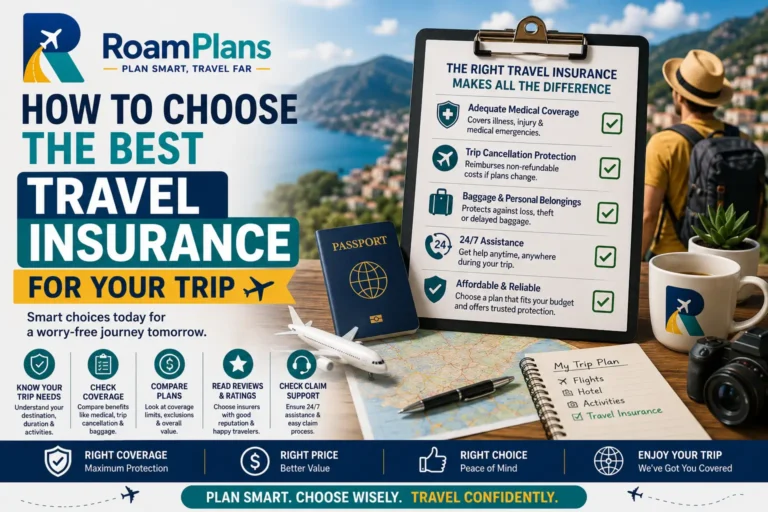
The detailed selection process belongs in How to Choose the Best Travel Insurance for Your Trip.
For this article, remember one rule:
Cheap is useful only when the coverage still fits.
Mistake 2: Assuming the Most Expensive Policy Must Be Best
Travelers can make the opposite mistake too.
A higher premium can come with:
- ✓Larger limits
- ✓More benefits
- ✓Extra activity coverage
- ✓Additional services
But you may not need all of them.
Suppose you are taking a short city trip with:
- ✓Refundable accommodation
- ✓No adventure activities
- ✓Strong existing international health protection
Paying much more for benefits designed around extreme sports or unusually high cancellation exposure may add little practical value.
A Better Approach
Compare the policy with your own risk profile rather than using price as a quality score.
The best fit may be:
- ✓Cheapest suitable option
- ✓Mid-priced option
- ✓Higher-priced option
depending on what your trip actually requires.
Mistake 3: Buying Before Calculating What You Could Really Lose

Travelers often say:
“My trip costs $6,000.”
That does not necessarily mean $6,000 is at risk.
Maybe:
- ✓Hotel is refundable
- ✓Airline ticket is non-refundable
- ✓Tour provides a partial refund
- ✓Train ticket cannot be changed
Before comparing cancellation protection, calculate the amount you could genuinely lose.
Example
| Booking | Paid | Refundable | Amount at Risk |
|---|---|---|---|
| Flight | $1,500 | No | $1,500 |
| Hotel | $2,000 | Yes | $0 |
| Tour | $900 | 50% | $450 |
| Train | $200 | No | $200 |
Total trip spending:
$4,600
Potential non-refundable exposure:
$2,150
Those are very different numbers.
A Better Approach
Separate:
total trip price
from
non-refundable financial exposure.
That gives you a much better starting point for insurance decisions.
Mistake 4: Assuming Every Cancellation Is Covered
Seeing:
Trip Cancellation — 100%
can create false confidence.
Standard cancellation protection normally depends on the reason meeting the policy’s covered conditions.
NAIC’s current guidance gives examples such as certain illnesses or injuries, hospitalization or death of a qualifying family member, severe weather, transportation disruption, and some natural disasters, but it also emphasizes that each policy defines what it will and will not cover.
Changing your mind is not the same as experiencing a covered event.
A Better Approach
Ask:
What are the three most realistic reasons I might cancel this trip?
Then search the policy for each one.
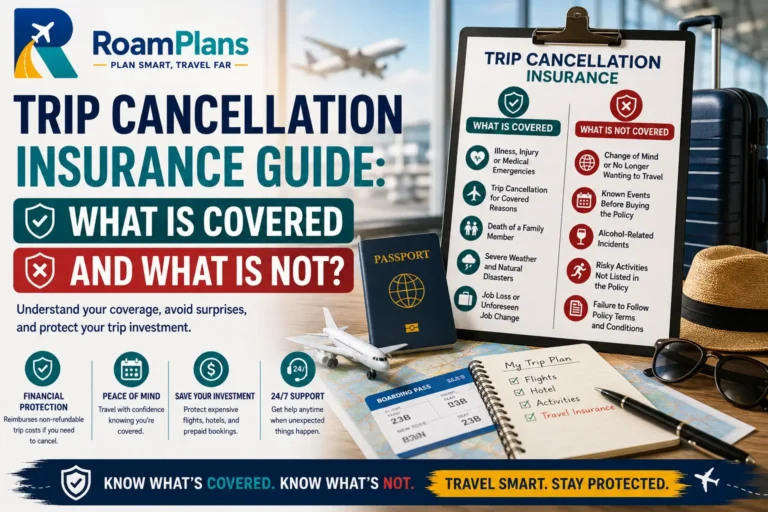
For the full rules, use Trip Cancellation Insurance Guide: What Is Covered and What Is Not?
Mistake 5: Assuming Cancel for Any Reason Means a Full Refund
The name Cancel for Any Reason, or CFAR, sounds almost unlimited.
It is not.
CFAR typically has:
- ✓Purchase deadlines
- ✓Eligibility requirements
- ✓Cancellation timing rules
- ✓Partial reimbursement
NAIC’s current travel-insurance guidance describes CFAR as broader than standard cancellation coverage but generally reimbursing only part of the trip price rather than providing an automatic full refund.
A Better Approach
Before paying extra for CFAR, check:
- ✓Percentage reimbursed
- ✓Purchase deadline
- ✓How much trip cost must be insured
- ✓How early you must cancel
- ✓Extra premium
Buy it only if that broader flexibility solves a risk that matters to you.
Mistake 6: Assuming Your Normal Health Insurance Works Abroad
This is one of the biggest mistakes an international traveler can make.
Your normal health plan may:
- ✓Cover overseas emergencies
- ✓Provide limited overseas protection
- ✓Require reimbursement later
- ✓Provide little useful overseas coverage
The State Department recommends checking directly with your health insurer about emergency and routine care abroad and considering short-term travel medical insurance when existing protection is inadequate.
A Better Approach
Before buying additional medical protection, ask your normal insurer:
- ✓Does my policy work in this country?
- ✓Does it cover emergency treatment?
- ✓Does it cover hospitalization?
- ✓Will I need to pay upfront?
- ✓How are international claims handled?
- ✓Is medical evacuation included?
Do not settle for:
“Yes, you’re covered abroad.”
Understand how that coverage actually works.
Mistake 7: Assuming Medicare Follows You Worldwide
For U.S. travelers who rely on Medicare, overseas medical protection deserves separate attention.
The State Department states that Medicare and Medicaid do not pay for medical care outside the United States in its international travel insurance guidance and advises travelers to examine additional protection.
Specific Medicare exceptions and supplemental-plan benefits can exist, so travelers should check their exact coverage.
A Better Approach
If Medicare-related coverage is relevant to you:
- ✓Check your exact Medicare situation.
- ✓Check any Medigap or Medicare Advantage benefits.
- ✓Identify the remaining international medical gap.
- ✓Compare travel medical insurance against that gap.
For the deeper medical discussion, use Travel Medical Insurance Guide for International Travelers.
Mistake 8: Forgetting About Medical Evacuation

A traveler can have medical treatment coverage but weak evacuation protection.
Those are different risks.
The State Department says some health plans cover typical medical costs abroad while most do not pay to bring a traveler back to the United States by air ambulance. It currently estimates that such evacuation can cost about $20,000–$200,000, depending on location and medical condition.
A Better Approach
Check medical evacuation separately.
Ask:
- ✓What is the limit?
- ✓Who decides evacuation is medically necessary?
- ✓Where would I be transported?
- ✓Does the insurer need to authorize it?
- ✓Does the benefit fit a remote destination?
The issue becomes especially important in areas with limited medical care. The State Department strongly recommends medical evacuation coverage for higher-risk or medically limited destinations.
Mistake 9: Assuming Medical Evacuation Means “Fly Me Home”
Medical evacuation does not necessarily mean you can choose to fly directly to your preferred hospital at home.
The policy may instead focus on medically necessary transportation to an appropriate medical facility.
The important terms can include:
- ✓Medical necessity
- ✓Appropriate facility
- ✓Authorization
- ✓Repatriation
A Better Approach
Read the evacuation wording before departure.
Do not wait until an emergency to discover who makes the transportation decision.
Mistake 10: Reading the Benefits but Skipping the Exclusions

A benefit table tells you what protection may exist.
The exclusions tell you when it may not.
NAIC’s April 2026 travel-insurance guidance identifies common exclusion areas that can include:
- ✓Pre-existing health conditions
- ✓Pandemics
- ✓Civil or political unrest
- ✓Pregnancy and childbirth
- ✓Certain risky activities
while emphasizing that every policy differs.
A Better Approach
For each major benefit you care about, ask:
What could stop this coverage from applying?
Search the policy for the exclusions connected to your:
- ✓Health
- ✓Destination
- ✓Activities
- ✓Cancellation concerns
You do not need to memorize the entire contract.
You do need to understand exclusions that directly affect your trip.
Mistake 11: Ignoring Pre-Existing-Condition Rules Until Something Happens
A traveler may see a policy with strong medical and cancellation benefits and assume an existing health problem is automatically covered.
That can be risky.
NAIC specifically advises travelers to check whether pre-existing medical conditions are excluded before relying on travel medical protection.
Some policies can have waiver provisions under specific conditions.
Those rules need to be checked before the trip.
A Better Approach
If a pre-existing condition could matter:
- ✓Find the policy definition
- ✓Check any look-back period
- ✓Check waiver eligibility
- ✓Check purchase timing requirements
- ✓Ask the insurer if wording is unclear
Do not rely on your personal definition of what counts as pre-existing.
Mistake 12: Waiting Too Long to Compare Insurance
Some travelers wait until the night before departure.
That can limit options.
A problem can also become known before insurance is purchased.
Insurance is designed around uncertain future events, not losses that are already happening or clearly known.
NAIC’s current consumer guidance emphasizes reviewing insurance before travel and checking the policy’s actual covered situations and limitations before purchase.
A Better Approach
Compare appropriate policies once you begin making meaningful non-refundable trip payments, especially when time-sensitive benefits are important.
Do not confuse:
buy early
with
buy immediately without reading.
You still need to compare.
Mistake 13: Automatically Buying the Policy Offered at Checkout
Airlines, cruises, booking sites, and travel companies often offer protection during checkout.
That option may be suitable.
But its location beside the Pay Now button does not make it automatically appropriate for your whole trip.
NAIC explains that travel protection packages can contain insurance alongside non-insurance services or products.
A Better Approach
Before selecting:
Add Travel Protection
check:
- ✓What product is being sold?
- ✓Who provides the insurance?
- ✓What benefits are included?
- ✓What is excluded?
- ✓Does it cover the rest of the trip or only part of the booking?
Then compare it with other appropriate options.
Mistake 14: Confusing a Cancellation Waiver With Travel Insurance
A supplier may offer a cancellation waiver.
That is not necessarily the same as a comprehensive travel insurance policy.
NAIC distinguishes travel insurance from non-insurance products that can be bundled with travel protection.
A waiver may address particular supplier cancellation charges without providing the same protection as insurance for:
- ✓Medical treatment
- ✓Medical evacuation
- ✓Baggage
- ✓Other travel losses
A Better Approach
Identify exactly what you are purchasing.
Ask:
Is this insurance, a supplier waiver, an assistance service, or a bundle?
Mistake 15: Ignoring Travel Insurance You Already Have
Buying duplicate coverage without knowing it can waste money and complicate comparison.
Existing protection may come from:
- ✓Health insurance
- ✓Credit card
- ✓Homeowners or renters insurance
- ✓Employer benefits
- ✓Supplier refund rules
NAIC’s June 2026 guidance specifically notes that some credit cards provide trip cancellation or lost baggage benefits and advises travelers to check whether those benefits are enough for their needs.
A Better Approach
Create a simple gap table.
| Risk | Existing Protection | Need More? |
|---|---|---|
| Cancellation | Credit card | Check |
| Medical abroad | Health plan | Check |
| Baggage | Card/home insurance | Check |
| Medical evacuation | None found | Likely important |
Then buy insurance to fill meaningful gaps rather than automatically duplicating everything.
Mistake 16: Assuming Credit-Card Insurance Covers the Whole Trip
Credit-card benefits can be useful.
But a card offering:
Trip Cancellation
does not automatically mean it provides suitable:
- ✓Overseas medical
- ✓Medical evacuation
- ✓Adventure activity
- ✓Baggage
- ✓Delay
protection.
NAIC recommends checking the actual credit-card policy and deciding whether its protection is enough for your situation.
A Better Approach
Read the card’s current benefit guide.
Check:
- ✓Which travelers qualify
- ✓What must be paid with the card
- ✓Benefit maximum
- ✓Covered reasons
- ✓Important exclusions
Then identify the remaining gaps.
Mistake 17: Assuming “Adventure Activities Covered” Means Your Activity Is Covered

This is a major mistake for active trips.
The State Department advises travelers to make sure their insurance covers the activities they plan to participate in, while NAIC warns that dangerous activities can be excluded from medical evacuation or other protection.
The words:
sports included
are not enough.
A Better Approach
Describe the actual activity.
Instead of:
Hiking
check:
Guided trek reaching 4,800 meters.
Instead of:
Scuba
check:
Recreational scuba to 30 meters with my certification level.
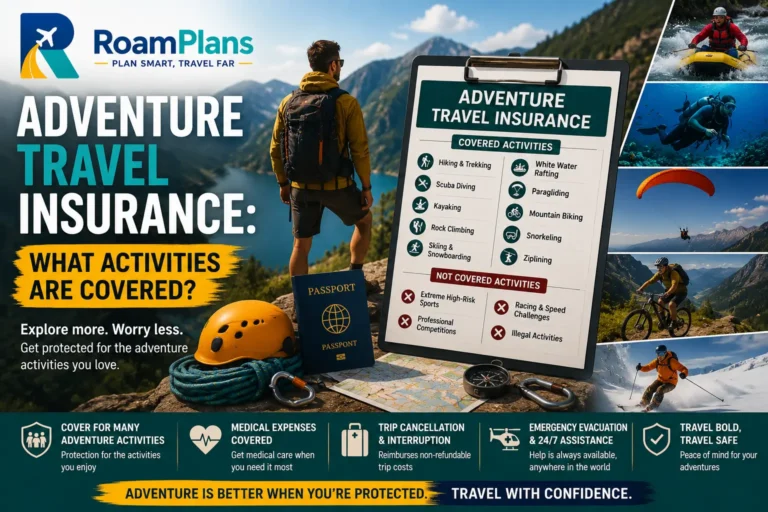
For detailed activity limits, use Adventure Travel Insurance: What Activities Are Covered?
Mistake 18: Forgetting That Activity Conditions Can Matter
Even when an activity appears covered, conditions can still matter.
Depending on the policy, these might involve:
- ✓Altitude
- ✓Diving depth
- ✓Certification
- ✓Competition
- ✓Professional participation
- ✓Safety equipment
- ✓Other stated restrictions
A Better Approach
Check both:
activity list
and
activity exclusions or conditions.
A policy does not fit your ski trip if it covers skiing generally but excludes the exact type of skiing you plan to do.
Mistake 19: Assuming Medical Coverage Automatically Covers an Adventure Injury
You may see:
Emergency Medical — $250,000
and assume any injury qualifies.
But if the injury happens during an excluded activity, the medical benefit may not work as expected.
The State Department’s adventure guidance specifically advises travelers to make sure insurance covers the activities they plan to participate in and any special medical risks they anticipate.
A Better Approach
For every important adventure activity, check three things separately:
- ✓Activity itself
- ✓Medical treatment after an activity-related injury
- ✓Evacuation or rescue after the activity
Do not assume one answer covers all three.
Mistake 20: Ignoring Destination and Trip-Length Limits
A policy that works for one country or a two-week trip may not automatically fit:
- ✓Multi-country itinerary
- ✓Long backpacking trip
- ✓Extended family visit
- ✓Annual policy with maximum trip duration
The State Department’s current travel-insurance checklist specifically advises travelers to verify that insurance is valid in the countries they plan to visit and for the full length of the trip.
A Better Approach
Check:
- ✓Every destination
- ✓Transit destinations where relevant
- ✓Start date
- ✓End date
- ✓Maximum trip duration
If you later extend the trip, ask the insurer whether the policy needs to be updated.
Mistake 21: Assuming Every Family Member Has the Same Coverage
Families can create extra complexity.
A policy may apply different rules based on:
- ✓Child age
- ✓Dependent status
- ✓Relationship
- ✓Residency
- ✓Benefit structure
Do not assume everyone traveling together automatically receives identical protection.
A Better Approach
Verify each traveler.
For family-specific issues such as children, shared trip costs, parent accompaniment, and dependent-child emergencies, use Family Travel Insurance Guide: Coverage for Parents and Children.
Mistake 22: Ignoring Per-Person, Per-Trip, and Per-Policy Limits
A policy may advertise:
Travel Delay — $1,000
But what does that mean?
It might apply:
- ✓Per person
- ✓Per event
- ✓Per trip
- ✓Across the policy
This becomes especially important for families and annual policies.
A Better Approach
For each important benefit, ask:
Exactly how is this maximum applied?
Do not multiply a benefit by the number of travelers unless the policy says you can.
Mistake 23: Focusing on Baggage While Ignoring Bigger Financial Risks
Baggage coverage is useful.
But it may not be the largest risk on your trip.
Compare:
Lost suitcase: potentially inconvenient and expensive
with
Major overseas medical treatment or evacuation: potentially much larger financial exposure
The State Department recommends international travelers consider emergency medical and evacuation protection and warns that the U.S. government does not pay citizens’ medical expenses abroad.
A Better Approach
Rank your risks from:
financially difficult
to
financially manageable.
Then prioritize accordingly.
Mistake 24: Assuming Travel Insurance Replaces Emergency Planning
Insurance can help financially and provide assistance.
It cannot guarantee:
- ✓Immediate rescue
- ✓Open airport
- ✓Available hospital bed
- ✓Safe weather
- ✓Reliable mobile signal
The State Department tells travelers to prepare contingency plans and review destination risks in addition to buying insurance.
A Better Approach
Pair insurance with practical preparation:
- ✓Emergency contacts
- ✓Destination information
- ✓Backup money
- ✓Important documents
- ✓Communication plan
For remote adventures, this becomes even more important because access to first responders and medical facilities can be difficult.
Mistake 25: Buying a Policy Without Knowing How to Contact the Insurer
A policy can sit unused in your email until an emergency happens.
Then you discover you do not know:
- ✓Emergency number
- ✓Assistance contact
- ✓Policy number
- ✓Claim procedure
The State Department specifically recommends finding out whether the insurer has a 24-hour help line during the trip.
A Better Approach
Before paying, check that you can easily find:
- ✓24/7 assistance
- ✓International phone number
- ✓Claims contact
- ✓Policy documents
Then save them before departure.
My Before-Buying Mistake Check
Before purchasing travel insurance, I want every answer below to be clear.
Trip
- ✓Every traveler identified
- ✓Every destination checked
- ✓Full trip duration checked
Money
- ✓Total trip cost calculated
- ✓Refundable costs separated
- ✓Non-refundable amount calculated
Existing Coverage
- ✓Health insurance checked abroad
- ✓Credit-card benefits checked
- ✓Other relevant insurance checked
Medical
- ✓Medical coverage gap understood
- ✓Deductible understood
- ✓Evacuation checked separately
- ✓Pre-existing-condition rules checked where relevant
Cancellation
- ✓Main cancellation concerns identified
- ✓Covered reasons checked
- ✓CFAR understood if being considered
Activities
- ✓Important activities listed
- ✓Activity conditions checked
- ✓Medical and evacuation protection checked for those activities
Policy
- ✓Important exclusions read
- ✓Major definitions checked
- ✓Limits understood
- ✓Emergency assistance contact located
If several of these answers are still unclear, I would keep reviewing before paying.
My Rule Before Buying Travel Insurance
I try not to ask:
“Is this a good travel insurance policy?”
That question is too broad.
I ask:
“What are the biggest financial risks on this trip, which of them am I trying to transfer to the insurer, and what policy wording could stop that protection from working?”
That question catches many insurance mistakes before they become expensive ones.
Mistake 26: Not Rechecking the Policy After Your Trip Changes
Buying insurance is not always the final insurance task.
Trips can change after purchase.
You might:
- ✓Add another country
- ✓Extend the trip
- ✓Add an expensive tour
- ✓Book a cruise
- ✓Add a higher-risk activity
- ✓Increase non-refundable trip costs
If the trip you eventually take is materially different from the trip you originally insured, check whether the insurer needs updated information.
A Better Approach
Whenever you make an important change, ask:
Does this change affect my policy dates, destinations, insured trip cost, activities, or eligibility?
Do not assume the original policy automatically adjusts itself.
Mistake 27: Extending the Trip Without Checking the Policy End Date
Imagine your insurance ends:
September 15
but you decide to stay abroad until:
September 22.
Do not assume coverage continues because the trip originally began within the policy period.
The State Department advises travelers to confirm that insurance covers the full length of their trip.
A Better Approach
Before extending travel:
- ✓Check policy end date
- ✓Check maximum trip duration
- ✓Contact the insurer
- ✓Ask whether an extension is available
- ✓Obtain confirmation where appropriate
Do this before the existing coverage expires when possible.
Mistake 28: Adding Another Country Without Checking Geographic Coverage
Multi-country trips change easily.
You may start with:
France and Italy
and later add:
Turkey.
Do not assume every destination is treated identically under the policy.
A Better Approach
Check the policy whenever you add:
- ✓Another country
- ✓Cruise destination
- ✓Long stopover
- ✓Remote region
The State Department recommends making sure travel insurance is valid for the places you plan to visit and reviewing medical and evacuation protection before departure.
Mistake 29: Adding an Adventure Activity Without Checking Coverage
Perhaps your original trip involved sightseeing.
After arrival, you decide to book:
- ✓Scuba diving
- ✓Skiing
- ✓Mountain trek
- ✓Motorbike tour
- ✓Paragliding
That new activity can change your insurance risk.
NAIC warns that medical evacuation coverage may exclude activities an insurer considers dangerous.
A Better Approach
Before paying for a major activity, check whether:
- ✓The activity is covered
- ✓Any altitude or depth conditions apply
- ✓Medical treatment remains covered
- ✓Evacuation remains covered
- ✓An optional activity upgrade is required
Do not discover the exclusion after an accident.
Mistake 30: Increasing Your Non-Refundable Trip Cost but Leaving the Policy Unchecked
Imagine you originally insured a:
$3,000 trip
and later add:
$4,000 cruise
and
$1,500 tour.
Your financial exposure has changed significantly.
Some policy benefits or eligibility requirements can depend on insured trip cost.
A Better Approach
When adding major prepaid costs:
- ✓Record the new expense.
- ✓Check its cancellation terms.
- ✓Contact the insurer where necessary.
- ✓Ask whether the insured trip cost should be updated.
Do not assume a large new booking is automatically protected under the original amount.
Mistake 31: Leaving the Full Policy at Home or Buried in Your Email

A travel policy is less useful during an emergency if you cannot find it.
Before departure, I save:
- ✓Policy certificate
- ✓Full policy wording
- ✓Policy number
- ✓Emergency assistance number
The State Department recommends reviewing insurance before travel and specifically advises travelers to understand medical and evacuation protection.
A Better Approach
Keep:
one online copy
and
one offline copy
of essential insurance information.
You do not need to print a large policy if you prefer digital documents.
You do need to be able to access it without depending entirely on hotel Wi-Fi.
Mistake 32: Saving the Policy but Not the Emergency Assistance Number
A 60-page policy PDF does not help much if you need urgent assistance and cannot locate the correct phone number.
The State Department encourages travelers to review emergency medical and evacuation arrangements before international travel.
A Better Approach
Save the emergency contact separately in your phone as something obvious, such as:
Travel Insurance Emergency Assistance
Include:
- ✓International number
- ✓Policy number
- ✓Insurer name
For remote or serious trips, consider giving the essential information to a trusted travel companion too.
Mistake 33: Letting Only One Person Know the Insurance Details
This can create problems for couples, families, and groups.
Imagine one partner manages all bookings and insurance.
That person becomes seriously ill.
The other traveler does not know:
- ✓Insurer
- ✓Policy number
- ✓Emergency number
A Better Approach
At least one other responsible traveler should know where the essential policy information is stored.
For families, both parents should be able to access it when possible.
Mistake 34: Assuming the U.S. Government Will Pay Your Medical Bills Abroad
For U.S. travelers, this is an important misunderstanding.
The State Department makes clear that the U.S. government does not pay private medical costs for citizens abroad and recommends travelers review medical and evacuation insurance before departure.
A Better Approach
Before traveling internationally, know:
- ✓What your health insurer covers
- ✓What your travel policy covers
- ✓What you might need to pay yourself
- ✓How emergency evacuation works
Do not build your financial emergency plan around government reimbursement.
Mistake 35: Traveling Without Access to Emergency Funds Because You Have Insurance
Travel insurance does not always mean you can receive care or services without paying anything first.
In some destinations or situations, travelers may need access to funds before reimbursement arrangements are completed.
This is especially important with international medical care and remote travel.
A Better Approach
Even when insured, keep reasonable access to:
- ✓Payment card
- ✓Backup payment method
- ✓Emergency funds
Insurance protects against eligible financial losses.
It does not mean you will never need to make an immediate payment.
Mistake 36: Paying for a Major Medical Evacuation Without Contacting the Insurer When Possible
Medical evacuation can be extremely expensive.
The State Department currently says air ambulance evacuation back to the United States can cost approximately $20,000 to $200,000, depending on location and medical condition.
NAIC also advises travelers to ask whether insurer approval is required before receiving medical care and explains that evacuation can involve transport to the nearest hospital capable of providing appropriate treatment.
A Better Approach
In a genuine emergency:
Get necessary emergency help first.
When circumstances safely allow, contact the insurer or assistance team before independently arranging expensive:
- ✓Air ambulance
- ✓Hospital transfer
- ✓Medical flight
- ✓Other major transportation
Ask who must authorize the service.
Mistake 37: Delaying Emergency Treatment Just to Contact the Insurer
The opposite mistake can also happen.
Insurance procedures are important.
Your immediate health and safety are more important in a genuine emergency.
A Better Approach
If urgent care is required:
- ✓Seek appropriate emergency help.
- ✓Contact the insurer as soon as reasonably possible.
- ✓Follow subsequent instructions.
- ✓Keep medical documentation.
Do not create additional medical risk just to complete insurance paperwork first.
Mistake 38: Assuming the Insurer’s Assistance Team Approving Help Means Every Cost Is Covered
Travel assistance and insurance reimbursement are related but not identical.
NAIC notes that travel packages can include both insurance and non-insurance assistance services.
An assistance team may help:
- ✓Locate a hospital
- ✓Coordinate transport
- ✓Provide travel assistance
That does not automatically mean every expense connected to the event qualifies under an insurance benefit.
A Better Approach
During an emergency, distinguish between:
What assistance can you provide?
and
Which costs does my insurance cover?
Keep receipts and documentation even when the assistance service arranged the help.
Mistake 39: Assuming Medical Evacuation Lets You Choose Any Hospital You Want
A traveler may think:
“I have evacuation coverage, so I can choose to fly home.”
That is not necessarily how the benefit works.
NAIC explains that emergency medical evacuation can involve transportation to a hospital capable of treating the traveler, with later transportation home where covered and needed.
A Better Approach
Before travel, understand:
- ✓Who decides evacuation is necessary
- ✓Where you can be transported
- ✓Whether insurer authorization is required
- ✓How repatriation differs from initial evacuation
Mistake 40: Not Reporting Missing Baggage Before Leaving the Airport
If your checked bag does not arrive, do not simply leave and decide to contact insurance later.
The carrier’s report can become important evidence showing that the baggage problem occurred.
A Better Approach
Before leaving the airport where possible:
- ✓Report the bag missing
- ✓Obtain the baggage report/reference
- ✓Keep baggage tags
- ✓Save airline messages
- ✓Record when the bag is returned
This creates evidence of both the incident and its duration.
Mistake 41: Replacing Everything in a Delayed Bag Immediately
A baggage delay benefit should not be treated as an unlimited shopping allowance.
You may need reasonable essentials while waiting for your belongings.
But the benefit can have:
- ✓Waiting period
- ✓Maximum amount
- ✓Eligible-expense rules
NAIC identifies baggage delays and lost or damaged baggage among common travel-insurance risks, but actual policy limits determine what is payable.
A Better Approach
Before making large replacement purchases:
- ✓Check the baggage-delay benefit
- ✓Check waiting period
- ✓Keep purchases reasonable
- ✓Save every receipt
Buy what you genuinely need while the baggage is delayed.
Mistake 42: Not Reporting Theft to the Appropriate Local Authority
If important property is stolen, waiting until you get home can make evidence much harder to obtain.
Depending on the policy and destination, an official police or incident report may be important to a later claim.
A Better Approach
When safe and appropriate:
- ✓Report the theft promptly
- ✓Obtain a case/reference number
- ✓Keep a copy of the report where available
- ✓Notify other relevant parties
Do not create or alter a report if one cannot be obtained.
Instead, tell the insurer what steps you took and ask what alternative evidence it accepts.
Mistake 43: Leaving Valuables Unattended and Assuming Insurance Will Pay
Baggage protection does not mean you can ignore reasonable care of personal property.
Policies can contain exclusions or conditions concerning how belongings are stored or supervised.
A Better Approach
Take reasonable precautions with:
- ✓Passport
- ✓Cash
- ✓Phone
- ✓Laptop
- ✓Camera
- ✓Jewelry
And read any unattended-property provisions relevant to your policy.
Insurance should complement sensible property security rather than replace it.
Mistake 44: Assuming Cash and Electronics Have the Same Limits as Normal Baggage
A policy may show one overall baggage amount but apply smaller limits or exclusions to particular categories.
For example:
- ✓Cash
- ✓Electronics
- ✓Jewelry
- ✓High-value items
can be treated differently from ordinary clothing.
A Better Approach
Before carrying expensive items, check:
overall baggage limit
and
per-item/category limits.
Do not assume a $3,000 baggage benefit means your $2,500 laptop is automatically protected for its full value.
Mistake 45: Throwing Away Receipts During the Trip

This is one of the simplest claim mistakes to prevent.
Receipts can become important for:
- ✓Medical expenses
- ✓Prescriptions
- ✓Delay meals
- ✓Extra hotel nights
- ✓Replacement essentials
- ✓Transportation
NAIC’s broader claims guidance advises contacting the insurer promptly because insurers commonly have reporting requirements for claims.
A Better Approach
Whenever an expense may later be connected to an insurance claim:
- ✓Keep the receipt.
- ✓Photograph it.
- ✓Store it in a claim folder.
- ✓Note what happened.
A receipt that disappears cannot always be recreated easily later.
Mistake 46: Keeping Receipts but No Evidence of Why the Expense Happened
A receipt can prove:
you spent $180 on a hotel.
It may not prove:
why the insurer should reimburse that hotel.
You may also need evidence such as:
- ✓Flight cancellation notice
- ✓Medical record
- ✓Carrier delay report
- ✓Other incident documentation
A Better Approach
For every potential claim, collect two categories:
Event evidence
and
financial evidence.
That simple distinction makes claim preparation much stronger.
Mistake 47: Waiting Until Home to Ask for Medical Records
Getting documentation from an overseas hospital can become much harder once you have left the country.
A Better Approach
Before leaving the medical facility, ask for available:
- ✓Medical report
- ✓Diagnosis
- ✓Itemized bill
- ✓Payment receipt
- ✓Discharge paperwork
- ✓Prescription
Keep the original documentation even if it is not in English.
Ask the insurer later if translation is required.
Mistake 48: Accepting a Medical Receipt With No Useful Detail When More Documentation Is Available
A receipt that says:
Medical Service — $1,200
shows a payment.
It may not explain:
- ✓Treatment
- ✓Diagnosis
- ✓Individual charges
A Better Approach
Where available, ask for:
itemized medical documentation
rather than only a card terminal receipt.
This helps establish both what treatment was received and what it cost.
Mistake 49: Not Keeping Proof of Payment
An invoice and proof of payment answer different questions.
Invoice
What the provider charged.
Proof of Payment
What you actually paid.
Depending on the claim, an insurer may need both.
A Better Approach
For important expenses, keep:
- ✓Invoice
- ✓Receipt
- ✓Card record where useful
Do not rely on one document if several are readily available.
Mistake 50: Failing to Contact the Travel Supplier When a Trip Is Canceled
Suppose you cancel an insured trip and immediately ask the insurer to reimburse:
$5,000
without first checking whether the airline or hotel will refund anything.
That can complicate the claim.
A Better Approach
When cancellation becomes necessary:
- ✓Contact airline
- ✓Contact hotel
- ✓Contact cruise or tour provider
- ✓Request available refunds
- ✓Record credits
- ✓Calculate remaining loss
Travel insurance generally concerns eligible financial loss rather than money you have already recovered elsewhere.
Mistake 51: Letting Avoidable Cancellation Penalties Grow
Suppose a hotel cancellation penalty is:
$300 today
but becomes:
$1,500 tomorrow.
If you already know you cannot travel, unnecessary delay can increase the loss.
A Better Approach
When a covered problem occurs:
- ✓Check insurer instructions.
- ✓Contact suppliers.
- ✓Act promptly where appropriate.
- ✓Keep evidence of refunds and penalties.
Do not intentionally allow avoidable costs to grow because you expect insurance to pay them.
Mistake 52: Hiding Travel Credits or Refunds From the Insurer
If an airline gives you:
- ✓Cash refund
- ✓Travel voucher
- ✓Future credit
keep and disclose that information when it relates to the loss you are claiming.
A Better Approach
Calculate:
Original loss
minus
refunds or other relevant recoveries
equals
remaining financial loss for the insurer to review.
Do not present already-recovered money as though it remains lost.
Mistake 53: Claiming the Entire Trip Cost Instead of the Actual Loss
Suppose your vacation cost:
$7,000
but after cancellation:
- ✓Hotel refunds $2,000
- ✓Airline refunds $1,000
- ✓Tour refunds $500
Your remaining loss is not automatically $7,000.
A Better Approach
Make a simple table:
| Booking | Paid | Refund/Credit | Remaining Loss |
|---|---|---|---|
| Flight | $2,000 | $1,000 | $1,000 |
| Hotel | $2,000 | $2,000 | $0 |
| Tour | $1,500 | $500 | $1,000 |
| Other | $1,500 | $0 | $1,500 |
Remaining financial loss:
$3,500
The insurer still decides which amount qualifies under the policy.
Mistake 54: Assuming One Travel Problem Means One Insurance Benefit
A single event can create several different types of loss.
For example, an illness abroad might lead to:
- ✓Medical treatment
- ✓Changed flights
- ✓Unused bookings
Those expenses do not necessarily belong under one benefit.
A Better Approach
Organize expenses by what they are.
Let the policy determine whether they fall under:
- ✓Medical
- ✓Interruption
- ✓Delay
- ✓Another benefit
Do not force every receipt into the first benefit you notice.
Mistake 55: Describing the Incident Differently to Different Organizations
If your explanation to:
- ✓Airline
- ✓Police
- ✓Hospital
- ✓Insurer
contains significantly different facts, the claim can become harder to understand.
A Better Approach
Be accurate from the beginning.
Do not exaggerate.
Do not simplify facts that materially change the event.
If you make an honest mistake, correct it clearly.
Mistake 56: Exaggerating the Value of Lost Property
Travel insurance is not an opportunity to upgrade an old item.
If a four-year-old phone is lost, do not claim it was:
- ✓Brand new
- ✓More expensive than it was
- ✓A different model
A Better Approach
Provide honest evidence such as:
- ✓Purchase receipt
- ✓Order confirmation
- ✓Photos
- ✓Product information
Then let the insurer apply its policy valuation rules.
Mistake 57: Assuming the Benefit Maximum Is a Guaranteed Payment
If the policy says:
Baggage — $2,500
that does not necessarily mean losing one bag results in a $2,500 payment.
Likewise:
Travel Delay — $1,000
does not automatically mean every qualifying delay produces $1,000.
NAIC’s current guidance emphasizes that travel policies establish their own limits and specify the situations they cover.
A Better Approach
Understand the difference between:
maximum possible benefit
and
eligible documented loss.
Mistake 58: Forgetting the Deductible After a Loss Happens
Travelers often notice the deductible when buying insurance and forget about it by claim time.
If the relevant benefit includes a deductible, it can affect the final payment.
A Better Approach
When estimating what you may receive, check:
- ✓Claimed amount
- ✓Eligible amount
- ✓Deductible
- ✓Benefit maximum
- ✓Other applicable limits
Do not assume the insurer made an error simply because payment is lower than your original expense.
Mistake 59: Assuming Every Travel Insurance Claim Must Be Submitted the Same Way
Medical, baggage, cancellation, and delay claims can require different evidence.
A claim involving medical care may need:
- ✓Medical records
- ✓Bills
while a baggage claim may need:
- ✓Carrier report
- ✓Proof of ownership
A Better Approach
Read the claim instructions for the specific benefit involved.
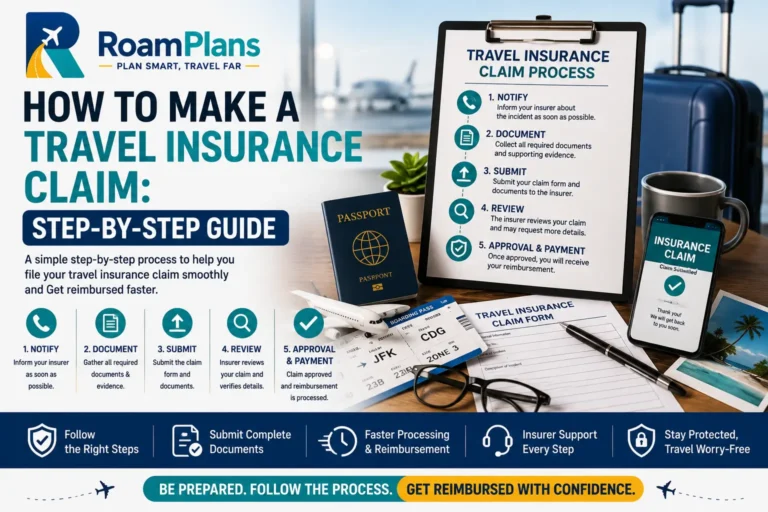
For the full documentation and submission workflow, use How to Make a Travel Insurance Claim: Step-by-Step Guide.
Mistake 60: Missing the Policy’s Reporting or Claim Deadline
Insurance claims can have time requirements.
NAIC’s general claims guidance advises consumers to contact their insurer promptly because companies commonly have requirements for reporting claims.
Do not assume:
“I can deal with this whenever I have time after the trip.”
A Better Approach
As soon as a potential claim occurs:
- ✓Check reporting requirements
- ✓Ask what deadline applies
- ✓Open the claim where appropriate
- ✓Save the claim number
Use your specific policy’s deadline, not one you read in another traveler’s experience.
Mistake 61: Failing to Save a Claim Number
If you contact the insurer, keep:
- ✓Claim number
- ✓Date
- ✓Representative name where available
- ✓Documents requested
This is especially useful when several weeks pass between communications.
A Better Approach
Maintain a simple log:
| Date | Action |
|---|---|
| July 4 | Claim opened |
| July 7 | Medical report submitted |
| July 10 | Insurer requested itemized bill |
You do not need sophisticated software.
A simple note is enough.
Mistake 62: Ignoring Requests for Additional Documents
An insurer asking for another document does not automatically mean the claim has been denied.
The company may need more evidence to complete its review.
A Better Approach
Read exactly what is requested.
If the insurer asks for:
itemized hospital bill
do not simply resend:
credit-card receipt.
Send the requested document where possible or explain why it cannot be obtained and ask what alternative evidence is acceptable.
Mistake 63: Opening Multiple Claims for the Same Event Because the First One Seems Slow
Duplicate claims can create unnecessary confusion.
A Better Approach
If you already have a claim number:
- ✓Use that number
- ✓Check status
- ✓Ask whether information is missing
- ✓Upload additional documents to the existing claim where instructed
Do not restart the entire process simply because a decision has not yet been made.
Mistake 64: Assuming a Delayed Claim Is Automatically an Unfair Denial
Complex claims can require additional review or documentation.
At the same time, you are entitled to understand what is happening.
A Better Approach
If a claim appears unusually delayed:
- ✓Check claim status.
- ✓Ask whether documents are missing.
- ✓Record communication.
- ✓Ask what next step is expected.
For U.S. insurance disputes that remain unresolved, NAIC provides access to state insurance departments and consumer complaint resources.
Mistake 65: Giving Up Immediately After a Claim Denial

A denial should first be understood.
The insurer may have denied the claim because:
- ✓Event was excluded
- ✓Coverage did not apply
- ✓Documentation was missing
- ✓Another condition was not met
Those are different problems.
A Better Approach
Read:
- ✓Denial reason
- ✓Policy section cited
- ✓Missing-document request
- ✓Review or reconsideration instructions
If the problem is missing evidence, providing the correct evidence may be different from disputing a genuine policy exclusion.
Mistake 66: Arguing About a Claim Before Reading the Policy Section Cited
It is easy to respond emotionally to an unexpected denial.
A better first step is to identify what the insurer relied on.
A Better Approach
Ask:
Which policy provision supports this decision?
Then compare:
- ✓Benefit
- ✓Definition
- ✓Exclusion
- ✓Limit
If the decision still appears incorrect, use the insurer’s available review procedure.
Mistake 67: Going Straight to a Regulator Without First Trying to Resolve the Issue
For U.S. insurance disputes, state insurance departments can help consumers with insurance problems.
NAIC provides a state insurance department directory and complaint resources.
But a regulator complaint should not replace basic communication with the insurer when the problem may be resolved directly.
A Better Approach
First:
- ✓Ask the insurer for a clear explanation.
- ✓Provide missing evidence.
- ✓Use available internal review procedures.
If a serious insurance issue remains unresolved, then consider the appropriate state insurance department.
Mistake 68: Assuming Every Travel Protection Product Falls Under the Same Insurance Complaint Process
NAIC explains that travel protection can bundle:
- ✓Insurance
- ✓Non-insurance travel assistance
- ✓Cancellation fee waivers
and these are not necessarily regulated in the same way.
A Better Approach
Before making a complaint, identify what the disputed product actually is.
Is it:
- ✓Insurance policy?
- ✓Airline refund?
- ✓Supplier cancellation waiver?
- ✓Travel assistance service?
That helps you use the correct process.
Mistake 69: Deleting the Claim File as Soon as You Receive Payment
A claim may seem finished when payment arrives.
But another issue can still arise.
For example:
- ✓Payment calculation unclear
- ✓Supplier sends a later refund
- ✓Another insurer responds
- ✓Additional correspondence arrives
A Better Approach
Keep:
- ✓Claim form
- ✓Receipts
- ✓Evidence
- ✓Insurer decision
- ✓Payment explanation
until you are satisfied the matter is fully resolved.
Mistake 70: Treating Insurance as a Substitute for Careful Travel Decisions
Travel insurance transfers certain financial risks.
It does not remove:
- ✓Health risks
- ✓Weather
- ✓Crime
- ✓Transport disruption
- ✓Local laws
- ✓Poor planning
The State Department continues to advise travelers to maintain emergency and contingency plans in addition to reviewing insurance.
A Better Approach
Use insurance alongside:
- ✓Careful itinerary planning
- ✓Emergency contacts
- ✓Safe behavior
- ✓Backup payment methods
- ✓Important-document protection
- ✓Destination research
My During-the-Trip Insurance Rule
Once the trip begins, I try to remember:
Protect yourself first.
Contact the right organization.
Document what happened.
Save what you spent.
Tell the insurer what you recovered elsewhere.
Those habits prevent many claim problems without turning the vacation into an insurance paperwork exercise.
And when the policy details become more complicated, I use Complete Travel Insurance Guide for International Travelers as the broader reference rather than trying to interpret every benefit from memory.Mistake 71: Forgetting That Insurance Only Works Within Its Policy Terms
A common mistake is treating travel insurance as a general promise that:
“If something goes wrong, I will get my money back.”
That is not how it works.
Travel insurance policies define:
- ✓Covered events
- ✓Exclusions
- ✓Benefit limits
- ✓Eligibility
- ✓Deductibles
- ✓Conditions
NAIC’s current travel-insurance guidance emphasizes that policies differ and that travelers should understand what a policy covers, excludes, and limits before relying on it.
A Better Approach
Think of insurance as protection for specific defined risks, not every possible travel problem.
Before the trip, know which risks you transferred to the insurer and which ones you are still carrying yourself.
Mistake 72: Assuming Travel Insurance Removes the Need for a Backup Plan
Even good insurance cannot prevent:
- ✓Flight cancellation
- ✓Severe weather
- ✓Illness
- ✓Lost belongings
- ✓Local disruption
It may help financially or provide assistance after certain covered problems occur.
You still need practical backup planning.
The State Department recommends travelers prepare contingency plans alongside reviewing insurance and other international travel arrangements.
A Better Approach
Before traveling, think about:
- ✓Backup payment method
- ✓Emergency contacts
- ✓Copies of important documents
- ✓Alternative transportation
- ✓How family can reach you
Insurance becomes one part of your emergency plan rather than the whole plan.
Mistake 73: Not Checking Current Destination Conditions Before Departure
A destination can change between booking and departure.
There may be:
- ✓Security concerns
- ✓Transport disruption
- ✓Health issues
- ✓Local emergencies
These changes do not automatically mean insurance will cover a cancellation.
A Better Approach
Review official destination information shortly before departure and understand how any new development relates to your actual policy.
For U.S. travelers, the State Department maintains current travel advisories and worldwide security information.
Do not cancel first and assume the insurer will reimburse you later.
Check the policy when circumstances allow.
Mistake 74: Assuming a Travel Advisory Automatically Triggers Insurance Coverage
An official warning can be important for your safety decision.
But the existence of an advisory does not, by itself, prove that your insurance will pay a cancellation claim.
Coverage depends on your policy’s covered reasons and exclusions. NAIC stresses that individual travel policies determine which situations qualify.
A Better Approach
Treat these as two separate questions:
Is it safe or appropriate for me to travel?
and
Does my policy cover my financial loss if I cancel?
Do not combine them.
Mistake 75: Ignoring the Difference Between Insurance and Assistance Services
A travel protection package may contain several things.
For example:
- ✓Insurance
- ✓Emergency assistance
- ✓Cancellation waiver
- ✓Other travel services
NAIC explains that travel protection products can bundle insurance and non-insurance components, which are not necessarily regulated or handled in the same way.
A Better Approach
Know what each part does.
For example:
Assistance service: may help you find medical care.
Insurance: may reimburse qualifying expenses under policy terms.
Those are useful together, but they are not identical.
Mistake 76: Assuming Help Arranged by an Assistance Service Is Automatically Free
An assistance team may help arrange:
- ✓Doctor
- ✓Hospital
- ✓Transportation
- ✓Translation
But assistance does not automatically mean the resulting expense is fully insured.
A Better Approach
When possible, ask:
“Are you arranging this service only, or has the insurance benefit also been approved?”
Then keep all documentation.
Mistake 77: Depending Entirely on Internet Access to Reach Your Insurer
Phones get lost.
Batteries die.
Mobile service disappears.
Hotel Wi-Fi can fail.
This becomes especially important when you are traveling somewhere remote.
A Better Approach
Before departure, keep the most important information offline:
- ✓Insurer name
- ✓Policy number
- ✓Emergency number
- ✓Assistance number
The State Department recommends checking for emergency medical and evacuation arrangements before international travel.
Mistake 78: Keeping All Important Insurance Information on One Phone
If that phone is:
- ✓Lost
- ✓Stolen
- ✓Damaged
- ✓Out of battery
you can lose access at exactly the wrong time.
A Better Approach
Use more than one secure location.
For example:
- ✓Phone
- ✓Cloud account
- ✓Offline PDF
- ✓Trusted travel companion
Do not publicly expose sensitive information.
The goal is simply to avoid one point of failure.
Mistake 79: Forgetting to Tell a Travel Companion Where the Policy Is
If you become seriously ill or injured, another traveler may need to contact the insurer for you.
A Better Approach
Tell a trusted companion:
- ✓Which insurer you use
- ✓Where the policy is stored
- ✓Where the emergency number is stored
This is especially useful for:
- ✓Couples
- ✓Families
- ✓Older travelers
- ✓Remote trips
Mistake 80: Assuming a Very Expensive Trip Automatically Needs the Most Expensive Insurance
Insurance need and trip price are related, but they are not identical.
An expensive trip may have:
- ✓High cancellation exposure
- ✓Mostly refundable bookings
- ✓Strong supplier protection
while a cheap trip can still create major medical or evacuation risk.
The State Department notes that medical evacuation alone can be extremely expensive, including air-ambulance costs that may range from roughly $20,000 to $200,000 depending on location and condition.
A Better Approach
Separate:
money you could lose on bookings
from
medical and emergency financial risk.
Then insure the risks that matter.
Mistake 81: Assuming a Cheap Trip Does Not Need Insurance
Imagine:
Trip cost:
$800
You may be able to absorb losing the trip.
But that says little about:
- ✓Overseas hospital costs
- ✓Emergency evacuation
- ✓Serious trip interruption
A Better Approach
Ask two separate questions:
Could I afford to lose the trip cost?
Could I afford the emergency costs that could happen during the trip?
The answers may be very different.
Mistake 82: Treating Older Travelers Exactly Like Younger Travelers
Age alone does not determine what insurance someone needs.
But existing medical protection can differ significantly.
For example, Medicare states that Original Medicare generally does not cover medical care outside the United States, with limited exceptions.
Some Medicare Advantage or Medigap arrangements may provide different foreign-travel benefits, so travelers need to check the specific plan rather than assume one rule applies to everyone.
A Better Approach
For an older traveler, review:
- ✓Existing medical insurance abroad
- ✓Medical limits
- ✓Evacuation
- ✓Pre-existing-condition terms
- ✓Trip duration
Do not simply buy a plan because it is marketed as:
Senior Travel Insurance.
Mistake 83: Assuming Higher Age Automatically Means Better Coverage Is Impossible to Find
The opposite assumption can also be wrong.
Do not reject travel plans or insurance options based only on age.
A Better Approach
Compare actual:
- ✓Eligibility
- ✓Premium
- ✓Medical terms
- ✓Existing coverage
- ✓Policy limits
The policy and traveler circumstances matter more than a general assumption.
Mistake 84: Using Someone Else’s Policy Experience as Your Coverage Answer
You may read online:
“My insurer paid for this.”
That does not prove your insurer must pay for the same situation.
The other traveler may have had:
- ✓Different policy
- ✓Different state of residence
- ✓Different benefit
- ✓Different documentation
- ✓Different circumstances
NAIC emphasizes that travel policies vary in benefits, limits, and exclusions.
A Better Approach
Use other travelers’ experiences to learn what questions to ask.
Use your policy to determine your coverage.
Mistake 85: Relying on a Social Media Post Instead of Policy Wording
A short video may say:
“Travel insurance always covers canceled flights.”
or:
“You never need separate medical insurance.”
Statements like these are too broad.
A Better Approach
When a travel-insurance claim sounds universal, verify it against:
- ✓Policy wording
- ✓Insurer information
- ✓Official regulatory guidance
Travel insurance is too policy-specific for one viral tip to answer every situation.
Mistake 86: Forgetting That the Same Mistake Can Affect Several Benefits
One poor decision can create problems across several parts of a policy.
For example, failing to document an illness could make it harder to support:
- ✓Medical expense
- ✓Trip interruption
- ✓Cancellation
depending on when the illness occurred and what benefits were involved.
A Better Approach
When a serious event occurs, document the event itself thoroughly.
Do not think only about the first expense that appears.
Mistake 87: Waiting for the Insurer to Tell You Every Document You Should Save
The insurer can tell you its formal claim requirements.
But some evidence is much easier to collect immediately.
A Better Approach
When something goes wrong, preserve:
- ✓Official notices
- ✓Receipts
- ✓Medical records
- ✓Incident reports
- ✓Booking information
Then follow the insurer’s instructions.
You can remove unnecessary documents later.
You cannot easily recreate evidence that no longer exists.
Mistake 88: Forgetting to Photograph Temporary Evidence
Some travel evidence does not last.
Examples:
- ✓Airport information screen
- ✓Damaged suitcase
- ✓Closed hotel entrance
- ✓Physical receipt
- ✓Temporary notice
A Better Approach
Take a quick photo where appropriate.
A photo is not guaranteed to prove insurance coverage.
It can simply help document what you encountered.
Mistake 89: Treating Claim Documentation as Something to Do Only After Vacation
This approach creates unnecessary work.
Instead of returning home with:
20 receipts
and no idea why each one exists, document expenses as they occur.
A Better Approach
Use a simple phone note:
July 10 — flight canceled
Hotel — $160
Dinner — $40
Taxi — $25
Then keep the supporting receipts.
This takes less than a minute and can save a lot of confusion later.
Mistake 90: Letting Insurance Worry Take Over the Trip
There is also a practical balance.
You should understand your insurance.
You do not need to spend your vacation constantly thinking about:
- ✓Exclusions
- ✓Claims
- ✓Receipts
- ✓Worst-case scenarios
A Better Approach
Prepare properly before departure.
During the trip, remember only a simple rule:
Stay safe → report the problem → contact the right provider → document important evidence → keep relevant receipts.
Then continue traveling when circumstances allow.
Before Your Trip vs During Your Trip: Mistakes at a Glance
| Before Your Trip | During Your Trip |
|---|---|
| Buying only by price | Not contacting insurer when needed |
| Ignoring exclusions | Losing receipts |
| Assuming medical insurance works abroad | Not obtaining medical records |
| Forgetting evacuation | Not reporting baggage loss |
| Ignoring pre-existing-condition rules | Not reporting theft |
| Assuming all cancellation reasons qualify | Making unnecessary purchases during delays |
| Not checking adventure activities | Arranging major services without checking authorization where possible |
| Ignoring existing credit-card coverage | Hiding refunds or credits |
| Incorrect trip dates | Missing claim deadlines |
| Not saving emergency contacts | Losing track of claim documents |
The left side is mainly about understanding the policy.
The right side is mainly about using it correctly.
The Five Biggest Travel Insurance Mistakes I Would Avoid
If I had to reduce this entire guide to five mistakes, I would choose these.
1. Buying Without Understanding the Main Exclusions
Benefits tell you what may be protected.
Exclusions can determine when that protection stops.
2. Assuming Existing Health Insurance Works Internationally
Confirm it directly before departure.
The State Department recommends travelers check their overseas medical protection and consider travel medical and evacuation insurance where appropriate.
3. Forgetting Medical Evacuation
This becomes especially important when traveling to remote locations or places with limited medical care.
4. Failing to Document a Problem While It Happens
Receipts and official reports become harder to obtain later.
5. Assuming Every Travel Problem Is Covered
No policy protects against everything.
Know the risks you chose to insure.
My 60-Second Pre-Departure Insurance Audit
Before leaving home, I would ask:
Policy
Do I have the correct policy and dates?
Travelers
Is everyone who expects coverage properly included?
Destination
Does the policy fit my full itinerary?
Medical
Do I understand my overseas medical coverage?
Evacuation
Do I know how emergency evacuation works?
Activities
Are the main activities of this trip covered?
Emergency Contact
Can I reach the insurer without searching through hundreds of emails?
Documents
Can I access the policy offline?
If I can answer all eight confidently, I am much less likely to discover an obvious insurance problem during the trip.
My 60-Second Emergency Insurance Audit
When something goes wrong, I use another short checklist.
First
Am I safe, and do I need urgent help?
Second
Who needs to receive the first report?
That could be:
- ✓Doctor
- ✓Airline
- ✓Police
- ✓Hotel
- ✓Insurer
Third
What evidence can I collect now?
Fourth
What am I paying for?
Fifth
What receipts should I keep?
Sixth
Does the insurer need to be contacted before I make a major arrangement?
That is usually enough to keep the situation organized without turning an emergency into a paperwork project.
Final Travel Insurance Mistake-Prevention Checklist
Before Buying
- ✓Trip dates confirmed
- ✓Travelers confirmed
- ✓Destinations confirmed
- ✓Non-refundable costs calculated
- ✓Existing medical insurance checked
- ✓Credit-card benefits checked
- ✓Major risks identified
- ✓Cancellation needs reviewed
- ✓Medical needs reviewed
- ✓Evacuation reviewed
- ✓Main activities checked
- ✓Pre-existing-condition terms checked where relevant
- ✓Important exclusions read
- ✓Deductible understood
- ✓Benefit limits understood
After Buying
- ✓Policy details checked for errors
- ✓Policy saved
- ✓Emergency number saved
- ✓Offline access prepared
- ✓Travel companion knows where details are
- ✓Significant new bookings reviewed
- ✓Trip extensions checked
- ✓New countries checked
- ✓New activities checked
During the Trip
- ✓Health and safety handled first
- ✓Insurer contacted when required
- ✓Major services authorized where required and practical
- ✓Baggage problems reported
- ✓Theft reported where appropriate
- ✓Medical records collected
- ✓Receipts saved
- ✓Receipts photographed
- ✓Official notices saved
- ✓Refunds and credits recorded
If Something Goes Wrong
- ✓Event timeline written
- ✓Proof of event collected
- ✓Proof of financial loss collected
- ✓Supplier contacted
- ✓Available refunds requested
- ✓Claim requirements checked
- ✓Reporting deadline checked
- ✓Claim number saved
If a Claim Is Reduced or Denied
- ✓Decision read carefully
- ✓Policy section checked
- ✓Missing documents identified
- ✓Calculation checked
- ✓Insurer contacted for clarification
- ✓Review procedure checked where appropriate
For U.S. insurance issues that remain unresolved after dealing with the insurer, NAIC provides access to state insurance departments and consumer complaint resources.
Frequently Asked Questions
One of the biggest mistakes is assuming that buying a policy means every travel problem is covered. Travel insurance is policy-specific, with defined benefits, exclusions, and limits.
Not automatically. It becomes a mistake when price is chosen before checking whether the policy covers the risks that matter to your trip.
You can pay for benefits or limits that add little value to your particular trip. Compare your real financial risks with the protection being offered.
Check your travelers, destinations, non-refundable costs, existing medical coverage, medical and evacuation needs, activities, cancellation risks, exclusions, limits, deductible, and emergency assistance arrangements.
You should understand the sections relevant to your trip, especially major benefits, exclusions, definitions, deductibles, and limits. NAIC advises travelers to understand what their policy does and does not cover.
Prioritize exclusions related to your own health, activities, destination, cancellation concerns, and other major risks rather than treating every exclusion as equally important.
Yes, if you have not checked. The State Department advises travelers to verify overseas health coverage before departure.
Original Medicare generally does not cover healthcare outside the United States, although limited exceptions exist. Other Medicare-related plans may differ.
It can be, particularly for destinations with limited medical care or remote locations. The State Department strongly recommends considering medical evacuation protection for higher-risk or medically limited destinations.
Not necessarily. The actual transport depends on the policy’s medical-necessity and evacuation terms, so read the relevant wording before relying on it.
You can consider it, but do not purchase automatically. Confirm what the product is, what it covers, and whether it protects the rest of your trip.
Not necessarily. NAIC explains that travel protection can include both insurance and non-insurance products such as cancellation waivers and assistance services.
Usually not. NAIC says CFAR generally provides partial reimbursement, commonly around 50%–75% of total trip price, subject to the policy’s conditions.
They can be useful, but compare the actual benefits with your medical, evacuation, cancellation, delay, and baggage needs before deciding that no additional protection is necessary.
Check the policy and contact the insurer where necessary. Do not assume the original coverage automatically continues beyond its dates or maximum trip duration.
Check whether the new destination affects the policy’s geographic eligibility or other terms and update the insurer where required.
Yes. Verify that the exact activity fits the policy, including any relevant conditions or exclusions, before relying on the insurance.
Get appropriate medical help first. Contact the insurer or assistance service as soon as reasonably possible, especially if authorization may be needed, and keep medical records, bills, and receipts.
In a true emergency, do not delay necessary care just to complete insurance paperwork. Contact the insurer as soon as reasonably possible afterward and follow the policy’s procedures.
Report the baggage problem to the airline, obtain a reference or report, keep baggage tags and airline communications, and save receipts for potentially eligible necessary purchases.
Yes, especially for expenses that may later form part of an insurance claim. Receipts help establish financial loss, although other evidence may also be needed.
Yes. Keep records of reimbursements related to the same loss and disclose them accurately when required.
Read the reason and policy provision cited, identify whether documentation is missing, and follow the insurer’s available review process if you believe reconsideration is appropriate.
For U.S. insurance matters, state insurance departments can handle consumer complaints within their authority. NAIC provides a directory and complaint resources.
Before traveling, understand the major risks your policy does and does not protect; during the trip, focus on safety, report problems promptly, collect evidence, save receipts, and follow the insurer’s procedures.
Final Thoughts
In short, Most travel insurance mistakes come from assumptions rather than the lack of a policy, so the safest approach is to understand your important coverage before departure and, if something goes wrong, protect yourself first, report the problem, document what happened, save your financial evidence, and follow the policy you actually purchased.

Adnan Ahmed
RoamPlans AuthorTravel Planning Researcher & Editor
Adnan Ahmed is the travel planning researcher and editor behind RoamPlans. He creates clear, practical guides to help travelers compare destinations, plan routes, estimate costs, and avoid common trip-planning mistakes. His work combines careful source research, official travel information, and regular content reviews to keep each guide useful and current.
- ✓Destination Research
- ✓Budget Planning
- ✓Route Planning
- ✓Beginner Travel Guides

Turn This Guide into a Practical Trip Plan
Use the recommended Airline Baggage Allowance Checker or explore more free RoamPlans tools.