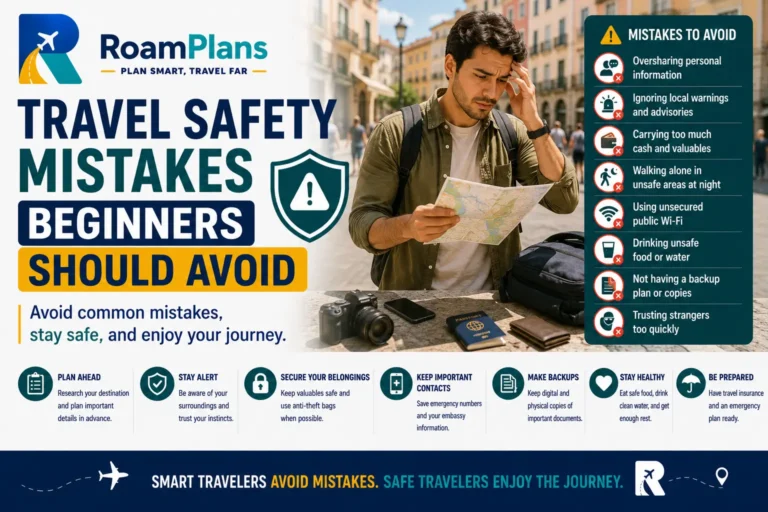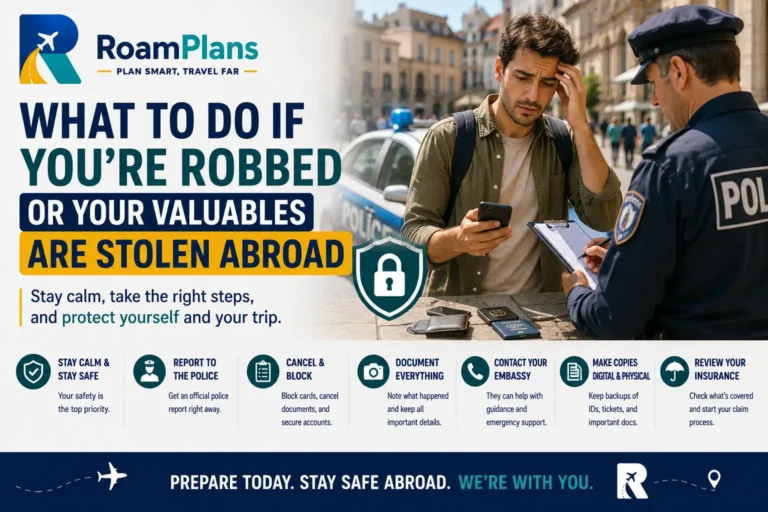
How to Build a Travel Emergency Plan Before You Leave?
Most trips go ahead without a serious emergency, but problems are much harder to solve when you are far from home ↗ and have no idea who to call, where your documents are, or how your family will know you are safe. A travel emergency plan gives you those answers before you leave.
When I prepare for a trip, I prefer a simple plan that I can actually use. I do not create pages of instructions for situations that are unlikely to happen. I save the contacts I may need, give someone at home my basic trip details, keep key information available offline, and make sure I have another way to access money and communication if my main option fails. That is enough to handle many common travel problems with less confusion.
This guide explains how to build a travel emergency plan before you leave. It covers communication, emergency contacts, medical help, documents, money access, transportation disruptions, and what your family or travel companions should do if you cannot reach each other. The aim is to create a short plan you can find and follow when you are tired, stressed, or without internet access.
Safety Note: Emergency services, security conditions, health risks, and government advice can change by destination. Check current official information shortly before departure and during your trip if local conditions change.
Key Takeaways
Keep your travel emergency plan short enough to use quickly.
Save local emergency numbers before arriving.
Choose one trusted person at home who has your basic itinerary.
Decide how and when you will check in.
Keep key contacts and travel information available without internet access.
Know how to get medical help at your destination.
Prepare backup access to money, communication, and travel documents.
Know which problems require local police, medical services, your embassy, your bank, or your insurer.
Make sure people traveling together know what to do if they become separated.
What Is a Travel Emergency Plan?

A travel emergency plan is a simple record of what you will do, who you will contact, and what information you will need if something goes wrong during a trip.
It is different from your normal itinerary.
Your itinerary might tell you:
Flight time
Hotel booking
Tour reservation
Train departure
Restaurant booking
Your emergency plan answers different questions:
What number do I call for an ambulance?
Who at home knows where I am?
What happens if my phone stops working?
Where can I find my passport information?
Who do I contact if my bank card is stolen?
Where would I get medical help?
How will my family know I am safe during a local crisis?
What should we do if our travel group gets separated?
The U.S. State Department’s current international travel checklist similarly recommends researching destination conditions, signing up for alerts, organizing travel documents, reviewing personal safety needs, and thinking about insurance before an international trip.
Your emergency plan brings the information most relevant to your trip into one place.
Keep the Plan Simple Enough to Use Under Stress
A twenty-page emergency document may look prepared, but it is not very useful if you cannot find the right information quickly.
For most beginner trips, I would organize the plan around six areas:
1. Communication
Who needs to know you are safe, and how will you contact them?
2. Local Help
Which emergency service, police office, medical provider, or other local service would handle an immediate problem?
3. Documents
How would you access important passport, visa, insurance, and booking information if the originals disappeared?
4. Money
What would you do if your main wallet, bank card, or phone was lost?
5. Health
Where could you get medical care and how would you access your medication information?
6. Travel Disruptions
What would you do if transport stopped, severe weather affected the trip, or you could not reach your accommodation?
If you can answer those six areas, you already have the foundation of a useful travel emergency plan.
Start with the Risks That Actually Apply to Your Destination

Do not prepare for every disaster you can think of.
Start with the destination.
Before traveling internationally, check:
Current travel advisory
Local security concerns
Weather hazards
Natural-disaster risks
Health notices
Transportation issues
Local laws
Areas with specific warnings
Availability of medical care
For U.S. travelers, the State Department’s international travel checklist directs travelers to review destination-specific Travel Advisories and information from the relevant U.S. embassy or consulate.
CDC also publishes destination health information and Travel Health Notices covering outbreaks, major gatherings, natural disasters, and other health risks that may affect travelers.
Your plan should reflect the trip you are actually taking.
For example, a weekend city trip might need more attention to:
Lost phone
Theft
Transport disruption
Medical care
Missing documents
A remote hiking trip may require more thought about:
Weak phone signal
Weather
Route information
Rescue access
Medical evacuation
Check-in times
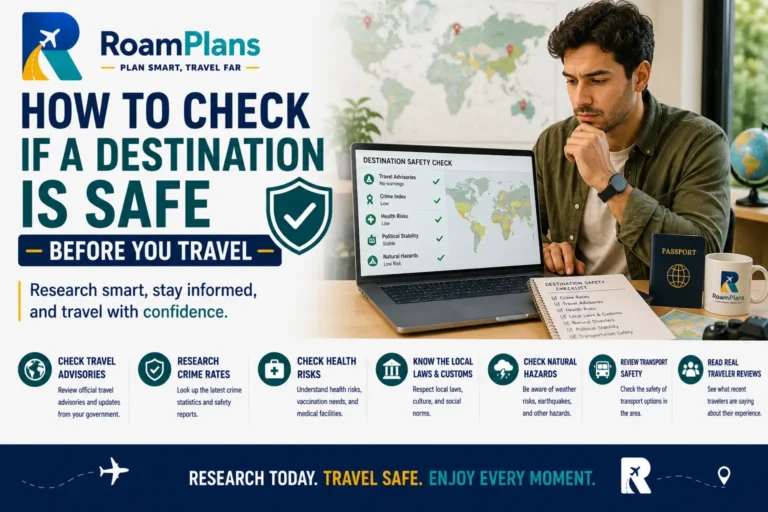
For a full safety-research process, read How to Check If a Destination Is Safe Before You Travel↗.
Create One Emergency Contact Sheet

I recommend keeping one short contact sheet rather than searching through different booking apps when something happens.
Include:
Local emergency number
Accommodation phone number
Accommodation address
Trusted contact at home
Embassy or consulate contact where relevant
Bank card emergency number
Travel insurer or assistance number
Airline contact
Mobile provider
Medical assistance information
Any tour operator needed for remote activities
You may not need every contact during the trip.
The point is having them ready before you need one.
Save the list:
On your phone
Somewhere secure online
Offline on the device
On a small printed copy if practical
Do not rely on one phone being available for every emergency.
Save the Local Emergency Number
Do not assume 911 works everywhere.
Emergency numbers differ between countries, and some destinations use separate numbers for police, ambulance, and fire services.
Find the correct number from an official destination or government source before departure.
Save it in your phone with a clear name such as:
Emergency Services – Italy
rather than something you may not recognize while stressed.
If several emergency numbers apply, save them separately.
Also make sure everyone in your travel group knows where this information is stored.
Know How to Explain Where You Are
Calling for help is more useful if you can tell someone where to find you.
Save the full address of your accommodation.
When traveling somewhere unfamiliar, you may also find it useful to have:
Hotel name
Street address
Nearby landmark
Map pin
Local-language version of the address where useful
If you are heading somewhere remote, save the name or coordinates of the place before leaving.
Do not depend on being able to open an online map during the emergency.
Choose One Trusted Contact at Home

Pick at least one person who knows the basic details of your trip.
This could be:
Family member
Partner
Close friend
Another person you trust
They should have enough information to help if normal communication stops.
Give them:
Your destination
Travel dates
Flight or main transport details
Accommodation
Your phone number
Major route changes
Important remote activities
A copy or secure record of information you may need in an emergency
They do not need every café or attraction on your itinerary.
Give them the information that would actually matter if they needed to work out where you were supposed to be.
Decide How Often You Will Check In
A check-in plan works better when both sides know what normal communication looks like.
For example:
Short City Trip
A message once each evening may be enough.
Solo Trip
You may check in when arriving in each new city.
Remote Activity
You may send a message before leaving and another after returning.
Longer Trip
You may agree on a call every few days.
The right schedule depends on the trip.
The main point is to avoid a vague arrangement where someone knows you are traveling but has no idea whether not hearing from you for two days is normal.
Decide What a Missed Check-In Means
This part is often forgotten.
Suppose you tell someone:
I will message you after my hike.
What should they do if you do not?
Before the activity, agree on:
When they should expect your message
How late you could reasonably be
Whether phone coverage may disappear
Who they should contact first
What information they should provide if they become concerned
Do not create an emergency because your phone lost signal for 20 minutes.
At the same time, a check-in has little value if nobody knows when a missed message should become a concern.
For remote or higher-risk activities, make the timing clearer.
Create a Group Communication Plan
Traveling with other people does not remove the need for an emergency plan.
Groups can become separated in:
Airports
Train stations
Festivals
Crowded attractions
Severe weather
Evacuations
Transport disruptions
Areas with weak phone service
Before the trip, agree on what happens if you cannot contact each other.
Ready.gov recommends that families make an emergency communication plan in advance and decide how they will reconnect if separated.
You can apply the same idea to travel.
For example:
If we become separated at the train station and cannot use our phones, meet beside the main information desk.
A simple meeting point can solve a problem that would otherwise become stressful.
Pick Meeting Points That Are Easy to Identify
Avoid vague meeting points such as:
Meet outside.
A major airport may have many exits.
Instead use something clear:
Main hotel reception
Information desk
Specific station entrance
Named café
Major landmark
Tour meeting point
Choose a place that is:
Easy to find
Public
Accessible
Likely to remain open or usable
For children or family groups, make sure everyone old enough to understand the plan knows where to go.
Have a Backup Communication Method
Your normal messaging app may not always work.
You could lose:
Mobile data
Wi-Fi
Phone battery
Your device
Access to one app
Think about what your second option would be.
Depending on the trip, that could include:
Normal phone call
SMS
Another messaging app
Hotel phone
Email
Borrowed phone
Accommodation reception
Local SIM or eSIM backup
Printed contact information
You do not need five communication systems.
You need one realistic backup.
Keep Key Phone Numbers Written Down
Most people no longer memorize phone numbers.
That becomes a problem when the phone containing every contact is the thing that disappears.
Write down the most useful numbers:
Trusted contact
Accommodation
Bank
Insurance assistance
Embassy or consulate where relevant
You can keep the paper:
In your luggage
Inside a document pouch
In another secure place separate from the phone
Do not write passwords, PINs, or other sensitive account information beside the numbers.
The goal is communication backup, not creating another security risk.
Know How You Would Get Medical Help
Medical planning should happen before you are sick.
CDC advises international travelers to have a plan for obtaining health care overseas and to check whether their existing health coverage applies abroad. Travelers may need to pay medical expenses themselves in many destinations, so CDC also recommends considering appropriate medical and evacuation coverage based on the trip.
Before departure, think about:
Where you could find suitable medical care
Whether you have insurance assistance
How you would reach a clinic or hospital
Which medications you take
Allergies
Medical conditions that may affect emergency treatment
For a normal city trip, you do not need a list of ten hospitals.
Knowing how you would locate appropriate care can be enough.
For remote, longer, or medically higher-risk trips, more preparation may make sense.
Create a Small Medical Information Record

Keep a short medical record if there is information a doctor may need quickly.
Depending on your situation, it could include:
Full name
Date of birth
Emergency contact
Blood type if confirmed
Allergies
Current medications
Major medical conditions
Relevant medical devices
Insurance information
Do not add medical details that serve no practical purpose.
Keep the information secure but accessible enough that you or someone traveling with you can use it during an emergency.
If you take regular medication, also know its generic name rather than relying only on a brand name that may not be used abroad.
Keep Essential Medication Accessible
Do not place every dose of an essential medicine somewhere that can disappear with one lost checked bag.
For medication you depend on, think about:
Where you will carry it
Whether it needs temperature control
What happens if your bag is delayed
How you would replace it
Whether destination rules apply
Check official medication-entry requirements for the country before travel.
Your emergency plan does not need to explain every medication rule. It only needs to answer:
What would I do if I suddenly lost access to the medicine I need?
Know What Your Embassy or Consulate Can Help With
For international travel, save the nearest embassy or consulate information where relevant.
For U.S. citizens abroad, State Department consular services can assist in certain situations involving lost or stolen passports, victims of crime, financial emergencies, medical issues, arrests, and wider crises. Local police, hospitals, banks, and other local services still handle the problems that fall within their own roles.
This distinction matters.
If you need an ambulance, contact local emergency services.
If your bank card is stolen, contact the bank.
If your passport is stolen, embassy or consular help may be needed.
If you are the victim of a crime, local police handle the investigation.
Knowing who does what stops you from wasting time calling the wrong organization.
Consider STEP if You Are a U.S. Traveler
U.S. citizens and nationals traveling or living abroad can use the Smart Traveler Enrollment Program, or STEP.
The State Department includes STEP in its current international travel planning process and uses it to send relevant embassy or consulate messages to enrolled travelers.
STEP can be useful during:
Security events
Demonstrations
Natural disasters
Other local crises
Changes affecting travelers
It does not replace your own communication plan.
Think of it as an extra official information channel.
Travelers from other countries should check whether their own government provides a similar travel registration or alert service.
Keep U.S. Consular Emergency Contact Information Available
For U.S. citizens who cannot reach the nearest U.S. embassy or consulate during an emergency abroad, the State Department currently lists:
From overseas: +1-202-501-4444
From the U.S. and Canada: 1-888-407-4747
The State Department publishes these numbers through its current Help Abroad and Emergencies Abroad pages.
Save them if they apply to you.
Do not rely on finding them through a search engine during an emergency.
Keep Copies of the Travel Documents You May Need

An emergency becomes harder if the only copy of an important document disappears with your phone, wallet, or luggage.
Before leaving, keep secure copies of documents that may be difficult to replace or may help confirm your identity and bookings.
Depending on your trip, this could include:
Passport information page
Visa or travel authorization
Driver’s license
International Driving Permit if required
Travel insurance details
Flight information
Accommodation booking
Prescription information
Emergency contacts
Do not keep every copy beside the original.
For example, if your passport and its only photocopy are inside the same stolen bag, the copy has provided no backup.
A better setup could include one secure digital copy and one separate backup that you can reach without your main phone.
For document storage and protection, follow How to Store Travel Documents Safely While Traveling↗ rather than adding every document rule to your emergency plan.
Make Sure Someone at Home Can Access Key Information
Your trusted contact should have enough information to help if you lose access to your own records.
That does not mean giving them every password or financial detail.
Useful information may include:
Passport copy
Travel dates
Accommodation
Flight information
Insurance provider
Emergency contact details
Prescription information when relevant
CDC advises travelers carrying medication to leave a copy of prescriptions with a friend or relative at home in case an emergency refill is needed. It also recommends keeping medicines properly labeled and carrying written prescription information.
Think about one simple question:
If I lost my phone and wallet today, what information would I need someone at home to send me?
Give your trusted contact access to that information before departure.
Prepare Backup Access to Money

An emergency fund is useful only if you can still reach it after losing your main wallet.
Do not keep:
Main bank card
Backup bank card
All cash
Phone
Identification
in one place unless circumstances leave no practical alternative.
A simple backup setup may include:
One main payment card
One second card stored separately
A reasonable amount of cash
Access to your bank without relying only on your primary phone
Your bank’s official emergency contact information
The amount of cash that makes sense depends on the destination.
You do not need to carry enough money for the entire trip.
The aim is to have enough access to cover basic needs such as food, transportation, communication, or one night’s accommodation while a larger problem is being solved.
Know How Someone Could Send You Emergency Money
Ask this question before leaving:
If I lost all immediate access to money, how could someone send funds to me?
Your answer might involve:
Your bank
A verified money-transfer service
Another account
A trusted family member
Your travel insurer in certain cases
Know which option would realistically work where you are going.
For U.S. citizens facing severe financial problems abroad, the State Department says embassies and consulates can explain ways family or friends can transfer funds. Limited emergency financial assistance may also exist in specific circumstances, subject to eligibility.
Do not treat embassy assistance as your normal backup-money plan.
Your own second payment method should come first whenever possible.
Keep Your Bank’s Emergency Contact Information Offline
If your wallet is stolen, you may need to freeze or cancel cards quickly.
Save the bank’s official international contact number somewhere other than the card itself.
A number printed on the back of a stolen card will not help much once the card is gone.
Store the information:
In your emergency contact sheet
In a secure offline note
With your separate document backup
If several travelers share one travel budget, make sure more than one person can access money.
One missing wallet should not leave the whole group unable to pay.
Review Your Insurance Before the Trip
Travel insurance should be part of emergency preparation if you have a policy, but owning insurance is not the same as knowing how to use it.
Before departure, check:
Emergency assistance number
Policy number
Medical coverage
Emergency transportation or evacuation coverage
Theft or baggage requirements
Documentation needed for claims
Any major exclusions
Whether you may need to pay first and claim later
CDC notes that travel and travel-health insurance policies vary widely, including how they handle emergency medical treatment, medical evacuation, and other costs.
Save the insurer’s assistance number offline.
If another person is traveling with you, make sure they know where to find it.
For policy selection and coverage details, use your dedicated Travel Insurance guidance rather than trying to place the full insurance topic inside this emergency plan.
Do Not Assume Your Normal Health Insurance Works Abroad
Before international travel, check what your existing health plan actually covers outside your home country.
CDC notes that travelers may have to pay for medical treatment themselves in another country, even when they have some form of insurance.
Your emergency plan should therefore answer:
Which insurer do I contact?
How would I pay an unexpected medical bill?
Do I need authorization for certain treatment?
Does my policy include medical evacuation?
Which records and receipts should I keep?
You do not need to memorize your policy.
You need to know where to find the answers quickly.
Think About Medical Evacuation for Higher-Risk Trips
A normal city trip and a remote expedition do not create the same medical situation.
Medical evacuation may deserve more attention if your trip involves:
Remote areas
Adventure activities
Limited local medical facilities
Long distances from major hospitals
Existing medical needs
The State Department notes that medical evacuation to the United States can be extremely expensive and advises travelers to consider whether appropriate evacuation insurance makes sense for their trip.
Do not assume a standard health plan or basic travel policy automatically includes this benefit.
Check the actual policy wording before departure.
Prepare a Small Emergency Supply Kit

You do not need a large disaster bag for every vacation.
A small collection of useful items can help if transport stops, electricity fails, weather changes, or you cannot reach your luggage for several hours.
Depending on the trip, consider:
Essential medication
Small first-aid items
Phone charging cable
Portable battery
Flashlight or phone-light backup
Drinking water where practical
Small amount of cash
Printed emergency contacts
Copies of essential information
Snacks for long delays
Weather-appropriate layer
Ready.gov includes communication supplies, medication, cash, important documents, and other basic items in its current emergency-kit guidance.
The kit should fit your destination.
You do not need hurricane supplies for every weekend city break.
Keep Essential Items in Your Carry-On
Think about what would happen if your checked luggage did not arrive.
Items that may deserve space in your carry-on include:
Essential medication
Important travel documents
Phone charger
One payment backup
Necessary medical items
Basic change of clothing when useful
CDC recommends packing health items that may be difficult to obtain during the trip and checking destination restrictions before carrying medications internationally.
Do not place every essential item in checked baggage simply because it is easier to pack there.
Your emergency plan should still work if your suitcase arrives a day later than you do.
Plan for a Dead or Lost Phone

Many travel plans now depend heavily on one phone.
It may contain:
Boarding passes
Hotel bookings
Maps
Ride apps
Bank access
Authentication codes
Emergency contacts
Passport copies
Insurance details
Ask yourself:
What would still work if this phone disappeared?
Before departure:
Save key addresses offline.
Keep important phone numbers elsewhere.
Know how to access your email from another device.
Enable suitable device-location and locking features.
Keep backup payment access separate.
Have another way to reach your accommodation.
You do not need a second smartphone.
You need enough backup information to continue functioning without the first one.
Decide What to Do if You Lose Internet Access
Mobile data can fail even when your phone works normally.
Save offline:
Accommodation address
Important maps
Transport details
Emergency numbers
Boarding or booking information
Translation phrases where useful
If your group depends on messaging apps, agree on what happens when nobody has data.
For example:
If we cannot message after leaving the stadium, meet at the hotel reception.
That is much easier than trying to solve the problem in a crowd without service.
Prepare for Transportation Disruptions
Flights get canceled. Trains stop. Roads close. Weather interrupts services.
Your emergency plan does not need a second itinerary for every possible delay.
It needs a few backup questions:
Is there another way to reach the destination?
Where could I stay if I cannot leave tonight?
Who needs to know that I am delayed?
Can I access enough money for an unexpected night?
Where can I verify official transport updates?
What happens to my next booking if I arrive late?
Keep airline, rail, rental-car, or other important transport contact information available.
During a major disruption, use information from the actual transport operator or authorities rather than relying only on rumors from other travelers.
Have a Backup Accommodation Option
You do not need to book two hotels.
But it can help to know what you would do if:
Your booking disappears
You arrive after reception closes
The property cannot be accessed
A serious safety issue makes you leave
Weather or transport prevents you reaching the property
Know whether there are other accommodation options nearby.
Keep enough payment access to cover an unexpected night if you can.
For a late arrival, save the accommodation’s contact and check-in instructions before departure.
This small step can prevent a booking problem from becoming an overnight emergency.
Prepare for Severe Weather and Natural Disasters
The risks worth preparing for depend on the destination.
A trip may involve:
Hurricanes or typhoons
Flooding
Wildfires
Earthquakes
Volcanic activity
Extreme heat
Winter storms
Check the risks that actually apply to your destination and season.
Ready.gov recommends having a communication plan, identifying evacuation routes, and knowing how family members will reconnect during an emergency.
For international travel, the State Department can also include natural-disaster risks in Travel Advisories and crisis information.
Your plan should answer:
Where will I get official local alerts?
Where would I go if told to evacuate?
How will I contact my family?
What if public transportation shuts down?
What essential items would I take immediately?
Follow Local Authorities During an Active Emergency
Your plan prepared at home cannot predict the exact conditions you will face.
During an earthquake, flood, fire, storm, civil emergency, or evacuation, follow current instructions from local authorities.
Do not continue with an activity because your original itinerary says you should.
If officials close a road, beach, trail, district, or transport service, change the plan.
During wider crises abroad, the State Department advises U.S. citizens to follow local authority instructions, monitor official information, maintain communication, and use embassy or consulate resources when appropriate.
Your emergency plan gives you options.
Local information tells you which option makes sense at that moment.
Know What You Would Take During an Evacuation
You may have only a short time to leave a hotel, rental, or area.
Think about the small set of items you would take immediately:
Passport and identification
Phone
Essential medication
Wallet and payment backup
Emergency contact information
Water where appropriate
Necessary clothing
Do not delay a required evacuation trying to pack your entire suitcase.
If authorities tell you to leave immediately, follow their instructions.
Property can be replaced.
Know That Government Evacuation Is Not Guaranteed
U.S. travelers should not build an emergency plan around the assumption that the government will always provide transportation out of a crisis.
The State Department explains that it may assist U.S. citizens during certain major crises, and U.S. law allows evacuation assistance under specific circumstances when lives are endangered. The exact assistance depends on conditions and available options.
Your first plan should still include:
Monitoring official information
Maintaining travel documents
Keeping access to money
Knowing commercial transport options
Leaving earlier when official guidance recommends it
Do not wait for a situation to become severe if current official advice says you should leave.
Decide What Happens if Your Travel Group Gets Separated
Groups often assume phones will solve everything.
Prepare one backup that requires no phone.
Agree on:
A meeting point
How long to wait
Who stays at the meeting point
Who contacts accommodation
What children should do
When to involve local security or police
For example:
If we become separated inside the airport, go to the airline check-in desk rather than walking around looking for each other.
Simple instructions work better under stress than a complicated plan.
Give Children an Age-Appropriate Plan
If children are traveling with you, make sure they know what to do if they cannot find you.
Depending on their age, teach them:
Your full name
Accommodation name
Who safe staff may be
Not to leave the area with an unknown person
Where the group meeting point is
How to show or use an emergency contact card
A younger child can carry a card with a parent’s name and contact number without needing to memorize a complete emergency plan.
Keep the instructions simple.
Make a Plan for Travelers Who Need Extra Support
Emergency planning may need adjustment if someone in the group:
Uses mobility equipment
Needs regular medication
Has a medical condition
Has hearing or vision needs
Is an older traveler
Needs help communicating
Requires accessible transportation
Ask what would happen if:
An elevator stops working
Medication is lost
Accessible transport is canceled
The group becomes separated
Medical equipment is damaged
The answer may affect accommodation, transport, insurance, and emergency-contact choices.
A useful plan is based on the people actually taking the trip, not a generic traveler.
Update the Plan When the Trip Changes
An emergency plan built three months before departure may contain old information by the time you travel.
Check it again shortly before leaving.
Update:
Accommodation
Flights
Emergency contacts
Travel advisory
Health information
Insurance
Phone numbers
Major itinerary changes
If you change hotels or cities during the trip, tell your trusted contact when the change is significant.
Your plan does not need constant editing.
It just needs to match where you are actually going.
Test Your Emergency Plan Before Departure
A plan can look complete until you try to use it.
Before leaving, spend a few minutes testing the most important parts.
Ask yourself:
Can I find my accommodation address without internet?
Do I know the local emergency number?
Can I contact my bank without using the stolen card?
Can I access my insurance information without my main phone?
Does someone at home know where I am staying?
Can I access copies of important documents?
Do I know who to contact if my passport disappears?
Can I pay for basic needs if my main wallet is lost?
If one answer is no, fix that part before the trip.
The purpose of this test is not to create more work. It is to find simple gaps while you are still at home and have easy access to your records.
Put the Most Important Information in One Place
Your emergency information should not be spread across ten different apps and email threads.
Create one short emergency record containing the details you would need first.
For example:
Trip details
Destination
Travel dates
Accommodation
Emergency help
Local emergency number
Embassy or consulate
Insurance assistance number
Personal contacts
Trusted contact at home
Travel companion numbers
Financial help
Bank emergency number
Backup-money method
Medical information
Medication
Allergies
Important medical conditions
Keep the list short.
You can store detailed documents elsewhere. This page is for information you may need within the first few minutes of a problem.
Keep a Printed Emergency Card
A small printed card can be useful even if almost everything else in your trip is digital.
It could contain:
Your name
Trusted emergency contact
Accommodation address
Local emergency number
Insurance assistance number
Relevant medical information
Embassy or consulate contact where needed
Do not include:
Bank PINs
Passwords
Full card numbers
Account login details
Keep the card somewhere separate from your phone.
If your phone is lost or its battery dies, you still have the contacts you need most.
Tell Your Travel Companion Where the Plan Is
A plan stored only in your private account may be useless if you are the person who needs help.
If you are traveling with someone else, show them:
Where emergency contacts are stored
Where insurance information is kept
Where document copies can be found
Which person at home should be contacted
Where essential medication is kept
They do not need access to every private financial record.
They simply need enough information to help if you cannot manage the situation yourself.
This becomes more useful for family travel, older travelers, and anyone managing a medical condition.
Do Not Put Every Backup in the Same Bag
A backup works only if it survives the same problem that affects the original.
For example:
Poor setup:
Passport + passport copy + both bank cards + emergency cash + phone all inside one backpack.
Better setup:
Main items with you, while selected backups are stored separately and securely.
Use the same thinking for:
Money
Documents
Medication
Charging
Communication
You do not need to scatter valuables everywhere.
Just avoid creating one bag whose loss removes every backup at once.
Plan for a Lost or Stolen Phone
A missing phone can affect almost every part of a modern trip.
Before departure, make sure you know:
How to locate or lock the phone remotely
How to contact your mobile provider
How to reach your email from another device
Which accounts depend on phone-based authentication
Where offline contacts are stored
How to access your accommodation without the device
How you would pay without a mobile wallet
If the phone is stolen, protecting your accounts may become as important as replacing the device.
This is another reason to keep emergency contacts and payment backups separate from the phone.
Plan for a Lost Wallet
Imagine your wallet disappears tomorrow.
Could you still:
Pay for transportation?
Buy food?
Reach your accommodation?
Contact your bank?
Identify yourself where necessary?
Keep one payment backup separate from your main wallet.
Also know how to freeze your primary cards quickly.
You do not need a large amount of hidden cash. You need enough backup access to prevent one lost wallet from stopping the entire trip.
Plan for Missing Travel Documents
Travel documents deserve their own backup because losing them can affect border crossings and flights.
Keep secure copies of key documents and know which official organization handles replacements.
If a passport is lost or stolen abroad, contact the relevant embassy or consulate and follow its current instructions.
Do not make your emergency plan into a full passport-replacement guide. The useful preparation step is simply:
Know who to contact and keep information that can help confirm your identity.
Plan for an Unexpected Hospital Visit
Even healthy travelers should know what they would do if they suddenly needed medical care.
Your plan should answer:
Who would I call?
How would I reach a medical facility?
What insurance information would I need?
Who at home should be told?
Where is my medication information?
How would someone access my travel details if I could not explain them myself?
If you have a medical condition that could affect emergency treatment, make that information easy to find.
Do not wait until you are sick to start searching old emails for an insurance number.
Plan for a Missed Flight or Major Transport Failure
Not every emergency involves danger.
A canceled flight, missed connection, train shutdown, or closed road can still create a difficult situation.
Prepare for it by keeping:
Airline or transport contact details
Accommodation contact
Backup payment access
Important bookings offline
Enough flexibility for an unexpected night
If your delay affects another booking, contact the next provider as early as possible.
A travel emergency plan should help with practical disruptions as well as serious safety events.
Plan for Losing Access to Your Accommodation
Think about what you would do if:
Your phone containing the entry code dies
You lose your room key
The host does not answer
Your booking cannot be found
You arrive after reception closes
Keep the accommodation address, phone number, and check-in instructions available offline.
For self-check-in properties, save entry instructions somewhere other than the booking app when security allows.
If you are arriving late, confirm the process before departure.
Plan for a Local Crisis
A local emergency can change transportation, accommodation, communication, and normal services at the same time.
Possible examples include:
Severe storms
Flooding
Wildfires
Earthquakes
Major demonstrations
Civil unrest
Large transport shutdowns
Your plan does not need to predict exactly what will happen.
Know:
Where official alerts come from
How you will contact family
Where your documents and medication are
How you could leave the area
What you would take if you had to move quickly
Follow local authority instructions during an active emergency rather than relying only on a plan prepared at home.
Decide When You Would Leave a Destination Early
This is worth thinking about before emotions and sunk costs influence the decision.
You might consider changing or ending a trip if:
Official authorities advise people to leave
A serious crisis is getting worse
Essential medical care becomes unavailable
Transportation options are closing
Your accommodation is no longer safe
You cannot maintain necessary medication
You personally no longer feel able to continue safely
There is no rule saying a trip must be completed because flights and hotels were already paid for.
Safety and practical needs come first.
Common Travel Emergency Planning Mistakes
A plan can fail because of very small gaps.
Keeping the Entire Plan Only on Your Phone
A stolen, damaged, or dead phone should not remove every emergency contact and booking detail.
Giving Someone Your Itinerary but No Check-In Plan
They know where you are traveling but do not know when lack of contact should become concerning.
Saving the Bank Number Only on the Bank Card
If the card disappears, so does the number you planned to call.
Keeping Main and Backup Cards Together
One stolen wallet removes both options.
Assuming 911 Works Everywhere
Save the correct local emergency number before arriving.
Not Checking What Insurance Actually Covers
An insurance card alone does not tell you whether medical care, evacuation, theft, or another event is covered.
Depending on Internet Access
Important addresses, phone numbers, and bookings should remain available during a data or Wi-Fi failure.
Giving Nobody at Home Your Trip Details
Someone you trust should know your basic route and accommodation.
Making the Plan Too Complicated
A plan you cannot use quickly is less useful than a short list of clear actions.
Forgetting to Update the Plan
Check accommodation, contacts, insurance, and destination information again shortly before departure.
Travel Emergency Plan Checklist

Destination Research
Check current official travel advice.
Check relevant health information.
Identify realistic weather or natural hazards.
Save official local alert sources.
Learn the local emergency number.
Communication
Choose a trusted contact at home.
Share basic trip details.
Agree on a check-in routine.
Decide what a missed check-in means.
Create a group meeting point where relevant.
Keep important phone numbers outside your phone.
Documents
Keep secure copies of key travel documents.
Store copies separately from originals.
Know where to get help if a passport is lost.
Give a trusted person access to essential backup information where appropriate.
Money
Carry a backup payment method.
Store it separately from your main wallet.
Save your bank’s emergency number.
Know how someone could send emergency money.
Keep a reasonable amount of accessible backup cash where suitable.
Health
Save relevant medical information.
Carry essential medication properly.
Know how you would find medical care.
Save insurance assistance details.
Check whether your existing health coverage applies abroad.
Phone and Digital Access
Save important information offline.
Turn on suitable phone security features.
Know how to lock a lost device remotely.
Keep another way to access important accounts.
Keep accommodation details outside your main phone.
Transportation and Accommodation
Save airline or transport contacts.
Know what you would do after a major delay.
Keep accommodation contact information offline.
Check late-arrival procedures.
Know at least one backup option if accommodation becomes unavailable.
Emergencies
Know who to call first.
Know where your emergency information is stored.
Decide what you would take during an evacuation.
Know how your group will reconnect if separated.
Consider STEP if you are an eligible U.S. traveler.
Frequently Asked Questions
Include emergency contacts, local help numbers, medical details, document backups, payment backups, insurance information, and a communication plan.
Give basic trip details to at least one trusted person who can help if normal communication stops.
Yes, a small printed copy can help if your phone is lost, damaged, or out of battery.
There is no fixed amount. Keep enough for basic short-term needs while avoiding carrying more cash than necessary.
Eligible U.S. citizens and nationals traveling abroad can consider STEP for embassy and consulate safety messages.
Use your backup contacts and offline information, secure the device remotely, contact your provider, and protect important accounts.
Use the meeting point and communication plan agreed before the trip instead of relying only on phones.
Not every traveler buys it, but if you have coverage, keep the policy and assistance details easy to access.
Final Thoughts
In short, A good travel emergency plan is short, practical, and easy to reach. Save the contacts you may need, keep backups separate, give someone at home your basic plans, and know what you would do if money, documents, communication, transport, or health suddenly became a problem. A few minutes of preparation before departure can remove a lot of confusion when plans do not go as expected.

Adnan Ahmed
RoamPlans AuthorTravel Planning Researcher & Editor
Adnan Ahmed is the travel planning researcher and editor behind RoamPlans. He creates clear, practical guides to help travelers compare destinations, plan routes, estimate costs, and avoid common trip-planning mistakes. His work combines careful source research, official travel information, and regular content reviews to keep each guide useful and current.
- ✓Destination Research
- ✓Budget Planning
- ✓Route Planning
- ✓Beginner Travel Guides

Turn This Guide into a Practical Trip Plan
Use the recommended Airline Baggage Allowance Checker or explore more free RoamPlans tools.