How Many Days Should Your Trip Be? A Complete Guide to Choosing the Right Trip Length
A practical guide for choosing the right trip duration based on your destination, available time, travel pace, transport, budget, and goals.
Planning a trip is exciting, but deciding how many days to travel is often harder than people expect ↗. I remember planning some of my own trips and constantly asking myself the same questions: Is one week enough? Should I stay longer? Am I trying to fit too much into a short vacation? I soon realized that choosing the wrong trip length can leave you feeling rushed, tired, or wishing you had planned differently.
After planning many trips over the years, I learned that there is no perfect number of days for every vacation. The right trip length depends on your destination, travel goals, available time, budget, and the way you like to travel. In this guide, I’ll share the practical approach I now use before every trip to help you, how long should a trip be that feels balanced, enjoyable, and worth your time.
Why Trip Length Matters?
The number of days you spend on a trip affects almost every part of your vacation.
It influences your budget, transportation, sightseeing, accommodation, daily schedule, and overall experience.
If your trip is too short, you may feel rushed.
If it is too long, you may spend more money than necessary or run out of things you genuinely want to do.
Choosing a realistic trip length helps create a more enjoyable travel experience.
Some of the benefits include:
- ✓Better use of your vacation time
- ✓A more comfortable daily schedule
- ✓Less travel stress
- ✓Better budget planning
- ✓More realistic sightseeing
Instead of asking how long other people travel, focus on the amount of time that works best for your own trip.
There Is No Perfect Number of Days
Many travelers search for the “ideal” number of vacation days.
In reality, no single answer works for every destination.
A three-day city break can be perfect for one trip, while another destination may deserve ten days or more.
The best trip length depends on several factors working together.
For example:
- ✓How far you need to travel
- ✓What you want to experience
- ✓Your available vacation time
- ✓Your travel budget
- ✓Your preferred travel pace
Rather than copying someone else’s itinerary, choose a trip length that fits your own situation.
Start with the Time You Actually Have
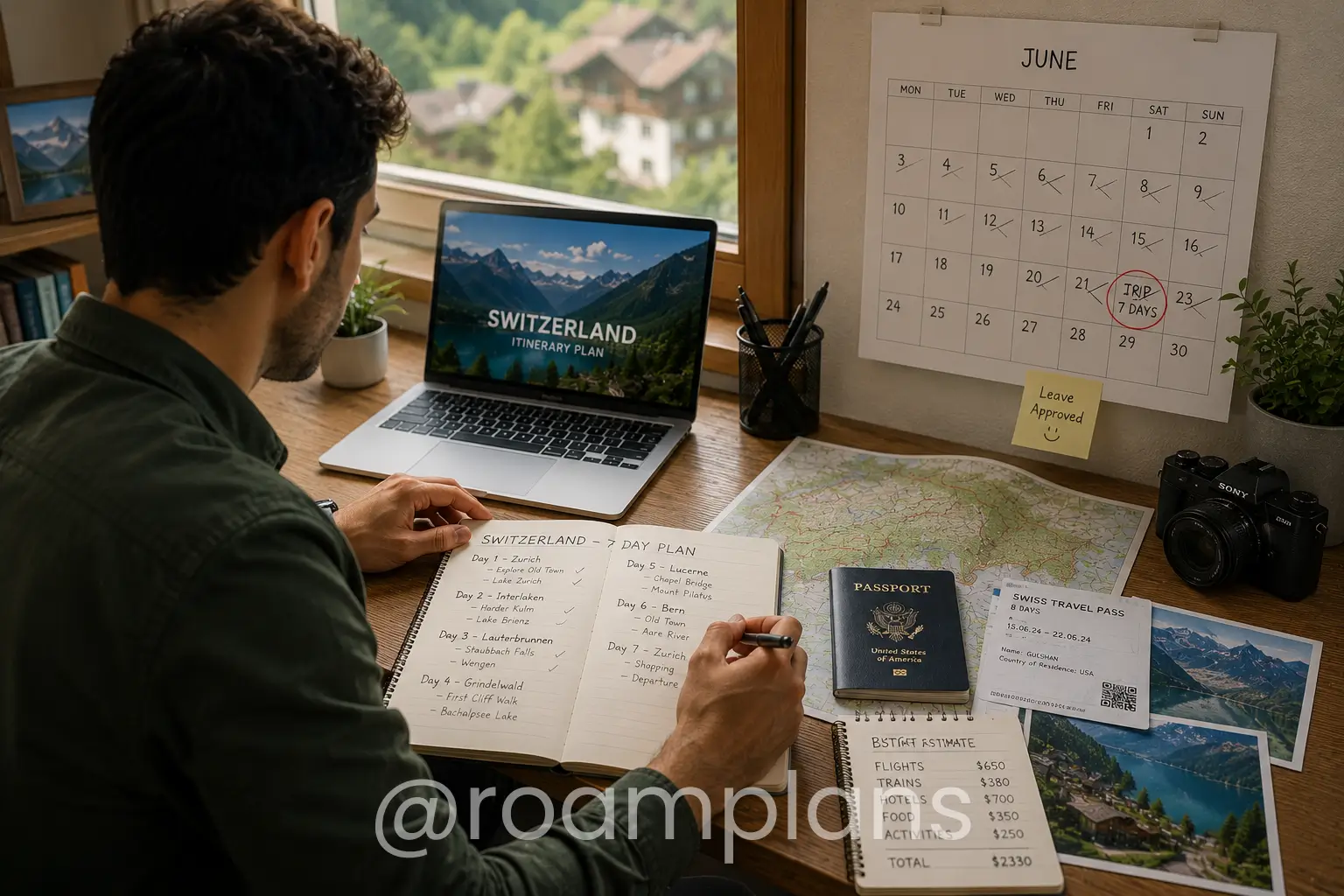
Before thinking about destinations, attractions, or activities, look at your available time.
Many travelers plan their dream vacation first and only later realize they do not have enough days to enjoy it properly.
A better approach is to begin with the number of vacation days you can realistically take.
Then choose a trip that fits comfortably within that timeframe.
Questions to Ask Yourself
Before deciding on your trip length, consider:
- ✓How many vacation days do I have?
- ✓Can I take additional leave if needed?
- ✓Do I need travel days at the beginning and end?
- ✓Will I need time to recover before returning to work or school?
- ✓How much free time do I realistically have?
Being honest about your schedule helps you plan a trip that feels enjoyable instead of rushed.
Available Time Guide
| Vacation Time | Trip Type That Often Fits Well |
|---|---|
| 2–3 Days | Weekend getaway or nearby city |
| 4–5 Days | Short domestic vacation |
| 6–7 Days | One-week holiday |
| 8–14 Days | International vacation or multiple regions |
| More than 2 Weeks | Extended travel or multi-country trip |
These are only general examples.
Your destination and travel style may lead to a different decision.
Think About Your Travel Goals

The purpose of your trip should also influence its length.
Different travel experiences require different amounts of time.
For example, someone looking for a relaxing beach holiday may spend several days enjoying the same location.
Another traveler interested in museums and sightseeing may prefer a shorter but more active trip.
Start by asking yourself what you hope to achieve during your vacation.
Common Travel Goals
Your main goal might be:
- ✓Relaxing and recharging
- ✓Exploring a new city
- ✓Visiting family or friends
- ✓Enjoying nature
- ✓Taking a road trip
- ✓Learning about local culture
- ✓Trying local food
- ✓Celebrating a special occasion
Once your travel goal is clear, it becomes much easier to decide how many days you actually need.
Match Your Trip Length to Your Travel Style
People enjoy traveling in different ways.
Some like to wake up early, visit several attractions each day, and keep a busy schedule.
Others prefer slow mornings, long meals, and plenty of free time.
Neither style is better.
The important thing is choosing a trip length that matches the way you enjoy traveling.
Fast-Paced Travelers
Fast-paced travelers often enjoy:
- ✓Busy sightseeing days
- ✓Visiting several attractions
- ✓Exploring multiple neighborhoods
- ✓Full daily schedules
- ✓Shorter vacations with many activities
Slow Travelers
Slow travelers often prefer:
- ✓Relaxed mornings
- ✓Fewer daily activities
- ✓Extra free time
- ✓Longer stays in one place
- ✓Flexible schedules
Understanding your travel style helps you avoid planning a vacation that feels either too busy or too quiet.
Consider the People Traveling with You
The ideal trip length may change depending on who is joining you.
A couple taking a romantic getaway may have different needs than a family traveling with young children or a group of friends.
Before deciding how many days to travel, think about everyone’s comfort and expectations.
Group Travel Considerations
Consider whether you are traveling:
- ✓Alone
- ✓As a couple
- ✓With family
- ✓With children
- ✓With friends
- ✓With older relatives
Some groups may prefer shorter, more relaxed vacations, while others may enjoy spending extra time exploring together.
Choosing a trip length that suits everyone often leads to a much better travel experience.
For the next step, you can read our How to Choose a Travel Destination guide ↗ to make sure your destination and trip length work well together.
Consider Travel Distance
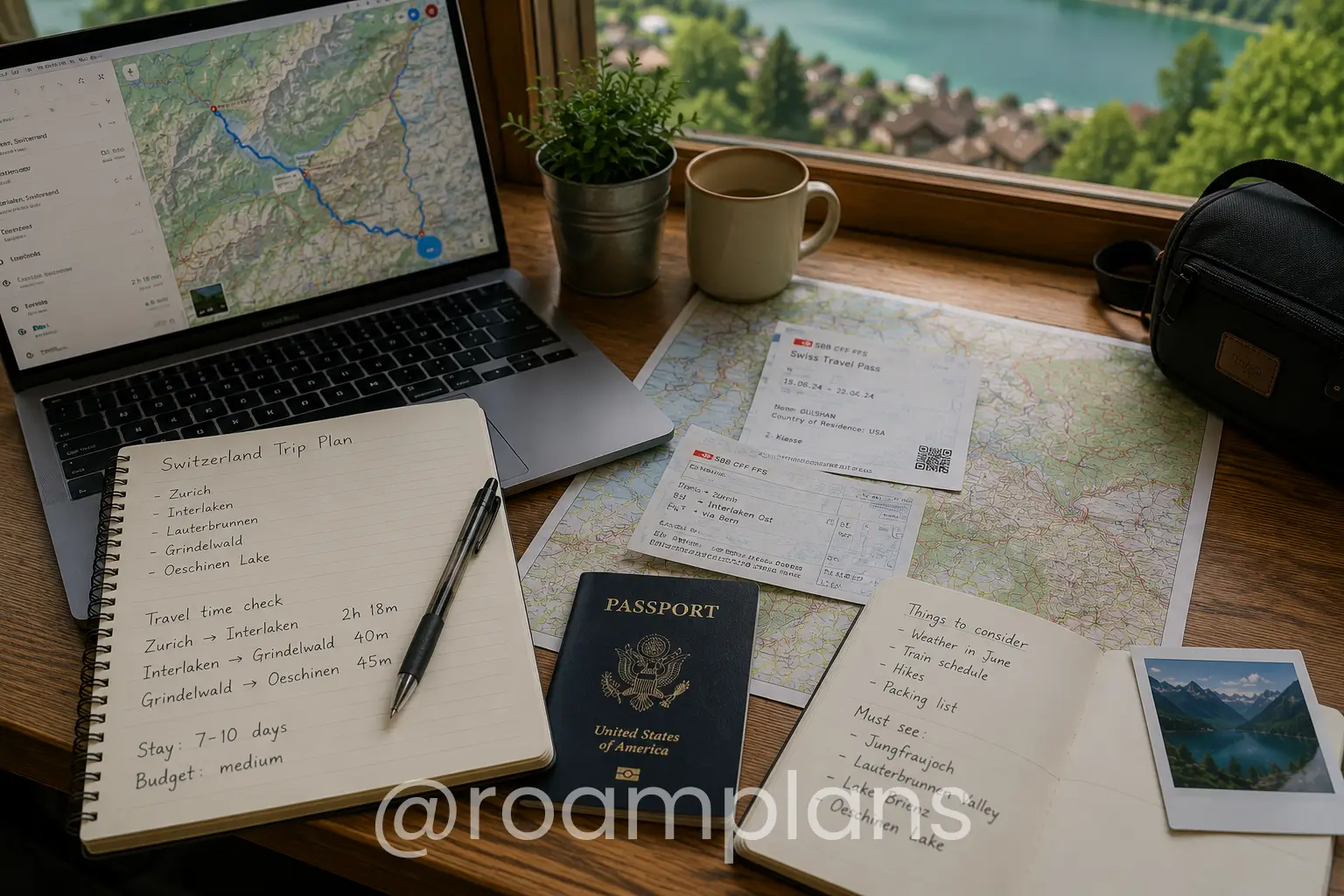
The distance you need to travel plays an important role in deciding how many days your trip should be.
A nearby destination often works well for a short vacation because you spend less time traveling.
A destination on the other side of the world usually deserves a longer stay since the journey itself takes more time.
The farther you travel, the more valuable each day at your destination becomes.
Questions to Ask Yourself
Before deciding on your trip length, think about:
- ✓How far is the destination?
- ✓How many hours will I spend traveling?
- ✓Will I lose a full day because of transportation?
- ✓Is the journey worth it for a short vacation?
- ✓Would a closer destination make better use of my time?
These questions help you balance travel time with time spent enjoying your destination.
Distance Guide
| Travel Distance | Trip Length That Often Works Well |
|---|---|
| Nearby destination | 2–4 days |
| Domestic destination | 4–7 days |
| Nearby international destination | 5–8 days |
| Long-haul international destination | 10–14 days or more |
These are general guidelines rather than fixed rules.
Your travel goals and available vacation time should always come first.
Think About Flight Time and Transfers

The journey does not end with the flight itself.
Many trips also include airport check-in, security, layovers, baggage collection, and transportation to your accommodation.
All of this takes time.
If reaching your destination requires a long journey, adding a few extra days to your vacation often creates a much more enjoyable experience.
Travel Time Checklist
Ask yourself:
- ✓How long is the flight?
- ✓Are there connecting flights?
- ✓How much time will airport procedures take?
- ✓How long is the transfer to my accommodation?
- ✓Will I lose most of my first or last travel day?
Looking at the complete journey helps you decide whether your trip length is realistic.
Consider Jet Lag
Jet lag is another factor that many travelers overlook.
Crossing several time zones can leave you feeling tired or out of sync for a day or two.
If you are traveling a long distance, your first day may be more about adjusting than sightseeing.
That is why longer international trips often benefit from a few extra days.
Jet Lag Comparison
| Trip Type | Typical Impact |
|---|---|
| Local or domestic travel | Usually little or no jet lag |
| Nearby international travel | Minor adjustment for some travelers |
| Long-haul international travel | May require one or more recovery days |
Not every traveler experiences jet lag in the same way, but it is worth considering when deciding your trip length.
Decide How Many Places You Want to Visit
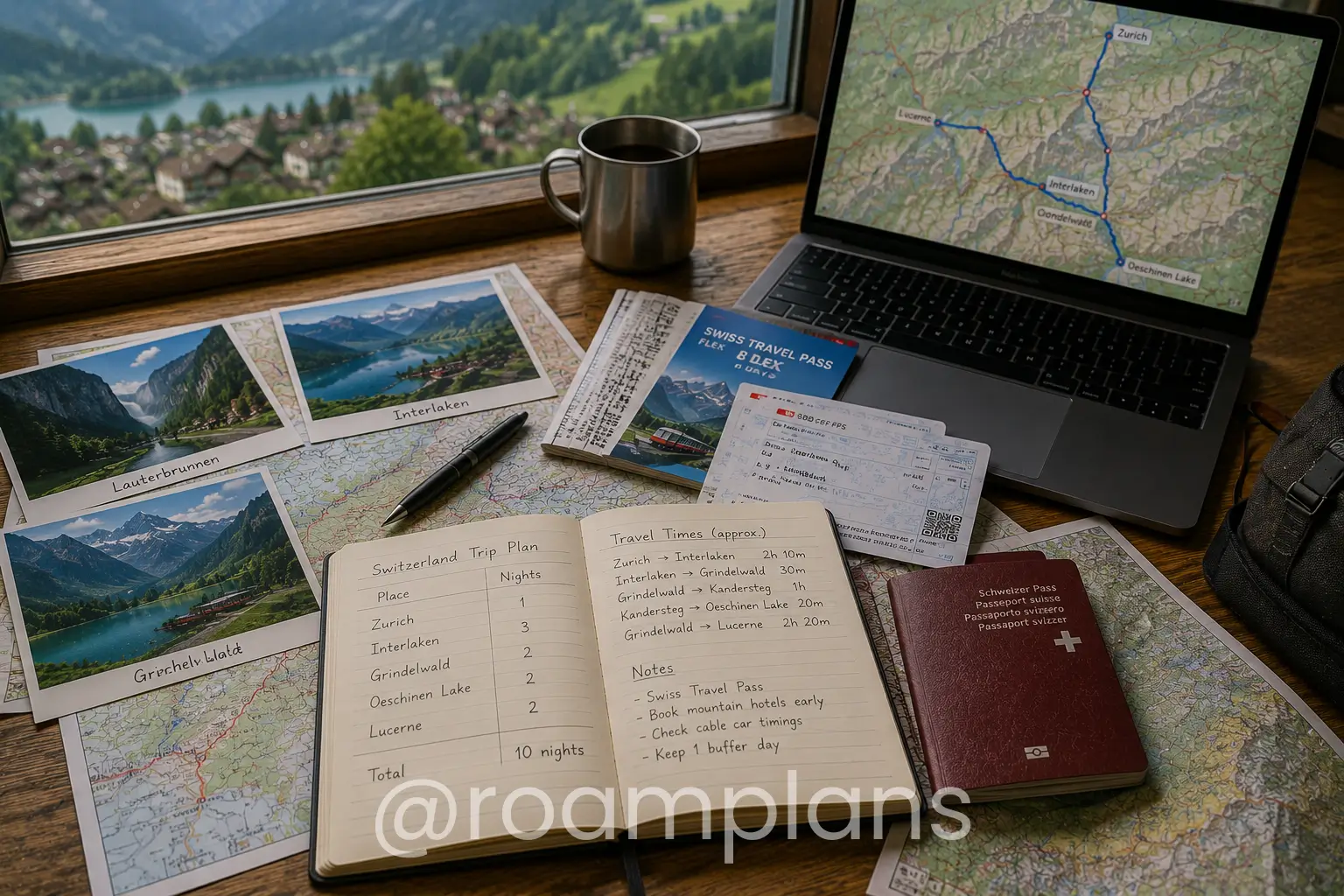
Another important question is whether you plan to stay in one place or visit several destinations during the same trip.
Traveling between cities takes time.
Packing, checking out, transportation, and checking into a new accommodation all reduce the time available for sightseeing.
If you want to visit multiple destinations, your trip usually needs to be longer.
Compare Different Travel Styles
Staying in One Destination
This often allows you to:
- ✓Explore at a relaxed pace
- ✓Spend less time traveling
- ✓Become familiar with the local area
- ✓Enjoy a more flexible schedule
Visiting Multiple Destinations
This often includes:
- ✓More transportation
- ✓More hotel check-ins
- ✓Less free time
- ✓A busier itinerary
- ✓More planning
Neither approach is better.
Choose the one that matches the type of vacation you want.
Choose Between Slow Travel and Fast Travel
Every traveler has a different pace.
Some people enjoy seeing as much as possible in a short time.
Others prefer spending several days exploring one destination without rushing.
Your preferred pace should influence your trip length.
Fast Travel
Fast travelers often enjoy:
- ✓Busy schedules
- ✓Visiting many attractions
- ✓Seeing several destinations
- ✓Early mornings
- ✓Full sightseeing days
Shorter trips can work well for this travel style.
Slow Travel
Slow travelers often prefer:
- ✓Longer stays
- ✓Relaxed mornings
- ✓Fewer daily activities
- ✓More time with local culture
- ✓Flexible plans
Longer trips usually provide a better experience for travelers who enjoy a slower pace.
Leave Room for Rest

It is easy to fill every day with activities.
However, many experienced travelers leave some free time in their schedule.
Rest days give you time to slow down, enjoy unexpected discoveries, or simply recover after busy sightseeing.
You do not need to plan every hour of your vacation.
A little flexibility often makes the trip feel more enjoyable.
Rest Day Checklist
Before finalizing your trip length, consider:
- ✓Will I have enough free time?
- ✓Am I trying to do too much?
- ✓Will I have time to relax?
- ✓Can I adjust my plans if needed?
- ✓Will I enjoy the trip instead of rushing through it?
A well-balanced vacation is usually more memorable than one that feels rushed from beginning to end.
Recommended Trip Length by Trip Type
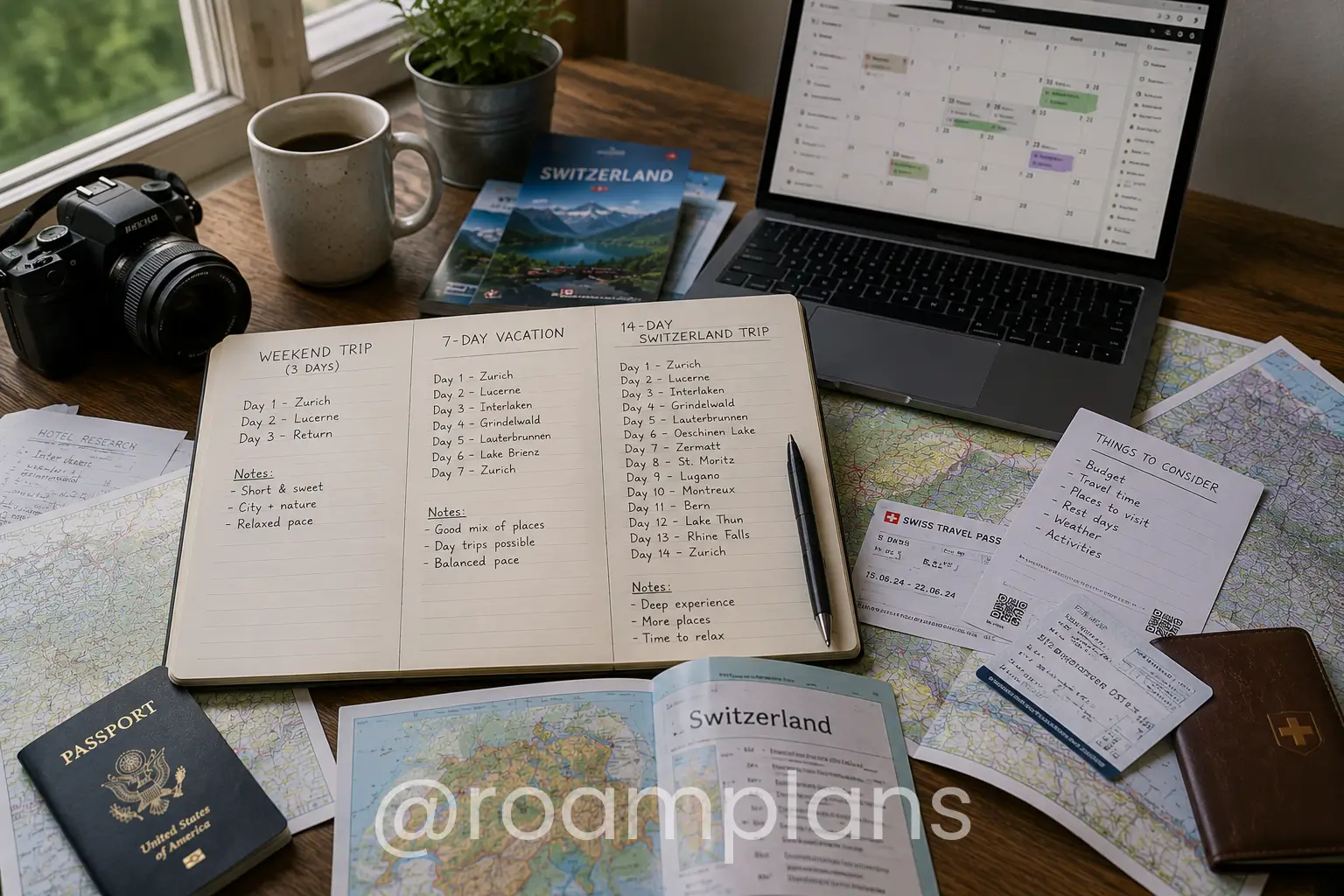
There is no fixed number of days that works for every vacation.
Different types of trips naturally require different amounts of time.
The recommendations below can help you choose a trip length that feels comfortable without making your schedule too busy.
Remember that these are general guidelines.
Your destination, travel goals, and available vacation time should always come first.
Weekend Getaway
Weekend trips are perfect when you need a short break without taking a long vacation.
Because travel time is usually limited, most of your time can be spent relaxing or sightseeing.
Recommended Length
2–3 Days
This often provides enough time to:
- ✓Explore the destination
- ✓Enjoy local food
- ✓Visit a few attractions
- ✓Return home feeling refreshed
Weekend trips usually work best for nearby destinations.
City Break
City breaks are ideal for travelers who enjoy museums, historic sites, shopping, restaurants, and local neighborhoods.
The right trip length depends on the size of the city and your sightseeing pace.
Recommended Length
3–5 Days
This often gives you enough time to:
- ✓Visit major attractions
- ✓Explore different neighborhoods
- ✓Try local restaurants
- ✓Enjoy the city without rushing
Beach Vacation
Beach vacations usually focus on relaxation rather than constant sightseeing.
Many travelers enjoy staying longer because they are not moving between different locations every day.
Recommended Length
5–7 Days
This often provides enough time to:
- ✓Relax by the beach
- ✓Enjoy water activities
- ✓Explore nearby areas
- ✓Take a slower travel pace
Nature or National Park Trip
Nature trips often include hiking, wildlife, scenic drives, or outdoor activities.
Travel time between attractions may also be longer than in a city.
Recommended Length
4–7 Days
This usually allows enough time to:
- ✓Visit several natural attractions
- ✓Enjoy hiking or outdoor activities
- ✓Spend time relaxing in nature
- ✓Adjust your plans if weather changes
Road Trip
Road trips involve regular travel between destinations.
Because you spend time driving, a longer vacation usually creates a more comfortable experience.
Recommended Length
7–14 Days
This often gives you enough time to:
- ✓Visit several destinations
- ✓Enjoy scenic routes
- ✓Take breaks between driving days
- ✓Explore places without feeling rushed
International Vacation
International trips often involve longer flights, airport procedures, and possible jet lag.
Many travelers find that staying longer makes the journey more worthwhile.
Recommended Length
7–14 Days
Long-distance destinations may benefit from even longer stays if your schedule allows.
Family Vacation
Family travel often moves at a slower pace.
Children may need extra breaks, and families usually spend more time organizing transportation, meals, and daily activities.
Recommended Length
5–10 Days
This usually provides enough flexibility without making the trip feel exhausting.
Solo Trip
Solo travelers often have greater flexibility because they only need to organize one schedule.
Trip length depends largely on personal travel style.
Recommended Length
3–10 Days
Some solo travelers enjoy quick city breaks, while others prefer spending several weeks exploring one destination.
Trip Length Comparison Table
| Trip Type | Recommended Length |
|---|---|
| Weekend Getaway | 2–3 Days |
| City Break | 3–5 Days |
| Beach Vacation | 5–7 Days |
| Nature Trip | 4–7 Days |
| Road Trip | 7–14 Days |
| International Vacation | 7–14 Days |
| Family Vacation | 5–10 Days |
| Solo Trip | 3–10 Days |
These recommendations are starting points rather than strict rules.
Adjust them according to your destination and travel style.
Common Mistakes When Choosing Trip Length
Many travelers either underestimate or overestimate how much time they need.
Here are some common mistakes to avoid.
Trying to See Too Much
Some travelers try to visit several cities in just a few days.
This often leaves very little time to actually enjoy each destination.
Sometimes, visiting fewer places creates a much better vacation.
Forgetting About Travel Days
Flights, train journeys, road trips, and airport procedures all use valuable vacation time.
Always include travel days when deciding how long your trip should be.
Choosing a Trip That Is Too Short
A short vacation can work well for nearby destinations.
However, traveling a long distance for only a day or two at the destination often leaves little time to relax or explore.
Staying Longer Than Necessary
A longer vacation is not automatically better.
If you have already experienced everything you hoped to do, extending your stay may simply increase your travel costs.
Choose the number of days that matches your goals rather than assuming longer is always better.
Planning Every Minute
Filling every day with activities often leads to travel fatigue.
Leave some free time to relax, explore unexpected places, or simply enjoy the destination at your own pace.
Simple Trip Length Decision Checklist
Before deciding how many days your trip should be, ask yourself:
- ✓How much vacation time do I actually have?
- ✓How far do I need to travel?
- ✓Will jet lag affect my trip?
- ✓How many destinations do I want to visit?
- ✓Do I prefer slow or fast travel?
- ✓Will I have enough time to relax?
- ✓Does my trip length fit my budget?
- ✓Am I trying to do too much?
Answering these questions honestly will usually help you choose a trip length that feels realistic and enjoyable.
Real-Life Trip Length Examples
Sometimes it is easier to decide your trip length by looking at practical examples.
The examples below show how different travelers might choose the number of days for different types of vacations.
Remember that these are examples only.
Your ideal trip length may be different depending on your destination, travel style, and available time.
Example 1: Weekend City Break
Vacation Time: 3 Days
Destination: Nearby city
Trip Length: 2 Nights
This gives enough time to:
- ✓Visit the main attractions
- ✓Enjoy local restaurants
- ✓Explore the city center
- ✓Return home without feeling rushed
Example 2: One-Week Beach Vacation
Vacation Time: 7 Days
Destination: Beach resort
Trip Length: 6–7 Nights
This allows time to:
- ✓Relax by the beach
- ✓Enjoy water activities
- ✓Visit nearby attractions
- ✓Take a slower travel pace
Example 3: International Vacation
Vacation Time: 14 Days
Destination: Long-haul international trip
Trip Length: 12–14 Nights
This provides enough time to:
- ✓Recover from long flights
- ✓Explore several attractions
- ✓Experience local culture
- ✓Enjoy a relaxed schedule
Example 4: Family Vacation
Vacation Time: 8 Days
Destination: Family-friendly destination
Trip Length: 7 Nights
This gives families extra flexibility for:
- ✓Children’s schedules
- ✓Rest breaks
- ✓Local sightseeing
- ✓Unexpected delays
These examples show that the best trip length depends on the type of vacation rather than following one fixed number of days.
How to Know If Your Trip Is Too Short
A trip may be too short if you find yourself answering “Yes” to several of these questions.
- ✓Will I spend almost as much time traveling as sightseeing?
- ✓Am I trying to visit too many places?
- ✓Will every day feel rushed?
- ✓Will I have very little time to relax?
- ✓Am I skipping experiences because of limited time?
If so, consider either extending your trip or focusing on fewer destinations.
How to Know If Your Trip Is Too Long
A longer vacation is not always the better choice.
Your trip may be longer than necessary if:
- ✓You have already experienced everything on your list.
- ✓You are adding extra days without a clear reason.
- ✓Your budget becomes uncomfortable.
- ✓You are running out of meaningful activities.
- ✓You would enjoy a shorter, more focused trip just as much.
The goal is to choose enough days to enjoy your destination—not simply the longest vacation possible.
Frequently Asked Questions
There is no single answer. The ideal trip length depends on your destination, travel goals, available vacation time, budget, and travel style.
Yes. A three-day trip can be perfect for nearby cities, weekend getaways, or short domestic vacations where travel time is limited.
For many destinations, yes. A one-week trip can work well, especially for nearby international destinations. Long-haul journeys may benefit from additional days.
That depends on your available time. If your vacation is short, focusing on one destination often creates a more relaxed experience.
Many travelers enjoy a slower pace because it provides more time to experience a destination without rushing. However, the best pace depends on your personal travel style.
Be realistic about your available vacation time, include travel days, and avoid trying to visit too many places during one trip.
Yes. If your journey involves long-haul flights or multiple time zones, adding a few extra days can make your vacation more comfortable.
Yes. Staying longer than necessary may increase costs without adding much value if you have already experienced everything you wanted to do.
Final Thoughts
One thing travel has taught me is that a great vacation is not measured by how many days you are away. It is measured by how well those days match your destination, travel style, and personal goals. I have found that some of my favorite trips were short weekend escapes, while others needed much more time because of long travel distances and slower sightseeing. Careful planning always made those trips feel more enjoyable and far less stressful.
As you decide how many days your own trip should be, focus on what works best for you instead of comparing your plans with someone else’s. Give yourself enough time to travel comfortably, enjoy the experiences that matter most, and return home feeling satisfied instead of exhausted. Every trip will teach you something new, and with each journey, you’ll become even better at planning the right length for your future adventures.

Adnan Ahmed
RoamPlans AuthorTravel Planning Researcher & Editor
Adnan Ahmed is the travel planning researcher and editor behind RoamPlans. He creates clear, practical guides to help travelers compare destinations, plan routes, estimate costs, and avoid common trip-planning mistakes. His work combines careful source research, official travel information, and regular content reviews to keep each guide useful and current.
- ✓Destination Research
- ✓Budget Planning
- ✓Route Planning
- ✓Beginner Travel Guides