Cross-Border Travel Planning Guide: Documents and Checklist
A cross-border trip needs more than a connected route and confirmed hotels. Your passport, entry permission, baggage, payment methods, and transport arrangements may need a fresh check each time you enter another country. Preparing for the first destination alone can leave a gap later in the journey.
This guide helps you organize those checks in route order, including transit stops and the return journey. Use the checklist to identify what to verify, then confirm the actual requirements with each country’s official authorities for your nationality, travel purpose, and dates.
To cross an international border, you normally need an accepted passport or travel document, the correct visa or authorization when required, and proof that you meet the destination’s entry conditions. Depending on your route and nationality, officials or transport providers may also request an onward ticket, accommodation address, proof of funds, health documents, customs declarations, or vehicle paperwork. Check official rules for the destination, any transit country, and your return route before departure.
| Border-Crossing Check | What to Confirm | Where to Verify It |
|---|---|---|
| Identity and passport | Accepted document, remaining validity, blank pages, condition, and matching personal details | Destination immigration authority or embassy |
| Permission to enter | Visa, eVisa, visa-free eligibility, travel authorization, permitted stay, and number of entries | Official immigration or consular website |
| Supporting evidence | Onward travel, accommodation, funds, insurance, invitation, or health documents if required | Official entry guidance and your carrier |
| Customs | Restricted items, declarations, cash thresholds, food, medicines, and duty allowances | Official customs authority |
| Land or sea transport | Vehicle registration, permission to drive a borrowed or rental vehicle, insurance, tolls, and ferry rules | Border authority, rental company, insurer, and transport operator |
| Return and transit | Rules for every border on the route, including re-entry and airport or land transit | Each relevant government authority |
Plan Every Border in Route Order
Write your journey as a border-by-border sequence instead of checking only the final destination. Include the country you leave, every transit point, each country you enter, and the route home. A traveler can meet the final destination’s rules and still face a problem at an earlier transit or land border.
Departure country → transit country → destination → additional countries → return transit → home-country re-entry. Verify entry permission, transit permission, passport validity, customs rules, and transport documents at every arrow.
Air, Land, Rail, and Sea Border Checks
| How you cross | Extra checks to make | Common planning risk |
|---|---|---|
| Air | Airline document checks, airport transit rules, terminal changes, baggage collection, and rechecking requirements | Assuming an airport connection never requires a transit visa or entry clearance |
| Private or rental car | Vehicle registration, driver authorization, destination-valid insurance, rental permission, road permits, tolls, and temporary import rules | Having permission to enter personally but not permission to take the vehicle across |
| Bus or train | Where inspection occurs, whether passengers leave the vehicle, luggage access, station changes, and operator document rules | Keeping required documents inside inaccessible luggage |
| Ferry or cruise | Port check-in deadlines, passenger manifests, shore-entry rules, vehicle paperwork, and destination-specific arrival forms | Confusing permission to board with permission to enter at the port |
Final 24-Hour Border Check
- 1Recheck official entry, transit, customs, health, and transport notices for the next border.
- 2Place passports, visas, authorizations, tickets, accommodation details, and supporting evidence where you can reach them.
- 3Complete any required online arrival or customs form and save the confirmation offline.
- 4Confirm local border or port operating hours, check-in deadlines, and realistic queue time.
- 5Download the next address, onward ticket, emergency contacts, and route information before losing connectivity.
What Is Cross Border Travel?
Cross-border travel means traveling from one country into another during the same journey.
Unlike domestic travel, you leave one country’s legal system and enter another with its own immigration rules, customs regulations, and travel requirements.
Your trip may include:
-
✓Two neighboring countries
-
✓Several countries within one region
-
✓Multiple countries across different continents
No matter how many borders you cross, each one may have different rules that require advance preparation.
Why Cross-Border Travel Needs Different Planning?
Planning a trip within one country is usually straightforward.
Cross-border travel is different because every country sets its own entry requirements.
A document accepted in one country may not be enough for another.
Some destinations require additional paperwork before arrival, while others have specific customs or health regulations.
Preparing for these differences before your trip helps prevent delays and unexpected problems at the border.
Types of Cross-Border Trips
Not every international journey looks the same.
Understanding which type of trip you are taking helps you prepare more effectively.
Visiting Neighboring Countries
Some travelers cross a land border into a neighboring country by:
-
✓Car
-
✓Bus
-
✓Train
-
✓Ferry
These trips often involve shorter travel times but still require proper travel documents.
Regional Multi-Country Trips
Some vacations include several countries within the same region.
Examples include exploring different countries during one European vacation or visiting several countries in Southeast Asia.
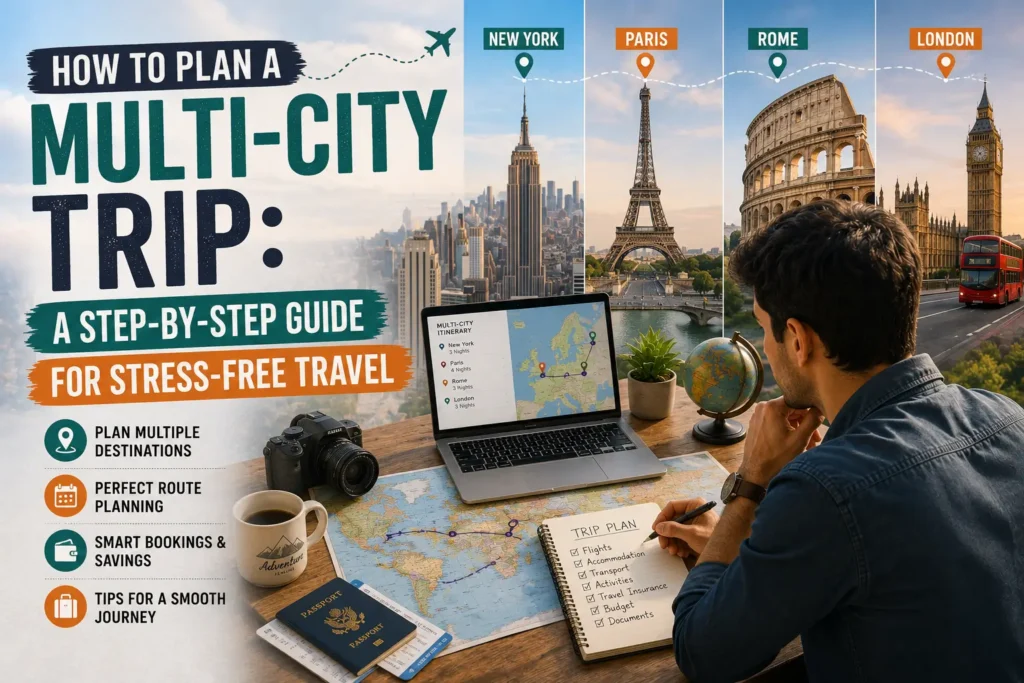
These trips often involve multiple border crossings throughout the journey. Use a multi-city trip plan ↗ to organize the overnight bases and transfers, then check border requirements for each leg.
Long-Distance International Trips
Other travelers combine countries that are much farther apart.
These trips usually involve international flights and additional planning for entry requirements, transportation, and travel schedules.
Check Your Passport First

Your passport is the most important document for international travel. Use the passport requirements for international travel ↗ guide to check validity, blank pages, damage, and route-specific requirements.
Before planning anything else, confirm that it meets the requirements for every country you plan to visit.
Many travelers only check whether their passport has expired.
However, several countries also require it to remain valid for months after your arrival or departure.
Checking this before making reservations can save significant time and money.
Passport Checklist
Before booking your trip, confirm that:
-
✓Your passport is valid.
-
✓It has enough blank pages if required.
-
✓Your personal information is correct.
-
✓It meets the validity requirements for every country on your itinerary.
-
✓It is in good physical condition.
If your passport needs renewal, complete that process before making major travel bookings.
Understand Visa Requirements

Visa rules are one of the biggest differences between domestic travel and cross-border travel.
Every country has its own immigration policies.
Some destinations allow visitors to enter without a visa.
Others require travelers to apply before departure, while some offer electronic visas or visas on arrival.
If your trip includes several countries, do not assume that the same rules apply everywhere.
Each destination should be checked individually. Include airport transit, baggage collection, terminal changes, and any overnight stop. If you leave a country and later return, check the permitted number of entries and whether your visa or authorization remains valid.
Questions to Answer Before You Travel
Research the following for every country you plan to visit:
-
✓Do I need a visa?
-
✓How long can I stay?
-
✓Can I apply online?
-
✓How long does approval take?
-
✓Are there any special entry conditions?
Taking the time to verify these details early helps prevent last-minute surprises and allows you to travel with greater confidence.
If you’re still deciding whether international travel is the right choice for your next vacation, our Domestic vs International Trip Planning ↗ guide explains the key planning differences before you begin crossing borders.
Prepare for Border Crossings

Crossing an international border is often the biggest difference between domestic and international travel.
Even if two countries are close together, the process of leaving one and entering another may take time.
Being prepared helps you move through border checkpoints more smoothly and reduces unnecessary stress.
Before arriving at any border, make sure your travel documents are easy to access rather than packed away in your luggage.
Keep Important Documents Ready
Border officers may ask to see several documents.
Depending on the country, these may include:
-
✓Passport
-
✓Visa or travel authorization
-
✓Return or onward travel confirmation
-
✓Accommodation details
-
✓Travel insurance
-
✓Proof of sufficient funds
Having both printed and digital copies can be helpful if you cannot access the internet during your journey. Copies help you retrieve information, but do not replace an original passport, visa, or other document when originals are required. Keep backups secure rather than sharing them through public links.
Crossing a Land Border by Car
If you drive across a border, passenger entry permission and vehicle permission are separate checks. Confirm whether you need the vehicle registration, driver’s licence, international driving permit, proof of insurance valid in the destination, rental-company authorization, owner permission for a borrowed vehicle, temporary import paperwork, or road permits.
Do not assume a rental car can cross every border covered by your itinerary. Ask the rental company and insurer in writing, and verify the border authority’s current rules before driving.
Understand Immigration Procedures
Immigration is the process where a country confirms that you meet its entry requirements.
The exact procedure varies by destination, but the purpose is generally the same.
An immigration officer may ask simple questions about your visit before allowing you to enter.
Answer honestly and keep your responses clear and consistent with your travel plans.
Common Questions You May Be Asked
During immigration, you may be asked:
-
✓Why are you visiting?
-
✓How long will you stay?
-
✓Where will you be staying?
-
✓When will you leave the country?
-
✓Have you visited before?
These are routine questions and are part of normal border procedures in many countries.
Know the Difference Between Immigration and Customs

Many first-time international travelers confuse immigration with customs.
Although they happen close together, they have different purposes.
Immigration
Immigration focuses on:
-
✓Your identity
-
✓Passport
-
✓Visa
-
✓Entry permission
-
✓Length of stay
Customs
Customs focuses on:
-
✓Items you are bringing into the country
-
✓Restricted goods
-
✓Duty-free allowances
-
✓Items that must be declared
Understanding this difference helps you know what to expect after arriving. The complete customs and immigration guide ↗ explains the two processes in more detail.
Learn the Customs Rules Before You Travel
Every country has its own customs regulations.
Items that are allowed in one destination may be restricted or prohibited in another.
Before traveling, check the official customs guidance for every country on your itinerary.
Pay special attention to rules about:
-
✓Food products
-
✓Plants
-
✓Animal products
-
✓Medicines
-
✓Cash declaration limits
-
✓High-value purchases
Declaring required items honestly is usually much easier than dealing with penalties later.
Traveling Within the Schengen Area
If your trip includes Europe, you may hear about the Schengen Area.
The Schengen Area allows travelers to move between participating countries without routine passport checks at most internal borders.
However, you still need to carry your passport or other accepted travel documents because identity checks can still take place.
Remember that not every European country is part of the Schengen Area.
Crossing into or out of a non-Schengen country may involve additional immigration procedures.
Temporary internal border controls can still occur; check the Council of the EU’s Schengen guidance and national notices for your route. Where the standard short-stay rule applies, the limit is 90 days in any 180-day period across the relevant Schengen countries combined, not a new allowance at each border. Confirm your own permitted stay with the immigration authority; see the Council’s short-stay border guidance.
Manage Different Currencies

One of the biggest practical challenges during cross-border travel is handling different currencies.
Some neighboring countries use completely different forms of payment.
Planning ahead helps you avoid unnecessary exchange fees and payment problems.
Before Crossing a Border
Check:
-
✓Which currency is used?
-
✓Are credit cards widely accepted?
-
✓Is cash commonly needed?
-
✓Where can you exchange money if necessary?
Knowing these answers before you arrive makes everyday purchases much easier.
Choose the Right Payment Method
Carrying only cash is rarely the best option for international travel.
Many travelers use a combination of payment methods.
For example:
-
✓Debit card
-
✓Credit card
-
✓Small amount of local cash
-
✓Mobile payment (where available)
Using more than one payment method gives you a backup if one option becomes unavailable.
Watch Exchange Rates and Fees
International payments sometimes include additional charges.
These may include:
-
✓Foreign transaction fees
-
✓ATM withdrawal fees
-
✓Currency conversion fees
Checking these costs before your trip can help you calculate your daily travel budget ↗ for each destination. Compare amounts in one currency with the currency converter ↗, while allowing for your bank’s actual rate and fees.
Cross-Border Money Checklist
Before entering another country, confirm that you have:
Access to the local currency if needed
At least two payment methods
Bank cards that work internationally
Emergency backup funds
A basic understanding of exchange rates
Taking a few minutes to prepare your finances before crossing a border can make the next stage of your journey much more convenient and help you avoid unnecessary payment issues.
Stay Connected While Crossing Borders

Losing mobile service is one of the first things many travelers notice after entering another country.
Without a working connection, it can become difficult to access maps, booking confirmations, transportation apps, or emergency contacts.
Planning how you will stay connected before crossing the border helps avoid unnecessary stress.
Compare Your Mobile Options
Depending on your destination, you may have several choices.
These include:
-
✓International roaming
-
✓Local SIM card
-
✓eSIM (if your device supports it)
-
✓Portable Wi-Fi device
The best option depends on how many countries you will visit and how long you plan to stay.
Download Important Information Offline
Internet access is not always available immediately after entering a new country.
Before leaving your current destination, download:
-
✓Offline maps
-
✓Hotel confirmations
-
✓Transportation tickets
-
✓Important travel documents
-
✓Translation resources
Having offline access can be extremely useful if your mobile service is temporarily unavailable. Compare navigation apps with offline maps ↗ and test the route type you need before crossing; downloading a map does not guarantee offline transit or walking directions.
Prepare for Different Time Zones
If your trip crosses multiple time zones, your schedule may change more than expected.
Even a small time difference can affect transportation, hotel check-ins, and activity reservations.
Updating your devices to the correct local time helps you stay organized throughout your journey.
Remember Time Differences When Booking
Always double-check the local time before confirming:
-
✓Flights
-
✓Trains
-
✓Tours
-
✓Airport transfers
-
✓Online check-ins
A reservation made using the wrong time zone could cause unnecessary travel problems.
Check Health Requirements

Some countries have specific health-related entry requirements.
These rules can change over time, so always review official government guidance before your departure.
Preparing in advance helps avoid delays at immigration or boarding.
Review Health Requirements Before You Travel
Depending on your destination, check whether you need:
-
✓Vaccination records
-
✓Health declarations
-
✓Medical certificates
-
✓Travel health recommendations
Do this for every country on your itinerary, not just your first destination.
Pack Essential Medicines Carefully
If you regularly take medication, prepare before crossing international borders.
Some medicines that are commonly available in one country may be restricted in another.
Carry medications in their original packaging whenever possible and keep them in your hand luggage during travel.
Check the destination and transit-country embassies for restrictions, quantity limits, and any advance permit or prescription requirements. Follow the CDC’s guidance on traveling with medicine and keep medicines in their original, labeled containers. A prescription alone does not guarantee that a medicine is permitted.
Buy Suitable Travel Insurance
Travel insurance becomes even more valuable when visiting multiple countries.
Unexpected situations can happen anywhere during an international journey.
Having the right coverage may help with expenses related to:
-
✓Medical emergencies
-
✓Trip interruptions
-
✓Lost luggage
-
✓Travel delays
-
✓Emergency assistance
Before purchasing a policy, confirm that it covers every country, travel date, and planned activity. Check medical and evacuation limits, exclusions, and claim conditions; protection depends on the policy, not just having an insurance confirmation.
Keep Emergency Information Ready
Every country has different emergency services and contact numbers.
Preparing this information before arrival makes it much easier to respond if something unexpected happens.
Save Important Contacts
Keep easy access to:
-
✓Local emergency numbers
-
✓Your country’s embassy or consulate
-
✓Travel insurance emergency hotline
-
✓Airline contact information
-
✓Hotel contact details
-
✓Family emergency contacts
Store this information both digitally and on paper in case your phone battery runs out.
Learn a Few Local Phrases
You do not need to become fluent in every language you encounter.
However, learning a few basic phrases can make international travel much easier and shows respect for local communities.
Helpful phrases include:
-
✓Hello
-
✓Thank you
-
✓Please
-
✓Excuse me
-
✓Do you speak English?
-
✓Where is the train station?
-
✓I need help.
Translation apps can also be useful, but having a few common expressions memorized is helpful when you do not have internet access.
Cross-Border Safety Checklist
Before entering your next country, review this quick checklist:
-
✓Mobile connection planned
-
✓Offline maps downloaded
-
✓Local time confirmed
-
✓Health requirements checked
-
✓Medicines packed correctly
-
✓Travel insurance covers the destination
-
✓Emergency contacts saved
-
✓Important documents backed up
Completing these simple steps helps you stay prepared for the practical challenges that often come with traveling between countries and allows you to focus more on enjoying the journey.
Transportation Between Countries

Moving from one country to another is often different from traveling within the same country.
International transportation usually involves additional document checks, security procedures, or border inspections.
Before booking, make sure you understand how you will enter your next destination.
Common Ways to Cross Borders
Depending on your route, you may travel between countries by:
-
✓International flights
-
✓High-speed trains
-
✓Long-distance buses
-
✓Rental car
-
✓Ferry
Each option has different requirements, so always review the latest travel guidance before departure.
Allow Extra Travel Time
Cross-border journeys often take longer than expected.
In addition to transportation time, you may need extra time for:
-
✓Immigration checks
-
✓Customs inspections
-
✓Security screening
-
✓Boarding procedures
-
✓Border queues
Avoid scheduling important activities immediately after arriving in another country whenever possible. Confirm hotel check-in and reception hours so a delayed border crossing does not leave you without access to your room.
Common Cross-Border Travel Mistakes
Many international travel problems happen because travelers assume every country follows the same rules.
A little preparation can prevent most of these issues.
Assuming Every Country Has the Same Entry Rules
Each country decides who can enter and what documents are required.
Never assume that because you entered one country successfully, the next destination will have the same requirements.
Research every country separately before your trip.
Forgetting Passport Validity Rules
A passport that is technically valid may still not meet another country’s minimum validity requirement.
Always verify this well before your departure date.
Ignoring Currency Differences
Arriving without access to local payment methods can make simple purchases difficult.
Plan your payment options before crossing each border.
Not Checking Customs Restrictions
Some everyday items may be restricted or require declaration.
Review customs guidance before packing rather than after arriving at the border.
Relying Only on Internet Access
Mobile service may not work immediately after entering another country.
Keep important travel documents available offline so you can access them at any time.
Cross-Border Travel Checklist
Before leaving for your trip, confirm that you have completed each of these steps.
Travel Documents
-
✓Passport checked
-
✓Visa requirements confirmed
-
✓Travel authorizations completed (if required)
-
✓Copies of important documents saved
Border Preparation
-
✓Immigration requirements reviewed
-
✓Customs regulations checked
-
✓Entry rules confirmed for every country
-
✓Return or onward travel documents ready
Money and Communication
-
✓International payment methods available
-
✓Local currency planned if needed
-
✓Mobile connection arranged
-
✓Offline maps and reservations downloaded
Safety and Health
-
✓Travel insurance purchased
-
✓Health requirements reviewed
-
✓Emergency contacts saved
-
✓Medicines packed correctly
Completing this checklist before departure helps you cross international borders with greater confidence and fewer unexpected delays.
Frequently Asked Questions
Cross-border travel means leaving one country and entering another during the same journey. Each destination may have its own immigration, customs, and entry requirements.
You generally need an accepted passport or travel document and any visa or travel authorization required for your nationality and route. You may also need onward-travel, accommodation, funds, health, customs, or vehicle evidence. Requirements vary, so verify every destination, transit point, and return border with official authorities.
Not always. Some countries allow visa-free entry, while others require a visa or electronic travel authorization. Always check the official requirements for every destination you plan to visit.
It depends on your destination. Many travelers use international bank cards, but having a small amount of local currency can be useful for transportation or small purchases.
Not necessarily. Your options depend on your mobile provider, roaming plan, or whether your device supports an eSIM. Check coverage before you travel.
Printed copies can be helpful if your phone loses power, you have no internet connection, or a border officer requests supporting documents.
Yes. It can provide financial protection for unexpected situations such as medical emergencies, travel delays, or lost luggage while traveling internationally.
One of the most common mistakes is assuming that every country has the same entry rules. Researching each destination individually helps avoid unnecessary problems.
Conclusion
A useful cross-border plan checks people, belongings, and transport separately. Work through the route one border at a time, verify official requirements before making non-refundable bookings, and recheck notices shortly before departure. Keep the originals and supporting evidence accessible throughout the journey.
If you’re planning your first cross-border adventure, don’t let the extra preparation discourage you. Treat each country as its own destination with its own requirements, check every detail carefully, and keep your travel documents organized from start to finish. With thoughtful planning and the right preparation, crossing international borders can become a simple part of an unforgettable travel experience.

Adnan Ahmed
RoamPlans AuthorTravel Planning Researcher & Editor
Adnan Ahmed is the travel planning researcher and editor behind RoamPlans. He creates clear, practical guides to help travelers compare destinations, plan routes, estimate costs, and avoid common trip-planning mistakes. His work combines careful source research, official travel information, and regular content reviews to keep each guide useful and current.
- ✓Destination Research
- ✓Budget Planning
- ✓Route Planning
- ✓Beginner Travel Guides


Turn This Guide into a Practical Trip Plan
Use the recommended Free Travel Itinerary Builder or explore more free RoamPlans tools.