How to Choose a Safe Area to Stay: Beginner’s Guide
Check the exact block—not only the city or district—using recent guest reviews, maps, reliable late-night transport, active nearby businesses, lighting, and official local safety advice.
Early in my travels, I booked a hotel simply because it was the cheapest option ↗ available. The photos looked great, but after arriving, I realized the neighborhood was much farther from the places I wanted to visit than I expected. It was also very quiet at night, and I didn’t feel as comfortable walking around after dark. Since then, I’ve always spent a little extra time researching the area before booking. That small habit has helped me enjoy every trip with much greater peace of mind.
Choosing a safe area to stay is just as important as choosing the hotel itself. Even an excellent hotel may not provide the experience you’re looking for if it’s located in an inconvenient or unfamiliar neighborhood. This beginner’s guide explains how to research different areas, what signs to look for, and how to choose accommodation in a location where you can feel comfortable throughout your trip.
Why Does the Location Matter?
Many first-time travelers focus mainly on the hotel’s price and facilities.
However, the surrounding neighborhood can affect your entire travel experience.
A good location can help you:
- ✓Feel safer during your stay.
- ✓Save time traveling.
- ✓Spend less on transportation.
- ✓Walk to popular attractions.
- ✓Find restaurants and shops more easily.
Choosing the right area often improves both convenience and peace of mind.
Research the Neighborhood Before Booking
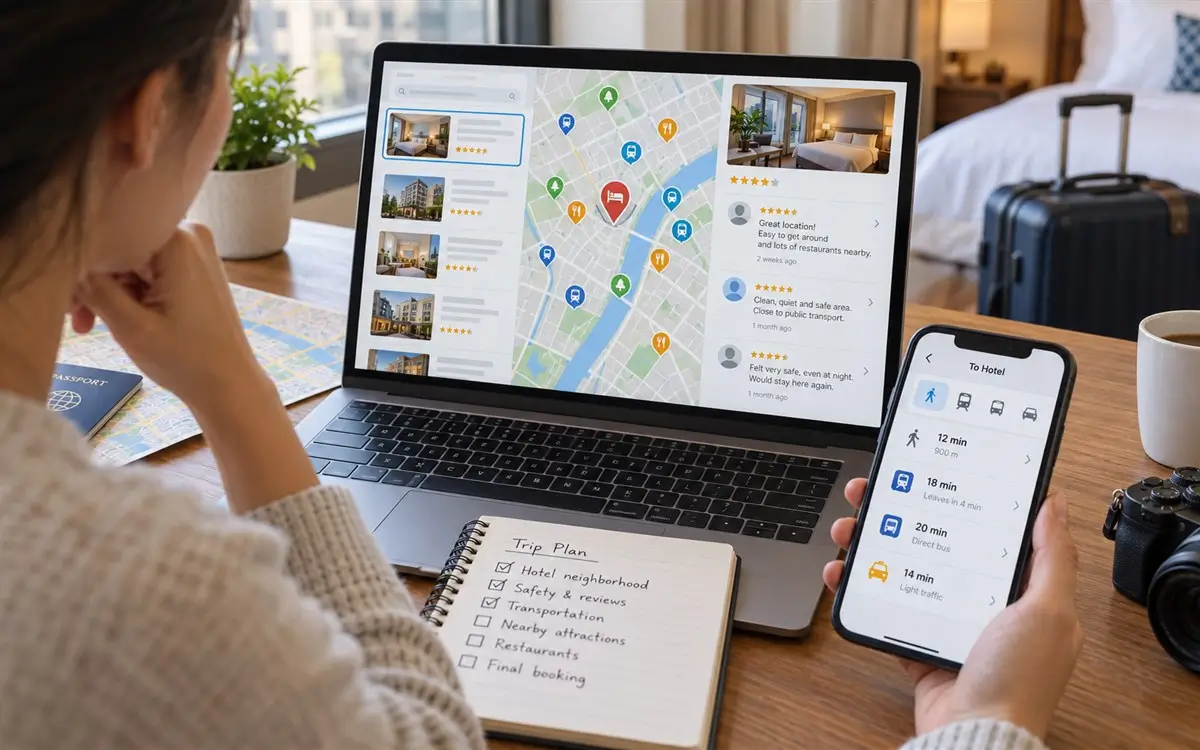
Before making a reservation, spend a few minutes learning about the area around the accommodation. Also check current local conditions using our guide to checking whether a destination is safe before you travel ↗.
Some simple ways to research a neighborhood include:
- ✓Reading recent guest reviews.
- ✓Looking at online maps.
- ✓Searching for nearby attractions.
- ✓Checking local transportation options.
- ✓Reading travel forums or destination guides.
The more information you gather, the easier it becomes to choose a location that matches your travel plans.
Read Guest Reviews Carefully
One of the first things I check before booking is what previous guests say about the neighborhood.
Guest reviews often mention things that hotel descriptions don’t.
Look for comments about:
- ✓Feeling safe during the day.
- ✓Walking around at night.
- ✓Public transportation.
- ✓Nearby restaurants.
- ✓Noise levels.
- ✓Overall neighborhood atmosphere.
If many guests mention the same concern, it’s worth taking seriously.
Use Online Maps
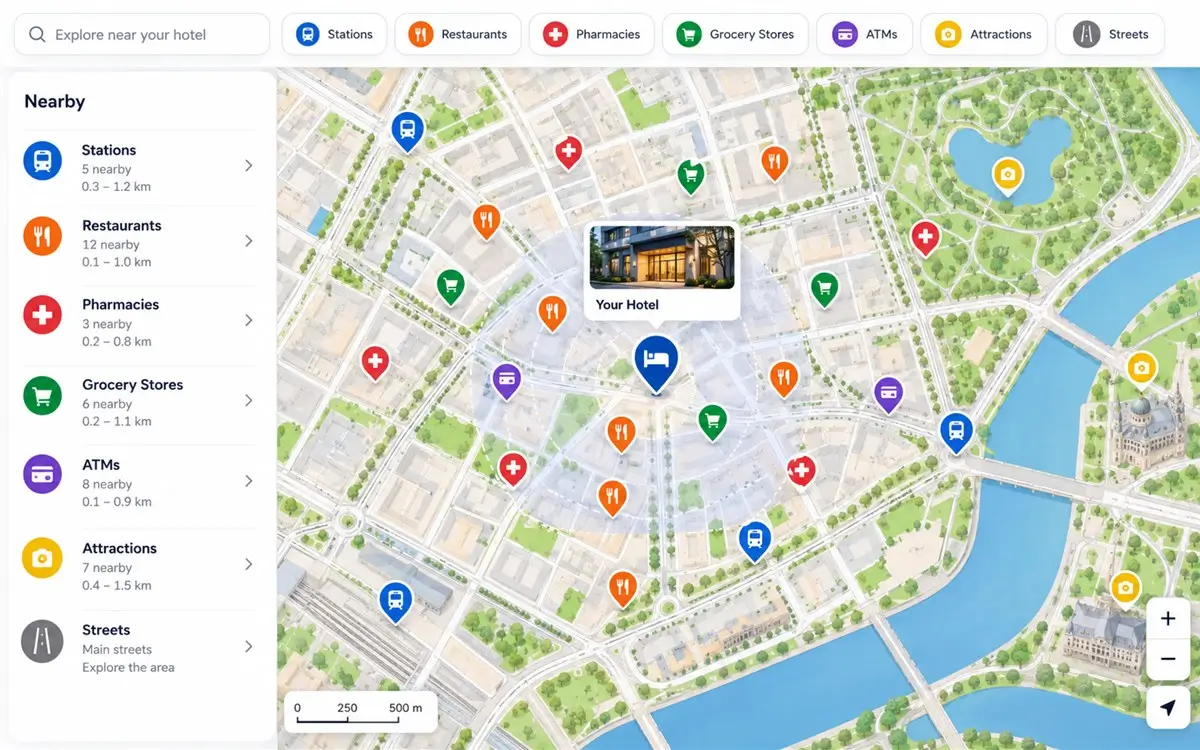
Online maps can tell you much more than just the hotel’s address.
Before booking, explore the surrounding area to see what’s nearby.
Check for places such as:
- ✓Train or bus stations.
- ✓Grocery stores.
- ✓Restaurants.
- ✓Pharmacies.
- ✓Banks or ATMs.
- ✓Tourist attractions.
Street view features can also help you understand what the neighborhood looks like before you arrive.
Stay Close to the Places You Plan to Visit
A hotel that’s close to your main attractions can make your trip much easier.
From my own experience, staying in a central location has helped me spend less time commuting and more time enjoying the destination.
When choosing an area, ask yourself:
- ✓Can I walk to the places I want to visit?
- ✓Is public transportation nearby?
- ✓Will I need taxis every day?
- ✓Is the location convenient for my itinerary?
A slightly more expensive hotel in a better location can often save both time and transportation costs.
Think About Daytime and Nighttime
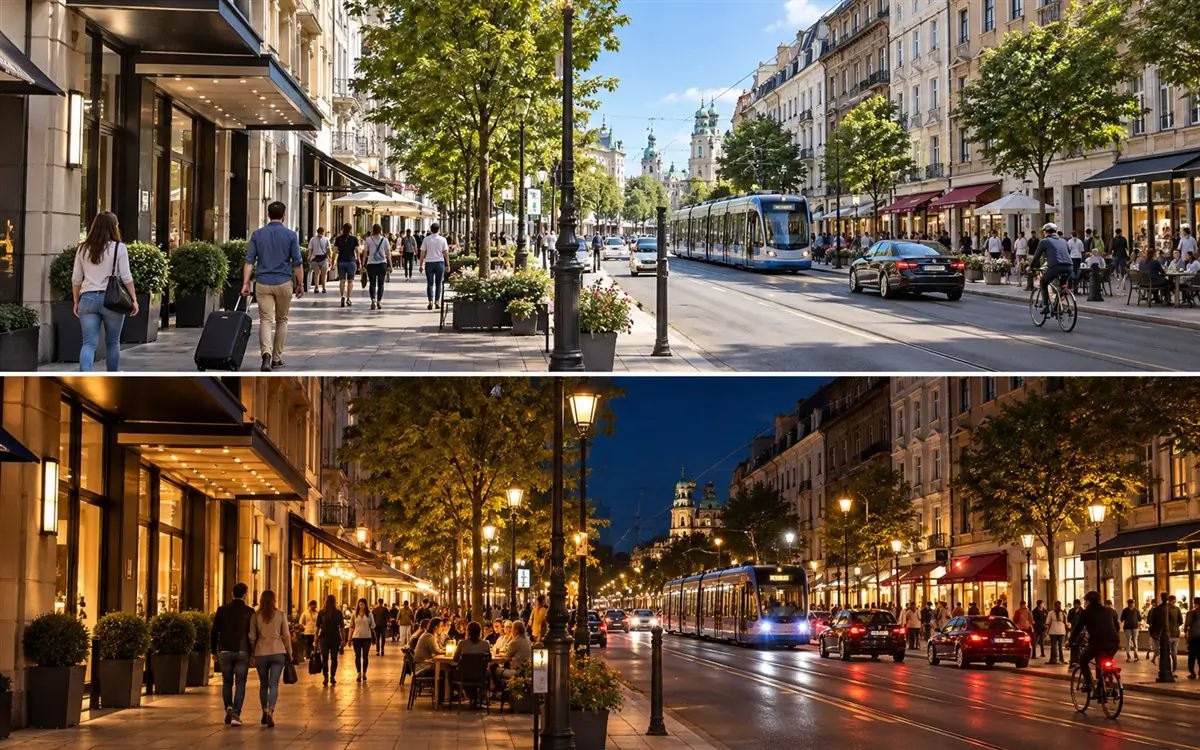
Some neighborhoods feel very different during the day than they do after dark.
If you expect to return to your accommodation in the evening, consider:
- ✓Whether the streets are well lit.
- ✓If restaurants and shops remain open.
- ✓Whether there are other people walking nearby.
- ✓How comfortable previous guests felt at night.
Thinking about both daytime and nighttime conditions helps you choose a location where you’ll feel comfortable throughout your stay.
Good Planning Builds Confidence
From my own experience, researching the neighborhood before booking has become one of the most important parts of planning a trip.
Taking just a few extra minutes to read reviews, explore maps, and check the surrounding area has helped me avoid inconvenient locations and enjoy my travels with much greater confidence.
Signs of a Safe Neighborhood
No neighborhood is completely risk-free, but some areas are generally more comfortable and convenient for travelers.
Before booking accommodation, look for positive signs such as:
- ✓Well-lit streets.
- ✓Active restaurants and cafés.
- ✓Families and local residents walking around.
- ✓Good public transportation.
- ✓Clean and well-maintained surroundings.
- ✓Positive reviews from recent visitors.
When several of these signs appear together, it’s often a good indication that the area is popular with both locals and tourists.
Watch for Warning Signs
Just as it’s important to know what to look for, it’s also helpful to recognize potential warning signs.
Before booking, pay attention if you notice:
- ✓Repeated guest complaints about feeling unsafe.
- ✓Poor street lighting.
- ✓Very limited transportation options.
- ✓Many abandoned buildings nearby.
- ✓Reviews mentioning theft or harassment.
- ✓Few nearby restaurants or businesses.
One negative review isn’t necessarily a problem, but if many recent guests mention the same issue, it’s worth considering another location.
Choosing a Safe Area for Families
Families often have different priorities when selecting accommodation.
When traveling with children, look for neighborhoods that offer:
- ✓Quiet surroundings.
- ✓Parks or open spaces.
- ✓Family-friendly restaurants.
- ✓Easy access to public transportation.
- ✓Well-reviewed hotels or apartments.
A peaceful location can make traveling with children much more enjoyable.
Choosing a Safe Area for Solo Travelers

As a solo traveler, I usually spend a little more time researching the neighborhood before booking.
I try to choose areas that:
- ✓Have plenty of people around during the day.
- ✓Stay active into the evening.
- ✓Offer reliable public transportation.
- ✓Have good lighting after dark.
- ✓Receive consistently positive guest reviews.
These simple checks have helped me feel much more confident when exploring new destinations on my own.
Choosing a Safe Area for Business Travelers
Business travelers often value convenience as much as safety.
A good business location usually offers:
- ✓Reliable transportation.
- ✓Restaurants within walking distance.
- ✓Well-reviewed hotels.
- ✓Easy access to business districts.
- ✓Safe streets for early morning or evening travel.
Choosing accommodation near your meetings can also reduce travel time and stress.
Stay Within Walking Distance When Possible
If your main attractions are nearby, staying within walking distance can make your trip easier.
Benefits include:
- ✓Spending less on transportation.
- ✓Saving travel time.
- ✓Returning to your accommodation more easily.
- ✓Exploring the local area at your own pace.
Before booking, use an online map to estimate how far you’ll need to walk between your accommodation and the places you plan to visit.
Check Nearby Services
It’s also helpful to know what’s available close to your accommodation.
Look for nearby:
- ✓Hospitals or medical clinics.
- ✓Pharmacies.
- ✓Grocery stores.
- ✓Banks or ATMs.
- ✓Police stations if possible.
- ✓Public transportation stops.
Having these services nearby can make your stay more convenient, especially during longer trips.
Trust Your Research Before Booking
From my own experience, spending an extra 15 minutes researching a neighborhood has often saved me from choosing accommodation in less convenient areas.
Choosing a safe neighborhood is only one part of finding the perfect place to stay. Our How to Choose the Right Accommodation for Your Trip ↗ guide explains how to match accommodation with your budget, travel style, and destination.
When several sources—guest reviews, online maps, and the hotel’s local area guide—paint a positive picture of an area, you can book with much greater confidence. Before paying, compare the platform, cancellation terms, and final price with our best hotel booking websites guide.
Common Mistakes When Choosing a Safe Area to Stay
Choosing a safe place to stay takes more than finding a hotel with good photos.
From my own experience, one of the biggest mistakes I made was focusing only on the room price. I didn’t spend enough time researching the neighborhood. Although the hotel itself was comfortable, getting around was inconvenient, and I didn’t feel confident walking outside after dark. Since then, I’ve learned that spending a little extra time researching the area before booking is just as important as choosing the hotel itself.
Some of the most common mistakes include:
- ✓Booking the cheapest accommodation without checking the neighborhood.
- ✓Ignoring recent guest reviews.
- ✓Not looking at the location on a map.
- ✓Choosing accommodation far from public transportation.
- ✓Forgetting to research the area after dark.
- ✓Overlooking nearby restaurants, shops, and essential services.
- ✓Booking without reading recent traveler experiences.
- ✓Assuming every neighborhood is equally suitable for tourists.
Avoiding these mistakes can help you enjoy a safer and more comfortable trip.
Safe Accommodation Checklist
Use this checklist before confirming your booking.
Before Booking
- ✓Research the neighborhood.
- ✓Read recent guest reviews.
- ✓Check the location using an online map.
- ✓Compare nearby accommodation options.
- ✓Confirm access to public transportation.
Review the Area
- ✓Look for restaurants and grocery stores nearby.
- ✓Check for pharmacies or medical facilities.
- ✓See if the streets appear well lit.
- ✓Read comments about daytime and nighttime safety.
- ✓Make sure the location matches your travel plans.
Before You Arrive
- ✓Save your hotel’s address.
- ✓Learn the best route from the airport or station.
- ✓Keep emergency contact numbers available.
- ✓Share your accommodation details with a trusted family member or friend if appropriate.
- ✓Plan your arrival during daylight if possible, especially when visiting a new destination.
Following these simple steps can help you feel more confident before and during your trip. First-time hotel guests can also review our hotel check-in and check-out guide ↗ before arrival.
Frequently Asked Questions
Read recent guest reviews, explore the neighborhood using online maps, and look for nearby restaurants, public transportation, and other businesses. Checking several sources gives you a better understanding of the area.
Not necessarily. Some city centers are very safe, while others may become crowded or noisy. Instead of assuming one area is better than another, research the specific neighborhood where your accommodation is located.
Yes. Guest reviews often mention details about the surrounding neighborhood, transportation, cleanliness, and overall safety that you may not find in the hotel’s description.
Yes. Staying close to bus stops, train stations, or metro lines can make it easier to reach attractions, reduce transportation costs, and avoid walking long distances in unfamiliar areas.
There isn’t just one factor. The best decision comes from looking at the neighborhood, guest reviews, nearby services, transportation, and how well the location matches your travel plans.
Final Thoughts
Over the years, I’ve learned that choosing a safe area to stay isn’t about finding the most expensive hotel; it’s about choosing the right location. Spending a little extra time reading reviews, exploring maps, and understanding the neighborhood has helped me feel more relaxed and confident on every trip. It’s one of the simplest travel habits I’ve developed, and it has made a real difference.
A safe location allows you to enjoy your destination with greater peace of mind. Before booking, take a few minutes to research the area, compare your options, and think about how the location fits your itinerary. If you’re planning your first trip, our Accommodation Guide ↗ covers everything from choosing accommodation to booking and staying comfortably, helping you make smarter travel decisions from start to finish.

Adnan Ahmed
RoamPlans AuthorTravel Planning Researcher & Editor
Adnan Ahmed is the travel planning researcher and editor behind RoamPlans. He creates clear, practical guides to help travelers compare destinations, plan routes, estimate costs, and avoid common trip-planning mistakes. His work combines careful source research, official travel information, and regular content reviews to keep each guide useful and current.
- ✓Destination Research
- ✓Budget Planning
- ✓Route Planning
- ✓Beginner Travel Guides


Turn This Guide into a Practical Trip Plan
Use the recommended Free Trip Cost Estimator or explore more free RoamPlans tools.