Passport Requirements for International Travel
A valid passport is usually the first document you need to check ↗ before planning an international trip. But seeing that your passport has not expired does not automatically mean it meets the rules for your destination.
Countries can set different rules for passport validity, blank pages, passport condition, accepted passport types, and traveler details. Your route can matter too. A passport that works for one country may not meet the rules for another country on your next trip.
When I check passport requirements for a trip, I start with the destination’s official entry rules instead of relying on a general six-month rule. That matters because passport requirements vary by country. The U.S. Department of State also tells travelers to review destination-specific entry information and check passport expiration dates early in the planning process.
For international travel, your physical passport must be accepted for your route, remain valid for the period required by every destination and transit country, have any required blank pages, be in acceptable condition, and match the personal details on your ticket and visa. A passport that has not expired can still fail an entry-validity rule.
This guide explains what to verify before booking and departure. If the remaining validity may be insufficient, use the guide to renewing a passport before international travel ↗. Check visa permission separately because a valid passport does not replace a required travel visa ↗.
| Passport Check | What to Confirm | Where to Verify |
|---|---|---|
| Passport type | The document is accepted for the transport method and route | Destination and transit-country authorities |
| Expiration and remaining validity | The passport satisfies the rule measured from the required arrival or departure date | Official destination entry guidance |
| Blank pages | Enough qualifying visa or entry-stamp pages remain | Destination’s official passport requirements |
| Physical condition | Identity page, cover, binding, chip, and pages are not materially damaged | Passport-issuing authority and carrier when uncertain |
| Personal details | Name, date of birth, passport number, and other booking details match | Passport, ticket, visa, and travel authorization |
| Complete route | Rules are checked for destinations, connections, and return travel | Official sources for every country on the itinerary |
Passport and entry rules can change. Always confirm the current requirements for your destination and transit countries through official government, embassy, immigration, or recognized travel-document sources before departure.
Key Takeaways
-
✓A passport can be unexpired but still fail a destination’s validity rule.
-
✓There is no single passport-validity rule for every country.
-
✓Some destinations require several months of validity beyond your arrival or planned departure.
-
✓Blank-page requirements vary by destination.
-
✓A damaged passport may cause problems even when it has not expired.
-
✓Your airline booking, visa, and other travel records should use the same personal details shown in your passport.
-
✓Children normally need their own passports for international air travel from the United States.
-
✓Transit countries can have their own passport and entry requirements.
-
✓Check official destination information again before departure rather than relying on rules from a previous trip.
What Makes a Passport Valid for International Travel?
People often use the word “valid” to mean that the expiration date has not passed.
For international travel, there can be more to check.
A destination may look at:
-
✓Passport expiration date
-
✓Remaining passport validity
-
✓Blank pages
-
✓Passport condition
-
✓Passport type
-
✓Nationality shown in the passport
-
✓Whether the passport is recognized for that type of entry
-
✓Whether the details match your visa or travel authorization
For example, official U.S. travel information shows how much the rules can differ. Vietnam requires U.S. passports to have six months of validity beyond arrival and at least one blank page, while Switzerland advises at least three months of validity beyond the period of stay when transiting the Schengen area.
That is why I would never use “six months” as a universal rule.
A safer question is:
What passport validity does my specific destination require for my nationality and travel dates?
Check Your Passport Before Booking an International Trip

Do not wait until you start packing.
Take out the passport early in your planning process and check it carefully.
Look at these six things:
1. Expiration Date
Find the passport expiration date and compare it with your planned travel dates.
Do not stop there.
Next, check how much validity your destination requires beyond your entry or departure date.
2. Blank Pages
Check how many usable pages remain.
Some countries have specific blank-page requirements for immigration or visa stamps. The U.S. Department of State advises travelers to check destination information for this requirement.
3. Physical Condition
Look for:
-
✓Tears
-
✓Water damage
-
✓Loose pages
-
✓Missing pages
-
✓Heavy bending
-
✓Damage around the photo page
-
✓Unreadable text
-
✓Damage around the electronic passport area
If something looks wrong, deal with it before travel rather than hoping airport staff will accept it.
4. Personal Information
Check:
-
✓Full name
-
✓Date of birth
-
✓Place of birth where shown
-
✓Nationality
-
✓Sex marker
-
✓Passport number
-
✓Issue date
-
✓Expiration date
If your travel booking or visa uses different information, correct the issue as early as possible.
5. Passport Type
Make sure you are carrying the document accepted for your route.
A regular passport book and a passport card are not interchangeable for every type of international travel.
6. Current Destination Rules
Check the rules again using current official information.
A passport that was accepted during your last visit does not prove the same requirements still apply.
How Much Passport Validity Do You Need?
This is one of the biggest sources of confusion for first-time international travelers.
You may hear advice such as:
Your passport always needs six months left.
That is a useful safety margin, but it is not one universal international law.
Different countries use different rules.
A destination may require your passport to be valid:
-
✓On the date you enter
-
✓For your full stay
-
✓For a set period beyond arrival
-
✓For a set period beyond your planned departure
The State Department gives U.S. travelers a general best-practice recommendation of having six months of validity after returning home, while also telling travelers to check the exact destination requirements.
Why the Six-Month Rule Causes Confusion?
Imagine your passport expires five months after your vacation.
You may still be traveling while the passport itself is legally unexpired.
But if your destination requires six months of remaining validity, you could fail its entry requirement.
The issue is not whether the passport has expired today.
The issue is whether it meets the destination’s rule for remaining validity.
Check the Date the Country Uses
Pay close attention to the wording of an official entry requirement.
For example, a rule might calculate passport validity from:
-
✓Date of arrival
-
✓Date of entry
-
✓End of your stay
-
✓Planned departure date
Those dates can produce different results.
Do not calculate passport validity until you know which date the destination uses.
Should You Renew a Passport with Less Than Six Months Left?
There is no single answer for every trip.
If your passport has less than six months remaining, check the destination rules before deciding whether you can travel with it.
You should also look at:
-
✓Transit countries
-
✓Airline document requirements
-
✓Length of your trip
-
✓Your return date
-
✓Whether you may extend the trip
-
✓How soon the passport will expire after you return
For many travelers, renewing early can reduce the chance that a future trip is affected by remaining-validity rules.
However, this article is focused on entry requirements rather than the renewal process. The separate RoamPlans guide How to Renew Your Passport Before International Travel will cover when to renew, the planning timeline, and what to check before applying.
Do You Need Blank Pages in Your Passport?
Possibly.
Blank pages can be used for:
-
✓Entry stamps
-
✓Exit stamps
-
✓Physical visas
-
✓Immigration endorsements
The number of required pages varies.
Some destinations specify one blank page. Others may have different requirements, while some modern border systems may use little or no passport-stamp space.
The U.S. State Department advises international travelers to check whether their destination requires blank pages and gives two or more blank pages as a general travel best practice.
What Counts as a Blank Passport Page?
Do not assume every small unused area counts.
A page containing an old stamp may not meet a rule requiring a fully blank page.
If you are traveling through several countries, leave extra space because each border may handle passport stamping differently.
Multi-Country Trips Need Extra Attention
Blank pages matter more if your itinerary includes several international borders.
Before leaving, look at:
-
✓Number of countries
-
✓Number of border crossings
-
✓Visa requirements
-
✓Remaining blank pages
-
✓Whether any destination requires a full blank page
If your passport is nearly full, check your options before traveling.
Can You Travel with a Damaged Passport?

Do not treat passport damage as a cosmetic problem.
Your passport needs to remain usable as an official identity and travel document.
Damage can make personal information harder to read or affect security features used during document checks.
Possible warning signs include:
-
✓Missing pages
-
✓Torn pages
-
✓Water damage
-
✓Large stains
-
✓Holes
-
✓Major cover damage
-
✓Photo-page damage
-
✓Information that is difficult to read
-
✓Passport pages separating from the binding
Normal wear from regular use is different from serious damage, but travelers should not make that decision based only on appearance if the passport has been badly affected.
If you think the passport may be damaged, contact the passport authority before traveling.
Replacing a questionable passport before the trip is safer than finding out at airline check-in that it cannot be accepted.
Does Your Passport Need an Electronic Chip?
Many modern passports are electronic passports, often called e-passports.
An e-passport contains an electronic chip that stores passport information and helps border authorities confirm the document.
Whether you specifically need an e-passport depends on the country, entry program, and travel authorization you are using.
Do not assume that every valid passport receives exactly the same entry treatment.
Some visa-free or electronic travel programs can have passport-type conditions.
The best place to check is the official entry information for your destination.
Passport Book vs Passport Card for International Travel
For U.S. travelers, the difference between a passport book and passport card matters.
A U.S. passport book is the standard document used for international air travel.
According to U.S. Customs and Border Protection, U.S. citizens, including children and infants, traveling internationally by air generally need a valid U.S. passport to board an international flight entering or departing the United States.
A U.S. passport card has more limited uses and should not be treated as a replacement for a passport book for normal international air travel.
If your trip involves flights overseas, check that you have the correct passport document before booking.
Make Sure Your Passport Details Match Your Airline Booking
One small typo can create unnecessary trouble.
When booking a flight, enter your name using the passport you will actually carry.
Check the booking against:
-
✓Given name
-
✓Middle name where applicable
-
✓Family name
-
✓Date of birth
-
✓Nationality
-
✓Passport number when requested
-
✓Passport expiration date
Do not enter a nickname because that is what friends normally call you.
Use the identity information required by the airline and shown in your passport.
Check Again After Booking
After you receive the confirmation email, compare the booking with your passport.
This takes less than a minute and gives you time to contact the airline if something looks wrong.
Do the same when entering passport details into:
-
✓Airline apps
-
✓Online check-in
-
✓Visa applications
-
✓eVisa applications
-
✓Electronic travel authorizations
-
✓Arrival forms
I prefer copying the passport information while the physical passport is in front of me instead of entering numbers from memory.
What If Your Name Has Changed?
Name changes can create extra document issues after:
-
✓Marriage
-
✓Divorce
-
✓Legal name change
-
✓Correction of personal information
Your travel booking should match the passport you intend to use.
If your new name appears on some records but your passport still uses an older name, check the rules before booking.
Do not assume that carrying a marriage certificate or other supporting document automatically fixes every airline or immigration mismatch.
The easiest setup is usually consistent personal information across the main documents used for the trip.
Every Traveler Needs the Correct Passport
Do not assume one parent’s passport covers the whole family.
For international air travel involving U.S. citizens, infants and children need their own passports.
Children’s passports can also expire sooner than adult passports. The U.S. Department of State states that passports issued to children under age 16 are generally valid for five years, compared with the longer validity normally given to adult passports.
This means a child’s passport that looked fairly new during the previous family vacation may already be much closer to expiration than a parent’s passport.
For family travel, check every passport separately.
Do not check one expiration date and assume the rest are similar.
Passport Requirements for Children Traveling Internationally

Children need their own travel documents, and their passport rules should be checked separately from an adult’s.
For U.S. families, passports issued to children under age 16 are generally valid for five years rather than the 10-year validity normally given to adults. That shorter validity means a child’s passport may reach its expiration date much sooner than parents expect.
Before a family trip, check each child’s:
-
✓Passport expiration date
-
✓Remaining validity required by the destination
-
✓Blank pages
-
✓Passport condition
-
✓Visa or travel authorization where required
-
✓Name and date of birth on airline bookings
Do not assume that because the parents’ passports are fine, the children’s documents are also ready.
Does a Child Need a Parental Consent Letter?
A passport proves a child’s identity and citizenship, but some international trips may require extra paperwork showing that the child has permission to travel.
The U.S. Department of State says some countries may require a signed and notarized consent letter when a child travels with only one parent. Similar paperwork may be required when a child travels alone or with someone who is not a parent or legal guardian.
Depending on the situation, travelers may need:
-
✓Consent letter from the non-traveling parent
-
✓Proof of sole legal custody
-
✓Birth certificate
-
✓Guardianship documents
-
✓Death certificate of a deceased parent
-
✓Other documents required by the destination
These are separate from the passport itself, but they belong in your pre-trip document check.
Check the destination country’s official rules because the format and supporting evidence can vary.
Passport Requirements for Dual Citizens
Dual nationality adds another layer to passport planning.
A traveler who is a citizen of two countries may have passport obligations in both.
For U.S. dual citizens, current U.S. government guidance says U.S. citizens must use a valid U.S. passport to enter and leave the United States. They cannot use a foreign passport with ESTA or a U.S. visa as a substitute for their U.S. passport.
The other country may also require you to enter or leave using its passport.
For example, if you hold both U.S. citizenship and citizenship in your destination country, you may need to travel with both passports.
Check Both Countries’ Rules
Before traveling as a dual citizen, check:
-
1Which passport you must use to leave your home country.
-
2Which passport the destination requires for entry.
-
3Which passport you need when leaving that destination.
-
4Which passport you must use when returning home.
-
5Whether either passport needs a visa or travel authorization for countries along your route.
The State Department also warns that dual citizens can have legal rights and obligations in both countries and advises checking the laws of countries where you are considered a national.
Do not simply choose whichever passport appears to offer easier entry without checking the legal requirements attached to each nationality.
Do Passport Rules Apply During an Airport Transit?
Yes, they can.
A connecting country may have passport or visa requirements even when it is not your final destination.
The exact requirements can depend on:
-
✓Your nationality
-
✓Passport type
-
✓Connection airport
-
✓Length of layover
-
✓Whether you stay airside
-
✓Whether you change terminals
-
✓Whether you collect baggage
-
✓Whether you change airports
-
✓Whether your flights are on separate tickets
This is especially worth checking on self-transfer itineraries.
If you must collect your suitcase and recheck it, you may have to pass through immigration. That can turn what looks like a simple airport connection into an entry to the country.
Check Passport Validity for the Whole Route
Suppose your final destination accepts your passport with three months of remaining validity.
That does not automatically mean your transit country accepts the same amount.
Check each country on the itinerary separately.
For broader document planning across final destinations and connections, RoamPlans’ Complete Travel Documents Guide for International Travelers explains how passports, visas, transit permissions, supporting documents, and other records work together.
Passport Requirements for International Travel by Air
For U.S. citizens, a passport book is the standard document for international air travel.
A U.S. passport card cannot be used as a replacement for a passport book for international flights. The State Department says passport cards are not valid for international travel by air.
Before flying internationally, check:
-
✓You have the passport book rather than only a passport card
-
✓The passport meets destination validity rules
-
✓It has any required blank pages
-
✓It is not badly damaged
-
✓Your booking details match it
-
✓Required visas or electronic permissions are connected to the correct passport
This is worth checking before leaving home rather than discovering the wrong document at airline check-in.
Passport Requirements for Land and Sea Travel
International land and sea travel can follow different document rules from international flights.
Under the Western Hemisphere Travel Initiative, certain approved documents may be accepted for U.S. citizens entering the United States by land or sea from Canada, Mexico, Bermuda, and some Caribbean locations.
For example, a U.S. passport card may be used for certain land and sea crossings, but it cannot be used for international air travel.
This distinction matters if your trip involves:
-
✓Driving between the U.S. and Canada
-
✓Driving between the U.S. and Mexico
-
✓Ferry travel
-
✓Cruise travel
-
✓Returning by land after entering another country
Always check the requirements for the exact route and transportation type.
A document accepted at a land border may not be accepted if an emergency later forces you to fly home.
Do You Need a Passport for a Cruise?
Cruise passport rules can be confusing because they depend on the itinerary.
Some U.S. citizens taking qualifying closed-loop cruises may be able to travel using other accepted proof of citizenship and identification rather than a passport book. A closed-loop cruise generally begins and ends at the same U.S. port. CBP provides specific rules for these trips.
However, the State Department recommends that cruise travelers carry a passport book even where it is not required because an unexpected situation may require them to fly home from another country.
That can happen if you:
-
✓Miss the ship at a foreign port
-
✓Become ill or injured
-
✓Have a family emergency
-
✓Need to leave the cruise early
-
✓Face a major itinerary disruption
A passport book gives you more options if your return changes from sea travel to international air travel.
Cruise Lines Can Have Their Own Rules
Your cruise company can also require a passport even where border rules may allow another document. The State Department specifically tells cruise travelers to check both government requirements and cruise-line requirements.
Before a cruise, check:
Destination rules + port rules + cruise-line rules + emergency flight options.
What Is an Emergency Passport?
An emergency passport is a limited-validity passport that may be issued in certain urgent situations.
For U.S. travelers abroad, one common situation is replacing a passport that has been lost or stolen when the traveler needs to continue or return from the trip. Current State Department guidance says an emergency passport issued abroad can have limited validity and may be valid for up to one year, depending on the circumstances.
An emergency passport should not automatically be treated the same as a full-validity passport.
Some destinations may refuse limited-validity passports or apply different entry conditions. The State Department advises travelers with these passports to check the destination’s entry and exit rules before traveling.
For example, current State Department destination guidance notes that some countries do not accept certain U.S. emergency passports for visa-free entry.
If You Receive an Emergency Passport
Check:
-
✓Its expiration date
-
✓Whether your next destination accepts it
-
✓Whether your transit country accepts it
-
✓Whether your visa remains valid
-
✓Whether an electronic travel authorization needs updating
-
✓When you should replace it with a full-validity passport
Do this before continuing to another country.
What Should You Do If Your Passport Is Lost or Stolen Abroad?
If your U.S. passport is lost or stolen overseas, contact the nearest U.S. embassy or consulate.
Current State Department guidance says travelers replacing a passport abroad generally need to appear in person. Travelers with urgent plans should tell consular staff about upcoming travel so the situation can be assessed.
Step 1: Search Carefully
Before reporting the passport missing, check:
-
✓Hotel safe
-
✓Luggage
-
✓Jacket pockets
-
✓Day bag
-
✓Airport security trays
-
✓Rental vehicle
-
✓Hotel reception
-
✓Places you recently visited
Once a passport is officially reported lost or stolen and canceled, it should not be used again even if you later find it. The State Department provides a process for reporting lost and stolen passports.
Step 2: Report Theft Where Appropriate
If your passport was stolen, local police documentation may help with replacement paperwork and insurance claims.
Step 3: Contact the Embassy or Consulate
The embassy or consulate can explain what you need for a replacement.
Having access to a copy of your passport may make it easier to provide passport details, although a photocopy does not replace the original travel document.
The State Department notes that travelers who cannot show proof of U.S. citizenship may sometimes request a passport file search when applying for an emergency replacement abroad.
Step 4: Review the Rest of Your Trip
A new passport normally has a different passport number.
That can affect documents connected to the old passport, such as:
-
✓Visa
-
✓eVisa
-
✓Electronic travel authorization
-
✓Airline passenger information
Check them before taking your next international flight.
What If Your Passport Expires While You Are Abroad?
Do not plan to return to the United States on an expired U.S. passport.
CBP states that the temporary policy that once allowed certain U.S. citizens to use expired passports for direct return ended on June 30, 2022. U.S. citizens abroad with expired passports are instructed to contact the nearest U.S. embassy or consulate to apply for a passport.
If you notice your passport will expire while you are abroad:
-
1Do not wait until the airport.
-
2Contact the nearest U.S. embassy or consulate.
-
3Explain your current location and travel dates.
-
4Check whether you need a normal replacement or limited-validity document.
-
5Recheck visas and travel authorizations after receiving the new passport.
This is another reason to check expiration dates before booking a long international trip.
Can You Travel with an Emergency Passport to Another Country?
Sometimes, but never assume it will be accepted.
A limited-validity U.S. passport can help you complete urgent travel, but foreign destinations set their own entry rules. The State Department warns that some destinations may reject limited-validity passports.
If your replacement passport was issued during a trip, check every remaining destination and transit country before boarding another flight.
This is especially useful for multi-country trips.
A document that allows you to return to the United States may not automatically let you continue through every country on your original itinerary.
Final Passport Check Before Leaving Home
Before an international trip, take a few minutes and physically check the passport you are putting in your bag.
Confirm:
-
✓This is the passport I entered in my airline booking
-
✓My name matches the booking
-
✓My passport is still valid
-
✓It meets the destination’s remaining-validity rule
-
✓It meets transit-country requirements
-
✓It has enough blank pages where required
-
✓It has no serious damage
-
✓My visa or travel authorization uses the correct passport number
-
✓Every child has the required passport
-
✓I have checked any dual-nationality rules that apply
-
✓I have secure backup passport information
-
✓I have checked the requirements again using current official sources
Doing this at home is much easier than discovering a problem at the airport.
Where to Check Passport Requirements Before International Travel
Passport rules should always be checked against your specific destination, nationality, route, and trav el dates.
For U.S. travelers, the U.S. Department of State’s destination information is one of the best starting points. Its country pages’ list details such as passport validity, blank-page requirements, visa requirements, and other entry conditions.
I prefer checking passport requirements in this order:
1. U.S. Department of State Destination Information
Start with the official information for the country you plan to visit.
Look specifically for:
-
✓Passport validity
-
✓Blank passport pages
-
✓Tourist visa requirements
-
✓Entry and exit rules
-
✓Restrictions on emergency passports
-
✓Requirements for children where applicable
Do not apply the passport rule for one country to another.
For example, current U.S. government information shows different validity requirements for different destinations. Germany requires at least three months of passport validity beyond the planned departure date, while other destinations can require six months.
2. Destination Country’s Official Immigration or Embassy Website
Next, check the destination government’s own immigration, foreign ministry, or embassy information.
This can be especially useful when:
-
✓Your nationality has special rules
-
✓You hold more than one passport
-
✓Your passport has limited validity
-
✓You are traveling with a child
-
✓Your trip involves work, study, or a long stay
-
✓Official sources appear to give different information
Use current government information rather than an old forum answer or social media post.
3. Check Every Transit Country
If your itinerary includes an international connection, check that country’s requirements too.
Pay close attention if you will:
-
✓Leave the transit zone
-
✓Collect baggage
-
✓Recheck luggage
-
✓Change airports
-
✓Use separate flight tickets
-
✓Stay overnight
-
✓Pass through immigration
Your final destination accepting your passport does not prove that every country along the route will accept it under the same conditions.
4. Check With Your Airline
Airlines check travel documents before carrying international passengers.
Use the airline’s travel-document information to help confirm what may be checked at departure, especially for complicated connections.
However, use the official government authority as the final source for entry rules.
Why Passport Requirements Vary by Country
There is no single global passport rule.
Each country controls its own borders and can decide what documents foreign visitors must present.
This is why one destination may require:
-
✓Three months of remaining validity
while another may require:
-
✓Six months of remaining validity
The same variation can apply to blank passport pages, emergency passports, passport cards, child documents, and entry permissions.
For example, State Department information for Portugal currently lists three months of validity beyond departure and two blank pages, while Botswana lists a six-month validity requirement and more unused passport pages.
The lesson is simple:
Check the country, not a general rule you found online.
Common Passport Mistakes Before International Travel
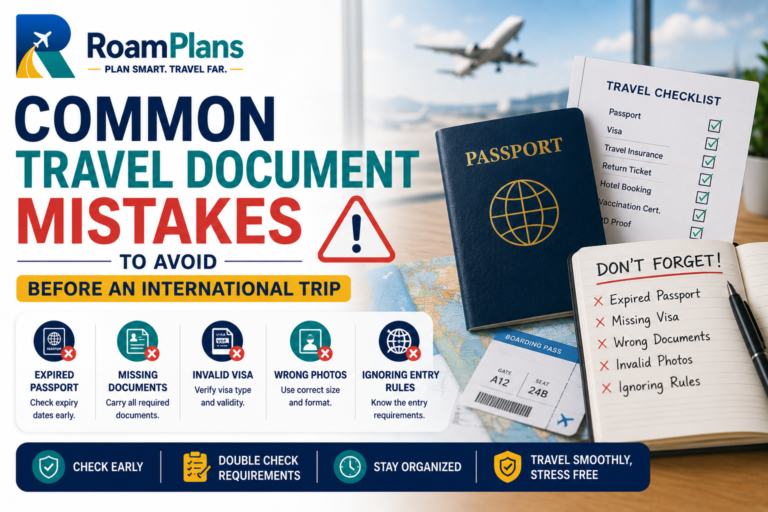
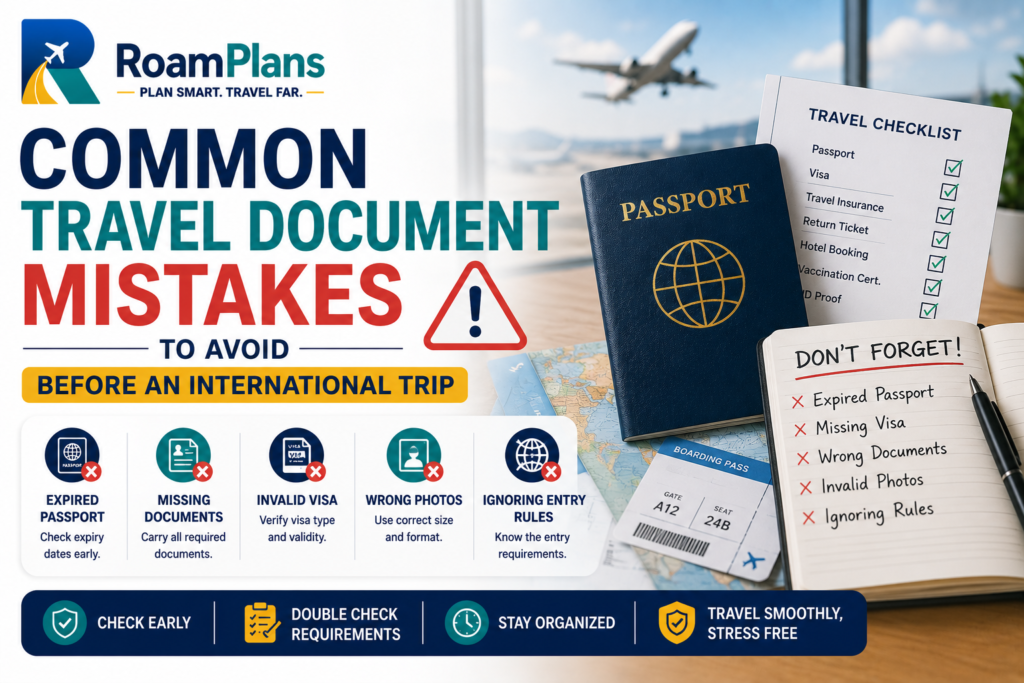
Use the broader travel document mistakes guide to check visas, names, copies, and other paperwork alongside your passport.
Most passport problems are easier to fix at home than at an airport.
Here are the mistakes I would check for before every international trip.
1. Assuming an Unexpired Passport Is Enough
This is probably the biggest misunderstanding.
Your passport might expire four months after your trip, but a destination could require six months of remaining validity.
Always check the country’s actual rule.
2. Believing Every Country Uses the Six-Month Rule
Six months is a useful planning margin, but it is not the legal requirement everywhere.
Some countries use different periods. State Department destination pages show these differences clearly.
3. Checking the Passport After Booking
Check your passport before paying for expensive non-refundable travel whenever possible.
If it needs replacement or does not meet the destination’s rules, finding out early gives you more options.
The State Department also advises travelers to check passport expiration dates when they begin planning international travel.
4. Forgetting to Check Blank Pages
A passport may have years of validity left but very little usable space.
Some foreign destinations require blank pages for stamps or visas. The State Department says requirements vary and advises travelers to check them before departure.
5. Traveling With a Damaged Passport
Water damage, major tears, stains, missing pages, or other serious damage can make a passport unsuitable for travel.
The State Department warns that airlines may refuse boarding or travelers may face problems abroad when a passport is damaged.
Do not tape, glue, laminate, or try to repair a damaged passport yourself.
6. Booking Under a Different Name
Use the name connected to the passport you intend to travel with.
Check the booking before paying and again after receiving confirmation.
Also make sure the correct passport details are used for visas, travel authorizations, and airline passenger information.
7. Entering the Wrong Passport Number
Passport numbers can be easy to mistype.
Check:
-
✓Letters and numbers
-
✓Issue date
-
✓Expiration date
-
✓Nationality
-
✓Date of birth
A mistake can become harder to correct after submitting a visa or electronic authorization.
8. Forgetting Children’s Passport Expiration Dates
Children’s U.S. passports issued under age 16 are valid for five years, so they can expire much sooner than an adult passport.
Check every family member separately.
9. Assuming a Passport Card Works for International Flights
A U.S. passport card cannot be used for international air travel. It has more limited use for certain land and sea border crossings.
For international flights, make sure you have the correct passport book.
10. Ignoring Dual-Citizenship Rules
Dual citizens can have passport obligations in both countries.
U.S. dual nationals generally must use a U.S. passport when entering and leaving the United States, while their other country of nationality may also require use of its passport.
Check both countries before traveling.
11. Ignoring Transit Requirements
Do not check only where your trip ends.
A connection through another country may create additional document requirements, especially if immigration clearance is involved.
12. Reporting a Passport Lost and Then Trying to Use It
Once a valid U.S. passport is reported lost or stolen and canceled, it is no longer valid for travel even if you later find it.
If you find a passport after reporting it, do not take it to the airport expecting it to work.
13. Depending on an Old Blog Post
Passport and border requirements can change.
Use blogs to learn what to check, but verify the actual requirement through current official government information.
That is also how I approach travel-document research for RoamPlans: explain the planning process clearly, then point travelers back to the authority responsible for the rule.
When Should You Check Your Passport?
You do not need to check it every week for months, but there are a few useful times to review it.
Before Booking
Check:
-
✓Expiration date
-
✓Destination validity requirement
-
✓Blank pages
-
✓Damage
-
✓Correct name
-
✓Passport type
If there is a problem, you still have time to deal with it before committing to expensive travel.
After Booking
Compare your passport with:
-
✓Airline reservation
-
✓Visa application
-
✓Electronic authorization
-
✓Cruise booking where applicable
Correct mistakes early.
One to Two Weeks Before Travel
Check the destination and transit requirements again.
Make sure you still have the passport you planned to use and that no document issue has appeared since booking.
Before Leaving for the Airport
Physically look at the passport.
Do not simply think:
“I know it’s in my luggage.”
Make sure it is actually in your carry-on or personal bag.
Frequently Asked Questions
Your passport usually needs to be valid, in acceptable physical condition, and meet the destination’s remaining-validity and blank-page rules. Exact requirements vary by country, nationality, and route.
Not for every destination. Some countries require six months, while others use a shorter period or another rule. The State Department recommends checking the exact requirements for each destination.
Possibly, but it depends on where you are going and when you plan to leave. Some destinations require at least three months beyond departure, while others require more. Check the destination’s current rule before booking.
There is no universal number. Some countries require one or more blank pages for entry stamps or visas. State Department guidance recommends checking the destination’s specific requirement.
Serious passport damage can cause boarding or border problems. The State Department advises applying for a replacement when a U.S. passport is damaged.
Your airline reservation should use the identity details connected to the passport you plan to present. If you notice a mistake, contact the airline before departure rather than waiting until airport check-in.
For U.S. citizens traveling internationally by air, children and infants need their own passports. Children’s passport rules and application procedures differ from those for adults.
A U.S. passport issued to a child under age 16 is valid for five years.
A U.S. passport card can be used for certain land and sea travel, but it is not valid for international air travel.
Yes. Transit countries can have their own document rules. Check them separately, especially if your connection requires you to pass through immigration, collect baggage, change airports, or leave the secure transit area.
U.S. travelers should contact the nearest U.S. embassy or consulate. A traveler applying for a replacement abroad generally needs to appear in person.
No. Once it has been reported lost or stolen and canceled, it is no longer valid for travel, even if you later recover it.
For U.S. travelers, start with the U.S. Department of State’s destination information, then confirm unusual or unclear requirements through the destination country’s official immigration authority or embassy.
Final Thoughts
A passport check should be one of the first steps in planning an international trip, not something you leave until packing day.
I check more than the expiration date. I look at the destination’s remaining-validity rule, blank pages, passport condition, booking name, transit countries, and any special requirements linked to children or dual nationality.
The biggest mistake is assuming that one passport rule applies everywhere. It does not. A passport that works for one trip may fail the requirements for another.
Use official destination information, check the passport before spending heavily on the trip, and check the rules again before departure. A few minutes of checking at home can prevent a much harder problem at airline check-in or the border.

Adnan Ahmed
RoamPlans AuthorTravel Planning Researcher & Editor
Adnan Ahmed is the travel planning researcher and editor behind RoamPlans. He creates clear, practical guides to help travelers compare destinations, plan routes, estimate costs, and avoid common trip-planning mistakes. His work combines careful source research, official travel information, and regular content reviews to keep each guide useful and current.
- ✓Destination Research
- ✓Budget Planning
- ✓Route Planning
- ✓Beginner Travel Guides
Turn This Guide into a Practical Trip Plan
Use the recommended Editorial Policy or explore more free RoamPlans tools.