Japan Travel Guide for First-Time Visitors
Planning your first trip to Japan can become confusing surprisingly fast. You start with Tokyo, then add Kyoto, Osaka, Mount Fuji, Nara, Hiroshima, and several day trips. Soon, a relaxing 10-day vacation turns into a schedule filled with hotel changes, train journeys, and very little time to enjoy the places you came to see.
I prefer to plan Japan from the opposite direction. Start with the number of full days you actually have, choose a small number of bases, and then build activities around those bases. For many first-time visitors, Tokyo, Kyoto, and Osaka give enough variety for one trip without forcing you to cross the country every other day.
This Japan travel guide is the starting point for the RoamPlans Japan hub. It helps you make the main decisions before booking. More detailed guides handle individual questions such as trip cost, itineraries, trains, accommodation, packing, and specific cities, so this page does not repeat those topics in full.
Japan at a Glance
| First-Trip Question | Good Starting Point |
| Ideal first trip length | 10–14 days |
| Classic first route | Tokyo → Kyoto → Osaka |
| Good shorter route | Tokyo → Kyoto |
| Main intercity transport | Train and Shinkansen |
| Main local transport | Train, subway and bus |
| Common local payment | IC card |
| Major international gateways | Tokyo and Osaka region |
| Currency | Japanese yen |
| Main language | Japanese |
| Good for independent travel | Yes |
| Popular seasons | Spring and autumn |
| Main planning risk | Trying to visit too many places |
Japan stretches a long way from north to south, so weather and travel conditions can differ greatly by region. Hokkaido, Tokyo, Kyoto, Osaka, and Okinawa should not be treated as if they share the same climate. JNTO confirms that Japan’s climate ranges from colder northern areas to subtropical conditions in the south. (Japan Travel)
Who This Japan Guide Is For
I wrote this guide for travelers who are interested in Japan but are still trying to make the basic trip decisions.
You may know that you want to see Tokyo and Kyoto but still be asking:
- How many cities can I realistically visit?
- Should I stay in Kyoto or Osaka?
- Do I need a rail pass?
- Which airport makes sense?
- How much should I book before leaving home?
- Will Japan be difficult without speaking Japanese?
- How much walking and public transport should I expect?
If those are the questions you are asking, you do not need a minute-by-minute itinerary yet. You need a clear trip framework first.
Why Japan Works Well for a First International Trip
Japan can look difficult from the outside. The writing system is unfamiliar to many visitors, Tokyo’s railway map looks complicated, and there are many customs that first-time travelers may not know.
In practice, the trip becomes much easier once you stop trying to learn everything at once.
Major cities have extensive public transport. Tourist areas commonly provide useful signs. Long-distance rail links make multi-city travel practical. Convenience stores, stations, hotels, and other everyday services also solve many small travel problems quickly.
The bigger challenge is usually choice, not access.
Japan gives you so many possible cities, neighborhoods, temples, food areas, museums, scenic routes, and day trips that poor planning can make the trip harder than it needs to be.
For a first visit, I would rather see three places properly than briefly pass through six.
Start With Days, Not Destinations
One of the easiest mistakes is building a wish list before checking how much usable time you have.
A 10-night booking does not always mean 10 full sightseeing days. Your arrival day may be affected by a long flight, immigration, airport transport, hotel check-in, and jet lag. Your final day may also disappear into packing and airport travel.
I normally separate the trip into:
Arrival day → full travel days → city-transfer days → departure day
That gives you a much more realistic picture.
If you have seven nights but two days are mostly used for arrival and departure, planning five cities makes little sense.
This one decision helps prevent many later problems.
How Many Days Do You Need in Japan?
A week can work if you keep the route small. Around 10 to 14 days gives a first-time traveler more room for Tokyo, Kyoto, Osaka, and possibly one additional stop. JNTO also suggests limiting hotel changes on trips of a week or less and notes that roughly 10 days to two weeks works well for the classic Tokyo-Kyoto-Osaka route. (Japan Travel)
For detailed trip-length choices, use How Many Days Do You Need in Japan?
Think in Bases Instead of Individual Attractions
A good Japan plan starts with bases.
A base is the place where you sleep for several nights and explore the surrounding area from there.
For example:
Base 1: Tokyo
Explore Tokyo and perhaps one nearby day trip.
Base 2: Kyoto
Explore Kyoto and possibly Nara.
Base 3: Osaka
Explore Osaka or use it for another Kansai-area trip.
This is much easier than moving accommodation every time you see another interesting location on a map.
Every hotel change has a hidden cost:
- Check-out
- Packing
- Getting to the station
- Finding the correct platform
- Traveling with luggage
- Reaching the next hotel
- Waiting for check-in
- Unpacking again
A two-hour train ride can easily consume much more than two hours of your day.
That is why I treat hotel changes as part of the itinerary, not just accommodation decisions.
The Classic First-Time Japan Route
For most first-time travelers, I would begin by testing this route:
Tokyo → Kyoto → Osaka
It works because the cities offer different experiences while staying connected by a practical transport corridor.
Tokyo gives you the scale and energy of modern urban Japan. Kyoto adds historic areas, temples, shrines, gardens, and a slower cultural focus. Osaka gives the trip another city style with food, nightlife, shopping, and easy access around Kansai.
JNTO also uses Tokyo, Kyoto, and Osaka as core parts of its first-time Golden Route planning. (Japan Travel)
You do not have to visit all three. The route is a starting framework, not a rule.
Tokyo for a First Trip
Tokyo can easily fill several days, so avoid treating it as one sightseeing stop. I would group each day around nearby neighborhoods rather than crossing the city repeatedly.
Use Tokyo Travel Guide for First-Time Visitors when you are ready to plan the Tokyo part of the trip.
Kyoto for a First Trip
Kyoto’s major sights are spread across different parts of the city. The easiest mistake is choosing famous places without checking where they are relative to each other.
Use Kyoto Travel Guide for First-Time Visitors to organize the city by area rather than by attraction popularity.
Osaka for a First Trip
Osaka can be a main destination, a short stop, or a base for part of Kansai. Whether you need several nights depends on your interests and how you divide time with Kyoto.
Start with Osaka Travel Guide for First-Time Visitors before deciding how long to stay.
Should You Stay in Kyoto or Osaka?
You do not automatically need hotels in both cities. Travelers who want fewer accommodation changes can choose one as a base and visit the other by train.
The full decision is covered in Kyoto vs Osaka: Which Is the Better Base?
Do Not Build Every Day at Home
I like to divide itinerary items into three groups:
Must Do
Places or experiences that matter enough to shape the day.
Would Like to Do
Things worth seeing if time and energy allow.
Optional
Nearby choices that can fill free time.
This is much safer than putting eight required stops into every day.
Japan involves plenty of walking, station transfers, waiting, shopping, meals, and small discoveries that do not appear on an itinerary. If you schedule every hour before leaving home, normal travel delays start feeling like failures.
A good plan should guide the trip without controlling every minute.
Plan Japan by Area Each Day
This is one of the methods I would use most often for Tokyo, Kyoto, and Osaka.
Suppose you have five places saved in Tokyo. Do not simply rank them from most exciting to least exciting. Put them on a map first.
If three are around eastern Tokyo and two are on the western side, split them into separate days.
The same idea works especially well in Kyoto, where poor grouping can create unnecessary bus and train travel.
Before finalizing a day, I check:
- Where the first stop is.
- Where the final stop is.
- How many major transfers are needed.
- Whether the attractions are actually open that day.
- Whether there is enough free time for meals and walking.
This simple check can improve the itinerary more than adding another attraction.
Choose Your Season Before Booking the Route
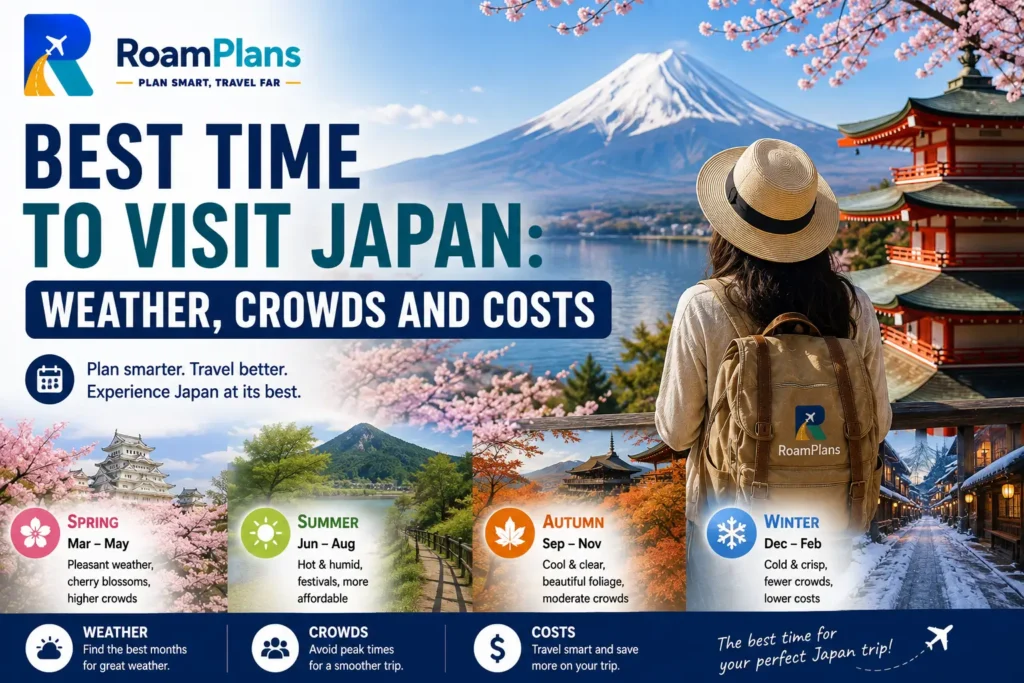
Japan’s four seasons create very different trips. Spring brings cherry blossoms, summer can be hot and humid, autumn brings cooler weather and foliage, while winter conditions vary greatly across the country. JNTO also notes that typhoons can affect travel during parts of late summer and early autumn. (Japan Travel)
For the full seasonal decision, read Best Time to Visit Japan: Weather, Crowds and Costs.
Build the Budget From the Route
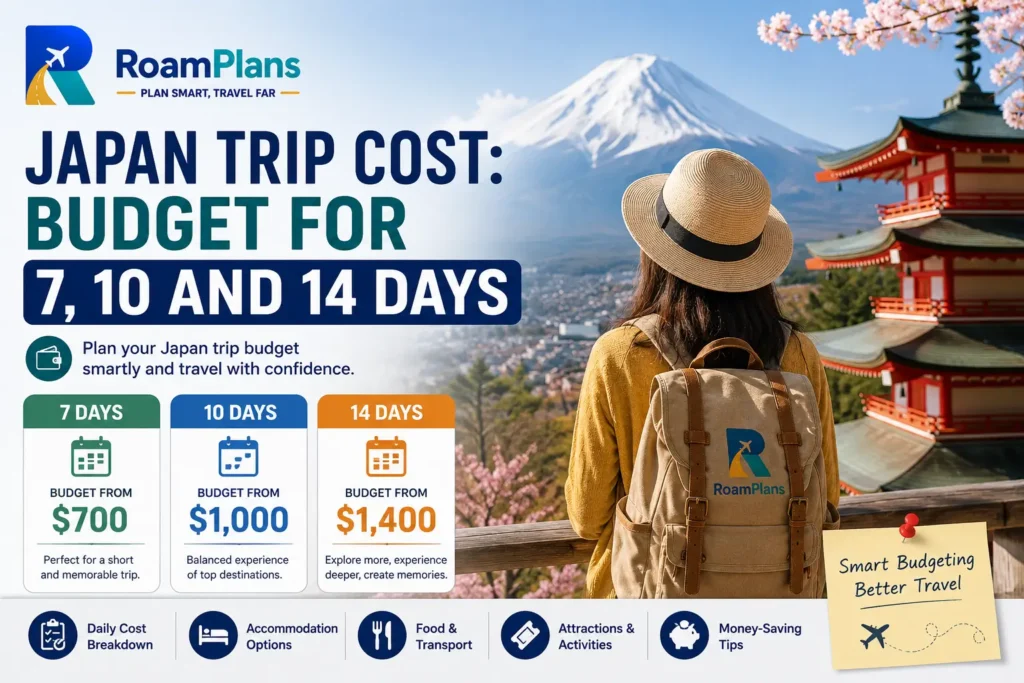
I would not start with a random daily Japan budget from another traveler. First list the flights, hotels, long-distance transport, local transport, food, paid attractions, connectivity, insurance, and a spending buffer.
Use Japan Trip Cost: Budget for 7, 10 and 14 Days for the detailed cost planning.
Choose Arrival and Departure Airports Early
Your airport choice can affect the whole route.
Tokyo’s major international airports are Haneda and Narita. If your itinerary finishes around Osaka or Kyoto, it can also be worth comparing a return flight from the Kansai region instead of traveling all the way back to Tokyo.
For example:
Arrive Tokyo → Tokyo → Kyoto → Osaka → fly home from Kansai
may fit better than:
Arrive Tokyo → Tokyo → Kyoto → Osaka → Tokyo → fly home
Do not assume that an open-jaw flight will always be cheaper. Compare the airfare against the time and transport cost of returning to your first city.
For the Tokyo airport choice, see Narita vs Haneda Airport: Which Tokyo Airport Is Better?
Book Accommodation Around Your Real Route
A hotel that looks cheap on a booking site can become poor value if it adds long journeys every morning and evening.
When I compare accommodation for a first Japan trip, I care about:
- Distance from useful transport
- Number of transfers
- Walking distance with luggage
- Nearby food options
- Ease of reaching the next city
- Room and luggage size
- Check-in rules
I would often prefer a simpler room in a useful location over a better room that works against the itinerary.
For city-specific choices, use Where to Stay in Tokyo: Best Areas for First-Time Visitors, Where to Stay in Kyoto: Best Areas for First-Time Visitors, and Where to Stay in Osaka: Best Areas for First-Time Visitors.
How to Get Around Japan
Most first-time routes use a mix of intercity trains and local trains, subways, buses, walking, and occasional taxis. You do not need to learn every transport operator before arriving.
The broader system is explained in How to Get Around Japan: Transportation Guide.
Using Japan’s Trains
For any train journey, focus on the departure station, destination station, operator or line, ticket type, and whether a reservation is needed. Learning those five things is more useful than trying to memorize an entire rail map.
See Japan Train Travel Guide for First-Time Visitors for the full rail-planning process.
Shinkansen
The Shinkansen connects several major destinations on common first-time routes, including Tokyo, Kyoto, and Shin-Osaka. It is useful, but travelers still need to understand stations, services, tickets, seats, and luggage rules.
Those details belong in Shinkansen Guide: How to Use Japan’s Bullet Trains.
Should You Buy a JR Pass?
I would never buy a nationwide rail pass before building the route. Price your planned long-distance journeys first, then compare that total against the current pass options.
Use Japan Rail Pass: Is the JR Pass Worth It? for that calculation and decision.
IC Cards
Prepaid IC cards such as Suica and PASMO can make many local train, subway, bus, and small-payment transactions easier, although coverage is not universal. JNTO also lists visitor options such as Welcome Suica and TOURIST PASMO. (Japan Travel)
See IC Cards in Japan: Suica, PASMO and ICOCA Explained before choosing one.
Plan for Luggage Before Travel Days
Large luggage can be tiring in busy stations and on hotel-change days. Japan has luggage delivery and storage services that can help travelers move bags between supported locations instead of carrying everything themselves. (Japan Travel)
The full process is explained in Luggage Forwarding in Japan: How Takkyubin Works.
Check Entry Rules Using Official Sources
Visa requirements depend on your passport, residence, travel purpose, and length of stay. Japan has visa-exemption arrangements for many passports, while other travelers may need a visa or may qualify for the JAPAN eVISA system. Rules can change, so check Japan’s Ministry of Foreign Affairs before booking non-refundable travel. (Ministry of Foreign Affairs of Japan)
Japan’s Digital Agency also operates Visit Japan Web for arrival procedures such as immigration and customs information. (デジタル庁)
Keep Your First Arrival Day Light
A mistake I would avoid is landing after a long international flight and immediately planning a major sightseeing schedule.
Your first few hours may involve:
- Immigration
- Baggage collection
- Customs
- SIM or eSIM setup
- Airport transport
- Finding the hotel
- Check-in
- Food
- Jet lag
I would normally make arrival day an orientation day.
Check the nearest station. Find a convenience store. Walk around the neighborhood. Eat something. Get familiar with the area.
Starting slowly often makes the next morning much easier.
Payments: Carry More Than One Option
Cards and electronic payments are now common across Japan, particularly in cities, but JNTO says some businesses and rural locations still require cash. (Japan Travel)
I would travel with a main card, a backup card stored separately, and some Japanese yen. Depending entirely on one phone wallet or one bank card creates an unnecessary problem if that payment method fails.
Prepare Your Phone Before You Arrive
Your phone may become one of your most-used travel tools in Japan.
You are likely to use it for:
- Maps
- Rail routes
- Translation
- Hotel information
- Reservations
- Weather
- Tickets
- Messaging
Set up your eSIM, SIM, roaming, or pocket Wi-Fi plan before you need it. I also save important hotel addresses, bookings, and transport details offline so a weak signal does not stop the trip.
Do You Need to Speak Japanese?
You can travel around the main visitor route without speaking fluent Japanese, but learning a few basic phrases helps.
I would also keep a translation app ready and save the Japanese version of important hotel names or addresses. Showing written information can be easier than trying to pronounce an unfamiliar name in a busy station or taxi.
Food Does Not Need a Full Itinerary
I would reserve special restaurants that genuinely need advance booking, but I would not schedule breakfast, lunch, and dinner for every day.
Part of traveling in Japan is finding places near where you already are. Stations, department stores, convenience stores, markets, shopping areas, and local streets give you many choices without forcing you across the city for every meal.
Travelers with allergies or strict dietary needs should prepare more carefully and keep clear translated information about foods they cannot eat.
Respect Local Etiquette Without Becoming Anxious
You do not need to memorize hundreds of rules before visiting Japan.
Start with basic awareness:
- Queue properly.
- Keep noise low on public transport.
- Follow signs.
- Keep luggage out of people’s way.
- Check whether shoes need to be removed.
- Respect photography restrictions.
- Follow local rules at temples, shrines, and baths.
- Watch what people around you are doing.
Being observant and considerate matters more than trying to behave like someone who has lived in Japan for years.
What to Pack
Your Japan packing list should follow the season, region, trip length, and amount of walking you expect. Comfortable shoes, suitable layers, phone charging gear, travel documents, medication, and enough suitcase space for the return trip are good starting points.
Use What to Pack for Japan: First-Time Visitor Packing List for the complete destination-specific list.
Prepare for Emergencies Without Overthinking Them
Japan is generally considered a safe destination, but natural hazards such as earthquakes, typhoons, tsunamis, volcanic activity, heavy snow, and extreme weather can affect trips. JNTO recommends knowing basic emergency actions and following official instructions if an event occurs. (Japan Travel)
I would keep digital and offline copies of important documents, insurance details, emergency contacts, accommodation information, and a backup payment method.
What Should You Book Before the Trip?
I use a simple rule:
Book early when losing the booking would affect the whole trip. Keep flexibility where changing plans would be easy.
Usually worth arranging earlier
- International flights
- Main accommodation
- High-demand experiences
- Essential timed reservations
- Travel insurance
- Entry documents
- Connectivity plan
Often safe to leave flexible
- Casual restaurants
- Neighborhood walks
- Shopping
- Many smaller attractions
- Backup activities
- Free evening time
The goal is not to arrive with nothing planned. It is to avoid turning the vacation into a list of appointments.
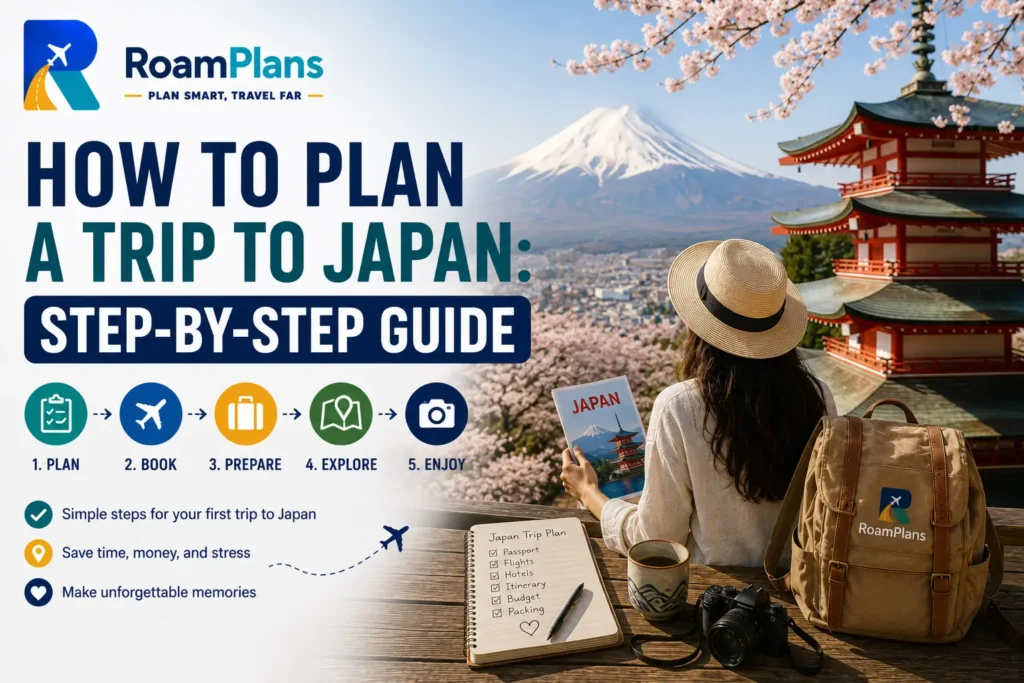
A Simple First-Time Japan Planning Order
This is the order I would use:
- Choose your dates.
- Count your real full days.
- Check passport and entry requirements.
- Choose two or three main bases.
- Decide your arrival and departure airports.
- Build a rough budget.
- Compare flights.
- Book well-located accommodation.
- Plan major intercity travel.
- Add your highest-priority experiences.
- Group sightseeing by area.
- Leave free space in each city.
- Prepare payments, phone access, insurance, and documents.
- Recheck weather and transport shortly before departure.
For the complete planning workflow, continue with How to Plan a Trip to Japan: Step-by-Step Guide.
Japan Itineraries
The right itinerary depends on your available days, arrival airport, travel pace, and number of hotel changes. RoamPlans keeps each trip length separate so a shorter route is not simply a longer itinerary with days removed.
Continue with Japan 7-Day Itinerary for First-Time Visitors, Japan 10-Day Itinerary for First-Time Visitors, Japan 14-Day Itinerary for First-Time Visitors, or Japan 21-Day Itinerary: Three-Week First Trip.
How to Divide Tokyo, Kyoto and Osaka
If you already know these three cities will form your route, the next decision is how many nights each one deserves. That depends on your interests, arrival city, day trips, and whether you prefer a faster or slower pace.
Use Tokyo, Kyoto and Osaka Itinerary: How to Divide Your Days for that specific decision.
Common Japan Planning Mistakes
The biggest first-trip problem is usually trying to see more than the available time allows. Too many hotel changes, poor attraction grouping, buying transport products before building the route, and giving no space for weather or tiredness can make a good itinerary feel stressful.
See Japan Travel Mistakes First-Time Visitors Should Avoid for the full prevention guide.
Use RoamPlans While Building the Trip
You can combine this destination guide with the existing RoamPlans planning tools.
Use the Travel Itinerary Builder once your cities are chosen, the Trip Cost Estimator when checking whether the route fits your budget, the Packing List Generator before departure, and the Weather Planner when your dates are fixed.
The tools handle the planning work, while the Japan guides help you make destination-specific decisions.
Frequently Asked Questions About a First Trip to Japan
Is Japan good for first-time international travelers?
Yes. Japan requires some preparation, but good transport links and visitor services make independent travel practical for many beginners.
How long should my first Japan trip be?
Around 10 to 14 days is a useful starting point. A shorter trip can still work if you limit the number of bases.
Should I visit Tokyo, Kyoto and Osaka?
They form a practical classic route, but you do not have to visit all three. Your available days should decide the route.
Is seven days enough for Japan?
Yes, if you keep the plan focused. I would rather use two bases well than fit several cities into one week.
Do I need a JR Pass for my first trip?
No. Build your rail route and compare current ticket costs before deciding whether any pass saves money.
Can I travel in Japan without speaking Japanese?
Yes. Basic phrases, translation tools, maps, and saved addresses can handle many everyday situations.
Should I carry cash?
Yes. Cards are widely accepted, but carrying some yen gives you a backup for places that still prefer or require cash. (Japan Travel)
Should I book every attraction before arriving?
No. Reserve high-demand or trip-defining activities, but keep part of the schedule flexible.
What is the biggest mistake on a first Japan trip?
Trying to visit too many places. A smaller route usually gives you more actual travel experience and less time handling luggage.
Plan a First Japan Trip You Can Actually Enjoy
A good first trip to Japan is not the one with the longest list of cities. It is the one where your days, route, hotels, transport, and budget work together. Start with a small number of bases, protect your full sightseeing days, book the parts that matter most, and leave enough space for Japan to feel like a trip rather than a schedule.