
Travel Medical Insurance Guide for International Travelers
Medical insurance is one of the first things I check when planning an international trip because the protection you have at home ↗ may not work the same way abroad.
I do not begin by looking for the policy with the biggest medical number. I first check whether my existing health insurance works in the destination, whether I may have to pay medical bills upfront, whether emergency evacuation is included, and what deductibles, exclusions, or pre-existing-condition rules apply. Then I compare travel medical plans against the gaps that are still left.
That approach is especially important for international travel. The U.S. Department of State recommends checking your health insurance before departure and says travelers should consider travel medical insurance for emergency medical care and medical evacuation. It also makes clear that the U.S. government does not pay private medical bills for travelers abroad.
The CDC also advises travelers to find out whether their existing health insurance covers care overseas and to consider additional medical and evacuation insurance, especially for remote destinations.
For a beginner traveler, the goal is not to predict every medical problem that could happen. It is to understand who would pay, how much protection you have, and what happens if the local hospital cannot provide the care you need.
Travel medical insurance policies vary widely. Coverage depends on the policy’s definitions, limits, deductibles, exclusions, eligibility rules, and medical-assistance requirements. Always read the actual policy wording before relying on a benefit.
Key Takeaways
- ✓Travel medical insurance is designed to help with certain eligible medical expenses during travel.
- ✓It can include emergency doctor visits, hospital treatment, and other covered medical care depending on the plan.
- ✓Medical evacuation is a separate risk and should be checked independently from normal medical treatment.
- ✓Your normal health insurance may provide limited or no useful overseas protection, so verify it directly before departure.
- ✓Original Medicare generally provides very limited coverage outside the United States.
- ✓Some Medigap policies provide foreign travel emergency benefits.
- ✓Policies can differ on deductibles, coverage limits, pre-existing conditions, activities, destinations, and whether another insurer must pay first.
- ✓Emergency evacuation can cost far more than normal trip expenses, especially from remote areas.
- ✓A high medical limit is not useful if your particular illness, activity, or situation is excluded.
- ✓Read the policy and emergency-assistance instructions before leaving home.
What Is Travel Medical Insurance?
Travel medical insurance is short-term insurance intended to help with qualifying medical expenses that happen while you are traveling.
Depending on the plan, it may cover eligible costs related to:
- ✓Unexpected illness
- ✓Injury
- ✓Emergency doctor visits
- ✓Hospital treatment
- ✓Medical testing
- ✓Certain prescription expenses
- ✓Emergency dental care
- ✓Medical transportation
- ✓Other covered treatment
NAIC describes travel medical insurance as health and accident protection for illness or injury while traveling and notes that standard health plans and Medicare may provide limited protection abroad.
The exact benefit list depends on the policy.
Do not assume every travel medical plan includes every service above.
Travel Medical Insurance Is Different From General Travel Insurance
General travel insurance can combine several types of protection, including:
- ✓Trip cancellation
- ✓Trip interruption
- ✓Travel delay
- ✓Baggage
- ✓Medical care
- ✓Medical evacuation
Travel medical insurance focuses much more heavily on healthcare risks.
The CDC distinguishes travel disruption insurance, which protects financial trip investment, from travel health and medical evacuation insurance, which addresses healthcare-related risks abroad.
If you want the broader picture first, the RoamPlans Complete Travel Insurance Guide for International Travelers explains how medical, cancellation, baggage, evacuation, and other benefits fit together.
Who Should Consider Travel Medical Insurance?
There is no single answer for every traveler.
I would give it particular attention if:
- ✓Existing health insurance does not work abroad
- ✓Existing coverage is limited internationally
- ✓You use Original Medicare
- ✓You are traveling somewhere remote
- ✓Medical facilities are limited
- ✓You are taking a long international trip
- ✓You have medical conditions that require careful insurance review
- ✓You are planning activities with higher injury risk
CDC guidance says specialized travel health policies may be especially useful for some travelers with pre-existing medical conditions, pregnant travelers, people over 65, and those spending extended periods abroad.
That does not mean everyone in those groups needs the same policy.
It means their medical coverage deserves closer review.
Do You Need Travel Medical Insurance If You Already Have Health Insurance?
Maybe.
The first step is to contact your existing insurer.
The State Department recommends finding out whether your plan covers medical care outside the United States and whether emergency medical transportation is included.
Ask specifically:
- ✓Does my health insurance cover this country?
- ✓Does it cover emergency treatment?
- ✓Does it cover hospitalization?
- ✓Does it cover outpatient treatment?
- ✓Will I need to pay first?
- ✓How do I make an international claim?
- ✓Is medical evacuation covered?
- ✓Are there provider-network restrictions?
- ✓What deductible or coinsurance applies?
Do not ask only:
“Am I covered internationally?”
That question can be too broad.
Ask how the coverage actually works.
Why “Covered Abroad” May Still Not Be Enough
Your insurer may tell you that overseas emergency treatment is covered.
That is useful, but I would still check:
- ✓How much is covered
- ✓Whether care is treated as out-of-network
- ✓Whether you must pay upfront
- ✓How reimbursement works
- ✓Whether evacuation is included
CDC guidance warns that travel-specific health insurance plans themselves also vary widely and may not cover the full cost of emergency care or evacuation, which is another reason to examine the actual limits.
The word covered is only the beginning.
Do Hospitals Abroad Accept U.S. Health Insurance?
You should not assume that a hospital abroad will bill your U.S. insurer the way a hospital at home might.
The State Department advises travelers that payment practices abroad differ and that travelers may need to pay medical costs themselves and seek reimbursement later, depending on the destination and insurance arrangement.
CDC similarly advises travelers to prepare for healthcare costs abroad and notes that travelers are often responsible for paying overseas medical expenses themselves.
That is why I would travel with access to some emergency funds even when insured.
Travel Medical Insurance vs Travel Health Insurance
These terms are often used closely together.
In practical travel planning, both generally refer to insurance designed to address healthcare needs while traveling.
However, policy names and benefits vary by company.
Do not decide based on whether the product is called:
Travel Medical Insurance
or
Travel Health Insurance
Instead, check what the plan actually provides.
Look for:
- ✓Emergency medical care
- ✓Hospitalization
- ✓Medical evacuation
- ✓Deductible
- ✓Maximum benefit
- ✓Pre-existing condition rules
- ✓Activities
- ✓Policy duration
The CDC uses the term travel health insurance when discussing policies that can help pay for medical care during international travel.
What Does Travel Medical Insurance Usually Cover?

A policy may provide benefits for eligible unexpected illnesses or injuries that occur during the covered trip.
Possible areas include:
Emergency Doctor Visits
If you unexpectedly become ill or injured, eligible evaluation or treatment may fall within the medical benefit.
Hospital Treatment
Travel medical insurance can include covered inpatient hospital expenses resulting from eligible illness or injury.
Emergency Treatment
This can include urgent treatment needed because of a covered medical event.
Medical Testing
Testing connected to covered treatment may qualify depending on the policy.
Certain Prescription Expenses
Medication connected with an eligible medical event may be included subject to the policy.
Emergency Dental Care
Some plans include limited emergency dental benefits.
NAIC includes emergency medical and dental expenses within travel medical coverage, while emphasizing that the exact policy terms control the benefit.
What Travel Medical Insurance Does Not Automatically Cover
Do not read the words medical insurance and assume every healthcare expense during the trip qualifies.
Policies can limit or exclude areas such as:
- ✓Pre-existing conditions
- ✓Routine care
- ✓Planned treatment
- ✓Certain pregnancy-related care
- ✓Injuries from excluded activities
- ✓Treatment outside the policy dates
- ✓Other specifically excluded circumstances
NAIC currently identifies pre-existing conditions, pregnancy and childbirth, and certain risky activities among common exclusion areas in travel policies.
The exact exclusions vary.
Always use your own policy as the final source.
Travel Medical Insurance Is Usually for Unexpected Problems
Travel medical insurance is generally designed around unexpected illness or injury during a trip rather than replacing long-term health insurance.
For example, there is an important difference between:
Unexpectedly needing medical treatment during a vacation
and
Traveling specifically to receive planned medical treatment.
The second situation may fall under very different rules and should not be assumed to qualify under ordinary travel medical insurance.
CDC separately discusses medical tourism and advises travelers seeking planned treatment abroad to review specialized medical and evacuation coverage carefully.
What Is the Emergency Medical Coverage Limit?
The medical coverage limit is the maximum amount the policy can pay for eligible medical expenses under that benefit, subject to its terms.
For example, a plan might state:
Emergency medical benefit: $50,000
or
Emergency medical benefit: $100,000
That does not mean the insurer automatically pays the full amount.
It means eligible expenses can be considered up to the policy limit.
Coverage still depends on:
- ✓Deductible
- ✓Exclusions
- ✓Policy definitions
- ✓Eligible treatment
- ✓Other insurance
- ✓Claim requirements
CDC warns that even travel-specific medical plans can differ significantly in how much emergency care they cover.
How Much Medical Coverage Do You Need?
There is no one universal number that is correct for every traveler.
I would look at:
- ✓Destination
- ✓Cost of healthcare
- ✓Trip length
- ✓Existing insurance
- ✓Age
- ✓Health circumstances
- ✓Activities
- ✓Access to hospitals
- ✓Evacuation risk
A short city trip with strong existing overseas health coverage creates a different situation from a month in a remote region with little local medical infrastructure.
Instead of asking:
“What is the biggest medical limit available?”
ask:
“What medical financial risk am I trying to protect on this trip?”
What Is a Travel Medical Insurance Deductible?
A deductible is an amount you may have to pay yourself before the applicable insurance benefit begins paying according to its terms.
Suppose a policy has:
$100,000 medical limit
and
$500 medical deductible
Those numbers answer different questions.
The limit tells you the maximum available benefit.
The deductible tells you part of what you may need to pay yourself.
When I compare two plans, I therefore look at:
medical limit + deductible + exclusions
together.
A Lower Deductible Can Change the Practical Value
Imagine two plans.
Plan A
Medical coverage: $100,000Deductible: $0
Plan B
Medical coverage: $100,000Deductible: $500
The headline medical benefit is the same.
The traveller’s out-of-pocket position may not be.
This is why comparing only the maximum medical limit can hide an important difference.
What Is Primary Travel Medical Insurance?
Primary medical coverage generally means the travel policy processes eligible covered expenses without requiring another applicable health insurer to pay first, subject to the policy terms.
This can make the claim process simpler in some situations.
However, whether a plan is primary must be confirmed in the actual policy.
Do not assume that all travel medical insurance works this way.
What Is Secondary Travel Medical Insurance?
Secondary coverage generally means another applicable insurer may need to process the medical expense first.
NAIC describes travel medical insurance in its consumer material as often providing secondary health and accident coverage while traveling.
In a secondary arrangement, you may need to show what your normal insurer:
- ✓Paid
- ✓Denied
- ✓Left unpaid
before the travel medical insurer considers the remaining eligible amount.
The exact coordination process varies by policy.
Why Primary vs Secondary Coverage Matters
Imagine you receive emergency hospital treatment abroad.
With one plan, you may submit the claim directly to the travel insurer.
With another, you may first need documentation from your regular health insurer.
That can affect:
- ✓Paperwork
- ✓Claim timing
- ✓Reimbursement
- ✓Which company you contact
Before leaving home, I would know whether the medical plan is primary or secondary and save the contact information for every insurer involved.
What Is Medical Evacuation Insurance?

Medical evacuation insurance addresses emergency transportation when qualifying medical circumstances require you to be moved for suitable care.
Depending on the situation and policy, that may include:
- ✓Ground ambulance
- ✓Air ambulance
- ✓Transfer between medical facilities
- ✓Transport from a remote location
- ✓Other medically necessary transportation
The State Department strongly recommends considering medical evacuation insurance when traveling to destinations with higher risk or limited medical care.
CDC also recommends considering evacuation coverage for remote destinations or places where adequate care may not be available locally.
Medical Treatment and Medical Evacuation Are Separate Risks
This is one of the most important things for a beginner traveler to understand.
Imagine you are seriously injured.
You may need:
Medical Treatment
Doctors, hospital care, tests, or surgery.
Medical Transportation
Transfer from where you are to a hospital that can treat you.
Possible Repatriation
Transportation home under circumstances covered by the policy.
These can be separate benefits.
Do not see a large emergency medical limit and assume it automatically includes every form of transportation.
How Expensive Can Medical Evacuation Be?
The State Department currently says an air ambulance evacuation back to the United States can cost approximately $20,000 to $200,000, depending on location and medical condition.
That is one reason evacuation protection can be important even when your trip itself is inexpensive.
A $1,000 vacation can still create a medical emergency that costs far more than the trip.
The financial risk comes from the emergency, not the hotel price.
Does Medical Evacuation Always Bring You Home?
Do not assume so.
Medical evacuation may be designed to move you to an appropriate medical facility rather than automatically fly you back to your home country.
The policy can determine:
- ✓Who decides evacuation is necessary
- ✓Where you are transported
- ✓What medical conditions qualify
- ✓Whether prior authorization is required
The State Department recommends reviewing evacuation policy terms before travel because these services and conditions vary.
This is a section I would read very carefully before a remote trip.
Do You Need Medical Evacuation Insurance for a City Trip?
The need can be lower when you are visiting a destination with strong local medical facilities and your existing insurance provides suitable protection.
But do not decide based only on whether the destination is a city.
Ask:
- ✓What hospitals are available?
- ✓Does my insurance work there?
- ✓Could specialized treatment require transfer?
- ✓Does existing coverage include evacuation?
CDC places particular emphasis on evacuation coverage for remote areas or places where suitable medical care may be difficult to access.
That helps you prioritize the risk rather than buying blindly.
Do You Need Medical Evacuation Insurance for Remote Travel?
I would give it much more attention.
Remote travel can include:
- ✓Mountains
- ✓Islands
- ✓Safari regions
- ✓Rural areas
- ✓Expedition routes
- ✓Remote trekking
Even if local treatment exists, serious injuries may require movement to a better-equipped facility.
The State Department and CDC both recommend considering evacuation protection for places where medical care is limited or difficult to access.
Does Original Medicare Cover Medical Care Abroad?
Usually very little.
Medicare’s current guidance says Original Medicare generally does not cover healthcare outside the United States except in limited situations.
For an international traveler using Original Medicare, that makes overseas medical coverage an important planning question.
Do not assume your normal Medicare protection follows you worldwide.
What About Medicare Advantage?
Medicare Advantage plans can differ.
Medicare says these plans generally do not cover medical care outside the United States, although some plans may offer additional benefits for emergency or urgently needed services abroad.
Check your exact plan before departure.
Ask:
- ✓What international emergency services are covered?
- ✓What limit applies?
- ✓How are claims submitted?
- ✓Is evacuation included?
Do not rely on rules from someone else’s plan.
What About Medigap?
Some Medigap policies provide foreign travel emergency coverage that Original Medicare does not provide.
However, the exact benefit depends on the Medigap plan.
Before buying separate travel medical insurance, check whether your Medigap coverage already helps with overseas emergencies and where gaps remain.
Should Older Travelers Pay More Attention to Medical Coverage?
Age by itself does not decide whether someone needs travel medical insurance.
However, older travelers may have more existing health considerations and may also need to examine Medicare or other domestic insurance limitations abroad.
CDC notes that specialized travel health insurance may be particularly beneficial for some travelers over age 65.
I would therefore compare:
- ✓Existing health coverage
- ✓Pre-existing conditions
- ✓Medical limits
- ✓Evacuation
- ✓Policy age eligibility
- ✓Trip duration
rather than simply choosing the policy with the biggest number.
What About Travelers With Chronic Medical Conditions?
A chronic medical condition does not automatically mean travel medical insurance is unavailable or useless.
It does mean the policy needs closer review.
CDC advises travelers with chronic illnesses to consider coverage that includes 24/7 assistance and emergency medical evacuation.
You should also examine:
- ✓Pre-existing-condition definition
- ✓Any look-back rules
- ✓Waiver availability
- ✓Medical exclusions
- ✓Medication planning
Do not assume ordinary emergency medical coverage automatically handles every problem related to an existing condition.
What Is a Pre-Existing Medical Condition in Travel Insurance?
The exact meaning can differ by policy.
A plan may look at medical history, symptoms, treatment, diagnoses, medications, or changes in health during a specified period.
NAIC advises travelers to check whether pre-existing conditions are excluded and whether insurer approval is required before certain medical care.
I would use the insurer’s definition rather than my own interpretation.
Is Travel Medical Insurance Necessary for Every International Traveler?
Not always.
A traveler may already have strong international health coverage and suitable evacuation protection.
Another traveler may have almost no useful overseas coverage.
That is why I would first identify the gap.
The RoamPlans Do You Really Need Travel Insurance? guide explains the broader decision process. For this medical-focused article, the key question is narrower: if you become sick or injured abroad, who pays for the treatment and transportation you may need?
What Does Travel Medical Insurance Not Replace?
Travel medical insurance should not replace normal trip preparation.
You still need to:
- ✓Carry necessary medication
- ✓Bring copies of important prescriptions
- ✓Understand destination health risks
- ✓Know how to find medical help
- ✓Follow medical advice
- ✓Keep access to emergency funds
CDC advises international travelers to prepare for healthcare needs before departure and to have a plan for obtaining care overseas.
Insurance is one part of that preparation.
Travel Medical Insurance Is Financial Protection, Not Medical Advice
A policy can help pay or arrange eligible services.
It does not decide:
- ✓Whether you are medically fit to travel
- ✓Which vaccine you need
- ✓Whether a medication is suitable
- ✓How an illness should be treated
Those are healthcare decisions.
For medical advice about your individual health, speak with a qualified healthcare professional.
For insurance questions, use the policy and insurer.
Keeping those two roles separate makes travel planning much clearer.
What Should a Beginner Check First?
When I review medical insurance for an international trip, I start with these questions:
1. Does My Existing Health Insurance Work Abroad?
Ask the insurer directly.
2. What Is the Emergency Medical Limit?
Know the maximum benefit.
3. What Deductible Applies?
Know what you may need to pay yourself.
4. Is the Coverage Primary or Secondary?
Understand who processes the claim first.
5. Is Medical Evacuation Included?
Do not assume normal medical coverage includes it.
6. How Much Evacuation Coverage Is Provided?
Check the separate limit.
7. Are Pre-Existing Conditions Restricted?
Read the exact definition.
8. Are My Activities Covered?
Especially for sports, trekking, diving, skiing, or remote adventures.
9. Who Do I Call During an Emergency?
Save the assistance number offline.
10. Will I Need to Pay Upfront?
Know how the insurer handles overseas treatment.
My Medical Insurance Rule
When I compare travel medical insurance, I do not ask only:
“How much medical coverage does this policy have?”
I ask:
“If I become seriously ill or injured on this exact trip, what treatment is covered, what would I still pay myself, and how would I reach suitable medical care?”
That question forces me to look beyond the headline number.
A useful medical policy needs more than a large limit.
It needs terms that fit the destination, traveler, activities, existing insurance, and the kind of medical financial risk the trip creates.
The RoamPlans What Does Travel Insurance Cover — and What Does It Not Cover? guide explains broader coverage and exclusions across the whole policy. Here, the focus stays specifically on whether the medical protection would actually work when healthcare is needed abroad.
How Do Pre-Existing Conditions Affect Travel Medical Insurance?
Pre-existing medical conditions are one of the most important parts of a travel medical policy to check before buying.
NAIC currently lists pre-existing health conditions among common travel-insurance exclusion areas, while also stressing that individual policies differ.
The difficult part is that pre-existing condition is an insurance definition.
It may not match what you personally consider an existing health problem.
Depending on the policy, the insurer may look at factors such as:
- ✓Previous symptoms
- ✓Medical treatment
- ✓Diagnoses
- ✓Prescription changes
- ✓Recent testing
- ✓Changes in a medical condition
- ✓A stated period before insurance was purchased
That period is sometimes called a look-back period.
Never assume a condition is too minor or too old to matter.
Read the definition in the actual policy.
What Is a Pre-Existing Condition Look-Back Period?
Some policies examine your medical history during a specified period before insurance begins or is purchased.
The policy decides:
- ✓How long that period is
- ✓What medical events matter
- ✓Which travelers or family members are considered
- ✓Whether an exclusion applies
For example, the policy may focus on whether a condition was newly diagnosed, treated, symptomatic, or medically changed during that period.
Do not use another traveler’s policy as your guide.
Two insurers can define the issue differently.
What Is a Pre-Existing Condition Exclusion Waiver?
Some travel insurance plans may waive their normal pre-existing-condition exclusion when certain requirements are satisfied.
The rules vary.
A policy may require conditions involving:
- ✓Purchase timing
- ✓Trip-cost insurance
- ✓Medical ability to travel
- ✓Other eligibility requirements
A waiver does not mean every medical problem automatically becomes covered.
It means the policy’s normal pre-existing-condition exclusion may be waived according to its stated conditions.
I would find the actual waiver wording before buying rather than relying on a comparison site’s green check mark.
Buy Early if a Medical Waiver Matters to You
Some insurance benefits can have time-sensitive eligibility requirements.
If coverage related to an existing medical condition matters to your trip, investigate insurance soon after you begin making meaningful trip payments.
Do not wait until the final days before departure and assume the same options will still be available.
NAIC advises travelers to check pre-existing-condition exclusions when comparing travel medical protection.
Your Medical History Can Affect More Than Hospital Coverage
A pre-existing condition can potentially matter in several parts of a travel policy.
Depending on the contract, it could affect:
- ✓Emergency medical treatment
- ✓Trip cancellation
- ✓Trip interruption
- ✓Medical evacuation
For example, if an existing condition causes you to cancel before departure, the question may involve the cancellation section rather than only the medical section.
Search the entire policy for:
pre-existing
rather than checking only one page.
Be Accurate When Answering Medical Questions
If the insurance application asks about health or medical information, answer according to the instructions provided.
Do not hide relevant information because you think disclosure will reduce your chance of coverage.
If you do not understand a question, ask the insurer or licensed insurance professional before completing the purchase.
For questions about your health itself, speak with a qualified healthcare professional.
For questions about whether the policy covers that health situation, ask the insurer.
Those are different questions.
Can Travelers With Chronic Conditions Get Travel Medical Insurance?
Having a chronic medical condition does not automatically mean travel medical insurance is unavailable.
It does mean that policy selection requires more care.
The CDC recommends that travelers with chronic illnesses plan carefully for healthcare abroad and specifically advises considering a travel insurance plan with 24/7 assistance and emergency medical evacuation protection.
I would check:
- ✓Pre-existing-condition wording
- ✓Medical benefit limit
- ✓Emergency assistance
- ✓Evacuation
- ✓Prescription planning
- ✓Destination healthcare
- ✓Trip duration
before buying.
Do Not Depend on Travel Insurance for Your Regular Medication Supply
Travel medical insurance should not replace normal medication planning.
If you take regular prescription medicine, plan before departure.
CDC advises travelers to prepare a personal travel health kit based on their health history and trip, including medication needed to continue treatment of chronic conditions.
Carry enough medication for the planned trip when legally permitted, and consider reasonable extra supply for unexpected travel disruption based on medical and destination guidance.
Also keep important medication information accessible.
Does Travel Medical Insurance Cover Prescription Medicine?
It may cover certain prescription costs connected with an eligible covered illness or injury, depending on the plan.
That does not mean it automatically pays for:
- ✓Your normal recurring prescription supply
- ✓Routine medication purchased before travel
- ✓Preventive medicine
- ✓Every drug purchased abroad
Look for terms such as:
- ✓Prescription drugs
- ✓Outpatient prescription
- ✓Covered medical expense
- ✓Emergency medication
in the policy.
If a medication is essential to your health, do not rely on an insurance claim as your main way of obtaining it abroad.
What If Your Medication Is Lost?
Do not automatically assume travel medical insurance will replace it.
A lost medicine could potentially involve a different part of your travel policy or assistance service rather than ordinary emergency medical coverage.
You may need help from:
- ✓Doctor
- ✓Pharmacist
- ✓Insurer assistance service
- ✓Local healthcare provider
Rules for bringing, replacing, or purchasing prescription medication also differ by country.
Plan important medication as part of your travel preparation rather than relying only on insurance.
Does Travel Medical Insurance Cover Emergency Dental Care?
Some plans include a limited emergency dental benefit.
NAIC includes emergency dental expenses within its description of travel medical insurance.
However, dental coverage may have:
- ✓A separate maximum
- ✓Different qualifying conditions
- ✓Different exclusions
A policy with:
$100,000 emergency medical coverage
might have a much smaller emergency dental benefit.
Read the dental limit separately.
Emergency Dental Care Is Not the Same as Routine Dental Care
Imagine you damage a tooth in an accident during your trip.
That is different from deciding to schedule:
- ✓Routine cleaning
- ✓Planned dental work
- ✓Cosmetic treatment
while traveling.
Travel medical insurance is generally designed around unexpected covered medical events.
Do not assume routine or planned care qualifies simply because it happens during the insured trip.
Does Travel Medical Insurance Cover Pregnancy?
Pregnancy deserves specific policy review.
NAIC currently lists pregnancy and childbirth among common travel-insurance exclusion areas, although actual coverage varies by policy.
CDC also notes that many normal health policies do not cover pregnancy or neonatal complications occurring outside the United States and advises pregnant travelers to strongly consider coverage that addresses pregnancy-related problems and neonatal care, along with evacuation protection.
Do not treat these statements as proof that one particular policy will or will not pay.
Read the specific contract.
Pregnancy-Related Care Can Be Treated Differently
A policy may distinguish between:
- ✓Routine prenatal care
- ✓Normal childbirth
- ✓Unexpected pregnancy complication
- ✓Emergency treatment
- ✓Neonatal care
- ✓Medical evacuation
Those are not automatically treated as one benefit.
If you are pregnant, ask the insurer specific questions before travel.
For example:
“Does this plan cover emergency treatment for unexpected pregnancy complications at my destination?”
That is more useful than asking:
“Does it cover pregnancy?”
Medical Fitness to Travel and Insurance Coverage Are Different
A doctor can advise whether traveling is medically appropriate for you.
An insurer decides whether a financial loss meets the policy.
One does not replace the other.
If pregnancy, chronic illness, recent surgery, or another medical issue could affect your trip, consider both:
medical advice
and
insurance terms.
Does Travel Medical Insurance Cover Adventure Activities?
Not necessarily.
NAIC currently identifies risky recreational activities as a common exclusion area and gives examples such as bungee jumping, backcountry skiing, and snowboarding.
Medical coverage can look excellent on paper but provide little value for an accident that happens during an excluded activity.
If an activity is central to your trip, check it before buying.
Search for Your Exact Activity
Do not stop when a policy says:
Adventure activities included
or
Sports coverage available.
Search for the actual activity.
For example:
- ✓Skiing
- ✓Snowboarding
- ✓Trekking
- ✓Mountaineering
- ✓Scuba diving
- ✓Cycling
- ✓Surfing
- ✓Motorbike riding
Then check whether conditions involve:
- ✓Altitude
- ✓Certification
- ✓Competition
- ✓Professional participation
- ✓Guided vs unguided activity
- ✓Equipment
- ✓Location
Those details can matter.
Check Medical and Evacuation Coverage for the Activity Separately
This is especially important.
An activity-related injury can raise two different insurance questions:
Will the medical treatment be covered?
and
Will evacuation after that activity be covered?
NAIC has specifically warned travelers that emergency medical evacuation or repatriation coverage may exclude an activity the insurer considers dangerous.
Do not assume that because one benefit covers an activity, every other medical benefit does too.
Related RoamPlans guide: Adventure Travel Insurance: What Activities Are Covered? explains higher-risk activities, exclusions, evacuation, equipment, and specialist coverage in more detail.
What About Alcohol or Other Excluded Conduct?
Do not assume that every accidental injury is automatically covered simply because it required emergency treatment.
Policies can contain general exclusions related to particular circumstances or conduct.
The wording differs from plan to plan.
I would search the policy’s:
- ✓General exclusions
- ✓Medical exclusions
- ✓Activity exclusions
rather than relying on a general statement that an alcohol-related or conduct-related incident is always covered or always excluded.
Illegal Activity Can Create Coverage Problems
Insurance should not be treated as protection from the consequences of breaking local law.
Policy exclusions can apply to particular conduct.
International travelers also need to remember that local laws may be very different from laws at home.
Follow destination laws and read the policy exclusions before relying on coverage in an unusual situation.
Does Travel Medical Insurance Cover Planned Medical Treatment Abroad?
Usually, ordinary travel medical insurance should not be assumed to function as insurance for medical tourism.
Medical tourism means traveling internationally specifically to obtain medical treatment.
CDC treats this as a distinct travel-health situation and advises medical tourists to check carefully what their domestic health insurance will cover and to plan for complications related to treatment abroad.
If the purpose of your trip is surgery, dental work, fertility treatment, cosmetic treatment, or another planned procedure, ordinary vacation travel insurance may not be the appropriate product.
Confirm before travel.
What If a Complication Happens After Planned Treatment?
Do not assume a normal travel medical policy will cover complications from treatment you intentionally traveled abroad to receive.
If medical tourism is part of the trip, ask specifically about:
- ✓Treatment itself
- ✓Complications
- ✓Extended hospital stay
- ✓Medical evacuation
- ✓Return-home care
CDC recommends planning in advance for how complications from overseas medical treatment would be managed.
Does Travel Medical Insurance Work in Multiple Countries?
It can, but you need to check the policy’s geographic coverage.
This matters for itineraries such as:
United States → France → Italy → Greece → Turkey → United States
Before buying, confirm:
- ✓Every country is eligible
- ✓Transit destinations are covered
- ✓Full dates are covered
- ✓No destination exclusion applies
Do not assume that a policy described as:
international
means every country is automatically included.
Multi-Country Travelers Should Check the Entire Itinerary
A beginner may enter the main destination when buying insurance even though the trip includes several countries.
Follow the insurer’s instructions for declaring destinations.
This is particularly important if:
- ✓You add countries later
- ✓You cross borders overland
- ✓You take a cruise
- ✓You have long stopovers
- ✓One destination has different restrictions
Your policy should match the trip you are actually taking.
What If Your Itinerary Changes?
Suppose you originally planned:
Spain and Portugal
but later add:
Morocco
Do not assume the added country becomes covered automatically.
If the change could affect your insurance, contact the insurer and ask whether the policy needs updating.
Keep important confirmation in writing where possible.
Check the Maximum Trip Length
Travel medical insurance can limit how long one trip may last.
That becomes particularly important for:
- ✓Long backpacking trips
- ✓Extended family visits
- ✓Digital nomad travel
- ✓Study abroad
- ✓Long-term travel
CDC advises long-term travelers to plan in advance for how they will access and pay for both routine and emergency healthcare abroad.
A policy suitable for a two-week vacation may not be appropriate for six months overseas.
Long-Term Travelers May Need a Different Type of Coverage
Travel medical insurance is often designed for temporary trips.
If you will live abroad for an extended period, especially around a year or more, you may need to consider insurance designed for longer-term international healthcare rather than ordinary vacation insurance.
CDC notes that people planning extended periods abroad may have different insurance needs from short-term travelers.
Check:
- ✓Policy duration
- ✓Renewal
- ✓Routine care
- ✓Chronic care
- ✓Emergency care
- ✓Evacuation
rather than simply extending a short-trip policy without reading the terms.
Will the Insurer Pay the Hospital Directly?
Sometimes assistance arrangements may be possible.
But never assume direct billing.
CDC’s 2026 Yellow Book advises travelers to confirm whether their insurer reimburses out-of-pocket payments because healthcare professionals abroad often do not accept payment directly from insurance carriers and travelers may have to pay upfront.
That means you should know the payment process before departure.
Direct Payment vs Reimbursement
These are two different situations.
Direct Payment
An insurer or assistance provider may arrange eligible payment directly with a medical facility where possible.
Reimbursement
You pay the medical provider yourself and then submit the expense to the insurer.
CDC specifically warns that upfront payment is common in overseas healthcare settings.
This is why insured travelers should still have access to emergency funds or available credit.
Ask This Question Before You Leave
I would ask the insurer:
“If I am admitted to a hospital abroad, do you normally arrange direct payment, or should I expect to pay and request reimbursement?”
Then ask:
- ✓What documents will I need?
- ✓Does the hospital need to contact you?
- ✓Is pre-authorization required?
- ✓What emergency number should I call?
Save the answer with your travel documents.
What Is Pre-Authorization?
Some insurance policies require the insurer or assistance provider to approve certain services in advance where circumstances allow.
NAIC specifically advises travelers to find out whether prior approval is required before seeking medical care.
This can be especially important for expensive services such as:
- ✓Hospital admission
- ✓Specialist treatment
- ✓Medical transportation
- ✓Evacuation
Read the policy before travel so you know which situations require contact.
Do Not Delay Emergency Care for Paperwork
Insurance requirements are important, but your immediate health comes first in a genuine emergency.
Get necessary emergency assistance.
Then contact the insurer as soon as reasonably possible and follow its instructions.
The purpose of knowing the emergency number beforehand is to reduce confusion when a serious situation happens.
Why 24/7 Assistance Matters
International medical emergencies do not happen only during business hours in your home country.
A useful assistance service may help with tasks such as:
- ✓Finding medical facilities
- ✓Communicating with providers
- ✓Coordinating treatment
- ✓Arranging medical transportation
- ✓Helping with evacuation
- ✓Providing claim instructions
CDC specifically recommends that travelers with chronic illnesses consider travel insurance that includes a 24/7 assistance phone line and medical evacuation coverage.
For international travel, I consider this a practical feature worth checking.
Assistance Does Not Mean Every Expense Is Covered
This distinction still matters.
An assistance team may help you locate a hospital.
That does not automatically mean every service received there is insured.
Think of it as:
Assistance helps manage the problem.
Insurance determines which eligible expenses the policy pays.
Read both the assistance services and medical-benefit sections.
Save More Than One Contact Number
Before departure, I would save:
- ✓Emergency assistance number
- ✓International calling number
- ✓Claims contact
- ✓Normal customer-service number
If the insurer has:
- ✓App
- ✓Online portal
- ✓Email
save those too.
Keep the main emergency contact available offline.
Medical Evacuation Requires More Than a Large Limit
When comparing evacuation coverage, I do not look only at:
$250,000
or
$500,000
or
$1 million.
I also ask:
- ✓Who decides evacuation is medically necessary?
- ✓Where will I be transported?
- ✓Is insurer authorization required?
- ✓Are my activities covered?
- ✓Is repatriation included?
- ✓Are there destination restrictions?
The State Department recommends medical evacuation insurance particularly for higher-risk or medically limited destinations.
The terms determine how useful that benefit really is.
Evacuation to an Appropriate Hospital vs Evacuation Home
These are not automatically the same thing.
A policy may provide transportation to:
the nearest appropriate medical facility
rather than:
the hospital of your choice back home.
Read the destination-of-transport language.
If being returned home is important to you, check whether the policy specifically includes a relevant repatriation or transport benefit and under what conditions.
Why Remote Trips Need Extra Attention
CDC says travelers going to remote areas or destinations where appropriate healthcare may be difficult to access should consider medical evacuation insurance. It notes that emergency evacuation can otherwise cost more than $100,000.
The State Department provides a broader current estimate of about $20,000 to $200,000 for air ambulance evacuation back to the United States, depending on location and medical condition.
These figures show why evacuation deserves separate consideration from the cost of the vacation itself.
Do Not Choose a Medical Limit From a Generic Number Online
There is no universal medical coverage amount that is automatically right for everyone.
Consider:
- ✓Destination
- ✓Existing health insurance
- ✓Trip duration
- ✓Age
- ✓Medical history
- ✓Healthcare costs
- ✓Activities
- ✓Remoteness
Someone visiting a major European city with strong existing international insurance may have different needs from a traveler spending several weeks in remote areas.
The correct question is not:
“What medical limit does everyone need?”
It is:
“What financial medical exposure does this trip leave me with?”
Compare the Medical Limit With Existing Insurance
Suppose your normal health insurance already provides useful emergency coverage abroad.
A travel medical policy may be filling a smaller gap.
Another traveler may have no useful overseas health protection at all.
Those two people should not automatically buy identical coverage.
The State Department recommends checking existing medical coverage first and then considering supplemental protection for healthcare and evacuation gaps.
Compare the Deductible Too
A medical policy with a very high limit can still have an important deductible.
Compare:
Medical maximum
Deductible
Coinsurance, if applicable
Exclusions
Primary or secondary status
together.
These determine much more about practical coverage than the maximum amount alone.
Look at Emergency Dental as a Separate Limit
If dental protection matters to you, find the exact amount.
Do not assume:
$250,000 emergency medical
means:
$250,000 dental.
Dental benefits can be much smaller.
The same principle applies to other sub-benefits.
How to Compare Travel Medical Insurance Plans

I use a simple table.
| Medical Feature | Plan A | Plan B | Plan C |
|---|---|---|---|
| Emergency medical limit | Check | Check | Check |
| Medical deductible | Check | Check | Check |
| Primary/secondary | Check | Check | Check |
| Medical evacuation | Check | Check | Check |
| Evacuation conditions | Check | Check | Check |
| Repatriation | Check | Check | Check |
| Pre-existing conditions | Check | Check | Check |
| Waiver rules | Check | Check | Check |
| Emergency dental | Check | Check | Check |
| Activities | Check | Check | Check |
| Trip duration | Check | Check | Check |
| Countries covered | Check | Check | Check |
| 24/7 assistance | Check | Check | Check |
| Direct billing/reimbursement | Check | Check | Check |
| Main medical exclusions | Check | Check | Check |
This makes it harder for one large marketing number to dominate the decision.
How to Choose the Right Medical Coverage
Start with your own trip rather than trying to find a policy labeled best.
Consider destination healthcare, existing insurance, medical needs, trip duration, evacuation risk, deductibles, exclusions, and activities before comparing price.
Related RoamPlans guide: How to Choose the Best Travel Insurance for Your Trip provides the broader policy-selection process, including medical protection alongside cancellation, baggage, activities, and other trip risks.
Red Flags I Would Check Before Buying
I would investigate further if:
- ✓Medical limit is unclear
- ✓Evacuation is not clearly explained
- ✓Pre-existing-condition wording is difficult to find
- ✓Main activity appears excluded
- ✓Destination eligibility is unclear
- ✓Trip-length limit is shorter than my itinerary
- ✓Emergency contact information is difficult to locate
- ✓I cannot tell whether I must pay medical bills upfront
- ✓Policy does not clearly explain claim requirements
Unclear coverage is not something I want to discover from a hospital abroad.
My Pre-Departure Medical Insurance Check
Before traveling, I want to know:
Existing Coverage
- ✓Regular health insurance checked
- ✓Overseas treatment confirmed
- ✓Medicare/Medigap/Medicare Advantage checked where relevant
Travel Medical Policy
- ✓Medical limit checked
- ✓Deductible checked
- ✓Primary/secondary status checked
- ✓Pre-existing-condition rules checked
- ✓Waiver requirements checked where relevant
Evacuation
- ✓Evacuation limit checked
- ✓Authorization rules checked
- ✓Transport destination checked
- ✓Activity exclusions checked
Trip Details
- ✓Every destination covered
- ✓Entire trip duration covered
- ✓Planned activities covered
- ✓Pregnancy-related terms checked where relevant
Emergency Use
- ✓24/7 assistance number saved
- ✓Policy number saved
- ✓Direct-payment process understood
- ✓Reimbursement process understood
- ✓Emergency funds available
The Policy Needs to Work in the Real World
The final medical insurance test I use is practical.
Imagine I am in the destination tonight and unexpectedly need hospital care.
Can I answer:
Who do I call?
Where can I get treatment?
Will I need to pay first?
What is my deductible?
What medical limit applies?
Does my activity or condition affect coverage?
What happens if I need evacuation?
If those answers are clear, the insurance is much easier to use.
If they are not, I keep reviewing the policy before I rely on it.
What to Do If You Need Medical Care Abroad

Knowing that you have travel medical insurance is only useful if you know how to use it.
Before I travel, I save the insurer’s emergency assistance number, policy number, and medical claim instructions offline. If something happens abroad, I do not want to search through old emails while trying to deal with a hospital.
In a medical emergency, getting necessary care comes first. After that, contact your insurer or assistance provider as soon as reasonably possible and follow any authorization requirements in the policy.
CDC advises travelers to have a plan for getting healthcare abroad because travelers are often responsible for medical expenses themselves, especially where their normal insurance does not work directly with overseas providers.
Step 1: Get Emergency Help When You Need It
If you have a serious accident or medical emergency, seek appropriate emergency care.
Do not delay urgent treatment simply because you are worried about completing insurance paperwork first.
Depending on where you are, that could mean:
- ✓Calling the local emergency number
- ✓Going to the nearest emergency department
- ✓Asking your hotel or tour operator for help
- ✓Contacting the insurer’s emergency assistance service
- ✓Getting help from a travel companion
Once the immediate emergency is being managed, contact the insurer as soon as practical.
Step 2: Contact Your Insurance Assistance Team
For a serious medical situation, tell the insurer:
- ✓Your name
- ✓Policy number
- ✓Current location
- ✓Hospital or clinic
- ✓What happened
- ✓Doctor’s information where available
Ask what you need to do next.
Useful questions include:
- ✓Is this facility acceptable under the policy?
- ✓Is authorization required?
- ✓Can you communicate directly with the hospital?
- ✓Will I need to pay first?
- ✓What documents should I collect?
- ✓Does another health insurer need to be contacted?
The State Department specifically recommends reviewing whether your policy requires insurer approval for medical treatment or evacuation.
Step 3: Understand How the Medical Bill Will Be Paid
Do not assume the hospital will simply send the bill to your insurer.
CDC warns that overseas healthcare providers often do not accept direct payment from U.S. insurance companies, meaning travelers may have to pay medical expenses themselves and later seek reimbursement.
Depending on the situation, one of several things may happen.
Direct Payment
The insurer or assistance company may arrange payment with the hospital when the provider accepts that arrangement.
Guarantee of Payment
In some situations, an insurer or assistance provider may coordinate with the medical facility according to the policy and provider arrangements.
Pay First and Claim Later
You pay the bill yourself and later submit eligible expenses for reimbursement.
Before travel, I want to know which of these is most likely under my policy.
Keep Access to Emergency Money Even When Insured
Travel insurance does not eliminate the need for financial preparation.
You may need to pay for:
- ✓Doctor visit
- ✓Medication
- ✓Hospital deposit
- ✓Transportation
- ✓Hotel during recovery
before reimbursement takes place.
CDC says travelers are usually responsible for paying hospital and other medical expenses themselves at many international destinations.
For that reason, I would still keep access to:
- ✓Credit card
- ✓Backup payment method
- ✓Emergency funds
Insurance and emergency cash solve different problems.
How to Find a Doctor or Hospital Abroad
Before visiting a destination, especially somewhere remote, it can be useful to know where appropriate medical facilities are located.
CDC recommends that travelers make a plan for obtaining healthcare overseas before departure.
During a medical problem, possible sources of assistance include:
- ✓Insurance assistance service
- ✓Local emergency services
- ✓Hotel
- ✓Tour operator
- ✓Cruise medical staff
- ✓Destination healthcare providers
For a serious situation, your insurance assistance team may be able to help coordinate care according to the services included with your plan.
Do Not Choose a Hospital Only Because It Is Cheap
During a significant medical problem, appropriate care matters more than finding the cheapest facility.
For planned trip preparation, I would look at:
- ✓Quality of medical facilities
- ✓Distance from where I am staying
- ✓Emergency services
- ✓Language considerations
- ✓Whether specialist care is available
For remote trips, this becomes one reason medical evacuation coverage deserves more attention.
What If the Local Hospital Cannot Treat You?
This is where medical evacuation can become important.
Medical evacuation coverage is designed to address qualifying emergency transportation to an appropriate medical facility under the policy terms. NAIC describes it as coverage for emergency transport to licensed medical facilities.
The State Department strongly recommends medical evacuation insurance for higher-risk destinations or areas with limited medical care.
A serious medical event may require:
- ✓Ground ambulance
- ✓Air ambulance
- ✓Transfer to another hospital
- ✓Transportation to another city
- ✓Transportation to another country
depending on the circumstances.
Do Not Arrange an Expensive Evacuation Without Checking the Policy
If the medical situation allows, contact the insurer before independently arranging a major evacuation.
Policies can contain rules about:
- ✓Medical necessity
- ✓Authorization
- ✓Transport provider
- ✓Appropriate destination
- ✓Medical supervision
A very important question is:
Who decides whether evacuation is medically necessary?
The answer should come from the policy.
Medical Evacuation Can Be Extremely Expensive
The cost of an international trip does not tell you how expensive a medical emergency could become.
The State Department says an air ambulance evacuation back to the United States can cost approximately $20,000 to $200,000, depending on the traveler’s location and medical condition.
CDC separately notes that emergency evacuation from remote destinations can cost more than $100,000.
This is why I treat evacuation coverage as protection against a potentially large financial risk rather than as a small travel add-on.
Evacuation Does Not Always Mean Transport Home
This is an important limitation.
Medical evacuation may mean transport to an appropriate facility capable of treating you.
It does not necessarily mean:
“Fly me directly back to my preferred hospital at home.”
NAIC describes evacuation coverage as transport to the nearest hospital capable of providing necessary treatment, with later transportation home where covered and medically warranted.
Read the policy wording for:
- ✓Nearest appropriate facility
- ✓Hospital of choice
- ✓Home-country transportation
- ✓Repatriation
These are not interchangeable terms.
What Is Medical Repatriation?
Repatriation can refer to different transportation benefits depending on the policy.
In medical insurance discussions, you may see language addressing return transportation after treatment when policy requirements are met.
Policies can also include repatriation of remains, which concerns transporting a covered person’s remains if they die while traveling. NAIC describes this as a separate travel-insurance benefit.
Read the policy so you understand which type of repatriation is actually included.
What Documents Should You Collect After Medical Treatment?

If you may make an insurance claim, start collecting evidence before leaving the medical facility.
I would ask for:
- ✓Medical report
- ✓Diagnosis
- ✓Itemized bill
- ✓Payment receipt
- ✓Prescription
- ✓Test results where relevant
- ✓Doctor’s contact information
- ✓Discharge paperwork
If there was medical transportation, keep those records too.
Do not settle for a receipt that only says:
Medical services — $1,400
if a more detailed itemized bill is available.
Ask for Documents in English When Available
Medical facilities will normally create records in the local language.
If an English version is available, ask for it.
If not, keep the original documents.
Do not alter or recreate records yourself.
Your insurer can tell you whether a translation is needed as part of a claim.
Photograph Important Paperwork
Paper documents can be lost during a trip.
I would photograph or securely scan:
- ✓Bills
- ✓Receipts
- ✓Medical reports
- ✓Prescriptions
- ✓Hospital discharge documents
Keep the copies in a secure location.
A simple digital backup can make claim preparation much easier after returning home.
Keep a Short Timeline of the Medical Event
For a serious medical incident, write down what happened while it is still fresh.
For example:
June 12, 4:30 PM — injured ankle
5:10 PM — arrived at clinic
6:00 PM — X-ray completed
7:15 PM — insurer contacted
8:20 PM — discharged
This can help you later when completing claim forms.
Keep it factual.
What Should You Keep for a Prescription Claim?
If medication is prescribed because of an eligible medical event, keep:
- ✓Doctor’s prescription
- ✓Pharmacy receipt
- ✓Medication name
- ✓Proof of payment
- ✓Related medical report where available
Whether the prescription itself qualifies depends on the policy.
Do not assume every pharmacy purchase made during a trip is a covered medical expense.
What About Emergency Dental Claims?
If you receive emergency dental treatment, collect the same kind of documentation:
- ✓Dentist report
- ✓Diagnosis
- ✓Itemized bill
- ✓Receipt
- ✓Any relevant imaging or treatment information
Remember that emergency dental benefits can have a lower limit than the main medical coverage.
Check that amount separately.
How to File a Travel Medical Insurance Claim
The exact process depends on the insurer, but a typical claim may involve:
- ✓Opening a claim
- ✓Providing the policy number
- ✓Explaining what happened
- ✓Submitting medical evidence
- ✓Providing itemized bills
- ✓Providing proof of payment
- ✓Providing information about other insurance where required
- ✓Responding to follow-up requests
Keep copies of everything you submit.
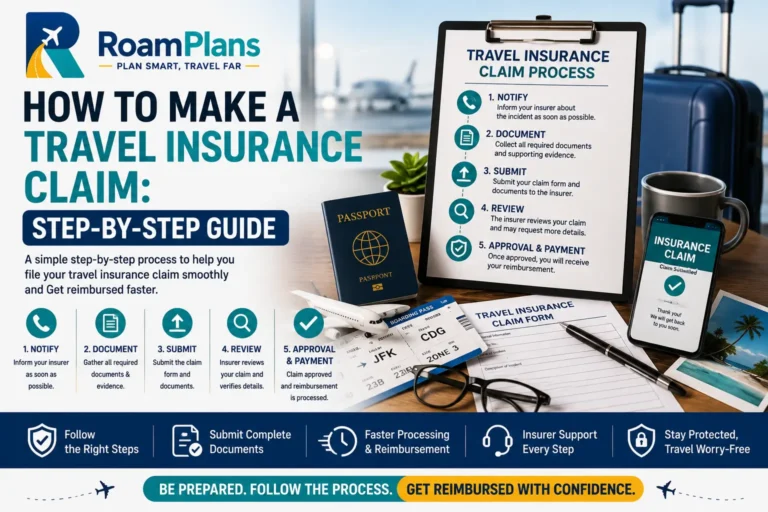
Related RoamPlans guide: How to Make a Travel Insurance Claim: Step-by-Step Guide covers the full claims process, supporting documents, deadlines, follow-up, and denied claims in more detail.
Primary vs Secondary Coverage Can Affect the Claim
If your travel medical insurance is secondary, the insurer may ask you to submit the expense to another applicable health plan first.
You may then need to provide:
- ✓Explanation of benefits
- ✓Payment statement
- ✓Denial
- ✓Remaining balance
before the travel insurer reviews the remaining eligible amount.
That is why knowing whether coverage is primary or secondary before departure can save confusion later.
Keep Proof of What Another Insurer Paid
If another health insurer contributes to the bill, save the documentation.
The travel insurer may need to know:
- ✓Original bill
- ✓Amount already paid
- ✓Amount denied
- ✓Remaining expense
Insurance is generally intended to cover eligible losses according to policy coordination rules, not to create duplicate payment for the same expense.
What If Your Travel Medical Claim Is Denied?
First, read the denial carefully.
A denial might involve:
- ✓Exclusion
- ✓Pre-existing condition rule
- ✓Missing documentation
- ✓Benefit limit
- ✓Activity exclusion
- ✓Treatment not meeting policy terms
- ✓Authorization issue
- ✓Another insurance requirement
Do not assume all denied claims fail for the same reason.
Find the specific provision the insurer relied on.
Ask the Insurer for a Clear Explanation
If the explanation is unclear, ask:
- ✓Which policy section caused the denial?
- ✓Is any documentation missing?
- ✓Can I submit additional records?
- ✓Is there an internal review process?
- ✓What is the review deadline?
Keep important communication in writing where practical.
When Can an Insurance Regulator Help?
For U.S. consumers, insurance is primarily regulated at the state level.
NAIC provides a directory of state insurance departments and directs consumers with unresolved insurer or agent problems to their state regulator.
Before filing a complaint, organize:
- ✓Policy
- ✓Claim
- ✓Denial
- ✓Medical bills
- ✓Emails
- ✓Other supporting records
This helps explain the dispute clearly.
Common Travel Medical Insurance Mistakes
Medical coverage problems often start before the trip.
Here are mistakes I would try to avoid.
Assuming Normal Health Insurance Works Everywhere
International coverage can differ significantly.
Check directly before departure. The State Department recommends confirming overseas medical protection with your health insurer.
Looking Only at the Medical Limit
A $500,000 limit sounds impressive.
It does not tell you:
- ✓Deductible
- ✓Exclusions
- ✓Primary or secondary status
- ✓Activity restrictions
- ✓Pre-existing-condition rules
Look at the whole policy.
Forgetting Medical Evacuation
Emergency treatment and evacuation are different risks.
Most ordinary U.S. health plans do not pay for transportation back to the United States by air ambulance, according to current State Department guidance.
Assuming Evacuation Means “Fly Me Home”
It may instead mean transportation to an appropriate medical facility.
Read the benefit wording.
Ignoring Pre-Existing Conditions
Check the definition and any waiver rules before buying.
Not Checking Adventure Activities
A large medical benefit can still have activity exclusions.
Waiting Until an Emergency to Find the Phone Number
Save assistance information before departure.
Assuming the Hospital Will Bill the Insurer
You may need to pay first and claim later.
Losing Medical Receipts
Keep detailed records.
Arranging Expensive Transport Without Calling the Insurer
Where the situation safely allows, check authorization requirements first.
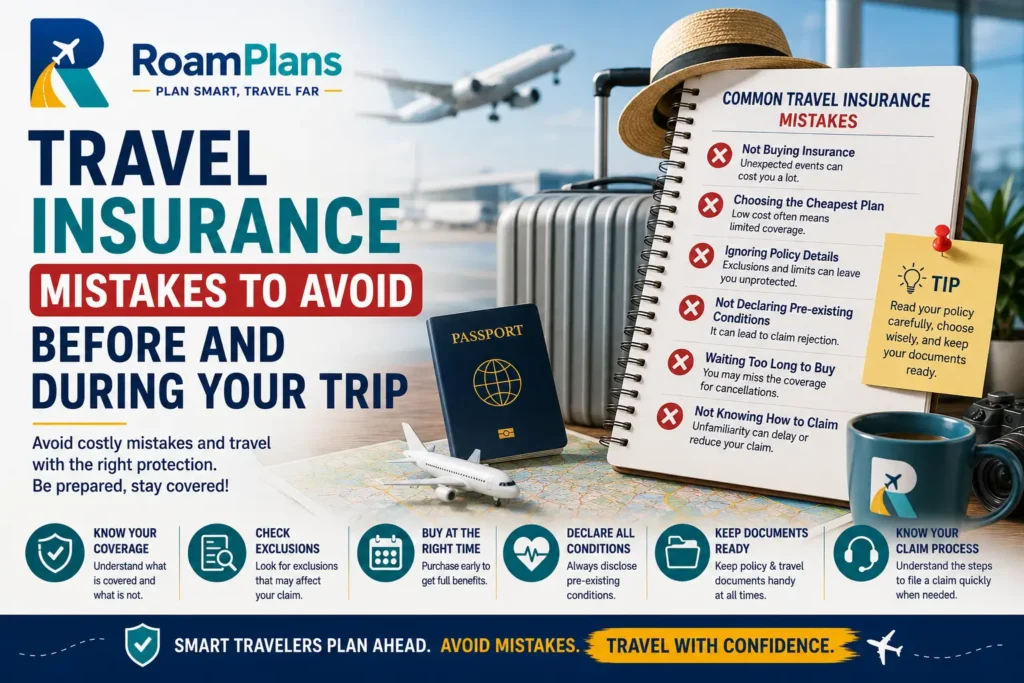
Related RoamPlans guide: Travel Insurance Mistakes to Avoid Before and During Your Trip explains the broader insurance mistakes that can create coverage and claim problems.
A Better Medical Insurance Setup Before Travel
Before I leave for an international trip, I want four things prepared.
1. Coverage
I know:
- ✓Medical limit
- ✓Deductible
- ✓Medical evacuation limit
- ✓Main exclusions
2. Access
I know:
- ✓Emergency phone number
- ✓Policy number
- ✓How to contact assistance
3. Payment Plan
I know:
- ✓Whether direct payment is possible
- ✓Whether I might pay first
- ✓How reimbursement works
4. Documentation
I know what to keep if I need:
- ✓Hospital care
- ✓Prescription
- ✓Dental care
- ✓Evacuation
This turns insurance from a PDF stored in my email into something I can actually use.
Final Travel Medical Insurance Checklist
Use this before an international trip.
Existing Health Insurance
- ✓Confirm overseas coverage
- ✓Confirm emergency treatment
- ✓Ask about hospital coverage
- ✓Ask whether providers are treated as out-of-network
- ✓Ask how international claims work
- ✓Check medical evacuation
- ✓Check Medicare-related coverage where relevant
Travel Medical Policy
- ✓Emergency medical limit checked
- ✓Deductible checked
- ✓Coinsurance checked where applicable
- ✓Primary or secondary status checked
- ✓Policy dates checked
- ✓Maximum trip duration checked
- ✓All destinations covered
Medical Conditions
- ✓Pre-existing-condition definition read
- ✓Look-back rules checked where applicable
- ✓Waiver requirements checked
- ✓Chronic-condition needs considered
- ✓Pregnancy terms checked where relevant
- ✓Planned treatment exclusions checked
Activities
- ✓Skiing checked where relevant
- ✓Trekking checked
- ✓Diving checked
- ✓Cycling checked
- ✓Motorbike activity checked
- ✓Other higher-risk activities checked
Evacuation
- ✓Evacuation limit checked
- ✓Medical necessity definition checked
- ✓Authorization rules checked
- ✓Destination of evacuation checked
- ✓Repatriation terms checked
Emergency Assistance
- ✓24/7 number saved
- ✓International phone number saved
- ✓Policy number available
- ✓Files available offline
- ✓Trusted person has essential details where appropriate
Payment
- ✓Direct-payment process understood
- ✓Reimbursement process understood
- ✓Emergency payment method available
- ✓Backup payment method available
Claims
- ✓Medical-document requirements checked
- ✓Itemized bills understood
- ✓Receipt requirements understood
- ✓Claim submission method saved
- ✓Claim deadlines checked
Frequently Asked Questions
Travel medical insurance is temporary insurance designed to help with eligible medical expenses caused by covered illness or injury while traveling. Coverage and exclusions vary by policy.
It depends on your existing health insurance and trip. The State Department recommends checking whether your current insurance works abroad and considering travel medical and evacuation protection where gaps exist.
Some plans provide overseas benefits and others provide limited protection. Ask your insurer directly about your destination, emergency treatment, payment process, and evacuation.
Original Medicare generally provides very limited coverage outside the United States, with specific exceptions. Travelers should check their exact Medicare-related coverage before departure.
Depending on the plan, it can cover eligible doctor visits, hospital treatment, emergency care, medical testing, prescription expenses related to covered treatment, emergency dental care, and other stated medical expenses.
It depends on the policy. Some plans exclude certain pre-existing conditions, while some may offer a waiver when specific eligibility requirements are met.
Coverage varies. Routine pregnancy care, childbirth, complications, and emergency treatment can be treated differently. Check the specific policy and discuss medical travel suitability with your healthcare professional.
Some policies may cover eligible prescription expenses related to a covered illness or injury. Routine medications and regular prescription supplies should not automatically be assumed covered.
Some plans include limited emergency dental benefits. Check the separate dental maximum and exclusions.
Not automatically. Certain activities may be restricted or excluded. Check your exact activity and the related medical and evacuation rules.
It can cover qualifying emergency transport to an appropriate medical facility according to the policy. It is particularly worth considering for remote destinations or places with limited medical care.
Current State Department guidance estimates that an air ambulance evacuation back to the United States can cost approximately $20,000 to $200,000, depending on location and medical condition.
Not necessarily. Some policies focus on transportation to an appropriate medical facility. Check exactly who chooses the destination and when transportation home is included.
Not always. CDC advises that travelers often need to pay overseas providers themselves because direct insurance billing may not be available.
Yes. You may need to pay a provider before receiving reimbursement, depending on the destination and policy arrangements.
Primary coverage generally processes an eligible claim without first requiring another applicable health insurer to pay, subject to the policy terms.
Secondary coverage may require another applicable insurer to process the medical expense first. You may then need to show what that insurer paid or denied before the travel policy considers remaining eligible expenses.
Keep itemized medical bills, receipts, medical reports, prescriptions, proof of payment, and any insurer authorization or transportation records related to the event.
Seek necessary medical help, then contact your insurer’s emergency assistance service as soon as reasonably possible. Keep records of treatment and expenses.
Read the denial and the policy section it cites. Ask whether documentation is missing and whether a review process is available. U.S. consumers can also find their state insurance regulator through NAIC if a serious unresolved insurance issue remains.
No. Medical insurance addresses eligible healthcare costs, while evacuation insurance addresses qualifying emergency medical transportation. They may be sold together or separately.
No. Compare the limit with the deductible, exclusions, pre-existing-condition terms, activities, evacuation benefit, trip duration, destination, and how claims are handled.
Final Thoughts
In short, Travel medical insurance becomes much easier to understand when you stop seeing it as one large coverage number.
When I review a plan, I want to know what would happen in a real medical emergency.
If I became seriously ill tonight in the country I am visiting:
Then save the policy, emergency number, and claim instructions somewhere you can actually reach them.
Medical insurance is most useful when you understand how to use it before you need it.

Adnan Ahmed
RoamPlans AuthorTravel Planning Researcher & Editor
Adnan Ahmed is the travel planning researcher and editor behind RoamPlans. He creates clear, practical guides to help travelers compare destinations, plan routes, estimate costs, and avoid common trip-planning mistakes. His work combines careful source research, official travel information, and regular content reviews to keep each guide useful and current.
- ✓Destination Research
- ✓Budget Planning
- ✓Route Planning
- ✓Beginner Travel Guides


Turn This Guide into a Practical Trip Plan
Use the recommended Airline Baggage Allowance Checker or explore more free RoamPlans tools.



One Comment