Travel First Aid Kit: Essential Medical Supplies for Any Trip (Beginner’s Guide)
A practical beginner’s guide to creating a compact medical kit for common minor injuries and health problems without carrying unnecessary supplies.
I’ve never needed a large medical kit while traveling, but I’ve been thankful for carrying a small one many times ↗. Whether it was treating a blister after walking all day, taking a pain reliever during a long flight, or cleaning a small cut while hiking, having basic medical supplies with me meant I could deal with the problem immediately instead of searching for a pharmacy in an unfamiliar place. Those experiences taught me that a simple first aid kit is one of the most useful things you can pack.
A travel first aid kit doesn’t have to be large or expensive. It simply contains the essential medical supplies that can help you handle minor injuries and common health problems during your trip. This guide will show you what to include, how to organize your kit, and how to pack it without taking up too much space in your luggage.
Why Every Traveler Should Carry a First Aid Kit?
No matter where you’re traveling, small health problems can happen unexpectedly.
A headache, blister, minor cut, upset stomach, or allergic reaction can quickly interrupt an enjoyable trip if you aren’t prepared.
Having a basic first aid kit allows you to:
- ✓Treat minor injuries quickly.
- ✓Stay comfortable during your trip.
- ✓Avoid unnecessary trips to a pharmacy.
- ✓Save time in unfamiliar places.
- ✓Feel more prepared while traveling.
Most travelers won’t use every item, but having them available provides peace of mind.
Keep Your First Aid Kit Simple
One mistake many people make is packing far more medical supplies than they’ll ever need.
Your travel first aid kit isn’t meant to replace professional medical care.
Instead, it should help you manage common minor health issues until you can access proper medical assistance if necessary.
A compact kit is usually easier to organize, lighter to carry, and much more practical for most trips.
Start with Basic Wound Care Supplies
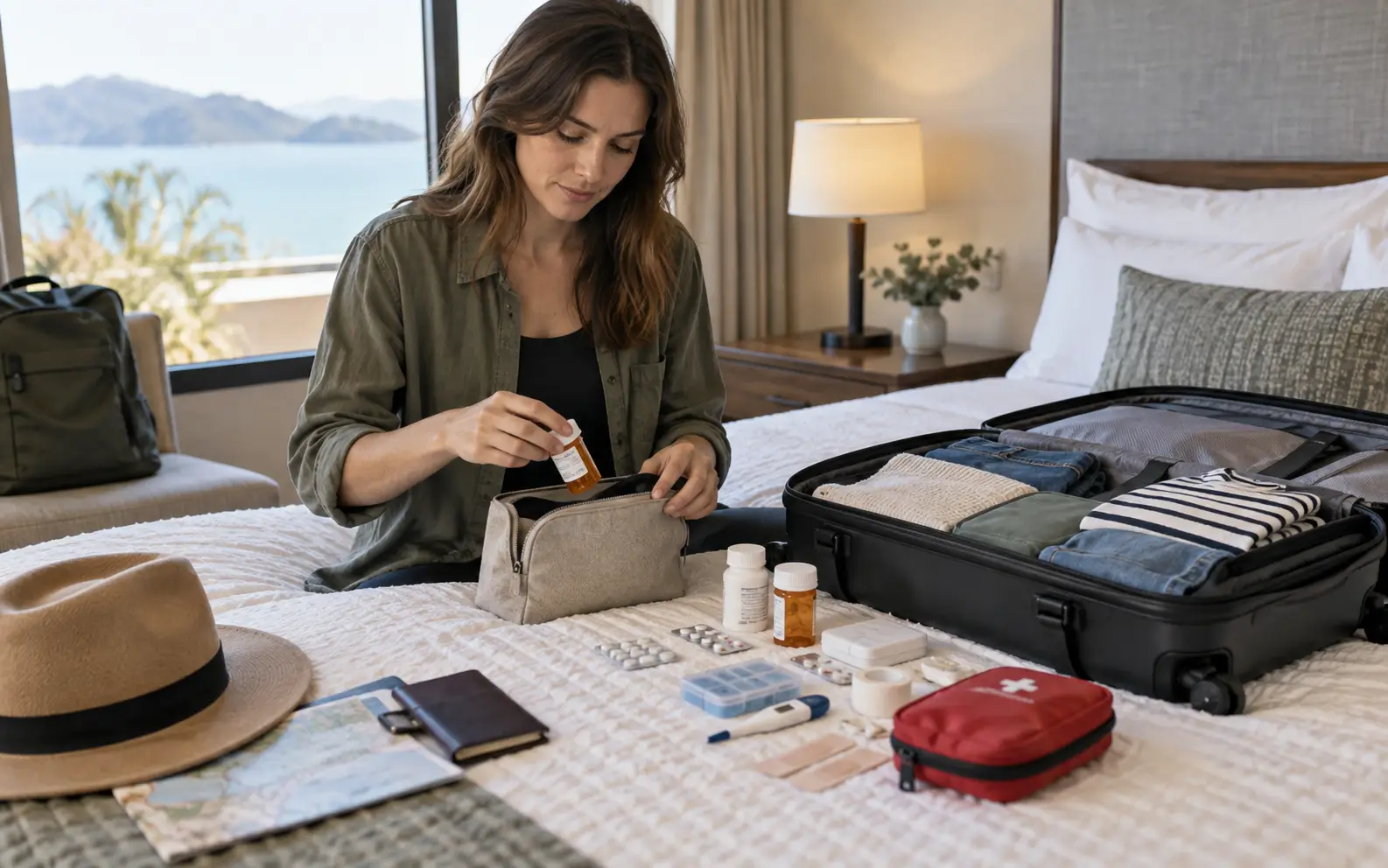
Small cuts, scrapes, and blisters are some of the most common travel injuries.
Keeping a few basic wound care supplies in your first aid kit allows you to treat these minor problems quickly.
Your kit may include:
- ✓Adhesive bandages.
- ✓Sterile gauze pads.
- ✓Medical tape.
- ✓Antiseptic wipes.
- ✓Small antiseptic cream.
These simple supplies take up very little space but can be extremely useful during sightseeing, hiking, or other outdoor activities.
Pack Pain Relief Medication
A mild headache or muscle soreness shouldn’t ruin your vacation.
Many travelers choose to carry a small amount of pain relief medication for occasional use.
Depending on your personal needs, this may include:
- ✓Acetaminophen (paracetamol).
- ✓Ibuprofen.
- ✓Aspirin (if appropriate for you).
Only bring medicines that you normally use and always follow the instructions provided with them.
Include Allergy Medication
Even if you don’t experience allergies often at home, traveling can expose you to new environments, foods, plants, or insects.
A basic allergy medicine can be useful for mild reactions such as:
- ✓Seasonal allergies.
- ✓Dust allergies.
- ✓Mild skin irritation.
- ✓Insect bites.
If you have severe allergies, speak with your healthcare professional before traveling and pack any prescribed emergency medication you require.
Don’t Forget Your Prescription Medicines
Prescription medicines are often the most important items in any travel first aid kit.
Before your trip:
- ✓Pack enough medicine for your entire journey.
- ✓Bring a few extra days’ supply if possible.
- ✓Keep medicines in their original packaging.
- ✓Check whether your destination has any restrictions on certain medications.
It’s also a good idea to carry a copy of your prescription when traveling internationally, especially for medications that require documentation.
Prepare for Blisters
Blisters are surprisingly common, especially during vacations that involve long walks, hiking, or exploring new cities.
After several trips, I’ve learned that treating a small blister early is much easier than waiting until it becomes painful.
Useful blister care items include:
- ✓Blister pads.
- ✓Moleskin.
- ✓Small adhesive bandages.
- ✓Antiseptic wipes.
Comfortable footwear helps prevent blisters, but carrying a few treatment supplies is still a smart precaution.
Store Everything in One Medical Pouch
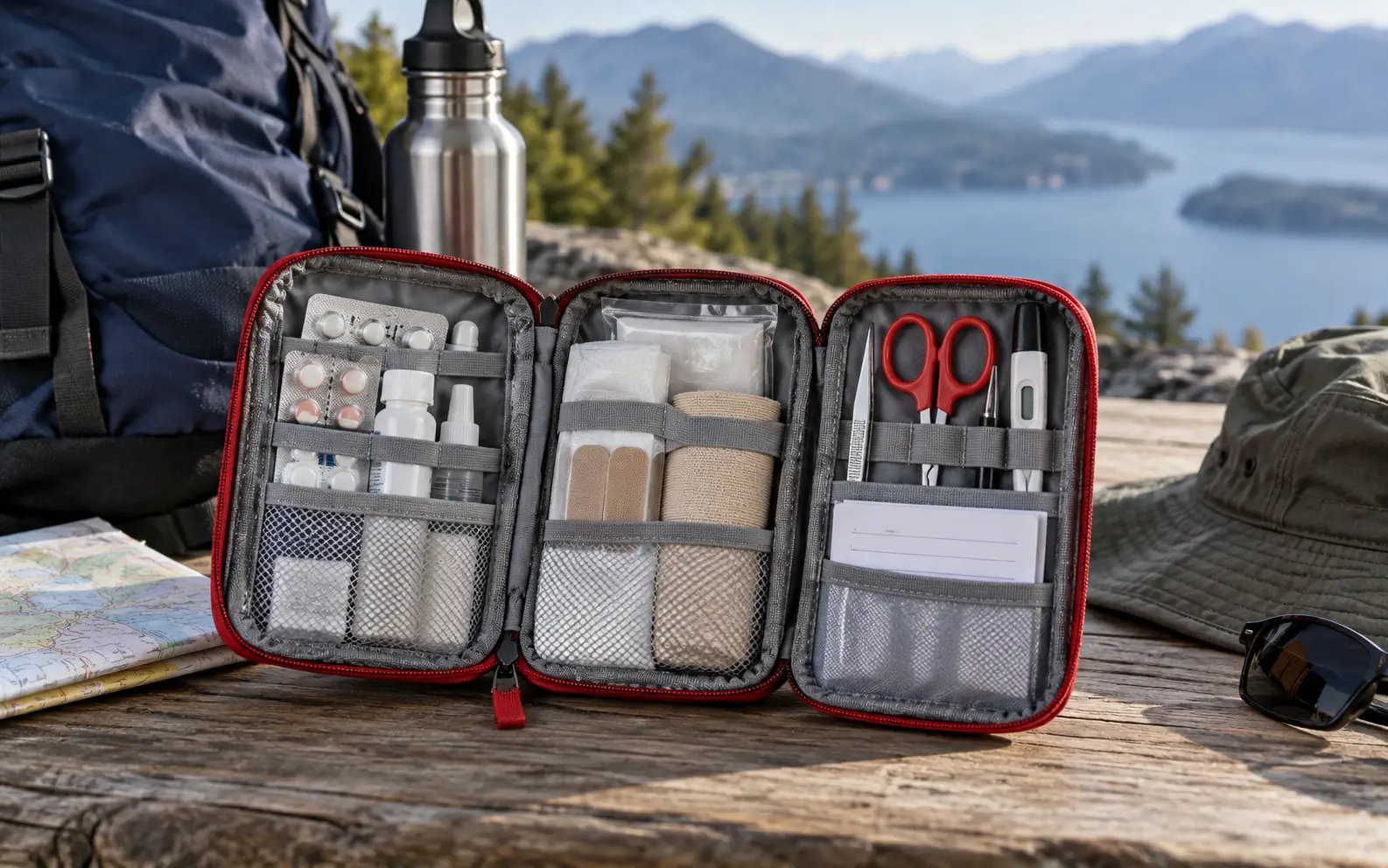
Keeping your medical supplies organized makes them much easier to find when you need them.
Instead of placing medicines and bandages throughout your luggage, keep everything together in one clearly labeled pouch.
This allows you to:
- ✓Find supplies quickly.
- ✓Prevent items from getting lost.
- ✓Keep medicines separate from toiletries.
- ✓Check your kit easily before every trip.
A dedicated first aid pouch also makes it simple to restock any items you’ve used before your next journey.
Pack Medicines for Common Travel Problems
Besides your regular prescription medication, it’s helpful to carry a few medicines for common travel-related issues.
You don’t need to prepare for every possible illness. Instead, focus on the problems travelers are most likely to experience.
Depending on your destination and personal needs, you may include:
- ✓Upset stomach medicine.
- ✓Diarrhea relief medication.
- ✓Antacids.
- ✓Motion sickness tablets.
- ✓Rehydration salts.
- ✓Cold and flu medicine.
Having these medicines available can save time, especially if you’re traveling somewhere unfamiliar or arriving late when local pharmacies may be closed.
Include a Few Useful Medical Tools
A few small tools can make your first aid kit much more practical.
These items don’t take up much space but can be helpful in different situations.
Consider packing:
- ✓Tweezers.
- ✓Small scissors (pack according to airline rules).
- ✓Digital thermometer.
- ✓Safety pins.
- ✓Disposable gloves.
These tools are useful for removing splinters, checking a fever, securing a bandage, or handling minor first aid tasks more safely.
Keep Emergency Medical Information with You
If you have an existing medical condition or allergies, it’s a good idea to carry important health information with you.
This can be especially helpful in an emergency.
You may want to carry:
- ✓A list of prescription medications.
- ✓Allergy information.
- ✓Emergency contact numbers.
- ✓Your healthcare provider’s contact details.
- ✓Travel insurance information.
Many travelers also save this information on their phone while keeping a printed copy in their first aid kit as a backup.
Organize Your First Aid Kit
A well-organized kit helps you find what you need quickly.
Instead of placing everything loosely into one pouch, group similar items together.
For example:
- ✓Wound care supplies together.
- ✓Medicines together.
- ✓Prescription medication in a separate section.
- ✓Medical tools in one pocket.
- ✓Emergency information in a waterproof sleeve.
This simple organization can save valuable time when you need something quickly.
Should Your First Aid Kit Go in Your Carry-On?
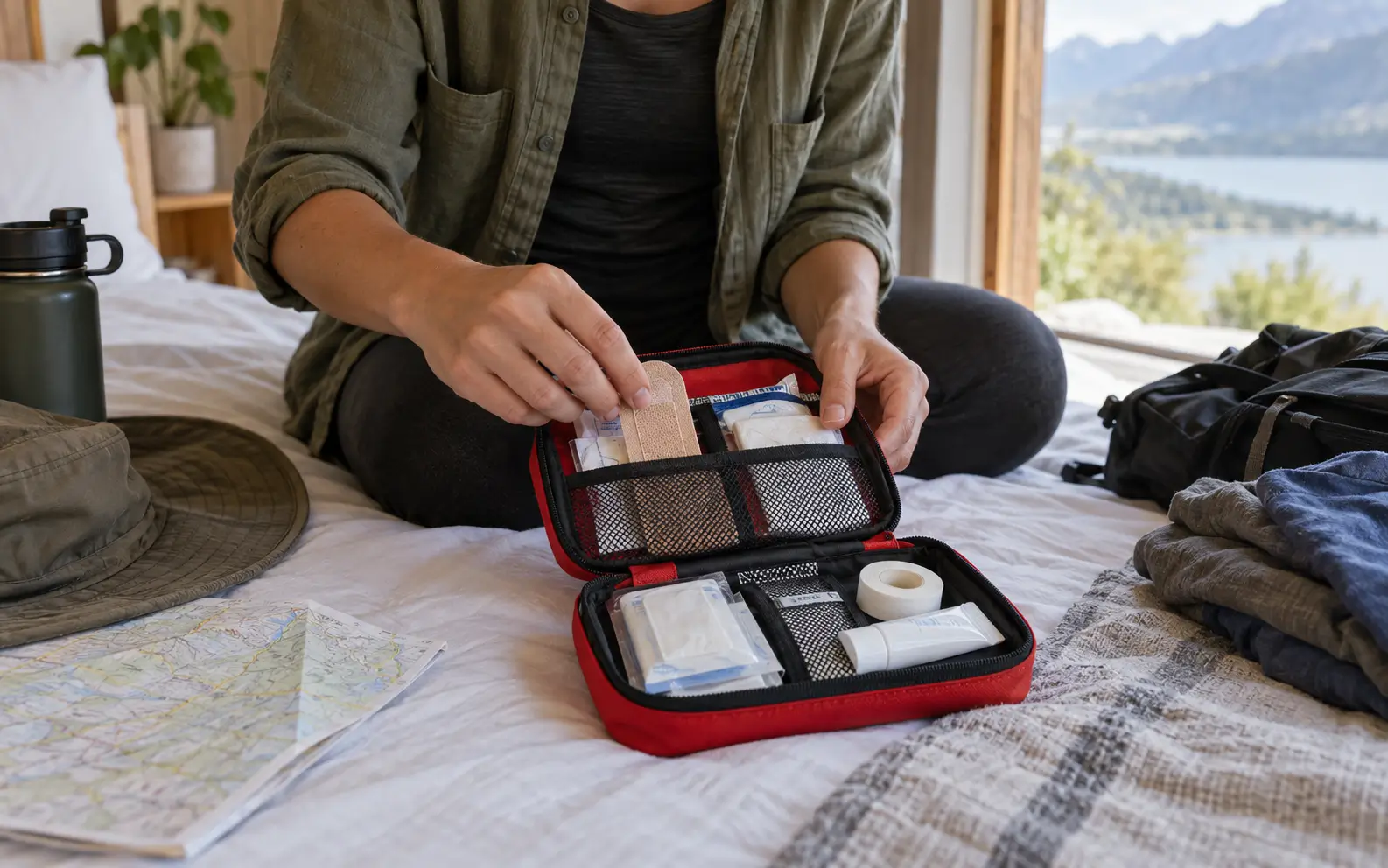
The answer depends on the item.
For flights, I usually keep prescription medication and any medicines I might need during the journey in my carry-on bag.
Items that may be useful during your flight include:
- ✓Prescription medication.
- ✓Allergy medicine.
- ✓Pain relievers.
- ✓Motion sickness tablets.
- ✓Inhalers if required.
Larger supplies that won’t be needed until you arrive can usually stay in your checked luggage.
Always check your airline’s rules before traveling, especially if you’re carrying liquid medicines or medical devices.
Check Expiration Dates Before Every Trip
One habit I’ve developed before every vacation is checking the expiration dates on every medicine in my first aid kit.
Medicines can remain in a travel pouch for months between trips, making it easy to overlook expired products.
Before you travel:
- ✓Check expiration dates.
- ✓Replace expired medicines.
- ✓Restock used supplies.
- ✓Make sure packaging is still sealed.
This quick review helps ensure your first aid kit is ready whenever you need it.
Pack for Your Destination
Your destination can influence what belongs in your first aid kit.
For example:
Beach Vacations
You may want:
- ✓Aloe vera gel.
- ✓Extra sunscreen.
- ✓Blister pads.
- ✓Insect bite cream.
Hiking or Outdoor Trips
You might include:
- ✓Additional bandages.
- ✓Elastic bandage.
- ✓Antiseptic cream.
- ✓Tick removal tool if appropriate.
City Breaks
A smaller kit is often enough, with basic medicines and wound care supplies for everyday travel.
Adjusting your first aid kit to match your activities helps you avoid carrying unnecessary items.
Protect Medicines from Heat and Moisture
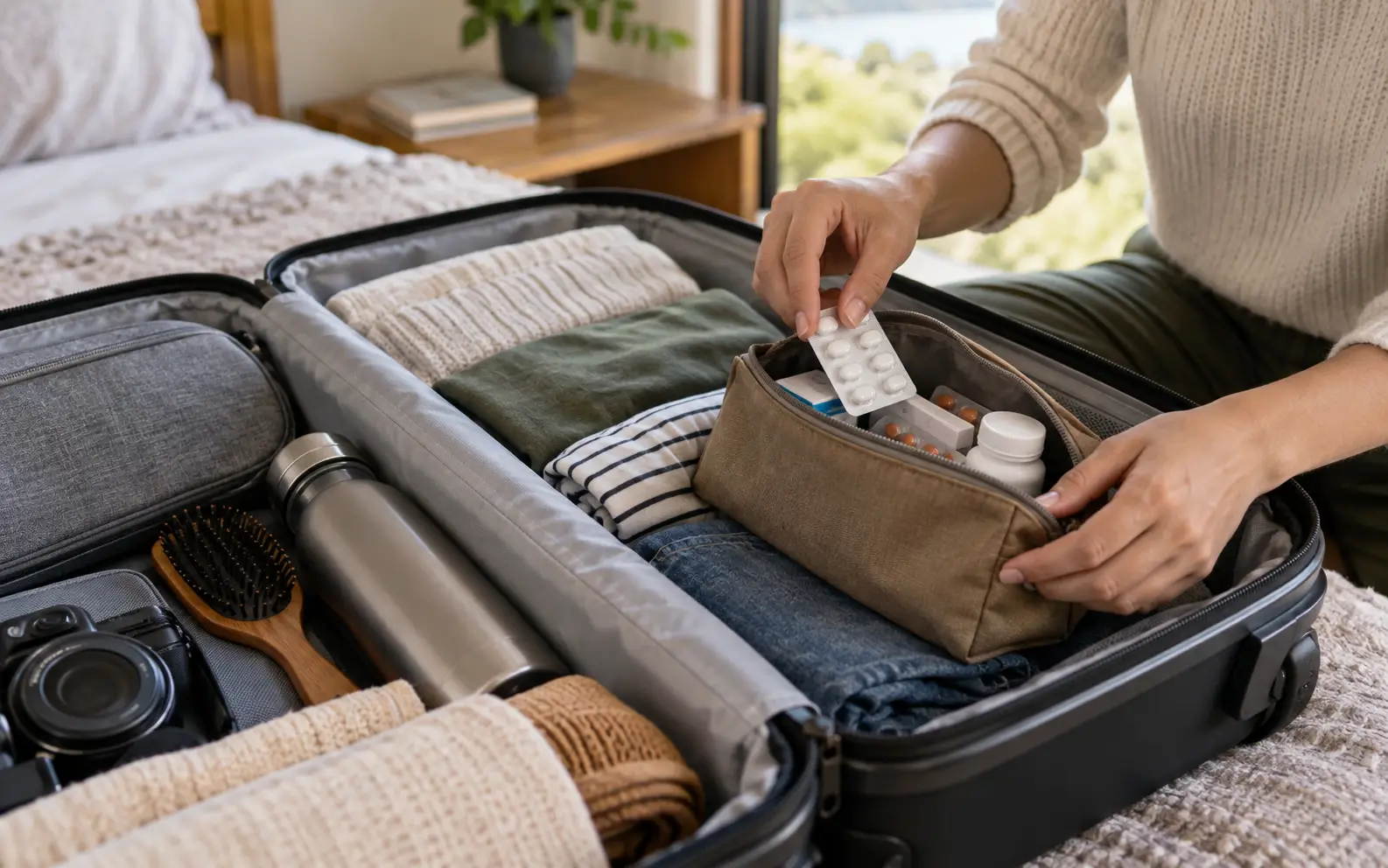
Medicines can lose their effectiveness if they’re exposed to excessive heat, moisture, or direct sunlight.
To help protect them:
- ✓Store medicines in their original packaging whenever possible.
- ✓Keep them in a cool, dry part of your luggage.
- ✓Avoid leaving them inside a hot parked car.
- ✓Keep liquids tightly sealed to prevent leaks.
A little care during your trip helps ensure your medicines remain in good condition when you need them.
Restock Your Kit After Every Trip
A travel first aid kit should always be ready for your next journey.
When you return home, take a few minutes to:
- ✓Replace used bandages.
- ✓Restock medicines.
- ✓Dispose of expired items.
- ✓Clean your medical pouch.
- ✓Update your emergency contact information if needed.
Doing this after each trip saves time and means your first aid kit is always prepared for your next adventure.
What You Don’t Need in a Travel First Aid Kit?
When I first started traveling, I packed far too many medical supplies because I wanted to be prepared for every possible situation.
After several trips, I realized I only used a small number of basic items.
For most vacations, you don’t need to carry:
- ✓Large bottles of medicine.
- ✓Multiple brands of the same medication.
- ✓Professional medical equipment.
- ✓Large quantities of bandages.
- ✓Medicines you don’t know how to use.
- ✓Bulky first aid books or manuals.
A compact, well-organized first aid kit is usually much more practical than a large one filled with unnecessary supplies.
Common First Aid Kit Packing Mistakes
Even experienced travelers sometimes overlook a few important details when preparing their medical kit.
Some of the most common mistakes include:
- ✓Forgetting prescription medication.
- ✓Packing expired medicines.
- ✓Bringing medicines without checking local travel regulations.
- ✓Mixing medicines with toiletries.
- ✓Carrying too many unnecessary supplies.
- ✓Forgetting blister treatment for walking trips.
- ✓Leaving the first aid kit buried at the bottom of the suitcase.
- ✓Waiting until the day before departure to prepare it.
Taking a few minutes to review your kit before each trip can help you avoid these problems.
Complete Travel First Aid Kit Checklist
Before leaving home, use this checklist to make sure your travel first aid kit includes the essentials.
Wound Care
- ✓Adhesive bandages.
- ✓Sterile gauze pads.
- ✓Medical tape.
- ✓Antiseptic wipes.
- ✓Antiseptic cream.
Medicines
- ✓Prescription medication.
- ✓Pain reliever.
- ✓Allergy medicine.
- ✓Motion sickness tablets.
- ✓Upset stomach medicine.
- ✓Diarrhea relief medicine.
- ✓Rehydration salts.
Blister Care
- ✓Blister pads.
- ✓Moleskin.
- ✓Small bandages.
Medical Tools
- ✓Tweezers.
- ✓Digital thermometer.
- ✓Disposable gloves.
- ✓Safety pins.
Emergency Information
- ✓Prescription list.
- ✓Allergy information.
- ✓Emergency contact numbers.
- ✓Travel insurance details.
Before You Travel
- ✓Check expiration dates.
- ✓Replace used supplies.
- ✓Pack medicines in original packaging when appropriate.
- ✓Keep important medicines in your carry-on.
- ✓Store the kit in an easy-to-reach place.
A quick review before every trip helps ensure you’re prepared for common travel health situations without carrying unnecessary supplies.
Frequently Asked Questions
A basic travel first aid kit should include adhesive bandages, antiseptic wipes, gauze, medical tape, pain relief medicine, allergy medication, prescription medicines, blister treatment, tweezers, and a digital thermometer. Adjust the contents based on your destination and personal health needs.
Yes. Prescription medicines should usually stay in your carry-on bag so they’re always available during your journey, especially if your checked luggage is delayed.
Check your first aid kit before every trip. Replace expired medicines, restock used supplies, and make sure all packaging is clean and undamaged.
Yes. Even a weekend trip can involve minor cuts, headaches, blisters, or stomach problems. A small first aid kit takes very little space and can be very useful.
In many places you can, but pharmacies may not always be nearby, open, or stock the products you’re familiar with. Carrying your own basic supplies is usually more convenient.
Final Thoughts
I’ve found that a travel first aid kit isn’t about preparing for every possible emergency—it’s about being ready for the small health problems that can happen on almost any trip. A headache, blister, or minor cut is much easier to handle when you already have the right supplies with you. Spending a few minutes preparing your kit before you leave can save you time, money, and unnecessary stress during your travels.
Use this guide as your checklist before every journey. A simple, well-organized first aid kit can help you travel with greater confidence, knowing you have the essential medical supplies needed to handle common situations while enjoying your trip.

Adnan Ahmed
RoamPlans AuthorTravel Planning Researcher & Editor
Adnan Ahmed is the travel planning researcher and editor behind RoamPlans. He creates clear, practical guides to help travelers compare destinations, plan routes, estimate costs, and avoid common trip-planning mistakes. His work combines careful source research, official travel information, and regular content reviews to keep each guide useful and current.
- ✓Destination Research
- ✓Budget Planning
- ✓Route Planning
- ✓Beginner Travel Guides


Turn This Guide into a Practical Trip Plan
Use the recommended Free Packing List Generator or explore more free RoamPlans tools.