
Travel Electronics Packing Guide: What Tech to Bring on Your Trip (Beginner’s Guide)
A practical beginner’s guide to bringing the technology you will genuinely use, keeping it charged and organized, and protecting valuable devices during travel.
One lesson I’ve learned ↗ from traveling is that forgetting a charger can be more frustrating than forgetting an extra T-shirt. On one trip, I arrived at my hotel with only a few percent of battery left on my phone and realized my charging cable was still at home. Finding a replacement in an unfamiliar city took both time and money. Since then, I always pack my electronics in the same order before every trip, and it has saved me from a lot of unnecessary stress.
Today’s travelers rely on electronics for almost every part of a journey. From boarding passes and navigation to taking photos and staying in touch with family, the right devices can make traveling easier and more enjoyable. This travel electronics packing guide will help you decide which tech items are worth bringing, how to organize them, and how to protect them while you’re on the move.
Why Electronics Have Become Travel Essentials?
Years ago, many travelers only carried a camera and a phone.
Today, electronics help with almost every stage of a trip.
You might use them for:
- ✓Booking confirmations.
- ✓Digital boarding passes.
- ✓Maps and navigation.
- ✓Translation apps.
- ✓Photography.
- ✓Entertainment.
- ✓Online banking.
- ✓Emergency communication.
Bringing the right devices helps you stay connected and prepared throughout your journey.
Start with the Devices You’ll Use Most
Before adding every gadget you own to your bag, think about which electronics you’ll actually use.
Ask yourself:
- ✓Will I need to work during the trip?
- ✓Do I plan to take lots of photos?
- ✓Will I need entertainment during long flights?
- ✓Will I have access to charging points?
- ✓Am I traveling internationally?
Only pack devices that have a clear purpose.
Keeping your electronics simple makes your luggage lighter and easier to organize.
Your Smartphone Is Your Most Important Travel Device
For most people, a smartphone is the one electronic device they simply can’t travel without.
It can replace several separate items, including:
- ✓Maps.
- ✓Camera.
- ✓Boarding passes.
- ✓Hotel reservations.
- ✓Translation tools.
- ✓Travel itinerary.
- ✓Emergency contacts.
- ✓Mobile payments.
Before leaving home, make sure your phone is fully updated and has enough storage for photos, videos, and travel apps.
Never Forget Your Chargers
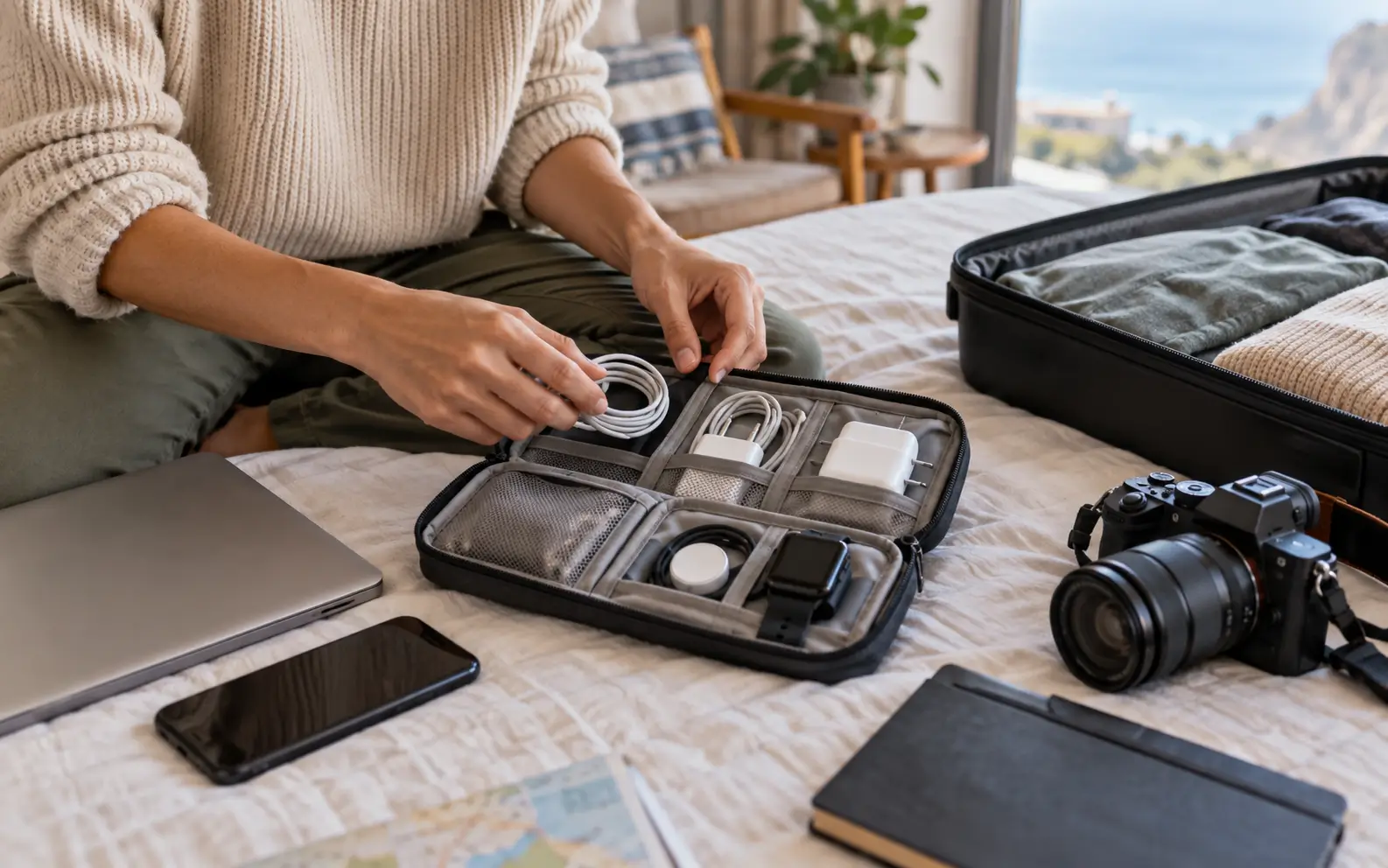
A useful device becomes much less helpful if you can’t charge it.
One habit I always follow is placing every charger into my travel bag a day before departure instead of waiting until the last minute.
Depending on your devices, you may need:
- ✓Phone charger.
- ✓Laptop charger.
- ✓Tablet charger.
- ✓Smartwatch charger.
- ✓Camera battery charger.
- ✓USB charging cable.
Keeping all chargers together in one small organizer makes them much easier to find during your trip.
Carry a Reliable Power Bank
A power bank has become one of my favorite travel accessories.
Long travel days, delayed flights, and full-day sightseeing can quickly drain your phone battery.
A portable charger allows you to recharge your devices even when power outlets aren’t available.
Before your trip:
- ✓Charge your power bank fully.
- ✓Check its battery capacity.
- ✓Bring the correct charging cable.
- ✓Review your airline’s rules for carrying power banks.
Having backup power can be especially useful when using GPS or taking photos throughout the day.
Decide Whether You Really Need a Laptop
Not every trip requires carrying a laptop.
For business travel or remote work, it’s often essential.
For a relaxing vacation, however, your smartphone or tablet may be enough.
Ask yourself:
- ✓Will I work during the trip?
- ✓Do I need special software?
- ✓Will I edit photos or videos?
- ✓Can my phone handle everything I need?
Leaving unnecessary devices at home makes your luggage lighter and reduces the number of valuable items you need to carry.
Tablets Can Be a Good Middle Ground
A tablet offers many of the advantages of a laptop while taking up much less space.
Many travelers use tablets for:
- ✓Watching movies.
- ✓Reading e-books.
- ✓Browsing the internet.
- ✓Video calls.
- ✓Light work.
- ✓Planning daily activities.
If your trip doesn’t require a full laptop, a tablet may provide everything you need in a smaller package.
Bring a Camera Only If You’ll Use It
Smartphone cameras have improved dramatically, and for many trips they’re more than enough.
However, if photography is one of the main reasons for your journey, bringing a dedicated camera may still be worthwhile.
Think about:
- ✓The type of trip you’re taking.
- ✓How important photography is to you.
- ✓The extra weight of camera equipment.
- ✓Additional batteries and memory cards.
Only pack camera gear that you’ll genuinely use instead of carrying equipment “just in case.”
Pack the Right Audio Accessories
Audio devices can make long journeys much more enjoyable, whether you’re on a plane, train, or bus.
Depending on your travel style, you may want to bring:
- ✓Wireless earbuds.
- ✓Over-ear headphones.
- ✓Noise-canceling headphones.
- ✓Wired earphones as a backup.
I usually carry a pair of wireless earbuds because they take up very little space and are useful for listening to music, watching movies, making calls, or following audio directions while exploring a new city.
Don’t forget to charge them before your trip and pack their charging case.
Bring the Correct Travel Adapter
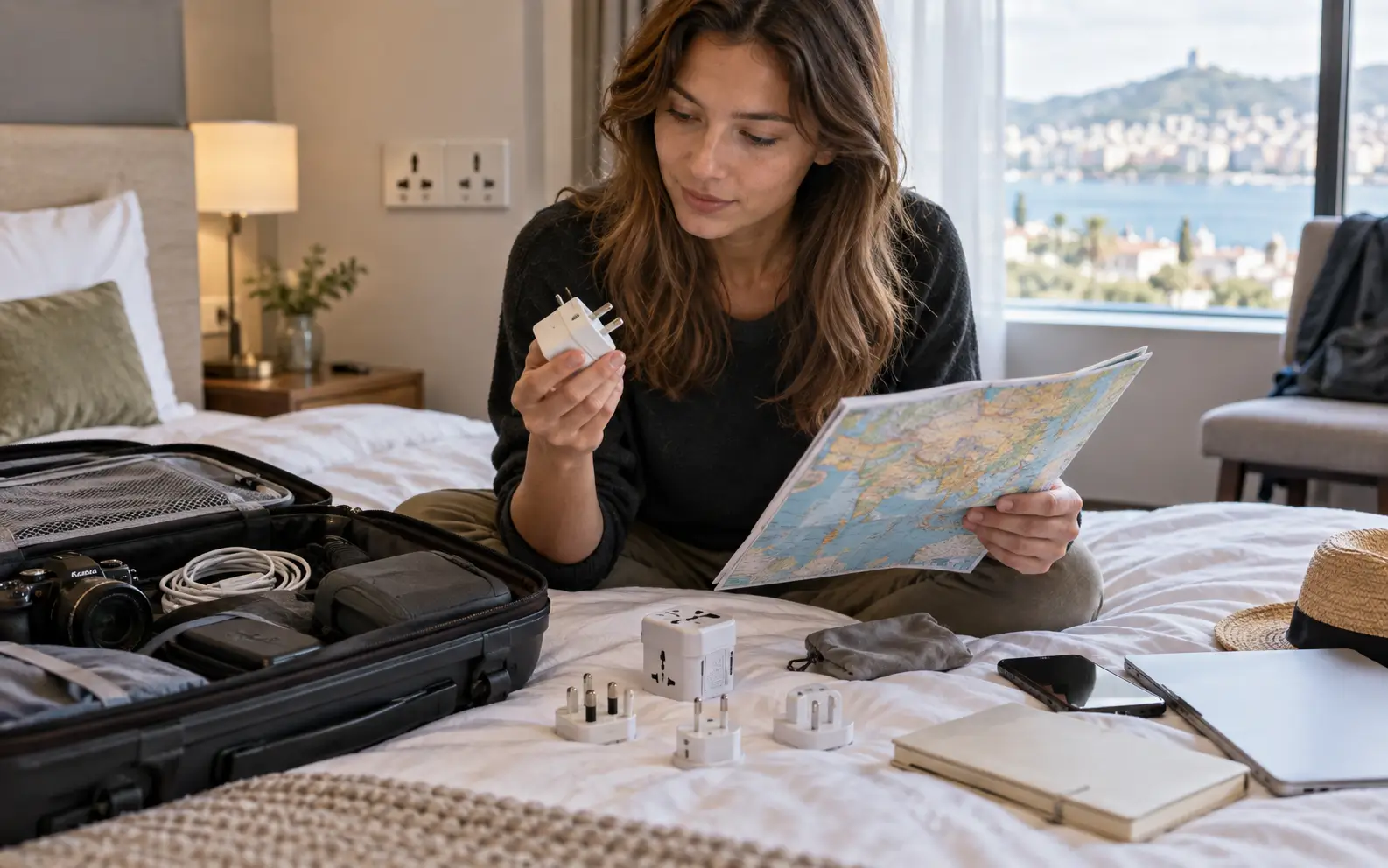
If you’re traveling to another country, your regular charger may not fit the local electrical outlets.
Before you leave, check:
- ✓The plug type used in your destination.
- ✓The local voltage requirements.
- ✓Whether your devices support dual voltage.
A universal travel adapter is often the easiest solution because it works in many countries and reduces the number of adapters you need to carry.
Packing the correct adapter before you travel can save you from searching for one after you arrive.
Keep Cables Organized
One thing that used to frustrate me was opening my bag and finding a tangled mess of charging cables.
Now I keep every cable together in a small organizer, and it saves a lot of time.
Depending on your devices, you may have:
- ✓USB-C cables.
- ✓Lightning cables.
- ✓Micro-USB cables.
- ✓Charging adapters.
- ✓Camera cables.
- ✓Laptop charging cable.
Keeping everything in one place also makes it easier to check that you haven’t left anything behind when changing hotels.
Pack Spare Batteries and Memory Cards
If you’re bringing a camera or other battery-powered devices, a few extras can make a big difference.
Consider packing:
- ✓Spare camera batteries.
- ✓Extra memory cards.
- ✓Portable SSD or USB storage if needed.
Running out of battery or storage during a special moment can be disappointing, especially if you’re visiting a place you may never see again.
Before leaving home, make sure all batteries are fully charged and memory cards have enough available space.
Protect Your Electronics During Travel
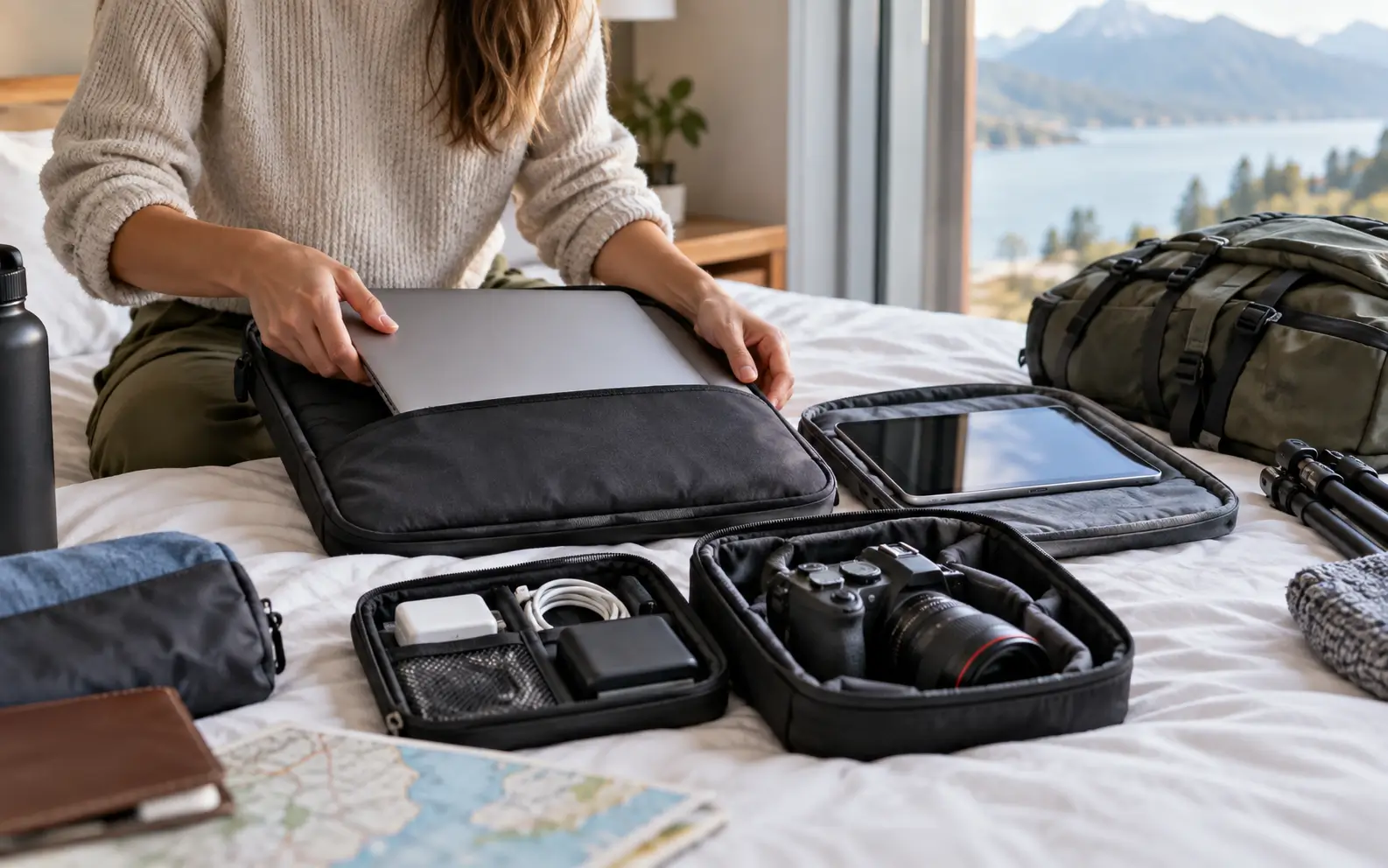
Electronic devices are valuable, and they can also be fragile.
A little extra protection helps prevent damage while you’re traveling.
Some simple ways to protect them include:
- ✓Use padded sleeves for laptops and tablets.
- ✓Store cameras in protective cases.
- ✓Keep chargers in cable organizers.
- ✓Avoid placing heavy objects on top of electronics.
- ✓Keep devices dry by using waterproof pouches when necessary.
Protecting your equipment properly can extend its lifespan and help avoid expensive repairs or replacements.
Carry Electronics in Your Carry-On Bag
Whenever possible, valuable electronics should travel with you rather than in your checked suitcase.
Keeping them in your carry-on provides several advantages.
You can:
- ✓Access them during your journey.
- ✓Reduce the risk of theft or damage.
- ✓Use them during layovers.
- ✓Charge them when needed.
Our Carry-On Packing List ↗ explains how to organize your cabin bag so your electronics remain safe and easy to reach throughout your trip.
Keep Your Devices Charged
A dead battery can quickly become an inconvenience when you rely on your phone for maps, tickets, or hotel information.
Before every travel day, I usually make it a habit to:
- ✓Charge my phone overnight.
- ✓Fully charge my power bank.
- ✓Charge my earbuds.
- ✓Recharge my camera batteries if needed.
- ✓Check my smartwatch battery.
Starting each day with fully charged devices means you’re less likely to run into problems while sightseeing or traveling between destinations.
Back Up Your Important Data
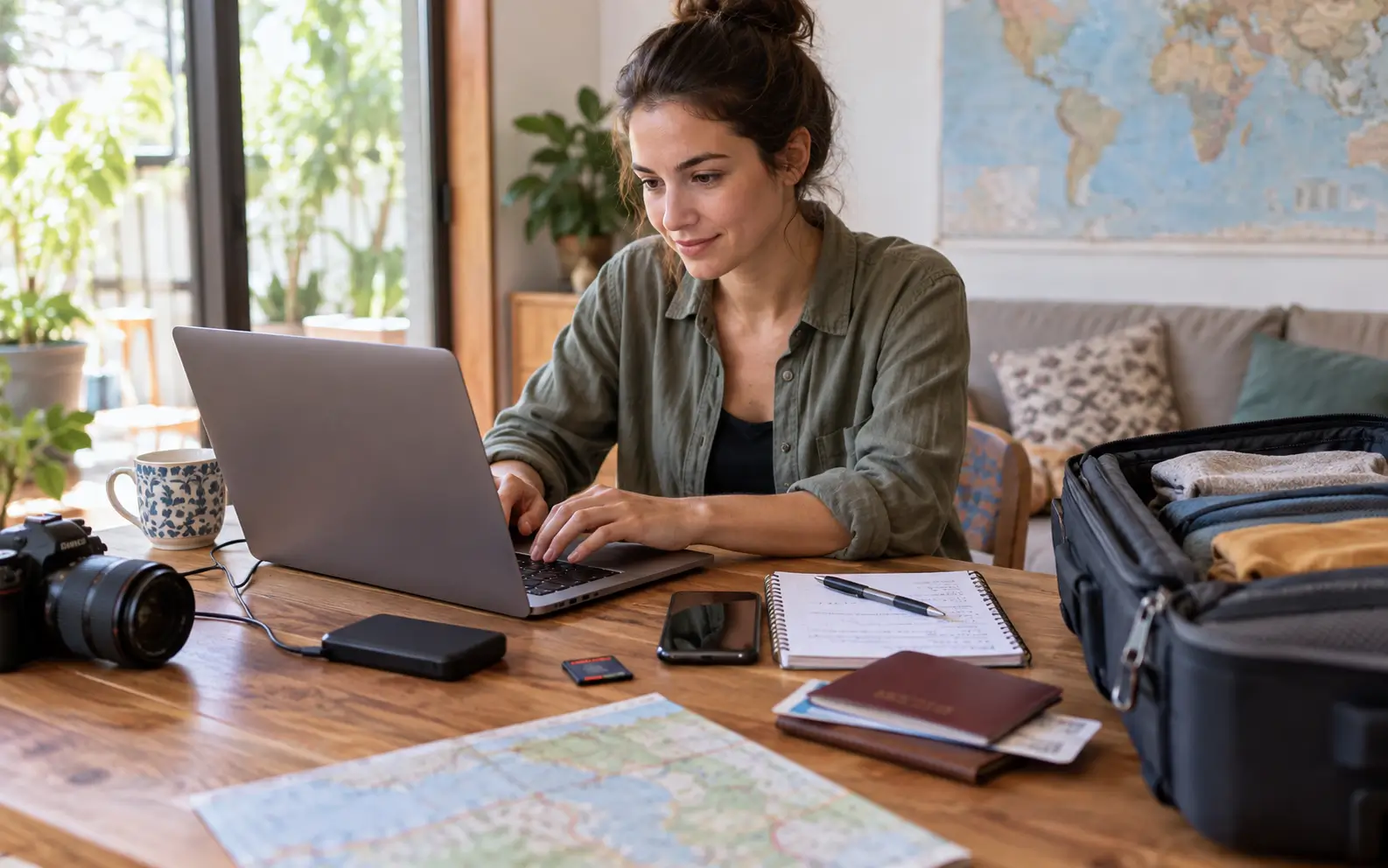
Before leaving home, take a few minutes to back up your important files.
This simple step can protect your memories if a device is lost, stolen, or damaged.
Consider backing up:
- ✓Photos.
- ✓Videos.
- ✓Important documents.
- ✓Travel itinerary.
- ✓Hotel confirmations.
- ✓Copies of passports or other important identification.
Cloud storage or an external drive can provide extra peace of mind during your trip.
Only Pack the Electronics You’ll Actually Use
Technology can make travel easier, but bringing too many devices often creates unnecessary weight and clutter.
Before packing each item, ask yourself:
- ✓Will I use every day?
- ✓Can another device do the same job?
- ✓Is it worth carrying for the entire trip?
I’ve found that packing fewer devices usually makes traveling simpler while still giving me everything I need.
Choosing quality over quantity helps keep your bag organized and your travel experience more enjoyable.
Electronics You Probably Don’t Need
When preparing for a trip, it’s easy to pack every gadget you own because you think you might need it.
I’ve done this myself and later realized that several devices never left my suitcase.
Before adding another electronic item to your bag, ask yourself if you’ll actually use it during the trip.
You may not need to bring:
- ✓Multiple cameras for a short vacation.
- ✓Several pairs of headphones.
- ✓Extra charging cables you won’t use.
- ✓Large speakers.
- ✓Gaming consoles for short trips.
- ✓Old devices “just in case.”
Packing only the electronics you’ll realistically use keeps your luggage lighter and more organized.
Common Electronics Packing Mistakes
Even experienced travelers sometimes make avoidable mistakes when packing their devices.
Some of the most common include:
- ✓Forgetting chargers.
- ✓Bringing the wrong travel adapter.
- ✓Not charging devices before departure.
- ✓Packing valuable electronics in checked luggage.
- ✓Carrying too many unnecessary gadgets.
- ✓Forgetting backup batteries or memory cards.
- ✓Leaving important files without a backup.
- ✓Not organizing charging cables.
A simple electronics checklist before every trip can help prevent these problems.
Travel Electronics Checklist
Before leaving home, review this checklist to make sure you’ve packed everything you need.
Essential Devices
- ✓Smartphone.
- ✓Laptop (if needed).
- ✓Tablet (optional).
- ✓Camera (if needed).
- ✓Smartwatch.
Charging Equipment
- ✓Phone charger.
- ✓Laptop charger.
- ✓Charging cables.
- ✓Power bank.
- ✓Camera battery charger.
- ✓Universal travel adapter.
Accessories
- ✓Wireless earbuds or headphones.
- ✓Spare batteries (if required).
- ✓Extra memory cards.
- ✓Cable organizer.
- ✓Laptop or tablet sleeve.
Before You Leave
- ✓Charge all devices.
- ✓Charge the power bank.
- ✓Back up important files.
- ✓Download maps for offline use.
- ✓Download boarding passes if available.
- ✓Download movies, music, or podcasts for offline entertainment.
A quick review before every trip helps ensure your electronics are ready whenever you need them.
Frequently Asked Questions
The essentials usually include your smartphone, charger, power bank, and any other devices you’ll use regularly, such as a laptop, tablet, camera, or headphones. Pack only what matches the purpose of your trip.
Yes. Valuable electronics such as phones, laptops, tablets, cameras, and power banks are generally best kept in your carry-on bag where they’re easier to access and better protected during your journey.
If you’re traveling internationally, a universal travel adapter is often a good investment. It allows you to charge your devices in countries that use different plug types.
Using a small cable organizer or travel pouch keeps charging cables, adapters, and small accessories together, making them easier to find and helping prevent tangled cords.
No. Only pack the devices you’ll realistically use. Carrying unnecessary electronics adds weight, takes up luggage space, and increases the number of valuable items you need to manage during your trip.
Final Thoughts
Technology has become an important part of modern travel, but packing electronics doesn’t have to be complicated. From my own experience, bringing only the devices I truly need and keeping them organized has made every trip much easier. It saves space, reduces stress, and means I’m never searching through my bag for a charger or the right cable.
Use this guide as your electronics checklist before every journey. By choosing practical devices, protecting them properly, and keeping everything charged and organized, you’ll be ready to stay connected, capture memories, and enjoy your trip without unnecessary distractions.

Adnan Ahmed
RoamPlans AuthorTravel Planning Researcher & Editor
Adnan Ahmed is the travel planning researcher and editor behind RoamPlans. He creates clear, practical guides to help travelers compare destinations, plan routes, estimate costs, and avoid common trip-planning mistakes. His work combines careful source research, official travel information, and regular content reviews to keep each guide useful and current.
- ✓Destination Research
- ✓Budget Planning
- ✓Route Planning
- ✓Beginner Travel Guides


Turn This Guide into a Practical Trip Plan
Use the recommended Free Packing List Generator or explore more free RoamPlans tools.