Winter Vacation Packing List: What to Pack for Cold Weather Trips (Beginner’s Guide)
A practical beginner’s guide to choosing warm layers, useful winter accessories, suitable footwear, and cold-weather essentials without filling your suitcase with unnecessary bulk.
The first time I traveled to a cold destination, I thought packing a thick winter jacket would be enough. After arriving, I quickly realized that I had forgotten simple things like warm gloves and a hat. My hands became cold long before the rest of me did, and I ended up buying winter accessories during my trip. That experience taught me that staying warm isn’t about packing more clothes it’s about packing the right layers and the right essentials ↗.
Whether you’re planning a snowy mountain getaway, a winter city break, or a holiday in a cold climate, packing properly can make your trip much more comfortable. This winter vacation packing list will help you choose the clothing, accessories, and essentials you actually need so you can stay warm, travel comfortably, and avoid carrying unnecessary luggage.
Why Winter Packing Is Different?
Packing for a winter vacation requires a different approach than packing for warm-weather destinations.
Cold temperatures, snow, wind, and rain can all affect what you’ll need during your trip.
Instead of focusing on lightweight clothing, winter packing is about staying warm while avoiding bulky luggage.
Choosing practical, versatile clothing helps you stay comfortable without filling your suitcase with unnecessary items.
Check the Weather Before You Pack
Not every winter destination has the same weather.
Before you begin packing, check the forecast for your travel dates.
Ask yourself:
- ✓Will it snow?
- ✓How cold will it be during the day?
- ✓Will temperatures drop below freezing at night?
- ✓Is rain expected?
- ✓Will I spend most of my time outdoors?
Knowing what weather to expect helps you pack the right clothing instead of guessing.
Dress in Layers Instead of Packing Heavy Clothes
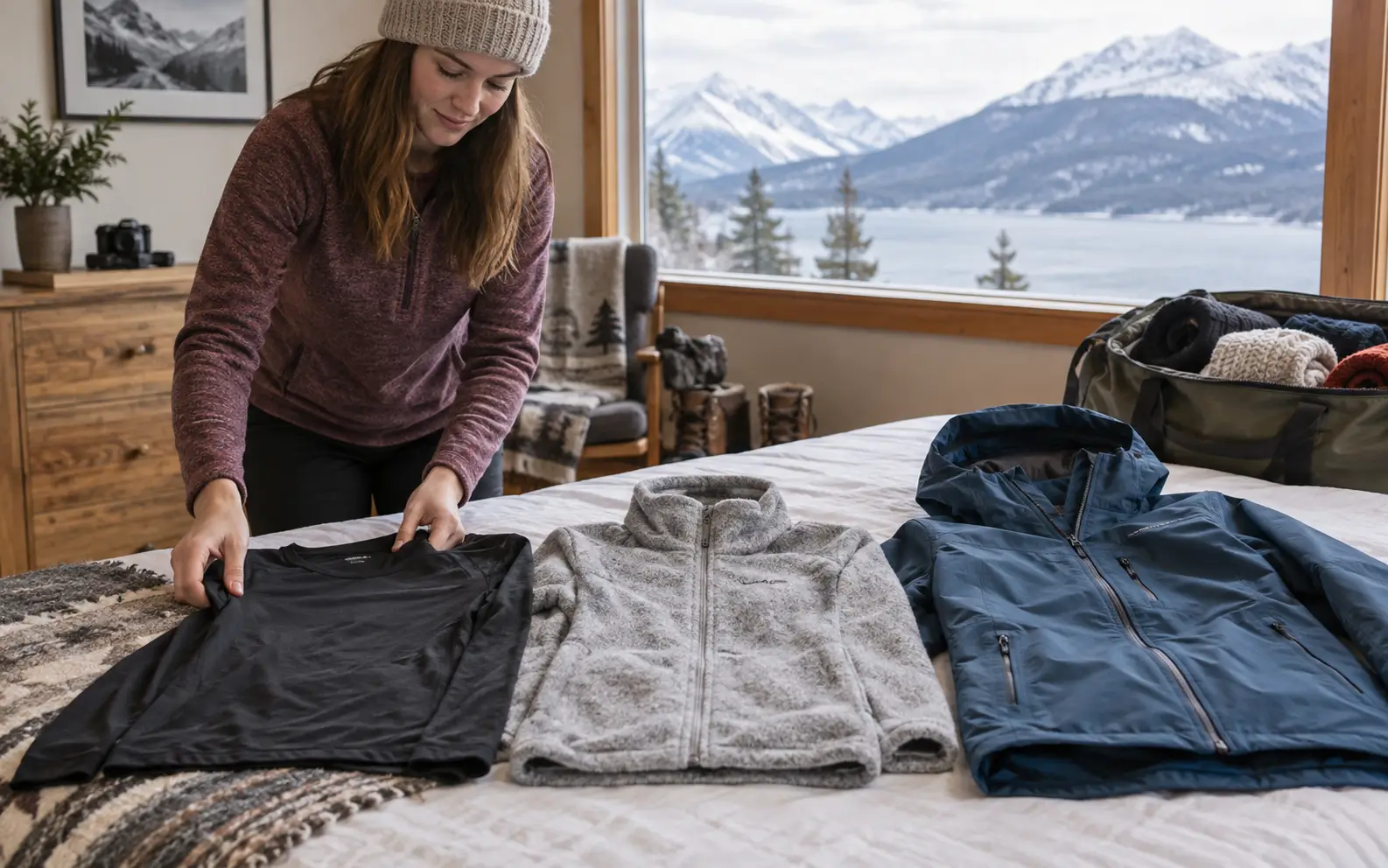
One of the biggest lessons I’ve learned from winter travel is that several lightweight layers usually work better than one very heavy sweater.
Layering allows you to adjust your clothing throughout the day as temperatures change.
A simple layering system usually includes:
- ✓Base layer.
- ✓Middle insulating layer.
- ✓Outer waterproof or windproof layer.
This approach keeps you warm while making it easier to stay comfortable indoors and outdoors.
Pack a Warm Winter Jacket
Your winter jacket is often the most important piece of clothing you’ll bring.
Choose one that’s suitable for your destination rather than simply choosing the thickest coat you own.
A good winter jacket should provide:
- ✓Warm insulation.
- ✓Wind protection.
- ✓Water resistance if possible.
- ✓Comfortable movement.
- ✓Secure pockets for personal items.
If you’ll spend long periods outdoors, investing in a quality winter jacket can make a noticeable difference to your comfort.
Bring Thermal Clothing
Thermal clothing helps trap body heat without adding too much bulk.
Depending on your destination, consider packing:
- ✓Thermal tops.
- ✓Thermal leggings.
- ✓Thermal socks.
- ✓Lightweight thermal base layers.
These items are especially useful if you’ll be walking outdoors, sightseeing, or visiting destinations with freezing temperatures.
Don’t Forget Winter Accessories
Small accessories often make a bigger difference than people expect.
During my first winter trip, I realized my hands became cold much faster than the rest of my body because I hadn’t packed proper gloves.
Useful winter accessories include:
- ✓Warm gloves.
- ✓Knit hat or beanie.
- ✓Scarf.
- ✓Ear warmers.
- ✓Neck warmer.
These items don’t take up much space but can make outdoor activities much more enjoyable.
Choose the Right Winter Footwear
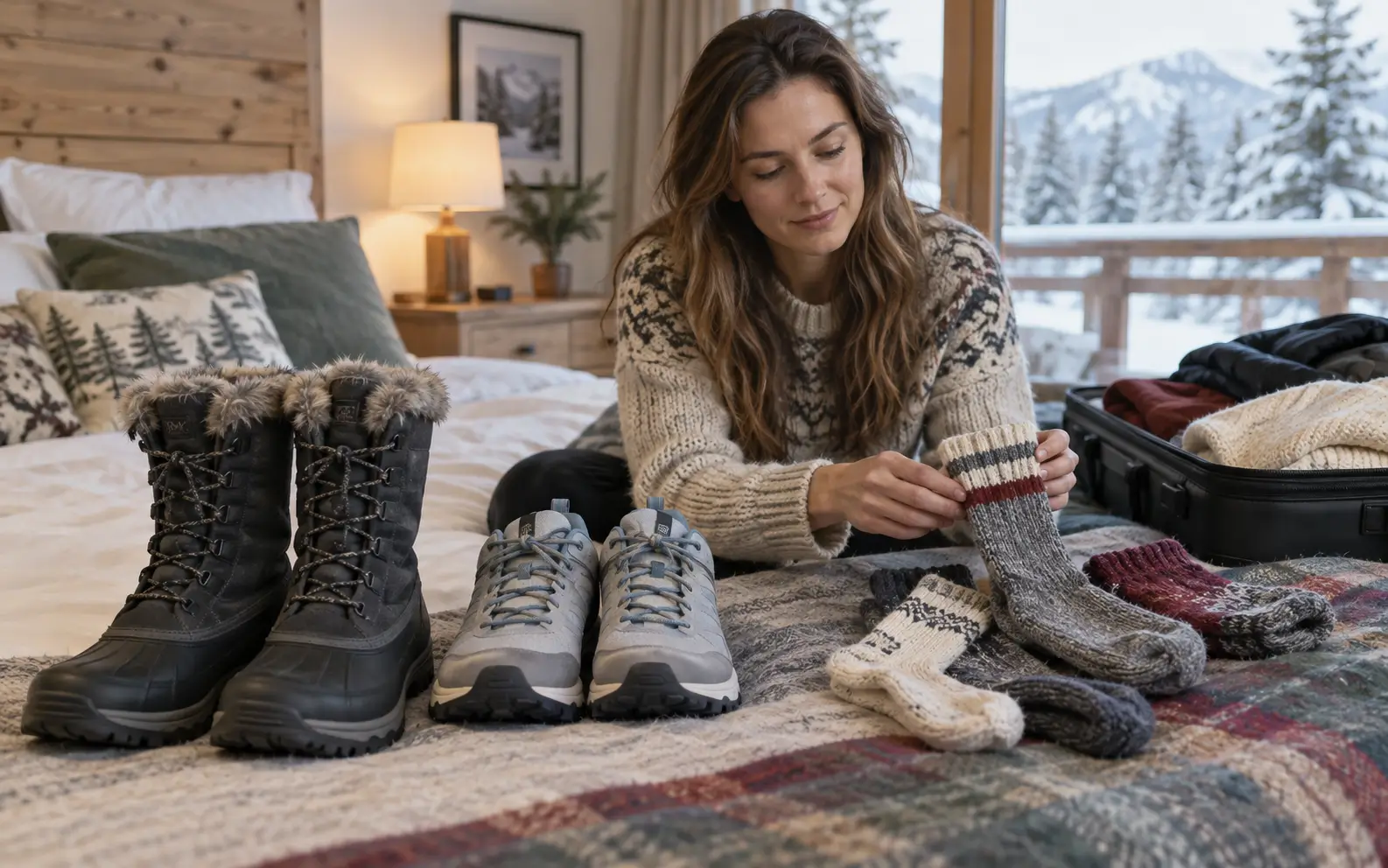
Comfortable footwear is essential during winter travel.
Regular sneakers may not provide enough warmth or grip if you’ll be walking on snow or icy streets.
Depending on your destination, you may need:
- ✓Waterproof winter boots.
- ✓Comfortable walking shoes.
- ✓Thick wool socks.
- ✓Extra pairs of warm socks.
Keeping your feet warm and dry helps you stay comfortable throughout the day.
Pack Clothes You Can Mix and Match
Winter clothing is naturally bulkier than summer clothing.
Instead of packing a different outfit for every day, choose versatile pieces that work well together.
For example:
- ✓Neutral-colored sweaters.
- ✓Simple long-sleeve shirts.
- ✓Comfortable trousers.
- ✓One or two jackets suitable for different conditions.
Mixing and matching clothing allows you to create several outfits without filling your suitcase with unnecessary items.
Pack Winter Accessories You’ll Use Every Day
Besides warm clothing, a few small accessories can make a huge difference during a winter trip.
These items don’t take up much luggage space, but they help keep you warm while spending time outdoors.
Some useful winter accessories include:
- ✓Insulated gloves.
- ✓Warm hat or beanie.
- ✓Scarf.
- ✓Neck warmer.
- ✓Thick wool socks.
- ✓Hand warmers (optional).
- ✓Sunglasses for snowy days.
I always pack an extra pair of gloves because wet gloves can become uncomfortable, especially after snow or rain.
Bring Winter Toiletries
Cold weather often affects your skin and lips more than you expect.
Dry air, strong winds, and indoor heating can quickly make your skin feel uncomfortable.
Besides your regular toiletries, you may want to include:
- ✓Moisturizer.
- ✓Lip balm.
- ✓Sunscreen.
- ✓Hand cream.
- ✓Body lotion.
- ✓Gentle facial cleanser.
Even during winter, sunscreen is worth packing because sunlight reflected from snow can still affect your skin.
Protect Your Electronics from Cold Weather
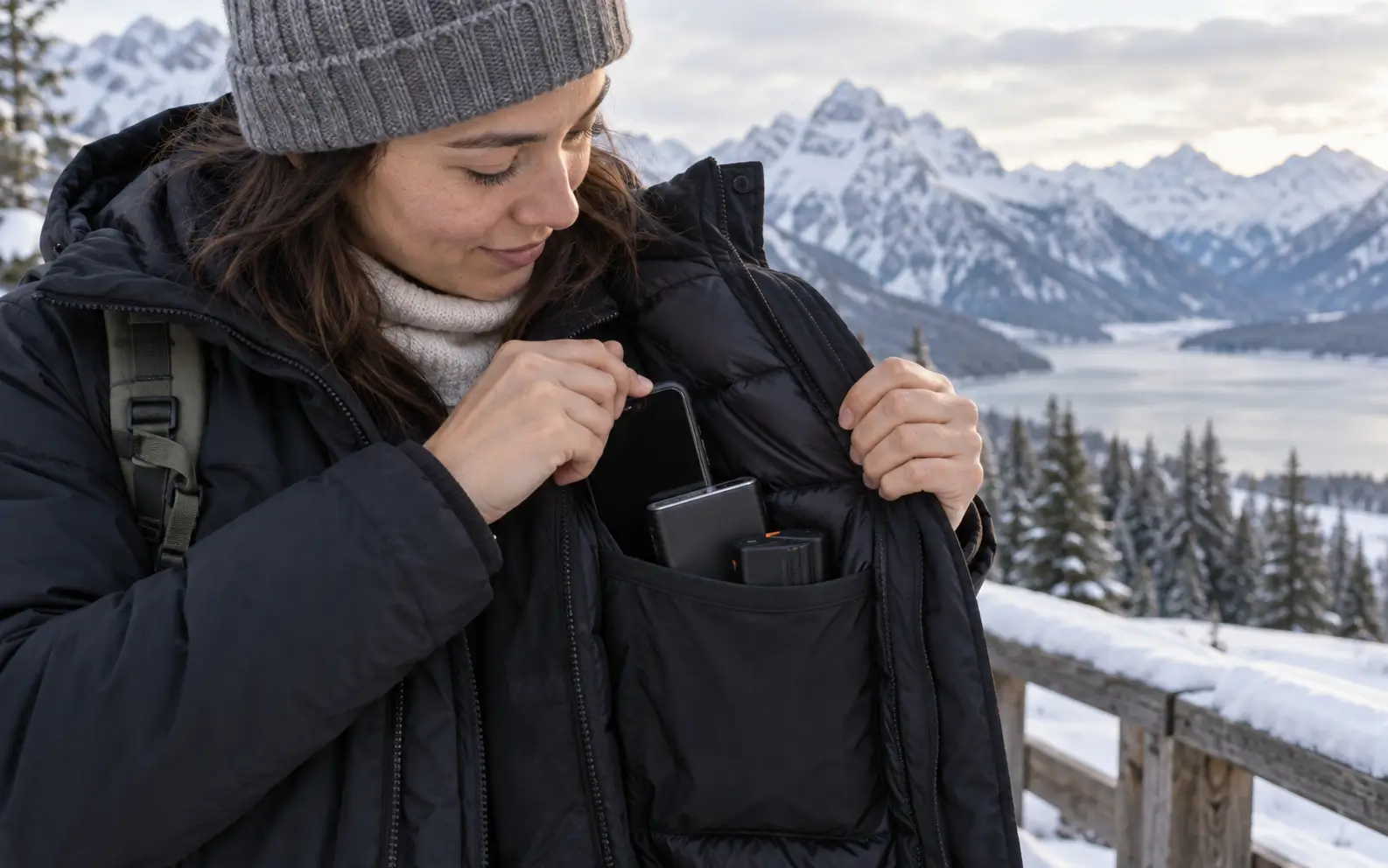
Very low temperatures can reduce battery life and affect electronic devices.
To help protect them:
- ✓Keep your phone in an inside pocket.
- ✓Carry a fully charged power bank.
- ✓Keep spare batteries warm if you’re using a camera.
- ✓Avoid leaving electronics in a cold car overnight.
- ✓Let cold devices warm up gradually before charging them.
These simple habits can help your electronics perform better throughout your trip.
Pack Medicines for Winter Travel
Cold weather can sometimes lead to seasonal illnesses or minor health problems.
Depending on your needs, consider bringing:
- ✓Prescription medication.
- ✓Pain relievers.
- ✓Cold and flu medicine.
- ✓Cough drops.
- ✓Allergy medicine.
- ✓Small first aid kit.
Cold destinations often involve more walking, so a few blister bandages can also be useful.
Our Travel First Aid Kit ↗ guide explains the essential medical supplies that are worth carrying on almost any trip.
Stay Hydrated in Cold Weather
Many travelers forget to drink enough water during winter because they don’t feel as thirsty as they do in hot weather.
However, your body still needs regular hydration.
I always carry a reusable water bottle during winter trips so I remember to drink throughout the day.
Staying hydrated can also help reduce dry skin and keep you feeling more comfortable while exploring.
Pack Energy-Boosting Snacks
Winter activities often require more energy, especially if you’re walking through snow, hiking, skiing, or spending long hours’ outdoors.
A few easy snacks can be useful during the day.
Good options include:
- ✓Granola bars.
- ✓Mixed nuts.
- ✓Trail mix.
- ✓Dried fruit.
- ✓Protein bars.
- ✓Crackers.
Choose snacks that are easy to carry and don’t require refrigeration.
Extra Items for Snow Activities
If your vacation includes skiing, snowboarding, or other winter sports, you’ll probably need a few additional items.
Depending on your plans, you may pack:
- ✓Ski goggles.
- ✓Helmet.
- ✓Ski gloves.
- ✓Waterproof snow pants.
- ✓Ski socks.
- ✓Neck gaiter.
- ✓Hand warmers.
If you aren’t planning any snow sports, there’s no need to bring specialized equipment that will stay unused.
Winter Packing Tips for Families
Traveling with children during winter usually requires a little extra preparation.
Besides your own clothing, remember to pack:
- ✓Extra hats and gloves.
- ✓Additional warm socks.
- ✓Waterproof boots.
- ✓Blankets for travel.
- ✓Snacks and drinks.
- ✓Spare clothing for wet weather.
Children often get cold more quickly than adults, so having a few extra warm items can make family outings much more comfortable.
Keep Wet and Dry Clothing Separate
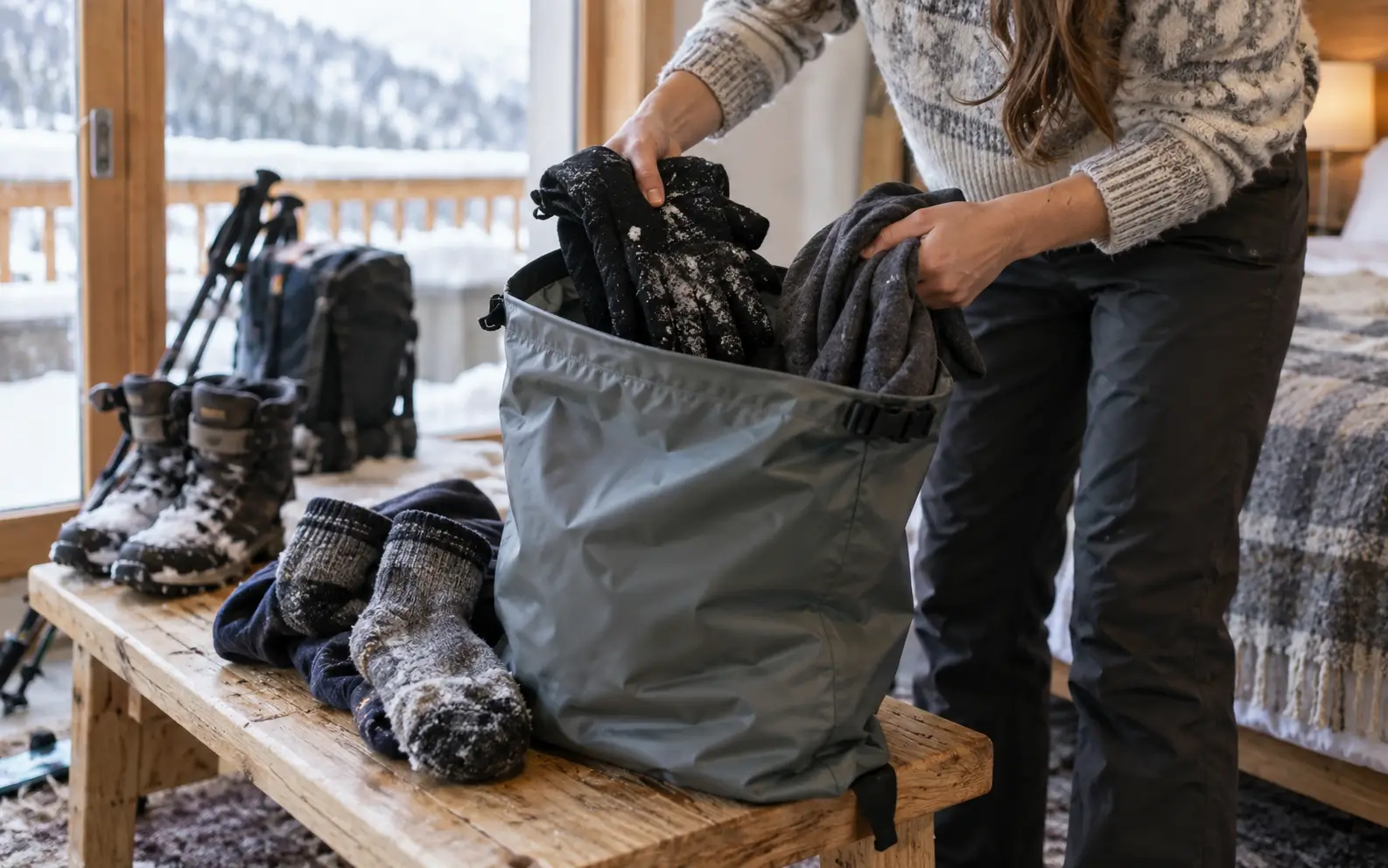
Snow, rain, and slush can quickly leave clothing damp.
One habit that’s helped me stay organized is packing a waterproof laundry bag for wet clothing.
It’s useful for:
- ✓Wet gloves.
- ✓Snow-covered socks.
- ✓Damp hats.
- ✓Used base layers.
- ✓Dirty laundry.
Keeping wet items separate helps protect the rest of your clothing and makes unpacking much easier after returning to your hotel.
What You Probably Don’t Need to Pack?
When preparing for a winter vacation, it’s easy to think you’ll need every warm item you own.
I’ve made that mistake myself and ended up carrying a heavy suitcase filled with clothes I never wore.
Instead of packing more, focus on packing smarter.
You can often leave behind:
- ✓Too many bulky sweaters.
- ✓Several heavy jackets.
- ✓Extra pairs of winter boots.
- ✓Thick blankets (if your accommodation provides bedding).
- ✓Duplicate winter accessories.
- ✓Clothing that can’t be layered with other items.
Packing fewer but more versatile items makes traveling much easier.
Common Winter Packing Mistakes
Even experienced travelers sometimes make simple mistakes when packing for cold weather.
Some of the most common include:
- ✓Forgetting gloves or a warm hat.
- ✓Packing bulky clothing instead of layering.
- ✓Bringing shoes that aren’t suitable for snow or ice.
- ✓Ignoring the weather forecast.
- ✓Packing too many clothes “just in case.”
- ✓Forgetting moisturizer or lip balm.
- ✓Not protecting electronics from the cold.
- ✓Wearing new winter boots without breaking them in first.
A little planning before your trip can help you stay warm and comfortable without overpacking.
Complete Winter Vacation Packing Checklist
Before leaving home, review this checklist to make sure you’ve packed the essentials for your winter trip.
Clothing
- ✓Thermal base layers.
- ✓Sweaters or fleece.
- ✓Winter jacket.
- ✓Comfortable trousers.
- ✓Sleepwear.
- ✓Extra underwear.
- ✓Warm socks.
Winter Accessories
- ✓Gloves.
- ✓Hat or beanie.
- ✓Scarf.
- ✓Neck warmer.
- ✓Sunglasses.
Footwear
- ✓Waterproof winter boots.
- ✓Comfortable walking shoes.
- ✓Extra wool socks.
Toiletries
- ✓Moisturizer.
- ✓Lip balm.
- ✓Sunscreen.
- ✓Hand cream.
- ✓Regular toiletries.
Electronics
- ✓Smartphone.
- ✓Phone charger.
- ✓Power bank.
- ✓Camera (optional).
- ✓Travel adapter if required.
Health & Safety
- ✓Prescription medication.
- ✓Small first aid kit.
- ✓Pain relievers.
- ✓Cold medicine.
- ✓Reusable water bottle.
Extras
- ✓Snacks.
- ✓Waterproof bag for wet clothing.
- ✓Travel documents.
- ✓Daypack for daily outings.
This checklist covers the essentials for most winter vacations while helping you avoid carrying unnecessary luggage.
Frequently Asked Questions
Most travelers should pack warm layers, a winter jacket, thermal clothing, gloves, a hat, scarf, waterproof footwear, moisturizer, lip balm, and other essentials based on their destination and planned activities.
For most trips, one good-quality winter jacket is enough. If you’ll experience different weather conditions or attend special events, you may choose to bring a second lighter jacket.
If you’re visiting a cold destination, thermal clothing is highly recommended. It helps retain body heat without adding too much bulk, making it easier to stay warm while wearing fewer layers.
If you’re flying, wearing your heaviest boots during the journey can save valuable suitcase space and reduce the weight of your checked luggage.
Choose clothing that layers well, pack versatile outfits, and avoid bringing duplicate items. Packing for your planned activities instead of every possible situation helps keep your luggage manageable.
Final Thoughts
Packing for a winter vacation doesn’t mean filling your suitcase with as many warm clothes as possible. From my own experience, staying comfortable in cold weather is all about choosing the right layers, wearing suitable footwear, and bringing practical accessories that you’ll use every day. A thoughtful packing plan makes traveling easier and helps you enjoy your destination instead of worrying about the weather.
Use this winter vacation packing list before every cold-weather trip to make sure you’ve packed the essentials without carrying unnecessary weight. With the right clothing, accessories, and preparation, you’ll be ready to stay warm, comfortable, and enjoy every part of your winter adventure.

Adnan Ahmed
RoamPlans AuthorTravel Planning Researcher & Editor
Adnan Ahmed is the travel planning researcher and editor behind RoamPlans. He creates clear, practical guides to help travelers compare destinations, plan routes, estimate costs, and avoid common trip-planning mistakes. His work combines careful source research, official travel information, and regular content reviews to keep each guide useful and current.
- ✓Destination Research
- ✓Budget Planning
- ✓Route Planning
- ✓Beginner Travel Guides


Turn This Guide into a Practical Trip Plan
Use the recommended Free Packing List Generator or explore more free RoamPlans tools.