Travel Planning Checklist: Everything to Do Before, During, and After Your Trip
A complete master checklist covering what to organize before departure, during your trip, and after you return home.
Planning a trip usually starts with the fun parts.
You think about where you want to go ↗, places you want to see, food you want to try, and experiences you hope to enjoy.
Then the practical tasks start adding up.
You need to check travel documents, compare bookings, organize transportation, reserve important activities, prepare money, pack your bags, and make sure everything at home is ready before you leave.
It is easy to forget a small task when your travel information is spread across emails, booking apps, notes, and browser tabs.
That is why I use a travel planning checklist.
A checklist gives every task a clear place. It helps you see what you have completed and what still needs your attention.
This guide covers the tasks to check before, during, and after your trip.
It is not meant to explain every part of travel planning in full detail. Instead, use it as your master task list and move to our detailed RoamPlans guides whenever you need more help with a specific planning decision.
For the full planning overview, read our Ultimate Travel Planning Guide ↗. If you want to follow travel tasks in the right order, use our Step-by-Step Trip Planning Process ↗.
Now, let’s start checking off your trip.
Why You Need a Travel Planning Checklist?
Travel involves many small tasks.
You may remember to book your flight but forget to check the baggage rules.
You may reserve a hotel but forget to save its address offline.
You may plan several activities but forget that one attraction requires advance tickets.
A travel planning checklist helps keep these tasks visible.
Use it to:
- ✓Track unfinished travel tasks
- ✓Check important documents
- ✓Organize bookings
- ✓Prepare for your arrival
- ✓Keep reservations together
- ✓Track travel spending
- ✓Prepare for unexpected problems
- ✓Reduce last-minute stress
The goal is simple.
You want to catch forgotten tasks before they cause problems.
Keep One Main Travel Checklist
Choose one place for your main checklist.
You could use:
- ✓A notebook
- ✓A spreadsheet
- ✓A notes app
- ✓A travel planning app
- ✓A printed checklist
Try not to keep several different task lists.
If your flight tasks are in one app, packing notes are on paper, and document reminders are hidden in your phone, it becomes harder to see what is unfinished.
Keep one main checklist and mark tasks as you complete them.
| Travel Task | Status |
|---|---|
| Destination chosen | ✓ |
| Passport checked | ✓ |
| Entry rules checked | ✓ |
| Main transportation booked | □ |
| Accommodation booked | □ |
| Activities reviewed | □ |
| Packing list created | □ |
When to Start Planning Your Trip?
The right planning time depends on the type of trip.
A short local break may need only a few weeks of preparation.
An international vacation may require several months, especially if you need a visa or plan to travel during a busy season.
Use this as a simple starting point.
| Time Before Travel | Main Tasks to Check |
|---|---|
| 6–12 Months | Destination, travel goals, passport |
| 3–6 Months | Dates, entry rules, budget, major bookings |
| 1–3 Months | Transportation, accommodation, activities, itinerary |
| 2–4 Weeks | Packing, money, documents, home preparation |
| 1 Week | Booking checks, apps, offline travel information |
| 1–2 Days | Final documents, bags, check-in, departure check |
These times are not fixed rules.
Some trips need earlier bookings. Others can be planned much faster.
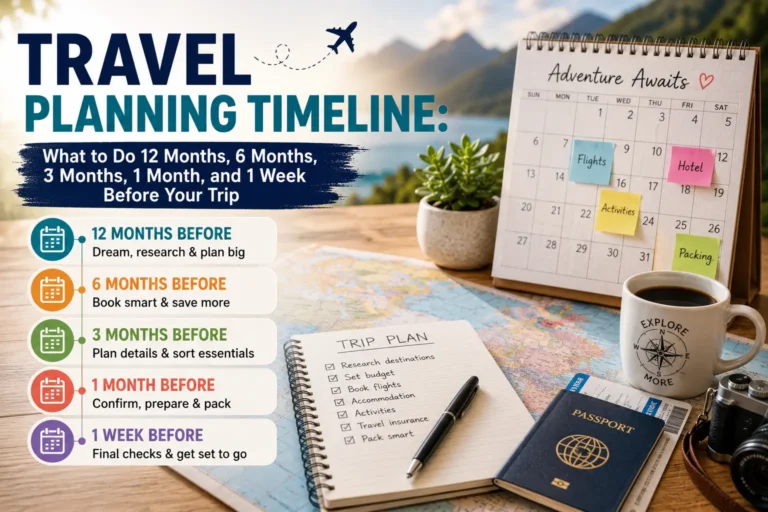
Use our Travel Planning Timeline ↗ for a full time-based planning schedule.
Complete Travel Planning Checklist at a Glance
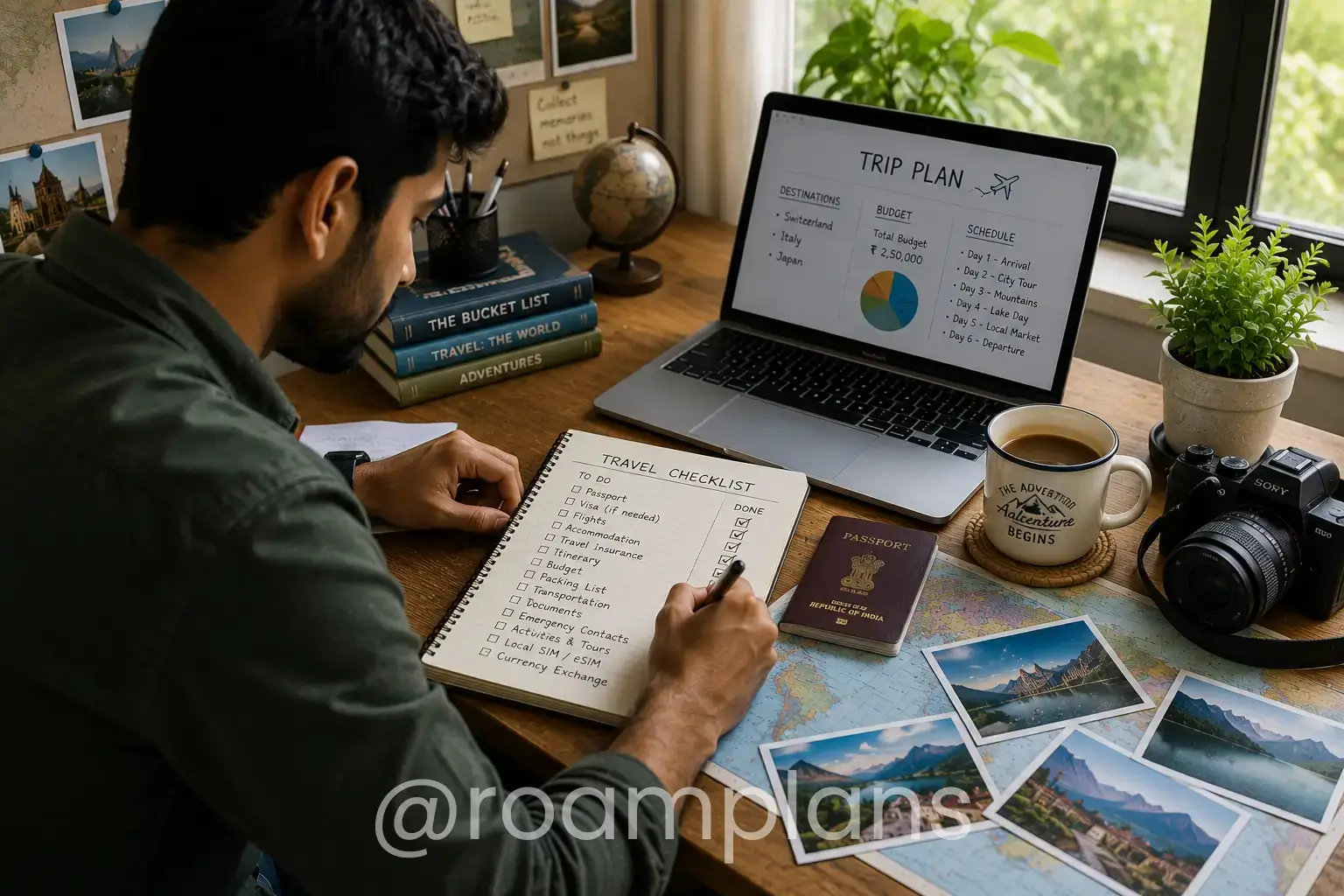
Here is the full checklist before we go through each stage.
| Planning Area | Main Task |
|---|---|
| Destination | Confirm where and why you are traveling |
| Entry Rules | Check passport, visa, and current requirements |
| Budget | Set a comfortable spending limit |
| Trip Route | Create a broad route |
| Main Transportation | Book your main travel |
| Local Transportation | Check how you will get around |
| Accommodation | Book your stay |
| Activities | Review and reserve priority experiences |
| Food | Save food ideas and required reservations |
| Itinerary | Organize the main daily plan |
| Emergencies | Prepare key contacts and backup information |
| Insurance | Check your travel protection needs |
| Loss or Theft | Prepare copies and replacement details |
| Packing | Pack for your planned trip |
| Home | Prepare your home before leaving |
| Money | Prepare cards, cash, and backup payment access |
| Connectivity | Check phone and internet access |
| Documents | Keep important travel information together |
| During the Trip | Track bookings, plans, and spending |
| After the Trip | Review costs and save useful trip details |
Use this table as a quick overview.
The detailed checklist starts below.
Before Your Trip: Complete Planning Checklist
Most travel tasks need attention before you leave home.
Work through each section and check off the tasks that apply to your trip.
Not every item will apply to every traveler.
1. Choose Your Destination and Define Your Trip Goals
Before booking, confirm that your destination fits the trip you want to take.
You do not need to complete a full destination research project at this stage.
You only need to answer the main questions that affect your decision.
Destination Decision Checklist
- ✓Confirm how many days you can travel
- ✓Decide what type of trip you want
- ✓List your main reasons for visiting
- ✓Check the basic travel time
- ✓Review the normal travel seasons
- ✓Check rough travel costs
- ✓Review current official travel advice
- ✓Discuss priorities with your travel companions
- ✓Make your final destination choice
Quick Destination Check
Before marking this section complete, ask:
| Question | Check |
|---|---|
| Does the destination fit my available time? | □ |
| Does it offer the experiences I want? | □ |
| Can I realistically afford the trip? | □ |
| Am I comfortable with the travel time? | □ |
| Have I checked current travel information? | □ |
If the answer is yes to each question, move to the next task.
If you are still comparing countries, cities, or travel styles, read our How to Choose a Travel Destination guide ↗ for the full selection process.
2. Check Passport, Visa, Vaccination, and Entry Requirements
Before paying for major non-refundable bookings, check the rules that apply to your trip.
Requirements can depend on your passport, destination, travel route, and length of stay.
Use current official government, embassy, consulate, immigration, or public health sources where requirements can change.
Passport Checklist
- ✓Find your passport
- ✓Check the expiration date
- ✓Check the destination’s passport validity rule
- ✓Check for required blank pages
- ✓Check your passport for serious damage
- ✓Start a renewal early if needed
Do not mark this task complete just because your passport has not expired.
Check the destination’s current passport rules.
Visa and Travel Authorization Checklist
- ✓Check whether you need a tourist visa
- ✓Check whether an eVisa is available
- ✓Check whether travel authorization is required
- ✓Review the permitted length of stay
- ✓Check application processing times
- ✓Check application fees
- ✓Save the official application page
- ✓Apply if required
- ✓Save your approval or visa details
Vaccination and Health Entry Checklist
- ✓Review current official health guidance
- ✓Check vaccination requirements
- ✓Check whether health documents are required
- ✓Arrange any required appointments early
- ✓Save relevant health records if needed
Other Entry Requirement Checklist
- ✓Check return or onward travel requirements
- ✓Check whether accommodation details are required
- ✓Review entry forms
- ✓Check customs rules that affect your trip
- ✓Review current travel restrictions
- ✓Save the official entry information
- ✓Add a reminder to check the rules again before departure
Entry Requirement Status Check
| Requirement | Checked |
|---|---|
| Passport | □ |
| Visa | □ |
| Travel authorization | □ |
| Health requirements | □ |
| Onward travel rules | □ |
| Entry forms | □ |
| Current official information | □ |
Once these tasks are complete, move to the next part of your checklist.
For detailed help with passports, visas, and travel paperwork, use our Complete Travel Documents Guide.
3. Set Your Travel Budget
You do not need to build a full financial plan inside this checklist.
Your task here is to confirm how much you can comfortably spend and make sure the main parts of your trip fit that amount.
Travel Budget Checklist
- ✓Set your maximum comfortable trip budget
- ✓Estimate main transportation costs
- ✓Estimate accommodation costs
- ✓Set a rough food budget
- ✓Estimate local transportation
- ✓Check priority activity costs
- ✓Include insurance costs if needed
- ✓Add personal spending money
- ✓Keep money aside for unexpected expenses
- ✓Create a simple way to track travel spending
Quick Budget Check
Before moving forward, confirm:
- ✓I know my total spending limit
- ✓My estimated major costs fit my budget
- ✓I have included daily expenses
- ✓I have money set aside for unexpected costs
If your estimated trip cost is already above your limit, stop before making major bookings.
Review the destination, trip length, dates, or expected travel style.
For full budgeting methods and cost-saving advice, read our Budget Travel Guide ↗ and How to Create a Travel Budget ↗.
4. Create a High-Level Trip Route
Before booking every hotel or activity, create a broad trip route.
This is not your detailed daily itinerary.
At this stage, you only need to know the main places you expect to visit and the order in which you may visit them.
High-Level Trip Route Checklist
- ✓List the main cities or areas you want to visit
- ✓Mark your arrival location
- ✓Mark your departure location
- ✓Put destinations in a possible travel order
- ✓Check basic travel time between each stop
- ✓Remove stops that make the trip feel too rushed
- ✓Estimate how many nights you may spend in each place
- ✓Save your basic trip route
Your rough route may look like this:
| Trip Day | Main Location |
|---|---|
| Days 1–3 | City A |
| Days 4–6 | City B |
| Days 7–9 | City C |
| Day 10 | Departure |
Do not add every museum, restaurant, or attraction yet.
Your only task is to create a trip route that appears realistic.
Route Check
Before moving to your major bookings, ask:
- ✓Does my route fit my trip length?
- ✓Have I allowed for travel between stops?
- ✓Am I changing locations too often?
- ✓Do my arrival and departure points make sense?
Once your broad route is clear, you are ready to start checking major bookings.
For trips involving several locations, our How to Plan a Multi-City Trip ↗ or Multi-Country Trip guides will cover route planning in greater detail.
5. Book Flights and Main Transportation
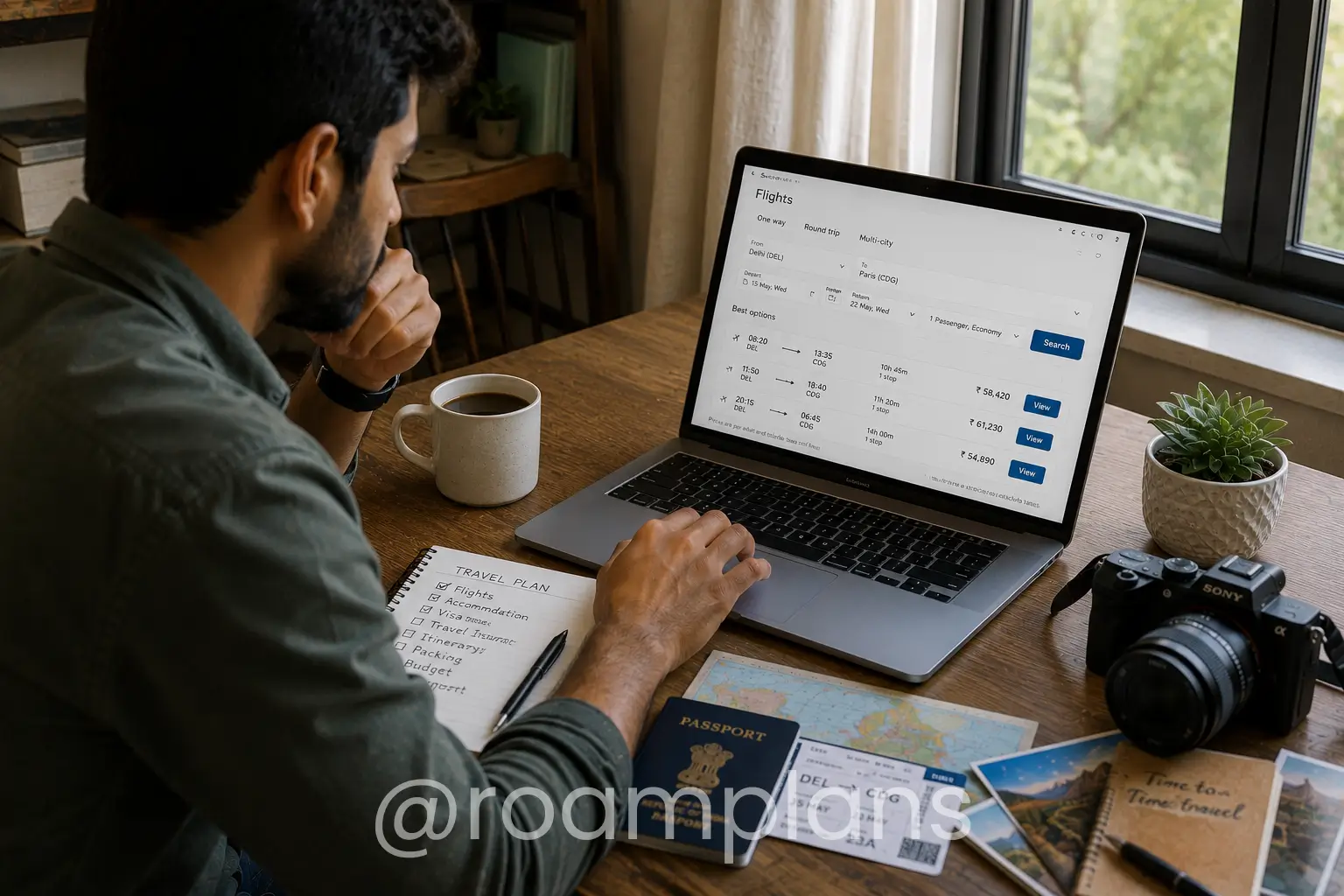
Once your destination, dates, budget, and broad trip route are clear, check your main transportation.
For many trips, this means booking flights. Depending on your route, it may also include a long-distance train, bus, or ferry.
Your task here is to confirm that your main travel booking fits the trip you have already planned.
Flight and Main Transportation Checklist
- ✓Confirm your travel dates
- ✓Confirm your arrival destination
- ✓Confirm your departure destination
- ✓Compare a few suitable routes
- ✓Check the total booking price
- ✓Review baggage rules
- ✓Check departure and arrival times
- ✓Review connection times
- ✓Check whether an airport change is required
- ✓Confirm passenger names match travel documents
- ✓Review change and cancellation terms
- ✓Complete the booking
- ✓Save your booking confirmation
Quick Booking Check
Before marking this section complete, confirm:
| Booking Detail | Checked |
|---|---|
| Travel dates are correct | □ |
| Passenger names are correct | □ |
| Airport or station is correct | □ |
| Baggage rules are checked | □ |
| Connections are reviewed | □ |
| Booking terms are checked | □ |
| Confirmation is saved | □ |
Do not compare flights forever.
Once you find a route that fits your dates, budget, and broad trip plan, complete the booking and move to the next task.
For detailed help comparing fares and booking options, use our Flight Booking Guide.
6. Plan Rental Cars and Local Transportation
Now check how you will move around after arriving.
You do not need to learn every train, bus, or metro route before your trip.
Your checklist goal is to make sure the main transportation needs are covered.
Arrival Transportation Checklist
Start with your first trip after arrival.
- ✓Check how to travel from the airport or station to your accommodation area
- ✓Review the main transport options
- ✓Check transport operating hours
- ✓Check whether advance booking is required
- ✓Estimate the basic arrival transport cost
- ✓Save your arrival route offline
Pay extra attention if you arrive early in the morning or late at night.
Your preferred transport option may not operate at that time.
Local Transportation Checklist
- ✓Check whether public transportation is available
- ✓Find out whether a local transit card is used
- ✓Check how transport tickets are purchased
- ✓Review basic service hours
- ✓Download the main local transport app if needed
- ✓Check transport access near your accommodation area
Between-City Transportation Checklist
If your trip includes more than one city or region:
- ✓Check the main route between each stop
- ✓Review basic travel times
- ✓Check whether reservations are required
- ✓Book limited or priority routes if needed
- ✓Save tickets and booking details
Rental Car Checklist
If you expect to drive:
- ✓Check whether a rental car is needed
- ✓Review basic driver requirements
- ✓Check license requirements
- ✓Check parking at your accommodation
- ✓Review your planned pickup and return locations
- ✓Reserve the vehicle if needed
- ✓Save the rental confirmation
Transportation Status Check
| Transport Task | Checked |
|---|---|
| Arrival route planned | □ |
| Local transport checked | □ |
| Between-city routes checked | □ |
| Priority transport booked | □ |
| Rental car needs checked | □ |
| Important routes saved | □ |
Once you know how you will reach your accommodation and move between your main travel points, mark this section complete.
For detailed transport choices and travel methods, use our Complete Transportation Guide for Travelers.
7. Choose and Book Accommodation
Your next checklist task is confirming where you will stay.
This section does not compare hotels, hostels, apartments, or other accommodation types in detail.
Your goal is simply to make sure your stay fits the route you have already planned.
Accommodation Planning Checklist
- ✓Confirm the cities or areas where you need accommodation
- ✓Confirm the number of nights at each stop
- ✓Check the general location
- ✓Review access to transportation
- ✓Check recent guest feedback
- ✓Review check-in and check-out times
- ✓Check the cancellation policy
- ✓Review taxes and extra fees
- ✓Check whether payment is due now or later
- ✓Complete your booking
- ✓Save the confirmation
After Booking Your Stay
Do not close the booking page and forget about the reservation.
Save the practical information you may need later.
- ✓Save the property name
- ✓Save the full address
- ✓Save the phone number or contact method
- ✓Save the booking reference
- ✓Note the check-in time
- ✓Note any arrival instructions
- ✓Save the location offline
Accommodation Status Check
| Accommodation Task | Checked |
|---|---|
| All travel nights are covered | □ |
| Location is checked | □ |
| Transport access is reviewed | □ |
| Booking conditions are checked | □ |
| Extra fees are reviewed | □ |
| Confirmation is saved | □ |
| Address is available offline | □ |
Make sure every night of your trip is covered unless you have intentionally planned overnight transportation or another arrangement.
For detailed help choosing where and how to stay, use our Accommodation Guide.
8. Choose and Book Your Priority Activities
Once your main bookings are confirmed, review the experiences you want to enjoy.
Do not try to reserve every hour of the trip.
Focus on activities that may sell out, require timed entry, or are a major reason for your visit.
Activity Planning Checklist
- ✓List your must-do experiences
- ✓List optional activities separately
- ✓Check official opening days
- ✓Check opening and closing times
- ✓Review last entry times
- ✓Check whether reservations are required
- ✓Review ticket prices
- ✓Check cancellation rules
- ✓Reserve priority activities
- ✓Save tickets and confirmations
Check for Date-Specific Activities
Some experiences only happen on certain days or at set times.
Check:
- ✓Guided tour schedules
- ✓Museum closing days
- ✓Festival dates
- ✓Sporting event dates
- ✓Performance times
- ✓Seasonal activity schedules
- ✓Market opening days
Add fixed activities to your trip calendar.
You can organize flexible activities around them later.
Activity Booking Status
| Activity Type | Status |
|---|---|
| Must-do experiences listed | □ |
| Opening information checked | □ |
| Reservation needs checked | □ |
| Priority tickets booked | □ |
| Confirmations saved | □ |
Do not mark every saved social media place as a must-do activity.
Keep your priority list realistic.
9. Research Food and Make Important Restaurant Reservations
Food planning does not mean choosing every meal before departure.
Your checklist goal is to save useful food ideas and reserve places that genuinely require advance planning.
Food Research Checklist
- ✓List local dishes you want to try
- ✓Save a few food areas or markets
- ✓Check food options near your accommodation
- ✓Note dietary needs
- ✓Learn how to communicate serious food allergies if needed
- ✓Save a few flexible restaurant ideas
Restaurant Reservation Checklist
- ✓Identify priority restaurants
- ✓Check whether reservations are required
- ✓Review opening days
- ✓Check reservation times against your itinerary
- ✓Book important meals
- ✓Save reservation confirmations
You may want to reserve:
- ✓A popular restaurant
- ✓A special celebration meal
- ✓A food experience
- ✓A restaurant with limited seating
Leave normal breakfasts, lunches, and casual meals flexible unless your destination requires more planning.
Food Planning Check
Before moving on:
- ✓I know a few local foods I want to try
- ✓My dietary needs have been considered
- ✓Important restaurants are reserved
- ✓I have left room for unplanned meals
Food should add to your trip, not turn your itinerary into a list of appointments.
10. Build and Finalize Your Detailed Travel Itinerary
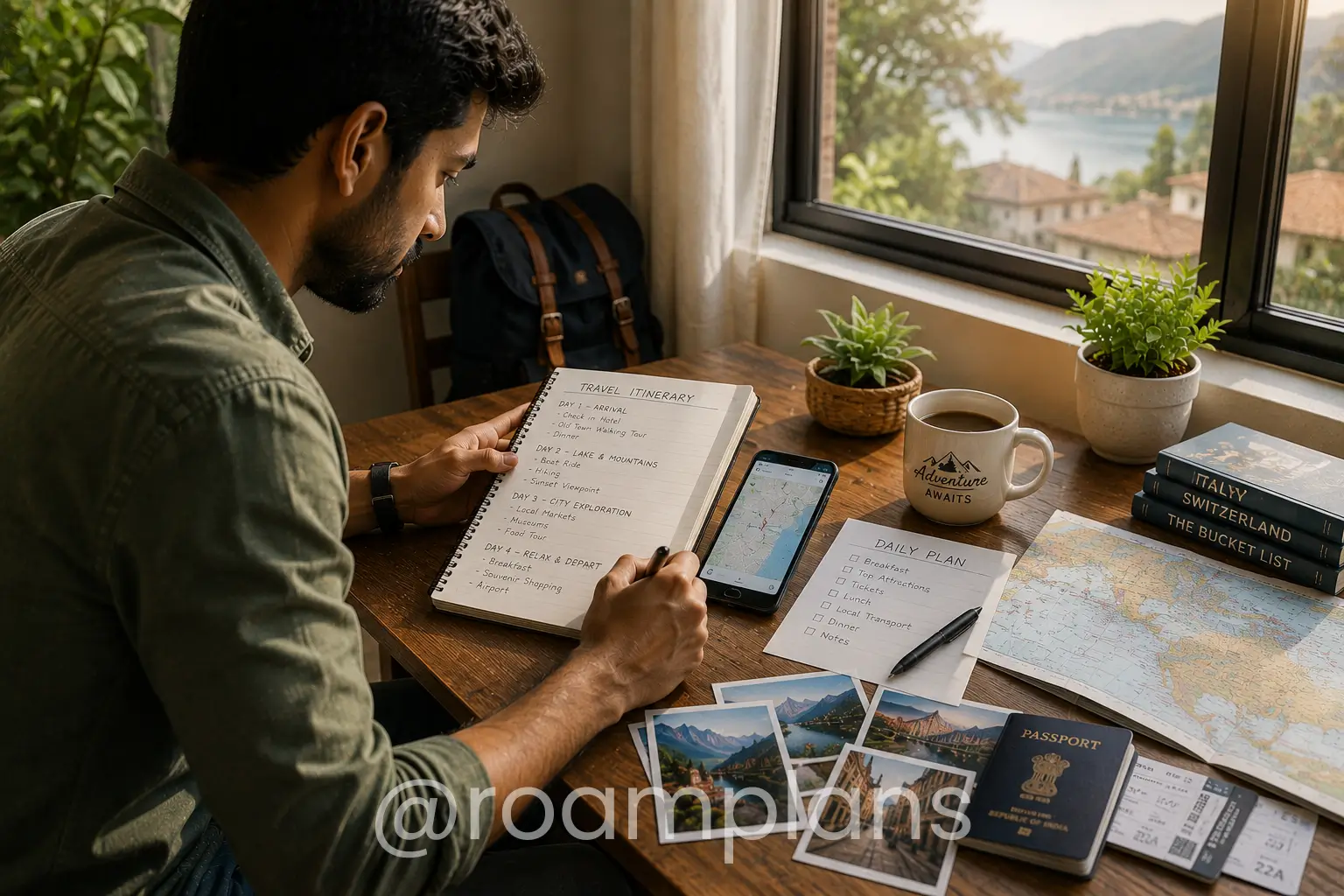
You can now bring your confirmed trip information into one daily plan.
At this point, you should already have:
- ✓Your main transportation
- ✓Your accommodation
- ✓Your basic local transport information
- ✓Your priority activity bookings
- ✓Your important restaurant reservations
Your task is to place these confirmed details into a simple day-by-day schedule.
Detailed Itinerary Checklist
- ✓Add arrival and departure details
- ✓Add accommodation check-in and check-out
- ✓Add confirmed transportation
- ✓Add booked activities
- ✓Add restaurant reservations
- ✓Group nearby activities where possible
- ✓Check basic travel time between places
- ✓Leave time for meals and breaks
- ✓Add flexible time
- ✓Save backup activity ideas
- ✓Review each day for unrealistic plans
Start With Fixed Bookings
Add reservations that already have a date and time.
For example:
| Day | Fixed Booking |
|---|---|
| Day 1 | Flight arrival |
| Day 2 | Museum ticket at 10:00 AM |
| Day 3 | Guided tour at 2:00 PM |
| Day 4 | Train to next city |
| Day 5 | Restaurant reservation at 7:30 PM |
These bookings create the basic shape of your itinerary.
Add flexible activities around them.
Check Each Travel Day
For every day, ask:
- ✓Do I have too many activities?
- ✓Have I included travel time?
- ✓Are the places reasonably close together?
- ✓Have I checked opening days?
- ✓Is there time to eat and rest?
- ✓Can I change part of the day if needed?
If a day looks rushed on paper, it will probably feel even more rushed during the trip.
Remove lower-priority activities before departure.
Save One Main Itinerary
Once the main schedule is ready:
- ✓Save your itinerary in one main location
- ✓Make it available offline
- ✓Share the basic plan with travel companions
- ✓Add important booking references
- ✓Keep flexible ideas separate from confirmed plans
Your itinerary does not need to control every hour.
It should help you see where you need to be, which bookings are fixed, and what you hope to do each day.
For the exact order of planning a trip from the first decision to departure, use our Step-by-Step Trip Planning Process ↗.
Checklist Review
You have now covered the main booking and trip-building tasks.
Before moving to travel preparation, check your progress.
| Planning Task | Complete |
|---|---|
| Main transportation booked | □ |
| Arrival transportation checked | □ |
| Local transportation checked | □ |
| Between-city routes reviewed | □ |
| Accommodation booked | □ |
| Priority activities reviewed | □ |
| Required activity tickets booked | □ |
| Important food reservations made | □ |
| Detailed itinerary created | □ |
| Main itinerary saved | □ |
If several boxes are still empty, complete the tasks that apply to your trip before moving into final preparation.
The next stage covers the practical details that are easy to overlook: emergencies, insurance, lost or stolen items, packing, home preparation, money, phone access, and travel document organization.
11. Prepare for Emergencies and Unexpected Problems
You cannot predict every travel problem.
Your checklist task is to make sure you know who to contact and where to find important information if something goes wrong.
You do not need to plan for every possible emergency.
Focus on basic preparation.
Emergency Contact Checklist
- ✓Save the local emergency number for your destination
- ✓Save your country’s embassy or consulate information if traveling internationally
- ✓Save your accommodation contact details
- ✓Save airline or main transportation contact information
- ✓Save important medical contact information if needed
- ✓Add an emergency contact to your phone
- ✓Keep important contact details available offline
Personal Emergency Information Checklist
Prepare basic information that may be useful during an emergency.
- ✓List any serious allergies
- ✓Record important medical information if needed
- ✓Save prescription details
- ✓Keep an emergency contact name and number
- ✓Note your travel insurance information if covered
Keep this information somewhere you can reach easily.
Create a Simple Backup Plan
Think about the main parts of your trip that could change.
- ✓Know what to do if your flight is delayed
- ✓Save an alternative arrival transport option
- ✓Keep emergency money available
- ✓Save important booking contact details
- ✓Know how to contact your accommodation if you arrive late
The goal is not to worry about everything that might happen.
You simply want a few useful options ready.
Emergency Preparation Check
| Emergency Task | Checked |
|---|---|
| Local emergency number saved | □ |
| Important contacts saved | □ |
| Medical information prepared | □ |
| Emergency money available | □ |
| Basic backup options checked | □ |
Once these details are ready, move to the next task.
12. Review Your Travel Insurance Needs
Travel insurance deserves its own detailed guide.
For this checklist, your task is simply to review whether you need coverage and confirm that you know what any purchased policy includes.
Travel Insurance Checklist
- ✓Check whether travel insurance is required for your destination
- ✓Review any existing travel coverage
- ✓Check your health insurance for overseas coverage
- ✓Review credit card travel benefits if applicable
- ✓Consider your non-refundable trip costs
- ✓Check emergency medical coverage
- ✓Check trip cancellation or interruption coverage
- ✓Review baggage coverage
- ✓Check planned activity exclusions
- ✓Compare suitable policies if needed
- ✓Buy coverage if appropriate for your trip
After Buying Travel Insurance
- ✓Save your policy number
- ✓Save the policy document
- ✓Save the emergency assistance number
- ✓Review basic claim instructions
- ✓Keep the information available offline
- ✓Share relevant policy information with travel companions if needed
Insurance Status Check
| Insurance Task | Checked |
|---|---|
| Existing coverage reviewed | □ |
| Trip risks considered | □ |
| Policy needs checked | □ |
| Coverage purchased if needed | □ |
| Emergency number saved | □ |
| Policy details available offline | □ |
Do not assume that every travel insurance policy covers the same situations.
For detailed help with coverage and exclusions, use our Complete Travel Insurance Guide.
13. Prepare for Lost or Stolen Travel Items
Losing a phone, wallet, passport, or bag can create a serious travel problem.
A small amount of preparation can make the next steps easier.
Your task is to keep useful copies and replacement information separate from the original items.
Passport and Document Backup Checklist
- ✓Create a copy of your passport information page
- ✓Save a secure digital passport copy
- ✓Keep a backup copy separate from your passport
- ✓Save visa or travel authorization details
- ✓Save your main booking references
- ✓Save embassy or consulate contact information if traveling internationally
A passport copy does not replace the original passport.
It may, however, help you access important details if the original is lost.
Payment Backup Checklist
- ✓Carry more than one payment option if possible
- ✓Keep your backup card separate from your main card
- ✓Save bank contact numbers
- ✓Know how to lock or freeze your cards
- ✓Keep emergency money separate from your wallet
Phone Loss Checklist
- ✓Enable a device lock
- ✓Turn on device location features if available
- ✓Back up important travel information
- ✓Save essential contacts somewhere outside your phone
- ✓Know how to contact your mobile provider
- ✓Keep important booking details available through another device or account
Loss and Theft Preparation Check
- ✓Passport copy prepared
- ✓Backup payment method ready
- ✓Bank contact details saved
- ✓Phone security checked
- ✓Important information backed up
Keep backup items separate.
A second payment card is less useful if it is stored in the same lost wallet as your first card.
14. Create Your Packing Checklist
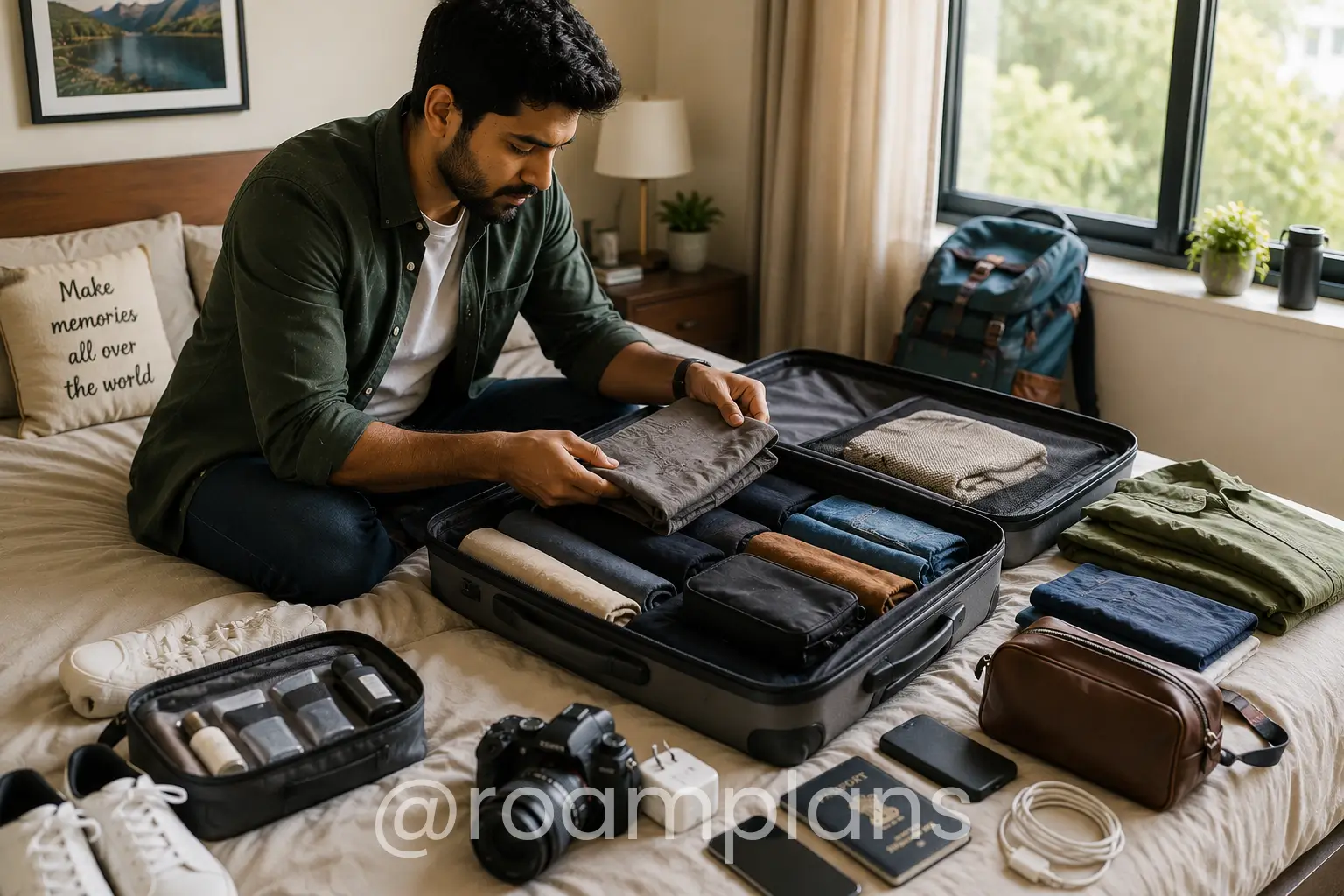
Now create a packing list based on your actual trip.
This article will not provide a full destination-specific packing guide.
Your task here is to confirm that each main packing group has been checked.
Travel Document Packing Checklist
- ✓Passport
- ✓Visa or travel authorization details if needed
- ✓Identification
- ✓Main travel confirmations
- ✓Insurance information
- ✓Driver’s license if needed
- ✓Important emergency details
Clothing Checklist
- ✓Daily clothing
- ✓Underwear
- ✓Sleepwear
- ✓Comfortable walking shoes
- ✓Weather-specific clothing
- ✓Activity-specific clothing
- ✓Appropriate clothing for cultural or religious sites if needed
Toiletries Checklist
- ✓Toothbrush
- ✓Toothpaste
- ✓Deodorant
- ✓Personal care products
- ✓Sunscreen if needed
- ✓Travel-size liquids where baggage rules require them
Electronics Checklist
- ✓Phone
- ✓Phone charger
- ✓Charging cables
- ✓Power bank
- ✓Travel adapter if needed
- ✓Camera if needed
- ✓Other trip-specific electronics
Medication and Health Item Checklist
- ✓Prescription medicine
- ✓Enough medication for the trip
- ✓Prescription information if needed
- ✓Personal medical items
- ✓Basic first aid items if appropriate
Baggage Check
Before closing your bags:
- ✓Check carry-on size limits
- ✓Check checked baggage weight limits
- ✓Review liquid rules
- ✓Review restricted items
- ✓Weigh your bag if needed
- ✓Remove unnecessary items
- ✓Add a luggage identification tag
For full packing lists, luggage organization, and trip-specific advice, use our Complete Travel Packing Guide.
15. Prepare Your Home Before Traveling
Your travel checklist should also cover the place you are leaving behind.
The tasks you need depend on how long you will be away.
Home Preparation Checklist
- ✓Arrange pet care if needed
- ✓Arrange plant care if needed
- ✓Pause or manage important deliveries
- ✓Take out the trash
- ✓Remove food that may spoil
- ✓Wash dishes
- ✓Check windows
- ✓Lock doors
- ✓Unplug selected devices if appropriate
- ✓Adjust heating or cooling if needed
- ✓Check water-related concerns for a longer absence
- ✓Arrange home security if needed
Before Leaving Home
- ✓Check all main doors
- ✓Check accessible windows
- ✓Confirm pets are cared for
- ✓Check appliances that need attention
- ✓Take a final look through the home
- ✓Give a trusted person relevant information if needed
Do not leave home preparation until you are already late for the airport.
Complete most tasks the day before departure.
16. Prepare Your Money, Cash, and Payment Cards
Before traveling, confirm that you can access money at your destination.
This section is a payment preparation checklist, not a full travel budget guide.
Payment Card Checklist
- ✓Check whether your main card can be used at the destination
- ✓Review foreign transaction fees if traveling internationally
- ✓Check whether your bank requires travel notification
- ✓Confirm your card is not close to expiring
- ✓Prepare a backup payment card if possible
- ✓Keep the backup card separate
- ✓Save your bank’s contact information
Cash and Currency Checklist
- ✓Check the local currency
- ✓Review basic exchange rates
- ✓Check whether cash is commonly used
- ✓Decide whether you need cash on arrival
- ✓Research safe ATM access
- ✓Keep emergency cash separate
Money Access Check
| Payment Option | Ready |
|---|---|
| Main card | □ |
| Backup card | □ |
| Local cash needs checked | □ |
| ATM plan checked | □ |
| Emergency money | □ |
| Bank contact saved | □ |
Do not depend on a single card or one wallet if you can avoid it.
For detailed spending and travel cost planning, use our Budget Travel Guide.
17. Plan How You Will Stay Connected
Check how your phone and internet access will work during the trip.
Your task is to choose a basic connectivity option and prepare the travel tools you need.
Phone and Internet Checklist
- ✓Check your mobile provider’s roaming options
- ✓Review roaming costs
- ✓Check local SIM options if needed
- ✓Check eSIM options if your phone supports them
- ✓Confirm that your phone is compatible with your chosen option
- ✓Save setup details
- ✓Check Wi-Fi availability at your accommodation
Travel App Checklist
Download the apps that apply to your trip.
- ✓Airline or main transportation app
- ✓Local transportation app
- ✓Map app
- ✓Translation app if needed
- ✓Accommodation app
- ✓Banking app
- ✓Travel planning or itinerary app if used
Do not download dozens of apps you may never open.
Focus on tools connected to your actual bookings and travel needs.
Offline Access Checklist
- ✓Download offline maps
- ✓Save your accommodation address
- ✓Save your arrival route
- ✓Download important tickets
- ✓Save your itinerary offline
- ✓Save emergency contacts
- ✓Save important booking references
For more detailed advice on travel apps, phone setup, and digital tools, use our Best Travel Technology Guide.
18. Organize Your Travel Documents and Reservations
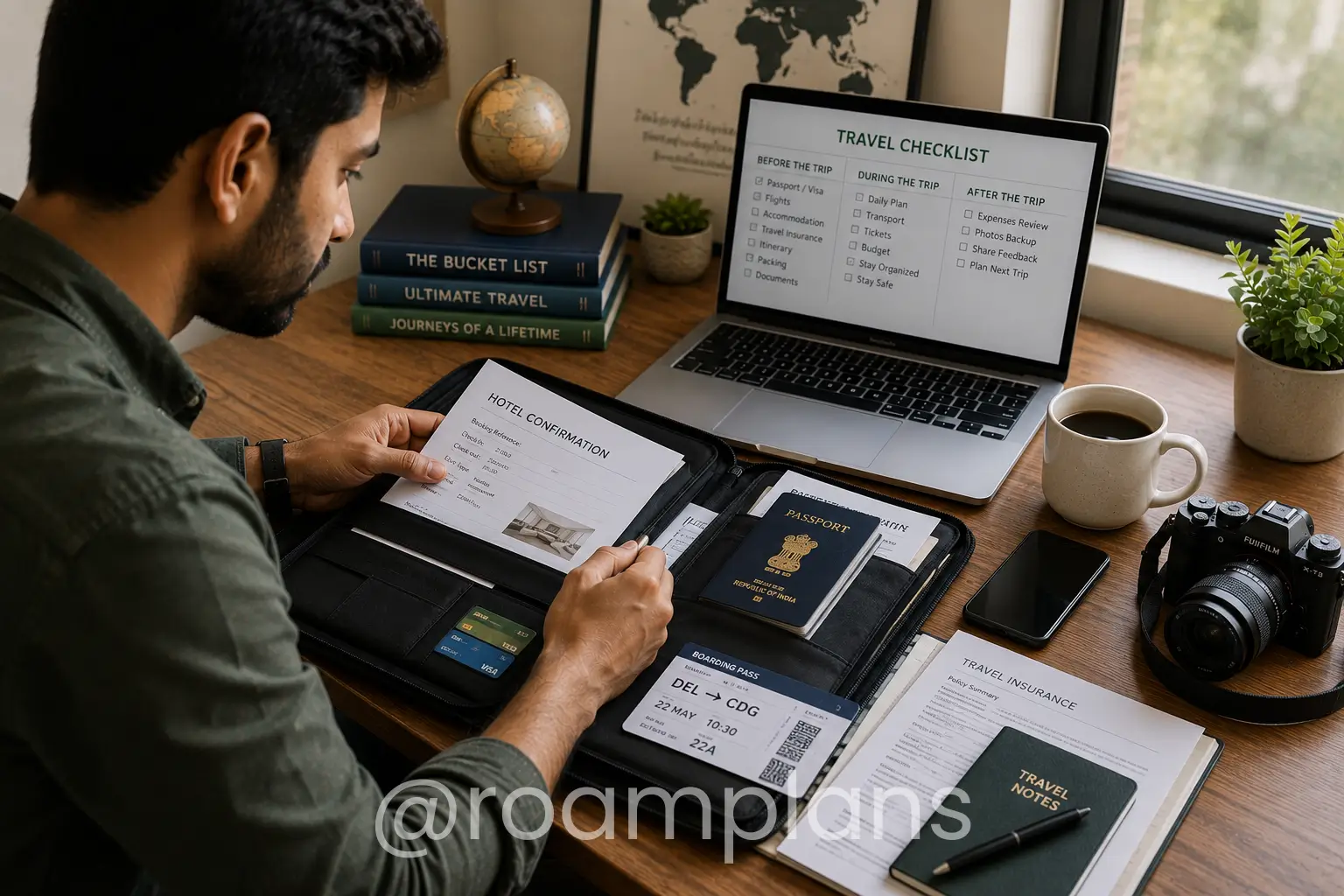
Before departure, bring your important travel information together.
Your task is to make essential bookings and documents easy to find.
Travel Document Organization Checklist
- ✓Passport details available
- ✓Visa information saved
- ✓Flight or main transportation booking saved
- ✓Accommodation confirmations saved
- ✓Local transport tickets saved
- ✓Activity tickets saved
- ✓Restaurant reservations saved if important
- ✓Insurance details saved
- ✓Rental car confirmation saved if needed
Create One Main Travel Folder
Choose one main location for your travel information.
This could be:
- ✓A cloud folder
- ✓A travel app
- ✓A secure notes system
- ✓An offline phone folder
- ✓A printed travel folder
Then:
- ✓Give files clear names
- ✓Remove duplicate old booking versions
- ✓Make essential files available offline
- ✓Check that important documents open correctly
- ✓Share needed details with travel companions
Final Document Access Check
Ask yourself:
If my internet stopped working after arrival, could I still find my hotel address and main booking information?
If the answer is no, prepare offline access before departure.
For detailed passport, visa, and paperwork organization, use our Complete Travel Documents Guide.
Before-Trip Checklist Review
You have now covered the main tasks that happen before departure.
Review your progress.
| Travel Planning Area | Complete |
|---|---|
| Destination confirmed | □ |
| Entry requirements checked | □ |
| Budget checked | □ |
| Broad trip route created | □ |
| Main transportation booked | □ |
| Local transportation checked | □ |
| Accommodation booked | □ |
| Priority activities checked | □ |
| Important food reservations made | □ |
| Detailed itinerary created | □ |
| Emergency information prepared | □ |
| Insurance needs reviewed | □ |
| Loss and theft backups prepared | □ |
| Packing completed | □ |
| Home prepared | □ |
| Money access prepared | □ |
| Phone and internet checked | □ |
| Travel documents organized | □ |
Do not worry if a task does not apply to your trip.
The goal is to review each area and make a clear decision.
Once your before-trip tasks are complete, your checklist does not end.
The next stage is using a shorter checklist during the trip to keep reservations, spending, and schedule changes organized.
During Your Trip: Stay Organized
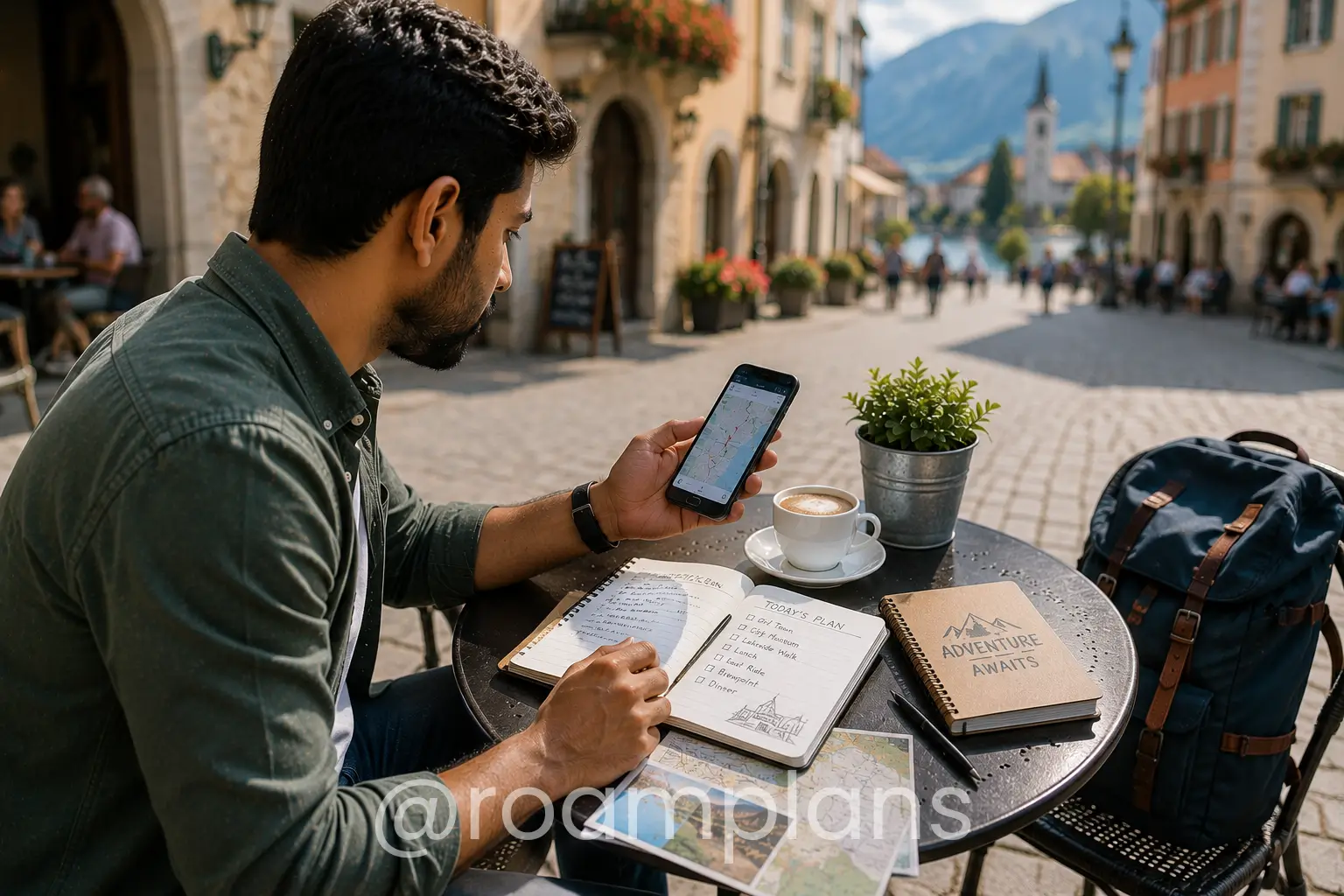
Your travel planning checklist does not stop when you leave home.
Most of the major work is already finished, but a few simple checks can help you stay organized while traveling.
You do not need to spend your vacation managing spreadsheets and updating planning apps.
The goal is to keep important information easy to access and adjust your plan when something changes.
Keep Reservations Easy to Access
Before starting each travel day, check whether you have any fixed bookings.
These may include:
- ✓Transportation
- ✓Timed attraction tickets
- ✓Guided tours
- ✓Restaurant reservations
- ✓Accommodation check-in
- ✓Rental car pickup or return
Daily Reservation Checklist
- ✓Check today’s confirmed bookings
- ✓Check reservation times
- ✓Confirm the meeting or entry location
- ✓Check how long it takes to get there
- ✓Keep tickets easy to access
- ✓Check whether identification is required
- ✓Review any booking updates
Do this before leaving your accommodation.
A quick check can help you catch a changed meeting point, transport delay, or forgotten reservation.
Check Tomorrow’s Fixed Plans
At the end of the day:
- ✓Review tomorrow’s main bookings
- ✓Check departure times
- ✓Check opening information if needed
- ✓Prepare required tickets
- ✓Confirm the basic transport route
You do not need to review your full trip every night.
Focus on the next day.
Track Your Daily Travel Schedule
Your itinerary is a guide.
It is not a contract.
Weather, transport delays, tiredness, and unexpected discoveries may change your original plan.
Use your schedule to keep important bookings visible while allowing flexible activities to move.
Daily Schedule Checklist
At the beginning of the day:
- ✓Check fixed bookings
- ✓Review the weather
- ✓Check major transport updates if needed
- ✓Choose your main activity
- ✓Review travel time between planned places
- ✓Remove an activity if the day feels too full
At the end of the day:
- ✓Check tomorrow’s main plan
- ✓Move unfinished optional activities if wanted
- ✓Remove plans you no longer care about
- ✓Confirm early departure times
Do not treat an unfinished activity as a failed travel day.
If you enjoyed your day and missed one optional museum or viewpoint, your trip is still going well.
Monitor Your Travel Budget
You do not need to record every small purchase if that makes your vacation less enjoyable.
However, checking your overall spending can help you avoid a money problem near the end of the trip.
Travel Spending Checklist
- ✓Check your main card transactions
- ✓Review large purchases
- ✓Track cash if you are using a large amount
- ✓Compare current spending with your trip budget
- ✓Keep emergency money separate
- ✓Check for unfamiliar card transactions
For a longer trip, review your spending every few days.
Ask one simple question:
Am I spending much faster than I planned?
If the answer is yes, adjust your flexible expenses.
You may decide to:
- ✓Choose less expensive meals
- ✓Reduce shopping
- ✓Skip a lower-priority paid activity
- ✓Use a cheaper transport option where practical
Do not use your emergency money to hide normal overspending.
Keep it available for unexpected needs.
For deeper cost control methods, use our Budget Travel Guide.
Update Your Itinerary When Plans Change
Travel plans change.
A museum may close.
Rain may affect an outdoor activity.
A train may be delayed.
You may simply decide that you want a slower day.
When something changes, update the part of your itinerary that is affected.
Do not rebuild the entire trip.
Itinerary Change Checklist
- ✓Identify the changed booking or activity
- ✓Check whether money can be refunded
- ✓Review any connected transportation
- ✓Check whether another reservation is affected
- ✓Move flexible activities if useful
- ✓Update travel companions
- ✓Save new booking details
Before Rebooking Anything
Ask:
- ✓Is the new plan really needed?
- ✓Does it affect another paid booking?
- ✓Have I checked the cancellation terms?
- ✓Does the new route still make sense?
Small changes are normal.
Keep your plan simple and work with the information you have.
During-Trip Checklist Review
Use this short checklist while traveling.
| During-Trip Task | Checked |
|---|---|
| Today’s reservations reviewed | □ |
| Tickets easy to access | □ |
| Basic schedule checked | □ |
| Weather reviewed if needed | □ |
| Major transport updates checked | □ |
| Spending reviewed | □ |
| Emergency money kept separate | □ |
| Tomorrow’s fixed plans checked | □ |
You do not need to complete this table formally every day.
Use it as a reminder when your trip becomes busy.
After Your Trip: Close Out Your Travel Plan

Returning home usually feels like the end of the trip.
There are still a few useful tasks worth checking.
These tasks can help you review your spending, organize travel memories, and make future trip planning easier.
Organize Your Travel Photos and Memories
Travel photos can become difficult to sort when thousands of images stay on your phone for months.
You do not need to create a perfect photo album immediately.
Start with a simple backup and organization check.
Travel Photo Checklist
- ✓Back up important photos
- ✓Check that cloud backups completed if used
- ✓Remove obvious duplicate photos
- ✓Create a folder for the trip
- ✓Give the folder a clear name
- ✓Save important travel videos
- ✓Share selected photos with travel companions if wanted
A simple folder name may look like:
Japan – April 2027
or:
Portugal Family Trip – September 2027
Clear names make travel memories easier to find later.
Save Useful Trip Notes
You may also want to save:
- ✓Favorite restaurants
- ✓Hotels you would use again
- ✓Useful transport routes
- ✓Places you missed
- ✓Activities worth repeating
- ✓Practical lessons from the trip
These notes can help if you return to the destination or give advice to someone else.
Review Your Final Travel Spending
After returning home, check the final cost of your trip.
This is useful even if you stayed within budget.
Your real spending gives you better information for planning future travel.
Post-Trip Spending Checklist
- ✓Review card transactions
- ✓Check for unfamiliar charges
- ✓Review final accommodation charges
- ✓Check rental car charges if applicable
- ✓Review major cash spending
- ✓Calculate the approximate total trip cost
- ✓Compare actual spending with your planned budget
You may discover that you spent more than expected on food but less on transportation.
Or your accommodation budget may have been accurate while activity costs were much higher.
Save these lessons.
They make your next travel budget more realistic.
Check Pending Travel Charges
Some travel charges may appear after you return.
Check for:
- ✓Hotel deposits
- ✓Rental car charges
- ✓Toll charges
- ✓Transport payments
- ✓Refunds
- ✓Foreign card transactions
Continue checking your main travel payment account for a reasonable period after returning.
If you see an unfamiliar transaction, contact the relevant provider or your bank.
Save Your Itinerary for Future Trips
Do not delete your entire trip plan as soon as you return.
A completed itinerary can become a useful personal travel record.
Itinerary Saving Checklist
- ✓Save the final itinerary
- ✓Remove outdated draft versions
- ✓Keep useful booking information if appropriate
- ✓Add notes about travel times
- ✓Note activities you enjoyed
- ✓Note places you would skip next time
- ✓Record useful trip lessons
Your final itinerary shows what actually worked.
For example, you may learn that three hotel changes in seven days felt too rushed.
You may discover that you prefer free mornings.
You may find that you planned too many paid attractions.
These are useful planning lessons.
Complete Master Travel Planning Checklist
Use this master checklist as a quick review of your full trip.
Destination and Trip Goals
- ✓Confirm available travel time
- ✓Decide your main trip goals
- ✓Check basic travel time
- ✓Review travel seasons
- ✓Check rough trip costs
- ✓Review current official travel information
- ✓Choose your destination
Passport, Visa, and Entry
- ✓Check passport validity
- ✓Check blank page requirements
- ✓Review visa rules
- ✓Check travel authorization requirements
- ✓Review health entry requirements
- ✓Check onward travel rules
- ✓Save official entry information
- ✓Check current requirements again before departure
Travel Budget
- ✓Set a comfortable total budget
- ✓Estimate major transportation
- ✓Estimate accommodation
- ✓Plan basic daily spending
- ✓Estimate activity costs
- ✓Add unexpected expense money
- ✓Prepare a spending tracking method
Broad Trip Route
- ✓List main destinations
- ✓Confirm arrival point
- ✓Confirm departure point
- ✓Check travel time between stops
- ✓Estimate nights in each location
- ✓Remove unnecessary stops
- ✓Save the broad route
Flights and Main Transportation
- ✓Confirm dates
- ✓Compare suitable routes
- ✓Check total booking cost
- ✓Review baggage rules
- ✓Check connections
- ✓Confirm passenger names
- ✓Review booking terms
- ✓Book main transportation
- ✓Save confirmation
Local Transportation
- ✓Plan arrival transportation
- ✓Check public transport
- ✓Review basic operating hours
- ✓Check transit cards
- ✓Review between-city transport
- ✓Reserve priority routes
- ✓Check rental car needs
- ✓Save important routes offline
Accommodation
- ✓Confirm required travel nights
- ✓Check the general location
- ✓Review transportation access
- ✓Check recent guest feedback
- ✓Review booking conditions
- ✓Check extra fees
- ✓Book accommodation
- ✓Save the address and confirmation
Activities
- ✓List must-do experiences
- ✓Check opening days
- ✓Review entry times
- ✓Check reservation requirements
- ✓Book priority activities
- ✓Save tickets
- ✓Keep optional activities separate
Food Planning
- ✓Save local food ideas
- ✓Consider dietary needs
- ✓Save useful food areas
- ✓Identify priority restaurants
- ✓Make required reservations
- ✓Leave room for flexible meals
Detailed Itinerary
- ✓Add arrival and departure
- ✓Add accommodation details
- ✓Add confirmed transportation
- ✓Add booked activities
- ✓Add important restaurant reservations
- ✓Check travel time
- ✓Leave free time
- ✓Save the itinerary offline
Emergency Preparation
- ✓Save local emergency numbers
- ✓Save embassy or consulate information if needed
- ✓Prepare important medical information
- ✓Save main travel contacts
- ✓Keep emergency money available
- ✓Review basic backup options
Travel Insurance
- ✓Check existing coverage
- ✓Review trip risks
- ✓Check medical protection
- ✓Review cancellation protection
- ✓Check activity exclusions
- ✓Buy suitable coverage if needed
- ✓Save policy details
- ✓Save the emergency assistance number
Lost or Stolen Items
- ✓Prepare a passport copy
- ✓Save important document backups
- ✓Prepare a backup payment method
- ✓Keep backup money separate
- ✓Save bank contact details
- ✓Check phone security
- ✓Back up important travel information
Packing
- ✓Pack travel documents
- ✓Pack suitable clothing
- ✓Pack footwear
- ✓Pack toiletries
- ✓Pack electronics
- ✓Pack chargers
- ✓Pack medication
- ✓Check baggage limits
- ✓Review restricted items
- ✓Add luggage identification
Home Preparation
- ✓Arrange pet care
- ✓Arrange plant care
- ✓Manage deliveries
- ✓Remove food that may spoil
- ✓Take out trash
- ✓Check doors and windows
- ✓Review appliances
- ✓Arrange security if needed
Money and Payments
- ✓Check main card access
- ✓Review foreign transaction fees
- ✓Prepare a backup card
- ✓Check local currency
- ✓Review cash needs
- ✓Check ATM access
- ✓Keep emergency money separate
- ✓Save bank contact information
Phone and Internet
- ✓Review roaming
- ✓Check SIM or eSIM needs
- ✓Download required travel apps
- ✓Download offline maps
- ✓Save arrival directions
- ✓Save bookings offline
- ✓Save emergency contacts
- ✓Charge your power bank
Travel Documents and Reservations
- ✓Save main transportation bookings
- ✓Save accommodation confirmations
- ✓Save transport tickets
- ✓Save activity tickets
- ✓Save insurance information
- ✓Create one main travel folder
- ✓Check offline access
- ✓Share needed information with travel companions
During the Trip
- ✓Check fixed bookings
- ✓Keep tickets accessible
- ✓Review major transport updates
- ✓Check your daily schedule
- ✓Monitor spending
- ✓Keep emergency money separate
- ✓Update changed plans
- ✓Review tomorrow’s fixed bookings
After the Trip
- ✓Back up photos
- ✓Organize travel memories
- ✓Save useful trip notes
- ✓Review final spending
- ✓Check unfamiliar transactions
- ✓Review pending travel charges
- ✓Save your final itinerary
- ✓Record lessons for your next trip
Travel Planning Checklist FAQs
A travel planning checklist should cover your destination, entry requirements, budget, transportation, accommodation, activities, itinerary, insurance, packing, money, connectivity, documents, and final travel checks.
Start as soon as you seriously decide to take a trip. International or high-demand trips may need several months of planning, while short local trips may need less time.
Confirm your destination, available travel time, basic budget, passport status, visa needs, and current entry requirements before making major non-refundable bookings.
Review your bookings, check current entry information, organize travel documents, review the weather, download offline travel information, and finish most of your packing.
Check departure times, complete online check-in if available, confirm your main documents, review baggage limits, charge devices, and prepare your arrival information.
Depending on the trip, you may need a passport, visa or travel authorization, transportation bookings, accommodation confirmations, insurance information, identification, and activity tickets.
You may not need to print every booking. However, keeping offline or printed access to key information can help if your phone, app, or internet connection is unavailable.
Keep important bookings in one main travel folder, app, or organization system. Use clear names and make essential information available offline.
Commonly forgotten tasks include checking passport rules, planning arrival transportation, saving the hotel address offline, preparing medication, checking phone access, and arranging a backup payment method.
International trips often require extra passport, visa, health, currency, connectivity, and entry checks. You can use this master checklist and complete the international items that apply to your destination.
Yes, but keep it simple. Review fixed reservations, transportation changes, your general spending, and the next day’s main plans.
Save useful itinerary details, review final spending, check travel charges, organize important photos, and record lessons that may help with future trips.
Final Thoughts
A travel planning checklist is useful because travel involves many small tasks that are easy to forget.
You do not need to complete everything in one day.
Start with your destination and entry requirements.
Then check your budget and broad route.
Move to transportation, accommodation, activities, and your itinerary.
After the main trip is built, prepare for emergencies, review insurance, pack, organize money, check phone access, and bring your documents together.
During the trip, focus on fixed bookings, important schedule changes, and your spending.
After returning home, review your final costs and save the information that may make your next trip easier.
The purpose of this checklist is not to make travel feel strict.
It is to help you handle the practical tasks so you can spend less time worrying about what you forgot.
For a full explanation of the planning process, read our Ultimate Travel Planning Guide.
If you prefer to follow each planning decision in order, continue with our Step-by-Step Trip Planning Process.
First-time traveler? Our How to Plan Your First Trip guide keeps the process simple and beginner-focused.
Use this checklist as your master task list. Check what applies to your trip, skip what does not, and keep moving until you are ready to leave.

Adnan Ahmed
RoamPlans AuthorTravel Planning Researcher & Editor
Adnan Ahmed is the travel planning researcher and editor behind RoamPlans. He creates clear, practical guides to help travelers compare destinations, plan routes, estimate costs, and avoid common trip-planning mistakes. His work combines careful source research, official travel information, and regular content reviews to keep each guide useful and current.
- ✓Destination Research
- ✓Budget Planning
- ✓Route Planning
- ✓Beginner Travel Guides