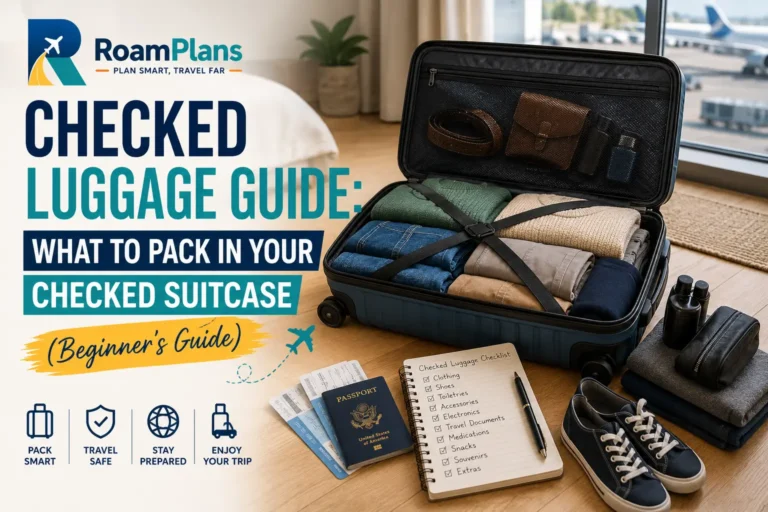
Travel Luggage Guide: How to Choose the Right Bag for Any Trip (Beginner’s Guide)
Choosing the right luggage is one of the first decisions ↗ you’ll make when planning a trip, and I’ve learned that it can make a bigger difference than most people expect. On one of my early trips, I packed everything into a large suitcase because I thought more space would make traveling easier. Instead, I found myself struggling to carry it through busy train stations, narrow hotel staircases, and crowded streets. Since then, I’ve realized that the best luggage isn’t the biggest or the most expensive—it’s the one that matches your trip.
This travel luggage guide will help you understand the different types of travel bags and when to use them. Whether you’re planning a weekend getaway, a business trip, or a long international vacation, choosing the right luggage can improve your comfort, protect your belongings, and make your journey much more enjoyable. In this guide, we’ll focus on selecting the right luggage, while our packing guides explain what to put inside each type of bag.
Why Choosing the Right Luggage Matters?
Many travelers spend hours deciding what to pack but only a few minutes choosing the luggage itself.
However, the bag you travel with affects almost every part of your journey.
The right luggage can help you:
- ✓Move through airports more easily.
- ✓Stay organized during your trip.
- ✓Protect your belongings.
- ✓Avoid carrying unnecessary weight.
- ✓Reduce travel stress.
Choosing luggage that matches your destination and travel style often makes your entire trip more comfortable.
Start by Thinking About Your Trip
Before buying or packing any luggage, think about the type of trip you’re taking.
Ask yourself questions such as:
- ✓How many days will I be away?
- ✓Am I flying, driving, taking a train, or using several types of transportation?
- ✓Will I stay in one hotel or visit multiple locations?
- ✓Will I mostly walk with my luggage?
- ✓What weather should I expect?
These answers will help you choose luggage that’s practical instead of simply choosing the largest suitcase you own.
The Main Types of Travel Luggage
There isn’t one perfect travel bag for every situation.
Different trips require different types of luggage.
The most common options include:
- ✓Rolling suitcases
- ✓Travel backpacks
- ✓Duffel bags
- ✓Carry-on luggage
- ✓Checked luggage
Each has its own advantages depending on how and where you travel.
Suitcase vs. Backpack
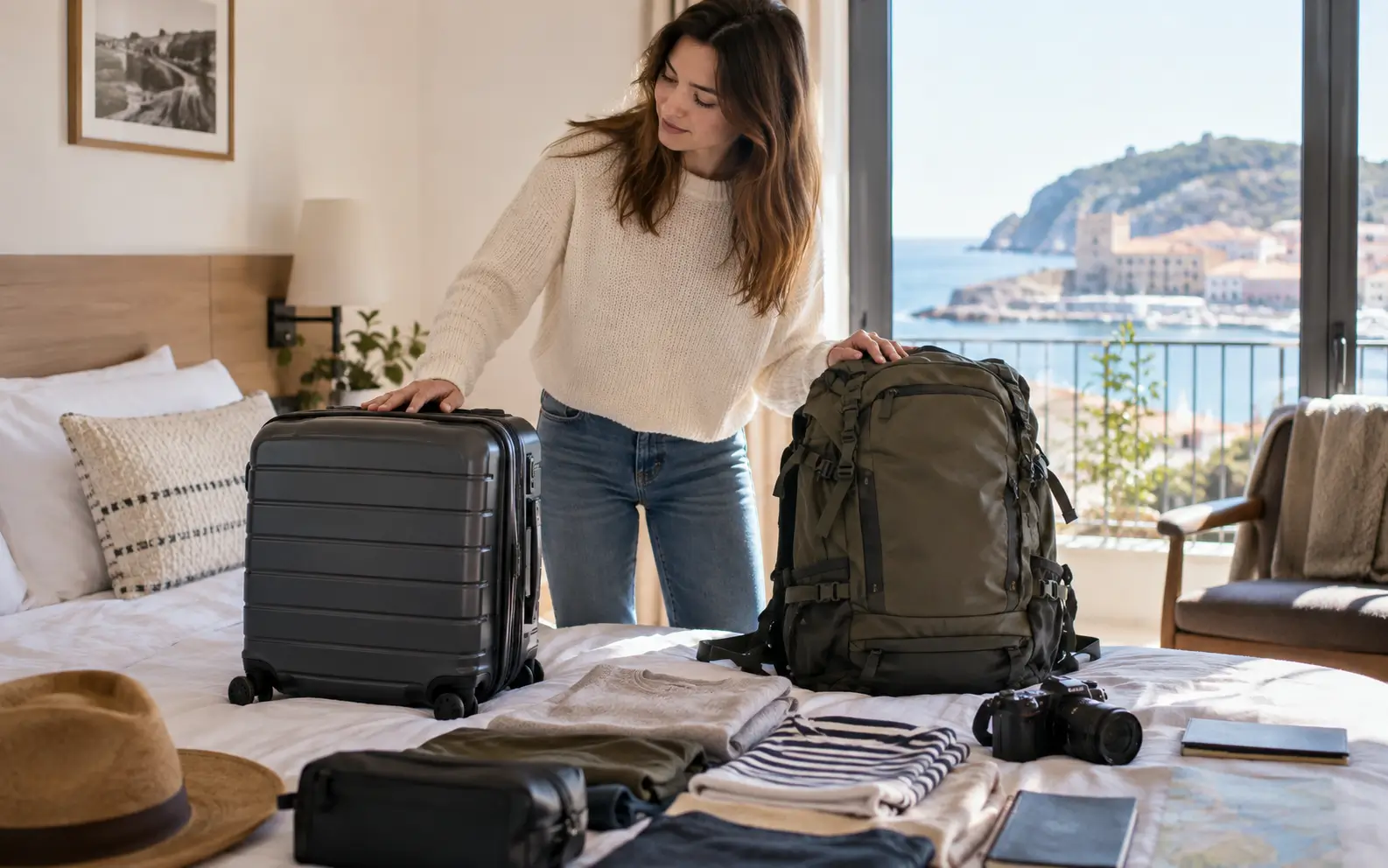
One of the most common questions travelers ask is whether they should use a suitcase or a backpack.
Both are excellent choices, but they work best in different situations.
Suitcase
A rolling suitcase is often ideal when:
- ✓Staying in hotels.
- ✓Traveling mainly through airports.
- ✓Visiting cities with paved roads.
- ✓Carrying heavier items.
- ✓Wanting easier organization.
Suitcases provide structure and make it easier to separate clothing, shoes, and accessories.
Backpack
A travel backpack is often better when:
- ✓Moving between multiple destinations.
- ✓Using buses or trains frequently.
- ✓Visiting places with uneven streets.
- ✓Hiking or exploring outdoor areas.
- ✓Wanting to keep both hands free.
Backpacks are generally easier to carry over stairs, rough paths, and crowded areas where rolling a suitcase may become difficult.
The best option depends on your destination rather than which style is more popular.
Hard Shell vs. Soft Shell Luggage
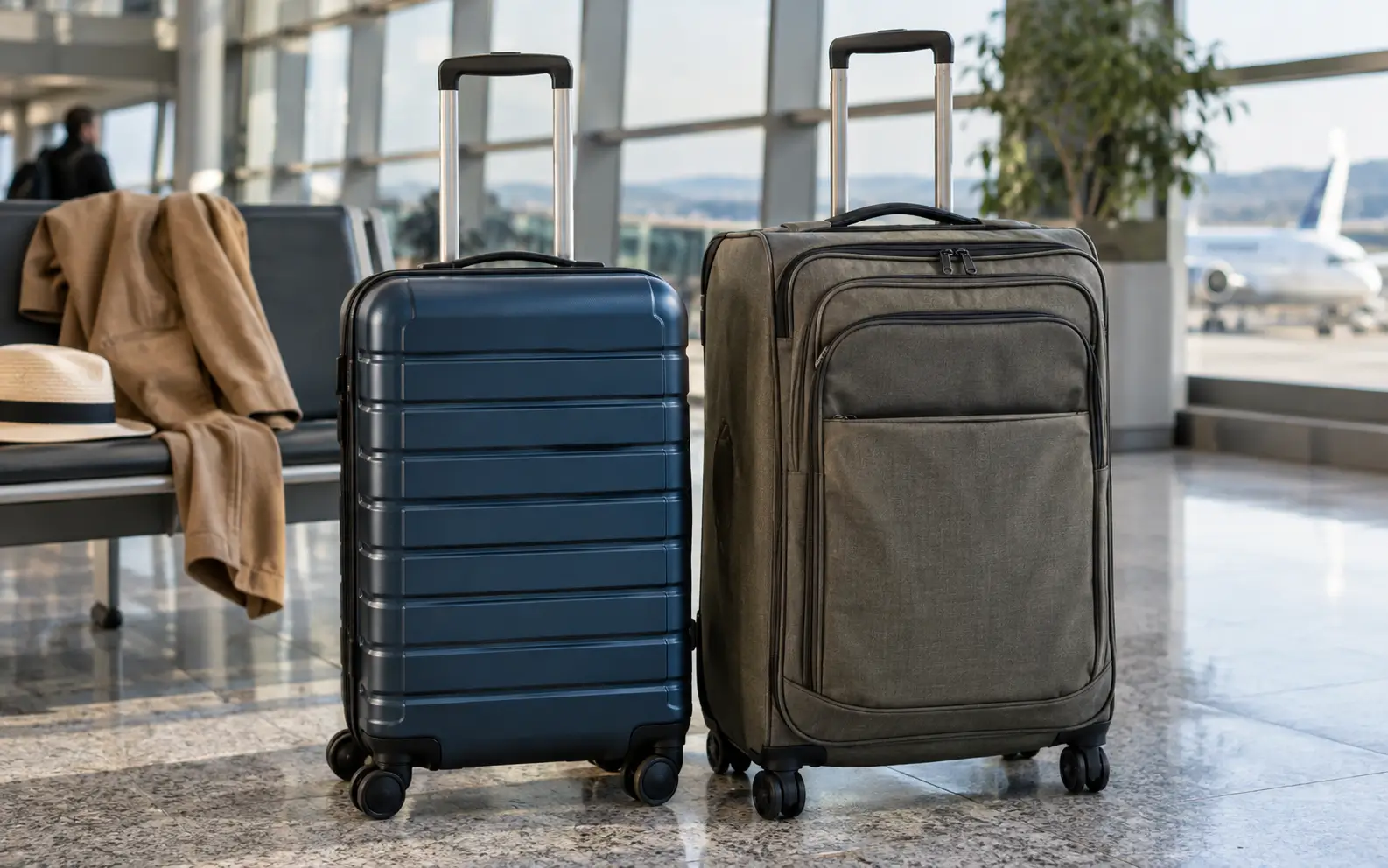
Another important decision is choosing between hard shell and soft shell luggage.
Hard Shell Luggage
Hard shell suitcases are known for protecting fragile belongings.
They often offer:
- ✓Better impact protection.
- ✓Greater water resistance.
- ✓Modern appearance.
- ✓Easier cleaning.
Many travelers choose hard shell luggage when carrying electronics or breakable items.
Soft Shell Luggage
Soft shell luggage offers greater flexibility.
It usually provides:
- ✓Expandable storage.
- ✓Exterior pockets for quick access.
- ✓Slightly lighter weight on many models.
- ✓Easier fitting into tight luggage spaces.
For travelers who occasionally return home with extra shopping, expandable soft luggage can be especially useful.
Neither option is universally better. The right choice depends on your travel habits and what you normally carry.
When a Duffel Bag Makes Sense?
Duffel bags are often overlooked, but they can be very practical for certain trips.
They work particularly well for:
- ✓Weekend getaways.
- ✓Road trips.
- ✓Sports travel.
- ✓Camping.
- ✓Short stays.
Many duffel bags are lightweight and easy to store when they’re not being used.
Some modern travel duffels also include wheels or backpack straps, making them even more versatile.
Should You Choose Two Wheels or Four Wheels?
If you’re buying a rolling suitcase, you’ll usually choose between two-wheel and four-wheel designs.
Two-Wheel Luggage
These suitcases:
- ✓Roll well over rough surfaces.
- ✓Stay stable on slopes.
- ✓Often have slightly larger wheels.
Four-Wheel Spinner Luggage
Spinner luggage offers:
- ✓Easy movement in airports.
- ✓Better maneuverability.
- ✓Less strain on your arms.
- ✓Smooth movement in crowded terminals.
For travelers who spend a lot of time in airports, four-wheel spinner luggage is often the more comfortable option.
Don’t Focus Only on Size
Many first-time travelers believe that buying the biggest suitcase is always the safest choice.
In my experience, that’s rarely true.
A larger suitcase encourages overpacking, becomes heavier to move, and may cost more if it exceeds airline baggage limits.
Instead of asking, “What’s the biggest suitcase I can buy?” ask yourself, “What’s the smallest suitcase that comfortably fits everything I truly need?”
Choosing the right size often makes traveling much easier than simply having more space.
Carry-On vs. Checked Luggage
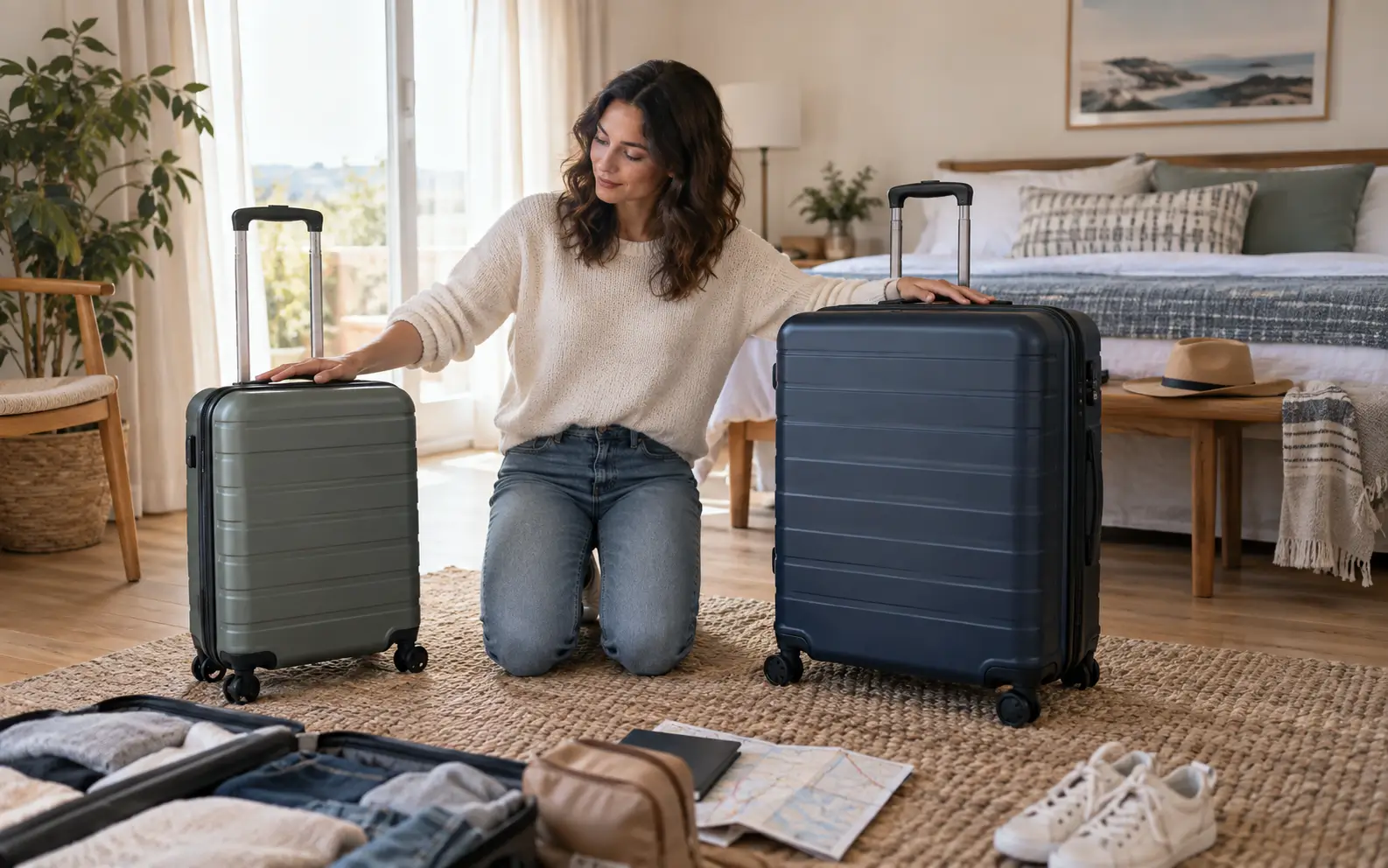
One of the biggest decisions travelers make is whether to travel with only a carry-on bag or check a larger suitcase.
The best choice depends on your trip rather than following a single rule.
Carry-On Luggage
Carry-on luggage is usually ideal for:
- ✓Weekend trips.
- ✓Business travel.
- ✓Short vacations.
- ✓Travelers who want to avoid baggage claim.
- ✓Trips where you need only a few outfits.
Many people also prefer carry-on luggage because it reduces the risk of checked baggage delays or loss.
If you’re planning to travel with only a cabin bag, our Carry-On Packing List ↗ explains exactly what to pack and how to make the most of the limited space.
Checked Luggage
Checked luggage is often a better option when:
- ✓Traveling for more than a week.
- ✓Visiting multiple climates.
- ✓Carrying bulky clothing.
- ✓Bringing sports equipment.
- ✓Traveling with family.
- ✓Packing gifts or souvenirs.
A checked suitcase provides much more packing space, but it also means you’ll need to check airline baggage rules before your trip.
Our Checked Luggage Packing Guide ↗ explains how to organize a larger suitcase efficiently and pack it without wasting space.
Choose Luggage Based on Trip Length
The length of your trip plays an important role in selecting the right bag.
Weekend Trips (1–3 Days)
A small carry-on suitcase, travel backpack, or duffel bag is usually enough.
Packing light makes traveling quicker and more convenient.
One-Week Vacations
Depending on your destination and travel style, you may choose either a carry-on or a medium-sized checked suitcase.
Many travelers can comfortably pack for a week using only a well-organized carry-on.
Long Vacations (10+ Days)
Longer trips often require additional clothing, shoes, and personal items.
A larger checked suitcase usually offers enough space while allowing you to pack more comfortably.
Remember that longer trips don’t always require significantly more luggage if you plan to do laundry during your stay.
Match Your Luggage to Your Travel Style
The same suitcase won’t be perfect for every traveler.
Think about how you’ll actually spend your trip.
Business Travelers
Business travelers often benefit from:
- ✓Lightweight carry-on luggage.
- ✓Laptop compartments.
- ✓Wrinkle-resistant packing.
- ✓Easy airport mobility.
Family Vacations
Families may prefer:
- ✓Larger checked luggage.
- ✓Matching luggage sets.
- ✓Durable materials.
- ✓Extra organization compartments.
Adventure Travelers
Adventure trips often call for:
- ✓Travel backpacks.
- ✓Water-resistant materials.
- ✓Comfortable shoulder straps.
- ✓Lightweight designs.
Road Trips
For road trips, flexible luggage such as duffel bags or soft-shell suitcases can fit more easily into car trunks than rigid luggage.
Features Worth Looking For
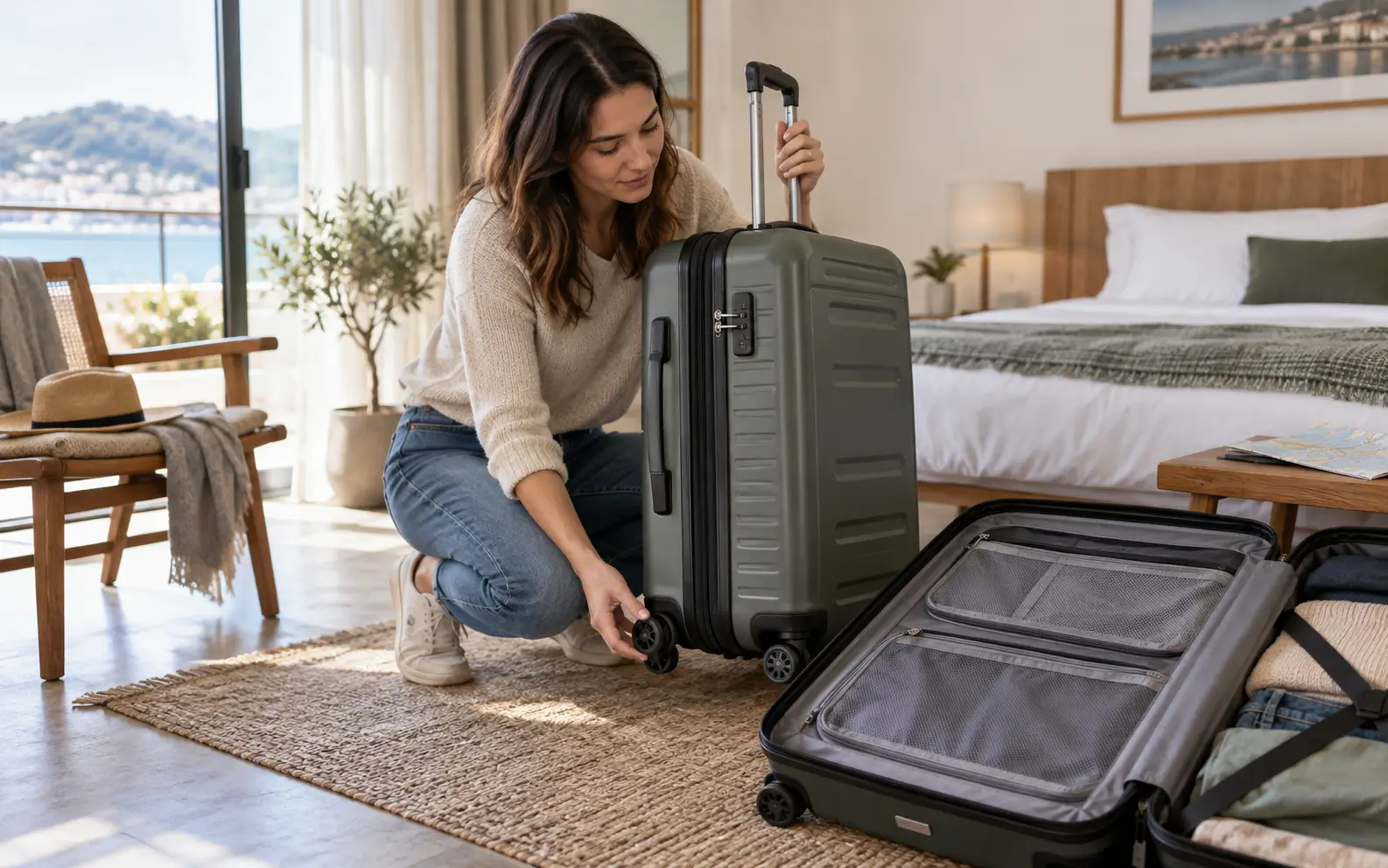
Not every suitcase with a stylish design performs well during travel.
Instead of focusing only on appearance, pay attention to practical features.
Some of the most useful include:
- ✓Strong zippers.
- ✓Comfortable handles.
- ✓Smooth wheels.
- ✓Durable fabric or shell.
- ✓Expandable storage.
- ✓Interior compartments.
- ✓Compression straps.
- ✓TSA-approved locks.
Good-quality features often make luggage last much longer.
Weight Matters More Than You Think
Many travelers only think about luggage weight after they’ve packed everything.
A heavy suitcase has several disadvantages.
It can:
- ✓Be harder to lift.
- ✓Become tiring during long journeys.
- ✓Exceed airline baggage limits.
- ✓Increase baggage fees.
Choosing lightweight luggage leaves more of your baggage allowance available for the items you actually want to pack.
Durability Is an Investment
Travel luggage experiences a lot of wear during every journey.
Airports, hotels, buses, taxis, and train stations can all be tough on your bags.
Durable luggage is often worth the investment because it can:
- ✓Protect your belongings better.
- ✓Last for many years.
- ✓Resist scratches and impacts.
- ✓Reduce the chance of broken wheels or damaged handles.
Rather than replacing inexpensive luggage every few trips, many frequent travelers find that one well-made suitcase provides better long-term value.
Security Features to Consider
Keeping your belongings secure is another important part of choosing luggage.
Modern travel bags often include useful security features such as:
- ✓TSA-approved locks.
- ✓Lockable zipper pulls.
- ✓Hidden compartments.
- ✓Strong zipper construction.
- ✓Identification tags.
While no suitcase is completely theft-proof, these features can provide extra peace of mind during your journey.
It’s also a good habit to place your contact information inside your luggage in case the exterior luggage tag becomes damaged or detached.
Think About Storage at Home
One detail that’s easy to overlook is where you’ll keep your luggage when you’re not traveling.
Large suitcases can take up a surprising amount of storage space.
If you don’t travel frequently, consider luggage that:
- ✓Nests inside larger suitcases.
- ✓Folds flat when empty.
- ✓Can be stored under a bed or in a closet.
- ✓Includes removable organizers.
Practical storage makes your luggage easier to manage between trips and helps keep your home organized.
Common Mistakes When Choosing Travel Luggage
Choosing the wrong luggage can make even a well-planned trip more difficult.
Over the years, I’ve noticed that many travelers make the same mistakes before they even start packing.
Some of the most common include:
- ✓Buying the biggest suitcase instead of the most practical one.
- ✓Choosing luggage based only on appearance.
- ✓Ignoring airline size and weight limits.
- ✓Purchasing very heavy luggage.
- ✓Forgetting to check wheel quality and handles.
- ✓Buying luggage without enough compartments.
- ✓Using the same bag for every type of trip.
Taking a few extra minutes to compare your options can help you avoid these problems and choose luggage that fits your travel style.
How to Make Your Luggage Last Longer?
Good luggage can serve you for many years if you take proper care of it.
Simple maintenance after each trip helps keep it in excellent condition.
Some easy habits include:
- ✓Wipe the exterior clean after traveling.
- ✓Remove dust and sand from the wheels.
- ✓Check zippers for damage.
- ✓Inspect handles before your next trip.
- ✓Empty all pockets after returning home.
- ✓Store luggage in a cool, dry place.
- ✓Avoid placing heavy objects on top of stored suitcases.
Looking after your luggage not only keeps it looking good but also helps prevent unexpected problems during future trips.
Is Expensive Luggage Worth It?
This is one of the most common questions travelers ask.
The answer depends on how often you travel.
If you only take one short vacation every few years, a mid-range suitcase from a reliable brand may be all you need.
However, if you travel frequently for work or leisure, investing in better-quality luggage can be worthwhile because it usually offers:
- ✓Stronger construction.
- ✓Better wheels.
- ✓More comfortable handles.
- ✓Higher-quality zippers.
- ✓Longer lifespan.
- ✓Better warranty support.
Price alone doesn’t determine quality, so compare materials, features, and customer reviews before making a decision.
Travel Luggage Buying Checklist
Before purchasing your next travel bag, ask yourself these questions:
- ✓Is it the right size for my typical trips?
- ✓Does it meet airline carry-on requirements if needed?
- ✓Is it lightweight?
- ✓Are the wheels smooth and durable?
- ✓Is the handle comfortable and sturdy?
- ✓Does it have enough compartments?
- ✓Is the material suitable for my travel style?
- ✓Can I easily lift and carry it?
- ✓Will it fit where I store luggage at home?
- ✓Does it offer good value for the price?
Using this checklist makes it easier to compare different luggage options before buying.
Frequently Asked Questions
The best luggage depends on your trip. Carry-on suitcases are great for short vacations, while larger checked suitcases work well for longer trips. Travel backpacks are often the best choice for adventure travel and trips with frequent movement.
Both have advantages. Hard shell luggage offers better protection for fragile belongings, while soft shell luggage is usually more flexible and often includes expandable storage and exterior pockets.
Choose the smallest suitcase that comfortably fits your typical travel needs. A carry-on is often enough for short trips, while longer vacations may require a medium or large checked suitcase.
Four-wheel spinner suitcases are generally easier to move through airports and smooth indoor surfaces. Two-wheel suitcases often perform better on rough roads, uneven sidewalks, and outdoor terrain.
A well-made suitcase that is properly maintained can last for many years. The lifespan depends on build quality, travel frequency, and how carefully it is handled and stored.
Final Thoughts
Choosing the right luggage isn’t about buying the largest suitcase or the most expensive travel bag. From my own experience, the best luggage is the one that suits your destination, transportation, trip length, and travel style. Making the right choice before you leave home can make your journey more comfortable and help you stay organized from start to finish.
Use this guide whenever you’re deciding which travel bag to take on your next trip. Once you’ve chosen the right luggage, the next step is packing it efficiently. Our carry-on and checked luggage guides will help you organize your belongings so you can travel with confidence and make the most of the space you have.

Adnan Ahmed
RoamPlans AuthorTravel Planning Researcher & Editor
Adnan Ahmed is the travel planning researcher and editor behind RoamPlans. He creates clear, practical guides to help travelers compare destinations, plan routes, estimate costs, and avoid common trip-planning mistakes. His work combines careful source research, official travel information, and regular content reviews to keep each guide useful and current.
- ✓Destination Research
- ✓Budget Planning
- ✓Route Planning
- ✓Beginner Travel Guides


Turn This Guide into a Practical Trip Plan
Use the recommended Free Packing List Generator or explore more free RoamPlans tools.