Public Transportation vs Rental Car: Which Is Better for Your Trip?
Compare public transportation and rental cars by cost, time, luggage, parking, and flexibility to choose the best option for your trip with fewer hassles.
Choosing between public transportation ↗ and a rental car can change your trip budget, daily schedule, and overall comfort.
Public transport may save money in a well-connected city. A rental car may give you more freedom in rural areas, small towns, or places where buses and trains are limited.
The better option depends on the destination, total cost, group size, luggage, parking, travel distance, and how much control you want over your schedule.
When I compare these two choices, I do not look at the ticket price or daily rental rate alone. I check the full route, every added cost, and how much time each option will take from one door to the next.
This guide compares public transportation vs rental car use so you can choose the option that fits your trip.
Transport fares, rental rules, insurance terms, parking costs, tolls, and local driving laws differ by destination. Check official local transport websites, rental company terms, and government sources before booking.
Key Takeaways
- ✓Public transportation often works better in large cities with frequent service.
- ✓A rental car may suit rural areas, road trips, and multi-stop routes.
- ✓Compare the full cost, including fuel, parking, tolls, and transfers.
- ✓Check door-to-door travel time instead of the listed journey time.
- ✓Group size and luggage can change which option costs less.
- ✓Some trips work best by using public transport in cities and renting a car only for rural areas.
Table of Contents
- 1Quick Answer: Public Transportation or Rental Car?
- 2What Is Public Transportation?
- 3What Does Renting a Car Include?
- 4Public Transportation vs Rental Car: Quick Comparison
- 5Which Option Costs Less?
- 6Compare Door-to-Door Travel Time
- 7Parking, Fuel, and Toll Costs
- 8Luggage and Group Size
- 9Comfort and Flexibility
- 10City Travel vs Rural Travel
- 11Best Option for Different Travelers
- 12When to Use Both
- 13Decision Checklist
- 14Frequently Asked Questions
- 15Final Thoughts
Quick Answer: Public Transportation or Rental Car?

Choose public transportation when you are visiting a large city with frequent trains, buses, or metro services. It may cost less, remove parking stress, and make city-center travel easier.
Choose a rental car when you are visiting rural areas, small towns, national parks, or several places in one day. A car can also work well for families, groups, and travelers carrying heavy luggage.
Do not decide by comparing one bus fare with one daily rental price. Add every cost connected to each option.
For public transportation, include:
- ✓Airport transfers
- ✓Daily fares
- ✓Travel passes
- ✓Taxis needed after the last service
- ✓Luggage storage where needed
For a rental car, include:
- ✓Rental price
- ✓Insurance
- ✓Refundable deposit or card hold: funds needed separately, not a trip expense unless charged
- ✓Fuel
- ✓Parking
- ✓Toll roads
- ✓Extra-driver fees
- ✓One-way charges
The best choice is the one that fits the full route, not the one with the lowest starting price.
| Travel situation | Better starting choice |
|---|---|
| Large city with good transit | Public transportation |
| Rural area | Rental car |
| City-center accommodation | Public transportation |
| Multi-stop road trip | Rental car |
| Solo budget trip | Public transportation |
| Family with several bags | Rental car may work better |
| Short city stay | Public transportation |
| Remote attractions | Rental car |
| Expensive city parking | Public transportation |
| Several travelers sharing costs | Rental car may cost less |
These are general starting points. The final choice still depends on the route and destination.
What Is Public Transportation?
Public transportation includes shared services that operate on fixed routes or schedules.
Common types include:
- ✓Metro
- ✓Subway
- ✓Local bus
- ✓Tram
- ✓Local train
- ✓Ferry
- ✓Airport train
- ✓Public shuttle
Public transport is often managed by a city, regional authority, or approved operator.
Travelers may pay using:
- ✓Single tickets
- ✓Day passes
- ✓Multi-day passes
- ✓Transport cards
- ✓Mobile tickets
- ✓Contactless bank cards
The guide How to Use Public Transportation Abroad ↗ explains ticket systems, transport cards, route maps, and ticket validation in full.
Main Benefits of Public Transportation
Public transportation can offer:
- ✓Lower daily costs
- ✓No parking fees
- ✓No driving stress
- ✓Easy access to city centers
- ✓Frequent service in large cities
- ✓No fuel or toll costs
- ✓No rental deposit
- ✓No need to learn local driving rules
It can be a strong choice when most attractions are near stations or stops.
Main Limits of Public Transportation
Public transport may be less useful when:
- ✓Service is limited
- ✓The final bus or train ends early
- ✓Your accommodation is far from a stop
- ✓You have several large bags
- ✓You are traveling with small children
- ✓Routes require many changes
- ✓Rural attractions are spread apart
- ✓Weekend service is reduced
A cheap transport pass is not useful if you still need several taxis.
What Does Renting a Car Include?
A rental car gives you control over departure times, stops, luggage, and route changes.
It can be useful for:
- ✓Rural areas
- ✓Road trips
- ✓National parks
- ✓Beach routes
- ✓Mountain areas
- ✓Small towns
- ✓Family travel
- ✓Group travel
- ✓Multi-stop days
The full booking process, insurance terms, fuel rules, deposits, pickup, and return are covered in the Car Rental Guide for Travelers ↗.
Main Benefits of a Rental Car
A rental car can offer:
- ✓Flexible departure times
- ✓Direct travel
- ✓Easier luggage storage
- ✓Access to remote places
- ✓More control over stops
- ✓Privacy
- ✓Easier travel with children
- ✓Shared cost for groups
A car may save time when public transport requires several changes or runs only a few times each day.
Main Limits of a Rental Car
A rental car may create extra costs and work.
These can include:
- ✓Insurance
- ✓Security deposit
- ✓Fuel
- ✓Toll roads
- ✓Parking
- ✓Traffic
- ✓Restricted city zones
- ✓Local road rules
- ✓Driver fatigue
- ✓One-way fees
A car may be useful outside a city but unnecessary inside it.
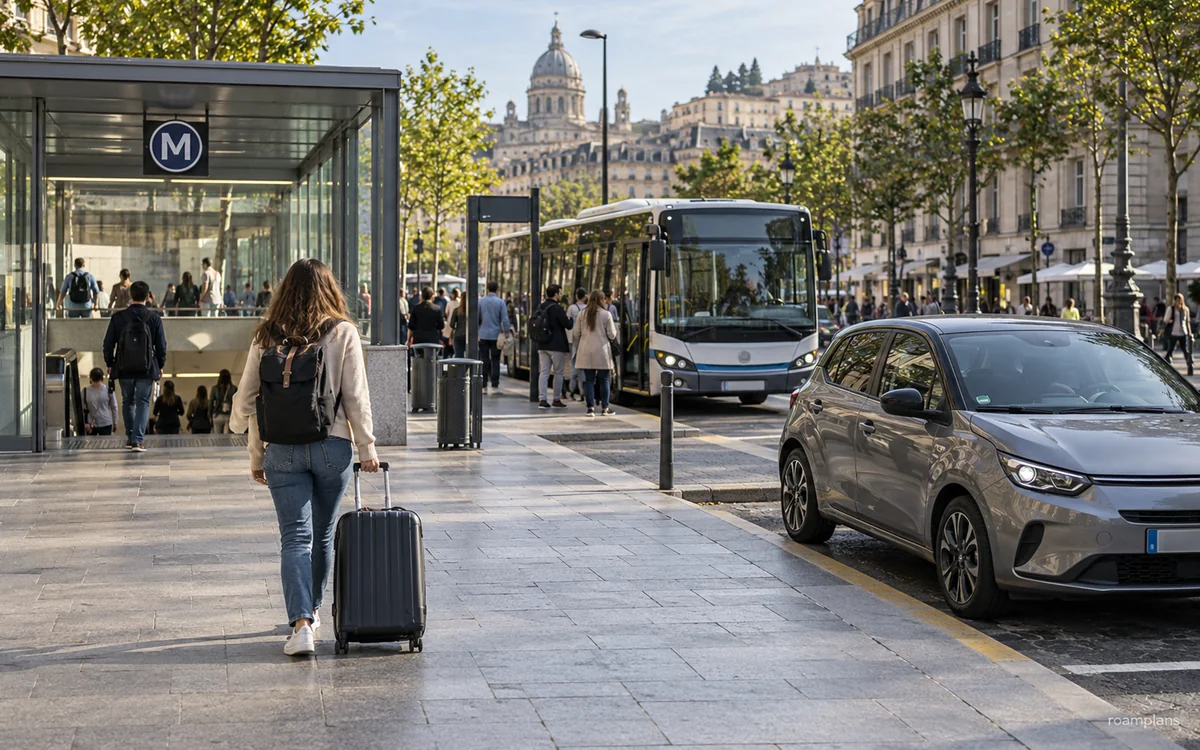
Public Transportation Vs Rental Car: Quick Comparison
| Factor | Public transportation | Rental car |
|---|---|---|
| Starting cost | Often lower | Often higher |
| Best for | Large cities | Rural and multi-stop routes |
| Parking | Not needed | May be expensive |
| Fuel | Not needed | Required |
| Flexibility | Based on schedules | High |
| Luggage | Can be difficult | Usually easier |
| Group travel | Cost rises per person | Cost can be shared |
| Solo travel | Often cheaper | Often more expensive |
| Driving stress | None | Can be high |
| Route access | Limited to the network | Wider access |
| Late-night travel | May be limited | More control |
| City-center travel | Often easier | Can be difficult |
| Rural travel | Often limited | Usually better |
| Child travel | May need several changes | Can be easier with a suitable seat |
| Accessibility | Depends on the network | Depends on the vehicle |
No option wins every category. The best choice changes with the trip.
Which Option Costs Less?
Public transportation often looks cheaper because the ticket price is low.
A rental car may look expensive because the booking shows a daily rate.
Both starting prices can be misleading.
The correct comparison is the final cost for the same dates, route, passengers and luggage. Add only costs that are not already included in the ticket, pass or rental quote. Keep refundable deposits and card holds separate from spending, while allowing enough funds for them. The U.S. FTC’s rental-car guide ↗ explains why taxes, fuel, tolls and other charges matter; check the local branch terms for your destination.
Public Transportation Costs
Public transport costs may include:
- ✓Airport train or bus
- ✓Local single tickets
- ✓Day passes
- ✓Multi-day passes
- ✓Taxis after service hours
- ✓Extra fare zones
- ✓Transport to remote attractions
- ✓Luggage storage
- ✓Missed-service replacement rides
Check whether the airport is outside the main city zone. Airport fares can cost more than normal local tickets.
Example Public Transport Budget
A traveler may need:
- ✓Airport train
- ✓Three-day city pass
- ✓One taxi after a late arrival
- ✓One regional train for a day trip
The final cost is more than the city pass alone.
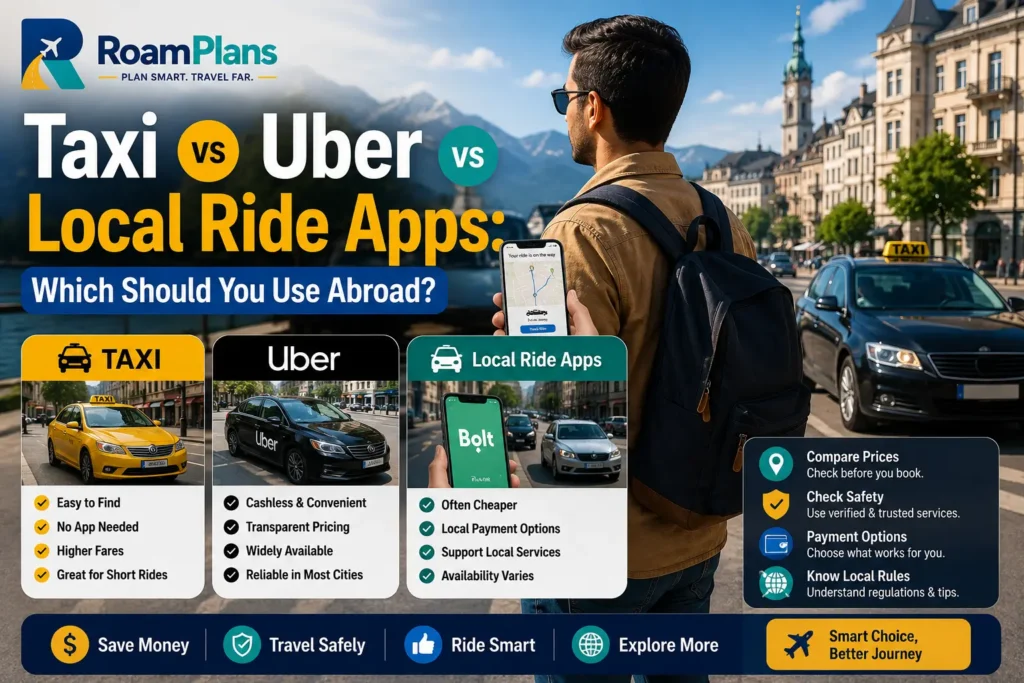
If you need a ride after the final service, compare taxis and local ride apps ↗ before committing to transit as the only option. Confirm the final complete connection to your accommodation, not just the first train’s departure.
Rental Car Costs
A rental car budget may include:
- ✓Daily rental price
- ✓Insurance
- ✓Refundable deposit or card hold: funds needed separately, not a trip expense unless charged
- ✓Fuel
- ✓Parking
- ✓Toll roads
- ✓Airport pickup fee
- ✓Extra driver
- ✓Child seat
- ✓One-way fee
- ✓Cross-border fee
- ✓Cleaning charge
The deposit is often returned, but it can reduce the money or credit available during the trip.
Example Rental Car Budget
A traveler may pay for:
- ✓Three rental days
- ✓Insurance
- ✓Fuel
- ✓Hotel parking
- ✓Attraction parking
- ✓Toll roads
The final price may be much higher than the daily rate shown in search results.
Cost Per Person vs Cost Per Group
Public transportation is usually charged per traveler.
A rental car is usually charged per vehicle.
This difference matters for groups.
For example:
- ✓One train ticket may cost less than a rental car.
- ✓Four train tickets may cost more than one shared car.
- ✓Fuel and parking may make the car more expensive again.
Always compare the full price for everyone, including child fares, concessions and any extra driver or child-seat charges that actually apply. Do not multiply a group rental quote by the traveler count.
If a complete car budget is €240 and comparable transit costs €70 per adult, two adults would spend €120 each by car versus €70 each by transit. Four adults sharing that same suitable car would spend €60 each versus €70 each. These are sample inputs, not destination rates. Recalculate if four people and their bags require a larger car, and include every relevant cost before comparing.
| Cost item | Public transportation | Rental car |
|---|---|---|
| Airport transfer | ||
| Daily fare or rental | ||
| Insurance | Not applicable | |
| Fuel | Not applicable | |
| Parking | Not applicable | |
| Tolls | Not applicable | |
| Taxi backup | ||
| Child seat | Not applicable | |
| Final group cost |
Use prices from your destination and travel dates.
When Public Transportation Usually Costs Less
Public transport often costs less when:
- ✓You are traveling alone
- ✓You are staying in one city
- ✓The transit network is frequent
- ✓Parking is expensive
- ✓Your hotel is near a station
- ✓You do not need taxis
- ✓You are taking several short local trips
- ✓A day pass covers your route
When a Rental Car May Cost Less
A rental car may cost less when:
- ✓Several people share the cost
- ✓You are visiting many places
- ✓Public transport needs several paid transfers
- ✓Taxi fares are high
- ✓Your accommodation includes free parking
- ✓Rural buses are limited
- ✓You would otherwise book private transfers
- ✓The trip includes heavy luggage
Compare Door-to-Door Travel Time
The fastest choice is not always the one with the shortest listed travel time.
Public transport and rental cars create different types of added time.
Public Transportation Time
Add:
- ✓Walking to the stop
- ✓Waiting for the service
- ✓Transfers
- ✓Platform changes
- ✓Delays
- ✓Walking after arrival
- ✓Time spent buying or validating tickets
A 30-minute train ride may become a 90-minute hotel-to-hotel route.
Rental Car Time
Add:
- ✓Travel to the rental desk
- ✓Waiting in line
- ✓Rental paperwork
- ✓Vehicle inspection
- ✓Finding parking
- ✓Fuel stops
- ✓Traffic
- ✓Toll booths
- ✓Vehicle return
A two-hour drive may take much longer after pickup and parking are added.
Direct Route vs Fixed Schedule
A car can provide direct travel, but traffic and parking may reduce the time saved.
Public transportation follows a fixed route, but a fast metro may avoid road traffic.
Compare both routes using the same starting and ending points.
Sample Time Comparison
| Travel stage | Public transportation | Rental car |
|---|---|---|
| Reach departure point | 15 minutes | 20 minutes |
| Waiting or pickup | 10 minutes | 30 minutes |
| Main travel | 60 minutes | 50 minutes |
| Final local travel or parking | 20 minutes | 25 minutes |
| Door-to-door total | 1 hour 45 minutes | 2 hours 5 minutes |
These are illustrative figures, not measured route times. Use actual timetables and pickup arrangements, then add walking, waiting, parking, refueling or charging, and vehicle return procedures where needed. Allow a separate disruption buffer before a flight or fixed booking.
Service Frequency
Public transport can work well when services run every few minutes.
It becomes less useful when:
- ✓Buses run once per hour
- ✓The final service ends early
- ✓Weekend schedules are reduced
- ✓A missed connection creates a long wait
A rental car gives you more control over departure time, but traffic can still delay the journey.
Arrival Time
Check how each option works at the exact time you arrive.
Public transport may be best during the day but unavailable after midnight.
A rental car desk may also close before a late flight arrives.
Check:
- ✓Final bus or train
- ✓Rental desk hours
- ✓After-hours pickup
- ✓Hotel check-in time
- ✓Road conditions at night
- ✓Backup taxi availability
Parking, Fuel, and Toll Costs
These costs can decide whether a rental car is worth using.
Parking
Parking may be charged at:
- ✓Hotels
- ✓City centers
- ✓Attractions
- ✓Beaches
- ✓Train stations
- ✓Airports
- ✓Shopping areas
Also check:
- ✓Overnight parking
- ✓Permit zones
- ✓Height limits
- ✓Street-cleaning rules
- ✓Time limits
- ✓Restricted areas
A hotel with free parking can make a rental car more useful.
A city hotel with no parking can make the same car a poor choice.
Fuel
Estimate fuel using:
- ✓Total distance
- ✓Vehicle size
- ✓Fuel type
- ✓Local fuel price
- ✓Expected traffic
- ✓Mountain roads
Do not compare a small rental car with a large family vehicle using the same fuel estimate.
Toll Roads
Tolls may be paid through:
- ✓Cash booths
- ✓Bank cards
- ✓Electronic tags
- ✓Online registration
- ✓Rental company billing
Rental companies may add an administration fee for toll payments.
Check the toll system before driving.
City Charges
Some cities charge for:
- ✓Congestion zones
- ✓Low-emission zones
- ✓Road permits
- ✓City entry
- ✓Special parking areas
A rental car may need registration or a permit before entering.
Public transportation avoids most of these charges.
When Added Driving Costs Change the Decision
A car may look cheaper until you add:
- ✓Daily parking
- ✓Fuel
- ✓Toll roads
- ✓Insurance
- ✓City charges
Public transport may then become the lower-cost option.
The opposite can also happen. Several train or bus tickets, airport transfers, and taxis may cost more than one shared rental car.
Luggage and Group Size
Luggage and group size can change which option is easier and cheaper.
Public transportation may work well for one traveler with a backpack. A rental car may work better for a family carrying several suitcases, a pushchair, and child seats.
Compare the actual needs of your group before choosing.
Public Transportation with Luggage
Public transportation can be easy with light luggage, especially when:
- ✓The hotel is near a station
- ✓The route is direct
- ✓Lifts are available
- ✓Vehicles have luggage space
- ✓Travel takes place outside busy hours
It can become harder when the route includes:
- ✓Several changes
- ✓Long station walks
- ✓Stairs
- ✓Crowded vehicles
- ✓Small luggage areas
- ✓A long walk to the hotel
Check the full route instead of looking only at the main train or bus journey.
Large Suitcases
Large suitcases may be difficult on:
- ✓Busy metro systems
- ✓Local buses
- ✓Trams
- ✓Small stations
- ✓Routes with several changes
You may need to lift bags onto vehicles or carry them between platforms.
A direct train or airport bus may still work well if the station and hotel are close.
Special Items
Check provider rules before carrying:
- ✓Pushchairs
- ✓Wheelchairs
- ✓Bicycles
- ✓Sports equipment
- ✓Musical instruments
- ✓Large bags
Some services require extra tickets or advance booking.
Rental Cars with Luggage
A rental car gives you private storage, but vehicle size matters.
Check:
- ✓Number of suitcases
- ✓Passenger count
- ✓Pushchair size
- ✓Child seats
- ✓Sports equipment
- ✓Boot space
A vehicle listed for five passengers may not fit five people and five large bags.
Do not choose the smallest vehicle only because it has the lowest rate.
Keep Luggage Out of Sight
Avoid leaving bags visible inside a parked car.
Use the boot where possible and move luggage before reaching the parking location. Opening the boot after parking may show others that valuable items are inside.
Take passports, money, medicines, and electronics with you.
Solo Travelers
Public transportation often costs less for solo travelers because rental costs, fuel, and parking are not shared.
It may be the better choice when:
- ✓The destination has good transit
- ✓The hotel is near a station
- ✓The route is simple
- ✓Travel takes place during normal service hours
- ✓Luggage is easy to manage
A rental car may still make sense for a solo traveler visiting remote places or following a route with limited public transport.
The final decision should also consider driving confidence and personal safety.
Couples
Couples should compare two public transport fares with one rental car.
Public transport may work better for:
- ✓Short city stays
- ✓Central hotels
- ✓Routes with frequent service
- ✓Trips with no rural travel
A rental car may work better for:
- ✓Several small towns
- ✓Scenic stops
- ✓Rural accommodation
- ✓Heavy luggage
- ✓Flexible day trips
Add insurance, fuel, parking, and tolls before deciding.
Families
Families may find a rental car easier because it provides:
- ✓Direct travel
- ✓Private luggage space
- ✓Flexible rest stops
- ✓Easier travel with children
- ✓More control over meal and toilet breaks
However, families must also check:
- ✓Child-seat rules
- ✓Vehicle size
- ✓Parking
- ✓Fuel
- ✓Insurance
- ✓Driver fatigue
Public transportation may still work better in a large city where driving and parking are difficult.
A direct train can also be a good family option because children may have more space than they would in a car.
Groups
A rental car or van may cost less when several travelers share the price.
Public transportation costs usually increase with each traveler, while vehicle costs are shared.
However, groups should confirm:
- ✓Passenger capacity
- ✓Luggage space
- ✓Driver requirements
- ✓Extra-driver fees
- ✓Parking size
- ✓Fuel use
One small car may not suit a large group. Two vehicles may increase the cost and make coordination harder.
Use a full group comparison:
| Cost item | Public transportation | Rental car or van |
|---|---|---|
| Passenger fares | Not applicable | |
| Vehicle rental | Not applicable | |
| Insurance | Not applicable | |
| Fuel | Not applicable | |
| Parking | Not applicable | |
| Tolls | Not applicable | |
| Taxi backup | ||
| Final group cost |
Comfort and Convenience
The cheaper option may not be the easiest option.
Think about how the route will feel after a flight, during bad weather, or while carrying luggage.
Public Transportation Comfort
Public transportation comfort depends on:
- ✓Service type
- ✓Time of day
- ✓Number of changes
- ✓Seat availability
- ✓Crowding
- ✓Air conditioning
- ✓Luggage space
- ✓Walking distance
A direct train may be comfortable. A crowded bus route with three changes may be tiring.
Check whether seating is:
- ✓Reserved
- ✓Unreserved
- ✓Guaranteed
- ✓Limited during busy periods
Walking and Transfers
Public transport may require walking:
- ✓To the first stop
- ✓Between platforms
- ✓Between stations
- ✓From the final stop to the hotel
A route that looks simple may involve stairs, hills, or long underground passages.
Weather
Public transportation may be less comfortable during:
- ✓Heavy rain
- ✓Extreme heat
- ✓Snow
- ✓Strong wind
Waiting outside with children or luggage can make a low-cost route harder.
Rental Car Comfort
A rental car can provide:
- ✓Private space
- ✓Temperature control
- ✓Luggage storage
- ✓Flexible stops
- ✓Direct routes
Comfort still depends on:
- ✓Vehicle size
- ✓Road quality
- ✓Traffic
- ✓Parking
- ✓Driving time
- ✓Driver experience
A long drive can be tiring, especially after a flight.
Driver Fatigue
Avoid planning a long drive immediately after:
- ✓An overnight flight
- ✓Poor sleep
- ✓A long airport wait
- ✓A major time-zone change
A train, shuttle, or taxi may be safer for the first stage of the trip.
Accessibility
Accessibility should be checked for the full route. For transit, verify the specific platforms, transfer paths and exits, plus any assistance booking. For driving, confirm that the vehicle, entry height, storage and controls meet your needs. A car is not automatically accessible, and an elevator symbol does not establish that the entire transit journey is step-free.
Public Transportation Accessibility
Look for:
- ✓Step-free stations
- ✓Working lifts
- ✓Low-floor buses
- ✓Wheelchair spaces
- ✓Platform assistance
- ✓Accessible toilets
- ✓Short transfer distances
A transport network may be accessible overall, while one station on your route is not.
Check the exact stops and stations.
Some operators require advance notice for boarding support.
Rental Car Accessibility
A rental car may offer more control, but the vehicle must meet the traveler’s needs.
Check:
- ✓Seat height
- ✓Door width
- ✓Boot space
- ✓Hand controls
- ✓Wheelchair storage
- ✓Driver support
- ✓Accessible parking
Special vehicles may need early booking.
Flexibility and Control
A rental car usually offers more freedom, while public transportation depends on schedules.
The better option depends on how fixed your trip is.
Public Transportation Schedules
Public transportation can work well when:
- ✓Services run often
- ✓The route is direct
- ✓Your daily plan is fixed
- ✓Attractions are near stations
- ✓You do not plan remote stops
It offers less control when:
- ✓Services run only a few times each day
- ✓The final service ends early
- ✓Weekend schedules are reduced
- ✓Delays affect connections
- ✓Rural routes require advance booking
A missed bus or train may create a long wait.
Rental Car Flexibility
A rental car lets you:
- ✓Leave at your chosen time
- ✓Stop along the route
- ✓Change plans
- ✓Visit several places in one day
- ✓Reach places without transit
- ✓Carry food and luggage
This freedom can be useful for road trips and rural travel.
However, a car still depends on:
- ✓Road conditions
- ✓Traffic
- ✓Parking
- ✓Weather
- ✓Driver energy
- ✓Opening hours
A car gives more control, but it does not remove every delay.
Fixed Plans Vs Open Plans
Public transportation may suit a trip with:
- ✓Booked hotels
- ✓Fixed attraction times
- ✓Clear city routes
- ✓Frequent services
A rental car may suit a trip with:
- ✓Flexible stops
- ✓Rural sightseeing
- ✓Changing daily plans
- ✓Several small destinations
Choose based on how much freedom you actually need.
City Travel
Public transportation often works better in large cities.
Cities may offer:
- ✓Metro systems
- ✓Frequent buses
- ✓Trams
- ✓Airport trains
- ✓Day passes
- ✓Wide route coverage
Driving may bring:
- ✓Traffic
- ✓Expensive parking
- ✓Restricted zones
- ✓One-way streets
- ✓Toll charges
- ✓Difficult navigation
A rental car may spend most of the trip parked.
When Public Transportation Is Better in a City
It may be the better option when:
- ✓The hotel is near a station
- ✓Main attractions are connected
- ✓Parking is expensive
- ✓Traffic is heavy
- ✓Services run late
- ✓A travel pass covers your routes
Check the location of your hotel before booking.
A lower hotel price outside the transit network may increase daily transport costs.
When a Rental Car May Still Help in a City
A car may still help when:
- ✓You are staying outside the center
- ✓Public transportation is limited
- ✓You have mobility needs
- ✓You are traveling with heavy equipment
- ✓You plan several trips outside the city
- ✓Free parking is available
You may also rent a car only for selected days.
Rural Travel
Rental cars often work better in rural areas because public transportation may be limited.
Rural routes may have:
- ✓Few daily buses
- ✓No evening service
- ✓Long waits
- ✓Distant stops
- ✓Limited taxis
- ✓Weak mobile coverage
A car can make it easier to visit:
- ✓Villages
- ✓National parks
- ✓Beaches
- ✓Mountain areas
- ✓Scenic routes
- ✓Remote accommodation
When Public Transportation Can Work in Rural Areas
Public transport may still work when:
- ✓A direct train serves the area
- ✓Local buses connect major attractions
- ✓The hotel provides a shuttle
- ✓Tours include pickup
- ✓You are staying in one place
- ✓The timetable matches your plan
Check the return service before leaving.
Road Trips
A rental car is usually the clearer choice for a road trip because the trip itself depends on driving.
Before booking, check:
- ✓Driving licence requirements
- ✓Insurance
- ✓Fuel
- ✓Toll roads
- ✓Parking
- ✓Road conditions
- ✓Border rules
- ✓One-way fees
A road trip should include realistic driving times and rest stops.
Airport Transfers
Both options can work for airport transfers.
Public Transportation from the Airport
Airport trains, buses, and metros may offer:
- ✓Lower cost
- ✓Fixed fares
- ✓No traffic on rail routes
- ✓Direct city-center access
Check:
- ✓Operating hours
- ✓Luggage space
- ✓Final stop
- ✓Walking distance to the hotel
- ✓Number of changes
Rental Car from the Airport
Airport rental locations may offer a wide vehicle choice, but they can include added fees.
Check:
- ✓Desk opening hours
- ✓Shuttle to the rental area
- ✓Airport surcharge
- ✓Queue time
- ✓After-hours pickup
- ✓Driving after a long flight
A rental car may be useful if you are leaving the city immediately.
It may be unnecessary if you are staying in the city for several days before starting a road trip.
Safety and Stress
Safety depends on the destination, time, route, and traveler.
Public Transportation Safety
Check:
- ✓Station location
- ✓Late-night service
- ✓Crowding
- ✓Safe walking routes
- ✓Official ticket areas
- ✓Luggage security
Keep bags closed and valuables close in busy vehicles.
Avoid empty stations or stops late at night where local guidance suggests another option.
Driving Safety
Before renting a car, ask:
- ✓Am I comfortable driving here?
- ✓Which side of the road is used?
- ✓Are road signs easy to follow?
- ✓Will I drive at night?
- ✓Is the weather difficult?
- ✓Are mountain or narrow roads involved?
Do not rent a car only because it looks convenient.
A driver who feels stressed or tired may be better using public transportation or an arranged transfer.
Best Option for Solo Travelers
Public transportation often wins for solo travelers because:
- ✓The fare is paid for one person
- ✓No parking is needed
- ✓Fuel is not required
- ✓Driving stress is removed
A rental car may be worth considering for remote routes or several rural stops.
Best Option for Couples
Couples should compare:
- ✓Two transit fares
- ✓One vehicle rental
- ✓Fuel
- ✓Parking
- ✓Convenience
Public transportation may suit city trips. A car may suit rural routes and flexible touring.
Best Option for Families
A rental car may suit families because it offers:
- ✓Direct travel
- ✓Luggage space
- ✓Flexible stops
- ✓Easier travel with children
Public transportation may still be better in cities with heavy traffic and expensive parking.
Check child-seat rules for any car or taxi journey.
Best Option for Groups
A rental car, van, or private transfer may cost less when several people share the price.
Public transportation may work better when:
- ✓The group is staying in one city
- ✓Everyone has light luggage
- ✓Stations are close
- ✓Group fares are available
Best Option for Budget Travelers
Public transportation often has the lower starting cost.
It works best when:
- ✓The network covers the full route
- ✓No taxis are needed
- ✓A pass offers real savings
- ✓The hotel is near transit
A shared rental car can still cost less for a group.
Best Option for Travelers with Reduced Mobility
Choose the option that provides the easiest complete route.
Compare:
- ✓Walking distance
- ✓Steps
- ✓Lifts
- ✓Boarding support
- ✓Vehicle access
- ✓Luggage handling
- ✓Accessible parking
Do not judge accessibility using the main journey alone.
When to Use Both Public Transportation and a Rental Car
Many trips do not require one option for the full stay.
Using both can reduce cost and make the route easier.
Public Transport in the City, Car Outside It
This works well when:
- ✓The city has good transit
- ✓Parking is expensive
- ✓Rural attractions are planned later
- ✓The rental office is near a station
You can avoid city driving and rent a car only when leaving the urban area. Arrange the stages with our multi-city trip planning guide ↗. Count the branch transfer, pickup queue and return process as part of the mixed-mode journey, not free time between bookings.
Rental Car for Selected Days
A short rental may suit:
- ✓A day trip
- ✓A national park
- ✓A remote beach
- ✓A mountain route
- ✓Several rural stops
Use public transportation on the other days.
Return the Car Before the Final City Stay
Returning the car before entering a busy city can reduce:
- ✓Parking fees
- ✓Traffic stress
- ✓Hotel parking costs
- ✓Restricted-zone problems
Use Public Transport After a One-Way Rental
A one-way rental may help you reach a rural area, while a train or bus may work for the next stage.
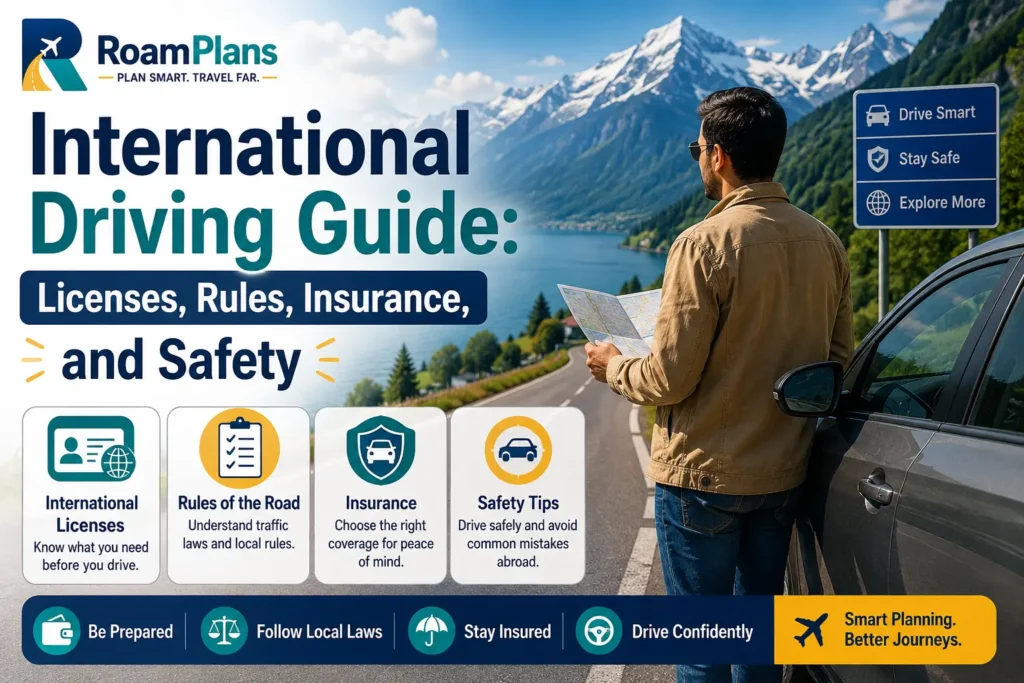
Check one-way fees before using this plan. Also confirm license acceptance, approved drivers, geographic limits and insurance territory before collecting a vehicle; the international driving guide ↗ explains which requirements to check.
The best trip may include both options rather than forcing one choice across every destination.
Step-by-Step Decision Process
Use this process before choosing between public transportation and a rental car.
Step 1: Map the Full Route
Write down:
- ✓Airport or station
- ✓Accommodation
- ✓Main attractions
- ✓Day-trip locations
- ✓Rural stops
- ✓Return airport or station
Check the exact starting and ending point for every stage.
A city may have several airports, stations, and rental offices. Do not compare options using city names alone.
Step 2: Check Public Transportation Coverage
Find out whether public transportation reaches:
- ✓Your accommodation
- ✓Main attractions
- ✓Day-trip locations
- ✓Airport
- ✓Train or bus station
- ✓Rural areas on your plan
Also check:
- ✓Service frequency
- ✓First service
- ✓Final service
- ✓Weekend schedule
- ✓Number of changes
- ✓Walking distance
Public transportation may look good on a map but still be difficult if services run only a few times per day.
Step 3: Check the Driving Route
For a rental car, check:
- ✓Total driving distance
- ✓Road conditions
- ✓Driving side
- ✓Toll roads
- ✓Parking
- ✓Restricted zones
- ✓Fuel stations
- ✓Weather
- ✓Rental return location
Do not judge the route using driving time alone. Add rental pickup, parking, fuel stops, and vehicle return.
Step 4: Calculate the Public Transportation Cost
Include:
- ✓Airport transfer
- ✓Local tickets
- ✓Day passes
- ✓Regional trains or buses
- ✓Taxis needed after late arrivals
- ✓Transport to remote attractions
- ✓Luggage storage where needed
Calculate the total for every traveler.
Step 5: Calculate the Rental Car Cost
Include:
- ✓Rental rate
- ✓Insurance
- ✓Refundable deposit or card hold: funds needed separately, not a trip expense unless charged
- ✓Fuel
- ✓Parking
- ✓Tolls
- ✓Child seats
- ✓Extra drivers
- ✓Airport fees
- ✓One-way fees
- ✓Cross-border charges
The deposit may be returned, but you still need enough available money or card credit.
Step 6: Compare Door-to-Door Time
For public transportation, add:
- ✓Walking
- ✓Waiting
- ✓Transfers
- ✓Main journey
- ✓Final walk or taxi
For a rental car, add:
- ✓Rental desk time
- ✓Inspection
- ✓Driving
- ✓Traffic
- ✓Parking
- ✓Walking from the parking area
- ✓Vehicle return
Compare both options from the same starting point to the same final destination.
Step 7: Check Luggage and Group Needs
Ask:
- ✓Can everyone manage the bags?
- ✓Does the vehicle have enough storage?
- ✓Are child seats needed?
- ✓Does anyone need step-free access?
- ✓Are long walks realistic?
- ✓Will the group stay together?
Remove any option that does not meet the group’s basic needs.
Step 8: Check Comfort and Stress
Consider:
- ✓Number of changes
- ✓Crowding
- ✓Driving confidence
- ✓Road conditions
- ✓Parking difficulty
- ✓Travel fatigue
- ✓Arrival time
- ✓Weather
A cheaper option may not be worth choosing if it creates too much stress.
Step 9: Check Flexibility
Public transportation may work better when the schedule is fixed and services are frequent.
A rental car may work better when:
- ✓You want to stop along the route
- ✓Plans may change
- ✓Attractions are spread apart
- ✓You are visiting rural areas
- ✓You want to leave at different times
Choose the amount of flexibility you will actually use.
Step 10: Check Backup Options
For public transportation, check:
- ✓Later service
- ✓Alternative route
- ✓Taxi availability
- ✓Another station
- ✓Nearby hotel
For a rental car, check:
- ✓Roadside assistance
- ✓Alternative roads
- ✓Fuel availability
- ✓Weather closures
- ✓Emergency parking
A route with no realistic backup carries more risk.
Step 11: Choose One Option for Each Trip Stage
You do not need to use the same option for the full trip.
A trip may use:
- ✓Public transportation inside the city
- ✓Rental car for rural days
- ✓Train between cities
- ✓Taxi for an early airport departure
Choose the option that fits each stage best.
Public Transportation Vs Rental Car Decision Table
Use this table to compare both options.
Rate each factor from 1 to 5.
| Factor | Public transportation | Rental car |
|---|---|---|
| Final cost | ||
| Door-to-door time | ||
| Luggage | ||
| Group size | ||
| Comfort | ||
| Flexibility | ||
| Accessibility | ||
| Parking | ||
| Rural access | ||
| City convenience | ||
| Safety | ||
| Backup options | ||
| Total score |
Use:
- ✓1 for poor
- ✓2 for below average
- ✓3 for acceptable
- ✓4 for good
- ✓5 for very good
The highest score can help with the decision, but it should not override safety, accessibility, or legal requirements.
When Public Transportation Is the Better Choice
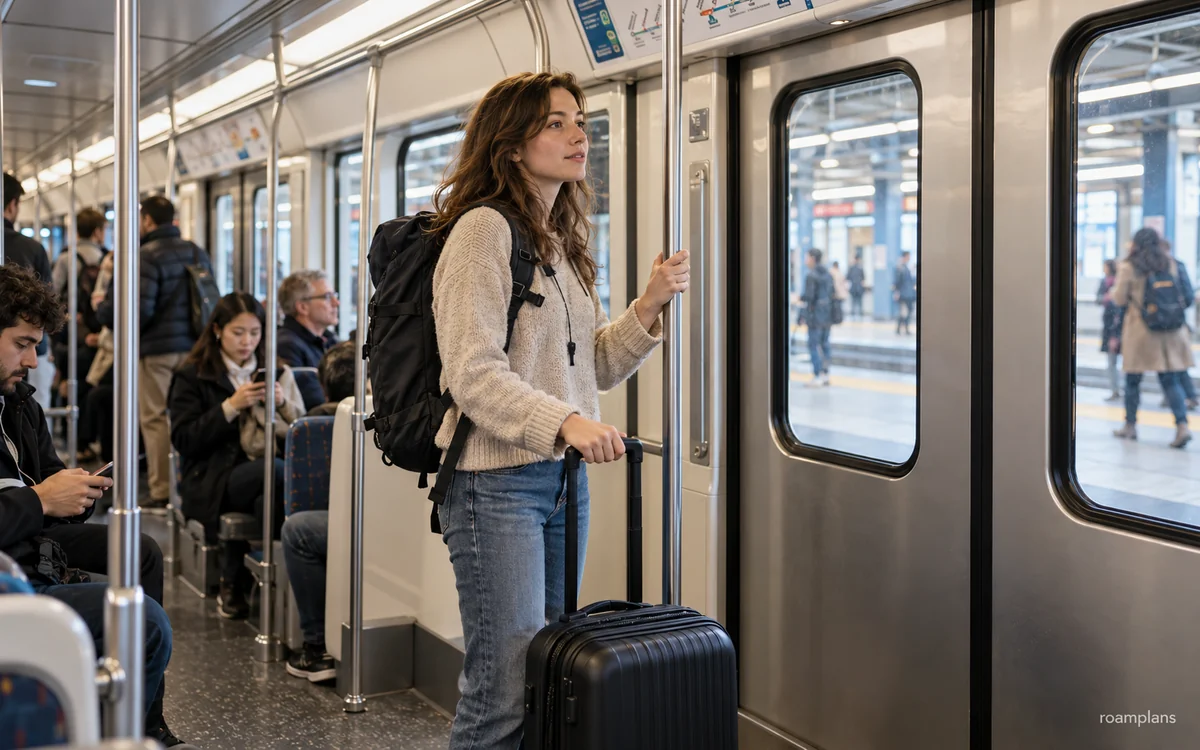
Public transportation is often the better option when:
- ✓You are staying in a large city
- ✓The hotel is near a station
- ✓Main attractions are well connected
- ✓Parking is expensive
- ✓Traffic is heavy
- ✓You are traveling alone
- ✓You have light luggage
- ✓Services run frequently
- ✓You do not plan rural day trips
- ✓You are not comfortable driving locally
It can also work well when a train or airport bus provides a direct route.
When a Rental Car Is the Better Choice
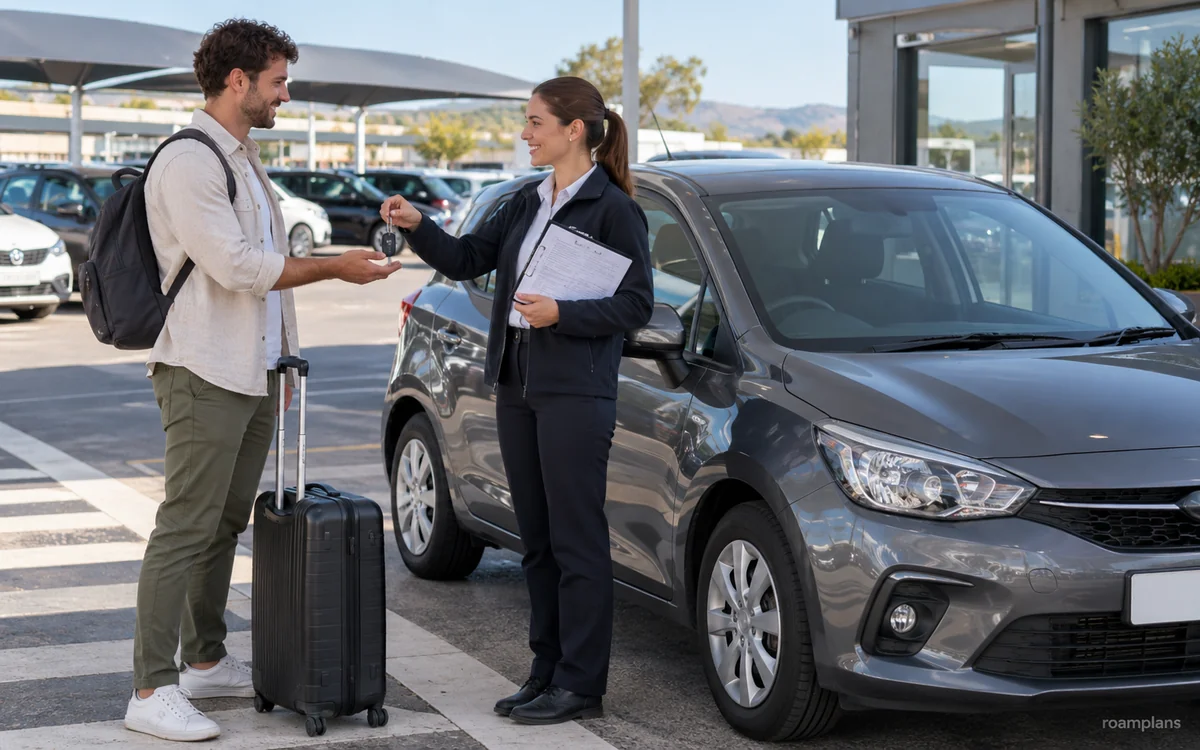
A rental car is often the better option when:
- ✓You are visiting rural areas
- ✓Attractions are far apart
- ✓You are planning a road trip
- ✓Public transportation is limited
- ✓You are traveling with a family or group
- ✓You have several large bags
- ✓Your accommodation includes parking
- ✓You want flexible departure times
- ✓You plan several stops in one day
- ✓Taxi costs would be high
A rental car may also save time when public transportation requires several changes.
When Neither Option Works Well Alone
Some routes may need another option.
Examples include:
- ✓Private airport transfer after midnight
- ✓Hotel shuttle to a remote resort
- ✓Taxi from a rural station
- ✓Tour transport for a national park
- ✓Ferry to an island
- ✓Domestic flight for a very long route
The choice is not always limited to public transportation or a rental car.
Common Mistakes to Avoid
1. Comparing a Single Ticket with a Full Rental Price
Public transportation is usually priced per person. A rental car is priced per vehicle.
Compare the total for the whole group.
2. Looking Only at the Daily Rental Rate
The daily rate may exclude:
- ✓Insurance
- ✓Fuel
- ✓parking
- ✓tolls
- ✓fees
- ✓child seats
Use the final cost.
3. Buying a Transport Pass Without Checking the Route
A pass may not cover:
- ✓Airport zones
- ✓Regional trains
- ✓private buses
- ✓night services
- ✓remote attractions
Compare the pass with the trips you will actually take.
4. Ignoring the Hotel Location
A cheap hotel outside the transit network may require taxis.
A central hotel with no parking may make a rental car expensive.
Check accommodation and transportation together.
5. Assuming a Car Always Saves Time
Traffic, parking, rental pickup, and vehicle return can remove the time saved.
6. Assuming Public Transportation Is Always Cheaper
Several fares, airport transfers, and taxis may cost more than one shared car.
7. Forgetting the Final Service
A delayed arrival may leave you without a train or bus.
Check late-night options before booking.
8. Ignoring Driving Confidence
Do not rent a car if local road conditions, driving side, weather, or traffic make you uncomfortable.
9. Choosing a Vehicle That Is Too Small
Count passengers, suitcases, child seats, and special equipment.
10. Ignoring Parking Rules
Parking fines, restricted zones, and hotel charges can raise the final cost.
11. Planning Long Drives After a Flight
Tired driving can be unsafe.
Use public transport, a taxi, or an airport hotel when needed.
12. Using One Option for the Full Trip
A mixed plan may cost less and work better.
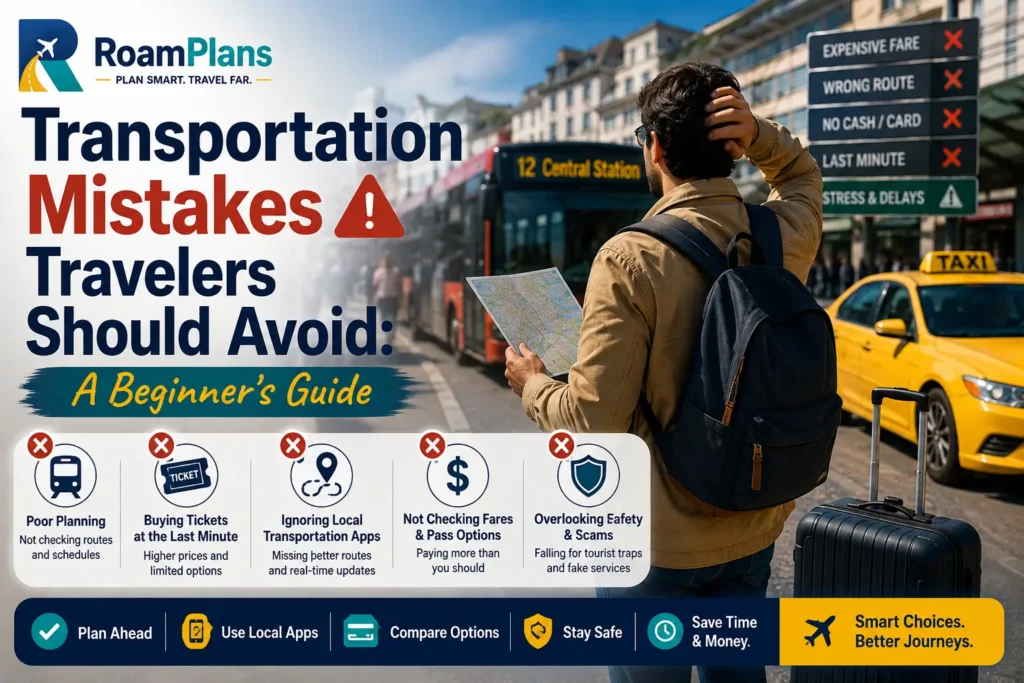
The guide How to Choose the Best Transportation for Your Trip ↗ explains the wider decision process for trains, buses, taxis, flights, and other options.
Public Transportation Checklist
Before Booking Accommodation
- ✓Nearest station checked
- ✓Walking distance checked
- ✓Airport route checked
- ✓Main attractions connected
- ✓Final service checked
- ✓Weekend schedule checked
Before Travel
- ✓Official app downloaded
- ✓Ticket system checked
- ✓Payment method confirmed
- ✓Airport fare zone checked
- ✓Route screenshots saved
- ✓Backup taxi checked
During the Trip
- ✓Correct ticket used
- ✓Ticket validated where required
- ✓Final service monitored
- ✓Bags kept secure
- ✓Service updates checked
- ✓Offline hotel address saved
Rental Car Checklist
Before Booking
- ✓Licence accepted
- ✓International Driving Permit checked
- ✓Driver age rules checked
- ✓Card requirements checked
- ✓Deposit checked
- ✓Insurance reviewed
- ✓Vehicle size checked
- ✓Parking checked
At Pickup
- ✓Damage photographed
- ✓Fuel level recorded
- ✓Mileage recorded
- ✓Toll process confirmed
- ✓Emergency number saved
- ✓Return location confirmed
- ✓Rental agreement saved
During the Trip
- ✓Fuel level monitored
- ✓Parking signs checked
- ✓Toll rules followed
- ✓Restricted zones avoided
- ✓Valuables kept out of sight
- ✓Driver breaks planned
At Return
- ✓Fuel replaced if required
- ✓Final photos taken
- ✓Mileage recorded
- ✓Belongings removed
- ✓Return receipt collected
- ✓Documents kept until charges settle
Final Decision Checklist
Choose public transportation when most of these are true:
- ✓The destination has a good network
- ✓The hotel is near transit
- ✓Parking is expensive
- ✓You are staying mainly in one city
- ✓You have light luggage
- ✓You are traveling alone or as a couple
- ✓Services run at the required times
Choose a rental car when most of these are true:
- ✓You are visiting rural areas
- ✓The route has several stops
- ✓Public transportation is limited
- ✓You are traveling with a group
- ✓You have heavy luggage
- ✓Parking is available
- ✓You are comfortable driving
- ✓Flexibility matters
Choose both when:
- ✓The city has good transit
- ✓Rural trips are planned later
- ✓You only need a car for selected days
- ✓Returning the car before the final city stay saves money
Frequently Asked Questions
Public transportation is often cheaper for solo travelers and city trips. A rental car may cost less for a family or group when the vehicle cost is shared. Compare all fares, transfers, fuel, parking, tolls, and insurance.
A rental car can be easier for families because it provides luggage space, direct travel, and flexible stops. Public transportation may still work better in cities with good service and expensive parking.
A car may not be useful if the city has frequent public transportation, heavy traffic, restricted zones, and costly parking. Renting one only for trips outside the city may work better.
It can be difficult when the route includes stairs, long walks, crowded vehicles, or several changes. A direct train or airport bus may still be easy with luggage.
Yes, but ticket systems, payment methods, and validation rules differ. Check the official local transport website before arrival.
It may save time on rural or multi-stop routes. In cities, traffic, parking, rental pickup, and return can make it slower than public transportation.
For many trips, yes. Public transportation may work best in cities, while a rental car may suit rural areas or selected day trips.
Check licence acceptance, International Driving Permit rules, insurance, deposit, payment card, driving side, tolls, parking, restricted zones, and cross-border conditions.
Final Thoughts
Public transportation and rental cars serve different travel needs.
Public transportation often works better in large cities, especially for solo travelers, short stays, and hotels near stations. It can reduce costs, parking problems, and driving stress.
A rental car often works better for rural areas, road trips, families, groups, and routes with several stops. It gives more control but adds insurance, fuel, parking, tolls, and driving duties.
Compare both options using the same route, dates, group size, and luggage. Calculate the full cost and door-to-door time before deciding.
Many trips work best with a mixed plan. Use public transportation where the network is strong, then rent a car only for the parts where it adds real value.

Adnan Ahmed
RoamPlans AuthorTravel Planning Researcher & Editor
Adnan Ahmed is the travel planning researcher and editor behind RoamPlans. He creates clear, practical guides to help travelers compare destinations, plan routes, estimate costs, and avoid common trip-planning mistakes. His work combines careful source research, official travel information, and regular content reviews to keep each guide useful and current.
- ✓Destination Research
- ✓Budget Planning
- ✓Route Planning
- ✓Beginner Travel Guides
Turn This Guide into a Practical Trip Plan
Use the recommended Transportation Cost Calculator or explore more free RoamPlans tools.