Complete Bus Travel Guide for Travelers
Bus travel can be one of the most practical ↗ ways to move between cities, airports, towns, and rural destinations. It often costs less than train travel and may reach places that do not have a rail connection.
However, taking a bus in an unfamiliar destination can feel confusing. Pickup points may be outside a main station, luggage rules may differ by operator, and some routes include several stops or long waiting periods.
When I plan a bus trip, I first check the exact pickup point, final stop, luggage allowance, total travel time, and transport from the arrival stop to my accommodation. This helps me avoid booking a cheap fare that creates a difficult final transfer.
This complete bus travel guide for travelers explains how to find routes, compare services, book tickets, locate the correct stop, manage luggage, and prepare for the journey.
Bus routes, fares, luggage limits, boarding rules, and refund conditions differ by country and operator. Confirm final details through the official bus company, station, airport, or local transport authority before travel.
Key Takeaways
- ✓Confirm the exact pickup and arrival points before booking.
- ✓Compare total travel time, not only the time shown on the ticket.
- ✓Check luggage size, weight, and storage rules.
- ✓Arrive early because some roadside stops are difficult to find.
- ✓Save your ticket, route, and pickup details offline.
- ✓Keep one backup option for delays, cancellations, or missed departures.
Quick Answer: How Does Bus Travel Work?

Start by searching for a route between your exact departure point and destination. Check whether the service leaves from a bus station, airport terminal, street stop, hotel, or roadside pickup area.
Compare direct and connecting routes, total travel time, luggage rules, seat options, arrival location, and cancellation terms. Book through the official operator where possible and save the ticket offline.
Before travel, confirm the pickup point on a map and arrive early. Match the operator name, route number, departure time, destination, and vehicle before boarding.
During the journey, keep valuables and travel documents with you. Watch your route and prepare for the arrival stop before the bus reaches it.
| Travel need | Common bus choice |
|---|---|
| Travel between cities | Long-distance coach |
| Airport to city center | Airport bus or coach |
| Travel within a city | Local public bus |
| Small town without rail service | Regional bus |
| Travel during the night | Overnight coach |
| Tourist attraction or resort | Shuttle bus |
| Cross-border route | International coach |
| Flexible sightseeing route | Hop-on, hop-off bus |
The Complete Transportation Guide for Travelers ↗ explains how buses fit with trains, rental cars, taxis, and other transport options.
Is Bus Travel Right for Your Trip?
Bus travel can work well for budget trips, airport transfers, and routes without train service. It may also provide a direct connection between places that would require several rail changes.
The best option depends on the route, cost, departure point, luggage, comfort, and arrival time.
When Bus Travel Works Well
A bus or coach may suit your trip when:
- ✓No direct train is available
- ✓The fare is lower than other options
- ✓The pickup point is near your hotel
- ✓The service reaches a small town
- ✓You need a direct airport connection
- ✓The route does not require changes
- ✓You want to avoid driving
- ✓An overnight journey saves daytime hours
- ✓Parking would be difficult or expensive
Bus travel can be useful for travelers visiting smaller cities, villages, airports, and regional attractions.
When Bus Travel May Not Work Well
A bus may be less useful when:
- ✓Road traffic is heavy
- ✓The route has many stops
- ✓You need frequent toilet access
- ✓You become uncomfortable on long road trips
- ✓The arrival stop is far from your hotel
- ✓The pickup point is unclear
- ✓You have oversized luggage
- ✓The arrival time is very late
- ✓A train provides a faster city-center route
- ✓A rental car is needed after arrival
Compare the bus with the same door-to-door journey by rail, including station access and luggage. The train travel guide ↗ explains the rail booking checks.
Do not choose a bus based only on the ticket price.
Add:
- ✓Travel to the pickup point
- ✓Waiting time
- ✓Traffic risk
- ✓Rest stops
- ✓Transport after arrival
- ✓Possible taxi costs
The guide How to Choose the Best Transportation for Your Trip ↗ provides a wider comparison method.
Main Types of Bus Services
Bus names and service styles differ by destination. Knowing the main types can help you choose the correct ticket and pickup point.
Local City Buses
Local buses operate within cities and nearby districts.
They often:
- ✓Stop frequently
- ✓Use public transport fares
- ✓Accept transport cards
- ✓Have no reserved seats
- ✓Carry standing passengers
- ✓Use marked street stops
Local buses may be useful for daily travel, but they are not always easy with large suitcases. Our guide to using public transportation abroad ↗ explains city fares, validation and stop requests.
Regional Buses
Regional buses connect:
- ✓Cities with nearby towns
- ✓Villages
- ✓Rural areas
- ✓Tourist sites
- ✓Suburban districts
They may operate less often than city buses.
Check the final return service before planning a day trip.
Long-Distance Coaches
Long-distance coaches connect cities over longer routes.
They may offer:
- ✓Reserved seats
- ✓Luggage storage under the bus
- ✓Toilets
- ✓Charging points
- ✓Wi-Fi
- ✓Air conditioning
- ✓Rest stops
Facilities differ by operator and vehicle.
Airport Buses
Airport buses connect terminals with:
- ✓City centers
- ✓Hotels
- ✓Train stations
- ✓Bus terminals
- ✓Nearby towns
They may use fixed fares and dedicated luggage areas.
Check whether the service stops at your terminal.
Shuttle Buses
Shuttles may operate between:
- ✓Airports and hotels
- ✓Hotels and attractions
- ✓Car rental areas
- ✓Train stations and resorts
- ✓Parking areas and terminals
Some shuttles are free, while others require advance booking.
Overnight Buses
Overnight buses travel during sleeping hours.
They may offer:
- ✓Reclining seats
- ✓Curtains
- ✓Leg supports
- ✓Blankets
- ✓Toilets
- ✓Rest stops
Comfort varies greatly. Check vehicle photos and seat details before booking.
International Coaches
International coaches cross borders.
Before booking, check:
- ✓Passport requirements
- ✓Visa rules
- ✓Border waiting time
- ✓Luggage rules
- ✓Customs checks
- ✓Arrival location
- ✓Local time differences
Border checks can increase the total travel time.
Tourist and Hop-On, Hop-Off Buses
Tourist buses follow routes between major attractions.
They may include:
- ✓Audio guides
- ✓Fixed sightseeing loops
- ✓Day passes
- ✓Several pickup points
- ✓Open-top seating
These buses are useful for sightseeing but are usually not the best option for airport or intercity travel.
Private and Hotel Buses
Hotels, resorts, tours, and event companies may operate private buses.
Check:
- ✓Reservation requirements
- ✓Pickup point
- ✓Departure time
- ✓Luggage space
- ✓Return schedule
- ✓Added fees
Do not assume a hotel shuttle is available all day.
How to Find the Right Bus Route?

Start with the exact places you need to travel between.
Bus search results may show several stops in one city. Some may be far from your hotel or located outside the center.
Identify the Exact Starting Point
Your bus may leave from:
- ✓Central bus station
- ✓Airport terminal
- ✓Train station
- ✓Street stop
- ✓Hotel
- ✓Shopping center
- ✓Petrol station
- ✓Roadside pickup area
Check:
- ✓Full address
- ✓Map location
- ✓Stop number
- ✓Terminal
- ✓Walking distance
- ✓Local transport access
- ✓Safety at the departure time
A station name alone may not provide enough information.
Identify the Exact Arrival Point
The bus may arrive at:
- ✓Central bus terminal
- ✓Street stop
- ✓Airport
- ✓Park-and-ride area
- ✓Shopping center
- ✓Roadside station
- ✓Small town stop
Check how you will reach your accommodation after arrival.
Look for:
- ✓Taxi availability
- ✓Local bus service
- ✓Ride apps
- ✓Walking route
- ✓Final local service
- ✓Hotel shuttle
- ✓Safe waiting areas
Use Official Operator Sources
Use the official bus company website or app to confirm:
- ✓Timetable
- ✓Stop address
- ✓Ticket rules
- ✓Luggage allowance
- ✓Seat reservation
- ✓Service updates
- ✓Refund conditions
- ✓Contact details
Third-party platforms can help compare operators, but final details should be checked with the bus company.
Search the Full Route
A useful route search should show:
- ✓Departure point
- ✓Arrival point
- ✓Departure time
- ✓Arrival time
- ✓Total journey time
- ✓Number of stops
- ✓Number of changes
- ✓Operator
- ✓Route number
- ✓Ticket conditions
Check whether the listed arrival time is on the same day or the next day.
Compare More Than One Service
Another departure may offer:
- ✓Direct travel
- ✓Lower price
- ✓Better arrival time
- ✓Fewer stops
- ✓Clearer pickup point
- ✓More luggage
- ✓Better cancellation terms
Do not choose the first result without comparing the full route.
Direct Buses vs Connecting Routes
A direct bus reaches the destination without requiring passengers to change vehicles.
A connecting route uses two or more buses.
Benefits of a Direct Bus
A direct service may offer:
- ✓Easier boarding
- ✓Lower missed-connection risk
- ✓Less luggage handling
- ✓Fewer pickup points
- ✓Easier travel for beginners
- ✓More comfort for families
A direct bus may take longer if it makes several stops, but it can still be easier than changing vehicles.
Benefits of a Connecting Route
A connecting route may provide:
- ✓Lower fare
- ✓More departure choices
- ✓Access to small destinations
- ✓Better arrival time
- ✓Routes not served directly
Connections can work well when enough time is available.
What to Check Before Booking a Connection?
Check:
- ✓Connection time
- ✓Same station or different station
- ✓Distance between stops
- ✓Luggage collection
- ✓Ticket conditions
- ✓Waiting area
- ✓Final service of the day
- ✓What happens after a delay
A connection between two buses at the same terminal is easier than a transfer across a city.
One Booking vs Separate Tickets
Check whether the operator sells the journey as a protected connecting service. One payment or booking reference does not, by itself, explain what help is included. Read the missed-connection terms before paying. For example, FlixBus’s carriage conditions ↗ distinguish scheduled transfers from individually combined journeys; apply the terms for your actual route and carrier.
Separate tickets may cost less but bring more risk.
If the first bus is late, the second operator may not replace the missed ticket.
Before booking separate tickets, check:
- ✓Minimum connection time
- ✓Change fees
- ✓Refund rules
- ✓Later services
- ✓Taxi alternatives
- ✓Nearby accommodation
How Much Connection Time Do You Need?
There is no fixed amount that works for every route.
Allow more time when:
- ✓Traffic delays are common
- ✓You must collect luggage
- ✓The terminal is large
- ✓You must change stations
- ✓A border check is involved
- ✓Tickets are separate
- ✓It is the final service of the day
A longer wait may be safer than a tight connection.
How to Choose the Correct Bus Stop or Station?
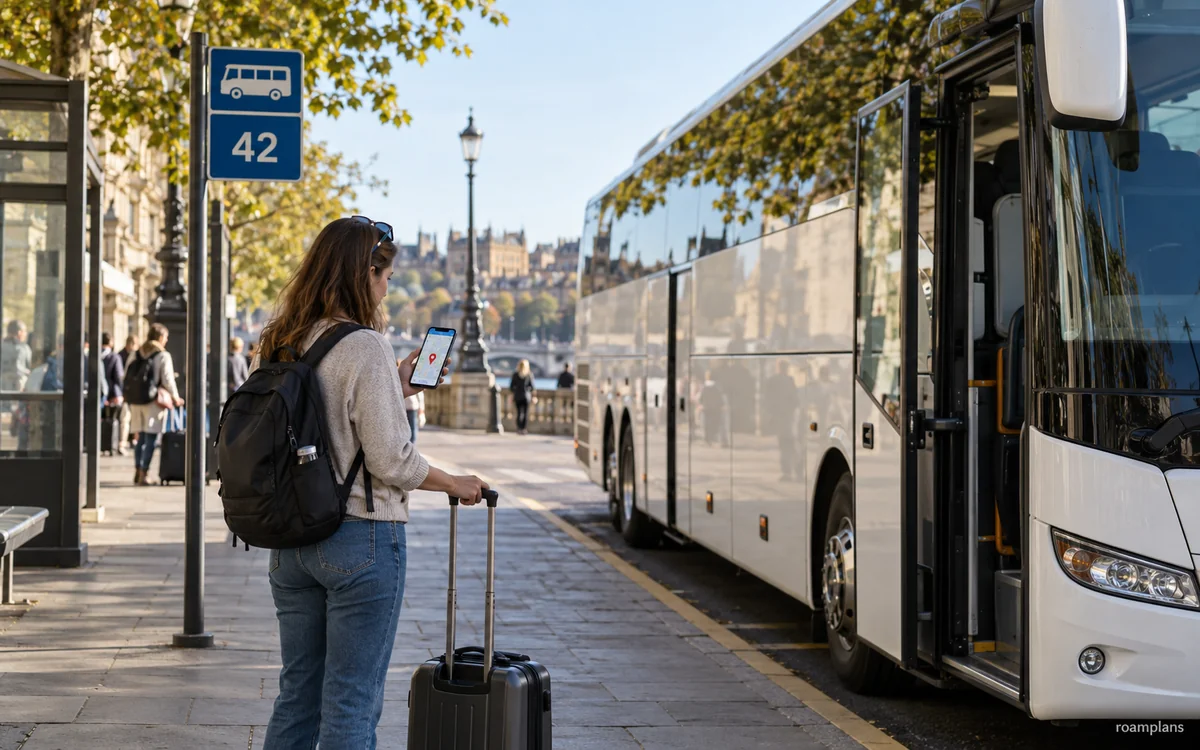
Bus pickup points are often less clear than train platforms.
Always confirm the full address and map location before travel.
Central Bus Stations
A central station may have:
- ✓Several platforms
- ✓Different operators
- ✓Ticket offices
- ✓Waiting areas
- ✓Toilets
- ✓Food shops
- ✓Luggage storage
Check the platform on the day of travel because it may change.
Airport Bus Stops
Airport buses may leave from:
- ✓Arrivals level
- ✓Departures level
- ✓Ground transport area
- ✓Another terminal
- ✓A remote bus station
- ✓A parking area reached by shuttle
Confirm the terminal and door number.
Street Stops
A street stop may have:
- ✓A small sign
- ✓Route number
- ✓Operator logo
- ✓No shelter
- ✓No staff
Arrive early because the bus may stop only briefly.
Roadside Pickup Areas
Long-distance coaches sometimes use petrol stations, service areas, or roadside stops.
Check:
- ✓Exact map pin
- ✓Side of the road
- ✓Nearby landmark
- ✓Operator sign
- ✓Safe waiting area
- ✓Toilet access
Do not rely only on the town name.
Stops With Similar Names
A city may have several stops using similar names.
Common differences include:
- ✓Central
- ✓North
- ✓South
- ✓Airport
- ✓Main station
- ✓University
- ✓Park and ride
Confirm the correct stop before booking.
Station Changes
Some connecting routes require travel between two bus stations.
Check:
- ✓Distance
- ✓Local transport
- ✓Taxi time
- ✓Traffic
- ✓Luggage
- ✓Transfer cost
Add the station transfer to the total travel time and cost.
Bus Ticket Types Explained
Bus ticket names differ by operator, but the main conditions are often similar.
Fixed-Service Tickets
A fixed ticket works on one selected bus.
It normally includes:
- ✓Date
- ✓Departure time
- ✓Route
- ✓Operator
- ✓Seat where reserved
These tickets may cost less but offer limited changes.
Flexible Tickets
A flexible ticket may allow:
- ✓A different departure
- ✓Same-day travel
- ✓Date changes
- ✓Route changes
The exact rules differ.
Flexible tickets often cost more.
Refundable Tickets
A refundable ticket may allow full or partial repayment.
Check:
- ✓Cancellation deadline
- ✓Refund fee
- ✓Processing time
- ✓Missed-bus rule
- ✓Original payment method
Refundable does not always mean a full refund.
Non-Refundable Tickets
These fares often cost less.
You may lose the ticket value after:
- ✓Cancellation
- ✓Late arrival
- ✓Wrong date
- ✓Wrong stop
- ✓Missed departure
Check every detail before paying.
Single and Return Tickets
A single ticket covers one direction.
A return ticket includes both directions.
Check whether:
- ✓The return time is fixed
- ✓The return date is flexible
- ✓Two single tickets cost less
- ✓The same operator must be used
Open Tickets
An open ticket may allow travel without choosing one exact departure.
It may still have restrictions based on:
- ✓Date
- ✓Route
- ✓Operator
- ✓Seat availability
- ✓Peak period
Mobile and Printed Tickets
Bus tickets may be issued as:
- ✓QR code
- ✓Barcode
- ✓PDF
- ✓App ticket
- ✓Paper ticket
- ✓Booking reference
Check whether the ticket must be:
- ✓Printed
- ✓Activated
- ✓Collected
- ✓Shown with identification
Download the actual ticket in the format the operator accepts and test that it opens without data. Check whether activation, printing or ID is required. A payment receipt is not necessarily a boarding ticket.
How to Book Bus Tickets?
Book through the official operator or an authorized seller. Check who handles changes, refunds and service notifications before paying.
This can make changes, refunds, and service updates easier.
Information Needed for Booking
You may need:
- ✓Passenger name
- ✓Travel date
- ✓Departure stop
- ✓Arrival stop
- ✓Seat choice
- ✓Luggage details
- ✓Passport information
- ✓Contact number
- ✓Email address
Enter all details carefully.
Check the Final Booking Screen
Before payment, confirm:
- ✓Correct date
- ✓Local departure time
- ✓Correct pickup point
- ✓Correct arrival point
- ✓Number of passengers
- ✓Operator
- ✓Route number
- ✓Luggage allowance
- ✓Seat
- ✓Refund terms
- ✓Total price
- ✓Payment currency
Save the Booking
After payment:
- ✓Download the ticket
- ✓Save it offline
- ✓Screenshot the pickup address
- ✓Save the booking reference
- ✓Add the trip to your calendar
- ✓Save the operator’s contact details
- ✓Save the arrival address
Do not depend only on email access.
Check Identification Rules
Some tickets may be linked to:
- ✓Passenger name
- ✓Passport
- ✓National identity card
- ✓Student card
- ✓Discount card
Carry the required document.
Avoid Booking the Wrong Date
Pay extra attention to:
- ✓Overnight buses
- ✓Departures after midnight
- ✓Different date formats
- ✓Return dates
- ✓Time zones
A bus at 12:20 a.m. (00:20) leaves just after midnight at the start of its printed departure date. For example, a ticket for 00:20 on 15 June means reaching the stop late on 14 June, not the evening of 15 June. Check the local time at both ends and any date change.
How Early Should You Book Bus Tickets?
The best booking time depends on the route, season, operator, and number of daily services.
Some local and regional buses allow same-day payment. Long-distance, overnight, airport, and international coaches may need earlier booking.
Consider Booking Early When
Book earlier when:
- ✓The route has limited daily departures
- ✓You are traveling during a holiday
- ✓You want seats together
- ✓You need extra luggage
- ✓You are traveling with a group
- ✓The route is overnight
- ✓The service crosses a border
- ✓A major event is taking place
- ✓You need an accessible seat
- ✓You need space for a bicycle or large item
Booking early can give you better departure times and seat choices.
Same-Day Booking May Work When
Same-day booking may be possible when:
- ✓Local buses run frequently
- ✓Tickets use fixed fares
- ✓Seats are not reserved
- ✓The route has many departures
- ✓You can pay on board
- ✓A transport card is accepted
Do not assume every bus accepts cash or cards. Check the payment method before reaching the stop.
Check When Tickets Are Released
Some bus tickets become available only a set number of weeks or months before travel.
A route may be missing because:
- ✓The timetable has not been released
- ✓Seasonal service has not started
- ✓The operator is updating schedules
- ✓Roadwork may affect the route
- ✓Holiday times are not confirmed
Check again through the official operator instead of assuming the service is sold out.
Avoid Booking Before the Route Is Clear
Before buying a fixed ticket, confirm:
- ✓Accommodation dates
- ✓Airport arrival time
- ✓Pickup point
- ✓Arrival stop
- ✓Final local transport
- ✓Hotel check-in time
- ✓Connection time
A cheap ticket can become useless if the earlier part of your trip changes.
How to Read a Bus Schedule?
A bus schedule shows more than the departure time.
Read the full route before booking.
Departure Time
Check:
- ✓Local time
- ✓Morning or evening
- ✓Date
- ✓Day of the week
- ✓Time zone
- ✓Overnight departure
A service leaving at 00:30 departs shortly after midnight on the new date.
Arrival Time
Confirm whether the bus arrives:
- ✓On the same day
- ✓After midnight
- ✓The next morning
- ✓In another time zone
Late arrival may affect:
- ✓Hotel check-in
- ✓Local bus service
- ✓Taxi availability
- ✓Safe walking routes
Route Number
The route number can help identify the correct bus.
Several buses may leave for the same city from the same terminal.
Match:
- ✓Route number
- ✓Operator
- ✓Departure time
- ✓Final destination
- ✓Platform or bay
Final Destination
The bus display may show the final destination rather than your stop.
Know both:
- ✓Your stop
- ✓The final destination shown on the bus
This helps you identify the correct vehicle.
Number of Stops
A direct bus may still stop many times.
Check:
- ✓Total number of stops
- ✓Main rest stops
- ✓Border stops
- ✓Passenger pickup stops
- ✓Estimated delay risk
A route with fewer changes may still take longer because of frequent stops.
Connection Details
For a connecting route, check:
- ✓Arrival time
- ✓Next departure time
- ✓Connection stop
- ✓Platform or bay
- ✓Whether luggage must be collected
- ✓Whether the second ticket is separate
Do not assume the second bus waits after a delay.
Service Notes
Look for notes about:
- ✓Replacement buses
- ✓Road closures
- ✓Border checks
- ✓Luggage limits
- ✓Bicycle restrictions
- ✓Seasonal operation
- ✓Holiday schedules
- ✓Reservation requirements
Small notes can change how the route works.
Preparing for the Bus Station or Stop
Good preparation helps you avoid missed departures.
Bus stops can be harder to locate than train platforms, especially when the pickup point is on a street or beside a road.
Confirm the Full Address
Save:
- ✓Station name
- ✓Street address
- ✓Map pin
- ✓Stop number
- ✓Platform or bay
- ✓Nearby landmark
- ✓Operator name
Do not depend only on the town or city name. Save the street address, stop code and correct side of the road, then test your map before travel. See our navigation app guide ↗ for offline planning checks.
Check Which Side of the Road
Street stops may serve different directions.
Confirm:
- ✓Correct side of the road
- ✓Direction of travel
- ✓Route number
- ✓Stop sign
- ✓Nearby building
A stop across the road may serve the opposite route.
Plan How You Will Reach the Stop
Check:
- ✓Walking time
- ✓Local bus route
- ✓Taxi availability
- ✓Traffic
- ✓Parking
- ✓Early-morning service
- ✓Safe access
Add extra time when the stop is unfamiliar.
Check Station Facilities
A bus station may offer:
- ✓Waiting room
- ✓Toilets
- ✓Food shops
- ✓Ticket office
- ✓Information desk
- ✓Charging points
- ✓Luggage storage
- ✓Accessible entrance
A roadside stop may have none of these facilities.
Prepare food, water, and toilet needs before arriving.
Download Your Ticket
Save your ticket:
- ✓In the official app
- ✓As a PDF
- ✓As a screenshot where accepted
- ✓In your phone wallet
- ✓As a printed copy where required
Make sure the accepted ticket code is clear. Use a screenshot only if the operator accepts it; tickets with dynamic codes or activation may require the original app. Keep the ticket accessible separately from your email login.
Charge Your Phone
Before leaving:
- ✓Charge your phone
- ✓Carry a battery bank
- ✓Save the ticket offline
- ✓Save the route
- ✓Save the hotel address
- ✓Save the operator contact
Mobile data may be weak at roadside stops or rural stations.
Check Service Updates
Before leaving your accommodation, check:
- ✓Delay status
- ✓Stop change
- ✓Cancellation
- ✓Road closure
- ✓Weather
- ✓Replacement service
- ✓Operator messages
Use the official bus company’s website or app.
How Early Should You Arrive?
Arrival time depends on the type of bus and pickup point.
A long-distance coach may require earlier arrival than a local city bus.
Arrive Earlier When
Allow extra time when:
- ✓The station is large
- ✓The stop is unfamiliar
- ✓You need to collect a ticket
- ✓Luggage must be checked
- ✓Passport checks may apply
- ✓The route is international
- ✓You are traveling with children
- ✓You need assistance
- ✓It is the final service of the day
Less Time May Be Needed When
Less time may be enough when:
- ✓It is a frequent local service
- ✓You already have the ticket
- ✓Seats are not reserved
- ✓The stop is easy to find
- ✓You use the route often
Do not arrive at the final minute. Some coaches close luggage storage before departure.
Bus Luggage Rules
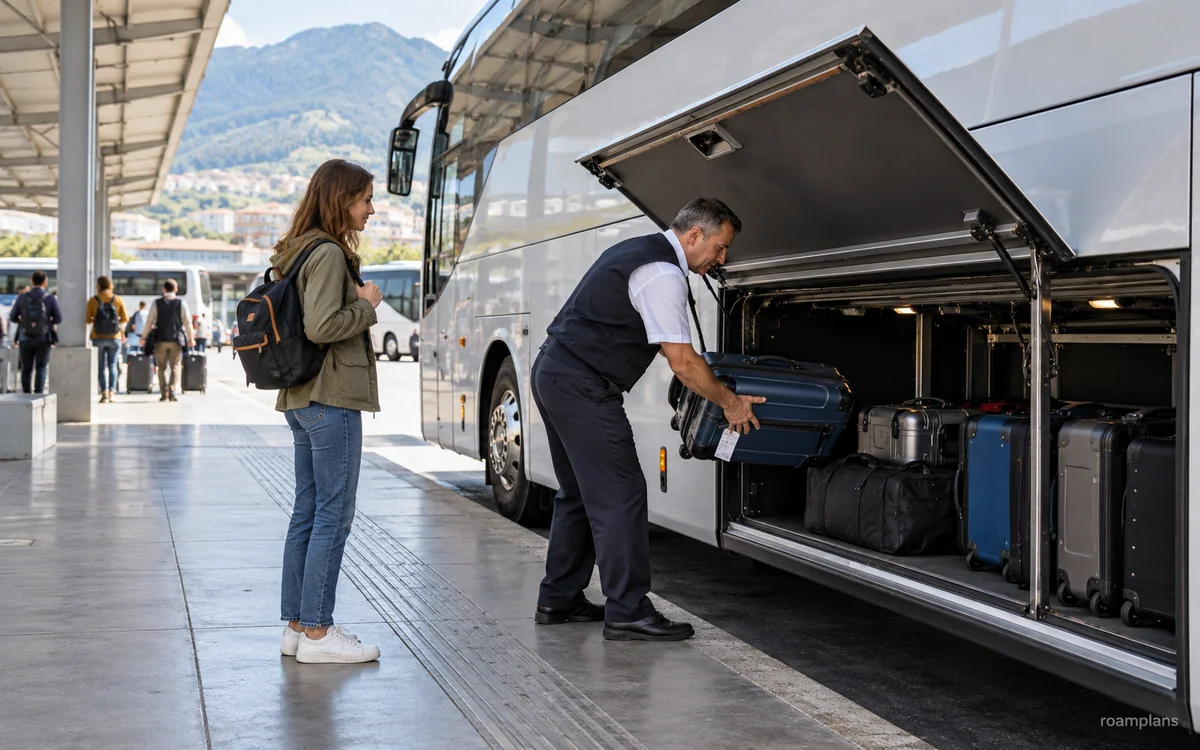
Bus luggage rules differ between local buses, regional services, airport buses, and long-distance coaches.
Check the operator’s rules before packing.
Carry-On Bags
A small bag may be allowed:
- ✓Under the seat
- ✓On your lap
- ✓In an overhead rack
Keep valuables inside this bag.
Checked Luggage
Large bags are often stored under a long-distance coach.
Check:
- ✓Number of bags included
- ✓Weight limit
- ✓Size limit
- ✓Extra bag fee
- ✓Oversized item fee
- ✓Tag requirements
Do not assume every ticket includes checked luggage.
Local Bus Luggage
Local buses may have little or no luggage storage.
Large suitcases can be difficult when:
- ✓The bus is crowded
- ✓The aisle is narrow
- ✓There are steps
- ✓No luggage rack is available
An airport bus, taxi, or transfer may be easier with several bags.
Keep Valuables With You
Keep these items inside your carry-on bag:
- ✓Passport
- ✓Wallet
- ✓Phone
- ✓Laptop
- ✓Camera
- ✓Medicines
- ✓Booking documents
- ✓Keys
Do not place them inside luggage stored under the bus.
Label Large Bags
Add:
- ✓Name
- ✓Phone number
- ✓Email address
Avoid showing your full home address.
Confirm Luggage at Stops
Long-distance coaches may unload bags at several stops.
Watch the luggage area when possible and confirm that your bag remains on board.
Special Items
These may need advance approval:
- ✓Bicycle
- ✓Wheelchair
- ✓Pushchair
- ✓Surfboard
- ✓Skis
- ✓Musical instrument
- ✓Sports equipment
- ✓Large box
Some items may require an extra ticket or special storage.
Boarding the Bus
Boarding is easier when you already know the operator, route, stop, and seat.
Confirm the Bus Before Boarding
Match:
- ✓Operator name
- ✓Route number
- ✓Departure time
- ✓Final destination
- ✓Vehicle number
- ✓Licence plate where provided
Do not board only because the bus is parked at your platform.
Let Passengers Leave First
Stand away from the door and allow passengers to exit.
This gives staff room to unload luggage and prepare the bus.
Show the Required Documents
You may need:
- ✓Ticket
- ✓QR code
- ✓Booking reference
- ✓Passport
- ✓National identity card
- ✓Student card
- ✓Discount card
Keep them ready before reaching the driver.
Load Large Luggage
Follow the driver’s instructions.
Your bag may need to be placed in a section based on:
- ✓Destination
- ✓Stop order
- ✓Luggage type
- ✓Route side
This helps staff unload it at the correct stop.
Keep the Luggage Receipt
Some operators give passengers a luggage tag or receipt.
Keep it until you collect the bag.
Find Your Seat
Check whether seating is:
- ✓Reserved
- ✓Assigned during booking
- ✓Assigned by the driver
- ✓Open seating
Sit in the correct seat and keep the aisle clear.
Bus Seat Selection
Seat choice can affect comfort during a long trip.
Window Seat
A window seat may offer:
- ✓Better views
- ✓A place to rest your head
- ✓Less movement from other passengers
It can be harder to leave for toilet stops.
Aisle Seat
An aisle seat may offer:
- ✓Easier movement
- ✓Faster exit
- ✓Better access to the toilet
- ✓More freedom during rest stops
You may need to move when the window passenger leaves.
Front Seats
Front seats may provide:
- ✓Easier boarding
- ✓Less walking
- ✓Better forward view
- ✓Quicker exit
They may also have more road noise or bright lights.
Rear Seats
Rear seats may offer more privacy on some vehicles.
They may also have:
- ✓More engine noise
- ✓More road movement
- ✓Less stable temperature
- ✓Stronger vibration
Travelers who feel travel sickness may prefer a seat near the front.
Seats Near the Toilet
These seats provide easy access but may have:
- ✓More passenger movement
- ✓Noise
- ✓Odour
- ✓Doors opening often
Check the vehicle layout before selecting.
Seats Together
Families and groups should reserve seats together where possible.
Do not assume the operator will move other passengers after boarding.
Extra-Legroom Seats
Some coaches charge more for extra-legroom seats.
Check whether the added space is worth the price for the length of the trip.
Accessible Seats
Accessible spaces may be reserved for passengers with mobility needs.
Contact the operator early when a wheelchair space or boarding support is required.
Food, Water, and Toilets
Facilities differ widely between bus services.
Prepare as though food and toilets may be limited unless the operator confirms otherwise.
Food on the Bus
Some buses allow:
- ✓Small snacks
- ✓Bottled drinks
- ✓Cold food
Avoid:
- ✓Strong-smelling food
- ✓Messy meals
- ✓Open cups
- ✓Food that may spill
Keep rubbish in a small bag until you find a bin.
Water
Carry enough water for the route, but consider toilet access.
For longer trips, check whether the bus stops at service areas.
Onboard Toilets
Some long-distance coaches have toilets.
Check whether:
- ✓The toilet is available for the full route
- ✓It may close during part of the trip
- ✓It is accessible
- ✓Water is available
- ✓Staff limit its use
Do not depend fully on an onboard toilet.
Rest Stops
Long routes may include planned stops for:
- ✓Toilets
- ✓Food
- ✓Driver breaks
- ✓Fuel
- ✓Border checks
Ask or check:
- ✓Stop length
- ✓Return time
- ✓Whether the bus may leave early
- ✓Where the bus is parked
Set an alarm and return before the stated time.
Do Not Wander Far From the Bus
At a rest stop:
- ✓Note the bus location
- ✓Check the operator name
- ✓Remember the licence plate
- ✓Keep your ticket
- ✓Carry valuables
Large service areas may have several similar buses.
Border Stops
International routes may stop for:
- ✓Passport control
- ✓Customs
- ✓Luggage checks
- ✓Visa checks
Follow staff instructions and keep documents ready.
Comfort During a Long Bus Journey
Long bus trips can be tiring.
Small preparations can make the journey easier.
Useful Items
Consider carrying:
- ✓Neck pillow
- ✓Light blanket
- ✓Earplugs
- ✓Eye mask
- ✓Water
- ✓Small snack
- ✓Hand sanitizer
- ✓Tissues
- ✓Phone charger
- ✓Battery bank
- ✓Warm layer
Bus temperatures may change during the route.
Travel Sickness
Travelers who feel sick on road journeys may prefer:
- ✓A front seat
- ✓A window view
- ✓Light food
- ✓Fresh air during stops
- ✓Fewer screen activities
Follow personal medical guidance for any travel-sickness medicine.
Move During Stops
Use planned stops to:
- ✓Stretch
- ✓Walk
- ✓Use the toilet
- ✓Refill water
- ✓Check the route
Do not block the aisle while the bus is moving.
Keep Noise Low
Use headphones and keep calls brief.
Overnight and long-distance passengers may be sleeping or resting.
Follow Your Route
Use:
- ✓Offline map
- ✓Operator app
- ✓Road signs
- ✓Onboard display
- ✓Driver announcements
Do not rely only on announcements because they may be hard to hear or may not use your language.
Prepare Before Your Stop
Before arrival:
- ✓Collect small items
- ✓Check under the seat
- ✓Remove charging cables
- ✓Confirm the stop
- ✓Open the hotel route
- ✓Prepare the next ticket
- ✓Watch for your luggage
Tell the driver in advance where required for small or request-only stops.
Overnight Bus Travel
An overnight bus can save daytime hours and may reduce the need for one hotel night.
However, comfort varies by vehicle, seat type, road quality, and number of stops. Check the service details before booking.
When an Overnight Bus May Work Well
An overnight bus may suit your trip when:
- ✓The route is long
- ✓The service is direct
- ✓Arrival time fits hotel check-in
- ✓A train or flight costs much more
- ✓You can sleep in a seated position
- ✓The operator has good reviews
- ✓The vehicle includes suitable facilities
It may work well for travelers who want to use daytime hours for sightseeing.
When an Overnight Bus May Not Be Suitable
Avoid or reconsider it when:
- ✓You struggle to sleep while seated
- ✓The route includes many stops
- ✓You need regular toilet access
- ✓Arrival is very early
- ✓The final stop is in an unsafe or remote area
- ✓You have an important activity soon after arrival
- ✓Road conditions are difficult
- ✓You are already tired from earlier travel
Saving one hotel night may not help if you lose most of the next day through tiredness.
Check the Seat Type
Overnight buses may offer:
- ✓Standard seats
- ✓Reclining seats
- ✓Extra-legroom seats
- ✓Semi-flat seats
- ✓Private sleeping pods on selected routes
Check official photos where possible.
A seat described as reclining may still remain mostly upright.
Check Arrival Time
An overnight bus may arrive before:
- ✓Hotel reception opens
- ✓Public transportation starts
- ✓Restaurants open
- ✓Taxis become easy to find
Plan where you will wait and how you will reach your accommodation.
Sleep and Security
Keep valuables close while sleeping.
Store these items in a small bag beside you:
- ✓Passport
- ✓Wallet
- ✓Phone
- ✓Medicines
- ✓Tickets
- ✓Electronics
Do not place important items inside checked luggage.
Border Checks at Night
International buses may stop for passport and customs checks during the night.
Keep documents ready and follow staff instructions.
Border delays can change the arrival time.
Changing Buses
A connecting bus route needs more planning than a direct service.
Check the transfer before booking, especially when two operators are involved.
Confirm the Connection Point
Find out whether the second bus leaves from:
- ✓The same platform
- ✓Another part of the station
- ✓A different terminal
- ✓A street stop
- ✓Another station across the city
Save the full address and map route.
Check Whether Luggage Must Be Collected
On many bus routes, passengers must collect and reload their own luggage.
Ask or check:
- ✓Whether bags move automatically
- ✓Which storage section to use
- ✓Whether another luggage tag is needed
- ✓How much time is available
One Booking vs Separate Tickets
A connecting service may include onward assistance after a delay, but confirm this in the operator’s terms rather than relying on one booking reference.
Separate tickets may be cheaper but carry more risk.
If the first bus arrives late, the second operator may not replace the missed ticket.
What to Do During a Short Connection
After leaving the first bus:
- 1Collect your luggage.
- 2Check the second departure board.
- 3Find the correct platform.
- 4Confirm the operator and route number.
- 5Use the toilet or buy food only after locating the bus.
Station Changes
When another station is involved, add time for:
- ✓Walking
- ✓Local transport
- ✓Traffic
- ✓Luggage
- ✓Ticket purchase
- ✓Finding the new platform
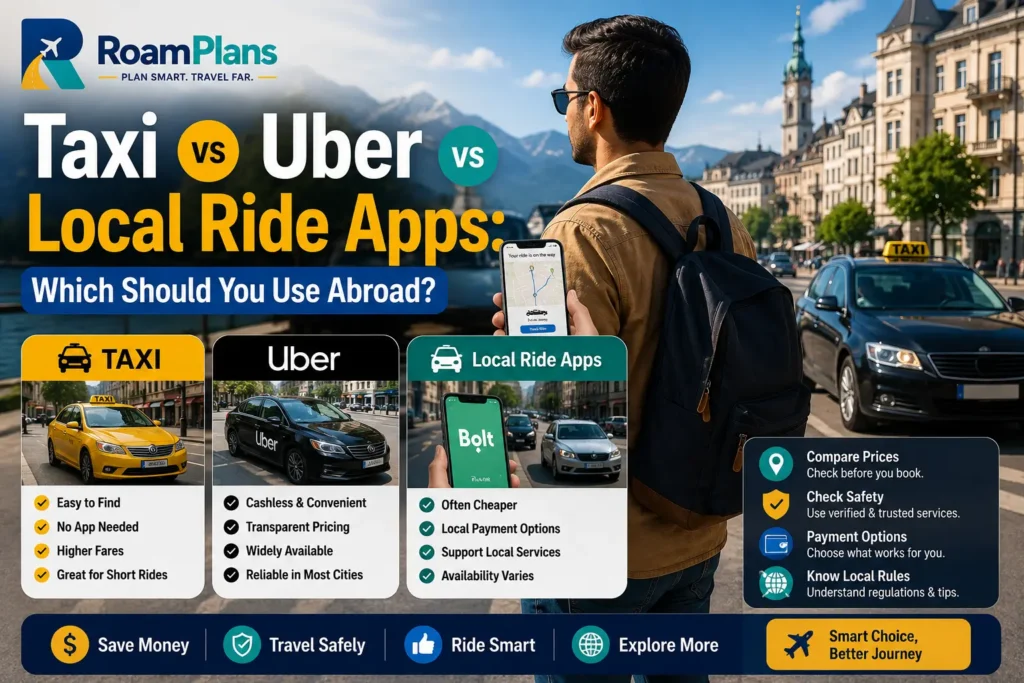
Keep a taxi or ride-app backup where available, with enough time and money for the transfer. Compare taxis, Uber and local ride apps ↗ before relying on an unfamiliar pickup system.
Bus Delays and Cancellations
Road traffic, weather, vehicle problems, border checks, and road closures can delay bus travel.
Use official information before changing your plans.
Check the Official Service Status
Use:
- ✓Operator app
- ✓Official website
- ✓Bus station display
- ✓Customer service
- ✓Driver or station staff
- ✓Official text or email update
Third-party apps may not show every stop change or cancellation.
Keep Your Ticket and Messages
Save:
- ✓Original ticket
- ✓Booking email
- ✓Cancellation notice
- ✓Delay message
- ✓Replacement ticket
- ✓Staff instructions
- ✓Receipts
These may be needed for a refund or insurance claim.
Ask About the Next Available Service
After a cancellation or serious delay, ask whether you can use:
- ✓A later bus
- ✓Another route
- ✓A replacement vehicle
- ✓Another operator
- ✓A refund
Do not assume the original ticket works on another bus without confirmation.
Added Expenses
A delay may cause extra costs for:
- ✓Food
- ✓Taxi
- ✓Hotel
- ✓Replacement transport
- ✓Missed booking
Keep receipts and check the operator’s terms before making a costly replacement booking where possible.
Passenger Rights
Refund, rebooking, and support rules differ by country, route, ticket, and operator.
Use the operator’s official passenger-rights page for the final process.
What to Do If You Miss the Bus?
The result depends on why the bus was missed and what type of ticket you bought.
If the Previous Bus Was Late
If both services are on one booking:
- 1Contact the operator.
- 2Show the original ticket.
- 3Ask about the next service.
- 4Request written confirmation where useful.
- 5Keep every document.
If You Used Separate Tickets
Contact the second operator before departure if possible. Explain whether the tickets were sold as a connecting service; do not assume a later bus or reimbursement is automatic.
Ask whether you can:
- ✓Change the ticket
- ✓Pay a change fee
- ✓Use a later service
- ✓Receive travel credit
You may need to buy a new ticket.
If You Arrived Late
A fixed-service ticket may become invalid.
Ask staff about:
- ✓Same-day changes
- ✓Later departures
- ✓Standby travel
- ✓Lower-cost replacement fares
If You Went to the Wrong Stop
Check whether the bus uses another nearby pickup point.
Do not chase the bus or enter an unsafe area.
Contact the operator and ask about the next available route.
If It Was the Final Bus
Check:
- ✓Taxi availability
- ✓Nearby hotel
- ✓Morning service
- ✓Another operator
- ✓Train route
- ✓Safe waiting area
Contact your accommodation if arrival will be late.
Bus Travel Safety
Normal precautions can reduce problems at stations, roadside stops, and during the journey.
Use Official Operators
Book through:
- ✓Official websites
- ✓Official apps
- ✓Approved ticket offices
- ✓Recognized stations
Be careful with unofficial sellers or drivers asking for unrecorded payment.
Confirm the Vehicle
Before boarding, match:
- ✓Operator
- ✓Route number
- ✓Departure time
- ✓Final destination
- ✓Vehicle details where provided
Protect Your Valuables
Keep important items with you.
Do not place passports, money, medicines, or electronics in luggage stored under the bus.
Watch Your Bags at Stops
During rest stops and passenger changes:
- ✓Check where your bag is stored
- ✓Keep the luggage receipt
- ✓Watch the unloading area
- ✓Confirm the bag before leaving
Wait in Safe Areas
At night:
- ✓Stay in lit areas
- ✓Remain near staff or other passengers
- ✓Avoid isolated roadside sections
- ✓Arrange final transport before arrival
Keep Emergency Details
Save:
- ✓Operator number
- ✓Hotel contact
- ✓Local emergency number
- ✓Travel insurance details
- ✓Trusted contact
Follow Driver Instructions
Follow rules about:
- ✓Seat belts
- ✓Rest-stop timing
- ✓Luggage
- ✓Border checks
- ✓Boarding
- ✓Emergency exits
Common Bus Travel Mistakes
1. Booking the Wrong Stop
A city may have several stations and street stops.
Check the full address and map pin.
2. Arriving at the Wrong Side of the Road
Street stops may serve opposite directions.
Confirm the direction and stop number.
3. Choosing by Price Alone
Add transfer costs, luggage fees, taxis, and waiting time.
4. Ignoring Traffic Risk
Do not plan a tight flight, train, or ferry connection after a long road journey.
5. Forgetting Luggage Rules
Check bag limits and extra fees before packing.
6. Assuming the Bus Has a Toilet
Not every coach provides one, and it may not remain available for the full trip.
7. Missing the Rest-Stop Return Time
Return to the bus before the time given by the driver.
8. Depending on Mobile Internet
Save the ticket, pickup point, hotel address, and backup route offline.
9. Booking a Very Early Arrival Without a Plan
Check hotel access, local transport, taxis, and safe waiting areas.
10. Leaving Valuables in Checked Luggage
Keep documents, money, and electronics with you.
11. Using Separate Tickets with a Tight Connection
Leave more time because the second operator may not protect the booking.
12. Ignoring the Final Local Connection
Check how you will travel from the arrival stop to your accommodation.
13. Boarding the Wrong Operator
Several buses may use the same platform.
Match the route number and operator.
14. Not Checking Holiday or Weekend Service
Some routes run less often on certain days.
15. Keeping No Backup Option
Save another bus, train, taxi, or nearby hotel for major routes.
More general planning errors are covered in Transportation Mistakes Travelers Should Avoid ↗.
Bus Travel Checklist
Before Booking
- ✓Exact pickup point checked
- ✓Exact arrival stops checked
- ✓Direct and connecting routes compared
- ✓Total travel time checked
- ✓Traffic risk considered
- ✓Luggage rules read
- ✓Seat type checked
- ✓Toilet and rest-stop details checked
- ✓Final local transport checked
- ✓Backup route saved
After Booking
- ✓Passenger name checked
- ✓Date and local time confirmed
- ✓Operator saved
- ✓Route number saved
- ✓Seat recorded
- ✓Ticket downloaded
- ✓Ticket saved offline
- ✓Pickup map saved
- ✓Arrival address saved
- ✓Operator contact saved
One Day Before Travel
- ✓Service update checked
- ✓Weather checked
- ✓Road closure checked
- ✓Pickup point confirmed
- ✓Phone charged
- ✓Battery bank packed
- ✓Food and water prepared
- ✓Documents prepared
- ✓Hotel check-in reviewed
- ✓Backup option checked
At the Station or Stop
- ✓Correct side of the road confirmed
- ✓Platform or bay checked
- ✓Operator confirmed
- ✓Route number confirmed
- ✓Final destination confirmed
- ✓Ticket ready
- ✓Identification ready
- ✓Luggage label attached
- ✓Arrival time monitored
- ✓Vehicle details matched
After Boarding
- ✓Correct seat found
- ✓Carry-on stored safely
- ✓Valuables kept close
- ✓Luggage receipt kept
- ✓Rest-stop rules checked
- ✓Connection details reviewed
- ✓Arrival stop followed
- ✓Phone kept charged
- ✓Hotel route opened before arrival
Before Leaving the Bus
- ✓Phone collected
- ✓Charger removed
- ✓Documents checked
- ✓Seat area checked
- ✓Carry-on counted
- ✓Checked luggage collected
- ✓Luggage tag matched
- ✓Final transport ready
- ✓Hotel address open
Frequently Asked Questions
Check the exact pickup and arrival points, compare direct and connecting routes, read luggage rules, save the ticket offline, and arrive early enough to locate the correct bus.
Arrive earlier for long-distance, airport, international, overnight, or unfamiliar services. Local city buses usually need less preparation.
Many long-distance coaches allow checked luggage, but size, weight, and bag limits differ. Confirm the rules before travel.
Some long-distance and overnight coaches have toilets, but local and regional buses often do not. Check the vehicle details before booking.
It can work when the route is direct, the operator is reliable, and the arrival time is practical. Check the seat type, stops, safety, and final transport first.
If both buses are on one booking, contact the operator for the next option. With separate tickets, you may need to change or buy another ticket.
Many operators accept mobile tickets, but some require printing, activation, or identification. Follow the ticket instructions.
Match the operator, route number, departure time, final destination, platform, and vehicle details shown on the booking.
It often costs less, but this depends on the route. Add transfer costs, luggage, taxis, and total travel time before comparing.
It can be safe with an official operator and normal precautions. Wait in lit areas, protect valuables, and arrange transport after arrival.
Final Thoughts
Bus travel can be a practical and lower-cost way to reach cities, airports, towns, and rural destinations.
Start by checking the exact pickup point and final stop. Compare direct routes, connections, luggage rules, seat type, travel time, arrival hour, and transport after the bus.
Save your ticket and map details offline. Arrive early, confirm the operator and route number, and keep valuables with you during the journey.
For long or overnight routes, check rest stops, toilets, seat comfort, and early-morning arrival plans before booking.
A cheap bus ticket is useful only when the full route works. Good preparation can prevent missed departures, unclear pickup points, difficult connections, and added taxi costs.

Adnan Ahmed
RoamPlans AuthorTravel Planning Researcher & Editor
Adnan Ahmed is the travel planning researcher and editor behind RoamPlans. He creates clear, practical guides to help travelers compare destinations, plan routes, estimate costs, and avoid common trip-planning mistakes. His work combines careful source research, official travel information, and regular content reviews to keep each guide useful and current.
- ✓Destination Research
- ✓Budget Planning
- ✓Route Planning
- ✓Beginner Travel Guides
Turn This Guide into a Practical Trip Plan
Use the recommended Transportation Cost Calculator or explore more free RoamPlans tools.