How to Use Public Transportation Abroad: A Beginner’s Guide
Using public transportation in another country can feel confusing at first. Ticket machines may use another language, routes may use unfamiliar colors or numbers, and the payment system may work ↗ differently from the one you know.
The good news is that most systems follow the same basic process. You find the right route, choose a valid ticket, pay the correct fare, validate or tap when required, and follow the stops to your destination.
When I prepare for a new city, I check the airport route, the nearest stop to my accommodation, the ticket system, and the final service time before I arrive. I also save the main route offline so I am not fully dependent on mobile data.
This guide explains how to use public transportation abroad, from researching the network and buying tickets to reading maps, changing services, handling luggage, and staying safe.
Public transport rules differ by country, city, and operator. Ticket prices, fare zones, payment methods, validation rules, and service hours can change. Check the official local transport website or app before travel.
Key Takeaways
- ✓Research the local transport system before arriving.
- ✓Find the nearest useful stop to your accommodation.
- ✓Check whether fares use zones, distance, or travel time.
- ✓Confirm whether you must tap, stamp, or activate the ticket.
- ✓Save tickets, maps, station names, and hotel details offline.
- ✓Keep a backup option for late arrivals and service problems.
The Complete Transportation Guide for Travelers explains how local public transport fits with trains, buses, rental cars, and airport transfers.
Research Public Transportation Before Arrival

You do not need to learn the full transport system before the trip. You only need enough information to complete your first few routes without stress.
Start with the routes that matter most.
These often include:
- ✓Airport to accommodation
- ✓Accommodation to city center
- ✓Accommodation to the main station
- ✓Hotel to planned attractions
- ✓Return route to the airport
- ✓A late-night backup route
Check the Airport Connection
Airport transport may use:
- ✓Train
- ✓Metro
- ✓Public bus
- ✓Express bus
- ✓Tram
- ✓Ferry
- ✓Hotel shuttle
Check:
- ✓Which terminal the service uses
- ✓First and final departure
- ✓Fare
- ✓Ticket location
- ✓Luggage space
- ✓Number of changes
- ✓Distance from the final stop to the hotel
An airport may sit outside the main fare zone. A normal city ticket may not cover the full route.
Find the Nearest Stop to Your Accommodation
Do not check distance using the station name alone.
Look at:
- ✓Walking time
- ✓Street crossings
- ✓Hills
- ✓Stairs
- ✓Station entrances
- ✓Lift access
- ✓Safe walking route
- ✓Final evening service
A station may have several exits. One exit may place you near the hotel, while another may lead several streets away.
Check the Daily Routes You Expect to Use
Make a short list of the places you plan to visit.
Then check:
- ✓Nearest stop
- ✓Direct route
- ✓Number of changes
- ✓Travel time
- ✓Fare zone
- ✓Final return service
This can also help you decide whether the accommodation location is practical.
The article Public Transportation vs Rental Car: Which Is Better for Your Trip? helps compare local transit with driving.
Check the First and Final Service
Service hours may change on:
- ✓Weekends
- ✓Public holidays
- ✓Festival days
- ✓Match days
- ✓Maintenance periods
- ✓Late nights
A metro may stop before your flight arrives. A night bus may follow a different route from the daytime service.
Save one backup choice for late arrival.
Learn the Main Types of Public Transportation
A destination may use several transport types under one network.
One ticket may cover all of them, or each service may use separate fares.
Metro or Subway
A metro or subway usually runs below ground or on dedicated tracks.
It often offers:
- ✓Frequent service
- ✓Fast city travel
- ✓Clear line colors
- ✓Several central stops
- ✓Less road traffic
Metro systems may use gates at the station entrance and exit.
Local Bus
Local buses cover areas that rail systems may not reach.
They may use:
- ✓Route numbers
- ✓Street stops
- ✓Front-door boarding
- ✓Rear-door boarding
- ✓Cash
- ✓Transport cards
- ✓Contactless payment
Bus routes can be harder for beginners because stops are closer together and may not always be announced clearly.
Tram or Streetcar
Trams run on rails through city streets.
They may share roads with cars and buses.
Tickets may be:
- ✓Bought before boarding
- ✓Purchased from a machine onboard
- ✓Paid by contactless card
- ✓Linked to the wider city network
Check whether you need to press a button before your stop.
Local Train
Local trains may connect:
- ✓City districts
- ✓Suburbs
- ✓Airports
- ✓Nearby towns
- ✓Regional attractions
They may use the same ticket system as the metro or a separate rail fare.
Ferry
Some cities use ferries as part of public transport.
A local ferry may connect:
- ✓City districts
- ✓Islands
- ✓Riverbanks
- ✓Ports
- ✓Tourist areas
Check whether the ferry is included in a city pass.
Funicular and Cable Car
Hilly destinations may use:
- ✓Funicular railways
- ✓Cable cars
- ✓Mountain lifts
Some are part of the normal transport network, while others require a tourist ticket.
Shared Local Services
Some destinations also use:
- ✓Minibuses
- ✓Shared vans
- ✓Water taxis
- ✓Demand-based buses
- ✓Public bike systems
These may follow different payment and booking rules.
Find Official Transport Information
Use official information for fares, schedules, ticket rules, and service changes.
General map apps are useful, but they may not show every local rule.
Official Transport Website
The official website may provide:
- ✓Route planner
- ✓Fare details
- ✓Zone map
- ✓Timetable
- ✓Service alerts
- ✓Ticket guide
- ✓Accessibility details
- ✓Airport route
- ✓Night services
Look for an English-language option where available.
Official Transport App
An official app may allow you to:
- ✓Plan routes
- ✓Buy tickets
- ✓Activate tickets
- ✓Check live arrivals
- ✓View delays
- ✓Find platforms
- ✓Load a transport card
Download the app before arriving when possible.
Airport Website
The airport website may explain:
- ✓Terminal transport
- ✓Train station location
- ✓Bus stops
- ✓Ticket machines
- ✓Operating hours
- ✓Taxi alternatives
Airport pages can be useful when several transport operators serve the terminals.
Accommodation Information
A hotel or host may provide:
- ✓Nearest stop
- ✓Best airport route
- ✓Correct station exit
- ✓Late-night option
- ✓Local ticket advice
Confirm this information with the official operator because hotel pages may not reflect recent changes.
Tourist Information Websites
Official tourism offices may explain:
- ✓Tourist transport cards
- ✓Attraction passes
- ✓Airport connections
- ✓Local transport maps
- ✓Visitor ticket options
Check whether a tourist pass truly covers the routes you plan to use.
Plan Your First Route

Your first route is often the airport-to-hotel journey.
Plan it before leaving home.
Record the Full Route
Save:
- ✓Airport terminal
- ✓Transport stop
- ✓Line number or color
- ✓Direction
- ✓Change station
- ✓Final stop
- ✓Correct exit
- ✓Walking route to accommodation
Do not save only the station name.
Check the Direction
Metro and train platforms often show the final station on the line.
To choose the correct direction, identify:
- 1Your current station
- 2Your destination station
- 3The final station in that direction
The sign may not display your stop as the main destination.
Check Every Change
For each change, save:
- ✓Station name
- ✓New line
- ✓New direction
- ✓Walking distance
- ✓Platform
- ✓Lift access where needed
A change inside one station may still require a long walk.
Check Door-to-Door Time
Add:
- ✓Walking
- ✓Waiting
- ✓Main travel
- ✓Changes
- ✓Final walk
A route with fewer stops may still take longer if the station is far from the hotel.
Save a Backup Route
Your backup may be:
- ✓Another metro line
- ✓Airport bus
- ✓Night bus
- ✓Taxi
- ✓Ride app
- ✓Hotel transfer
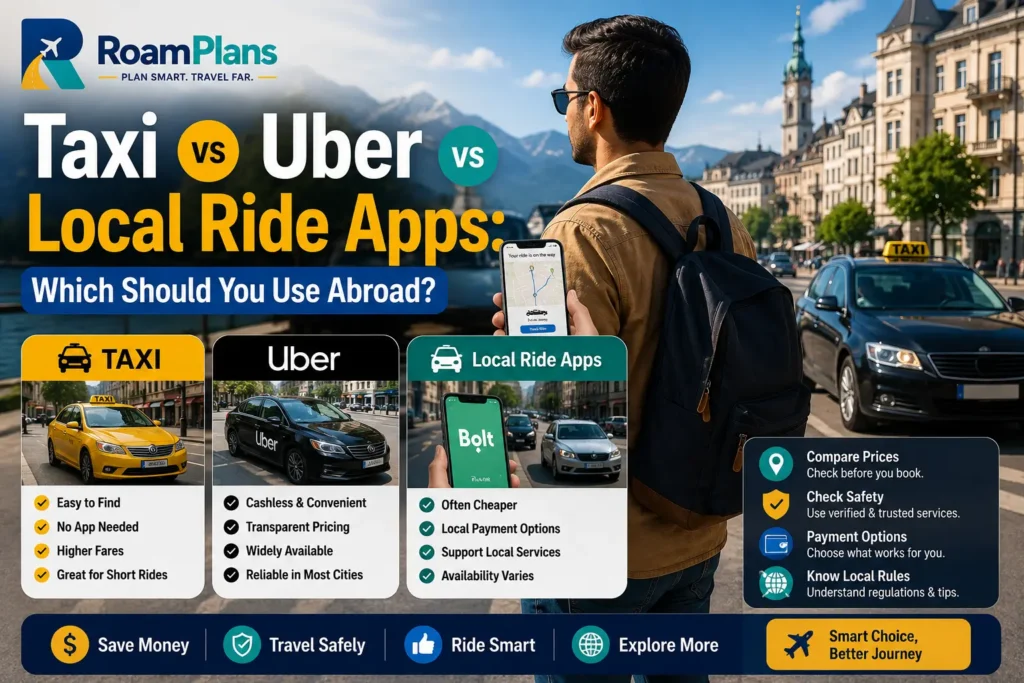
The guide Taxi vs Uber vs Local Ride Apps covers private local transport choices in more detail.
Learn How the Fare System Works
Public transport fares may be based on zones, distance, time, or individual rides.
Learn the basic system before buying a ticket.
Flat Fare
A flat fare costs the same for a normal trip within the network.
The same ticket price may cover short and long journeys.
Zone-Based Fare
A city may divide the network into fare zones.
The ticket price depends on how many zones you cross.
Common zones may include:
- ✓City center
- ✓Inner suburbs
- ✓Outer suburbs
- ✓Airport
- ✓Regional area
Check the full route on the zone map.
Distance-Based Fare
Some systems charge based on distance.
You may need to tap when entering and leaving so the system can calculate the fare.
Time-Based Fare
A time-based ticket may allow travel for:
- ✓30 minutes
- ✓60 minutes
- ✓90 minutes
- ✓Several hours
It may cover changes during the valid period.
Check whether the time begins when you:
- ✓Buy the ticket
- ✓Activate it
- ✓Validate it
- ✓Tap for the first time
Per-Ride Fare
A per-ride ticket covers one trip.
The rules may allow:
- ✓One direct service
- ✓A set number of changes
- ✓Unlimited changes for a short period
- ✓No changes at all
Peak and Off-Peak Fare
Some networks charge more during busy times.
Peak periods may include:
- ✓Weekday mornings
- ✓Weekday evenings
- ✓Major events
Off-peak tickets may not work during restricted hours.
Airport Fare
Airport transport may use:
- ✓Special ticket
- ✓Added airport fee
- ✓Separate zone
- ✓Express fare
Do not assume a normal city ticket covers the airport.
Choose the Right Public Transport Ticket
The best ticket depends on the number of journeys, zones, and travel days.
Do not buy a tourist pass until you compare it with your real plan.
Single Ticket
A single ticket may suit:
- ✓One short journey
- ✓Airport arrival followed by little travel
- ✓A route where you plan to walk most of the day
Check whether it includes changes.
Return Ticket
A return ticket covers travel in both directions.
It may require:
- ✓Same route
- ✓Same day
- ✓Fixed return time
- ✓Use within a set period
Compare it with two single tickets.
Day Pass
A day pass may allow unlimited travel during one day.
It can work well when:
- ✓You plan several rides
- ✓Attractions are spread out
- ✓The pass covers all needed zones
- ✓The airport is included
Check when the day ends. Some passes expire at midnight, while others remain valid for 24 hours after activation.
Multi-Day Pass
A multi-day pass may cover:
- ✓Two days
- ✓Three days
- ✓One week
- ✓Another fixed period
Check whether the days are:
- ✓Consecutive
- ✓Chosen separately
- ✓Based on calendar days
- ✓Based on hours after activation
Tourist Transport Pass
A tourist pass may include:
- ✓Public transportation
- ✓Airport route
- ✓Attraction entry
- ✓Discounts
- ✓Museum access
It may cost more than a normal transport card.
Compare the value of every included feature.
Group Ticket
A group ticket may cover:
- ✓Family
- ✓Couple
- ✓Small group
- ✓Adults and children
Check whether the group must travel together.
Child and Student Fares
Reduced fares may depend on:
- ✓Age
- ✓Student card
- ✓Local school status
- ✓Time of day
- ✓Route
- ✓Residency
International student cards may not always qualify.
Senior Fares
Senior discounts may require:
- ✓Local transport card
- ✓Passport
- ✓Advance registration
- ✓Residency
Check eligibility before relying on the reduced price.
Airport Ticket
An airport ticket may cover:
- ✓Express train
- ✓Metro extension
- ✓Airport bus
- ✓Added fare zone
Buy the correct ticket before boarding where required.
How to Buy Public Transport Tickets?
Tickets may be sold at machines, ticket offices, shops, apps, or onboard.
The available options depend on the city.
Ticket Machines
Ticket machines may accept:
- ✓Cash
- ✓Bank card
- ✓Contactless payment
- ✓Mobile wallet
- ✓Transport card
Before paying, confirm:
- ✓Correct language
- ✓Ticket type
- ✓Number of passengers
- ✓Zones
- ✓Travel date
- ✓Activation rule
Keep the receipt where useful.
Ticket Office
A staffed office can help with:
- ✓Route questions
- ✓Transport cards
- ✓Group tickets
- ✓Accessibility
- ✓Tourist passes
- ✓Refund rules
Opening hours may be limited.
Shops and Kiosks
Some cities sell tickets at:
- ✓Newsstands
- ✓Convenience stores
- ✓Tourist offices
- ✓Tobacco shops
- ✓Supermarkets
Look for the transport company logo.
Buying From the Driver
Some buses allow passengers to pay the driver.
Payment may require:
- ✓Exact cash
- ✓Contactless card
- ✓Transport card
- ✓Mobile ticket
The driver may not sell day passes or accept large notes.
Buying Onboard
Some trams and trains have onboard ticket machines.
Check whether buying onboard costs more.
Do not board without a ticket unless the operator clearly allows onboard purchase.
Contactless Payment on Public Transportation

Contactless payment lets you use a bank card, phone, or watch without buying a paper ticket.
It can be easy, but the tap rules must be followed correctly.
Tap In
Tap the card or device at:
- ✓Station gate
- ✓Platform reader
- ✓Bus reader
- ✓Tram reader
Wait for a green light or confirmation sound.
Tap Out
Some systems require another tap at the end of the trip.
This lets the network calculate the correct fare.
Failing to tap out may cause the highest fare.
Use the Same Card or Device
A physical bank card and the same card inside a phone may appear as two different payment methods.
Use the same item for:
- ✓Entry
- ✓Exit
- ✓Every trip during the fare period
One Card Per Traveler
Many systems require each passenger to use a separate card or device.
One bank card may not pay for several adults at the same gate.
Daily Fare Caps
Some contactless systems stop charging after you reach a daily or weekly limit.
A fare cap may depend on:
- ✓Zones
- ✓Time
- ✓Transport types
- ✓Using the same payment method
Check whether a normal transport pass would still cost less.
Foreign Card Fees
Your bank may charge:
- ✓Foreign transaction fee
- ✓Currency conversion fee
- ✓Small payment fee
Several small transport payments can create several bank charges.
Card Failure
A foreign card may fail because of:
- ✓Bank security
- ✓Unsupported card network
- ✓Offline reader
- ✓Low balance
- ✓Contactless limit
- ✓Card damage
Carry another payment method.
Transport Cards and Stored-Value Cards
A transport card is a reusable card for local travel.
It may store:
- ✓Money
- ✓Travel pass
- ✓Discount fare
- ✓Tourist product
Buying the Card
A card may be sold at:
- ✓Airport
- ✓Station
- ✓Ticket office
- ✓Machine
- ✓Shop
Check whether the card has a separate purchase fee.
Adding Money
You may add value through:
- ✓Ticket machine
- ✓App
- ✓Website
- ✓Shop
- ✓Ticket office
Check the minimum top-up amount.
Using the Card
You may need to:
- ✓Tap when entering
- ✓Tap when leaving
- ✓Tap only when boarding
- ✓Show it during inspection
Do not tap twice unless the system asks you to.
Card Balance
Check the balance before a long route or airport trip.
Some systems allow a small negative balance. Others block entry when funds are too low.
Refundable Balance
Unused money may or may not be refunded.
A refund may require:
- ✓Ticket office visit
- ✓Online form
- ✓Bank account
- ✓Card return
- ✓Administration fee
Do not add more money than you are likely to use.
Mobile Tickets and Transport Apps
Mobile tickets can remove the need for paper tickets or transport cards.
However, they depend on the phone and app working correctly.
Buying a Mobile Ticket
The app may require:
- ✓Account
- ✓Phone number
- ✓Email
- ✓Bank card
- ✓Local app store access
- ✓Internet connection
Create the account before arrival where possible.
Activating the Ticket
Some tickets become valid only after activation.
Do not activate too early.
The ticket may expire after:
- ✓Set number of minutes
- ✓Several hours
- ✓End of day
- ✓Fixed travel period
Show the Ticket
A valid mobile ticket may display:
- ✓QR code
- ✓Moving image
- ✓Countdown
- ✓Color change
- ✓Time stamp
A screenshot may not be accepted.
Phone Battery
A dead phone may leave you unable to show the ticket.
Carry:
- ✓Battery bank
- ✓Charging cable
- ✓Backup payment method
App Problems
Prepare for:
- ✓Login failure
- ✓Card rejection
- ✓No mobile data
- ✓App update
- ✓Phone restart
- ✓Location permission issue
Do not wait until the bus arrives to buy the first mobile ticket.
Ticket Validation and Tap Rules

A ticket is not always valid just because you paid for it.
Some systems require another action before travel.
Paper Ticket Validation
A paper ticket may need to be stamped in:
- ✓Station machine
- ✓Platform machine
- ✓Bus validator
- ✓Tram validator
The machine may print the date and time.
Mobile Ticket Activation
Activate the ticket before:
- ✓Boarding
- ✓Passing the gate
- ✓Entering the paid area
Follow the app’s instructions.
Tap In and Tap Out
Distance-based and zone-based systems may require both taps.
Always check for an exit reader.
Validate After a Change
Some networks require another tap or validation when changing between:
- ✓Bus and metro
- ✓Train and tram
- ✓Different operators
- ✓Fare zones
Others allow free changes within a time limit.
Ticket Inspections
Inspectors may check tickets onboard or inside stations.
You may need to show:
- ✓Ticket
- ✓Transport card
- ✓Bank card used for payment
- ✓Mobile device
- ✓Discount ID
Keep the ticket until the full journey ends.
Validation Mistakes
A traveler may receive a fine after:
- ✓Forgetting to stamp a ticket
- ✓Activating too late
- ✓Using the wrong zone
- ✓Failing to tap out
- ✓Using a child or student fare without proof
- ✓Sharing a card that is for one person
Check the rule before boarding rather than copying another passenger.
How to Read Public Transport Maps?

Public transport maps can look confusing because they may show several lines, colors, zones, and transfer stations.
Start with only the part of the map that affects your route.
Find Your Current Stop
Look for the station or stop where your trip begins.
Confirm:
- ✓Full station name
- ✓Line color
- ✓Line number
- ✓Zone
- ✓Nearby landmark
- ✓Station entrance
Two stops may have similar names, so check the area as well.
Find Your Destination Stop
Locate the stop closest to your destination.
Then check:
- ✓Walking distance
- ✓Correct station exit
- ✓Final service time
- ✓Accessibility
- ✓Safe walking route
The closest stop on the map may not have the easiest walking route.
Follow the Line
Trace the line from your starting point to your destination.
Check whether the route is:
- ✓Direct
- ✓One change
- ✓Several changes
- ✓Part of another operator’s network
Count the stops so you know when your destination is getting close.
Check the Direction
Public transport signs often show the final stop on the line.
For example, your destination may be the fifth stop, but the platform sign may show the final station several stops later.
To choose the correct direction:
- 1Find your current station.
- 2Find your destination.
- 3Follow the line beyond your destination.
- 4Note the final station in that direction.
Use that final station to choose the platform.
Find Transfer Stations
Transfer stations may be marked with:
- ✓Several line colors
- ✓Several route numbers
- ✓A large circle
- ✓A special transfer symbol
Check how far you must walk inside the station.
A change between two lines may require:
- ✓Stairs
- ✓Lift
- ✓Long tunnel
- ✓Another ticket check
- ✓Separate station entrance
Check Fare Zones
Zone maps may use:
- ✓Numbers
- ✓Letters
- ✓Rings
- ✓Different colors
Confirm whether your route crosses into another zone.
Airport routes often use an outer or special zone.
Read the Map with the Route Planner
Use both the network map and the official route planner.
The map helps you see the full system. The route planner gives current times, platform details, and service changes.
Finding the Correct Stop or Platform
Finding the correct line is only part of the process. You must also choose the correct stop, platform, direction, and station exit.
Metro and Train Platforms
Station signs may show:
- ✓Line name
- ✓Line color
- ✓Platform number
- ✓Final destination
- ✓Main stops
- ✓Direction arrow
Match the line and final destination with your saved route.
Bus Stops
A bus stop may display:
- ✓Route number
- ✓Stop name
- ✓Direction
- ✓Timetable
- ✓Operator logo
- ✓Stop code
Several buses may use the same stop.
Do not board until the route number and direction are correct.
Tram Stops
Tram platforms may sit:
- ✓In the middle of a road
- ✓Beside a pavement
- ✓Inside a station
- ✓Near a bus stop
Watch traffic when reaching a street platform.
Stops with Similar Names
Some cities use similar names for:
- ✓Central station
- ✓Main square
- ✓Airport terminals
- ✓North and south stations
- ✓University areas
- ✓Old and new towns
Check the full name before boarding.
Request-Only Stops
Some buses and trams stop only when a passenger:
- ✓Presses a button
- ✓Signals the driver
- ✓Stands at the stop
- ✓Uses an app request
Press the stop button early enough for the driver to stop safely.
Station Exits
Large stations may have several exits.
They may use:
- ✓Numbers
- ✓Letters
- ✓Street names
- ✓Landmark names
- ✓District names
Save the best exit before arriving.
The wrong exit may add a long walk or place you across a busy road.
Boarding Public Transportation
The boarding process depends on the transport type.
Watch local signs and follow the official instructions.
Before Boarding
Confirm:
- ✓Correct route
- ✓Correct direction
- ✓Valid ticket
- ✓Required validation
- ✓Destination stop
- ✓Final service time
Keep the ticket or payment card easy to reach.
Let Passengers Leave First
Stand to the side of the door.
Allow passengers to exit before you enter.
This is useful on crowded metros, buses, trams, and trains.
Boarding a Metro or Local Train
You may need to:
- ✓Tap at the gate
- ✓Scan a ticket
- ✓Pass through an open entrance
- ✓Validate before reaching the platform
Board the correct train and check the line display inside.
Boarding a Bus
Local bus systems may use:
- ✓Front-door boarding
- ✓Rear-door boarding
- ✓All-door boarding
Payment may happen:
- ✓Near the driver
- ✓At a card reader
- ✓Before boarding
- ✓Through a mobile ticket
Do not block the entrance while searching for money or a ticket.
Boarding a Tram
You may pay:
- ✓Before boarding
- ✓At an onboard machine
- ✓With a transport card
- ✓By contactless payment
Check whether the ticket needs another validation after boarding.
Boarding with a Pushchair or Wheelchair
Look for:
- ✓Wider door
- ✓Low-floor entrance
- ✓Wheelchair symbol
- ✓Pushchair area
- ✓Ramp request button
Give space to passengers who need the marked accessible area.
Leaving the Vehicle
Prepare before your stop arrives.
Follow the Stops
Use:
- ✓Onboard screen
- ✓Route map
- ✓Announcements
- ✓Offline map
- ✓Station signs
Announcements may not be clear or may use only the local language.
Press the Stop Button
On many buses and trams, you must press a button before your stop.
Do this after the previous stop or when your destination appears on the screen.
Check Whether You Must Tap Out
Some networks require a tap when leaving.
Tap out with the same card, phone, watch, or transport card used to enter.
Use the Correct Exit
After leaving the vehicle, follow signs for:
- ✓Street
- ✓Transfer
- ✓Bus station
- ✓Taxi rank
- ✓Airport terminal
- ✓Your saved exit
Do not follow the largest crowd without checking the signs.
Check Your Belongings
Before leaving, check:
- ✓Seat
- ✓Floor
- ✓Overhead area
- ✓Pushchair space
- ✓Luggage rack
Keep your phone and ticket with you until the trip is complete.
Changing Between Transport Services
Transfers may involve the same transport type or a change between metro, bus, tram, local train, or ferry.
Check Whether the Transfer Is Included
Some tickets allow free transfers within a set time.
Others require:
- ✓Another fare
- ✓Another validation
- ✓Another tap
- ✓A separate operator ticket
Check before starting the trip.
Follow Transfer Signs
Look for signs marked:
- ✓Transfer
- ✓Connection
- ✓Interchange
- ✓Another line color
- ✓Platform number
Stay inside the paid area unless the route tells you to leave.
Allow Enough Time
Transfers may take longer because of:
- ✓Long station walk
- ✓Stairs
- ✓Lifts
- ✓Crowds
- ✓Ticket gates
- ✓Platform changes
Do not judge the transfer by map distance alone.
Bus-to-Bus Transfers
A bus change may happen:
- ✓At the same stop
- ✓Across the road
- ✓Around a corner
- ✓At another station
Check the second stop’s exact location.
Metro-to-Bus Transfers
After leaving the metro, use the correct station exit.
The bus stop may be on a specific side of the street.
Transfers Between Operators
Different operators may use:
- ✓Separate tickets
- ✓Separate apps
- ✓Different transport cards
- ✓Different fare zones
Check whether the first ticket covers the second service.
Missed Transfer
If you miss a connection:
- 1Check the next service.
- 2Confirm whether the ticket remains valid.
- 3Check the final service time.
- 4Find another route if needed.
- 5Save a taxi or ride option for late travel.
For long-distance rail booking and station changes, use the Complete Train Travel Guide for Beginners.
Using Public Transportation with Luggage
Public transport can work with luggage, but the route must be practical.
A direct airport train may be easy. A route with several buses, stairs, and long walks may be difficult.
Check the Full Route
Look for:
- ✓Number of changes
- ✓Walking distance
- ✓Stairs
- ✓Lifts
- ✓Platform gaps
- ✓Luggage space
- ✓Crowded times
Choose fewer changes where possible.
Travel Outside Peak Hours
Large bags take more space.
Avoid busy travel times when you can.
This makes it easier to:
- ✓Board
- ✓Find luggage space
- ✓Move through stations
- ✓Use lifts
- ✓Keep bags near you
Use Lifts Where Available
Follow signs for:
- ✓Lift
- ✓Elevator
- ✓Step-free route
- ✓Accessible entrance
The nearest entrance may not have a lift.
Keep Bags Under Control
Do not block:
- ✓Doors
- ✓Aisles
- ✓Wheelchair spaces
- ✓Stairs
- ✓Emergency exits
Keep one hand on larger luggage.
Protect Valuables
Keep these items in a smaller bag:
- ✓Passport
- ✓Wallet
- ✓Phone
- ✓Laptop
- ✓Medicines
- ✓Tickets
- ✓Accommodation details
Do not place them in a suitcase far from your seat.
Airport Trains and Buses
Airport services may provide:
- ✓Large luggage racks
- ✓Wider doors
- ✓More floor space
- ✓Terminal stops
They may be easier than a normal city bus.
When a Taxi May Be Better
A taxi or ride app may be easier when:
- ✓You have several large bags
- ✓The hotel is far from a stop
- ✓The route requires many changes
- ✓You arrive late
- ✓You are traveling with small children
- ✓Lifts are unavailable
Compare the extra cost with the time and effort saved.
Public Transport During Peak Hours
Peak hours are the busiest travel periods.
They often happen during weekday mornings and evenings.
Common Peak-Hour Problems
You may face:
- ✓Crowded platforms
- ✓Full buses
- ✓Limited seating
- ✓Longer boarding
- ✓Busy ticket machines
- ✓Harder luggage movement
Travel Earlier or Later
A small time change may make the trip easier.
Check whether:
- ✓Off-peak fares are cheaper
- ✓Services run more often
- ✓Attractions open later
- ✓Hotel check-in allows a later route
Keep Your Ticket Ready
Do not stop near a busy gate to search for a card or phone.
Prepare payment before reaching the reader.
Protect Your Belongings
During crowded travel:
- ✓Close bags
- ✓Keep phones secure
- ✓Keep wallets out of back pockets
- ✓Move backpacks to the front
- ✓Avoid leaving bags near doors
Let One Vehicle Go
If a metro or bus is too full, the next one may arrive soon.
Check service frequency before deciding to wait.
Night, Weekend, and Holiday Services
Public transport may follow a different schedule outside normal daytime hours.
Night Services
Night travel may use:
- ✓Night bus
- ✓Reduced metro service
- ✓Special weekend train
- ✓On-demand service
- ✓Limited tram route
The route may differ from the daytime version.
Final Service
Check the last departure from:
- ✓Attraction
- ✓City center
- ✓Station
- ✓Airport
- ✓Event venue
Do not rely on an old timetable.
Weekend Service
Weekend schedules may have:
- ✓Later first service
- ✓Earlier final service
- ✓Longer waiting
- ✓Closed stations
- ✓Engineering work
Holiday Service
Public holidays may use:
- ✓Sunday schedule
- ✓Reduced service
- ✓Free service
- ✓Closed routes
- ✓Event diversions
Check the official alert page before leaving.
Event and Festival Changes
Large events may cause:
- ✓Closed stations
- ✓Temporary stops
- ✓Route diversions
- ✓Crowded vehicles
- ✓Added services
Plan another route when your trip passes near a major event.
Late-Night Backup
Save:
- ✓Licensed taxi number
- ✓Ride app
- ✓Hotel contact
- ✓Safe waiting place
- ✓Night bus
- ✓Another station
Do not wait until the final service is missed to search for another option.
Using Public Transportation Without Mobile Data
Mobile data is helpful, but your route should still work without it.
Download Offline Maps
Save the city area and main routes before leaving Wi-Fi.
Make sure the map includes:
- ✓Accommodation
- ✓Airport
- ✓Main stations
- ✓Attractions
- ✓Emergency locations
Take Route Screenshots
Save screenshots showing:
- ✓Line
- ✓Direction
- ✓Change station
- ✓Final stop
- ✓Station exit
- ✓Walking route
Save Important Names
Write down:
- ✓Hotel name
- ✓Hotel address
- ✓Station names
- ✓Route numbers
- ✓Airport terminal
- ✓Emergency contact
Save the hotel address in the local language where useful.
Keep a Paper Backup
A small paper note can help when:
- ✓Phone battery dies
- ✓App stops working
- ✓Screen breaks
- ✓Mobile ticket fails
Download Translation Support
Save common transport phrases or an offline translation pack.
Useful phrases may include:
- ✓Which platform?
- ✓Where can I buy a ticket?
- ✓Does this bus go to…?
- ✓Where should I change?
- ✓Is this ticket valid?
- ✓What is the final stop?
Carry a Battery Bank
Charge your phone before leaving.
Carry:
- ✓Battery bank
- ✓Charging cable
- ✓Adapter where needed
Do not use all battery life for photos before the return trip.
Accessibility on Public Transportation
Accessibility differs by city, station, vehicle, and route.
Check each stage before travel.
Step-Free Routes
Look for:
- ✓Lift
- ✓Ramp
- ✓Low-floor vehicle
- ✓Wide gate
- ✓Step-free platform
- ✓Accessible exit
A station may be accessible through only one entrance.
Lift Status
Some official apps show broken lifts.
Check before leaving because one closed lift may affect the full route.
Wheelchair Spaces
Buses, trams, and trains may have marked areas.
These spaces may also be shared with pushchairs.
Follow local priority rules.
Boarding Assistance
Some services require advance notice for:
- ✓Ramp
- ✓Platform help
- ✓Wheelchair boarding
- ✓Luggage support
- ✓Visual or hearing support
Confirm the meeting place and arrival time.
Accessible Tickets
Reduced fares may require:
- ✓Local disability card
- ✓Registration
- ✓Proof of eligibility
- ✓Advance application
An international document may not always qualify.
Accessible Taxis as Backup
Save an accessible taxi or transfer option where available.
This can help after:
- ✓Lift failure
- ✓Closed station
- ✓Missed service
- ✓Late arrival
Public Transportation with Children
Family travel needs extra time and planning.
Child Fares
Check:
- ✓Free travel age
- ✓Reduced ticket age
- ✓Proof of age
- ✓Family pass
- ✓School-hour rules
Carry a passport copy or other accepted age proof where required.
Pushchairs
Check whether the pushchair must be:
- ✓Folded
- ✓Placed in a marked area
- ✓Carried on stairs
- ✓Removed during busy travel
A small folding pushchair may be easier on city transport.
Keep Children Close
Before boarding:
- ✓Explain the stop
- ✓Hold hands near doors
- ✓Let adults board first where practical
- ✓Choose a meeting point in case someone becomes separated
Avoid Tight Transfers
Allow extra time for:
- ✓Lifts
- ✓Toilets
- ✓Snacks
- ✓Boarding
- ✓Pushchair movement
Plan Toilet Stops
Some metro systems and buses have no toilets.
Check station facilities before a long route.
Use Direct Routes
A direct route may cost more or take a little longer, but it can reduce stress for families with young children.
Public Transportation Safety Tips
Public transportation is usually easy to use, but travelers should stay aware in stations, at stops, and inside vehicles.
Use Official Transport Services
Use:
- ✓Official stations
- ✓Marked bus stops
- ✓Approved ticket machines
- ✓Official transport apps
- ✓Licensed service staff
Avoid people offering unofficial tickets or private rides inside stations.
Protect Your Belongings
Keep bags:
- ✓Closed
- ✓In front of you in crowds
- ✓Away from vehicle doors
- ✓Within reach
- ✓Off empty seats during busy travel
Keep passports, money, phones, and cards inside a secure inner pocket or small bag.
Stay Alert Near Doors
Phones and bags can be easier to grab near open doors.
Avoid standing with your phone close to the exit when the vehicle is about to stop.
Use Lit Waiting Areas
At night, wait:
- ✓Near other passengers
- ✓Close to staff
- ✓Under good lighting
- ✓Near cameras where available
- ✓Inside the station rather than outside
Avoid empty platforms or isolated stops where a safer option is available.
Check the Area Around the Final Stop
A station may be busy, while the streets outside are quiet.
Before leaving, check:
- ✓Correct exit
- ✓Walking route
- ✓Street lighting
- ✓Taxi rank
- ✓Hotel distance
- ✓Late-night activity
Do Not Display Large Amounts of Cash
Prepare a small payment amount before boarding.
Do not open a wallet full of cash in a crowded station.
Follow Local Safety Advice
Official transport operators may warn travelers about:
- ✓Pickpocketing
- ✓Closed exits
- ✓Unsafe stops
- ✓Event crowds
- ✓Service problems
Check current notices during the trip.
Ticket Inspections and Transport Fines
Many transport networks use ticket inspectors instead of checking every passenger at the entrance.
An inspector may board a bus, tram, metro, or train without warning.
What Inspectors May Ask to See
You may need to show:
- ✓Paper ticket
- ✓Mobile ticket
- ✓Transport card
- ✓Bank card used to tap
- ✓Phone or watch used to pay
- ✓Student or child fare proof
- ✓Passport or identity document
Keep the payment method used for the journey.
Common Reasons for Fines
A traveler may receive a fine for:
- ✓No ticket
- ✓Wrong fare zone
- ✓Unvalidated ticket
- ✓Expired ticket
- ✓Missed tap out
- ✓Wrong discount fare
- ✓Shared personal pass
- ✓Activated mobile ticket after boarding
- ✓Ticket used outside its valid time
Paying for a ticket does not help if the local system also requires validation.
What to Do During an Inspection?
Stay calm.
Show the ticket or payment method requested.
If there is a problem:
- 1Ask what rule was broken.
- 2Ask for written details.
- 3Record the inspector’s identification where allowed.
- 4Keep the fine notice.
- 5Check the official appeal process.
Do not pay cash to an unofficial person.
Appealing a Fine
An appeal may be possible after:
- ✓Broken ticket machine
- ✓App failure
- ✓Incorrect charge
- ✓Accessibility issue
- ✓Staff instruction
- ✓Valid ticket not showing correctly
Keep:
- ✓Ticket
- ✓Payment receipt
- ✓Screenshot
- ✓App error
- ✓Station photo
- ✓Written fine notice
Appeal rules and deadlines differ by operator.
What to Do If You Board the Wrong Service?
Boarding the wrong bus, train, tram, or metro can happen in an unfamiliar city.
Do not panic or leave at an unsafe place.
Check the Current Route
Use:
- ✓Onboard screen
- ✓Route map
- ✓Station signs
- ✓Official app
- ✓Offline map
Find your current location and the next stop.
Leave at a Safe Stop
Get off at:
- ✓A main station
- ✓A staffed stop
- ✓A busy area
- ✓A place with a return service
Avoid leaving at an isolated stop late at night unless staying onboard would take you farther away.
Find the Return Direction
Look for:
- ✓Opposite platform
- ✓Return bus stop
- ✓Correct line direction
- ✓Transfer station
Check whether the same ticket remains valid.
Ask Staff for Help
Show staff:
- ✓Your destination
- ✓Current route
- ✓Ticket
- ✓Hotel address
Use the written address if pronunciation is difficult.
What to Do If You Miss Your Stop?
Missing a stop is usually easy to fix.
Get Off at the Next Stop
Do not try to force doors open or distract the driver.
Leave at the next safe stop.
Check the Return Route
Find out:
- ✓Whether the opposite service stops nearby
- ✓Whether you need another ticket
- ✓How long the next service takes
- ✓Whether walking is safe and practical
Tell the Driver Where Required
On a local bus, the driver may tell you where to change or return.
Keep the question short and show the stop name.
Check the Final Service Time
A missed stop matters more late at night.
If the return service has ended, check:
- ✓Night bus
- ✓Taxi
- ✓Ride app
- ✓Hotel contact
- ✓Safe waiting place
What to Do During Delays and Service Changes?
Public transport can be affected by weather, road closures, strikes, events, repairs, and technical problems.
Check Official Service Alerts
Use:
- ✓Official app
- ✓Operator website
- ✓Station display
- ✓Platform announcement
- ✓Staff information
- ✓Official social account
General map apps may not show a temporary stop change.
Check Whether the Ticket Remains Valid
After a delay or closure, ask whether your ticket works on:
- ✓Another route
- ✓Replacement bus
- ✓Another operator
- ✓Later service
- ✓Different station
Do not buy another ticket before checking.
Look for Replacement Transport
A closed rail line may use:
- ✓Replacement bus
- ✓Shuttle
- ✓Another metro line
- ✓Local train
- ✓Temporary walking route
Replacement stops may sit outside the normal station entrance.
Leave More Time for Important Trips
Use extra time before:
- ✓Airport departure
- ✓Long-distance train
- ✓Tour
- ✓Ferry
- ✓Hotel check-in deadline
A short local delay can affect a major booking.
Keep Receipts After a Major Problem
Save receipts for:
- ✓Replacement ticket
- ✓Taxi
- ✓Food
- ✓Hotel
- ✓Phone call
Refund rules differ, and added costs may not always be covered.
What to Do If the Ticket Machine Is Not Working?
A broken machine does not always allow free travel.
Look for Another Machine
Check:
- ✓Other station entrance
- ✓Platform
- ✓Ticket office
- ✓Nearby shop
- ✓Official app
Record the Problem
Take a photo showing:
- ✓Machine
- ✓Error message
- ✓Station
- ✓Time
This may help if an inspector checks your journey.
Ask Staff Before Boarding
Where staff are available, explain the problem and ask how to pay.
Check Onboard Payment
Some services allow onboard purchase. Others charge a higher fare or do not allow it.
Do not assume you can pay later.
Lost Property on Public Transportation
Act soon after noticing a missing item.
Check the Vehicle and Station
If you are still nearby:
- ✓Check your seat
- ✓Check the floor
- ✓Check luggage racks
- ✓Ask station staff
- ✓Note the vehicle number
Record Journey Details
Write down:
- ✓Route number
- ✓Line
- ✓Direction
- ✓Boarding stop
- ✓Exit stop
- ✓Travel time
- ✓Vehicle number
- ✓Item description
Contact the Official Lost Property Office
Use the operator’s official website or help desk.
Do not share passwords, card PINs, or full bank details with anyone claiming to have the item.
Protect Lost Cards and Phones
After losing a phone or wallet:
- ✓Lock the phone
- ✓Block bank cards
- ✓Change key passwords
- ✓Contact your mobile provider
- ✓Report identity documents where needed
Common Public Transportation Mistakes
1. Buying the Wrong Ticket
A city ticket may not cover the airport, regional train, or outer zone.
Check the full route.
2. Forgetting to Validate
Some paper and mobile tickets need another action before use.
3. Using the Wrong Direction
Platform signs may show the final station rather than your stop.
4. Failing to Tap Out
This may cause the highest fare.
5. Switching Payment Devices
A bank card and the same card on a phone may be treated as separate cards.
6. Buying a Pass Without Comparing Costs
A pass may cost more than the trips you will take.
7. Depending Only on Mobile Data
Save routes and tickets offline.
8. Ignoring the Final Service
Check night, weekend, and holiday times.
9. Standing at the Wrong Bus Stop
The opposite side of the road may serve the other direction.
10. Missing a Request Stop
Press the stop button before your destination.
11. Blocking Doors With Luggage
Keep doors, aisles, and accessible spaces clear.
12. Using a Discount Fare Without Proof
Carry the document required for child, student, senior, or disability fares.
13. Following Other Passengers Without Checking
Another passenger may use a different route or ticket.
14. Leaving Through the Wrong Station Exit
Save the exit number or street name.
15. Keeping No Backup Route
Save another line, night bus, taxi, or ride option.
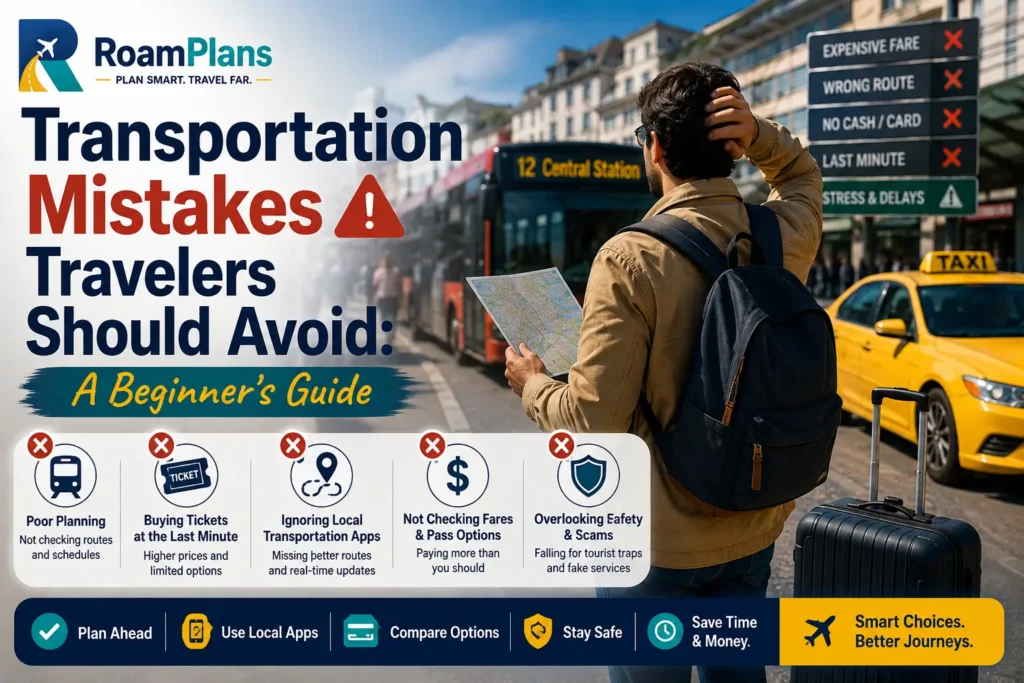
More errors and planning solutions are covered in Transportation Mistakes Travelers Should Avoid.
Public Transportation Checklist
Before the Trip
- ✓Official transport website found
- ✓Official app downloaded
- ✓Airport route checked
- ✓Hotel stop checked
- ✓Fare zones checked
- ✓Ticket types compared
- ✓Final service checked
- ✓Weekend schedule checked
- ✓Backup route saved
- ✓Offline map downloaded
Before Buying a Ticket
- ✓Correct zones selected
- ✓Airport fare checked
- ✓Number of travelers correct
- ✓Child fares checked
- ✓Travel period checked
- ✓Transfer rules checked
- ✓Validation rule checked
- ✓Refund rule checked
- ✓Payment method accepted
Before Boarding
- ✓Correct stop confirmed
- ✓Correct direction confirmed
- ✓Route number checked
- ✓Ticket activated
- ✓Paper ticket validated
- ✓Payment card ready
- ✓Destination stop saved
- ✓Final service checked
During the Journey
- ✓Stops followed
- ✓Ticket kept ready
- ✓Bags kept secure
- ✓Valuables kept close
- ✓Transfer checked
- ✓Stop button used where needed
- ✓Tap-out rule remembered
- ✓Station exit checked
With Luggage
- ✓Direct route chosen where possible
- ✓Lift access checked
- ✓Peak hours avoided
- ✓Bags kept out of aisles
- ✓Valuables kept in a small bag
- ✓Airport service checked
- ✓Taxi backup saved
At Night
- ✓Final service confirmed
- ✓Safe exit selected
- ✓Hotel route saved
- ✓Taxi or ride option ready
- ✓Phone charged
- ✓Trusted contact informed where useful
- ✓Isolated stops avoided
Frequently Asked Questions
Find the official transport website, check the route and fare system, buy the correct ticket, validate or tap when required, and follow the stops to your destination.
Tickets may be sold through machines, offices, shops, official apps, transport cards, or contactless bank cards. The options differ by city.
Some systems require validation, activation, or tapping before travel. Check the local rule because an unvalidated ticket may lead to a fine.
Many cities accept contactless cards, but foreign cards may fail or create bank fees. Carry another payment method.
A day pass may cost less when you take several trips. Compare its price with the number of rides and zones you plan to use.
Find your destination on the line map. Then note the final station beyond it. That final station usually appears on the platform sign.
Some systems charge the highest fare. Check the official website for a correction or refund process.
Usually yes, but large bags may be difficult on crowded routes, stairs, and local buses. Check space and access before travel.
Download offline maps, save route screenshots, store tickets offline, write down station names, and carry a charged battery bank.
It depends on the destination and route. Use lit stations, stay near other passengers, protect belongings, and save a taxi or ride option.
Check your current location, leave at a safe stop, and find the return route. Ask official staff for help where available.
Final Thoughts
In short, public transportation abroad becomes easier once you know the local fare and boarding rules.
Start by checking the airport route, hotel stop, ticket options, fare zones, and final service time. Use official sources for current schedules and service alerts.
Before boarding, confirm the line, direction, stop, and ticket validation rule. During the journey, follow the stops and keep your ticket and belongings secure.
Save routes, hotel details, and backup choices offline. This helps when mobile data fails or a service changes.
You do not need to learn the full network. Focus on the routes you will use and check each trip before leaving. A little preparation can prevent wrong tickets, missed stops, fines, and late-night transport problems.

Adnan Ahmed
RoamPlans AuthorTravel Planning Researcher & Editor
Adnan Ahmed is the travel planning researcher and editor behind RoamPlans. He creates clear, practical guides to help travelers compare destinations, plan routes, estimate costs, and avoid common trip-planning mistakes. His work combines careful source research, official travel information, and regular content reviews to keep each guide useful and current.
- ✓Destination Research
- ✓Budget Planning
- ✓Route Planning
- ✓Beginner Travel Guides
Turn This Guide into a Practical Trip Plan
Use the recommended Transportation Cost Calculator or explore more free RoamPlans tools.